

When to Stop Using Swaddle A Guide for Modern Parents
That cozy newborn swaddle is more than just a blanket. It’s like a warm hug, recreating the snug feeling of the womb to calm that jerky startle reflex and help your little one settle into a deep sleep. But like all good things, this cozy chapter has an end date.
So, when should you stop using the swaddle? The most straightforward, non-negotiable answer is the moment your baby shows the first signs of trying to roll over. This often happens around 8 weeks or 2 months old.
From Cozy Womb to Safe Sleep
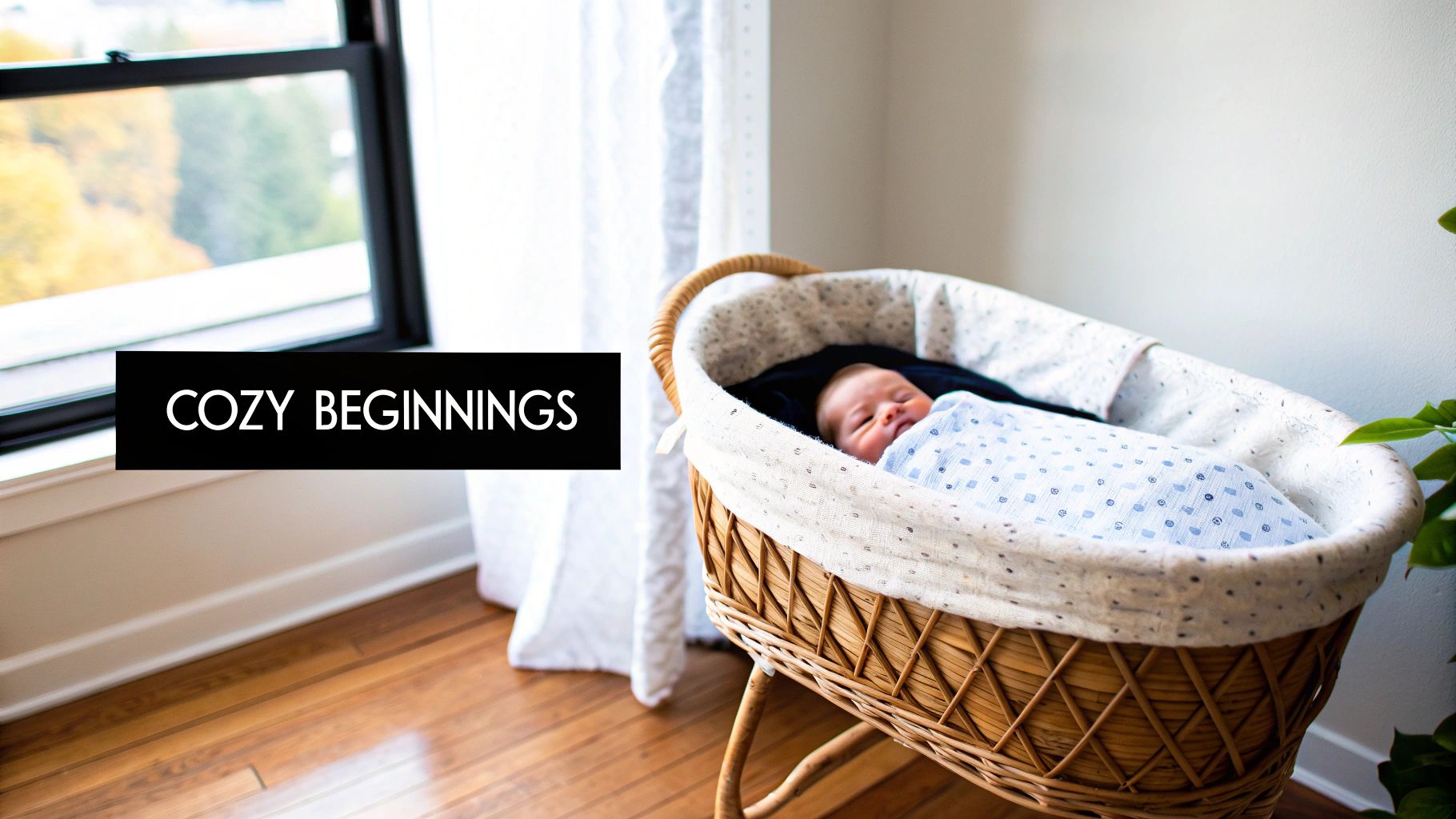
For a brand-new baby, the world feels like a vast, open space—a stark contrast to the comforting confines of the womb. A swaddle brilliantly bridges that gap by providing a gentle, reassuring pressure that helps your baby feel secure and contained.
This age-old practice is a lifesaver for taming the Moro, or startle, reflex. You know the one—those sudden, involuntary arm flails that can jolt a peacefully sleeping infant right awake. A snug wrap, made from a high-quality, breathable material like organic cotton, is one of the best tools for encouraging longer, more restful sleep in those first few weeks. If you're looking to master this technique, check out our detailed guide on how to swaddle a newborn.
The Critical Turning Point
As helpful as it is, the swaddle has a firm expiration date that’s all about safety. This isn't just a gentle suggestion; it’s a critical step to protect your child. As babies gain strength and motor skills, they need their arms free. This freedom allows them to push up and reposition their head, ensuring their airway stays clear if they happen to roll onto their stomach.
While swaddling is a beloved trick for soothing newborns, pediatric experts unanimously agree it's time to stop by 2 months of age. The American Academy of Pediatrics sets this guideline because it’s when babies start showing signs of rolling over—a developmental milestone that poses a serious risk if their arms are still pinned.
This quick reference table highlights the key indicators that it's time to hang up the swaddle for good.
Quick Guide: Key Signs to Stop Swaddling
| Indicator | What to Look For | Recommended Action |
|---|---|---|
| Signs of Rolling | Lifting head and shoulders, rocking from side to side, kicking legs and scooting in the crib, or actually rolling from back to side. | Stop swaddling immediately, even if it's just one arm out. Transition to a sleep sack. |
| Age | Reaching 8 weeks or 2 months old. | Begin the transition process proactively, even if you haven't seen definite rolling signs. |
| Breaking Free | Consistently wiggling one or both arms out of the swaddle. | This indicates they have the strength to move and need their arms free for safety. Transition now. |
| Startle Reflex Fades | The Moro reflex naturally diminishes around 2 to 4 months. | Once this reflex integrates, the primary reason for swaddling is gone. Your baby is ready for more freedom. |
Remember, these signs are your baby's way of telling you they're growing up and ready for the next step in their sleep journey.
Moving away from the swaddle is more than just a developmental milestone; it's a proactive measure to ensure your baby’s sleep environment remains as safe as possible. This transition empowers them to learn self-soothing techniques and move freely as they grow.
This guide will walk you through how to make this transition a positive and necessary step for your baby's safety and continued sleep success.
Learning Your Baby's Language: The Signs It’s Time to Unswaddle
While the calendar can give you a rough idea, your baby is the real expert here. They’ll give you all the clues you need to know when it’s time to ditch the swaddle. Learning to read their unique developmental signals is the best way to make the safest choice at just the right moment. The most urgent sign, of course, is any attempt at rolling over, but you’ll likely spot plenty of subtle hints before that ever happens.
Think of these early signs as your baby building the strength and coordination for their next big move. When you spot them, you can be proactive and start transitioning away from the swaddle before they surprise you with that first roll in the crib. Every baby hits these milestones on their own schedule, which is why being a careful observer is your most valuable tool.
Beyond Rolling: The Early Warning Signs
Long before your baby masters the full back-to-tummy roll, they’ll start practicing in small ways. These are the dress rehearsals for the main event. Paying close attention to these subtle movements is the key to knowing when their swaddling days are numbered.
Keep an eye out for these powerful, yet often-missed, developmental cues:
- The Little Escape Artist: Is your baby constantly wiggling an arm (or both!) out of the swaddle? This isn't just a sign of a weak wrap—it shows they have the strength and drive to move. Those arms need to be free for safety.
- Increased Wiggling and Scooting: Have you noticed your baby is no longer staying put in the crib? If they’re kicking their legs, squirming around, or even scooting upwards, it's a clear signal that their motor skills are firing up.
- Tummy Time Progress: When your baby starts pushing up on their arms with more force during tummy time or lifting their head and chest higher off the mat, they are building the exact muscles needed for rolling. This is a direct preview of what’s coming next.
- Rocking and Leaning: You might see your baby rocking from side to side or leaning heavily onto one hip while on their back. This is the classic warm-up for a full roll and means it’s time to stop swaddling immediately.
Your baby's ability to break out of their swaddle isn't a sign of a poorly wrapped blanket—it's a clear signal of their growing strength and an urgent message that they need their arms free for safe sleep.
Why Age Is Still a Reliable Benchmark
Even if you haven't seen any definite signs of rolling, age itself is a critical factor. The American Academy of Pediatrics recommends starting the transition around 8 weeks old, which is when the startle reflex typically starts to fade and motor skills really begin to ramp up. The swaddle should absolutely be retired by 12 weeks at the latest.
Think of that 8-week mark as a built-in safety check. Babies develop incredibly fast at this age, and that first roll can happen completely out of the blue. By transitioning proactively, you eliminate the risk of being caught off guard. This isn't about rushing your baby—it's about staying one step ahead to keep their sleep space as safe as possible while supporting their next developmental stage.
Understanding the Risks: Why Rolling Over Changes Everything
The moment your baby starts showing signs of rolling, the swaddle goes from a cozy comfort to a serious safety risk. It’s a sudden shift, but the reason is incredibly important: if a baby rolls onto their stomach while swaddled, their arms are pinned. They can't use them to push up and turn their head to breathe.
This isn't a "wait and see" situation. That very first attempt to roll can happen without warning in the middle of the night. If their arms are trapped and they end up face-down, they can't clear their airway. This is why pediatricians are so clear about stopping swaddling before your baby can fully roll over. You have to act on the early signs.
The Science Behind the Urgency
The link between swaddling a rolling baby and Sudden Infant Death Syndrome (SIDS) is a serious one. Most babies start rolling somewhere between 2 and 6 months, but the earliest signs can appear around 8 weeks. The American Academy of Pediatrics (AAP) is adamant: stop swaddling as soon as you see any attempt to roll.
Research shows that a swaddled infant who ends up on their stomach has a 12-fold increased risk of SIDS compared to a baby sleeping on their back with their arms free. For a deeper dive into this, you can learn more about why to stop swaddling your baby.
The freedom to move isn't just about comfort—it's your baby's built-in safety system. Freeing their arms gives them the ability to use their natural reflexes to lift and turn their head if they ever find themselves face-down.
This simple freedom is a cornerstone of safe sleep. For more on this topic, check out our complete guide on creating a safe sleep environment for infants.
Beyond Rolling: Skin Health and Overheating
While the suffocation risk is the most urgent reason to ditch the swaddle, there are a couple of other things to keep in mind, like overheating and skin irritation. A swaddle is essentially an extra blanket, and if the room is warm or the fabric isn't breathable, your baby can get too hot.
Overheating isn't just about being uncomfortable; it's also a known risk factor for SIDS and can lead to nasty heat rashes. Poor-quality fabrics treated with harsh chemicals or dyes can also trap sweat and moisture, creating a breeding ground for skin irritation, eczema flare-ups, or even allergies in sensitive babies.
Here’s what to look out for:
- Trapped Heat: Snug swaddles, especially those made from synthetic materials, can trap heat and sweat right against your baby’s skin.
- Signs of Overheating: Check for damp hair, a flushed face, rapid breathing, or a sweaty neck. These are all signs that your baby is too warm.
- Skin Irritation: Look for redness, bumps, or rashes, particularly in the folds of your baby's skin. This could be a sign that the fabric is causing irritation.
This is why choosing the right sleepwear is so important. Breathable fabrics like organic cotton allow air to circulate, helping to regulate your baby's temperature and keeping their delicate skin healthy and comfortable.
Your Gentle Swaddle Transition Playbook
So, you've seen the signs. Your little one is getting stronger, more active, and is just about ready to graduate from their swaddle. Now comes the part that can feel a little daunting: actually making the change.
Don't worry. This doesn't have to be a stressful, overnight battle. The best approach is a gentle and gradual one, making this new milestone a positive experience for everyone. Think of it like teaching your baby a new skill—it takes a bit of practice and a whole lot of patience. You're giving them time to get used to a new way of sleeping with more freedom.
The One Arm Out Method
One of the most tried-and-true strategies is the one arm out method. It’s a simple, step-by-step approach that lets your baby ease into sleeping without being fully wrapped. It’s perfect for babies who still love that snug feeling but are developmentally ready to start moving more.
Here’s a simple breakdown of how to do it:
- Start at Night: Begin the process at bedtime, when their sleep drive is naturally at its peak. Swaddle your baby just like you always do, but leave one of their arms free.
- Switch It Up: For the next few nights, stick with the one-arm-out swaddle. You can alternate which arm is free each night, which helps them get used to the sensation on both sides of their body.
- Bring in the Naps: Once your baby seems to be handling nights well, apply the same technique to all of their naps. Consistency across every sleep is what helps build the new habit.
After a few successful days with one arm free, your baby will likely be ready for the next big step.
Taking the Final Step: Both Arms Out
When your baby is sleeping soundly with one arm out, it's time to free the other one. For some babies, this is a really smooth transition. Others might be ready to jump straight to this step, especially if they're a bit older or adapting quickly.
This is sometimes called going "cold turkey," and while it might mean a few rocky nights, most babies figure it out within a week.
This image perfectly illustrates why this transition is so important for safety, especially once your baby starts rolling.
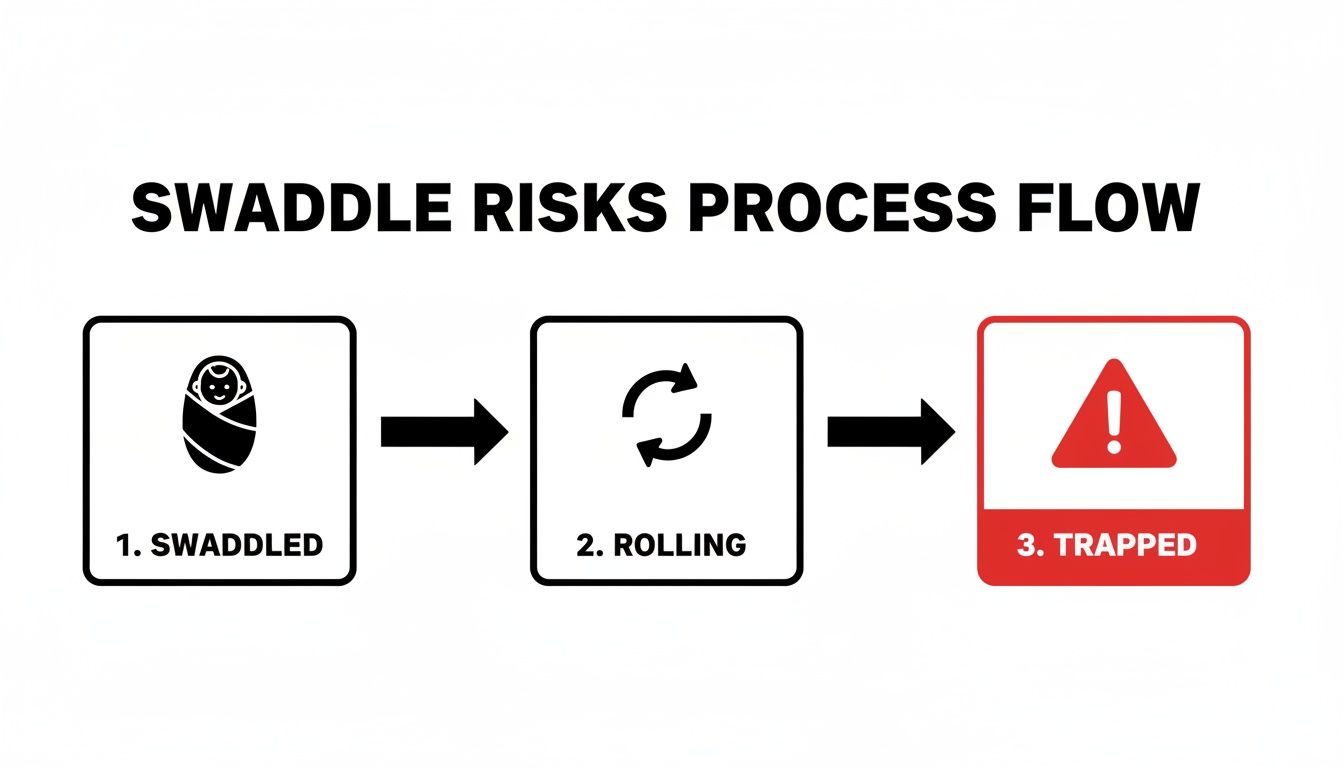
As you can see, a swaddle becomes a major hazard once a baby can roll over. It traps their arms, preventing them from pushing themselves up and repositioning their head to breathe freely.
No matter which method you go with, a solid bedtime routine is your best friend right now. Things like a warm bath, a gentle massage, or reading a book create powerful sleep cues that have nothing to do with the swaddle. If you’re juggling other sleep changes at the same time, our guide on how to transition baby to crib has even more helpful tips.
Expect a little turbulence. It’s completely normal for sleep to get a bit bumpy for a few nights while your baby figures out how to self-soothe with their hands. Just stay consistent—they’ll get there
Choosing Your Baby's Next Safe and Cozy Sleepwear
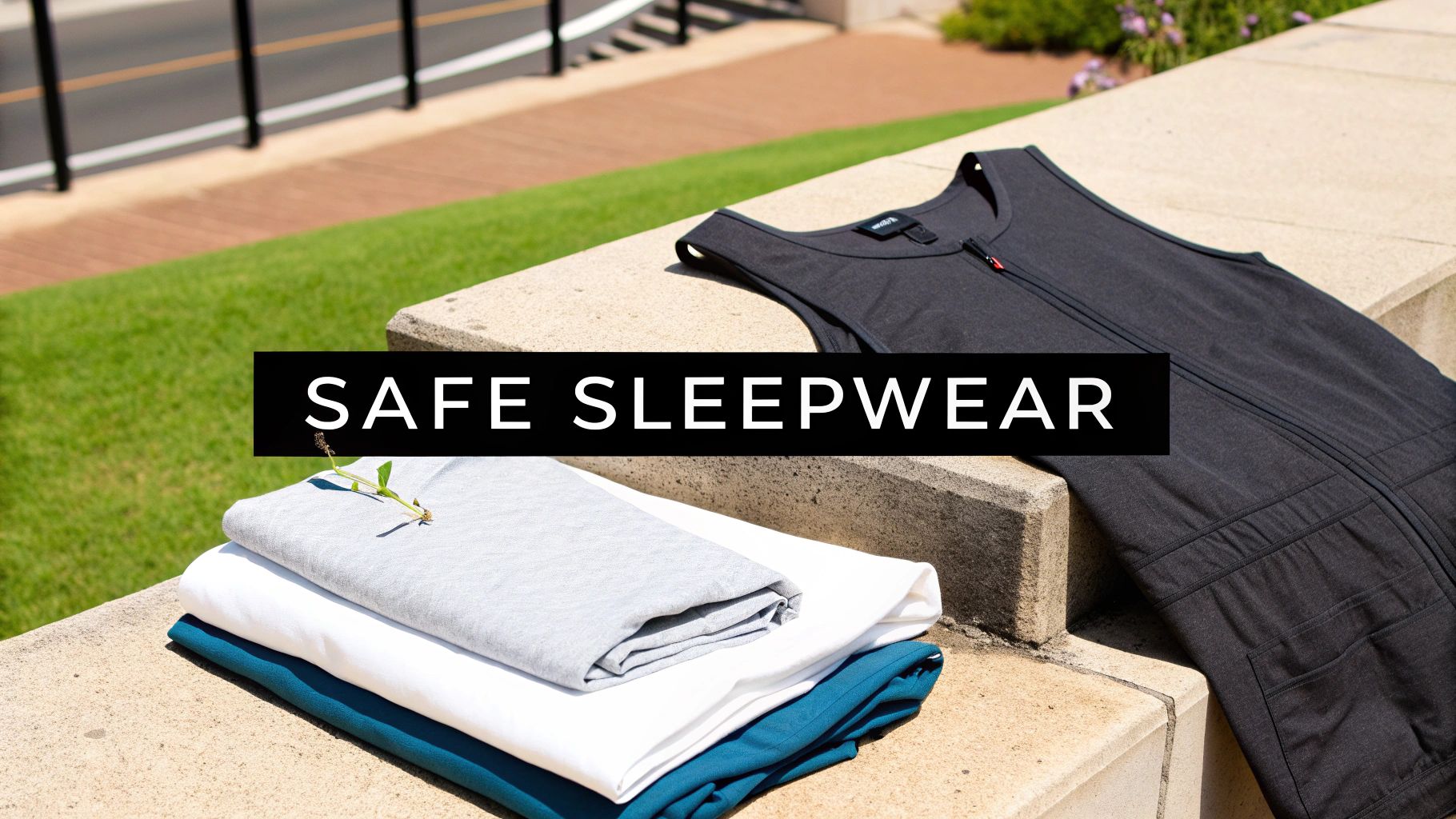
Once your baby is ready to leave the swaddle behind, you're faced with a new question: what should they wear to bed now? The key is finding something that gives them that sense of comfort and security they're used to, but without restricting their arms.
This is where the wearable blanket—often called a sleep sack—comes into play. It’s the perfect next step. A sleep sack gives your baby that familiar snug feeling around their body but leaves their arms completely free.
This "arms-out" design is a game-changer for safety. It means if your baby rolls over, they can use their arms to push up and reposition their head. At the same time, the sack design allows plenty of room for their legs to kick and move, which is fantastic for healthy hip development. For a deeper dive, check out our complete guide to understanding what a sleep sack is.
Decoding TOG Ratings for Your Baby's Comfort
When you start shopping for sleep sacks, you'll see a number called the TOG (Thermal Overall Grade) rating. Don't let it intimidate you! It's simply a measure of how warm the fabric is. This little number makes it incredibly easy to dress your baby correctly for the temperature of their room and avoid overheating.
Overheating is a serious safety concern and a risk factor for SIDS. It can also lead to uncomfortable heat rashes on their delicate skin. If you notice your baby has a flushed face, a sweaty neck, or is breathing rapidly, they might be too warm.
Here’s a quick cheat sheet for TOG ratings:
- 0.5 TOG: For hot weather and warm rooms, generally above 75°F (24°C). Think lightweight and super breathable.
- 1.0 TOG: The all-rounder. This is your go-to for most nights in a standard-temperature room, around 68-75°F (20-24°C).
- 2.5 TOG: For chilly nights and colder rooms, below 68°F (20°C). It provides all the warmth of a blanket, without the safety risks.
Getting the TOG right helps keep your baby’s body temperature stable, ensuring they stay comfortable and safe all night long.
Swaddle vs Sleep Sack vs Transitional Product
Choosing the right sleepwear can feel overwhelming, but it's all about matching the product to your baby's specific developmental stage. This table breaks down the key differences to help you decide.
| Feature | Traditional Swaddle | Transitional Product | Sleep Sack (Wearable Blanket) |
|---|---|---|---|
| Primary Use | Recreates a womb-like feeling; calms the Moro reflex | Eases the transition from swaddle to sleep sack | Safe sleepwear after baby shows signs of rolling |
| Arm Position | Arms are securely wrapped against the body | Options for arms-in, one-arm-out, or arms-out | Arms are completely free |
| Age Range | Newborn to 2-3 months (or until signs of rolling) | 2-4 months, during the swaddle transition period | 3 months and up, can be used well into toddler years |
| Safety Consideration | Must be discontinued once baby can roll over | Stop use once baby masters rolling in both directions | Safest option for mobile babies; no loose fabric in the crib |
| Material Quality | Should be soft, breathable, and hypoallergenic (e.g., organic cotton) to prevent rashes. | Soft, stretchy fabrics that allow some movement while providing comfort. | Available in various TOG ratings and materials (cotton, bamboo) to prevent overheating and skin irritation. |
Each of these options serves a wonderful purpose at just the right time. The goal is to move from the snug security of a swaddle to the safe freedom of a sleep sack, using a transitional product as a helpful bridge if needed.
Material Matters for Healthy Skin
The fabric touching your baby's skin all night is just as critical as the fit of their sleepwear. A baby's skin is incredibly sensitive and more susceptible to irritation, rashes, and allergic reactions. That’s why you should always look for materials that are soft, breathable, and hypoallergenic.
Organic cotton is a fantastic choice because it’s grown without the harsh chemicals and pesticides that can trigger skin reactions or allergies. It is gentle, durable, and allows for excellent airflow. Another great option is bamboo, which is known for being silky-soft and naturally moisture-wicking. It pulls sweat away from the skin, keeping your baby dry and comfortable while preventing heat rash. Always look for certifications like Oeko-Tex or GOTS to ensure the product is free from harmful substances.
By choosing sleepwear made from high-quality, breathable fabrics, you're not just dressing your baby for bed—you're creating a safe, comfortable, and skin-friendly environment that supports healthy sleep and prevents irritation.
Answering Your Top Questions About Ditching the Swaddle
Deciding to stop swaddling can feel like a huge step, and it's totally normal to feel a little anxious about it. Will my baby ever sleep again? Am I doing this at the right time? It’s a milestone that brings up a lot of questions.
Let's walk through the most common concerns parents have. Getting clear, expert-backed answers will help you feel confident and make the whole process feel much less daunting.
What if My Baby Just Can't Sleep Without a Swaddle?
This is the number one worry for most parents, but trust me on this: babies are incredibly adaptable. The trick to getting through this is consistency. You should plan for a few rocky nights while your baby figures out this new way of sleeping.
This is where your bedtime routine becomes your secret weapon. A warm bath, a gentle massage, or a quiet book are all powerful signals that it's time to wind down—cues that have nothing to do with being wrapped up. Swapping the swaddle for a high-quality wearable blanket or sleep sack can also work wonders, giving them that same cozy, secure feeling while leaving their arms safely free.
This transition is just a phase. It might feel tough for a night or two, but your consistency is teaching your baby a brand new skill for falling asleep. In the long run, this leads to better sleep habits and a much safer sleep space.
My Baby Isn't Rolling Yet. Can I Keep Swaddling Past 4 Months?
The short answer is no. The safest bet is to stop swaddling by 8 weeks (2 months), whether your baby is showing signs of rolling or not. The American Academy of Pediatrics recommends this early cutoff because you just can't predict when that first roll will happen.
A baby's startle reflex is usually fading by this point anyway, and that first roll can happen completely out of the blue—often in the middle of the night when you're asleep. It's so much safer to be ahead of the curve and switch to a sleep sack long before the 4-month mark. This takes the risk of a swaddled baby getting stuck on their stomach completely off the table.
Will the Startle Reflex Keep Waking My Baby Up?
That jerky startle (or Moro) reflex naturally starts to fade around the 2 to 3-month mark. When you first unswaddle, your baby might startle themselves awake a few times, but this stage is usually very short-lived. They learn new ways to settle themselves back down surprisingly fast.
Try to see this as a good thing! Freeing their arms lets them discover their hands and find their mouth, which is a baby's go-to method for self-soothing. A sleep sack gives them just enough security to feel comforted as they get the hang of this new skill.
Are Weighted Sleep Sacks a Safe Alternative?
Absolutely not. Leading pediatric safety organizations, including the AAP, strongly advise against using any weighted sleep products for babies. That goes for both weighted sleep sacks and weighted swaddles.
There's simply no evidence to suggest these products are safe or that they even help babies sleep better. The extra weight can restrict a baby's movement, which could interfere with their breathing if they get into an unsafe position. Stick with a standard, non-weighted sleep sack made from a light, breathable fabric to ensure quality and safety.
At GUGUTON LLC, we get that every baby milestone brings a new set of questions. We're here to help you through it with high-quality, safe, and comfortable gear for every stage. Check out our collection of breathable sleep sacks and other baby essentials to give your little one the safest, coziest sleep imaginable. Visit us today at guguton.com.