

How to Transition Baby to Crib Without Tears
Making the move to the crib successful really boils down to three things: knowing when your baby is ready, setting up a safe and cozy space, and picking a gentle approach that works for your family. It’s less about a strict set of rules and more about finding a realistic rhythm that builds trust and, hopefully, gets everyone a little more sleep.
Your Guide to a Calm and Confident Crib Transition
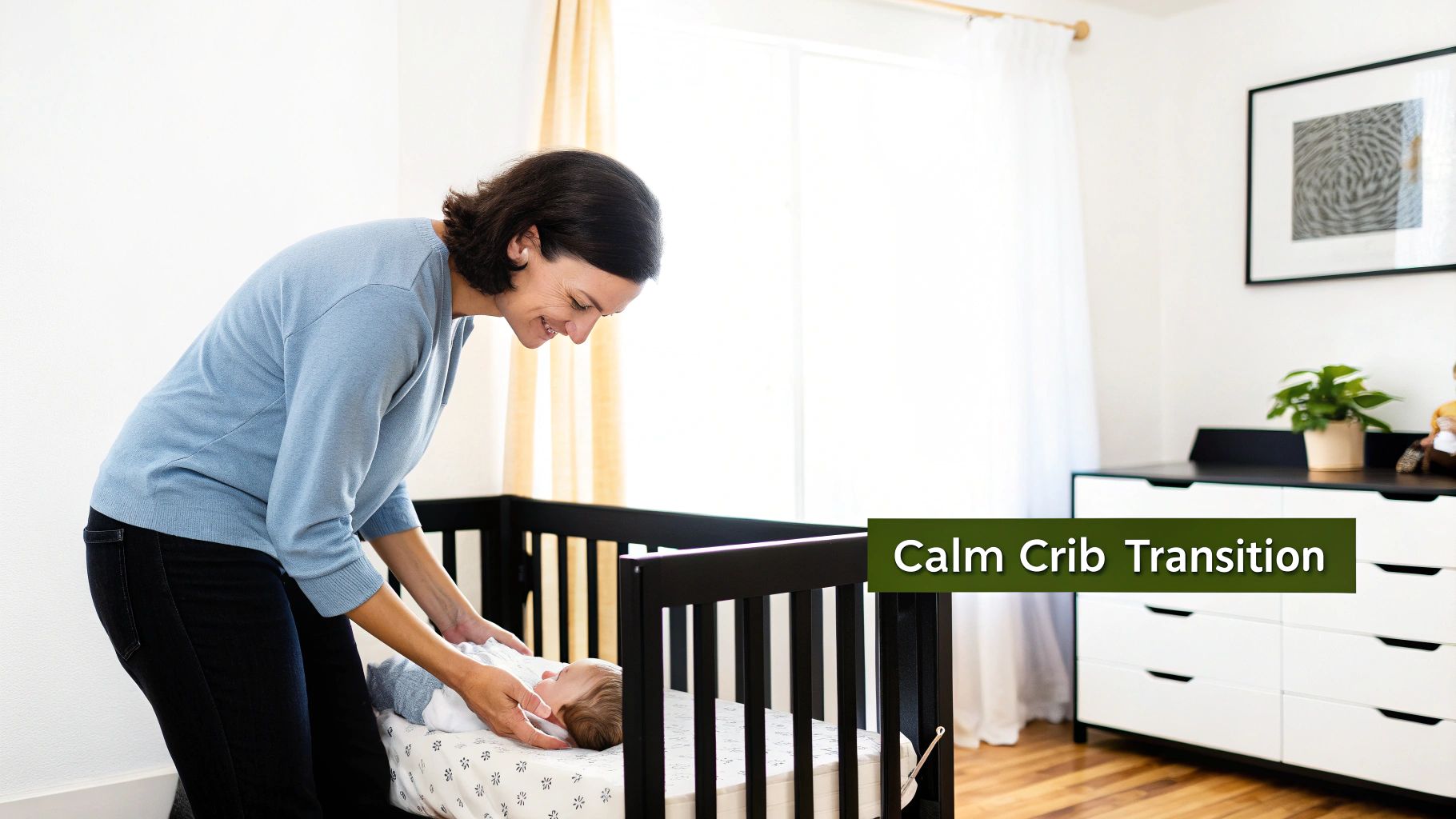
Moving your baby from a bassinet or your own room into their crib is a huge milestone. It’s totally normal to feel a mix of excitement (hello, personal space!) and a bit of worry about how your little one will handle the change. This guide is here to walk you through it, swapping that uncertainty for a clear, practical plan that puts your baby’s comfort and safety first.
We're going to focus on gentle, real-world advice you can tweak to fit your baby’s personality and your family’s routine. Forget the pressure to follow some rigid, one-size-fits-all method. Instead, we’ll look at how to make the crib a positive, secure spot that encourages healthy, independent sleep skills, with a special focus on materials that protect their delicate skin from allergies and rashes.
Setting the Stage for Success
A smooth transition starts long before the first night. It begins with creating a sleep space that’s not just safe, but genuinely soothing. A huge part of that is choosing high-quality, gentle materials for their bedding and sleepwear, especially for a baby’s delicate skin. The right fabrics can help prevent irritation, rashes, or allergic reactions that can make a baby uncomfortable in their new bed.
Think of it this way—your main goals are to:
- Prioritize Safety: Following safe sleep guidelines is the absolute, non-negotiable first step. This gives you priceless peace of mind.
- Build Positive Associations: You want your baby to see their crib as a cozy, familiar haven, not a lonely island.
- Establish Consistency: A predictable routine is your best friend. It sends clear signals to your baby that it's time to wind down, making the new environment feel much more secure.
A successful crib transition isn't just about where your baby sleeps—it's about how they feel about their sleep space. You're building a foundation of security and comfort that will support healthy sleep habits for years to come.
The Importance of a Quality Sleep Surface
The crib mattress is the star of this new sleep setup. A firm, flat surface is essential for safety, but the quality of the materials is just as critical for your baby's comfort and health. A mattress made from breathable, hypoallergenic materials can make a world of difference in regulating their temperature and preventing skin sensitivities, rashes, or allergies.
To help you sort through the options, we put together a detailed guide on how to choose a crib mattress that covers all the key safety and quality checks. Getting this one decision right is a massive first step in creating a sleep sanctuary your baby will love. Let’s get started on this journey together.
Creating A Safe And Soothing Crib Environment
Before that first night in the crib, your goal is to turn it from a piece of furniture into a safe, cozy little haven. This isn't just about making it look cute; it’s about creating a healthy sleep space where your baby feels secure, which is the secret to a much smoother transition.
A huge clue that it's time to start this process is when your baby starts showing signs of rolling over. It's an exciting milestone, for sure! But it also means a bassinet just isn't the safest spot anymore. Once a baby can roll, they need a sleep space with higher, sturdier sides. That's when the crib becomes the safest and most logical next step.
Start With A Foundation Of Safety
The safest crib is a simple one. You’ve probably heard the "bare is best" mantra from safe sleep campaigns, and it’s absolutely true. Babies need to sleep on a firm, flat surface in a crib that's free of soft bedding, bumpers, or pillows.
Interestingly, more than a quarter of older infants still wake up at night, which is why a proper, sleep-promoting setup is so critical. You can learn more about common baby sleep challenges from the experts at SleepFoundation.org.
This "bare is best" approach isn't a suggestion—it's essential for reducing risks. The only things that should be in the crib are a firm mattress and a tightly fitted sheet.
- No Bumpers: Forget them. Whether they're padded or mesh, they pose a serious suffocation and entrapment risk.
- No Loose Bedding: This means no blankets, quilts, or pillows. A wearable blanket or a simple sleep sack is a much safer way to keep your baby warm and cozy.
- No Soft Toys: Stuffed animals are cute, but they need to stay out of the crib during sleep time.
A clutter-free crib is the gold standard for safety, ensuring nothing can ever get in the way of your baby’s breathing. For a more detailed look, our guide on creating a safe sleep environment for infants has you covered.
Prioritize Skin-Friendly Materials
A baby's skin is incredibly delicate and can get irritated by rough fabrics or leftover chemicals from manufacturing. Picking the right bedding isn't just about comfort; it helps prevent rashes, allergies, and skin conditions that can disrupt sleep and make your baby start to dislike their crib.
A firm crib mattress is non-negotiable for safety, but what you put on top of it matters, too. I always recommend a breathable, hypoallergenic mattress paired with a snug-fitting sheet made from soft, natural fibers.
Key Takeaway: You're building a foundation of comfort and security. High-quality, non-irritating bedding doesn't just keep your baby safe—it protects their delicate skin from rashes or allergies, making the crib a place they can truly relax.
Materials like 100% organic cotton are fantastic. They’re soft, breathable, and free from the pesticides and harsh chemicals that can hide in conventional fabrics. This simple choice reduces the risk of skin irritation and ensures a healthier sleep environment, preventing discomfort that could be mistaken for a dislike of the crib.
The Healthy Crib Setup Checklist
Use this quick reference to ensure your baby's crib is set up for optimal safety and comfort, focusing on materials that protect sensitive skin from allergies and rashes.
| Safety Checkpoint | Why It Matters for Health and Safety | Recommended Material or Product |
|---|---|---|
| Firm, Flat Mattress | A firm surface reduces the risk of SIDS and suffocation. It should fit the crib snugly with no gaps. | A new, safety-certified, hypoallergenic crib mattress. |
| Fitted Crib Sheet | A tight-fitting sheet prevents entanglement. Natural, chemical-free materials prevent skin irritation. | Snug, 100% organic cotton or bamboo sheets. |
| Wearable Blanket | Safely keeps baby warm. Breathable, soft fabrics prevent overheating and protect delicate skin. | A season-appropriate sleep sack made from organic cotton. |
| Empty Crib Space | Eliminates suffocation, entrapment, and strangulation hazards from bumpers, toys, and pillows. | Nothing but the mattress and fitted sheet. |
By taking the time to set up the crib with safety and skin health in mind, you're creating a truly welcoming space. This thoughtful preparation helps your baby feel secure and comfortable, which is a massive step in helping them learn that their crib is a wonderful place for sleep.
Finding the Right Gentle Transition Method
Once you've got the crib set up as a safe, cozy little haven, the big question becomes how to actually make the move. Let's be clear: there's no single "right way" to do this. The best method is whatever feels right for your baby’s personality and your own comfort level. The real goal is to be gentle and consistent, helping the crib become a familiar, happy space instead of a scary new one.
Remember to pack your patience. This is a big change for a little person! Some babies might take to their new crib in just a few nights, while others could take a couple of weeks to adjust. That's completely normal. An older, more aware baby might need a slower, more gradual approach than a tiny infant.
This simple visual can help you pinpoint a key safety milestone that often makes the transition non-negotiable.
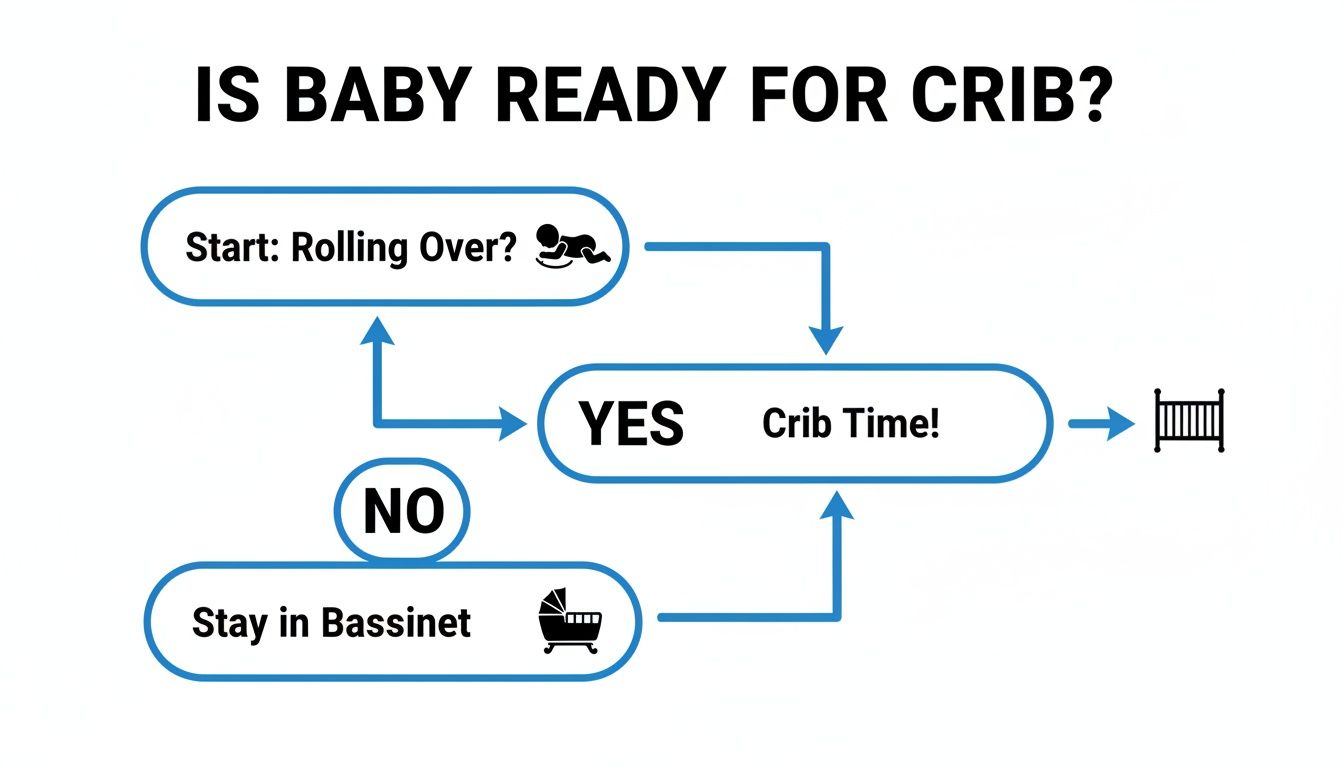
As you can see, once a baby starts showing signs of rolling, a bassinet is no longer the safest option. At that point, moving to the crib becomes a necessity for their safety.
The Familiarity First Approach
One of the most powerful things you can do is make the crib a happy place before your baby ever sleeps in it. This strategy is all about building positive associations, which can make a world of difference when it’s finally time for that first nap.
Start by introducing short, supervised play sessions in the crib during the day. Toss in a few favorite toys and let your baby hang out for 10-15 minutes at a time while you're nearby. Sing some songs, play peek-a-boo—make it fun! The idea is to teach them that the crib is a safe and enjoyable spot, not just the place where you leave them for sleep.
Parent Tip: I like to call this "crib playtime." It breaks the mental connection that the crib only appears when it's time to separate. When your baby already sees their crib as a friendly, familiar zone, they're far less likely to protest when you lay them down for a nap.
Once your baby seems comfortable playing in the crib, try putting them down for the first nap of the day. This one is often the easiest to tackle. Go through your normal naptime routine, but simply place them in the crib instead of their usual spot. After naps are going smoothly, you can apply the same logic to nighttime sleep.
The Gradual Retreat Method
If your little one needs a bit more reassurance, the Gradual Retreat method (often called the "Chair Method") is a wonderfully gentle option. It allows you to stay close and offer comfort while slowly helping your baby learn to fall asleep on their own.
Here's a breakdown of how it works:
-
Start Beside the Crib: For the first few nights, put a chair right next to the crib. After your bedtime routine, lay your baby down while they're drowsy but still awake. You can rest a hand on their chest or whisper soothing words until they drift off.
-
Move a Little Further Away: Every few nights, scoot your chair a little farther from the crib. You can still offer verbal reassurance, but try to cut back on the physical touch. Your comforting presence is still there, just from a bit more of a distance.
-
Continue to the Doorway: Over time, you’ll move the chair all the way to the doorway, and then eventually just outside the room. Your baby will gradually learn to fall asleep without you being right beside them. This method definitely requires consistency, but it's fantastic for babies who get distressed by sudden separation.
Transitioning from Co-Sleeping
For families moving from bed-sharing, the transition often requires a few extra, careful steps to make the change feel less abrupt. The secret is to take it one small piece at a time.
A great place to begin is by moving from your bed to a bedside sleeper or bassinet. This keeps your baby within arm's reach for easy comforting but gets them used to their own separate sleep surface first.
Once they're comfortable there, you can start the transition to the crib in their own room using one of the gentle methods we've talked about. Some parents also find it helpful to keep the crib in their own room for a few nights before moving it, which can help ease the change even more.
Throughout this process, a wearable blanket or sleep sack is an absolute game-changer. It provides a constant feeling of warmth and security, almost like a wearable hug that mimics the snugness they felt sleeping next to you. A quality sleep sack made from soft, breathable fabric can also prevent skin irritation and keep them at a comfortable temperature all night. You can learn more about what a sleep sack is and its benefits for creating a safe, cozy sleep environment.
No matter which path you take, consistency is the one thing that will make it work. Stick with your plan, and remember that you're teaching your baby an amazing new skill—how to fall asleep feeling safe, secure, and loved in their very own space.
Navigating Common Bumps in the Road
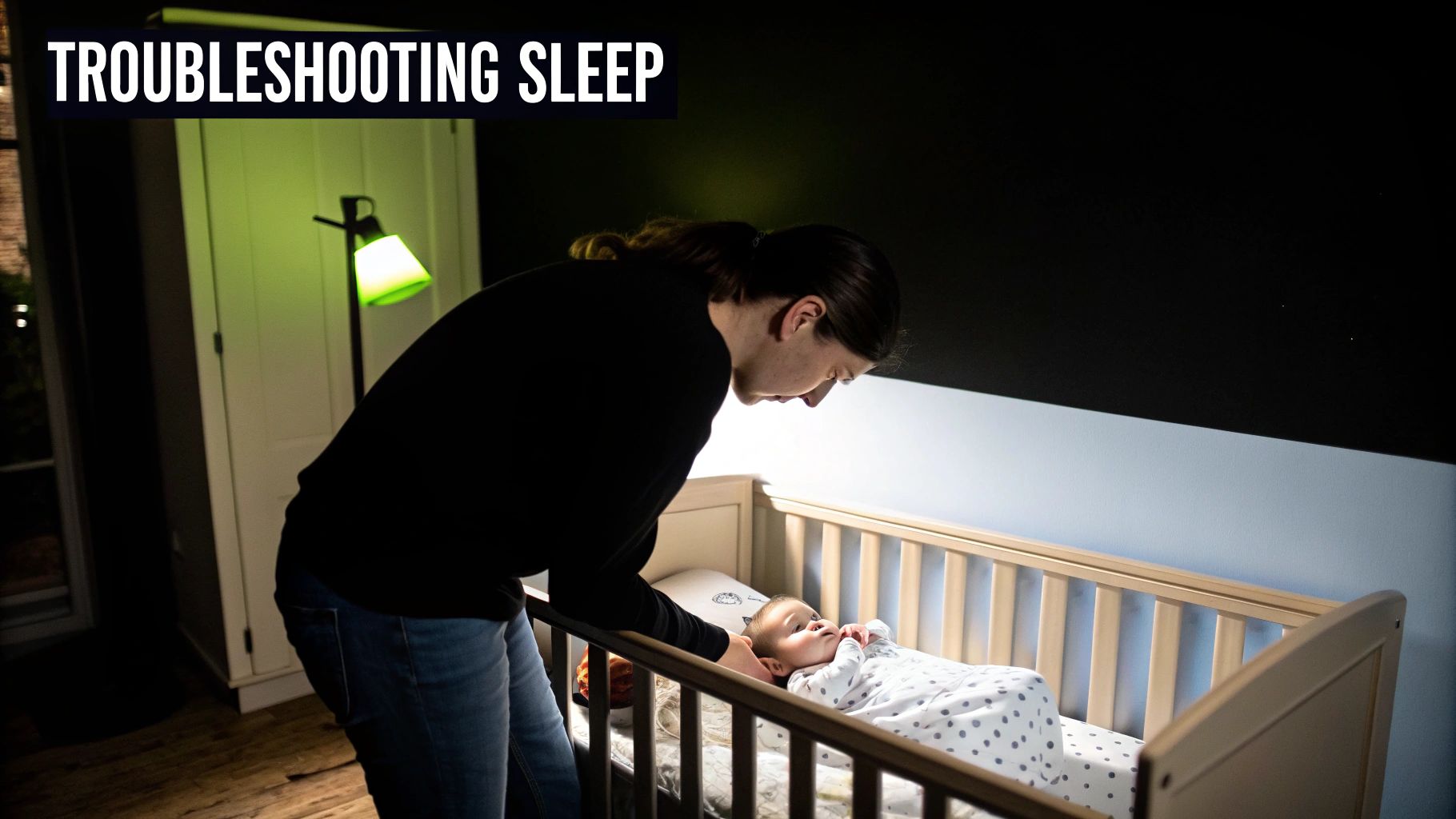
Even with the most thoughtful plan, you're bound to hit a few bumps when moving your baby to their crib. It's totally normal! The idea of a "perfect" transition is a myth. The real skill is learning how to handle the inevitable hiccups with a little confidence and a lot of patience.
Think of setbacks less as failures and more as signals. Your baby might be growing, hitting a new milestone, or just needing some extra comfort while getting used to this big change.
When Your Baby Cries Immediately in the Crib
It’s heart-wrenching when your baby starts to wail the moment their back touches the crib mattress. This is usually a classic sign of separation anxiety—a completely normal developmental stage—but it can also be a reaction to a new, unfamiliar space. Before assuming it's purely behavioral, quickly check for physical discomforts, like a scratchy sheet or feeling too cold on the new mattress.
The key here is reassurance. It’s so tempting to swoop them up and abandon the plan, but try to offer comfort without taking them out of the crib right away.
- Offer a Soothing Touch: Rest your hand firmly but gently on their chest or tummy.
- Use Your Voice: Sing a familiar lullaby or make some soft, rhythmic shushing sounds.
- Stay Close: Linger by the crib for a few minutes so they know you're there and they're safe.
Doing this consistently teaches them that the crib is a secure place and that you’re still there for them, even if you aren't holding them. Over time, that consistency builds their confidence.
Managing New Night Wakings
So, you did it. You got them to sleep in the crib, only for them to wake up an hour later. And then again two hours after that. New or more frequent night wakings are probably the most common hurdle parents face during this transition. Before you blame the crib, it's worth checking if something else is going on.
Often, an outside factor is the real culprit. Is your baby teething? Are they too hot or too cold? Could their pajamas or bedding be causing a skin irritation? These big developmental leaps and physical discomforts are notorious for messing with sleep.
A sudden change in sleep isn't always about the crib itself. Often, it's a sign of a developmental milestone or a temporary discomfort like a skin rash. By addressing the root cause, you can help your baby (and yourself) get back to restful nights more quickly.
Sometimes, these wakings are part of a very predictable pattern. You can learn more about these phases by understanding what is baby sleep regression, which often lines up perfectly with major developmental shifts. Knowing what to expect can make it easier to respond with patience.
Troubleshooting Short Naps in the Crib
Few things are more frustrating than the 20- or 30-minute "disaster nap." A baby who used to nap for over an hour in their cozy bassinet might suddenly start taking these tiny power naps in their crib. This usually happens because they have trouble connecting sleep cycles in a less snug, more open environment.
This is where a good sleep sack can be a total game-changer. A high-quality, wearable blanket gives them a gentle, consistent feeling of security that can mimic the feeling of being held. That cozy pressure helps muffle their startle reflex just enough to help them drift from one sleep cycle into the next without fully waking up.
Look for a sleep sack made from soft, breathable material like organic cotton to make sure they don't get too hot or develop a heat rash. This simple addition can make the crib feel much more secure and really help stretch out those short naps.
The Power of a Calming Bedtime Routine
If you feel like you're stuck, take another look at your bedtime routine. A consistent, calming wind-down is the strongest signal you can send your baby that it’s time for sleep. This predictability becomes even more important when their sleep space has just changed.
Your routine doesn't need to be long or complicated, just consistent.
- A Warm Bath: This is incredibly soothing and a clear transition from playtime to quiet time. Use gentle, hypoallergenic soaps to avoid skin irritation.
- A Gentle Massage: A few minutes of baby massage with a natural, scent-free lotion can help release tension and is a wonderful way to connect.
- Quiet Time: Dim the lights and read a book or sing a soft lullaby to help them settle.
This sequence of events becomes a powerful sleep cue. When your baby experiences this routine every night, their brain starts to anticipate sleep, making it much easier for them to settle into their new crib. Remember, setbacks are part of the process—with a little troubleshooting, you’ll get back on track.
The Long-Term Benefits of Independent Sleep
Getting through the crib transition can feel like a marathon, right? You're troubleshooting tears, short naps, and brand-new night wakings, and it's easy to wonder if all the effort is truly worth it.
Let me tell you: the answer is a resounding yes. Successfully teaching your baby to sleep in their crib is about so much more than just getting through the next few nights. You’re laying the groundwork for healthy, independent sleep that will benefit them for years to come.
Think of this process as a long-term investment in your child's well-being. Consistent, quality rest in a safe space is directly tied to better cognitive function, physical growth, and emotional regulation. When babies get the deep, restorative sleep they need, their brains are hard at work consolidating memories and building the connections they need for another day of learning.
Building Healthy Sleep Habits for the Future
The sleep habits you create now have a funny way of sticking around. A child who learns to fall asleep on their own in their personal, safe space is picking up a crucial life skill. They're figuring out how to self-soothe and settle back to sleep without your help—a superpower that will serve them well through every future sleep regression, illness, or developmental leap.
This independence usually translates into better sleep patterns as they get older. Toddlers who are comfortable sleeping alone in their cribs often have more consistent schedules, with earlier bedtimes and fewer wake-ups. This isn't just an anecdotal observation, either.
A major 2018 study found that most toddlers—63.4%, in fact—between 18 and 24 months were still sleeping in a crib. The research also showed that these crib-sleeping toddlers fell asleep faster, slept longer, and woke up less often than kids who had already moved to a bed. You can dive into the full details about toddler sleep patterns and environments yourself.
This is a big reason why so many pediatric sleep experts now recommend keeping kids in their cribs for as long as it’s safe, often until they're closer to age three. It’s simply a secure, contained space that encourages better sleep.
The Gift of a Safe and Secure Space
Beyond all the developmental benefits, you’re giving your child something truly priceless: their very own sanctuary. Their crib becomes a familiar place of comfort, security, and rest. When you make it a healthy environment with soft, breathable materials that prevent allergies and skin irritation, it’s a place where they can truly recharge.
Creating this positive association with their sleep space helps cut down on bedtime anxiety and makes them feel secure, even when you aren't right there. They learn that their crib is their spot in the world.
You are teaching your child that sleep is a peaceful and positive experience. This perspective shapes their relationship with sleep for a lifetime, helping them see rest not as a separation, but as a comforting and natural part of their day.
It’s so easy to get bogged down in the day-to-day challenges of this transition. But try to keep this bigger picture in mind. Every time you patiently guide them back to sleep in their own crib, you're reinforcing a powerful message of safety and independence. You're not just solving a short-term problem; you're giving your child a gift that will support their health and happiness for years to come.
Burning Questions About the Crib Transition
Even with the best plan in hand, moving your baby to a crib can feel like navigating uncharted territory. It’s a huge step, and it's completely normal to have a few lingering "what ifs." Let's clear up some of the most common questions that pop up for parents during this time.
How Long Will This Crib Transition Actually Take?
Honestly, there's no magic number here. Every baby is different. A younger infant who isn't quite as aware of their surroundings might settle into the new routine in just a few days. An older, more perceptive baby might need one to two weeks to feel totally at home in their new crib.
The most important thing you can do is stay consistent. Sticking to your plan gives your baby the predictability they need to feel secure. Try not to get discouraged by a rough night or a fussy nap—patience is everything during this adjustment.
When Is It an Absolute Must to Move My Baby to the Crib?
Safety is the bottom line. The second your baby shows signs of rolling over, it's officially time to ditch the bassinet. This is a non-negotiable safety milestone. They need a sleep space with high sides and enough room to move without risk.
Also, keep an eye on the manufacturer's limits. Once your baby gets close to the maximum weight or height for their bassinet—usually around 15-20 pounds or when they can push up on their hands and knees—it’s time to make the switch for their safety.
The transition stops being a choice and becomes a necessity the moment your baby's current sleep space is no longer safe. This is almost always triggered by your baby learning to roll.
What If My Baby Just Hates Sleeping on Their Back?
This is such a common hurdle. For months, your baby has probably felt cozy and contained, either in your arms or in a snug bassinet. The wide-open, flat surface of a crib can feel massive and unsettling in comparison, especially if they have a strong startle reflex.
A wearable sleep sack is your best friend here. It gives your baby a gentle, all-over hug that mimics the feeling of being held, which can be incredibly calming. This helps muffle their Moro (startle) reflex without the safety risks of using loose blankets in the crib.
- Make it cozy: A soft, high-quality fitted sheet, like one made from organic crib sheets, can make a huge difference. A cold or scratchy sheet is an unwelcome surprise and can cause skin irritation.
- Check the temp: If your baby is too cold, they won't settle easily. A comfortable room temperature paired with a breathable sleep sack is key to preventing overheating or chills.
Remember, the "Back to Sleep" guideline is the gold standard for infant safety and should always be followed. Your goal is simply to make that safe position feel as secure and comfortable as possible.
Can I Just Try the Crib for Naps First?
Yes, absolutely! This is a fantastic strategy, and one I often recommend for babies who are a little more sensitive to change. Starting with naps is a low-pressure way to introduce the crib and build some positive associations.
The first nap of the day is usually the easiest one to start with since your baby is typically the most rested. Once crib naps are going well, you can start applying that same routine to bedtime. This gradual approach lets your baby learn in short, successful bursts that their crib is a safe and comfy place to sleep, no matter the time of day.
At GuGuTon, we know that the little details make all the difference in your baby's comfort and safety. From ultra-soft organic crib sheets that are gentle on sensitive skin to cozy sleep sacks that encourage longer stretches of sleep, our collection is designed to support you through every milestone. Explore our essentials to create the perfect sleep sanctuary for your little one.