

What Is a Sleep Sack: A Guide to Safer, Healthier Baby Sleep
If you've ever wondered what a sleep sack is, the simplest way to think of it is a wearable blanket for your baby. It's essentially a pint-sized sleeping bag that your little one wears, keeping them snug and warm all night long without the safety risks of loose bedding in the crib. It's a brilliantly simple concept that gives parents a huge amount of peace of mind.
Understanding the Sleep Sack
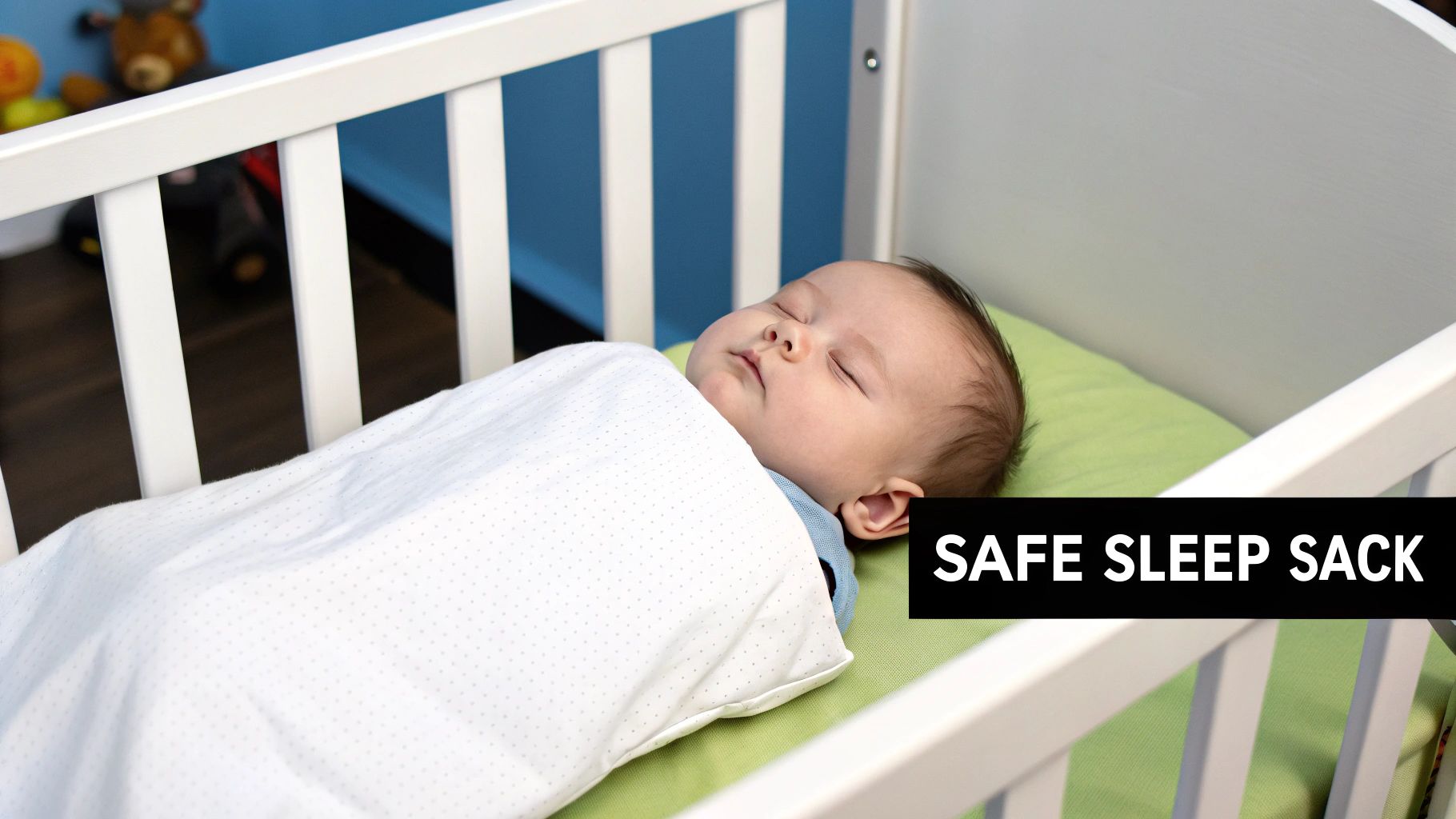
Picture a cozy sleeping bag, but with armholes and a handy zipper down the front—that’s a sleep sack in a nutshell. Its main job is to keep your baby at a safe and consistent temperature while they sleep, all while protecting their delicate skin from irritation.
Unlike a regular blanket that can easily be kicked off in the middle of the night, a sleep sack stays put. This means no more waking up to a chilly baby (or waking up just to check if they're still covered!).
Crucially, the design also ensures that no fabric can accidentally cover your baby's face, which is a major safety concern with loose blankets. For any new parent trying to navigate the anxieties of infant sleep, this feature alone is priceless.
To give you a quick overview, here’s a simple breakdown of what a sleep sack offers.
Sleep Sack at a Glance
| Feature | Description |
|---|---|
| What It Is | A wearable blanket or a mini sleeping bag designed for infants and toddlers. |
| Core Purpose | To keep a baby warm, comfortable, and safe all night without using loose blankets. |
| Key Benefits | Promotes safe sleep by reducing suffocation risk, helps regulate temperature, protects sensitive skin, and becomes a positive sleep cue for the baby. |
As you can see, it's a straightforward tool with some seriously important benefits for safety, quality sleep, and your baby's well-being.
A Safer Alternative to Blankets
The whole idea of a wearable blanket gained traction as pediatricians and sleep experts started emphasizing safer sleep practices to reduce the risk of Sudden Infant Death Syndrome (SIDS). A sleep sack is purpose-built to be a safer choice than loose blankets, keeping your baby warm without the associated dangers of suffocation or overheating.
By keeping your baby comfortably contained, a sleep sack also helps them stay in the safest sleep position: on their back. It's no surprise that they frequently appear on lists of the best baby products for newborns.
Core Benefits for Baby and Parent
The perks of using a sleep sack go well beyond just safety. For many babies, it quickly becomes a powerful and positive sleep cue. The simple act of zipping them into their cozy sack signals that it's time to wind down and get ready for sleep. This little routine can make bedtime transitions so much smoother and more predictable.
A high-quality sleep sack provides a consistent, comfortable, and safe sleep environment, which is key for developing healthy sleep habits. It eliminates temperature fluctuations from kicked-off blankets, leading to fewer night wakings and longer, more restorative sleep for everyone.
How Sleep Sacks Create a Safer Sleep Environment
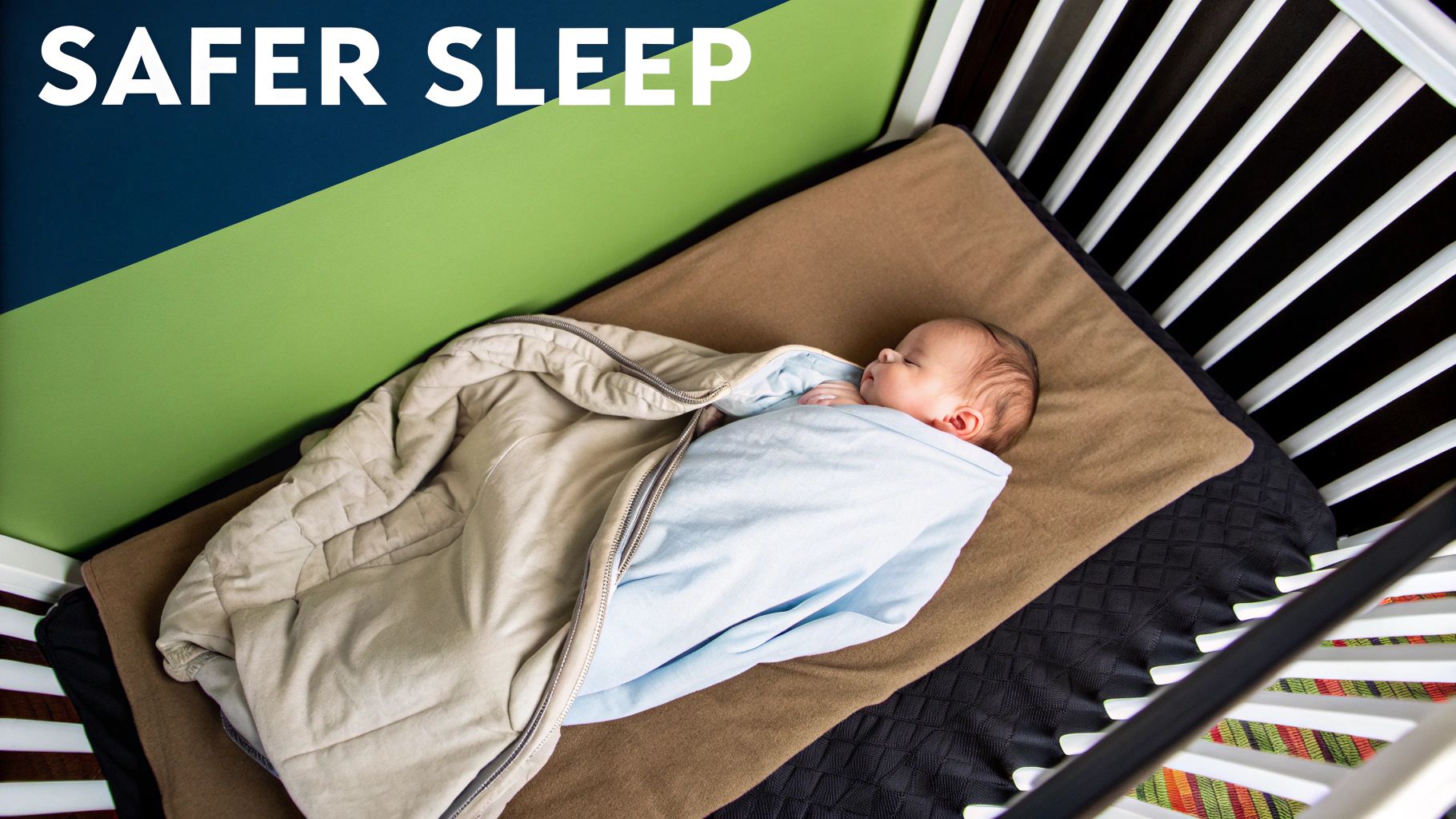
When we talk about a sleep sack, we're looking at something much bigger than just a cute piece of baby clothing. It’s a game-changer for safe sleep and a tool designed to align with the core recommendations from organizations like the American Academy of Pediatrics (AAP). Its most important job? To get loose blankets out of the crib for good.
Any parent will tell you that the fear of a loose blanket, quilt, or any soft bedding ending up near their baby's face is very real. These items present a serious risk of suffocation and entanglement. A sleep sack neatly sidesteps this danger because your baby wears it, just like a little sleeping bag with armholes. It can’t get kicked off or pulled up over their head, which is a huge source of peace of mind for parents during those long nights.
The shift toward wearable blankets has had a measurable impact on infant safety. In countries that have embraced safe sleep campaigns since the 1990s, SIDS rates have plummeted by a staggering 50-70%. While many factors contribute to this, keeping the crib free of loose items is a cornerstone of the strategy. For more details, you can look into the baby sleeping sacks market report from cognitivemarketresearch.com.
Regulating Temperature to Prevent Overheating
Keeping a baby at just the right temperature—not too hot, not too cold—is another crucial piece of the safe sleep puzzle. Overheating is a known risk factor for SIDS, and this is where quality sleep sacks truly shine. They take the guesswork out of layering.
The secret is the TOG (Thermal Overall Grade) rating. Think of it like the tog rating on your own duvet. It’s a simple, standardized way to measure how warm the sleep sack is.
- Low TOG (0.5-1.0): Perfect for warm nurseries or summer nights. These are typically made from lightweight, breathable cotton or muslin to prevent heat rash and discomfort.
- High TOG (2.5+): Your go-to for chilly rooms and winter weather. They provide plenty of insulation without the need for risky extra blankets.
By choosing a sleep sack with the right TOG for your nursery's temperature, you can be confident your little one is comfortable and safe. If you want to dive deeper, our guide on creating a safe sleep environment for infants has even more tips.
Promoting a Safe Sleeping Position
There’s another subtle but brilliant safety feature built into the design of a sleep sack: it helps babies stay on their backs. The "back to sleep" message is one of the most important for new parents, and a sleep sack naturally supports this.
It doesn’t restrain your baby, but the wearable bag design makes it a bit more challenging for a young infant to accidentally roll over onto their tummy before they have the muscle control to roll back.
A good sleep sack gives them plenty of room to kick their legs and move their hips freely—which is great for development—but the snug-yet-spacious fit discourages unintentional flipping. It's an extra layer of reassurance during those critical early months.
When you put it all together—no loose bedding, smart temperature control, and promoting the back-sleeping position—it's easy to see why the sleep sack has become an essential item for parents focused on creating the safest sleep space possible.
Choosing the Right Fabric for Your Baby’s Sensitive Skin
When you're a parent, you quickly learn that your baby's skin is incredibly delicate—it’s much thinner and more sensitive than our own. This is why the fabric of their sleep sack is so important, especially if your little one is prone to rashes, allergies, or eczema. The right material can be the difference between a peaceful night's sleep and a restless, itchy one.
So, when you're asking yourself what is a sleep sack made of, the answer should almost always be natural, high-quality fibers. They’re simply better at providing the softness and breathability that synthetic fabrics often can't match, which is key to preventing overheating, irritation, and skin reactions.
Breathable Fabrics for Healthy Skin
The best fabrics for a sleep sack are those that help regulate your baby's temperature and pull moisture away from their body. You're looking for materials that are gentle to the touch and, ideally, free from any harsh chemicals, dyes, or pesticides that might trigger a skin reaction.
Here are a few of the best options for sensitive skin:
- Organic Cotton: You can't go wrong with organic cotton. It's naturally hypoallergenic, super soft, and grown without pesticides, making it one of the safest choices you can put next to your baby's skin.
- Muslin: Famous for its light, open weave, muslin is exceptionally breathable. This makes it a perfect choice for preventing heat rash in warmer weather or for babies who tend to run hot, as it allows air to circulate freely.
- Bamboo: Bamboo fabric feels incredibly silky and smooth. It’s also fantastic at wicking moisture, pulling sweat away from the skin to keep your baby dry and comfortable all night long.
Want to learn more about materials? Check out our complete guide to choosing the right fabric for your baby's sensitive skin for a more detailed look.
What to Look for and What to Avoid
Fleece is a popular choice for its warmth, but as a synthetic material (polyester), it isn't very breathable. For babies with eczema or sensitive skin, fleece can trap heat and sweat, potentially worsening irritation and rashes.
A great way to ensure quality and safety is to check for certifications on the product label. The Global Organic Textile Standard (GOTS) certification, for example, is a trustworthy sign that the fabric is truly organic and was produced without harsh chemicals, making it a superior choice for preventing allergies and skin issues.
As a general rule, it's best to steer clear of sleep sacks made from rough, synthetic fabrics that can trap heat and moisture. By choosing soft, breathable, and certified materials, you’ll find a sleep sack that not only helps your baby sleep safely but also protects their delicate skin.
Decoding TOG Ratings for Year-Round Comfort
If you’ve ever felt overwhelmed by the sheer amount of baby gear out there, you’re not alone. But when it comes to sleep sacks, there’s one little acronym that makes life a whole lot easier: TOG.
Think of a sleep sack's TOG (Thermal Overall Grade) rating just like the tog rating on your own duvet. It’s a simple, standardized way to measure how warm it is. This genius little system takes the guesswork out of dressing your baby for bed, ensuring they stay perfectly comfortable and, most importantly, safe all night long.
A higher TOG number means more insulation, making it perfect for those cold winter nights. A lower TOG is light and breathable, ideal for warm summer evenings. Getting this right is crucial for preventing overheating, which is a major risk factor for SIDS and can cause uncomfortable heat rashes.
By simply matching the sleep sack's TOG to the temperature of your nursery, you can rest easy knowing your little one isn't too hot or too cold. It’s a straightforward solution that keeps your baby cozy without ever needing to add dangerous loose blankets to the crib.
Matching TOG to Nursery Temperature
The concept is beautifully simple: the warmer your baby's room, the lower the TOG rating you'll want on their sleep sack. This simple correlation is your key to helping them sleep soundly through the night.
Here’s a quick breakdown of the most common ratings you'll see:
- 0.5 TOG: This is your go-to for high summer and warm climates. It's designed for rooms that are consistently above 75°F (24°C) and is usually made from ultra-lightweight fabrics like muslin.
- 1.0 TOG: The all-rounder. This versatile TOG is perfect for most of the year in homes with central heating or air conditioning, working best in rooms between 69-73°F (21-23°C).
- 2.5 TOG: When the temperature drops, this is the sleep sack you'll need. It's made for colder rooms, typically between 61-68°F (16-20°C), and provides plenty of cozy warmth.
Remember that room temperatures can change overnight. A simple room thermometer in the nursery is one of the most valuable tools a new parent can have. For a deeper dive into creating the perfect sleep space, check out our guide to the best baby bedding sets.
How to Layer Under a Sleep Sack
Choosing the right TOG is only half the equation. What your baby wears underneath the sleep sack is just as important for keeping them comfortable and safe.
The best way to check your baby's temperature is to feel the back of their neck or their tummy. Their skin should feel warm and dry, not sweaty or cold. Don't worry if their hands or feet feel a bit cool—that's completely normal and not a good indicator of their core body temperature.
Choosing the right TOG and layering strategy is key. Below is a handy table to help you figure out the perfect combination based on the temperature in your nursery.
TOG Rating and Room Temperature Guide
| TOG Rating | Ideal Room Temperature (°F / °C) | Suggested Clothing Layers |
|---|---|---|
| 0.5 TOG | 75-81°F / 24-27°C | Short-sleeved bodysuit or just a diaper |
| 1.0 TOG | 69-73°F / 21-23°C | Long-sleeved bodysuit or pajamas |
| 2.5 TOG | 61-68°F / 16-20°C | Long-sleeved bodysuit plus footed pajamas |
| 3.5 TOG | 54-60°F / 12-15°C | Long-sleeved bodysuit plus fleece pajamas and even socks |
This guide is a great starting point, but always remember that every baby is different. Use it to make an informed choice, then do a quick neck-check to ensure your little one is perfectly comfortable.
When it comes to fabrics, some are naturally better at keeping your baby comfortable than others. Breathable, natural fibers are always the best choice for delicate skin.
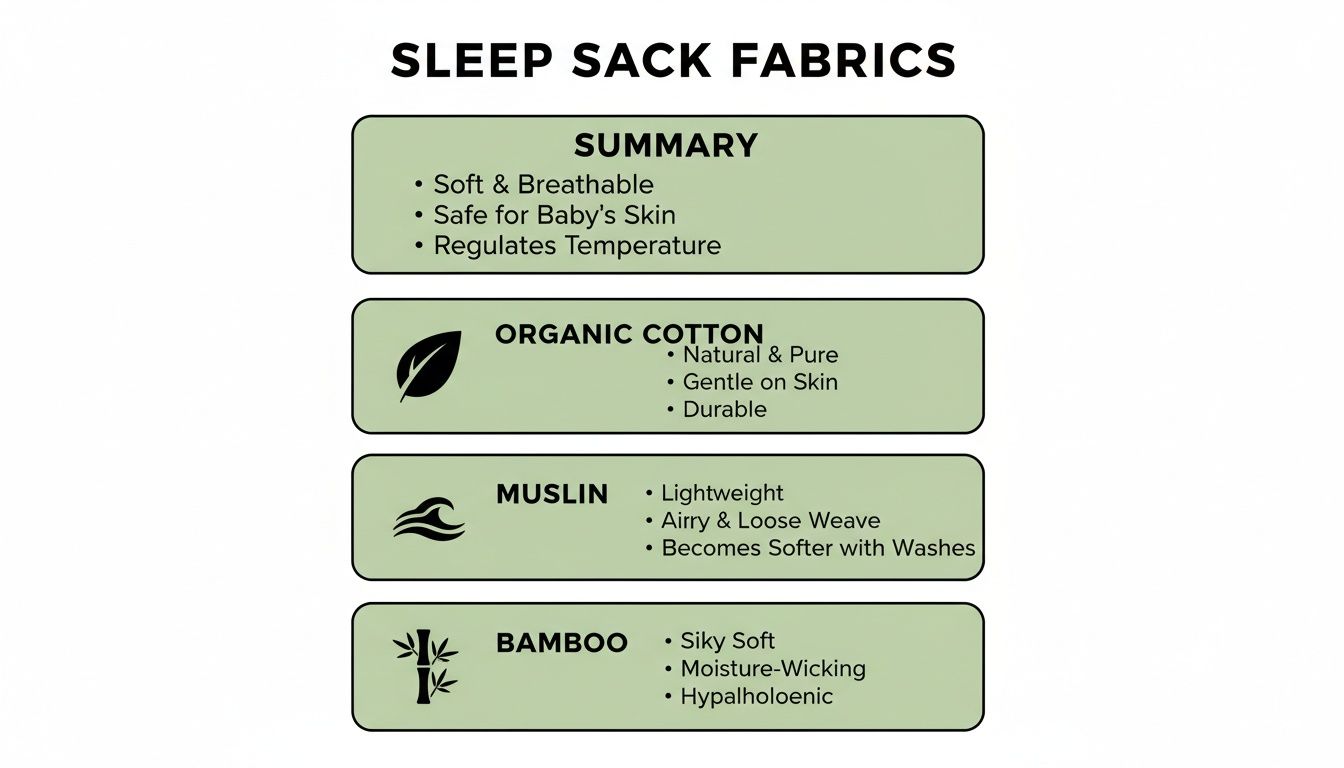
Materials like organic cotton, muslin, and bamboo are fantastic because they allow air to circulate freely, wicking away moisture and preventing irritation. That means a happier baby with healthier skin, and more peaceful nights for everyone.
Sleep Sacks, Swaddles, and Blankets: Which Is Right for Your Baby?
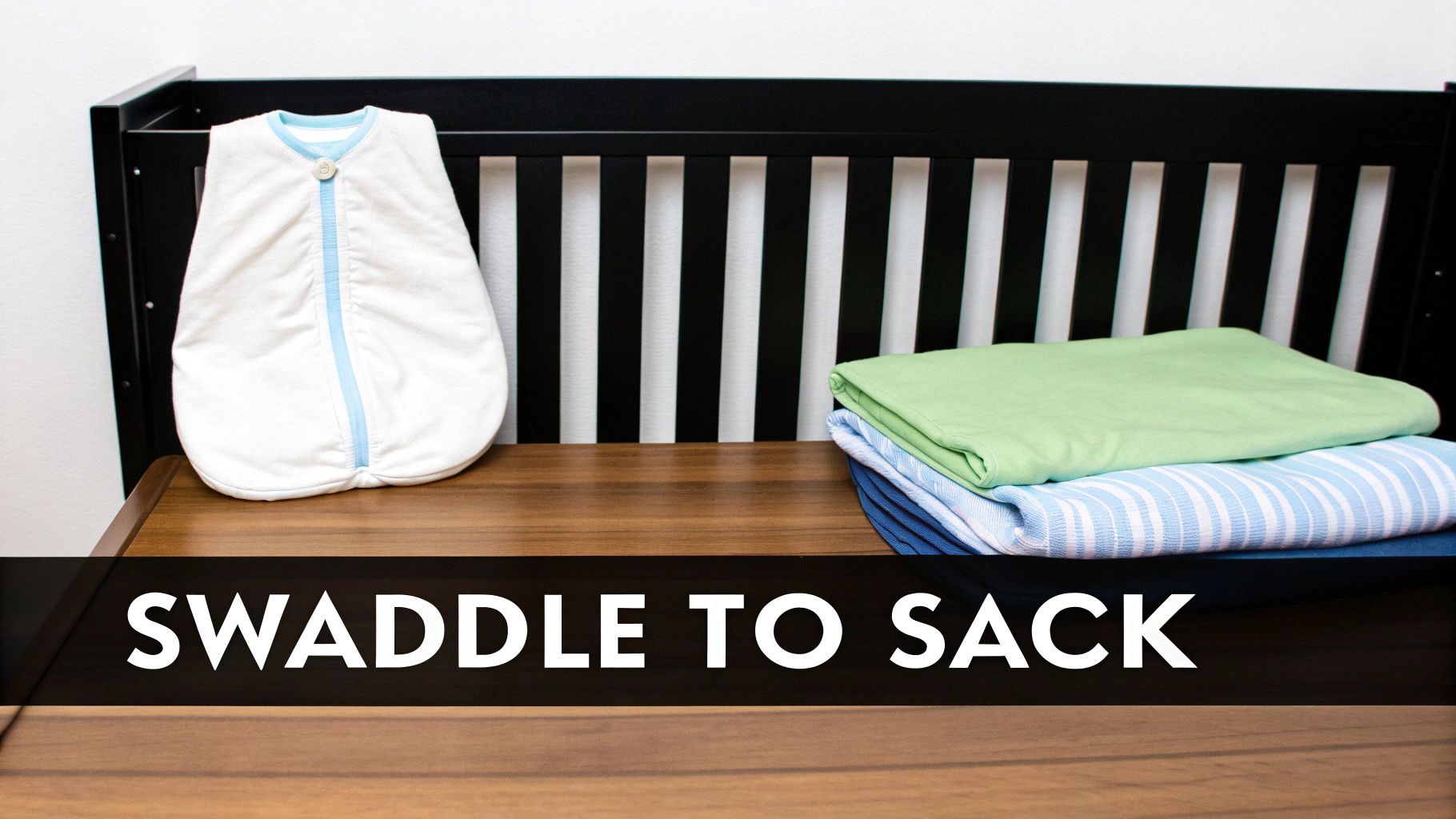
Trying to figure out baby bedding can feel overwhelming. You've got swaddles, sleep sacks, and blankets—how do you know what’s right, and more importantly, what’s safe? It really boils down to your baby's age and where they are in their development. Once you understand the natural progression, choosing the right option becomes much clearer.
Think of it as a journey. Each item has its moment, and knowing when to use each one is key to creating a safe sleep space and giving yourself some much-needed peace of mind.
The Swaddle: A Newborn’s Best Friend
In the very beginning, a swaddle is pure magic. It’s designed to recreate that snug, secure feeling of being in the womb, which is incredibly comforting for a newborn. That tight wrap helps calm their startle reflex (you know, that sudden arm-flailing that wakes them up!), often leading to longer, more peaceful sleep. It's the perfect little cocoon for the first few months.
But every cocoon has its time limit. The swaddle needs to be retired the moment your baby shows signs of trying to roll over, which usually happens around 3 to 4 months old. This isn't just a suggestion—it's a critical safety step. If a swaddled baby manages to roll onto their stomach, their arms are pinned, making it impossible for them to push up and clear their airway.
The Sleep Sack: The Perfect Next Step
This is where the sleep sack comes in to save the day (and night). It's the ideal transition out of the swaddle, offering a cozy sense of security without restricting your baby's arms. Think of it as a safe, wearable blanket they can't kick off or get tangled in.
Making the switch to a sleep sack is a game-changer for a few reasons:
- Safety is Built-In: It keeps your baby warm without the risks posed by loose blankets, which is right in line with all the safe sleep guidelines from pediatric experts.
- Room to Wiggle: A good sleep sack allows plenty of room for kicking and hip movement, which is essential for healthy physical development.
- A Powerful Sleep Cue: The simple act of zipping up the sleep sack every night becomes a clear signal to your baby’s brain: it’s time to wind down and go to sleep.
A sleep sack perfectly bridges the gap between the snug swaddle and no blankets at all. It keeps your baby feeling secure while giving them the freedom to move as they grow, taking all the guesswork out of keeping them warm and safe.
The Blanket: For Toddlers and Big Kids
We all love a cozy blanket, but for babies, they are a definite no-go in the crib. The American Academy of Pediatrics (AAP) safe sleep guidelines are very clear: no soft bedding of any kind—including blankets, pillows, or bumpers—in a baby's sleep space for at least the first year. This is to reduce the risk of SIDS and accidental suffocation.
So when can you introduce a blanket? The safest time is when your child moves out of a crib and into a toddler bed, which is typically well after their first birthday. By then, they're much stronger and more mobile, able to move a blanket away from their face if needed. Until that milestone, the sleep sack is your safest bet for warmth and comfort.
Time to Say Goodbye? How to Transition Your Toddler Out of Their Sleep Sack
It feels like just yesterday you were zipping them into their first sleep sack, and now, suddenly, you're wondering what's next. Moving on from a sleep sack is a big step in your toddler's journey, but it doesn't have to mean sleepless nights for everyone. The key is knowing when they're ready and having a gentle plan in place.
While most kids make this transition sometime between 2 and 3 years old, it's less about the calendar and more about their own developmental cues. Is your toddler suddenly attempting to scale the crib walls like a tiny mountaineer? Or have they simply shot up, leaving you unable to find a sleep sack that fits? These are clear signs it's time to move on.
Spotting the "I'm Done" Signals
Keep an eye on your toddler's behavior and growth—they'll tell you when they’re ready to ditch the sack. You just have to know what to look for.
Here are the biggest clues:
- The Great Escape: If you see a leg swinging over the crib rail, a sleep sack can actually become a safety risk by restricting their movement and making a fall more likely.
- They've Outgrown Everything: When you’ve officially sized out of every sleep sack on the market, the universe is giving you a pretty clear hint.
- Restless and Resisting: Some toddlers simply start fighting the sleep sack at bedtime, pushing it away or getting frustrated. They’re telling you they crave more freedom.
A Gentle, Step-by-Step Plan for a Smooth Transition
Going cold turkey can be a bit of a shock to their system. After all, the sleep sack has been a cozy and consistent sleep cue for a long time. A gradual approach is almost always the better route.
The goal here is to trade the sleep sack for a new sleep setup without losing that precious sense of security. This is as much about emotional comfort as it is about physical freedom.
A fantastic first step is switching to a walker-style sleep sack—one with leg holes. This gives them the mobility they're craving while still providing that familiar, wearable-blanket feeling. Think of it as a halfway point.
After a week or two in a walker sack, you can introduce a light, toddler-sized blanket. But remember this critical safety rule: loose bedding like blankets and pillows should only be introduced once your child is in a toddler bed, never in a crib.
With a little patience and these simple steps, you'll guide your little one into their next big sleep adventure with confidence.
Common Questions About Using a Sleep Sack
Even after learning all the great things about sleep sacks, it's totally normal to still have a few questions buzzing around. When you're getting ready to use one for the first time, the practical, day-to-day stuff is what really comes to mind. We've rounded up the most common questions we hear from parents to give you clear answers and a little extra peace of mind.
Think of this as your go-to FAQ for keeping your baby safe, comfortable, and sleeping soundly.
Are Weighted Sleep Sacks Safe for Babies?
This is a big one, and the expert consensus is clear. Right now, the American Academy of Pediatrics (AAP) does not recommend using weighted sleep sacks or swaddles.
There's simply no proof that they help babies sleep better, and they might even introduce serious risks. The extra weight could press down on your baby’s chest and lungs, which could make breathing more difficult and hinder their ability to get into a safe position. For the safest possible sleep, always stick with a standard, non-weighted sleep sack.
How Many Sleep Sacks Do I Actually Need?
You'll definitely want more than one! A good rule of thumb is to have at least two or three in your rotation. This way, you always have a clean, dry sleep sack ready to go when another one is inevitably in the laundry pile.
Let's be real—diaper blowouts and spit-up happen, often in the middle of the night. Having a backup ready means you won't be scrambling. It's also smart to have different TOG ratings for different seasons, ensuring your baby stays comfy whether it's a chilly winter night or a warm summer evening.
Can My Baby Wear a Sleep Sack in a Car Seat?
The short answer is no, a standard sleep sack should never be used in a car seat. Even if the fabric feels thin, it can create a gap between your baby and the harness. That little bit of slack is dangerous because it could prevent the car seat from protecting them properly in an accident.
A few brands make special "travel" sleep sacks with a slot for the buckle, but you have to be absolutely sure it's tested and approved for car seat use and doesn't add any bulk under the straps. When in doubt, the safest bet is to dress your baby in their regular clothes for the car ride and tuck a blanket over them after they're securely buckled in.
Important Takeaway: Proper sizing is a non-negotiable safety rule. Always choose a sleep sack based on your baby's current weight and height—not their age. It should be snug around the chest so it can't ride up over their face but roomy at the hips for healthy development. Never buy a size up for them to "grow into," as a poor fit is a safety hazard.
At GuGuTon, we know that your baby's safety and comfort mean everything. That’s why we’ve carefully chosen a collection of high-quality, breathable sleep sacks made from gentle fabrics that are perfect for sensitive skin. Explore our collection to find the perfect sleep solution for your little one at https://guguton.com.