

Best Baby Bedding Sets: A Guide to Safe and Skin-Friendly Nurseries
When it comes to baby bedding, less is truly more. The safest and most comfortable setup is simple: a snug-fitted sheet over a firm mattress. That’s it. Fabrics like organic cotton and bamboo are fantastic choices because they’re breathable and hypoallergenic, which goes a long way in preventing skin irritation, allergies, and rashes for your little one.
1. Building a Safe and Serene Sleep Environment
Picking out a baby bedding set feels like a huge decision, and honestly, it is. It’s about so much more than matching the nursery theme. You're creating the very foundation for safe sleep and protecting your baby’s unbelievably delicate skin. Let's walk through what really matters, from safety rules to picking fabrics that won't cause rashes or allergies.
The single most important rule, championed by every pediatrician, is that bare is best. A truly safe crib has just two things in it: a firm mattress and a sheet that fits like a glove. All those other items you see in magazines—pillows, bumpers, quilts, and stuffed animals—might look sweet, but they are serious safety hazards that can lead to tragic accidents.
The Foundation of Safe Sleep
A peaceful sleep environment starts with safety. The number one priority is to minimize every possible risk inside the crib. This means building a space that's comfortable, keeps your baby at the right temperature, and is completely free of potential dangers.
Of course, a secure haven isn't just about the crib. The whole room plays a part. A quiet, soothing atmosphere can make a world of difference for sleep quality. Many parents, myself included, have found that a good white noise machine can be a game-changer, mimicking the comforting sounds of the womb to help babies sleep longer and more soundly.
This simple chart gets right to the heart of crib safety.
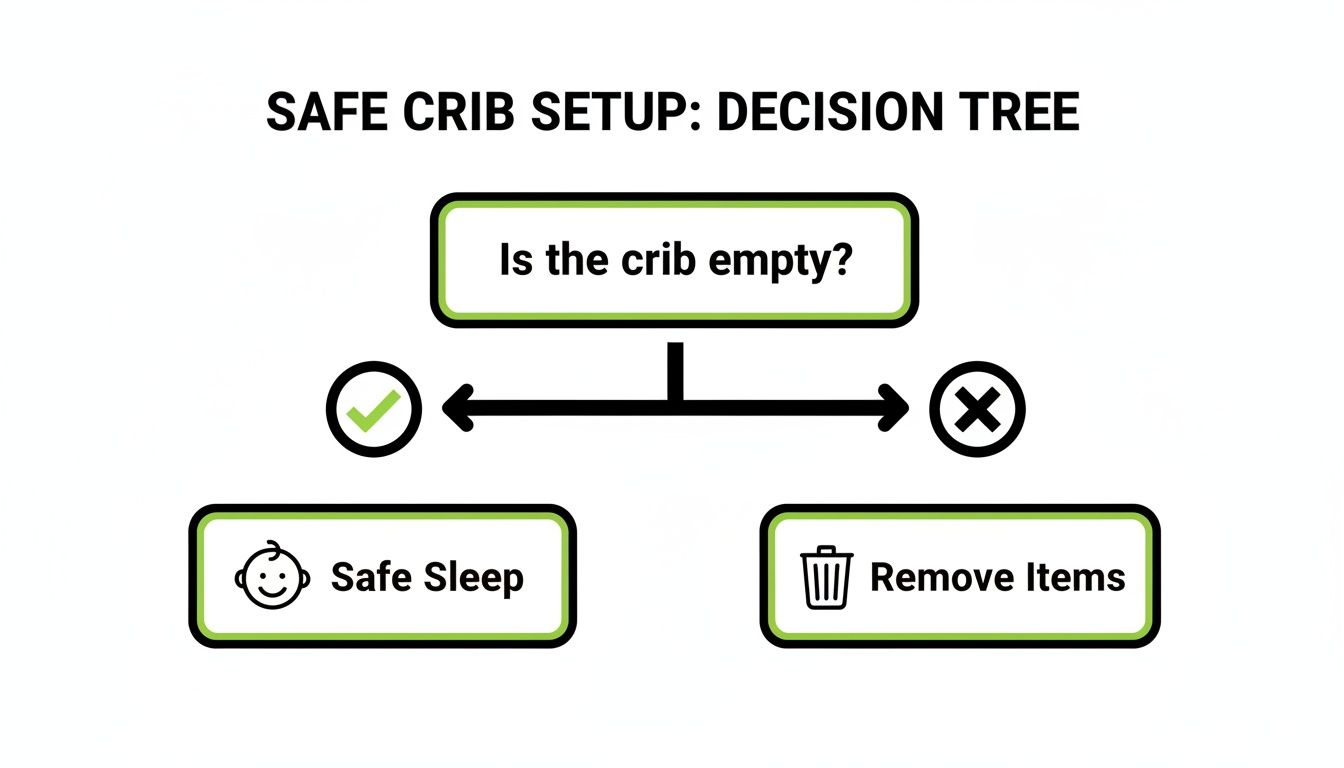
The takeaway is crystal clear: an empty crib is the safest place for your baby to sleep.
To make this even easier, here's a quick reference table. Think of it as your cheat sheet for setting up a safe sleep space.
Safe Crib Bedding Essentials Checklist
| Safe Sleep 'Do's' | Unsafe Sleep 'Don'ts' |
|---|---|
| Use a firm, flat mattress. | Never use soft mattresses, memory foam, or toppers. |
| Choose a tight-fitting crib sheet. | Avoid pillows, quilts, and comforters. |
| Dress baby in a sleep sack or wearable blanket. | Don't add loose blankets to the crib. |
| Keep the crib completely clear. | No stuffed animals, toys, or crib bumpers. |
| Place baby on their back to sleep. | Avoid placing baby on their stomach or side. |
Stick to the "Do's" and steer clear of the "Don'ts," and you'll be well on your way to creating a nursery that’s both beautiful and, most importantly, safe.
Why Quality Materials Matter
The intense focus on infant safety has completely reshaped the baby bedding industry. In 2023, North America led the market, accounting for over 38% of global revenue. This isn't surprising when you consider how aware parents have become and the strict safety standards in place. The U.S., in particular, has really pushed for better quality control and a shift toward organic, hypoallergenic materials to protect babies from skin issues and allergies.
A baby’s skin is up to five times thinner than an adult’s, making it more susceptible to irritation from harsh chemicals, dyes, or non-breathable fabrics. Investing in high-quality, certified materials is a direct investment in your baby’s health and comfort, helping to prevent rashes and allergic reactions.
By putting safety and material quality first, you can build a gorgeous nursery that is, above all, a secure and peaceful sanctuary for your baby to rest, grow, and thrive.
Choosing Fabrics to Nurture Your Baby's Skin
A baby's skin is a marvel, but it's also incredibly delicate. In fact, it's up to five times thinner and more absorbent than our own, making it super susceptible to irritation. This means the fabric you choose for their bedding isn't just about finding the softest sheet; it's a crucial decision that affects their health and comfort every single night.
The materials touching your baby's skin for hours on end need to be gentle, breathable, and free of harsh chemicals. Making the right choice here can be the difference between a peaceful, restorative sleep and a frustrating cycle of rashes, eczema flare-ups, and general discomfort.

Natural Fibers: The Gold Standard for Preventing Irritation
When you talk to pediatric dermatologists, they almost universally recommend natural fibers for baby bedding. It’s simple: these materials work with your baby’s sensitive system, not against it, reducing the risk of allergies and skin problems.
Think of natural fabrics like a second skin. Materials like organic cotton and bamboo are exceptionally breathable, allowing air to circulate freely around your little one. This is vital for helping them regulate their body temperature and preventing overheating—a known risk factor for Sudden Infant Death Syndrome (SIDS).
On top of that, these fabrics are pros at wicking moisture away from the skin. This keeps your baby dry and comfortable, which goes a long way in preventing heat rash and other irritations that love damp environments.
The Problem with Synthetic Fabrics and Skin Reactions
Now, let's talk about synthetics like polyester and fleece. They might feel soft at first, but they can create a surprisingly problematic environment in the crib. Instead of breathing, they tend to act more like plastic wrap.
These man-made materials trap both heat and moisture right against your baby's skin, which can lead to a whole host of issues. The lack of airflow can quickly make your baby sweaty and overheated. Worse, that trapped moisture creates a perfect breeding ground for bacteria and fungi, which can easily trigger eczema or contact dermatitis. A polyester blend might save you a few dollars, but the potential cost to your baby’s skin comfort just isn't worth it.
If you want to dig deeper, we have a detailed guide on choosing the right fabric for your baby's sensitive skin that covers this in more detail.
Decoding Fabric Certifications: Your Shield Against Allergens
When you're shopping, you’ll see labels like GOTS and OEKO-TEX tossed around. These aren't just marketing fluff; they are your guarantee of purity and safety. Understanding what they stand for is key to making a truly informed decision to protect your baby.
These certifications act as a third-party promise that the bedding is free from a long, scary list of harmful substances. We're talking pesticides, heavy metals, formaldehyde, and harsh chemical dyes that can easily be absorbed through a baby’s porous skin and trigger allergic reactions or rashes.
Here’s a quick rundown of what these important labels mean for you:
-
GOTS (Global Organic Textile Standard): This is the top-tier certification for organic fibers. To earn the GOTS label, a product must have at least 95% organic fiber and be produced without toxic pesticides, synthetic fertilizers, or GMOs. The standard also covers the entire manufacturing process, ensuring everything is done in a socially and environmentally responsible way.
-
OEKO-TEX STANDARD 100: This label certifies that every single component of a product—from the thread to the zipper—has been tested for over 100 harmful substances and found to be safe. It doesn't necessarily mean the fabric is organic, but it guarantees it's non-toxic and free from common skin irritants.
When you choose bedding with these certifications, you're building a safer, cleaner sleep space. It’s a simple step that helps protect your baby from potential allergens and irritants, preventing skin reactions and giving you priceless peace of mind. Prioritizing certified fabrics is one of the best things you can do to nurture and protect your baby’s delicate skin.
Navigating Key Safety Standards and Certifications
Walking into the baby bedding aisle can feel like trying to decipher a secret code. You're hit with a wall of acronyms and certifications that can make your head spin. Let's cut through that noise. I'll break down exactly what you need to look for to ensure your baby's sleep space is as safe as it is cozy.
Think of safety standards as the official rulebook for baby gear manufacturers. They aren't just flimsy suggestions; they are serious, science-backed guidelines created to prevent accidents. When you see a product that meets these standards, you can breathe a little easier knowing it was designed with your child's safety as the absolute top priority.
The Guardians of Nursery Safety
In the United States, two key organizations are the gatekeepers of baby product safety: the CPSC and ASTM International. Getting to know what they do will give you a huge confidence boost when you're shopping.
-
CPSC (Consumer Product Safety Commission): This is the U.S. government's watchdog agency. Their entire mission is to protect us from products that could cause injury or death. They set mandatory rules, ban dangerous items, and issue recalls. For baby bedding, they're laser-focused on preventing suffocation and entrapment risks.
-
ASTM International: This is a global group that writes the technical playbook for thousands of products, including cribs and mattresses. While their standards start as "voluntary," the CPSC often adopts them and makes them federal law. ASTM gets into the nitty-gritty, specifying everything from how far apart crib slats can be to how firm a mattress must be.
When you're comparing products, keep an eye out for phrases like "meets or exceeds CPSC and ASTM standards." That's your green light, signaling that the product has passed the toughest safety tests out there.
Key Safety Features to Look For
Beyond the official labels, you need to inspect the bedding itself for a few non-negotiable safety features. These are the practical details that make all the difference in the crib.
First up, the mattress. The golden rule is simple: it must be firm and flat. A soft, cushy mattress might seem comfortable to us, but for a baby, it can create a pocket of air that increases the risk of suffocation. Give the mattress a good press in the middle and along the edges. It should pop right back, not hold the shape of your hand.
Next, look closely at the fitted sheet. The best ones have a strong, fully encased elastic band that goes all the way around the bottom edge. This ensures the sheet grips the mattress tightly and won't pop off a corner or bunch up in the middle of the night. A sheet with elastic just on the corners is a recipe for a loose, unsafe fit.
A secure, snug fit is paramount. A fitted sheet should fit the mattress like a second skin, with no slack or extra fabric. If you can easily pinch a fold of the sheet from the surface, it’s too loose.
This focus on safety has completely reshaped the industry. The global crib bedding market has grown immensely as parents have become more educated about safe sleep and the benefits of organic materials. This is especially true for products that meet standards like the Global Organic Textile Standard (GOTS), which verifies that fabrics are free from nasty pesticides. You can dig deeper into the rise of safe and organic baby bedding to understand how these trends are making safer products more accessible.
Certifications as a Shield Against Toxins
Certifications like GOTS and OEKO-TEX are often talked about for being gentle on sensitive skin, but they also play a critical safety role. Think of them as a shield protecting your baby from invisible threats like heavy metals and harsh chemicals.
These certifications guarantee that the bedding is free from a whole host of harmful substances, including:
- Lead
- Phthalates
- Formaldehyde
- Azo dyes
These toxins can be absorbed through a baby's delicate skin or even inhaled, posing potential long-term health risks and triggering skin conditions. Choosing certified bedding means you're creating a nursery that is not only physically safe from accidents but also chemically clean. It's a holistic approach that gives you true peace of mind.
What to Look For in High-Quality Baby Bedding
Picking out a safe, soft fabric is a great start, but the real secret to great baby bedding is in the construction details. These are the nitty-gritty features that make all the difference—determining if the bedding will survive endless laundry cycles, meet the highest safety standards, and just make your life easier as a new parent. A little extra attention here will save you a ton of frustration later on.
Good construction isn't just for looks; it’s about sheer durability. A well-made fitted sheet, for example, will have strong, reinforced seams and tight, even stitching. Think of the seams as the backbone of the bedding—if they're flimsy, the whole thing will give out in no time.
Built to Last Through the Chaos
Let's be honest: baby bedding takes a serious beating. It's in a constant cycle of use, messes, and washing. Poorly made sheets will start to fray, pill, or wear thin at the corners almost immediately. When you're shopping, get up close and look for double-stitched seams and high-quality thread that won't shrink or snap after a few trips through the dryer.
Parents are catching on, and this focus on quality is driving major changes in the market. The global baby bedding market was valued at around USD 4.9 billion in 2023 and is expected to climb to nearly USD 7.3 billion by 2032. This isn't just a random trend; it shows a real shift as more families prioritize durable, safe sleep products for their little ones. You can discover more insights about the global baby bedding market on dataintelo.com to see how this is playing out worldwide.
Keeping Baby Warm—The Safe Way
Since loose blankets are a major no-go in the crib due to suffocation risks, the wearable blanket, or sleep sack, has become a nursery game-changer. It's essentially a cozy, wearable sleeping bag that keeps your baby warm without any danger of it covering their face.
The most critical feature to understand is the TOG (Thermal Overall Grade) rating. This simple number tells you exactly how warm the sleep sack is, taking the guesswork out of dressing your baby for bed.
- Low TOG (0.5 - 1.0): Perfect for warm rooms (72-78°F or 22-26°C). These are usually made of lightweight cotton or muslin.
- Medium TOG (1.0 - 2.5): The go-to for most homes with moderate temperatures (64-72°F or 18-22°C).
- High TOG (2.5+): Designed for chilly nights or colder climates (below 64°F or 18°C), often made from fleece or quilted fabric.
Choosing the right TOG is about more than just comfort; it's a key safety measure. Overheating is a known risk factor for SIDS, so getting this right is crucial. Always dress your baby in light layers underneath and do a quick check on their neck or back to make sure they feel comfortably warm, not sweaty.
Practicality for Those 3 a.m. Surprises
Life with a newborn is unpredictable, and most of that unpredictability seems to happen in the dead of night. A diaper blowout or a major spit-up at 3 a.m. is way less of a crisis when you're prepared. That's why having multiple fitted crib sheets isn't a luxury—it's a necessity.
Trust me on this: you'll want at least three to five fitted sheets. This setup means you can have one on the crib, one in the wash, and a spare (or two!) ready for those back-to-back incidents. Look for sheets with deep pockets and strong, fully encased elastic. This ensures a tight, snug fit that won't pop off the corners as your baby wiggles around.
For parents who want to get everything in one go, a complete newborn pure cotton crib kit can be a fantastic way to stock up on matching, high-quality essentials. By focusing on these practical features, you’re not just buying bedding; you're investing in safety, comfort, and a little more peace of mind.
5. Mastering Care for Longevity and Hygiene
Let's be real: baby bedding is the frontline for every kind of mess, from spit-up to diaper blowouts. Having a solid care routine isn't just about cleanliness—it's about protecting the fabric and, more importantly, your baby's incredibly sensitive skin from potential irritants.
Getting the washing technique right from the start means your favorite bedding sets will last longer, stay softer, and keep your baby comfortable. It’s a simple way to make sure you get the most out of your investment while maintaining a healthy sleep environment.

Gentle Washing for Sensitive Skin
When it comes to laundry detergent, less is definitely more. A baby’s skin is like a sponge, and it can easily react to the dyes, perfumes, and harsh chemicals in standard detergents, sometimes leading to contact dermatitis, rashes, or eczema flare-ups.
Always opt for a gentle, dye-free, and fragrance-free detergent made for sensitive skin. It's also a great practice to wash all new bedding before you use it for the first time to clear away any dust or factory residues that could irritate the skin.
Think of your baby's bedding like their favorite onesie. You wouldn't wash their clothes in a heavily scented, harsh soap, so you definitely shouldn't use one on the sheets they'll be sleeping on all night.
To keep things hygienic, a consistent washing schedule is your best friend. A simple routine helps remove allergens like dust mites and keeps their sleep space feeling fresh.
- Fitted Crib Sheets: Plan to wash these every 1-2 days, or immediately after any messes.
- Mattress Protectors: Aim for once a week, or more often if it gets soiled.
- Wearable Blankets/Sleep Sacks: Treat these like pajamas and wash them every 2-3 days.
Tackling Stains Without Harsh Chemicals
Accidents are just part of the deal, but you don't need to reach for heavy-duty stain removers that can leave behind chemical residues. For those classic protein-based stains (think spit-up, formula, or leaks), acting quickly with a gentle approach is all it takes.
First, blot the spot with a clean cloth to soak up as much as you can. Next, mix a little of your baby-safe detergent with some cool water and gently work it into the stain before throwing it in the wash. To prevent those messes from ever reaching the mattress in the first place, a top-notch cotton terry waterproof mattress protector is a lifesaver.
By sticking to a gentle but consistent care routine, you can make sure your baby's bedding stays a safe, clean, and cozy little sanctuary, all while making your favorite sets last.
Answering Your Top Baby Bedding Questions
Walking down the baby aisle can feel overwhelming, and when it comes to bedding, the questions just seem to multiply. You want what's best for your little one—something safe, comfortable, and gentle on their skin. Let's clear up some of the most common concerns parents have when choosing bedding.
How Many Crib Sheet Sets Do I Actually Need?
Life with a newborn is full of surprises, and many of them are messy. Trust me, the last thing you want to be doing is frantically washing sheets after a 3 a.m. diaper blowout.
Having a few extra crib sheets on hand is a sanity-saver. A good starting point is three to five fitted sheets. This simple strategy means you can have one sheet on the mattress, one in the laundry basket, and at least one clean spare ready for a quick change. It’s a small bit of prep that makes a huge difference.
Are Mesh Bumpers a Safe Alternative?
This is a big one. Mesh bumpers are often sold as a "breathable" and safer choice compared to the old-school padded kind. However, major child safety experts, including the American Academy of Pediatrics (AAP), advise against using any type of bumper at all.
The risk, even with mesh, is that it can come loose and create an entrapment or suffocation hazard. The golden rule for infant sleep is that a bare crib is the safest crib. All your baby needs is a firm mattress with a tightly fitted sheet.
The Consumer Product Safety Commission (CPSC) officially banned the sale of padded crib bumpers in 2022 due to their connection to infant deaths. While mesh bumpers weren't specifically named in the ban, the core safety advice from pediatricians hasn't changed: an empty crib is best.
When Can My Baby Use a Pillow and Blanket?
Moving from a bare crib to one with a cozy blanket and pillow feels like a big step, and it’s one you definitely don’t want to rush. For your child's safety, you should wait until they are at least two years old before introducing a small, firm pillow or a light blanket.
Before that age, soft bedding like pillows and blankets poses a serious suffocation risk. To keep your baby warm, stick with a wearable blanket or a sleep sack. They provide all the warmth without the danger of loose bedding in the crib.
What Is a TOG Rating and Why Does It Matter?
If you've shopped for sleep sacks, you've probably seen the term TOG (Thermal Overall Grade). It’s simply a standard rating that tells you how much warmth the fabric provides. Think of it like the tog rating on your own duvet.
Understanding TOG helps you dress your baby appropriately for the room temperature, which is crucial for preventing overheating—a known risk factor for SIDS. Here’s a quick guide:
- 0.5 TOG: For hot weather and warm nurseries (75-81°F).
- 1.0 TOG: A great all-rounder for warmer seasons (69-74°F).
- 2.5 TOG: Keeps baby cozy on cooler nights and year-round (61-68°F).
Matching the TOG to the temperature in your nursery ensures your baby stays comfortable and safe all night long.
At GUGUTON LLC, we are dedicated to providing families with high-quality, safe, and beautiful baby essentials. Explore our curated collections to find everything you need to create a serene and secure nursery for your little one at https://guguton.com.