

A Parent's Guide to a Safe Sleep Environment for Infants
As a new parent, one of your biggest priorities is keeping your baby safe, especially while they sleep. A safe sleep environment for infants is surprisingly simple: it's a space where a baby sleeps alone, on their back, in a crib or bassinet that’s free of clutter. Getting this right is one of the most powerful things you can do to reduce the risk of sudden infant death syndrome (SIDS) and accidental suffocation.
The Foundations of a Safe Nursery
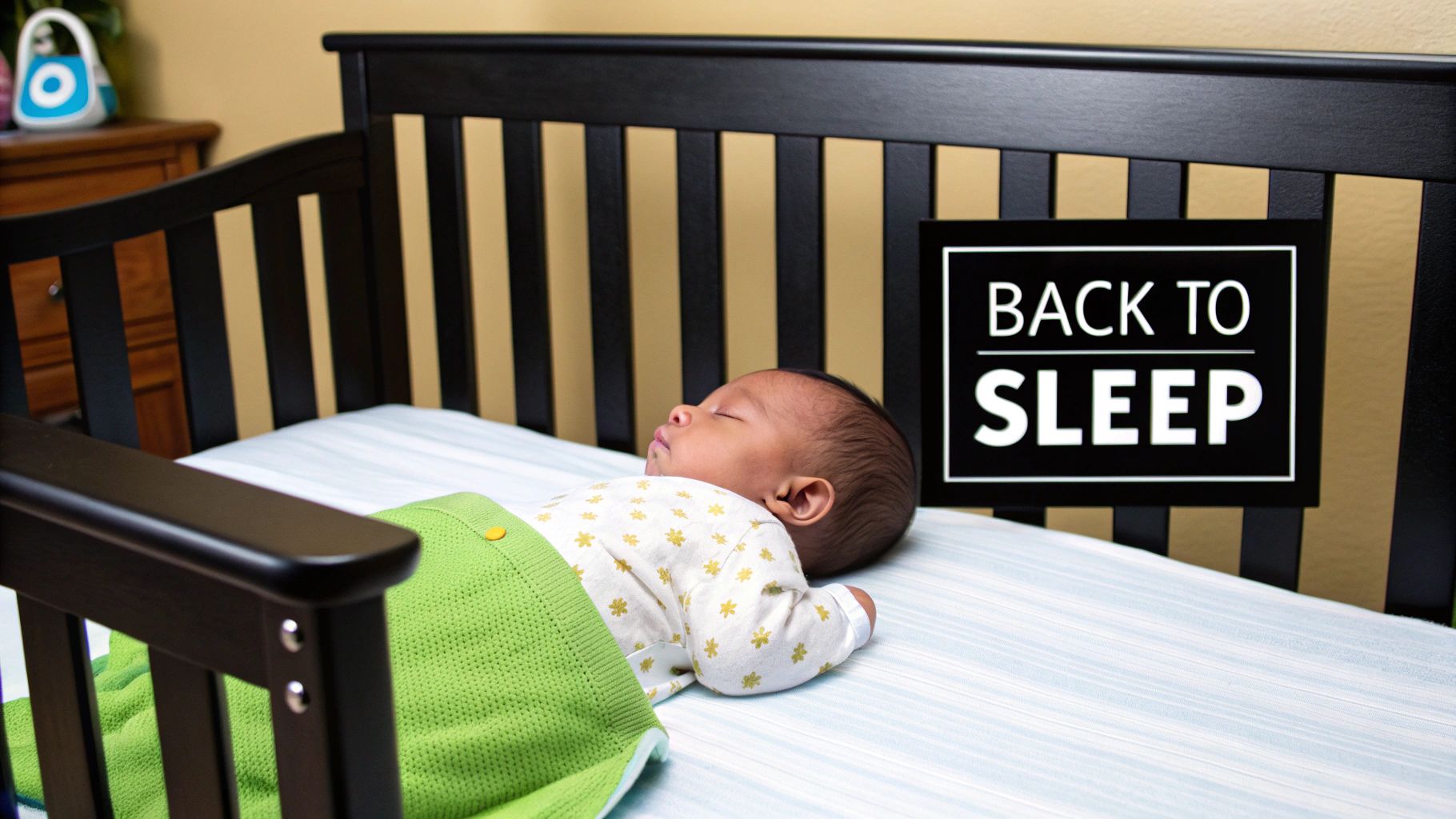
When you're setting up the nursery, it’s easy to get caught up in the decor. But beyond the cute themes and color schemes, the real goal is to follow a few straightforward, life-saving rules. These are the non-negotiables that pediatricians and sleep experts emphasize for every single nap and nighttime sleep.
Every guideline is designed to tackle the two biggest risks head-on: SIDS and accidental suffocation. Following these practices consistently gives you peace of mind and provides a crucial layer of protection when your baby is most vulnerable.
The ABCs of Safe Sleep
The easiest way to remember the absolute must-dos for infant sleep is the acronym ABC: Alone, on their Back, in a Crib. Let's dig into what each of these really means in practice.
- Alone: This is key. The crib should be completely bare except for a fitted sheet on the mattress. That means no blankets, no pillows, no stuffed animals, and definitely no crib bumpers. While they might look cozy, these items are serious suffocation and entrapment hazards.
- Back: For every sleep, every time, place your baby on their back. This is the single most effective thing you can do to lower the risk of SIDS because it keeps their airway wide open. This rule applies for the entire first year.
- Crib: The sleep surface has to be firm and flat. A safety-approved crib, bassinet, or play yard is what you need. Soft surfaces, like an adult bed or a couch, are dangerous, as are inclined sleepers that can cause a baby’s head to slump forward and block their breathing.
Sticking to the ABCs isn't just a friendly suggestion—it’s a proven way to prevent tragedies. Since the "Back to Sleep" campaigns began in the 1990s, the rate of SIDS has dropped by an incredible 59% globally. The research on this is incredibly compelling.
To make it even easier to remember, here’s a quick-reference checklist of the essentials.
Safe Sleep Essentials Checklist
This table breaks down exactly what you need—and what you need to do—to create the safest possible sleep space for your infant.
| Component | Requirement | Why It's Critical |
|---|---|---|
| Sleep Space | A safety-approved crib, bassinet, or portable play yard. | These products meet strict federal safety standards for infant sleep. |
| Mattress | Firm, flat, and fits snugly inside the crib frame. | A firm surface prevents the baby's head from sinking in, which can obstruct the airway. |
| Bedding | A fitted sheet only. Nothing else. | Loose blankets, pillows, and bumpers are major suffocation hazards. |
| Sleep Position | Always on their back for every sleep. | This is the safest position to keep the airway open and reduce SIDS risk. |
| Sleep Attire | A wearable blanket or sleep sack instead of loose blankets. | Keeps baby warm without the risk of a blanket covering their face. |
Following these simple rules consistently is the best way to ensure your baby is sleeping safely, giving you one less thing to worry about.
Protecting Your Baby’s Sensitive Skin
A healthy sleep environment goes beyond just physical safety—it also means looking out for your baby’s delicate skin. The materials they sleep on and wear can make a big difference in preventing irritation, rashes, and allergic reactions.
When choosing sleepwear and bedding, look for high-quality, hypoallergenic, and breathable fabrics like organic cotton. These materials promote good air circulation, which helps keep your baby from overheating and developing a heat rash. Plus, they're typically free from the harsh chemicals and dyes found in some synthetic fabrics that can trigger skin issues or allergies.
For more ideas on gentle, baby-friendly items, you can check out our guide to the best baby products for newborns. By focusing on both the ABCs of sleep and skin-friendly materials, you're building a nursery that's not only safe but truly healthy and comfortable for your little one.
Setting Up Your Baby's Sleep Space
Bringing your baby home is one of life's most incredible moments, and setting up their nursery is a big part of that. But beyond the cute decor, the most important thing is creating a truly safe place for them to sleep. Let’s walk through how to build that safe haven, piece by piece, starting with the crib itself.
The Foundation: Crib and Mattress Safety
First things first, you need a crib that meets modern safety standards. You'll want to look for a certification from the Consumer Product Safety Commission (CPSC). This isn't just a sticker; it's your assurance that the crib has been put through its paces.
A critical safety check is the space between the slats. They should be no more than 2 ⅜ inches apart. A good real-world test? If you can slide a can of soda between them, they're too wide. This rule is there to prevent a baby's head from getting trapped.
Next up is the mattress. It needs to be firm, flat, and fit snugly inside the crib frame—no exceptions. A soft mattress might seem cozy, but it's a serious suffocation hazard. Check the fit by seeing if you can wedge more than two fingers between the mattress and the side of the crib. If you can, it’s not a safe fit.
Protecting Delicate Skin with the Right Bedding
A baby’s skin is incredibly sensitive, so what you put on that mattress matters a lot. Rashes, allergies, and irritation are no fun for anyone. The rule here is simple: all you need is a single, well-fitting fitted sheet. That's it.
To keep their skin happy, go for sheets made from high-quality natural, breathable fabrics. Think 100% organic cotton or bamboo. These materials are wonderfully soft and, more importantly, they don't contain the harsh chemicals, pesticides, or dyes you often find in synthetic fabrics that can affect the skin. They’re also great at wicking away moisture, which helps prevent heat rash on those warmer nights.
While a waterproof mattress pad seems like a must-have for inevitable leaks, be careful with your choice. Many are made from vinyl, which doesn't breathe at all. This can trap heat and moisture right against your baby’s skin, potentially causing a rash. A much better option is a protector with a breathable waterproof layer, usually backed with soft cotton or bamboo. For more tips on choosing safe and gentle materials, check out our insights on the best baby bedding sets.
Creating a Comfortable Room Atmosphere
The overall vibe of the nursery is just as important as the crib setup. Getting the temperature and sound right can make a world of difference for safe, restful sleep.
Overheating is a known risk factor for SIDS, so a cool room is a must. The sweet spot is generally between 68°F and 72°F (20°C to 22.2°C). Basically, if it feels comfortable for a lightly dressed adult, it's probably right for your baby. Also, make sure the crib isn't positioned in direct sunlight or right next to a heater.
Parenting Tip: To check if your baby is too warm, don’t go by their hands or feet—they’re often cool to the touch. Instead, feel the back of their neck or their tummy. If it feels sweaty, they’re probably too hot and you should remove a layer.
Many of us swear by white noise machines to help drown out the sounds of a busy household (or a barking dog!). They can be a sleep-saver, but you have to use them correctly.
- Keep the volume down. It should be no louder than a gentle shower, right around 50 decibels. Anything louder can be harmful to a baby’s developing ears.
- Position it away from the crib. A good rule of thumb is to place the machine at least 7 feet away from where your baby sleeps.
- Give their ears a rest. Try to use it only when the baby is sleeping, rather than leaving it on 24/7.
By taking the time to choose a safe crib and mattress, picking the right skin-friendly bedding, and creating a comfortable room environment, you’re building a sleep space that is truly secure. Each of these details works together to give your baby—and you—the gift of safer, more peaceful rest.
Choosing Skin-Friendly Sleepwear and Bedding
Let's talk about something that often gets overlooked when setting up a safe nursery: what your baby actually wears to bed and the sheets they sleep on. A baby's skin is incredibly delicate—so much more permeable than ours—which makes it a magnet for irritation, rashes, and even allergic reactions. Picking the right quality fabrics isn't just a matter of comfort; it's a critical part of protecting their health.
Many of the cute, conventional baby clothes and bedding you see are made from synthetics like polyester. The problem is, these materials can trap heat and moisture right up against your baby's skin. This can easily lead to heat rash and make conditions like eczema much worse. On top of that, these fabrics are often treated with some pretty harsh chemicals and dyes that can cause nasty skin reactions and affect sensitive skin.
Selecting the Best Natural Fabrics
To prevent allergies and keep your baby’s sensitive skin happy, your best bet is to stick with high-quality natural, breathable materials. You're looking for fabrics that are soft, hypoallergenic, and great at keeping your baby at a comfortable temperature all night long.
Here are my top picks:
- Organic Cotton: This is truly the gold standard. It's grown without nasty pesticides and processed without harsh chemicals, making it incredibly gentle. Plus, its natural breathability helps air circulate, which is key to preventing overheating and potential rashes.
- Bamboo: If you've ever felt bamboo fabric, you know it's silky-soft. It's also fantastic at wicking moisture away from your baby's skin, keeping them dry and comfortable. As a bonus, it has natural hypoallergenic and antibacterial properties that help prevent skin irritations.
- Merino Wool: I know what you're thinking—wool? For a baby? But merino wool is a brilliant temperature regulator. Its super-fine fibers keep babies warm when it's cold and cool when it's hot, making it a surprisingly perfect choice for year-round comfort.
Making a conscious choice to use these quality natural fibers significantly cuts down on your baby's exposure to potential irritants that can cause allergies or affect the skin. If you want to dive deeper into how different fabrics can affect your little one, check out our guide on choosing the right fabric for your baby's sensitive skin.
Pre-Washing Everything Is a Must
Here's one of the simplest and most effective things you can do to prevent skin reactions: pre-wash all new sleepwear and bedding before your baby ever touches them. This quick step washes away any lingering chemicals, dust, or grime from the factory and shipping process.
When you do that first wash, grab a fragrance-free, hypoallergenic detergent. The fragrances and dyes in most standard detergents are a common source of skin irritation for babies. A good pre-wash ensures the very first thing that touches your baby's skin is truly clean, soft, and free of anything that could cause a rash or allergic reaction.
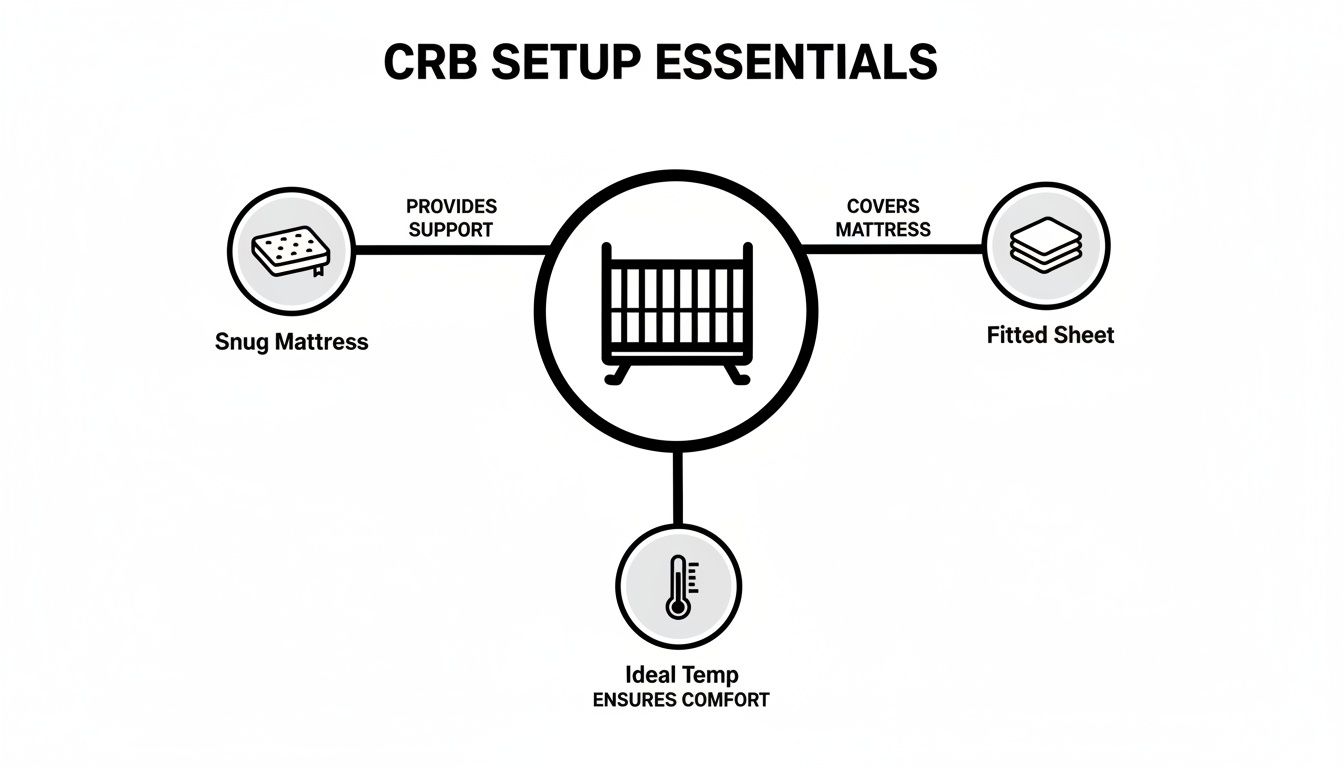
This diagram breaks down the essentials of a safe crib, showing how a firm mattress, a tight-fitting sheet, and the right room temperature create the perfect foundation for safe sleep.
Why a Sleep Sack Is the Safest Choice
We know that loose blankets are a serious suffocation hazard in a crib. So, how do you keep your baby warm? The answer is a wearable blanket, also known as a sleep sack. It's a zippered sack your baby wears, which completely removes the risk of fabric accidentally covering their face. They also give babies a cozy, secure feeling and often become a wonderful sleep cue in the bedtime routine.
But it’s important to remember that not all sleep sacks are the same. The key is to choose one with the right level of warmth to prevent overheating, which is another major risk factor for SIDS.
Choosing the right sleepwear is all about finding that perfect balance. You want your baby to be comfortably warm, but never hot. A baby who is too warm isn't just uncomfortable—they're at a higher risk for SIDS.
Understanding TOG Ratings
To take the guesswork out of dressing your baby for bed, you need to get familiar with TOG (Thermal Overall Grade) ratings. This is a simple, standardized system that tells you exactly how much insulation a sleep sack or garment provides. The higher the TOG, the warmer it is.
Here’s a quick-and-easy guide to matching the TOG rating to your nursery's temperature:
- 0.5 TOG: Perfect for warm weather or rooms that are 75°F (24°C) and up. These are super lightweight, usually just a single layer of cotton or bamboo.
- 1.0 TOG: This is your all-rounder, ideal for most homes with moderate temperatures between 69-73°F (21-23°C). It's a fantastic year-round option.
- 2.5 TOG: Built for cooler rooms and colder months, from 61-68°F (16-20°C). These are thicker, cozier, and often have a bit of padding for extra warmth.
Paying attention to the TOG rating allows you to dress your baby perfectly for their room's temperature every single night. When you combine that with soft, breathable fabrics and a gentle laundry routine, you create a sleep space that's not only safe from physical hazards but is also a soothing, irritation-free haven for their delicate skin.
Navigating Common Sleep Hazards and Misconceptions
As a new parent, you’re absolutely flooded with advice. It comes from well-meaning family, friends, and a constant stream of online content. This sea of information, especially when paired with beautifully marketed baby products, can make it incredibly tough to tell what's truly safe and what's a hidden danger.
The truth is, many popular and trendy nursery items actually pose serious risks.
This section is all about cutting through that noise. We'll tackle some of the most persistent myths and point out common hazards that might look harmless but can seriously compromise a safe sleep environment for infants. When you understand the science behind the guidelines, you'll feel much more confident sticking with what’s proven to keep your baby safe.
Debunking Popular but Dangerous Nursery Items
Walk into any big-box baby store, and you'll find shelves loaded with things that look like they belong in a crib. But here's a hard truth: the coziest-looking products are often the most hazardous. These items introduce a very real risk of suffocation, entrapment, and SIDS.
Here’s a look at the most common culprits you need to avoid:
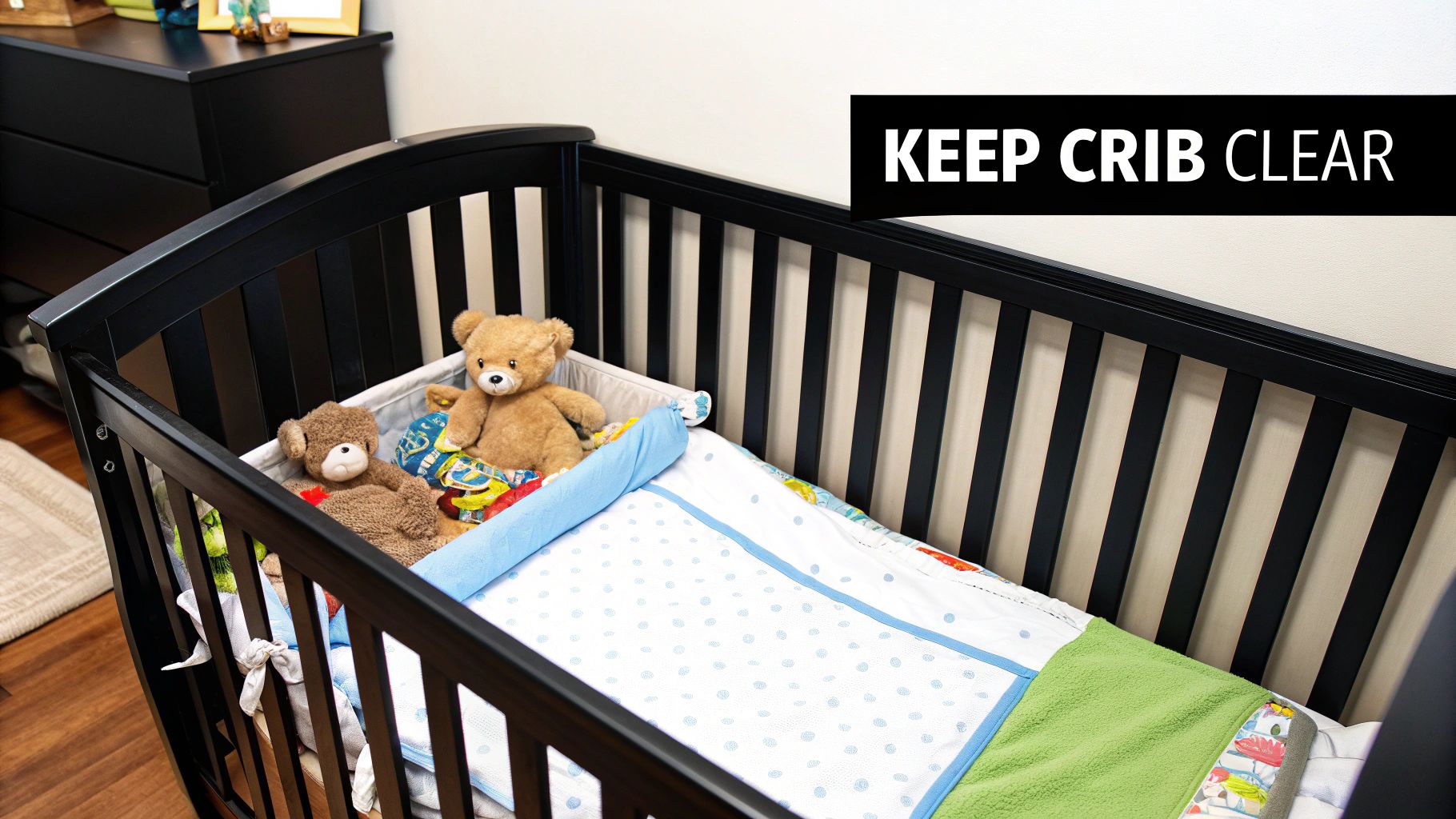
- Crib Bumpers: Despite being marketed for "safety," bumpers are a major hazard. It doesn't matter if they're padded, thin, or mesh—they can all lead to suffocation if a baby's face presses against them. The ties also present a strangulation risk. There’s simply no evidence they prevent any serious injury, and a bare crib is always the safest crib.
- Loose Blankets, Pillows, and Quilts: It's simple: any soft, loose bedding can cover a baby's face and block their airway. Instead of a blanket, use a wearable sleep sack to keep your baby warm and safe. Pillows are a definite no-no until your child is at least two years old.
- Stuffed Animals and Toys: While they're perfect for playtime, soft toys have no place where your baby sleeps. Just like pillows and blankets, they are a suffocation risk and need to be removed from the crib for every single nap and nighttime sleep.
A simple rule of thumb I always tell parents is "bare is best." The only things in your baby's crib should be a firm mattress, a fitted sheet, and your baby. That minimalist approach is the absolute cornerstone of a safe sleep environment for infants.
The Hidden Dangers of Inclined Sleepers
Over the years, products that place a baby on an incline—like rockers, nappers, or swings—have been tragically linked to infant deaths. When a baby sleeps at an angle, their head can slump forward, which can compress their tiny airway and make it difficult to breathe. This is known as positional asphyxia.
It’s the same reason car seats aren’t for routine sleep. They are designed for travel safety, not for hours of unsupervised rest. Of course babies fall asleep in the car; that's perfectly normal. But as soon as you reach your destination, the safest thing to do is move them to a firm, flat surface like their crib.
The same goes for strollers and baby carriers. If your baby is asleep in one, an awake and alert adult needs to be supervising them closely to make sure their airway is always clear. The safest place for any unsupervised sleep is always on a flat, firm surface.
Room-Sharing vs. Bed-Sharing: A Critical Distinction
You’ll hear the terms “room-sharing” and “bed-sharing” thrown around a lot, but they mean very different things and have vastly different safety implications. Getting this right is crucial for protecting your baby.
Room-sharing is the practice recommended by pediatric experts. It means your baby sleeps in your room, but on their own separate, safe surface—like a crib or bassinet placed next to your bed. The recommendation is to do this for at least the first six months, and ideally the first year. Keeping your baby close not only makes night feedings easier but has also been shown to reduce the risk of SIDS by as much as 50%.
Bed-sharing, on the other hand, means your baby sleeps in the same bed with you. While it’s a common practice in some cultures, it comes with serious risks in a modern adult bed. Our beds simply aren't designed for infants. They have soft mattresses, pillows, and blankets—all major suffocation hazards. There's also the risk of an adult accidentally rolling onto the baby or the baby becoming trapped between the mattress and a wall or headboard.
It's also critical to acknowledge that systemic issues affect these outcomes. In the United States, from 2018 through 2022, the Sudden Unexpected Infant Death (SUID) rate per 100,000 births soared to 238 for Black infants, compared to just 22 for Asian infants. This is a heartbreaking, tenfold difference that experts often attribute to factors like unequal healthcare access and culturally insensitive public health messaging. This gap persists even as the overall US infant mortality rate dropped 24% between 1999 and 2022. You can read the full research about these findings to understand more.
By sticking to the evidence-based recommendation of room-sharing without bed-sharing, you give your baby the best of both worlds: the protective benefits of sleeping nearby and the essential safety of their own dedicated space.
Maintaining a Safe Sleep Routine on the Go
You’ve finally perfected the safe sleep setup in your nursery, but what happens when you travel? It’s a common source of anxiety for parents. The good news is that keeping your baby safe while you’re away from home is entirely possible with a little planning.
Consistency is everything. Whether you're visiting grandparents for the weekend or taking a family vacation, your baby’s safe sleep rules shouldn't take a holiday.
Choosing and Setting Up a Portable Crib
The cornerstone of safe sleep on the road is a reliable, portable sleep space. A modern play yard or travel crib is your best bet, as long as it meets current safety standards.
When you're choosing one, the most critical part is the mattress. It must be the firm, flat mattress that came with that specific model. It’s tempting to add extra padding to make it seem "comfier," but this is a serious hazard. A different mattress can create dangerous gaps between the edge and the mesh sides, posing an entrapment risk.
Once you get to your destination, the setup rules are identical to the ones at home.
- Keep it bare. The only things inside should be the firm mattress and a tightly fitted sheet. No toys, no bumpers, and absolutely no blankets.
- Find a safe spot. Set up the travel crib away from windows, blind cords, lamps, or any furniture your baby could use to try and climb out.
- Give it a stability check. Before you put your baby down, give the crib a little shake to make sure it's assembled correctly and won't wobble.
Recreating a Familiar and Safe Sleep Space
Babies are creatures of habit. Making their temporary sleep space feel a bit like home not only helps them settle down in a new environment but also reinforces the safety cues they're used to.
Think about what signals "sleep time" to your baby. Bringing their own sleep sack is a fantastic way to offer that familiar comfort while keeping them warm without the risk of loose blankets. If you rely on a white noise machine at home, packing a portable version can be a game-changer for drowning out strange hotel or house sounds.
A travel crib isn't just a convenience—it's a critical piece of safety equipment. Using only the mattress and sheet it came with is non-negotiable for creating a safe sleep environment for infants, no matter where you are.
These small touches help signal that it's time to rest while keeping the space completely secure. And for those times on the move when you need to keep your baby close, check out our guide on the best baby carriers for newborns for options that work well for supervised naps.
Communicating Safe Sleep Rules to Caregivers
This can be the trickiest part. How do you make sure everyone watching your baby follows the same strict rules? Grandparents and other relatives raised their kids differently, and it’s crucial to communicate your expectations clearly but kindly.
Don't assume they're up-to-date on the latest pediatric advice. It's best to have a gentle, direct conversation. I find it helps to frame it around what keeps your baby safe and helps them sleep better.
Here’s a simple way you could phrase it:
"We're so grateful you're watching the baby! Our pediatrician has us following the 'ABC's of sleep,' which means they sleep Alone, on their Back, in a Crib. There's so much new research on this, and it would give us peace of mind knowing they're sleeping that way here, too."
You could even text them a quick checklist summarizing the key points: back only, bare crib, no blankets. This leaves no room for confusion and empowers them to be a part of your baby’s safety team, ensuring a safe sleep environment for infants is maintained in every loving home they visit.
Answering Your Top Infant Sleep Safety Questions
Even when you've done all the research, real-life situations with your baby can leave you second-guessing. It's totally normal to have questions pop up, especially in the middle of the night. Let's walk through some of the most common worries parents have and give you the clear, evidence-based answers you need to feel confident.
Having this knowledge ahead of time helps you stay calm and stick to the safest plan for your little one, even when you're sleep-deprived.
"My Baby Rolled Onto Their Stomach! What Do I Do?"
This is a huge one. That first time you peek at the monitor and see your baby has flipped over can send a jolt of panic through any parent. I've been there.
Here's the good news: once your baby can consistently roll from their back to their stomach and back again on their own, you can let them choose their sleep position. The key is that they've developed the strength and coordination to get themselves into—and out of—that position.
Your job remains the same: always, always place your baby in the crib on their back for every single sleep. If they decide to roll over after that, you can leave them be. This is exactly why a bare, empty crib is so critical—it ensures their airway stays clear no matter how they wiggle and turn.
"Are Swaddles Okay, and When Do I Need to Stop?"
Swaddling can feel like a lifesaver in those early newborn days. That snug, cozy feeling mimics the womb, which can work wonders to calm a fussy baby and keep their startle reflex from waking them up.
But safe swaddling is an art. You need to use a light, breathable blanket that's snug around their chest but leaves plenty of room for their hips and legs to move. Think "frog legs." If a swaddle is too tight around the hips, it can interfere with healthy development and has been linked to hip dysplasia.
The most important rule, without exception, is to stop swaddling as soon as your baby shows any signs of trying to roll over. This milestone usually pops up between 2 and 4 months. A baby who rolls onto their stomach while swaddled can't use their arms to push up or roll back, creating a serious suffocation risk. Once you see those first rolling attempts, it's time to transition to a wearable blanket or sleep sack.
"How Do I Know If My Baby Is Too Hot or Too Cold?"
Overheating is a known risk factor for SIDS, so getting the temperature right is incredibly important. The most reliable way to check is to feel the nape of their neck or their tummy.
If their skin feels warm and dry, they're perfect. If it feels sweaty, clammy, or hot to the touch, they're too warm, and you should remove a layer of clothing.
It's a common mistake to judge their temperature by their hands or feet. A baby's circulatory system is still maturing, so having cool hands and feet is completely normal and doesn't mean they're cold. A simple guideline is to dress your baby in one more light layer than you would need to feel comfortable in the same room.
"Can I Use a Secondhand Crib or Mattress?"
A secondhand crib can be a safe way to save money, but you absolutely have to do your due diligence.
First, check that it meets all current safety standards. This means:
- No drop-sides (these were banned for a reason).
- The slats must be no more than 2 ⅜ inches apart—about the width of a soda can.
You also need to go to the CPSC website and check for any recalls on that specific make and model.
When it comes to the mattress, however, the advice is different. It is highly recommended that you always buy a new mattress. A used mattress brings a few significant risks. It may have lost its firmness over time, creating soft spots or indentations where a baby's face could get trapped. More concerning is what you can't see: a used mattress can be a breeding ground for bacteria, mold, and mildew, which is a real health risk for your baby's developing respiratory system and can trigger allergies or rashes.
Investing in a new, firm mattress is one of the most important purchases you can make for a safe sleep space.
At GUGUTON LLC, we understand that creating a safe and comfortable space for your baby is your top priority. Explore our curated collection of high-quality, skin-friendly crib sheets, sleep sacks, and nursery essentials designed with your little one’s safety and well-being in mind. Visit https://guguton.com to find everything you need for peaceful nights and happy mornings.