

A Parent's Guide to the Best Baby Carriers for Newborns
When you start looking for the best baby carrier for a newborn, it's easy to get lost in all the options. But it really comes down to a few core things: safety, comfort, and materials that won't irritate your baby’s brand-new, sensitive skin. The right carrier will support your baby's developing body while fitting into your daily life.
Understanding the Essentials for a Newborn Carrier
A newborn’s body is still so delicate. Their carrier needs to provide serious support for their head, neck, and spine, allowing them to rest in a natural, C-shaped curve. Think of it as a secure, gentle hug that keeps them safe and cozy while you go about your day.
The fabric touching their skin is just as important. You’ll want something soft, breathable, and hypoallergenic, like organic cotton or linen, to avoid rashes, allergies, or skin irritation. Steer clear of harsh synthetic fabrics, dyes, and chemicals that can affect their delicate skin. Keeping these fundamentals in mind is the first step, and you can find more great gear in our guide to the best baby products for newborns.
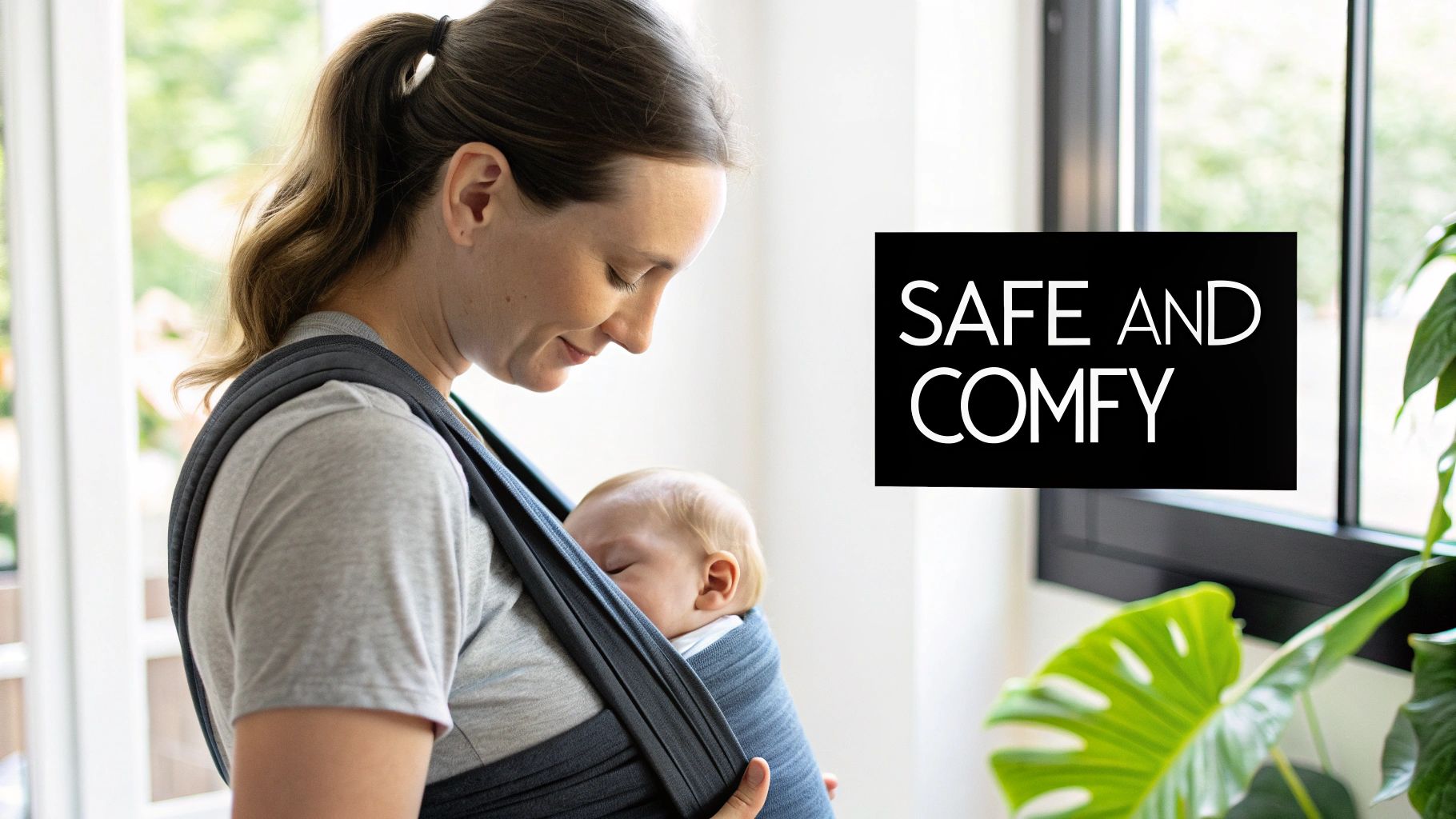
What Truly Matters for Newborns
Parents everywhere are getting smarter about carrier safety and ergonomics. In fact, the North American market makes up about 37% of global baby carrier revenue, largely because parents are demanding models that are designed with proper hip and spine support in mind. This has really pushed brands to create better, more ergonomic carriers specifically for the newborn stage.
To cut through the noise, I’ve put together a quick-reference table that covers the absolute must-haves for any newborn carrier.
Essential Features for a Newborn Baby Carrier
Here’s a look at the non-negotiable features you should be looking for. Think of this as your checklist for ensuring your baby is safe, supported, and comfortable.
| Feature | Why It's Critical for Newborns | What to Look For |
|---|---|---|
| Ergonomic 'M' Position | This is crucial for healthy hip development and prevents putting any strain on their tiny joints. | Look for a wide seat that supports your baby’s thighs all the way from one knee to the other, with their bum sitting slightly lower than their knees. |
| Full Head & Neck Support | Newborns have zero head control, so this support is vital to keep their airways open and prevent their head from flopping around. | A high back panel or an adjustable headrest that comes up to the base of your baby’s neck is a must. |
| Breathable, Skin-Safe Fabric | This helps prevent overheating and protects their delicate skin from rashes, irritation, or allergies. Low-quality materials can contain chemicals that cause skin reactions. | Prioritize natural fibers like organic cotton, linen, or bamboo. An Oeko-Tex certification is a great sign that the fabric is free from harmful substances. |
| Secure & Snug Fit | A good fit holds your baby safely against you, much like they were in the womb, and prevents them from slumping down inside the carrier, which is a breathing risk. | You need adjustable straps and panels to get a customized fit for both your body and your baby, with no loose gaps. |
Getting these four features right is the foundation of a great babywearing experience. It ensures your baby is not just close to you, but also in the safest and most comfortable position possible.
Comparing the Different Types of Newborn Carriers
Trying to pick the best baby carrier for your newborn can feel overwhelming, but it really boils down to understanding the main styles. Each one offers a totally different feel for you and your baby, and they're all designed for different moments and needs. Let’s walk through the four main options you’ll encounter for those precious early months so you can get a real sense of how each might fit into your life.
These carriers range from super-soft, unstructured fabrics to more built-out buckle carriers. It’s no surprise the global baby carrier market is booming—valued at around USD 652.81 million—as more parents discover how practical they are. In fact, structured buckle carriers make up over 50% of that market, mostly because they hit that sweet spot between support and convenience.
Stretchy Wraps: The Ultimate Newborn Cocoon
A stretchy wrap is just what it sounds like: a long piece of soft, jersey-like fabric you tie around yourself to create a cozy pouch for your baby. Think of it as a wearable hug.
- Best For: The "fourth trimester," those first three months after birth. The soft, flexible material mimics the feeling of the womb, which is incredibly comforting and calming for a sleepy newborn.
- Material Focus: Most are made from cotton blends with a hint of spandex or elastane to give them that signature stretch. If you can, look for organic cotton to minimize any risk of skin irritation and make sure it’s breathable—a must for preventing heat rash.
- Learning Curve: There’s definitely a learning curve here. It’ll take a few practice runs to master the tying technique, but once you’ve got it down, you get a perfect, custom fit every single time.
A stretchy wrap is your best friend for soothing a fussy newborn and soaking up all those bonding moments. Its biggest limitation is that it starts to feel less supportive as your baby gets heavier, usually around the 15-20 pound mark.
Ring Slings: Quick and Convenient
A ring sling is a long piece of fabric with two rings sewn securely at one end. You just thread the tail of the fabric through the rings to create an adjustable pouch that rests on one shoulder.
This design makes it incredibly fast to pop your baby in and out. It's a lifesaver for quick errands or for those babies who can't decide if they want to be held or be down exploring. It strikes a great balance, giving you the snug feel of a wrap with the speed of a more structured carrier.
Soft-Structured Carriers (SSCs): Support and Simplicity
Soft-Structured Carriers, or SSCs, are what most people picture when they think of a baby carrier. They come with a padded seat panel, a sturdy waistband, and padded shoulder straps that all click together with buckles.
- Ease of Use: SSCs are generally the easiest and most intuitive to use. Just click the buckles, pull the straps for a snug fit, and you’re good to go.
- Newborn Readiness: Many modern SSCs are designed to work right from birth without needing a separate, bulky infant insert. They pull this off with clever features like adjustable seat panels or built-in newborn positioners that keep your baby in a safe and ergonomic 'M' position.
- Skin Safety: The best SSCs use soft, breathable fabrics like linen or certified organic cotton on the interior panels—the parts that touch your baby’s skin—to prevent irritation, rashes, or allergic reactions.
While carriers are a must-have, there are times you might need other gear. For those moments, you might want to look into versatile options like our two-way baby stroller for longer walks.
Mei Tais: A Hybrid of Comfort and Structure
A Mei Tai (pronounced "may tie") is a beautiful blend of a wrap and a soft-structured carrier. It has a main body panel with four long straps attached—two to tie around your waist and two to go over your shoulders.
Instead of buckles, you tie the straps to get your baby secure. This gives you the custom-fit feeling of a wrap but with the built-in structure and support of a carrier panel. They're incredibly versatile and can be used for front, hip, and back carries, easily growing with your child well beyond the newborn phase.
A Deep Dive into Newborn Carrier Styles
Choosing a newborn carrier isn’t about picking the one with the most features. It’s about finding the one that fits into the rhythm of your new life. What works for a quick dash to the coffee shop is totally different from what you'll need for a long afternoon walk to soothe a fussy baby.
Let’s get real about what matters when you’re sleep-deprived and juggling a tiny human. We’ll look at how easy each carrier is to use when you're fumbling at 3 AM, how well it supports a newborn’s delicate head and spine, and how comfortable it is for you as your baby grows. This way, you can pick the best carrier for your actual, day-to-day reality.
Ease of Use for Sleep-Deprived Parents
When your baby is melting down and you haven't slept, the last thing you need is a complicated piece of gear. This is where carriers really show their differences.
Soft-Structured Carriers (SSCs) are the champions of speed and simplicity. You just buckle, click, and go. Those audible clicks are wonderfully reassuring, and most parents can get an SSC on and baby safely inside in under a minute. That’s a game-changer when you’re in a hurry.
Stretchy wraps, on the other hand, require a bit of practice. There’s a definite learning curve to mastering the tying technique, and you’ll probably need to watch a few tutorials. But once you get the hang of it, the process becomes muscle memory, giving you a perfect, snug fit every single time.
While a stretchy wrap provides that ultimate, womb-like coziness for a newborn, a soft-structured carrier is a back-saver, offering far better support for parents during longer walks.
Ring slings sit somewhere in the middle. They are incredibly fast for quick ups-and-downs, making them perfect for errands or for babies who are in that "up, now down, now up again" phase. Threading the fabric through the rings the first time can be tricky, but after that, popping baby in and out is a breeze.
Quality of Newborn Support
A newborn’s body needs to be supported in a very specific way—maintaining the natural C-curve of their spine and the hip-healthy ‘M’ position for their legs.
-
Stretchy Wraps: These are often called the gold standard for the fourth trimester, and for good reason. The soft, jersey-like fabric molds perfectly to a newborn's tiny body, providing gentle, even support from head to toe. It's like a constant, secure hug.
-
Ring Slings: When used correctly, a ring sling offers fantastic support. The trick is to spread the fabric wide across your baby's back and bottom, creating a deep pocket that encourages that 'M' shape. You’ll also need to make sure the top edge of the fabric is snug to support their head and neck.
-
Soft-Structured Carriers: The best newborn-ready SSCs are designed with this in mind, often featuring adjustable seat panels and built-in headrests. They provide structured, ergonomic support right out of the box, no complicated wrapping required.
This decision tree can help you visualize which carrier might be the right starting point for your main priorities.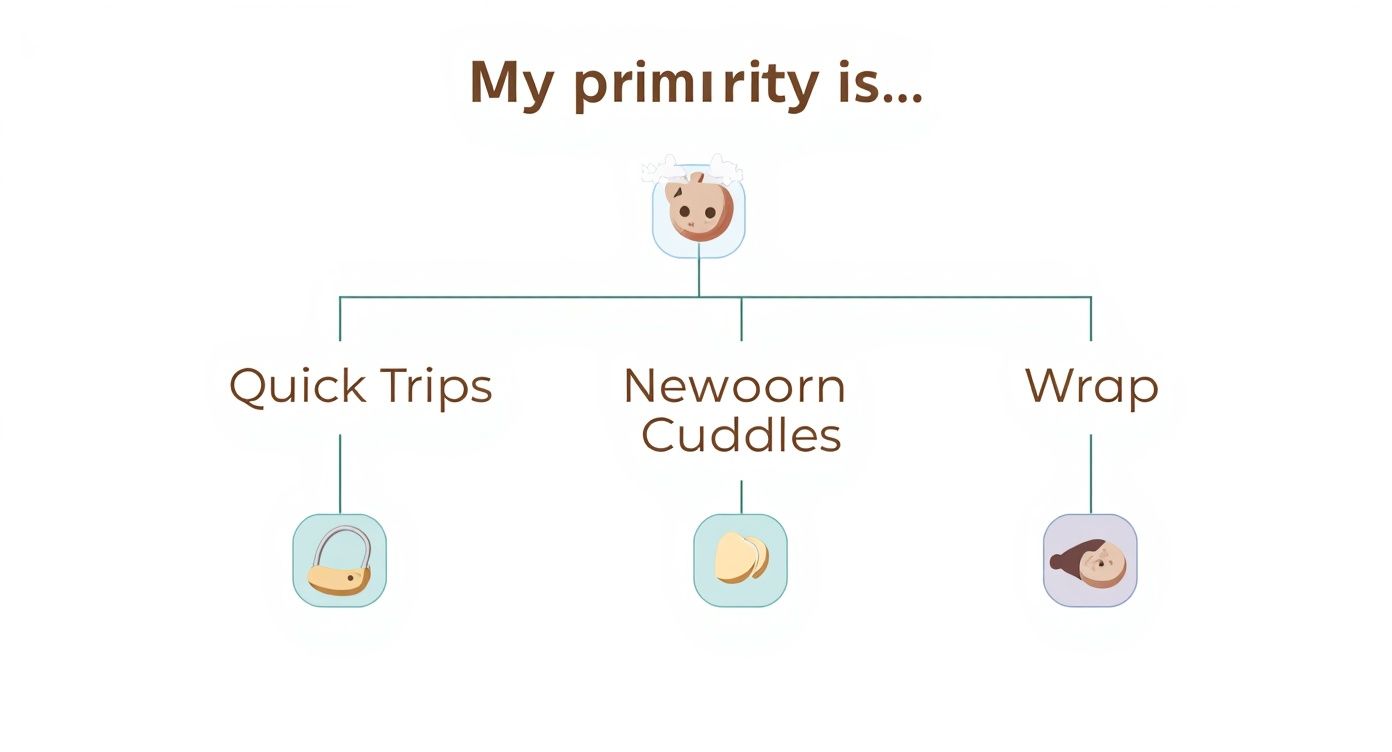
It connects common goals, like "Quick Trips" or "Newborn Cuddles," to the carrier type that excels in that scenario.
Long-Term Comfort for the Wearer
Babywearing shouldn't hurt! Your comfort is just as important, especially as that tiny newborn starts packing on the pounds.
A soft-structured carrier usually takes the top spot for long-haul comfort. The combination of padded shoulder straps and a wide, supportive waistband distributes your baby's weight evenly across your hips and shoulders. This prevents strain on your back and neck, even after hours of wear.
In contrast, a ring sling places all the weight on one shoulder. While it's fantastic for short trips, it can lead to muscle fatigue if you’re out for a long walk. Think of it as a convenience tool, not an endurance carrier.
Stretchy wraps feel amazing when your baby is tiny, spreading their weight beautifully. But as your baby gets closer to the 15-20 pound mark, the stretchy fabric can start to sag. This means you'll be readjusting more often, and it won't feel nearly as supportive for you or for them.
Which Newborn Carrier Fits Your Lifestyle?
Choosing a carrier is a personal decision that depends entirely on your daily routine and what feels most comfortable for you and your baby. This table breaks down which carrier might be the best fit for different parenting scenarios.
| Carrier Type | Ideal For This Parent... | Learning Curve | Key Material Benefit | Longevity (Newborn to Toddler) |
|---|---|---|---|---|
| Stretchy Wrap | The parent who wants the ultimate newborn snuggle and plans to babywear mostly at home or for calm walks. | Medium: Requires practice to master tying techniques. | Ultra-soft, breathable jersey cotton that minimizes skin irritation. | Short: Best for the first 4-6 months, up to about 15-20 lbs. |
| Ring Sling | The parent who needs a quick, easy option for errands, transitioning from car to store, or for a baby who wants frequent ups and downs. | Medium: Tricky to set up initially but very fast for daily use. | Woven fabrics like linen or cotton offer breathability and strength to prevent overheating. | Long: Can be used from newborn to toddlerhood (up to 35 lbs). |
| Soft-Structured Carrier (SSC) | The parent looking for an all-in-one solution with excellent back support for longer outings, hiking, and daily tasks. | Low: The most intuitive and quickest to learn, with simple buckles. | Durable, often organic fabrics with padding. Look for hypoallergenic linings. | Very Long: Many models adjust from newborn to toddler (7 to 45 lbs). |
| Mei Tai (Meh Dai) | The parent who loves the custom fit of a wrap but wants a bit more structure and simplicity. | Medium-High: Involves tying but is less complex than a woven wrap. | Often made from beautiful woven wrap fabric for great support and breathability. | Very Long: Highly adjustable to fit from newborn through toddler years. |
Ultimately, the best carrier is the one you'll actually use. Don't be afraid to try a couple of different styles if you can—what looks good on paper might feel different in person.
Versatility and Longevity
Finally, think about how a carrier can grow with your family. An investment that lasts beyond the first few months offers fantastic value.
The soft-structured carrier is easily the most versatile of the bunch. Many models are designed to carry babies from 7 to 45 pounds, supporting different positions like front-inward, front-outward (once baby has excellent head control), and eventually, a back-carry. This means a single purchase can last you from birth right through the toddler years.
Mei Tais and ring slings also have great staying power. Their unstructured, tie-on designs can be adjusted to get a comfortable fit on both a tiny newborn and a wiggly toddler. A well-made ring sling, in particular, can be a trusted tool for years.
Stretchy wraps have the shortest lifespan. They are truly made for that delicate, sleepy newborn phase and are typically outgrown once your baby becomes heavier and more active, usually around the six-month mark.
The Non-Negotiable Guide to Newborn Safety and Ergonomics
When you're choosing a carrier, it's easy to get caught up in colors and features. But before anything else, we have to talk about safety. This is the absolute number one priority. Getting these fundamentals right means you can wear your baby with total confidence, knowing they’re safe and sound, right where they belong—tucked in close to you.
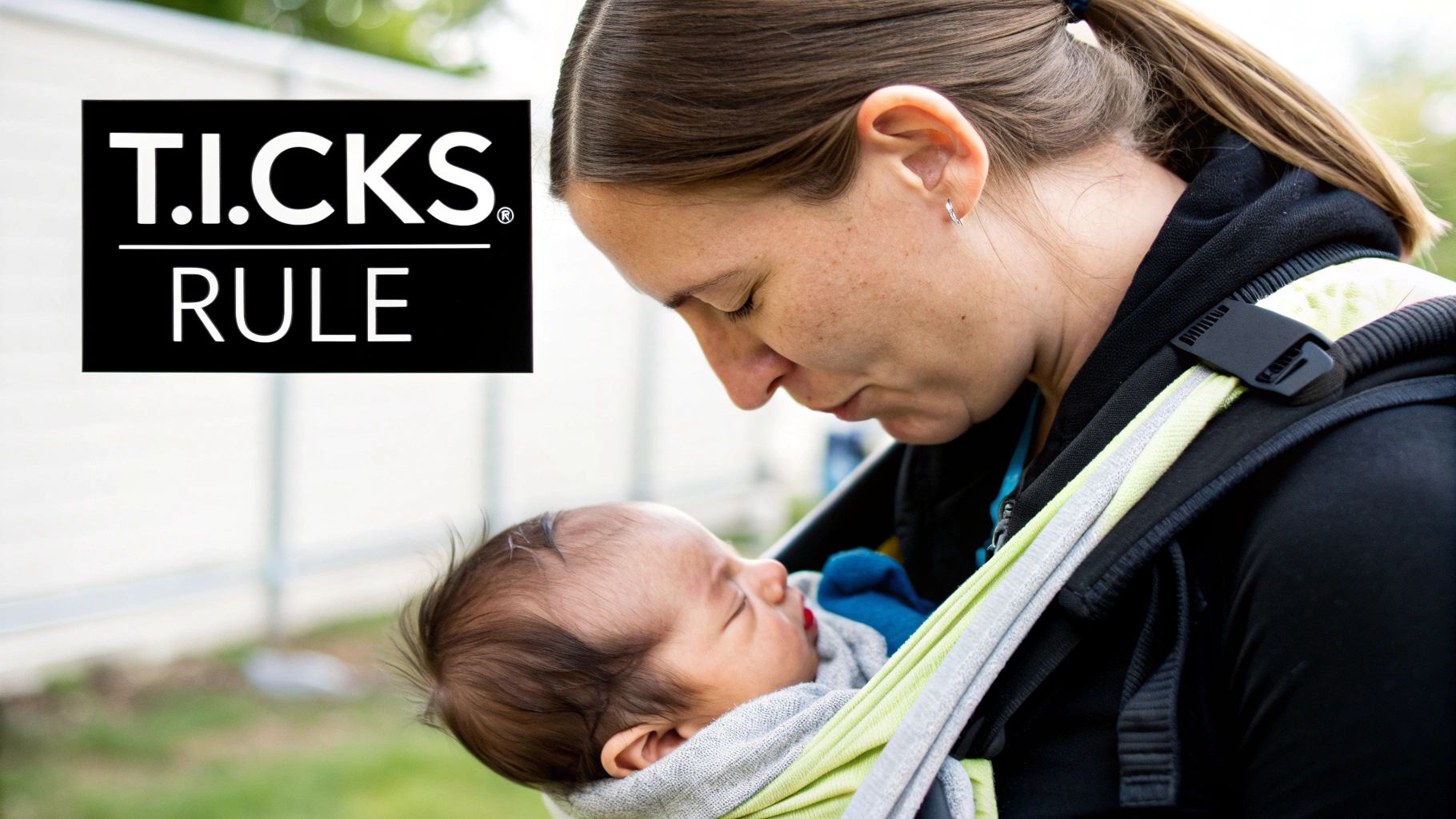
The best tool in your safety toolkit is a simple but incredibly powerful acronym: T.I.C.K.S. Burn this into your memory. It’s a five-point checklist you should run through in your head every single time you put your baby in a carrier.
Mastering the T.I.C.K.S. Rule
Think of T.I.C.K.S. as your safety mantra. It doesn't matter if you're in a wrap, a sling, or a structured carrier—these rules always apply.
-
T is for Tight: The carrier needs to be snug enough to hug your baby securely against your body. Any slack can cause them to slump down, which is a real risk for their tiny airway. If it feels loose, it's not supporting them properly.
-
I is for In View at All Times: You must be able to see your baby's face just by glancing down. No exceptions. The fabric should never cover their head or face, so you can always check that they're breathing easily.
-
C is for Close Enough to Kiss: Your newborn should be positioned high up on your chest. An easy way to check this is to tip your chin down—you should be able to kiss the top of their head without straining. This high, snug position is key to keeping their airway clear.
-
K is for Keep Chin Off Chest: This is the most critical check of all. A baby's airway is incredibly fragile. If their chin is tucked down onto their chest, it can cut off their ability to breathe. Make sure you can always fit at least one finger between their chin and chest.
-
S is for Supported Back: In the early months, a baby's spine has a natural, gentle 'C' curve. Your carrier should support this shape. The fabric should be taut across their back, preventing them from curling into a tight ball or slumping.
Following the T.I.C.K.S. rule is the single most important habit you can develop. It’s what transforms babywearing from just a convenience into a truly safe and reliable practice.
Ergonomics: The M-Position and C-Curve Spine
While T.I.C.K.S. is about immediate safety, good ergonomics is all about supporting your baby's long-term physical development. Two terms you’ll hear a lot are the 'M-position' and the 'C-curve.'
The 'M' Position (also called the spread-squat position) is what the International Hip Dysplasia Institute recommends for healthy hip development.
- What it looks like: Imagine your baby sitting in the carrier. Their bottom should be lower than their knees, and their thighs should be fully supported from one knee pit to the other. Their legs will naturally form the shape of the letter 'M'.
- Why it matters: This position keeps the ball of the hip joint perfectly seated in its socket, which is crucial for preventing hip dysplasia. You want to avoid carriers that let a baby’s legs dangle straight down, as that puts all their weight on the crotch and strains their hips.
The C-Curve Spine refers to the natural, rounded shape of a newborn’s back. For the first few months of life, their spine is C-shaped, not straight like an adult's.
- How to support it: The carrier should mold to your baby's back, allowing them to maintain this gentle curve. Look for soft, pliable fabric rather than a rigid structure that would force their spine straight before their muscles are strong enough to support it.
- What to check for: When you look at your baby from the side, their spine should be softly rounded. This is the most comfortable and developmentally correct posture for them.
Airway Safety: A Constant Priority
A newborn’s airway is their most vulnerable point. We already covered keeping their chin off their chest, but you also have to be vigilant that no fabric is blocking their nose or mouth.
Always opt for carriers made from breathable materials. This helps prevent overheating, which is a known risk factor for SIDS. Synthetic fabrics can trap heat and moisture, which may also cause skin irritation or heat rash. For newborns, navigating skin allergies from unsafe fabrics is a real concern, so choosing safe, hypoallergenic materials is a smart move.
Finally, always carry your newborn in an upright, vertical position on your chest. This is the safest way to carry them, as it naturally keeps their airway open. Make a habit of checking on them frequently, especially when they’re sleeping, just to confirm their breathing is unobstructed. That constant awareness is what makes babywearing such a safe and wonderful bonding experience.
How to Choose Materials That Protect Your Newborn’s Skin
A newborn’s skin is incredibly delicate and much more porous than our own, which means it's easily irritated by harsh chemicals, dyes, and rough fabrics. Since your baby will spend hours snuggled up in their carrier, the material it's made from is one of the most important things to consider. It’s not just about what feels softest; it's about breathability, purity, and whether it’s free from harmful substances that can cause rashes or allergic reactions.
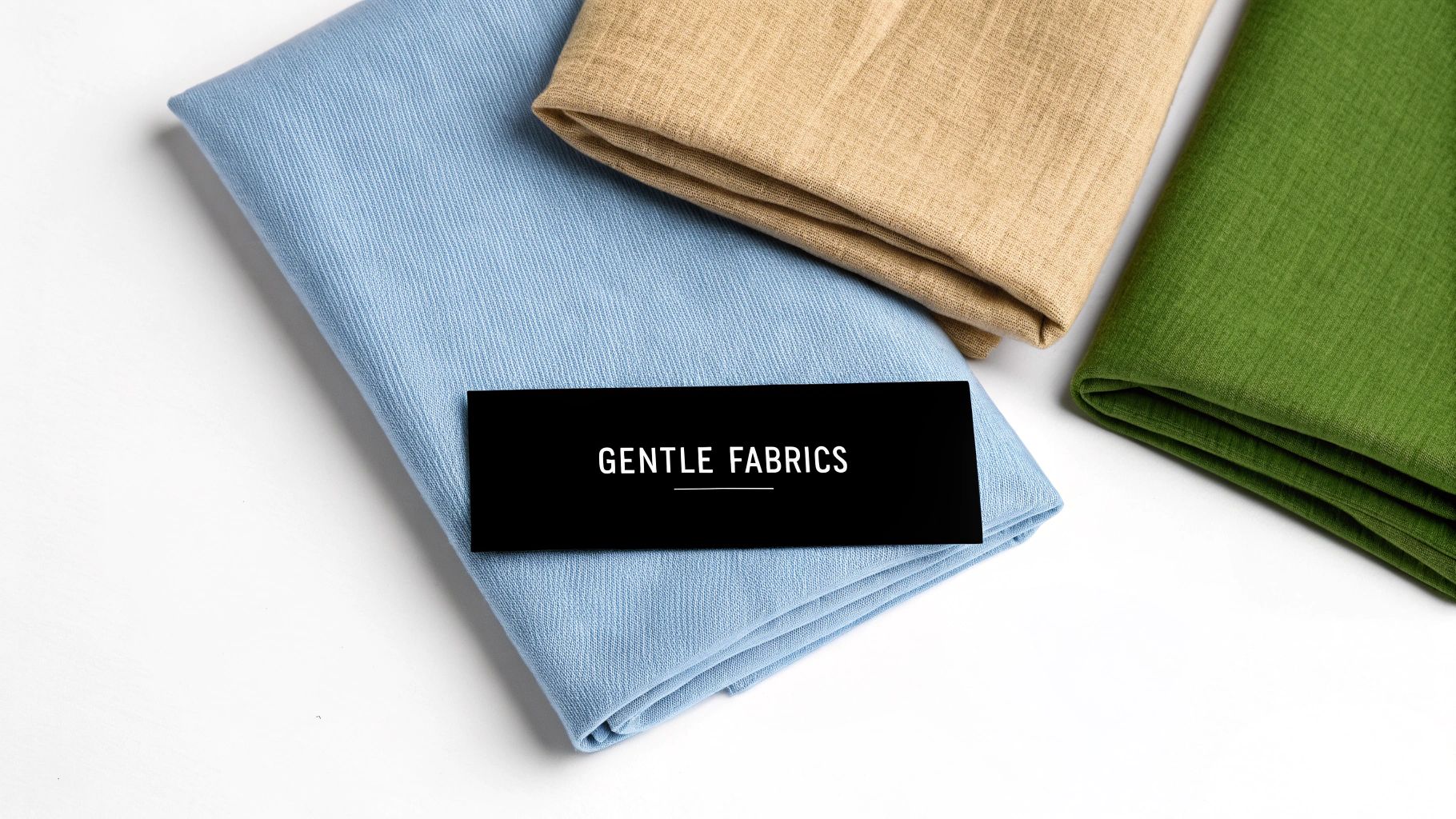
This demand for high-quality, safe materials is a huge deal in the baby carrier industry. Parents are actively seeking out carriers with better designs and premium, skin-friendly fabrics. This trend is driving the global market from around USD 840 million toward a predicted USD 1,153 million. You can dig deeper into these trends over at the IMARC Group's baby carrier market report.
Prioritizing Natural and Breathable Fabrics
When you're shopping for a newborn, natural fibers are almost always the way to go. They offer a blend of softness and performance that synthetic fabrics just can't replicate, which directly helps avoid common issues like rashes and allergies.
Here are a few of the best fabric choices for newborn skin:
- Organic Cotton: This is the gold standard for a reason. It's soft, incredibly durable, and grown without the pesticides and harsh chemicals found in conventional cotton, which drastically cuts down the risk of skin irritation and allergic reactions.
- Linen: Famous for being strong and exceptionally breathable, linen is a lifesaver in warmer climates or for babies who run hot. It does a fantastic job of wicking moisture away, keeping your little one cool, dry, and free from heat rash.
- Bamboo Blends: If you're looking for something silky-soft, bamboo fabric is it. It’s also naturally hypoallergenic and has some antibacterial properties, making it an excellent choice for babies with particularly sensitive skin prone to eczema or rashes.
Getting to know the pros and cons of different materials is a game-changer. For a closer look, we’ve put together a guide on choosing the right fabric for your baby’s sensitive skin.
Understanding Certifications That Guarantee Safety
Besides just looking at the type of fabric, certifications give you that extra peace of mind that a carrier is truly safe and free from harmful substances. When you see these labels on a product, it means it has passed rigorous, independent testing for chemicals that could harm your baby.
The best way to know if a carrier’s fabric is free from harmful chemicals is to check for third-party certifications. These labels go beyond marketing talk and provide real, verifiable proof of safety.
Keep an eye out for these two key certifications:
- Oeko-Tex Standard 100: This is one of the most trusted labels in the world for textiles. If a carrier has this certification, every single part of it—from the fabric and thread down to the buckles and snaps—has been tested and proven to be free from a long list of harmful substances.
- Global Organic Textile Standard (GOTS): This is the top-tier certification for organic fibers. GOTS doesn't just guarantee the fabric is made from at least 95% certified organic materials; it also ensures that no toxic chemicals, harsh dyes, or chlorine bleach were used during the entire production process.
By choosing carriers made from high-quality natural fibers that are backed by certifications like Oeko-Tex or GOTS, you’re creating a safe, non-toxic little world for your baby. This careful choice protects their delicate skin from irritants and lets you enjoy all the snuggles of babywearing without a worry.
Got Questions About Carrying Your Newborn?
It's completely normal to have a few lingering questions, even after you've chosen a carrier. Getting it just right for a tiny newborn can feel a little daunting at first. Let's walk through the most common things new parents ask, focusing on safety, getting that perfect fit, and keeping your carrier clean for your baby's sensitive skin.
My goal here is to clear up those final uncertainties so you can feel completely confident and ready to go.
When Can I Start Using a Baby Carrier for My Newborn?
You can usually start babywearing from day one, as long as your baby is healthy and hits the carrier's minimum weight limit, which is often around 7-8 lbs. The most important thing is that the carrier is designed specifically for newborns, giving them complete support for their head, neck, and still-developing spine.
Stretchy wraps and ring slings are fantastic for those very first few weeks because they create a soft, womb-like environment. If you've opted for a soft-structured carrier (the kind with buckles), just make sure it has a built-in infant setting or a separate newborn insert that keeps your baby in that safe, ergonomic 'M' position. And if you have any doubts, especially if your baby was premature, a quick chat with your pediatrician is always the best first step.
How Do I Know if My Baby Is Positioned Correctly?
The best way to double-check your work is to run through the T.I.C.K.S. safety acronym. It’s a simple, memorable checklist that ensures your little one is safe and sound every single time.
- Tight: The carrier should be snug, holding your baby securely against your body.
- In view: You should be able to glance down and see your baby’s face.
- Close enough to kiss: Your baby should be high up on your chest, right under your chin.
- Keep chin off chest: Make sure there's at least a finger's width of space between their chin and chest to keep their airway open.
- Supported back: Their back should be naturally rounded in a gentle C-curve, not ramrod straight.
For their hips and legs, you're looking for that frog-like 'M' shape, where their knees are higher than their bottom. When the carrier is fitted correctly, you should be able to be completely hands-free without worrying about them slumping down.
A proper fit isn't just about comfort; it's the foundation of safe babywearing. Consistently using the T.I.C.K.S. checklist transforms it from a set of rules into a confident, natural habit every time you put on the carrier.
Is It Safe to Breastfeed My Baby in a Carrier?
Absolutely! Many parents find that nursing in a carrier is a lifesaver, giving them a convenient and discreet way to feed while out and about. Wraps and ring slings are often the easiest to adjust for this since the fabric is so flexible.
To nurse safely, you'll want to loosen the carrier just enough to lower your baby down to breast level. The absolute priority here is making sure their airway is completely clear—not blocked by fabric or your body. Once they're finished, it's really important to bring them right back up into that high, snug, "close enough to kiss" position and retighten the carrier.
How Should I Wash the Carrier to Protect My Newborn's Skin?
Keeping your carrier clean is key to preventing skin irritation, rashes, or the buildup of allergens. The first thing you should always do is check the manufacturer's care tag for specific instructions.
For a general, newborn-safe approach, here’s what I recommend:
- Use a gentle detergent: Stick with a mild, fragrance-free, and dye-free detergent. The one you already use for your baby’s clothes is perfect for preventing any chemical residue that could irritate their skin.
- Wash in cold water: A delicate cycle with cold water is best for protecting the fabric's fibers and colors.
- Protect the hardware: To keep buckles and straps from getting damaged (or damaging your machine), pop the carrier into a mesh laundry bag or even just a zippered pillowcase before washing.
- Air-dry if possible: While some carriers can be tumble-dried on low, air-drying is almost always the better option. Laying it flat or hanging it away from direct sun will help it keep its shape and avoid any potential heat damage to elastics or padding.
At GUGUTON LLC, we believe that the right gear can make the journey of parenthood smoother and more joyful. Our curated collection of baby essentials is chosen with safety, quality, and your baby's delicate needs in mind. Explore our thoughtful selection of products designed for modern families today at https://guguton.com.