

Best Baby Products for Newborns: A Guide to Safe, Skin-Friendly Essentials
When you're bringing a newborn home, nothing matters more than their safety and well-being. It's easy to get lost in the endless aisles of baby products, but you can cut through the noise by focusing on one simple rule: be gentle. The best choices are always the ones that protect your baby’s incredibly delicate skin from irritants, preventing potential allergies and rashes from the very start.
Choosing the Safest Start for Your Newborn
That moment you first hold your baby changes everything. Suddenly, your top priority is keeping this tiny human safe, healthy, and sound. The baby product market is a huge, often overwhelming, world. My goal here is to help you zero in on what truly matters—safety and quality—so you can feel confident that every choice you make helps prevent skin issues and allergies.
A newborn’s skin isn’t just soft—it's much thinner and more porous than our own. This makes it extremely sensitive to everything it touches. The wrong fabric, lotion, or even diaper can quickly lead to painful rashes, eczema, or allergic reactions. Think of your job as creating a soft, nurturing bubble around them, filled only with products designed to protect, not harm, their sensitive skin.
What to Prioritize for Newborn Safety and Skin Health
The best way to protect your baby is to become a detective, looking closely at the materials and ingredients in everything you buy. This focus on preventing skin sensitivities is why the market for safe, hypoallergenic newborn products continues to grow. You can see just how much this awareness is shaping the industry in this detailed report on newborn baby care products.
So, where should you focus your attention to prevent allergies and rashes?
- Things That Touch Their Skin: Pay the most attention to items that will have direct, prolonged contact with your baby’s body—think clothing, bedding, swaddles, and diapers. These are the most common sources of skin irritation.
- Fabric First: Always go for natural, breathable fabrics. Organic cotton, bamboo, and linen are fantastic choices because they don't trap heat and moisture, which is a common cause of skin irritation and heat rash. They are also less likely to contain residual chemicals from processing.
- Simple Ingredients: When it comes to skincare, bath products, and wipes, less is more. Look for short, recognizable ingredient lists and steer clear of common allergens and irritants.
Here's a little trick I've always used: If you can't pronounce the ingredients or have no idea what they are, it’s a red flag. The best products for a newborn's sensitive skin almost always have the simplest, most natural formulas, free from potential allergens.
Putting a little extra thought into these details from the beginning makes all the difference. It helps you prevent discomfort before it starts, letting you and your baby relax and enjoy those precious first few months together with total peace of mind.
Here’s a quick-glance checklist to help you remember the most important safety features when shopping for your newborn. It’s all about protecting that sensitive skin from potential allergies and rashes.
Newborn Essentials Safety Checklist
| Product Category | What to Look For (Safety Focus) | Materials and Chemicals to Avoid |
|---|---|---|
| Clothing & Bedding | GOTS-certified organic cotton, tagless designs, breathable weaves to prevent overheating. | Synthetic fabrics (polyester, nylon), flame retardants, harsh dyes that can trigger skin reactions. |
| Diapers & Wipes | Hypoallergenic, chlorine-free, fragrance-free, lotion-free to minimize risk of diaper rash. | Fragrances, alcohol, parabens, phthalates, chlorine bleaching which can cause irritation. |
| Skincare & Bath | Plant-based ingredients, fragrance-free, hypoallergenic, short ingredient lists. | Sulfates (SLS, SLES), parabens, dyes, synthetic fragrances known to cause allergies. |
| Travel Gear | OEKO-TEX certified fabrics (tested for harmful substances), proper harness fit, good ventilation. | Flame retardant chemicals (often listed as "FR"), PVC, BPA. |
This checklist isn't about being perfect, but about being mindful. By focusing on these key areas, you're creating a safe, gentle, and loving environment for your baby to thrive in from their very first day.
Creating a Safe Sleep and Diapering Environment
Your newborn will spend most of their early life sleeping or needing a diaper change. It's a constant cycle. That's why getting these two areas right is about so much more than just picking cute patterns—it's foundational to their health and preventing skin irritation. We're talking about creating a safe, non-toxic space that supports their development and keeps their brand-new skin happy from day one. When you choose the best baby products for newborns, you're really being mindful about what's touching their skin 24/7.
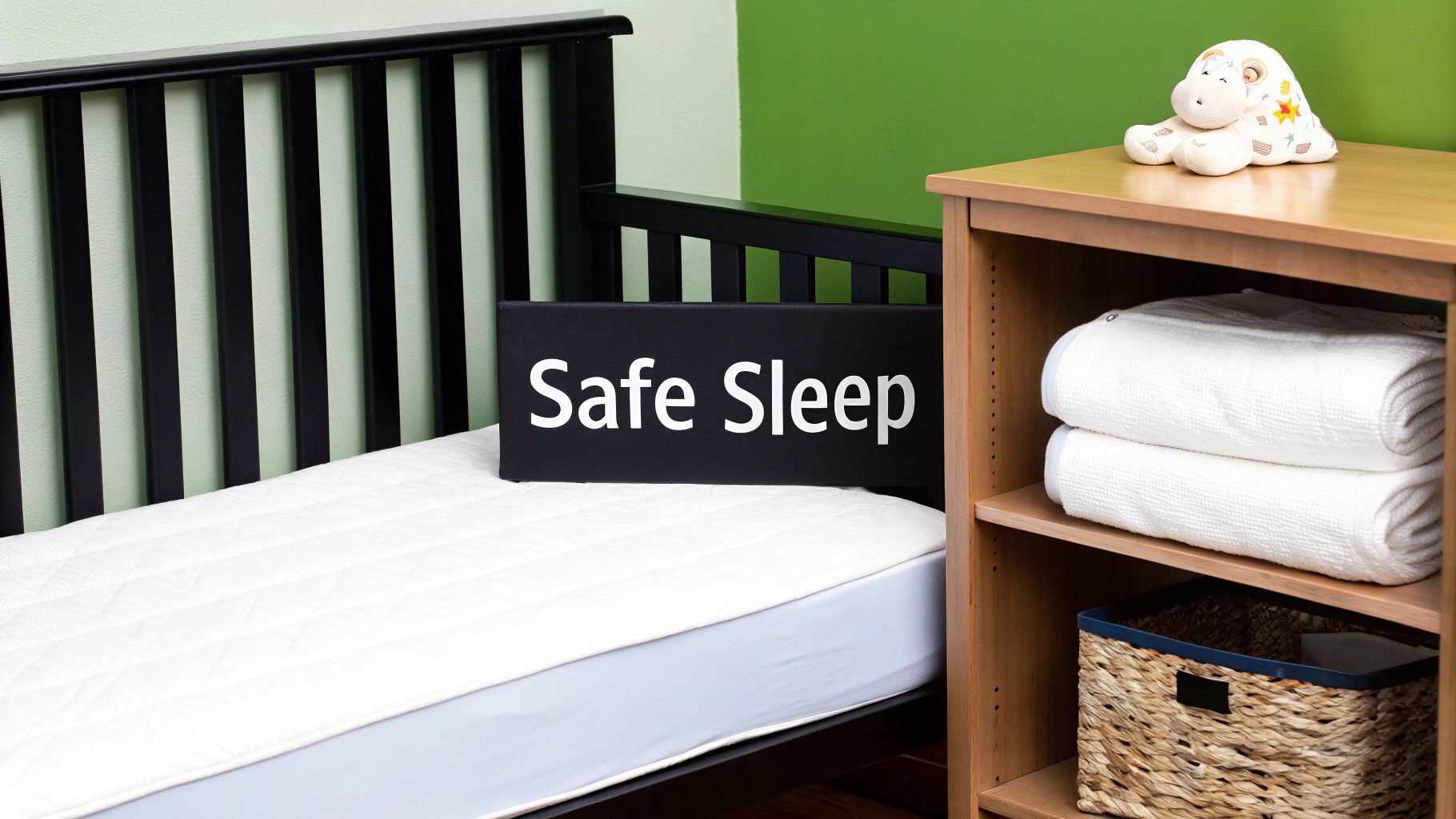
Think of your baby’s crib as their little sanctuary. The golden rule for safe sleep is simple: a bare crib with a firm mattress and a fitted sheet. That’s it. But within that simplicity, the materials of those few items make all the difference in protecting your little one from chemicals and potential allergens that can cause rashes.
Building a Safe Sleep Foundation
The mattress is literally the foundation of your baby’s sleep world. Many standard crib mattresses have vinyl covers and are treated with flame-retardant chemicals, which can off-gas volatile organic compounds (VOCs). A much better route is to find a mattress with a waterproof, food-grade polyethylene surface and an organic cotton core. This setup gives you the protection you need without any of the questionable chemicals.
Next up is the bedding. A newborn’s skin is incredibly thin and permeable, meaning it can easily absorb whatever it touches. This makes soft, breathable, and natural fabrics non-negotiable for preventing skin reactions.
- Choose Organic Cotton Sheets: Look for sheets with a GOTS certification. This is your guarantee that the cotton was grown without pesticides and wasn't processed with the harsh chemicals and dyes that can irritate sensitive skin or trigger eczema.
- Prioritize Breathability: A snug-fitting sheet made from a breathable fabric helps your baby regulate their temperature. This is a crucial part of reducing the risk of overheating, which can cause heat rash and is a known factor in Sudden Infant Death Syndrome (SIDS).
- Avoid Synthetics: Materials like polyester are notorious for trapping heat and moisture. This creates a damp environment against the skin—a perfect recipe for irritation and rashes. Stick with natural fibers for anything that will be touching your baby.
The safest sleep space is a minimalist one. A firm, chemical-free mattress and a single, breathable fitted sheet are all your newborn needs. This simple approach significantly minimizes risks associated with both SIDS and skin-irritating chemical exposure.
Making Smart Diapering Choices
Diapering is the other round-the-clock job. The choices you make here have a constant impact on your baby's most delicate areas. Honestly, the best way to deal with diaper rash is to prevent it from ever starting, and that begins with choosing diapers and wipes that are free from common irritants.
The big debate is often disposable versus cloth. Both have their fans, but your main focus, either way, should be on safe materials that won't cause allergic reactions.
- Disposable Diapers: If you go this route, seek out brands that are Totally Chlorine-Free (TCF). The chlorine bleaching process can create dioxin byproducts, which you definitely want to avoid. Also, make sure the packaging says the diapers are free from fragrances, lotions, and phthalates—all common triggers for diaper rash.
- Cloth Diapers: For those using cloth, you can’t go wrong with natural fibers like organic cotton, bamboo, or hemp. They’re super absorbent, soft, and incredibly gentle on the skin, reducing the likelihood of irritation.
Wipes, Creams, and Changing Essentials
The diaper is only half the story. The accessories you use at every single change matter just as much for skin health. Wipes are often the hidden culprit behind skin reactions. The best ones are water-based, have very few ingredients, and are completely free of alcohol or synthetic fragrances.
A good barrier cream is your best friend for preventing diaper rash. Zinc oxide is a proven, effective ingredient, but check that the cream itself doesn't contain petroleum or parabens. Look for formulas with soothing, natural ingredients like calendula or shea butter instead.
And for all those changes when you're not at home, a quality, easy-to-clean changing mat is a lifesaver. GuGuTon's waterproof diaper changing pad gives you a soft, non-toxic surface that keeps your baby protected from public changing tables and is a breeze to wipe down.
By being thoughtful about each part of your sleep and diapering routines, you’re building a bubble of safety that keeps your newborn comfortable, healthy, and rash-free.
Gentle Feeding and Soothing Essentials
Feeding your newborn is one of the first and most profound ways you connect with them. It’s about so much more than just nutrition—it's about comfort, bonding, and closeness. But the tools we use for feeding and soothing can sometimes introduce chemicals or irritants we'd rather avoid, which is why picking gentle, non-toxic gear is so important for protecting their tiny, developing systems.
It’s easy to feel overwhelmed by the sheer number of options out there. The baby product market is huge—valued at around USD 256.78 billion in 2024—and it's growing because parents everywhere are demanding safer, better-quality items. If you're curious, you can see how this trend is shaping everything from toiletries to safety gear in this in-depth baby products market analysis.
Selecting Safe Feeding Supplies
Whether you’re breastfeeding, bottle-feeding, or doing a bit of both, the materials touching your baby and their milk really do matter. A little thought here can prevent skin irritation around the mouth and keep your baby away from unwanted chemicals.
If you're breastfeeding, your comfort is just as important as your baby's.
- Natural Nipple Creams: Look for simple, lanolin-free creams with organic ingredients like olive oil or calendula. They work wonders for soothing sore skin and are perfectly safe if your baby ingests a little—no mystery additives or potential allergens involved.
- Breathable Nursing Pads: Reusable pads made from organic cotton or bamboo are a game-changer. They're soft, incredibly absorbent, and let your skin breathe, which is key to preventing irritation and infection.
When it comes to bottle-feeding, the focus is squarely on the bottle and nipple.
Think of your newborn’s bottle as a clean slate, totally free from iffy plastics. The absolute safest choices are glass, stainless steel, or plastics that are clearly marked BPA-free, BPS-free, and phthalate-free. This is your guarantee that no endocrine-disrupting chemicals will sneak into your baby's milk.
The nipple is just as critical. Stick with medical-grade or food-grade silicone. It’s durable, easy to clean, and won’t harbor bacteria or break down like latex, which can be an allergen for some babies. And don’t forget, a warm bottle can make all the difference for a happy feeding. We've got a great guide on the best baby bottle warmers to help you find a safe one that fits your routine.
Choosing Gentle Soothers
Beyond a full belly, newborns often need a little extra help calming their brand-new nervous systems. Swaddles and pacifiers are go-to soothers for a reason, but just like feeding gear, the materials make a big difference for your baby's health and skin.
A pacifier should be as simple and safe as possible. Your best bet is a single-piece model made from 100% medical-grade silicone. The one-piece design means there are no parts to break off and become a choking hazard, and silicone is naturally hypoallergenic and easy to sterilize.
Swaddling is amazing for helping newborns feel secure, almost like they’re back in the womb. But the wrong fabric can cause them to overheat and develop a heat rash, which is a known risk factor for SIDS.
Key Features of a Safe Swaddle:
- Fabric: Always go for lightweight, stretchy, and breathable fabrics. Think organic cotton or a soft bamboo blend to prevent skin irritation.
- Fit: A good swaddle should be snug around the torso but leave plenty of room for their legs to move and bend, which is crucial for healthy hip development.
- Temperature: Natural fibers are fantastic at regulating body temperature, keeping your baby cozy and warm without making them sweat.
By being mindful about these essentials, you can build a feeding and soothing routine that not only works but is also built on a foundation of safety, protecting your little one from unnecessary irritants and allergens.
A Guide to Skin-Safe Clothing and Bath Products
A newborn's skin is their first line of defense, but it’s incredibly thin and porous, making it super sensitive to the world around it. This is why choosing the right clothing and bath products is so important—it’s not just about comfort, it's about actively preventing the irritants that can lead to rashes, allergies, and eczema.
Think of your baby’s skin as a delicate little sponge that soaks up everything it touches. What you put on their body is just as critical as what you put in it. Making mindful choices here creates a protective, nurturing environment right from the start.
Choosing the Right Fabrics for Sensitive Skin
The clothes your newborn wears are in constant contact with their skin. While that tiny patterned onesie is adorable, the fabric it's made from matters so much more for their health. Many conventional fabrics are treated with pesticides, harsh dyes, and finishing chemicals that can easily bother delicate skin and cause allergic contact dermatitis.
The best way to avoid this is to stick with natural, breathable, and certified-safe materials. These fabrics work with your baby's skin, not against it.
- GOTS-Certified Organic Cotton: This is really the gold standard for baby clothing. The Global Organic Textile Standard (GOTS) certification is your guarantee that the cotton was grown without harmful pesticides and processed without harsh chemicals. It's exceptionally gentle and pure, minimizing the risk of skin reactions.
- Bamboo Rayon: You'll know bamboo fabric by its incredibly soft, silky feel. It's also hypoallergenic and super breathable. Its moisture-wicking properties are fantastic for keeping your baby's skin dry, which is a game-changer for preventing heat rash and irritation.
By choosing these materials, you drastically cut down your baby's exposure to things that could cause a reaction. For a closer look at this, feel free to explore our detailed guide on choosing the right fabric for your baby's sensitive skin, where we break down all the benefits.
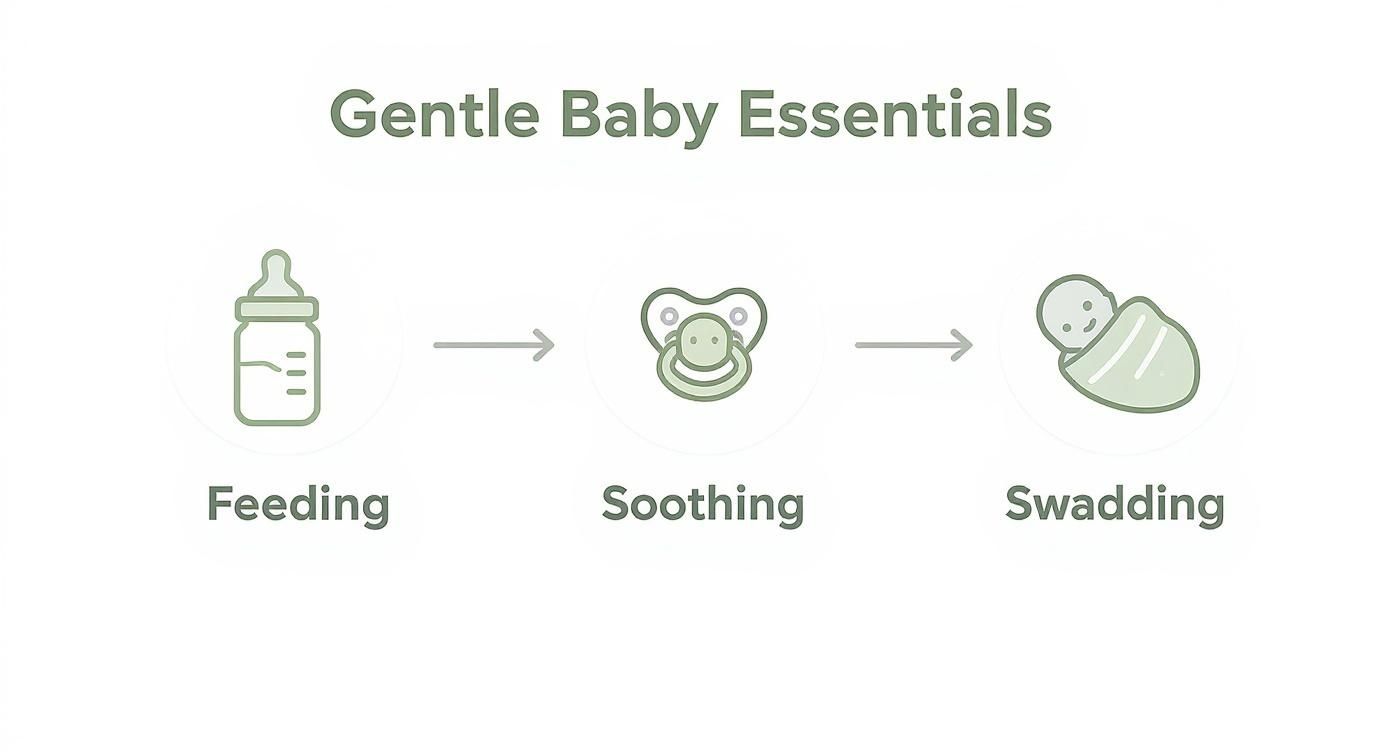
This image beautifully illustrates how gentle, thoughtfully chosen essentials—from feeding and soothing to swaddling—all work together to support your newborn's overall well-being. It's a great reminder that the best products are often the simplest and safest ones.
Decoding Bath Product Ingredients
Bath time should be a calming, sweet experience. But so many mainstream baby products contain ingredients that can strip the skin of its natural, protective oils, leading to dryness and eczema. Learning to be an ingredient detective is one of the most powerful things you can do for your baby's skin.
The good news is that parents everywhere are catching on. The global market for baby skincare is expected to hit about $31.14 billion by 2034, showing a massive shift toward organic and hypoallergenic options.
To help you navigate the aisles, here's a quick reference guide for spotting the good stuff and avoiding the not-so-good stuff in both clothing and skincare.
Skin-Safe Fabric and Ingredient Guide
| Category | Choose These (Safe & Gentle) | Avoid These (Potential Irritants) |
|---|---|---|
| Clothing Fabrics | GOTS-Certified Organic Cotton, Bamboo Rayon, Muslin, Linen | Synthetic Fabrics (Polyester, Nylon), Non-Organic Cotton (pesticides), Fleece (can trap heat/sweat) |
| Cleansers & Soaps | Castile Soap, Oat Extract, Calendula, Chamomile | Sulfates (SLS/SLES), Soap with "Fragrance" or "Parfum" |
| Lotions & Oils | Shea Butter, Coconut Oil, Jojoba Oil, Lanolin (if no wool allergy) | Mineral Oil, Parabens, Phthalates, Synthetic Dyes |
| Diaper Creams | Zinc Oxide (non-nano), Calendula, Shea Butter | Petrolatum, BHA, Boric Acid, Fragrances |
Remember, a shorter, more recognizable ingredient list is almost always better. If you can't pronounce it, it's probably worth skipping to avoid a potential allergic reaction.
Your goal is to cleanse gently without causing dryness or irritation. Look for plant-based formulas that nourish the skin.
Key Irritants to Watch Out For:
- Sulfates (SLS/SLES): These are harsh detergents used to create a bubbly lather. They're notorious for stripping the skin of its natural moisture, which can lead to dryness and irritation.
- Parabens: Used as preservatives, these chemicals can be skin sensitizers and are best avoided in products for little ones.
- Synthetic Fragrances: This is a tricky one. A single term like "parfum" or "fragrance" on a label can hide hundreds of undisclosed chemicals, which are common triggers for allergies and rashes.
Instead, look for products with calming, natural ingredients like calendula, chamomile, and oat extract. Honestly, a simple, fragrance-free castile soap is often all a newborn really needs.
By choosing gentle, non-toxic options for both clothing and bath time, you're creating a safe daily routine that truly protects and supports your baby’s delicate skin.
Keeping Your Newborn Safe While Traveling
Taking your newborn on their first adventures is a huge milestone. Whether it's a short drive to the grandparents' house or just a quick run to the store, their safety is everything. The best baby products for newborns aren't just for the nursery; they're about creating a protective bubble for your little one wherever you go. Think of your travel gear as more than just a convenience—it's a critical part of keeping them safe from physical bumps and environmental nasties.
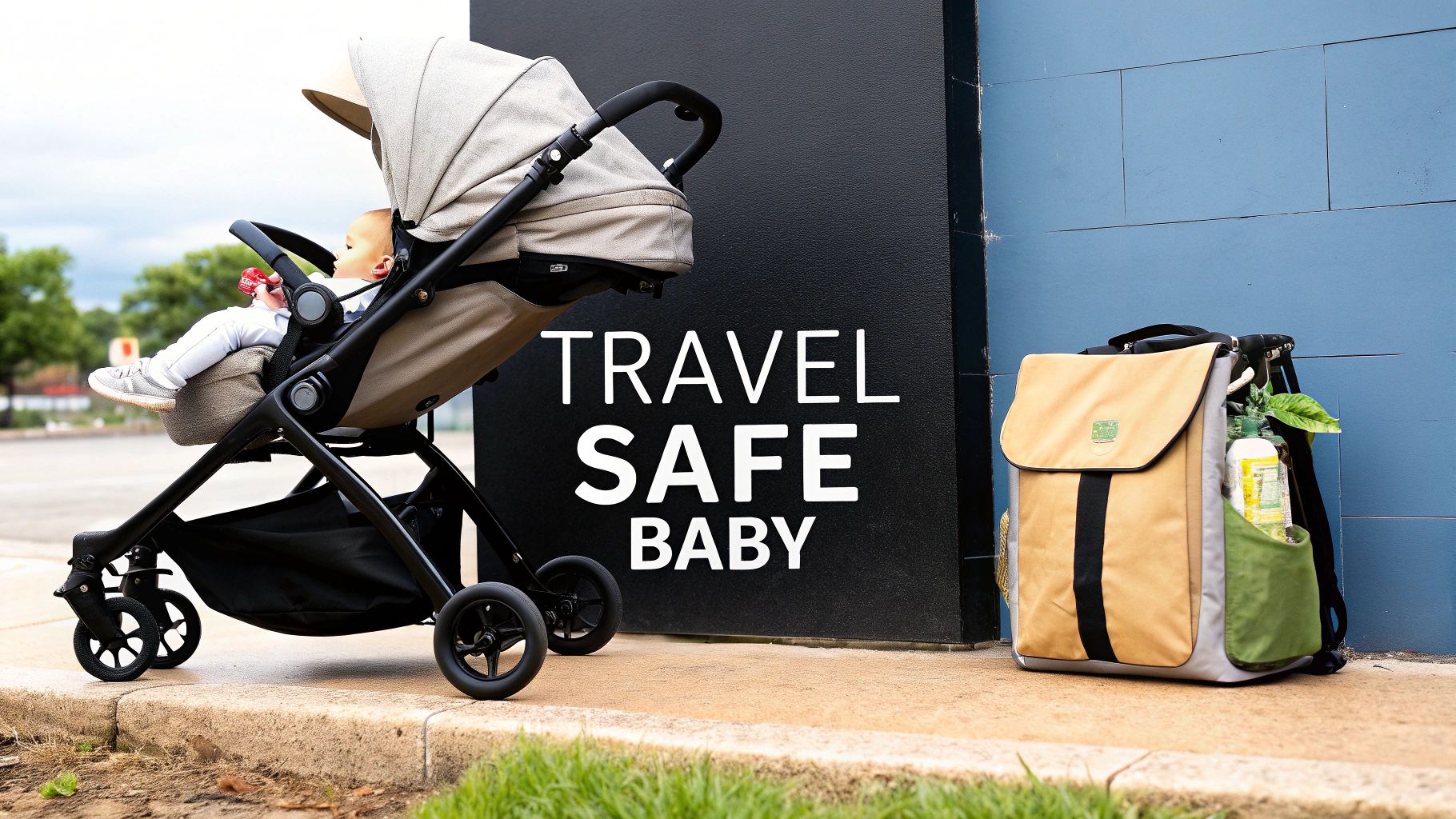
Prioritizing Non-Toxic Car Seats and Strollers
Let’s talk about the big one: the car seat. It’s your baby’s first line of defense in any vehicle, but safety goes beyond just crash test ratings. Many car seats on the market are treated with chemical flame retardants to meet federal safety standards. The problem is, these chemicals can "off-gas," releasing substances into the air your baby breathes in that confined space.
Thankfully, you have other options. Many brands now offer seats made with flame-retardant-free fabrics, opting for naturally flame-resistant materials like merino wool. When you're shopping, keep an eye out for that specific label. It's a simple way to dramatically reduce your baby's chemical exposure.
Strollers and carriers have their own set of considerations. Your baby will spend a lot of time snuggled up in them, so the materials really count. A stroller with poor airflow can cause a newborn to overheat in minutes, since they can’t regulate their own body temperature yet.
Look for strollers with generous mesh panels for ventilation and canopies made from breathable, non-toxic fabrics. Certifications like OEKO-TEX Standard 100 are your best friend here—they guarantee the textiles are free from harmful substances, which is great for peace of mind and preventing skin reactions.
Ergonomics are also a huge deal, especially for carriers. You want a design that supports healthy hip and spine development and doesn't trap heat against your body. Natural, breathable fabrics like cotton or linen are perfect for preventing rashes and keeping everyone comfortable. Exploring options like GuGuTon's lightweight folding stroller can point you toward designs that get both safety and comfort right.
Assembling a Safe Travel Diaper Bag
Your diaper bag is basically your mobile command center. Packing it right means you're ready for anything without having to compromise on using gentle, safe products. A well-organized bag helps you tackle messes quickly, which is key to preventing the skin irritation that comes from a wet diaper.
Here’s a quick checklist for a diaper bag that’s ready for the road:
- Hypoallergenic Wipes: Stick to water-based wipes that are free from alcohol, fragrances, and parabens. You don’t want to be dealing with an unexpected skin reaction while you're out.
- A Portable Changing Pad: Public changing tables are… questionable. A wipeable, non-toxic changing pad creates a clean, safe barrier between your baby and whatever surface you're using.
- Gentle Diaper Cream: A travel-sized tube of a zinc-oxide-based cream is a must-have for soothing skin and preventing diaper rash before it can even start.
- Extra Outfits: Blowouts happen. Always pack at least one extra set of clothes made from something soft and breathable, like organic cotton or bamboo, to keep their skin comfortable.
- Safe Hand Sanitizer: For those times when soap and water aren’t an option, keep a gentle, alcohol-free hand sanitizer for yourself.
With the right gear and a thoughtfully packed bag, you can head out the door feeling confident, knowing you’ve chosen products that will protect your newborn from head to toe.
How to Build a Smarter Baby Registry
Creating a baby registry can feel like a full-time job. It’s so easy to get caught up in the excitement and add every shiny new gadget to your list. But a smarter, more thoughtful approach is to focus on what truly matters: safety, quality, and practicality, especially when it comes to preventing skin issues.
Think of your registry less as a wishlist and more as a strategic plan for your baby’s first few months. The goal isn't just to get free stuff; it's to gather the best baby products for newborns that will genuinely make your life easier and keep your little one safe and comfortable, without cluttering your home with things you’ll never use.
Prioritize Essentials Over Nice-to-Haves
Let's be honest: the baby industry is amazing at making you think you need everything. But newborns have very simple needs. They need a safe place to sleep, a way to eat, soft clothes to wear, and a whole lot of diapers. Everything else is just a bonus.
To cut through the noise, a great first step is to divide your list into two simple categories: "must-haves" and "nice-to-haves." This little exercise really helps you zero in on what’s actually critical for your baby's well-being and skin health right from day one.
Must-Have Registry Items:
- A Safe Sleep Space: A certified crib or bassinet is non-negotiable. Pair it with a firm mattress and a few sets of fitted organic cotton sheets to prevent skin irritation.
- Diapering Supplies: Stock up on chlorine-free, hypoallergenic diapers, gentle water-based wipes, and a good non-toxic diaper cream.
- Feeding Essentials: Whether you're breastfeeding or bottle-feeding, this includes things like BPA-free bottles with medical-grade silicone nipples or supportive breastfeeding gear.
- A Core Wardrobe: You don't need a huge collection at first. A small set of GOTS-certified organic cotton onesies, sleepers, and swaddles is perfect for protecting sensitive skin.
Your registry does more than just get you gifts; it communicates your priorities to friends and family. When you focus on high-quality essentials, you’re guiding them toward items that are safe, durable, and free from harmful chemicals, giving your baby the healthiest, most skin-friendly start possible.
Become a Label and Review Detective
Once you have your essentials list, it’s time to put on your detective hat. Digging into product details, decoding labels, and sifting through reviews is the best way to make sure every single item meets your standards for preventing rashes and allergies.
Start with the easy stuff: look for trusted third-party certifications. Think of them as a shortcut to finding genuinely safe and well-made products.
Key Safety Certifications to Look For:
- GOTS (Global Organic Textile Standard): This is the gold standard for textiles. It guarantees that things like clothing and bedding are made from organic fibers and are free from nasty chemicals at every step of production.
- Oeko-Tex Standard 100: When you see this label, it means every part of an item—from the thread to the buttons—has been tested for harmful substances and is safe for human health.
After checking for seals of approval, dive into the reviews, but do it with a critical eye. Don't get swayed by one over-the-top positive or negative comment. Instead, look for patterns. Do multiple people mention the same flaw? Do parents rave about how a product was a lifesaver for their baby with sensitive skin?
This kind of thoughtful research is what turns a simple wishlist into a carefully curated collection of the safest and best baby products for newborns.
A Few Common Questions About Newborn Products
Stepping into the world of baby gear can feel overwhelming, and it's natural to have a ton of questions. Let's tackle some of the most common concerns new parents have, with a focus on keeping your little one safe, comfortable, and free from skin irritation.
What Are the Most Important Safety Certifications to Look For?
Think of certifications as your cheat sheet for safety. Instead of becoming a chemical engineer overnight, you can rely on these independent seals to verify that a product meets high standards for preventing exposure to irritants.
- For Textiles (Clothing & Bedding): The GOTS (Global Organic Textile Standard) is the gold standard. It means the fibers are organic and the entire production process is free of nasty chemicals that can cause rashes. OEKO-TEX Standard 100 is another great one to look for, as it guarantees the final product is free from a long list of harmful substances.
- For Gear (Car Seats & Strollers): The JPMA (Juvenile Products Manufacturers Association) seal is a big deal. It tells you the product has passed tough safety tests for both performance and materials.
- For Skincare: Look for USDA Organic, which certifies that the ingredients were grown and processed without synthetic pesticides. The EWG Verified mark is also a trusted sign, confirming a product avoids ingredients of concern for sensitive skin.
How Should I Wash Newborn Clothes to Prevent Skin Irritation?
A newborn's skin is brand new and incredibly delicate, making it prone to irritation. The right laundry routine can make all the difference. Always, always pre-wash any new clothing, bedding, or swaddles before they touch your baby’s skin to get rid of any dust or chemical residues from the factory.
Stick to a liquid detergent that is clearly labeled fragrance-free and dye-free for sensitive skin. It’s also a good idea to skip fabric softeners and dryer sheets entirely. They work by leaving a waxy, chemical coating on fabrics—the very thing you want to keep away from your baby's skin. For extra peace of mind, run an extra rinse cycle to wash away any lingering detergent.
Are organic baby products always the safest choice? While "organic" is often a good sign, the word can sometimes be used loosely in marketing. The smartest move is to look for official certifications like GOTS and always flip the product over to read the full ingredient list. A truly safe product has simple, recognizable ingredients and is free from fragrances, dyes, sulfates, and parabens, which are known skin irritants.
What One Product Category Should I Prioritize for Safety?
If you have to channel your energy (and budget) into one area, focus on the items that have the most direct and prolonged contact with your baby’s skin. This makes your top three priorities bedding, clothing, and diapers.
Choosing certified organic, breathable fabrics for crib sheets and onesies, and opting for diapers that are free from chlorine and fragrances, will make the biggest day-to-day impact. These choices directly reduce your baby's constant exposure to potential irritants, which is key to preventing rashes, allergies, and discomfort right from the start.
At GuGuTon, we know that creating a safe and gentle world for your newborn is what matters most. That’s why we hand-pick our collections, focusing on high-quality, non-toxic materials you can feel good about. Explore our range of baby essentials designed for total comfort and your peace of mind at https://guguton.com.