

What Is Baby Sleep Regression A Guide for Worried Parents
Just when you think you’ve finally got your baby's sleep schedule figured out, everything falls apart. Sound familiar? If your once-solid sleeper is suddenly fighting naps, waking up all night, and generally refusing to cooperate, you've likely hit a sleep regression.
It's a frustrating and exhausting experience, but here’s the most important thing to remember: this isn't a step backward. A sleep regression is actually a sign of incredible mental and physical growth. Think of it as a system upgrade for your baby's brain and body.
What Is Baby Sleep Regression
Sleep regressions are temporary periods directly tied to major developmental milestones. Your baby's brain is working overtime, learning to roll over, crawl, or even process language. This internal activity can make it incredibly hard for them to switch off and settle down to sleep.
The most notorious of these is the 4-month sleep regression. This one is a biggie because it marks a permanent change in how your baby sleeps. Around 3 to 4 months of age, their newborn sleep patterns disappear, and they start cycling through light and deep sleep stages, much like adults. This new sleep architecture is a huge biological leap, but it often means more frequent waking as they learn to connect these new sleep cycles. You can explore more about these sleep cycle changes and their effects and what they mean for your family.
This timeline gives you a great visual of how your baby's sleep evolves from the disorganized newborn phase, through the rocky regression period, and toward more mature, structured sleep.
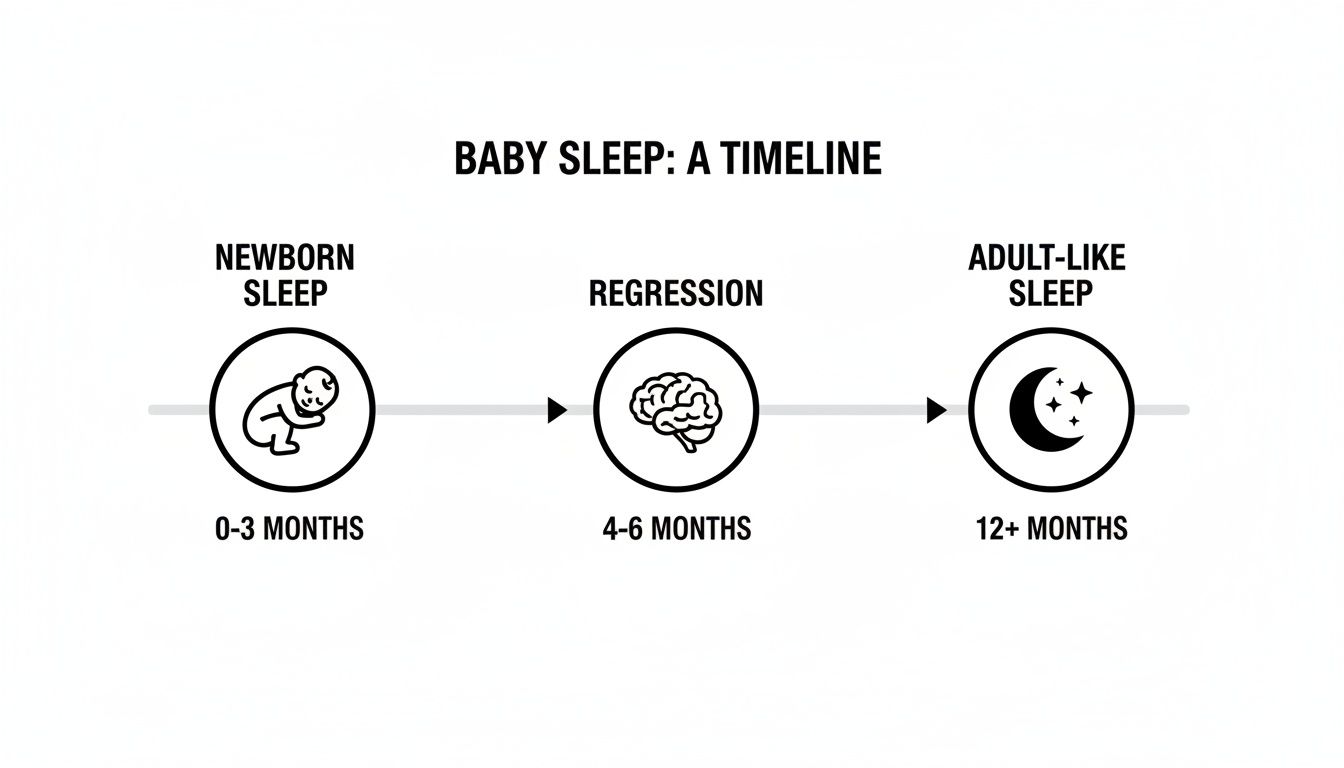
As you can see, these regressions are a necessary bridge. They are the transition point between chaotic newborn sleep and the more predictable patterns that come later.
Key Aspects of a Sleep Regression
It’s easy to confuse a regression with other sleep disruptors like teething or a cold. The tell-tale signs of a regression are almost exclusively related to their sleep habits.
- It’s Temporary: Hang in there. Most regressions last anywhere from two to six weeks.
- It’s Tied to Development: These phases almost always pop up when your baby is on the verge of a big new skill.
- It’s Sudden: The shift from sleeping well to... not sleeping well often feels like it happens overnight.
During these restless periods, you might notice your baby tossing and turning a lot more. This increased movement can cause friction against their bedding, making soft, breathable, and hypoallergenic materials more important than ever. Choosing high-quality, gentle fabrics helps prevent skin irritation, allergies, or rashes from flaring up when they're already struggling to get comfortable.
Recognizing the Signs of a Sleep Regression
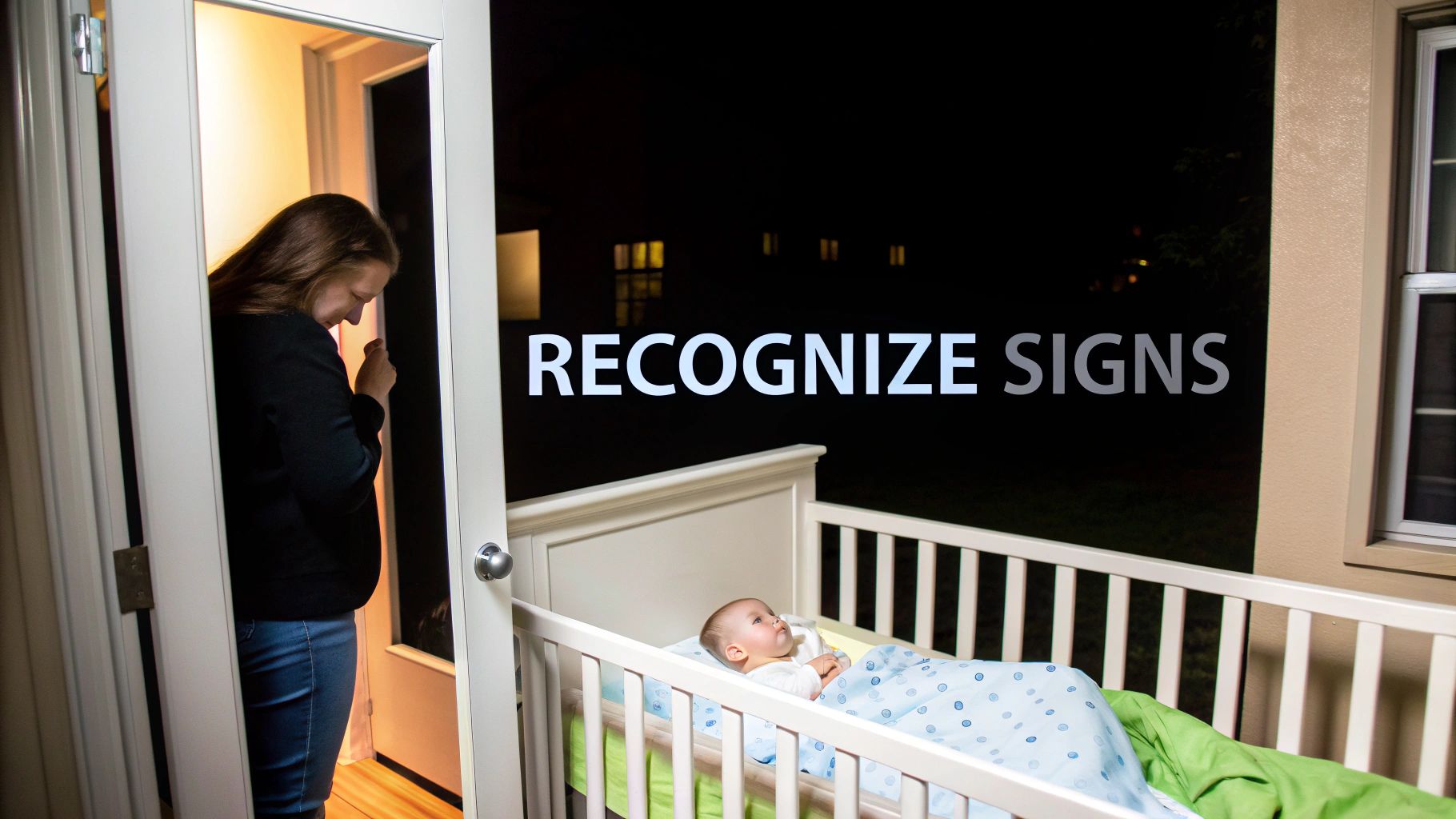
It can be really hard to tell what's behind your baby's sudden sleep troubles. Is it a sleep regression? Teething? A growth spurt? While every baby is unique, a sleep regression usually brings a cluster of changes that are almost entirely focused on their sleep patterns. The biggest clue is just how abruptly things change from your normal routine.
The most glaring sign is a sudden spike in night wakings. The baby who was finally giving you long, glorious stretches of sleep might suddenly be up every couple of hours again. This isn't just random; it's a direct result of their sleep cycles maturing. They are beginning to cycle through lighter and deeper sleep stages, much like adults do, which creates more opportunities for them to wake up between those cycles.
More Than Just Waking Up at Night
It’s not just the nights that fall apart—daytime sleep usually takes a hit, too. Even champion nappers can suddenly start fighting you on naps or taking frustratingly short ones. Those dreaded 30-45 minute "disaster naps" can become the new normal for a little while, leaving you with an exhausted and fussy baby.
On top of the sleep changes, you’ll probably notice some shifts in their behavior during the day. Look out for:
- Increased Fussiness and Crankiness: An overtired baby is rarely a happy baby. This general irritability can seem to pop up out of nowhere and last all day long.
- Extra Clinginess: Separation anxiety often kicks into high gear during a regression. Your little one might wail the second you step out of sight or refuse to be put down in their crib.
- Fighting Sleep with All Their Might: Bedtime can suddenly feel like a wrestling match. Even when they are clearly exhausted, they might cry, arch their back, and do everything in their power to resist drifting off.
The real giveaway of a sleep regression is how quickly it starts. If your baby's solid sleep habits seemed to completely unravel overnight—and there are no other signs of illness like a fever or runny nose—you're almost certainly in the middle of a developmental leap that's messing with their rest.
Don't Overlook Skin Comfort and Safety
All that newfound restlessness—the tossing, turning, and protesting in the crib—creates a lot more friction against their sleepwear and bedding. This constant rubbing can be surprisingly irritating for a baby’s sensitive skin, sometimes leading to uncomfortable chafing, rashes, or triggering an allergy.
This is when the quality and safety of fabrics really matter. Choosing soft, breathable, and certified hypoallergenic materials like organic cotton helps minimize that friction and keeps their skin cool and dry. It’s a simple change that ensures their skin stays comfortable and healthy while their brain is working overtime, helping to prevent discomfort that could further disrupt sleep.
Keeping a close eye on them with a reliable wireless baby monitor can also offer incredible peace of mind, letting you check for signs of discomfort without having to go in and potentially wake them up fully. Spotting these signs early lets you respond with the patience and comfort they need to get through it.
Why Do Sleep Regressions Happen?
Just when you think you’ve finally got your baby’s sleep figured out, everything falls apart. It’s frustrating, but here’s the thing: these disruptions aren’t random. They’re a direct sign that your baby is growing and developing exactly as they should.
Think of it like a computer installing a massive software update. The system gets a little glitchy and slows down while the new program is loaded. Your baby’s brain is doing the same thing, and sleep is often the first thing to get temporarily sidelined. Once you understand the root causes, you can shift your perspective from feeling helpless to seeing these tough nights for what they are—signs of incredible progress.
The triggers almost always boil down to one of three things: major developmental leaps, physical growth, or a shake-up in their daily routine.
Developmental Leaps and Cognitive Growth
By far, the most common culprit behind a sleep regression is a big developmental milestone. When your baby’s brain is working overtime to master a new skill—rolling, sitting up, crawling, or even babbling—it doesn’t just clock out at bedtime.
That heightened mental activity carries right into the night. Your little one might feel an overwhelming urge to practice their new moves in the crib, turning their quiet sleep space into a 2 a.m. gym. All that tossing and turning can create friction against their bedding, so making sure they're in soft, high-quality, breathable pajamas can help prevent skin irritation, rashes, or allergic reactions during these active phases.
The notorious 8-month sleep regression is a classic example. Hitting anywhere from 7 to 10 months, this phase lines up with a huge explosion of new skills: crawling, pulling to a stand, and absorbing language at an incredible rate. It’s a lot for a little brain to process, and it can disrupt sleep for 3 to 6 weeks. This is also when most babies drop from three naps to two, adding another layer of complexity. You can learn more about how to navigate these sleep pattern shifts like a pro.
Your baby isn't trying to be difficult by practicing their new skills at 2 a.m. Their brain is simply so captivated by this new ability that it overrides their drive to sleep. It’s an involuntary, exciting part of their growth.
Physical Discomfort and Changes in Routine
Physical growth can also throw a wrench in the works. Teething is a big one. It's hard for anyone to sleep when their gums are aching! Growth spurts are another factor, often making babies hungrier and leading to extra night feedings you thought were long gone.
Finally, never underestimate the power of routine. Babies thrive on predictability, and even small changes in their world can disrupt the sense of security they need to sleep well.
Common culprits include:
- Starting at a new daycare
- Traveling or going on vacation
- Welcoming a new sibling
- Moving to a new home
During these times, your steady, calming presence is what will help them adapt. By keeping their bedtime routine as consistent as possible, you provide an anchor that helps them feel safe enough to settle back into their peaceful sleep habits.
Creating a Soothing and Skin-Safe Sleep Environment
When you're in the thick of a sleep regression, a calm and consistent environment is your best friend. You can't press pause on the developmental leaps that are throwing sleep for a loop, but you can make your baby's room a true sanctuary for rest. Think of it as insulating their sleep space from the rest of the world.
The first step is taking control of light and sound. Blackout curtains are a game-changer; they create a dark, womb-like space that tells your baby’s brain it's time to sleep, even if the sun is still out. A white noise machine is another hero, muffling all those sudden household sounds—the dog barking, the dishwasher running—that can startle a baby who’s already struggling to stay asleep.

Prioritizing Skin Health and Safety
Beyond the basics, what your baby’s skin touches all night long matters more than you might think, especially during a regression. All that extra tossing and turning can lead to friction, which might cause chafing, heat rash, or even allergic reactions on their sensitive skin. This is why the quality and safety of the fabrics you choose for pajamas and bedding are a key part of your sleep strategy.
You want to aim for a breathable, hypoallergenic bubble. High-quality natural fibers are the safest and gentlest choice.
- Organic Cotton: This is a fantastic choice because it’s not only soft and breathable but also grown without the harsh pesticides and chemicals found in conventional cotton. This significantly lowers the risk of skin irritation and allergic contact dermatitis.
- Bamboo: Famous for its silky-smooth feel, bamboo fabric is also amazing at wicking away moisture. This helps regulate your baby’s body temperature, keeping them cool and dry to prevent heat rash.
When a baby is already fussy and fighting sleep, the last thing they need is to feel itchy or uncomfortable in their own pajamas. Choosing high-quality, skin-safe fabrics is a simple way to prevent a potential problem and help them settle.
On the flip side, it's wise to steer clear of synthetics like polyester, which often trap heat and moisture right against the skin and can contain irritating chemicals. Harsh dyes and fragrances in laundry detergents can also be a hidden source of irritation that can cause rashes. A good rule of thumb is to always wash new sleepwear and sheets in a gentle, fragrance-free detergent to remove any residual manufacturing chemicals.
For a deeper dive, check out our complete guide to building a safe sleep environment for infants. Paying attention to these small details ensures their crib is not just a soothing space, but a genuinely healthy one, too.
Gentle Strategies to Get Through a Regression
Surviving a sleep regression can feel like walking a tightrope. You want to give your baby all the comfort they need, but you also don't want to accidentally create new sleep habits that you'll have to undo later. The trick is to lean into consistency and gentle reassurance. This reinforces a sense of security for your little one while you hold the line on your established, healthy routines.
Even when your baby is fighting sleep with all their might, sticking to your predictable bedtime routine sends powerful signals to their busy little brain that it’s time to wind down.
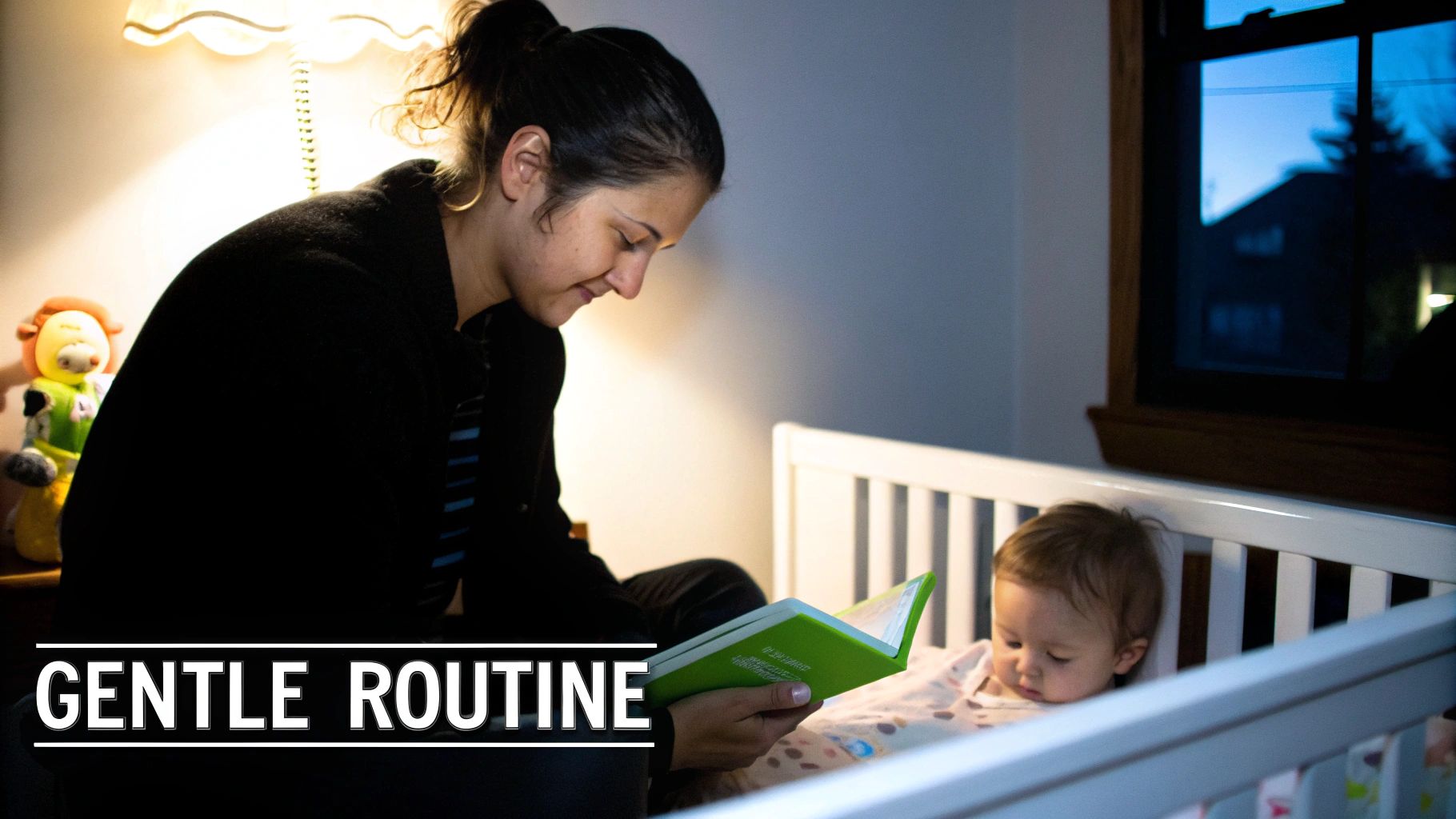
This doesn’t mean you have to resort to "crying it out." You can absolutely use gentle soothing methods to provide the comfort they're craving. For instance, you could try brief, calming check-ins where you pat their back or whisper a few reassuring words before quietly leaving the room again. The goal here is to show them you're there for them without becoming a "sleep crutch" they can't fall asleep without.
Prioritize Daytime Routines for Better Nights
What happens during the day has a massive impact on what happens at night. A really common mistake parents make during a regression is letting daytime naps slide. But an overtired baby is often a wired baby, which makes it so much harder for them to settle down at bedtime and usually leads to more frequent wake-ups all night long.
You'll also want to make sure your baby is getting enough to eat during their waking hours. A growth spurt often goes hand-in-hand with a developmental leap, and a hungry baby will absolutely wake up at night demanding a snack. By offering full, distraction-free feedings during the day, you can help rule out hunger as the culprit for those extra nighttime wake-ups.
Consistency is your anchor in the stormy sea of a sleep regression. It doesn’t mean being rigid, but rather providing a predictable rhythm that helps your baby feel secure even when their internal world is changing rapidly.
Create Calm with Soothing Sounds
For many babies, a perfectly quiet room can actually make sleep harder. Every little creak of the floorboards or a cough from the next room can jolt them awake. This is where adding a consistent, low-level sound can work wonders to mask those disruptions and create a peaceful atmosphere. A great tool for this is a sound machine that provides continuous, calming audio.
Many parents swear by the gentle, steady hum of a white noise machine. It often helps babies connect their sleep cycles more easily, which can turn those dreaded short "disaster naps" into more restorative, longer stretches of rest. If you're looking for an option, you could explore something like the DreamSoothe White Noise Machine, which offers a variety of sounds to help create that serene environment.
Remember, these regressions are temporary, but the habits you build now can last much longer. Sleep problems that start in infancy can be surprisingly persistent; some research shows that 21% of cases can continue right through 36 months of age. And for toddlers between 12-24 months, who average about 12.5 hours of total sleep amid roughly five night wakings per week, having solid routines is crucial. You can discover more insights about these baby sleep patterns to see just how much that consistency pays off in the long run.
A Few Common Questions About Sleep Regressions
When you're in the thick of a sleep regression, it's easy to feel lost and full of questions. Let's tackle some of the most common concerns parents have during these tricky, but totally normal, phases.
How Long Does a Baby Sleep Regression Last?
This is the big one, isn't it? Thankfully, most sleep regressions are temporary. You can typically expect them to last anywhere from two to six weeks.
The exact timeline really depends on your unique little one and what new skill they're mastering. The best thing you can do to get through it smoothly is to stay as consistent as possible with your routines. This stability helps them navigate the phase a little bit faster.
Can I Sleep Train During a Regression?
It's tempting, but it's usually best to hold off on starting any new sleep training during a regression. Your baby is already dealing with a lot of internal change and development, which can make them a bit stressed and unsettled.
Instead of introducing a new system, focus on offering extra comfort and sticking to the familiar routines you already have. Once the storm passes and their sleep starts to even out again, that’s a much better time to introduce sleep training if you feel it's needed.
Is it a regression or is my baby sick? This is a great question. While both can throw sleep off track, sickness usually comes with other clues like a fever, a rash, or a noticeable change in their appetite. A regression, on the other hand, is almost entirely focused on sleep disruption. When in doubt, a quick call to your pediatrician is always the best move.
All that extra tossing and turning during a regression can sometimes lead to skin irritation. Making sure their sleepwear is made from soft, high-quality, and breathable fabrics can make a world of difference in preventing rashes and discomfort. You can learn more about choosing the right fabric for your baby's sensitive skin to keep them as comfy as possible.
At GuGuTon, we know that the little details make a huge difference in your baby's comfort and your peace of mind. Our collection of high-quality, skin-friendly baby essentials is designed to support you through every sleep (and sleepless) stage. Visit https://guguton.com to find the perfect cozy solutions for your little one.