

How to Choose a Crib Mattress to Protect Your Baby's Health and Safety
When you're choosing a crib mattress, it really boils down to three things you absolutely can't compromise on: it must be extremely firm, it must fit the crib snugly with no gaps, and it should be made from non-toxic, hypoallergenic materials. These aren't just suggestions; they work in tandem to create a truly safe sleep space, drastically cutting the risk of Sudden Infant Death Syndrome (SIDS) and protecting your baby's delicate skin from allergies, rashes, and irritants.
Your Guide to a Safe and Healthy Crib Mattress
Let's be real, preparing for a new baby comes with a mountain of decisions. But choosing their mattress is one of the most important ones you'll make. Think about it: newborns can sleep up to 16 hours a day, so their mattress is where they'll spend most of their time. This guide is here to help you cut through the noise and focus on what genuinely matters for your baby's health, safety, and sensitive skin.
The goal here is simple: build a secure, healthy spot for your little one to rest and grow. That means looking past the cute patterns and focusing on features that prevent suffocation risks, skin irritation, and allergic reactions.
The Core Safety Principles
Walking into a baby store or browsing online can be overwhelming. There are so many options, all with different marketing claims. To keep it simple, just focus on these three foundational checks. Everything else is secondary.
- Firmness is Non-Negotiable: To an adult, a soft, plush mattress sounds cozy. For an infant, it’s a serious suffocation hazard. You need a surface that is firm and flat, one that supports your baby without creating an indentation around their head.
- A Perfect, Snug Fit: This is a big one. There should be absolutely no space between the edge of the mattress and the crib frame. A common rule of thumb is that if you can fit more than two fingers between the two, it’s too small. Any gap can become a dangerous trap for tiny limbs or, even worse, a baby's head.
- Health-First Materials: Babies have incredibly sensitive skin and developing respiratory systems. Opting for a mattress made from non-toxic, hypoallergenic materials—free from harsh chemicals, synthetic dyes, and common allergens—is one of the best ways to prevent skin reactions like rashes or eczema and protect them from breathing in harmful substances.
This decision tree gives you a quick visual of the simple, non-negotiable checks every parent should perform before making a final choice.
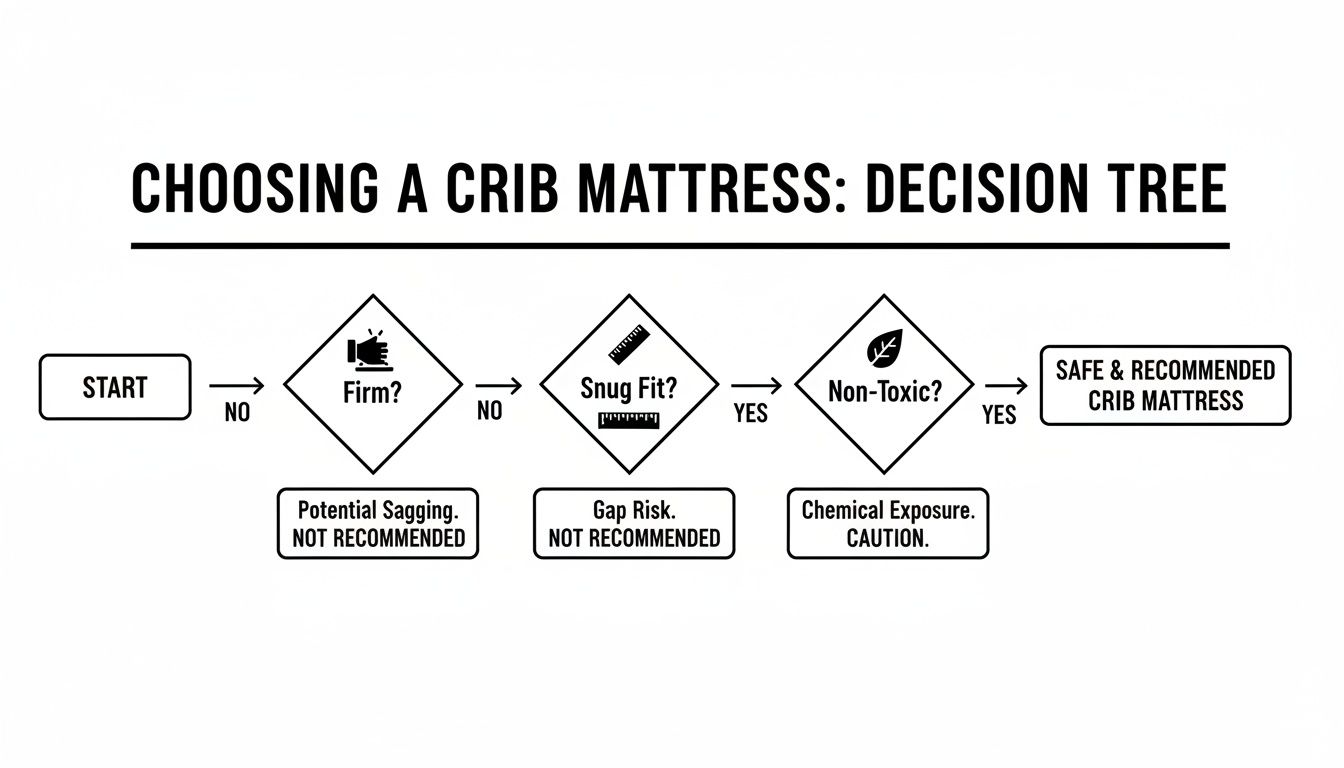
Think of this as your starting point. These three principles are the bedrock of your decision. Ultimately, the care you put into how you choose a crib mattress is a huge part of building a safe sleep environment for infants.
Firmness and Fit: The Foundations of Safe Sleep
When you're trying to choose the right crib mattress, two words should be your north star: firmness and fit. These aren't just features on a product description; they are the absolute cornerstones of a safe sleep environment for your baby. While things like organic materials and waterproof covers are important for health and hygiene, getting the firmness and fit right is the first and most critical step.
As adults, we often think of "soft" as comfortable, but for an infant, a soft sleep surface is a serious hazard. A mattress that’s too plush can conform to the shape of a baby's head or face, which tragically increases the risk of suffocation and SIDS. This is why a firm, flat surface is completely non-negotiable.
Putting Firmness to the Test
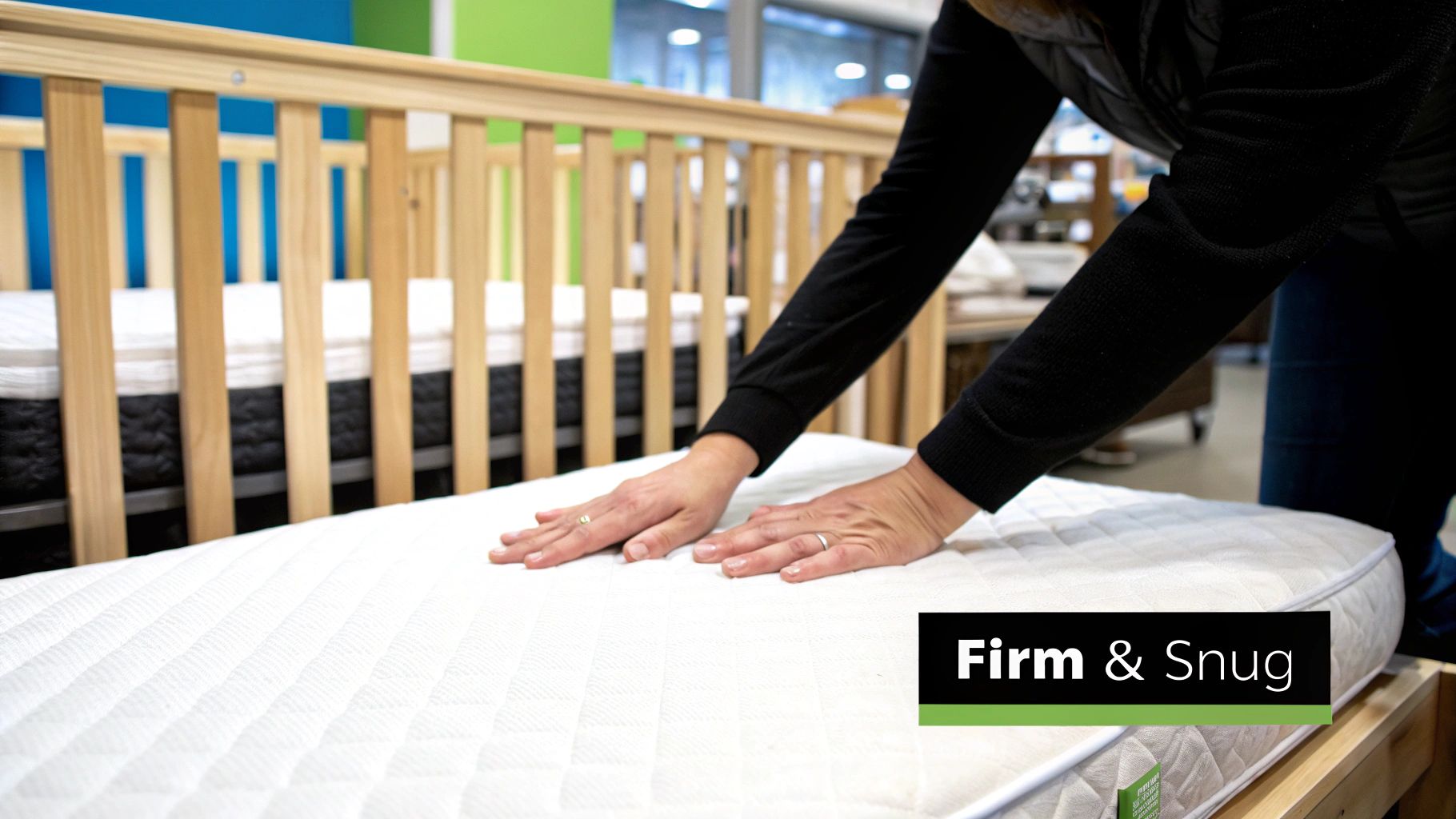
You don’t need any special equipment to figure out if a mattress is firm enough. There’s a simple, hands-on check you can do right in the store that will tell you more than any marketing label ever could.
Here’s how to do it:
- Press Down: Put your hand flat in the center of the mattress and push down with firm pressure.
- Watch the Rebound: Pay close attention to how it responds. A truly safe mattress will snap back into place almost instantly, showing very little indentation.
- Check the Edges: Don't forget the corners and edges! A quality crib mattress will maintain that same level of firmness all the way across its surface.
If the mattress holds the shape of your hand for even a second, or if your hand sinks in deeply, it's too soft. Period. Think about it: if a baby rolls onto their stomach, a soft mattress won't give them the solid support they need to easily lift and turn their head to breathe.
Why a Snug Fit Is So Critical
Just as important as firmness is how the mattress fits inside the crib. You want to see virtually no gap between the edge of the mattress and the crib frame. Even a small space can become a dangerous entrapment hazard where a baby’s arms, legs, or even their head can get stuck.
This is definitely not an area for guesswork. Imagine a curious baby wiggling into a corner. If there's a gap, they could become wedged in a position that could lead to injury or suffocation. It's for this very reason that international safety standards often mandate that any gaps not exceed 20–30 mm.
The Two-Finger Rule
This is the easiest and most reliable way to check for a safe fit. Simply try to slide your fingers between the mattress and the crib frame. If you can fit more than two fingers (side-by-side) in that space, the mattress is too small and is unsafe.
The ideal fit is snug—so snug that you might even have to push down on it a bit to get it into the crib. That's actually a good sign. It means there’s no room for dangerous gaps to appear, even as your baby starts moving around more in their sleep. A tight-fitting sheet is also key, and you can learn more about how to choose the best pack and play sheet in our other guide.
Tying It All Back to Safety Standards
These simple, hands-on tests aren't just old wives' tales; they're the real-world application of official safety recommendations. The American Academy of Pediatrics (AAP) specifically advises a firm, flat sleep surface to reduce the risk of SIDS and suffocation. In fact, some studies have shown that soft bedding can increase the risk of SIDS by up to 5-fold.
With around 3,400 sleep-related infant deaths still occurring in the U.S. each year, choosing a safe sleep surface is one of the most direct ways to prevent a tragedy.
Making sure your chosen mattress passes both the hand-press test and the two-finger rule is one of the most impactful decisions you can make for your baby’s safety. It directly addresses the leading causes of sleep-related risks and gives you the peace of mind that you're building the safe and healthy nursery you’ve been dreaming of.
Choosing Materials for a Healthier Nursery
Once you’ve nailed down the right firmness and a snug fit, it’s time to look inside the mattress. What a crib mattress is made of directly affects your baby’s delicate skin and still-developing respiratory system. This choice can mean the difference between a clean, healthy sleep environment and one that introduces allergens and irritants that could cause rashes, eczema, or breathing issues.
It’s clear parents are paying more attention than ever to this. The global market for baby mattresses is projected to jump from USD 9.09 billion in 2025 to USD 12.91 billion by 2031. Analysts point to the growing demand for organic, hypoallergenic, and low‑VOC options as a huge reason for this growth. In fact, a recent survey found that over 60% of new parents are willing to pay more for a mattress labeled "non‑toxic" or "organic," and about 1 in 3 actively seek out certifications. You can dig deeper into these trends in the full crib mattress market research report.
Unpacking Common Mattress Types
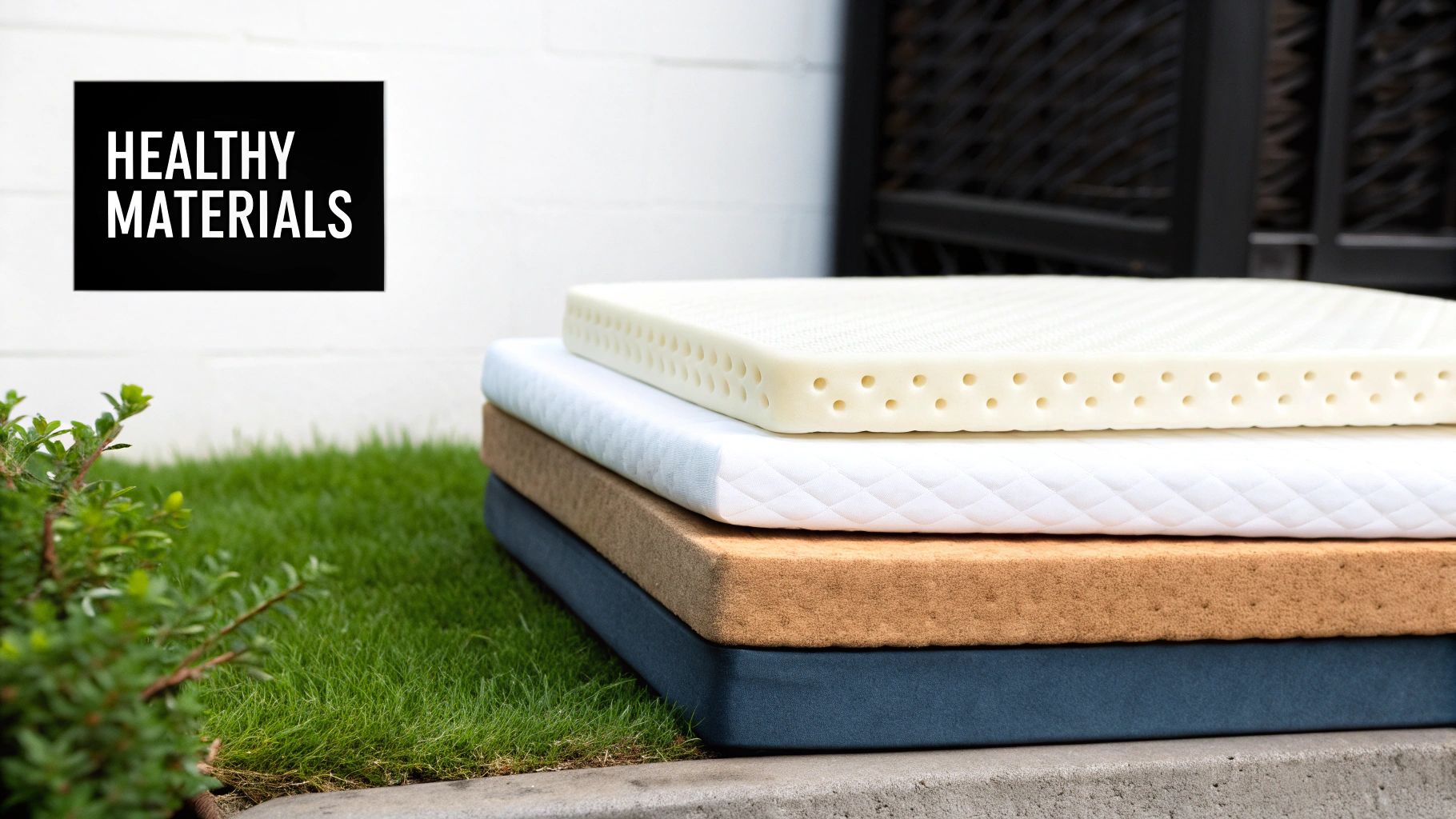
Most crib mattresses boil down to a few common types, and each comes with its own set of pros and cons. Getting familiar with these is a huge part of learning how to choose a crib mattress that fits your family's priorities.
Innerspring Mattresses
These are the traditional choice, built around a core of steel coils. This setup provides incredibly firm and durable support. The firmness is determined by the coil count and the thickness (gauge) of the steel wire. While they can be a bit heavy, they also offer fantastic air circulation, which helps keep the mattress fresh and less prone to allergen buildup.
Foam Mattresses
Usually made from high-density polyurethane foam, these are a popular modern option. Their biggest selling point is how lightweight they are—a real back-saver when you're changing sheets at 2 a.m. A good one will give you firm, even support from edge to edge. The key here is to make absolutely sure it’s certified for low chemical emissions to protect your baby's respiratory system.
Decoding Harmful Chemicals
One of the biggest worries for parents is the cocktail of hidden chemicals that can lurk in baby products. Babies are just more vulnerable because of their tiny size and developing bodies. Knowing what to steer clear of is just as important as knowing what to look for to prevent skin irritation and other health concerns.
- VOCs (Volatile Organic Compounds): These are gases that "off-gas" from materials like foam, adhesives, or vinyl covers. Exposure can irritate your baby's respiratory system, trigger allergies, and cause other health issues. Ever notice that "new mattress smell"? That's often VOCs.
- Phthalates: These chemicals are used to make plastics (like cheap vinyl waterproof covers) soft and flexible. Unfortunately, they've been linked to developmental problems and can be skin irritants.
- Chemical Flame Retardants: While fire safety is non-negotiable, many old-school flame retardants have been tied to serious health risks. The good news is that most modern mattresses now meet fire safety standards using smarter, natural barriers like wool or rayon instead of harsh chemicals.
A Quick Tip for Label Reading
Don't get fooled by vague marketing. Look for specific, confident claims like "phthalate-free," "low-VOC," or "made without chemical flame retardants." Terms like "eco-friendly" or "natural" can be misleading if they aren't backed up by a legitimate certification.
The Power of Hypoallergenic and Organic Materials
For families dealing with allergies, eczema, or chemical sensitivities, choosing natural and organic materials can be a game-changer. These options are naturally gentler and don’t come with the pesticides or harsh processing chemicals found in many conventional products, reducing the risk of skin flare-ups.
This thinking extends beyond just the mattress core. To see how different fabrics can impact your little one, take a look at our guide on choosing the right fabric for your baby's sensitive skin.
Why Choose Organic Materials?
| Material | Key Health Benefit | Best For |
|---|---|---|
| Organic Cotton | Grown without synthetic pesticides and processed without harsh chemical dyes. It's exceptionally gentle on sensitive skin. | Families who want to minimize skin irritants, prevent rashes, and avoid exposure to agricultural chemicals. |
| Natural Latex | Naturally resists dust mites and mold, all while providing firm, comfortable support. A fantastic alternative to synthetic foam. | Babies with allergies or parents who want a durable, hypoallergenic option to reduce allergen exposure. |
| Wool | Acts as a brilliant natural flame retardant and is incredible at regulating temperature, keeping your baby comfortable year-round. | Parents looking to avoid chemical flame retardants and get the bonus of a breathable, temp-control material. |
Ultimately, the materials inside your baby’s mattress are a cornerstone of a safe, non-toxic nursery. By understanding what’s available and what to avoid, you can confidently pick a mattress that truly supports your baby's health from their very first night.
Understanding Certifications and What They Mean
When you start shopping for a crib mattress, you'll be hit with a dizzying array of logos and acronyms. GREENGUARD Gold, CertiPUR-US®, GOTS—it can feel like learning a new language. But these labels are far more than just marketing jargon; they're your single best tool for ensuring the mattress you choose is genuinely safe and free from harmful chemicals that can cause skin reactions or respiratory issues.
Instead of just trusting a company's "non-toxic" claim, these certifications act as an independent referee. They send products to third-party labs for rigorous testing, giving you unbiased proof of what’s in—and what isn’t in—your baby’s mattress.
The Most Important Labels to Look For
You don't need to become an expert on every certification out there. Just focusing on a handful of the most reputable ones will cover your bases, from the air your baby breathes to the materials touching their skin.
GREENGUARD Gold
If you prioritize one certification, make it this one. GREENGUARD Gold is all about clean air. It tests for emissions from over 10,000 different volatile organic compounds (VOCs). A mattress with this seal has been proven to have incredibly low chemical emissions, which is critical for protecting your baby’s tiny, developing lungs and creating a healthier nursery.
CertiPUR-US®
This one is a non-negotiable if you’re looking at a foam mattress. The CertiPUR-US® program specifically analyzes the polyurethane foam to make sure it was made without a whole list of nasty stuff.
A CertiPUR-US® seal means the foam is free from:
- Ozone depleters
- PBDE, TDCPP, or TCEP (“Tris”) flame retardants
- Mercury, lead, and other heavy metals
- Formaldehyde
- Phthalates regulated by the CPSC
It’s your guarantee that the foam core is made with safer materials that won't irritate your baby.
Here’s something I always tell new parents: These certifications aren't interchangeable. Think of it this way: GREENGUARD Gold checks what comes out of the mattress (air quality), while CertiPUR-US® checks what goes into the foam. Both are important, but they test for different things.
Certifications for Fabrics and Textiles
What’s on the outside of the mattress matters just as much as what's on the inside. The cover is what your baby’s skin will be in direct contact with for hours every day. For families dealing with eczema, allergies, or chemical sensitivities, looking for textile certifications is a must to prevent rashes and allergic reactions.
GOTS (Global Organic Textile Standard)
When a product says it's "organic," the GOTS certification is the proof. This is the world’s leading standard for organic textiles, and it's incredibly strict. It verifies that the entire supply chain—from harvesting the cotton to weaving the fabric and sewing the cover—is free from pesticides, herbicides, and toxic processing chemicals that could irritate the skin.
Oeko-Tex Standard 100
Another powerhouse for textile safety is the Oeko-Tex Standard 100. If a product has this label, it means every single component, right down to the thread and the zipper, has been tested for a long list of harmful substances and found to be harmless for human health. It’s a great seal of approval for sensitive skin.
Decoding Crib Mattress Certifications
It's a lot to remember, I know. To make it easier, here's a quick cheat sheet that breaks down what the most common certifications really mean for your baby.
| Certification Logo | What It Guarantees | Key Benefit for Baby |
|---|---|---|
| GREENGUARD Gold | The mattress meets some of the world's strictest third-party standards for low chemical emissions. | Protects your baby from breathing in harmful VOCs, contributing to cleaner indoor air in the nursery. |
| CertiPUR-US® | The foam used is made without specific harmful chemicals like heavy metals, certain flame retardants, and phthalates. | Reduces exposure to toxic chemicals commonly found in lower-quality foam products. |
| GOTS | The textile components (like the cover) are made from certified organic fibers and processed without harmful chemicals from farm to finish. | Minimizes the risk of skin irritation and allergic reactions from pesticides or harsh chemical residues. |
| Oeko-Tex Standard 100 | Every part of the textile product has been tested for harmful substances and is harmless for human health. | Ensures the materials directly touching your baby's skin are free from a wide range of toxic dyes and chemicals. |
By prioritizing mattresses that carry these trusted, third-party seals, you're not just buying a product—you're investing in a safer, healthier sleep environment for your little one.
Thinking Ahead: Practical Features and Long-Term Mattress Care
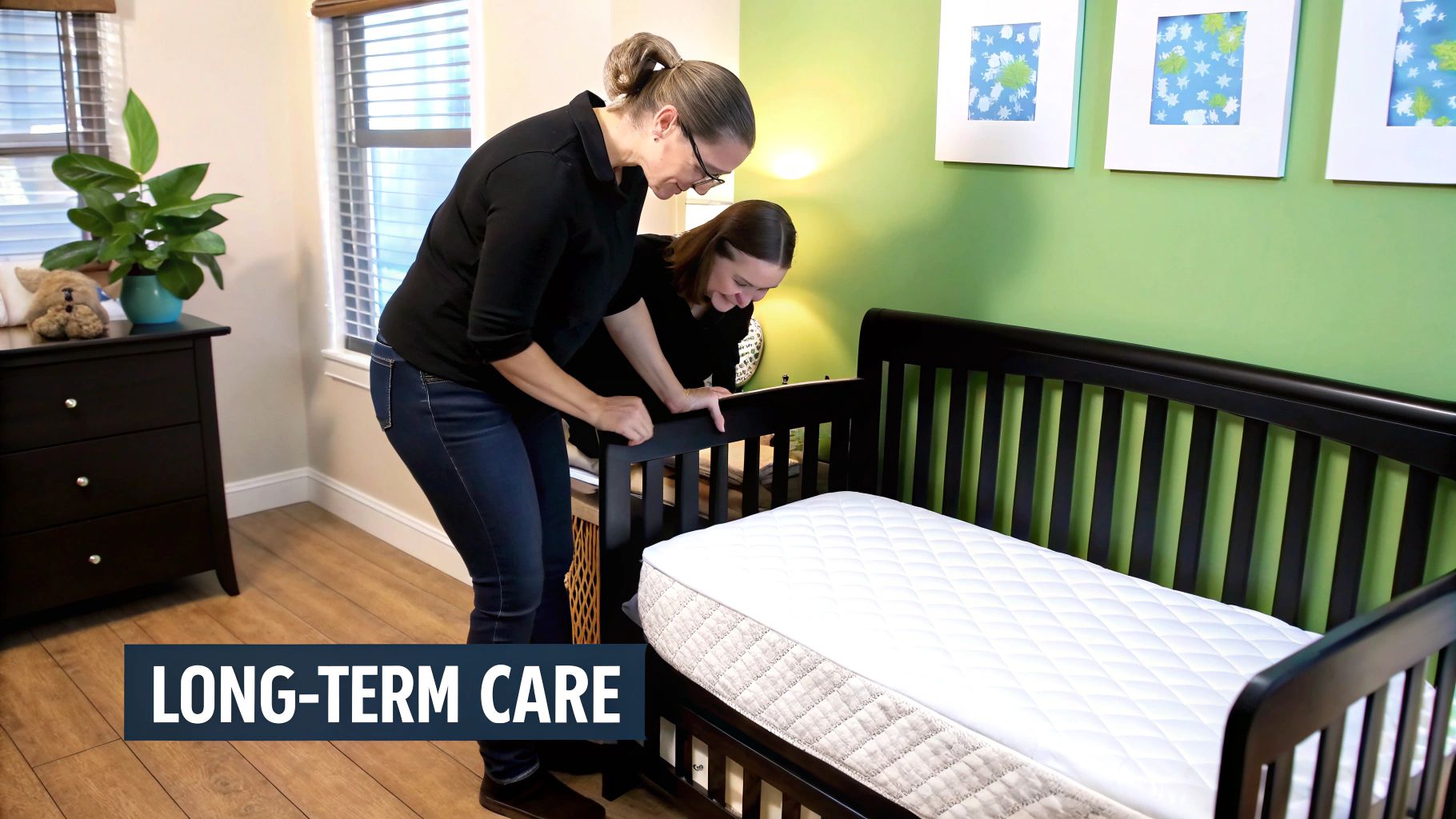
Once you’ve nailed down the basics of firmness, fit, and materials, it’s time to think about the long game. The best crib mattress isn't just safe for a newborn; it's also practical for you and built to last. A few smart features and a simple care routine will make your life so much easier and keep your baby's sleep space hygienic and free from skin irritants.
Thinking about longevity right from the start is one of the smartest moves you can make. This means looking for a mattress that can adapt as your child grows and knowing exactly how to care for it to keep it in top shape.
The Smart Choice of a Dual-Sided Mattress
If you want the best bang for your buck, look for a dual-sided mattress. This is one of the most valuable features I recommend to new parents. It’s essentially a two-in-one solution designed to grow right alongside your child.
Here’s how it works:
- An ultra-firm infant side: This is the rock-solid, flat surface that the American Academy of Pediatrics recommends for safe sleep during that critical first year.
- A slightly softer toddler side: Once your baby hits the 1-year mark and is more mobile, you can flip it over. This side has a bit more give for comfort but is still plenty supportive for a growing toddler.
This single purchase can save you from having to shop for a whole new toddler mattress down the road. Just make sure the sides are clearly labeled so there’s no guesswork.
The Essential Role of a Waterproof Cover
Let’s be real: diaper leaks, spit-up, and spills are going to happen. It's a guarantee. Without a solid barrier, all that moisture sinks right into the mattress core, which can quickly become a breeding ground for mold, mildew, and bacteria. Not only does this ruin the mattress, but it can also introduce allergens and irritants into your baby's crib, potentially causing skin rashes.
But here's a pro-tip: not all waterproof covers are the same. You want a cover that is both waterproof and breathable. Some covers feel like a cheap plastic sheet, trapping heat and making your baby a sweaty, uncomfortable mess. Look for materials that promote airflow to help regulate temperature and keep everything feeling cool and dry. This is a game-changer for preventing heat rashes.
A common mistake I see is parents assuming the mattress's built-in cover is sufficient. It helps, but adding a separate, washable protector is the best way to handle middle-of-the-night messes. You can just whip it off and throw it in the wash without having to deep clean the entire mattress.
Proper Mattress Maintenance and Care
A little upkeep goes a long way. Getting into a good routine from the start will protect your investment and, more importantly, your baby's skin. A pristine, hygienic sleep surface is a key part of preventing skin irritation and allergies.
Regular Cleaning and Rotation
- Clean up spills immediately. Don't let them sit. A damp cloth with a bit of mild soap and water is all you need for the waterproof cover. Steer clear of harsh chemical cleaners that could leave irritating residue.
- Rotate the mattress every few months. I suggest doing this every 2-3 months, spinning it from head-to-foot. This ensures it wears evenly and prevents dips from forming where your baby usually sleeps.
- Let it breathe. When you're changing the sheets, give the mattress a few minutes to air out. This helps any lingering moisture evaporate completely and prevents mustiness.
For that extra layer of protection, I always recommend a high-quality cotton terry waterproof protector bed cover. It’s an easy, absorbent layer you can toss in the laundry, making cleanup incredibly simple.
The Dangers of a Second-Hand Mattress
I know how tempting it is to save money with hand-me-downs, but the crib mattress is one item you should always buy new. An old mattress carries hidden risks that just aren't worth it.
For one, its firmness has likely broken down over time, creating soft spots that are a serious suffocation hazard. You also have no idea what it's been through—it could be harboring years of dust mites, bacteria, or even mold deep inside, which are major triggers for allergies and skin problems. A used mattress simply can't provide the guaranteed clean and supportive foundation your baby needs for safe and healthy sleep.
Common Questions About Choosing a Crib Mattress
Stepping into the world of baby gear can feel overwhelming. You're trying to make the best, safest choices for your little one, and the questions can pile up fast. Let's tackle some of the most common ones parents ask when picking out that all-important crib mattress.
Should I Get a New Mattress for Each Baby?
I get this question all the time, and my answer is always a firm yes. This is one of those times where buying new really matters. A mattress that's been used before, even if it looks fine, has likely softened over time. It can develop subtle dips and indentations that aren't safe for a newborn and can increase the risk of suffocation.
Plus, an old mattress can be a hiding place for things you can't see, like mold, bacteria, or dust mites, all of which can trigger allergies or skin reactions. Starting fresh with a firm, clean mattress gives your baby the safest and most hygienic sleep space, and it ensures you’re up-to-date with the latest safety standards. It’s worth the peace of mind.
Is an Organic Crib Mattress Really Worth the Money?
For many families, it absolutely is. If you have a history of allergies, eczema, or sensitive skin in your family, going organic can make a huge difference in preventing flare-ups. An organic mattress with a certification like GOTS means the materials were grown without nasty pesticides and made without harsh chemicals.
Think of it as reducing your baby's "chemical load" right from the start. They spend so much time sleeping, and this ensures they aren't breathing in or absorbing potential irritants that could lead to rashes or respiratory trouble. The price tag is higher, but you're paying for the confidence that their sleep surface is as pure and gentle as possible.
As a parent, one of your biggest worries might be avoiding skin flare-ups. Choosing certified organic materials is a simple, proactive way to create a soothing environment where your baby’s delicate skin can just be happy.
What’s the Real Difference Between Foam and Innerspring?
It really boils down to what's inside and how much it weighs. Both can be fantastic, safe options as long as you prioritize firmness and quality materials that won't cause irritation.
- Innerspring mattresses are the more traditional choice. They have a core of steel coils that provides incredibly firm, long-lasting support. That coil structure also allows for great airflow, which helps keep the mattress cool and reduces the buildup of allergens. The only real downside? They tend to be heavier.
- Foam mattresses, typically made from high-density polyurethane, are a parent favorite because they are so lightweight. This makes lifting the mattress to change sheets a breeze. They offer consistent, even support from edge to edge. Just be sure to look for a CertiPUR-US® certification, which confirms it’s made without harmful chemicals and has low emissions.
Honestly, you can't go wrong with either one as long as it's firm and certified. It's more about your personal preference for weight and feel.
How Critical Is a Waterproof Cover?
It's non-negotiable. A waterproof cover is an absolute must-have, and not just for making clean-ups easier. Diaper leaks and spit-up are just part of the baby package. Without a waterproof barrier, that moisture seeps right into the mattress core.
Once moisture gets trapped inside, it becomes a breeding ground for mold, mildew, and bacteria—things you definitely don't want your baby sleeping on, as they can trigger allergies and rashes. I always recommend looking for a cover that is also breathable. This helps regulate temperature and keeps your baby from getting sweaty and uncomfortable, which can prevent heat rash. Even if your mattress has a built-in waterproof layer, an extra, washable protector makes life so much easier and keeps the mattress itself pristine.
At GUGUTON LLC, we get it. Every decision you make for your baby comes from a place of deep love and a desire to provide the very best. We’ve put that same care into our collection of baby essentials, from the safest bedding to the softest clothing, all designed to create a healthy, cozy world for your little one.
Explore our collection of high-quality, parent-approved products at https://guguton.com.