

Your Essential Guide to the Best Pack and Play Sheet
A pack and play sheet is a fitted sheet made specifically for the thin mattress pad that comes with a portable playard. It might seem like a simple accessory, but a high-quality, properly fitting sheet is absolutely essential for your baby’s comfort and, most importantly, their safety.
Why the Right Pack and Play Sheet Matters
When you're a new parent, creating a safe and healthy space for your baby is everything. We spend so much time researching big-ticket items like car seats and cribs, but smaller details—like the humble pack and play sheet—play a massive role in your little one's well-being. This is about more than just adding a soft surface; it's about making a conscious choice that affects everything from skin health and allergies to safe sleep.
Getting the right sheet isn't just a nice-to-have, it's a non-negotiable part of setting up your baby's playard. A poorly fitting or low-quality sheet can introduce serious and completely avoidable hazards.
The Dangers of an Improper Sheet
If a sheet is too big or has weak elastic, the loose fabric can bunch up and create a suffocation risk. On the other hand, a sheet made from a cheap, synthetic material that doesn’t breathe can trap heat and moisture against your baby's delicate skin. This can lead to painful rashes, skin irritation, or even allergic reactions from chemical residues left over from the manufacturing process. It's no wonder parents are getting more and more selective.
A great pack and play sheet does more than just protect the mattress. It creates a secure, breathable, and hypoallergenic foundation for rest and play, giving you invaluable peace of mind.
This intense focus on safety is a huge driver behind the industry's growth. The global market for pack and play fitted sheets hit a staggering USD 1.31 billion in 2024, which shows just how much parents are demanding products that offer a perfect, snug fit to reduce risks associated with Sudden Infant Death Syndrome (SIDS). You can dig deeper into this market trend over at dataintelo.com.
When you get right down to it, a quality sheet serves three crucial purposes:
- Safety: It must fit the mattress pad tightly, with no loose fabric, to follow safe sleep guidelines. To learn more, check out our guide on creating a safe sleep environment for infants.
- Health: It should be made from hypoallergenic and breathable materials to protect sensitive newborn skin from rashes, allergies, and irritation.
- Comfort: It provides a soft, temperature-regulating surface that helps your baby get a peaceful nap.
Choosing Fabrics for Your Baby’s Sensitive Skin
When you're picking out a pack and play sheet, the material is probably the most important decision you’ll make. It’s easy to forget just how delicate a baby's skin is. It’s much thinner and more porous than our own, which means it’s incredibly susceptible to irritation, rashes, and allergic reactions from synthetic fabrics or leftover manufacturing chemicals.
Think of the right sheet as a soft, protective hug for your little one. The goal is to find a fabric that’s both gentle on their skin and practical for you. Natural fibers are almost always the best bet because they're breathable, which is crucial for helping your baby regulate their temperature and avoid overheating. A breathable sheet allows air to flow freely, wicking away moisture and keeping them cool, dry, and comfortable.
Prioritizing Natural and Certified Materials
To make sure you're getting the safest option, stick with fabrics known for being gentle and keep an eye out for important safety certifications. These labels are your proof that the sheet is free from harmful substances that could trigger skin issues.
Here are the top fabric choices for sensitive skin:
- 100% Cotton: You can't go wrong with this classic. Cotton is soft, durable enough for endless washes, and exceptionally breathable. It’s naturally gentle and less likely to cause skin problems.
- Organic Cotton: This is the next level up in safety. Organic cotton is grown without any synthetic pesticides or fertilizers, so there are even fewer potential irritants to worry about for babies prone to allergies or eczema.
- Bamboo: Known for being silky-soft, bamboo fabric is also naturally hypoallergenic and fantastic at wicking moisture. It's a lifesaver for babies with extra sensitive skin. You can dive deeper into this by reading our guide on choosing the right fabric for your baby's sensitive skin.
The right sheet really does contribute to your baby's overall well-being.
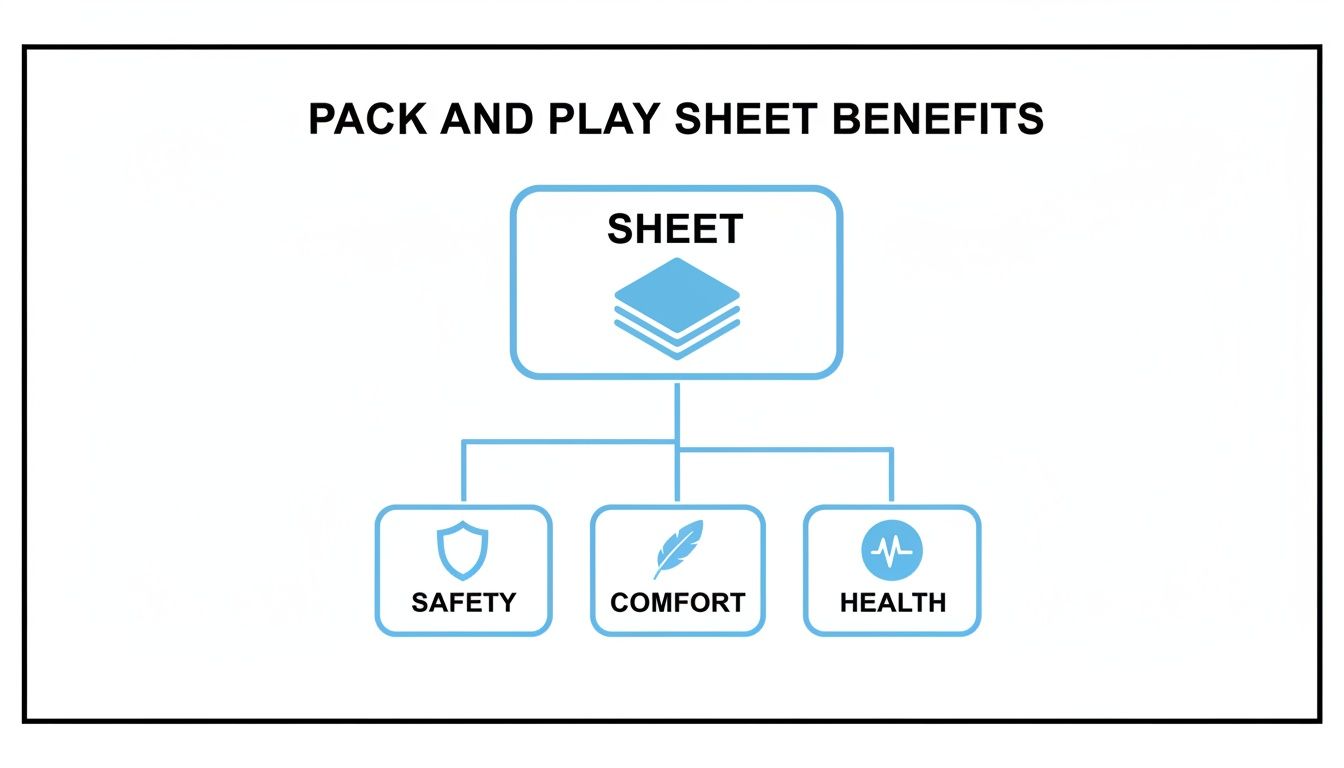
As you can see, a quality sheet is a cornerstone of a safe and comfortable sleep space, directly protecting your baby's health.
Understanding Safety Certifications
Beyond the type of fabric, look for independent certifications that guarantee the sheet’s safety. These aren't just fancy marketing words; they represent rigorous testing standards that give parents peace of mind about what touches their baby's skin.
OEKO-TEX STANDARD 100: This is one of the big ones you'll see. If a sheet has this certification, it means every single part of it—from the thread to the elastic band—has been tested and cleared of a long list of harmful substances known to cause allergies and skin irritation.
Another key certification to look for is the Global Organic Textile Standard (GOTS). This label doesn't just mean the cotton is organic; it ensures the entire production process meets high environmental and social standards.
Choosing certified products is a big deal for parents today. The baby crib sheet market is on track to hit USD 9.3 billion by 2033, and in 2023, organic options already made up a 54% share of that. This shift is happening because parents are moving away from synthetics and demanding safer, chemical-free materials to protect their children from potential skin issues. By focusing on these fabrics and certifications, you're not just buying a sheet—you're investing in your baby’s comfort and health.
Ensuring a Snug Fit for Ultimate Sleep Safety
When it comes to your baby’s sleep area, a loose sheet is one of the biggest—and most preventable—dangers. The goal is simple: a perfectly smooth surface, as taut as a drum, with absolutely zero slack. Getting this snug fit right is a non-negotiable part of creating a safe sleep space for your little one.
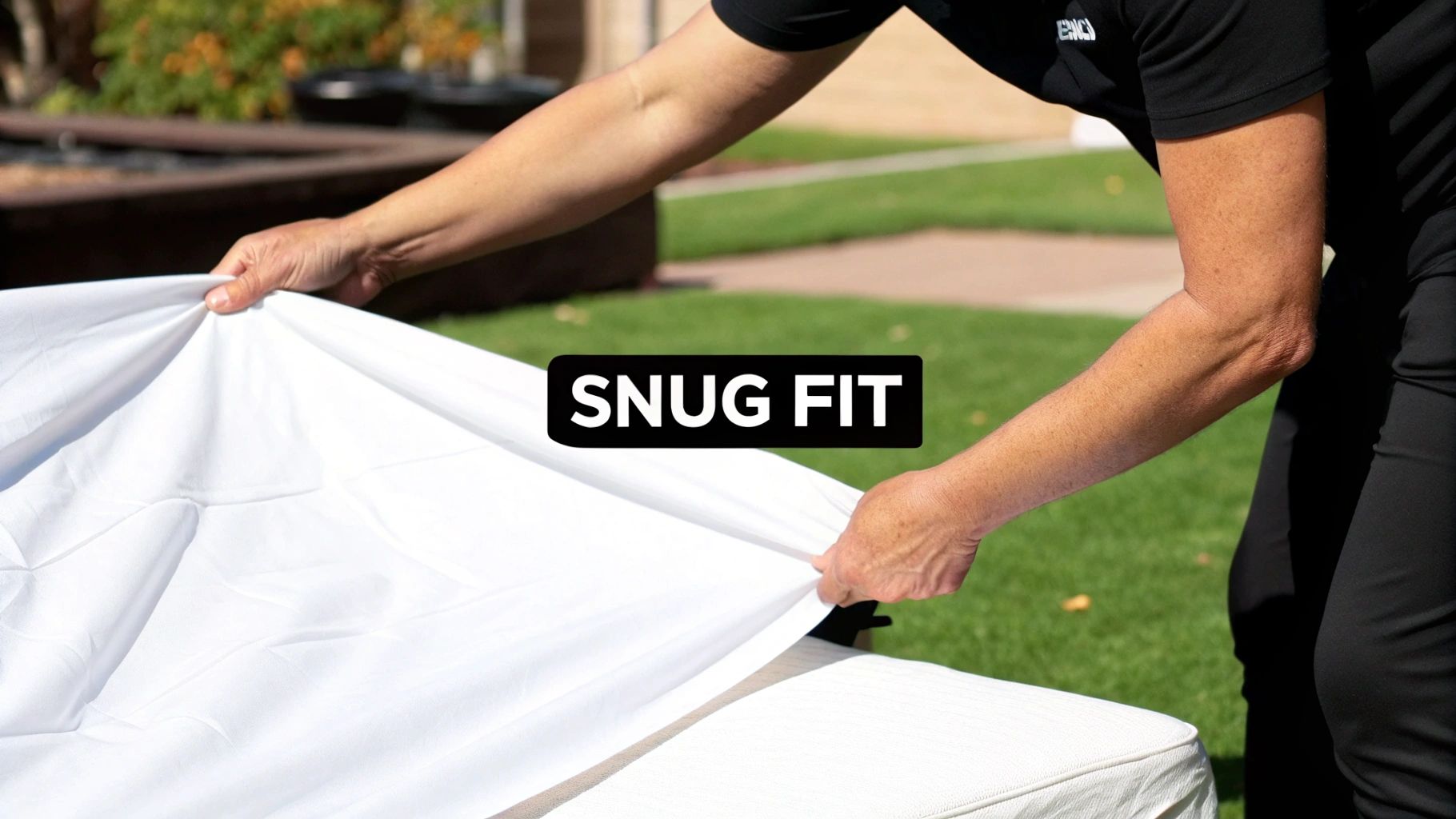
This is exactly why you can't just toss a standard crib sheet into a pack and play. A regular crib mattress is much thicker, usually around four to six inches deep. The mattress pad in a pack and play, on the other hand, is often only about one inch thick. If you try to use a crib sheet on that thin pad, you’ll end up with a dangerous amount of bunched-up fabric, creating a serious risk for suffocation and entanglement.
To avoid this, you absolutely must use a sheet made specifically for the slim profile of a pack and play mattress.
How to Guarantee the Perfect Fit
The key to safety is a sheet that hugs the mattress so securely it won't budge. You shouldn't be able to pinch any extra fabric on the surface once it's on.
Getting it right is easier than you think. Just follow these simple steps:
- Measure Your Mattress Pad: Before you even start shopping, grab a tape measure and jot down the length and width of your pack and play's mattress pad. Most are standard, but some brands can be slightly different.
- Check Product Dimensions: As you browse, compare your measurements to the dimensions the manufacturer lists online. They need to be a close match.
- Look for Strong Elastic: A quality sheet will have a sturdy, fully encased elastic band that goes all the way around the edge. This creates a 360-degree grip on the underside of the mattress, so the corners can't pop off.
This little bit of diligence ensures the sheet stays put, no matter how much your baby wiggles and rolls around during the night.
A secure, well-fitted sheet is a core component of safe sleep practices recommended by the American Academy of Pediatrics. A tight fit eliminates loose bedding, one of the primary risk factors associated with Sudden Infant Death Syndrome (SIDS).
Features That Enhance Safety and Fit
It's not just about the length and width. Certain design features make a world of difference in how well a sheet stays in place.
Deep pockets, for example, are a game-changer. They allow the sheet to wrap generously underneath the thin mattress pad, which is crucial for preventing the corners from slipping off—a common frustration with cheaper, poorly designed sheets.
Also, keep an eye out for sheets built to last. You want something that will hold its shape and elasticity wash after wash. By choosing a sheet with a secure design, deep pockets, and strong elastic, you're not just buying bedding; you're building a safer sleep environment and giving yourself some much-deserved peace of mind.
Keeping Your Sheets Clean and Hygienic
Let’s be honest, with a baby, laundry is a never-ending cycle. Spit-up, diaper blowouts, and all the little messes in between mean your pack and play sheet is going to become very familiar with your washing machine. Learning how to wash them correctly does more than just keep things sanitary—it helps the sheets stay soft, prevents skin-irritating residue, and preserves that snug fit you need for safety.
It all comes down to using the right settings and supplies. You want to knock out germs and bacteria without being harsh on the fabric or, worse, leaving behind chemicals that could irritate your baby's delicate skin.
Washing and Drying Best Practices
To really get those sheets clean while protecting your baby's skin, washing them in warm water is the way to go. I’d steer clear of hot water, though. It can make natural fibers like cotton shrink and, over time, will absolutely wreck the elastic. A weakened elastic means a loose sheet, which is a safety hazard we want to avoid.
When it comes to detergent, think simple. Always reach for a gentle, hypoallergenic, and fragrance-free option. Many standard detergents are loaded with chemicals and strong perfumes that can linger in the fabric and cause rashes, eczema flare-ups, or allergic reactions on your baby’s sensitive skin.
Here are a few quick tips that make laundry day a little easier:
- Tackle Stains Immediately: For those classic baby stains, rinse the spot with cold water as soon as you can. A little dab of your baby-safe detergent rubbed directly on the area before washing can work wonders.
- Dry on Low Heat: High heat is the enemy of elastic and soft fabrics. Tumble dry your sheets on a low or delicate setting to keep them in great shape.
- Air-Dry When You Can: If you have the time and space, air-drying is the gentlest method. It's the best way to extend the life of the sheet and its all-important elastic.
It's worth investing in a few good-quality sheets. Some of the more durable playard sheets are designed to handle over 200 wash cycles without pilling, shrinking, or losing that secure fit. For busy parents, that kind of longevity is a huge plus. If you're curious, you can discover more insights about the baby crib sheet market trends on market.us.
How Many Sheets Do You Really Need?
Here’s a pro tip to prevent late-night laundry emergencies: have at least three sheets. This simple system—one on the pack and play, one in the hamper, and one clean and ready to go—means you'll never be caught off guard by a mess.
For an extra layer of defense, think about using a cotton terry waterproof protector bed cover under the sheet. It can save the mattress pad from soak-throughs and cut your cleaning time down even more.
How to Choose the Best Pack and Play Sheet
Okay, we've covered the ins and outs of fabrics, fit, and cleaning. Now, let's put it all together. Standing in a store aisle or scrolling online, it's easy to get overwhelmed by all the options for pack and play sheets. But if you know exactly what to look for, you can cut through the noise and pick a winner.
Let's get you past the cute patterns and focused on what really counts for your baby’s comfort, skin health, and most importantly, their safety. The goal is simple: find a sheet that creates a secure, healthy, and durable little sleep space.
Your Practical Shopping Checklist
Think of this as your mental checklist for spotting a top-notch product. A truly great pack and play sheet will tick every one of these boxes, giving you total peace of mind.
Here’s what you should be looking for:
- Verified Dimensions: Before you do anything else, check the measurements. Make sure the sheet is designed specifically for your playard's mattress pad. A perfect, snug fit is non-negotiable for safety.
- Strong, Fully Encased Elastic: Flip the sheet over and inspect the elastic. You want to see a sturdy band that goes all the way around the edge. This 360-degree grip is what prevents the corners from popping off.
- Certified Safe Fabrics: Look for an OEKO-TEX Standard 100 certification on the label. This is your guarantee that the fabric is free of nasty chemicals and is perfectly safe to place against your baby's delicate skin.
When it comes to infant sleep, the details matter. Studies show that proper sleep products are linked to 90% safer rest, and a correctly fitted pack and play sheet is a huge part of that. It drastically cuts down on the risks from loose fabric. This is especially critical when you consider that 1 in 5 U.S. babies sleeps in a portable crib, making sheet safety a major priority. You can dig into more of this data with these home bedding market insights.
Red Flags to Avoid
Knowing what to look for is half the battle. Knowing what to run from is the other half. Some tell-tale signs can signal a low-quality or even unsafe sheet that could harm your baby's skin or pose a safety risk. Keep an eye out and steer clear of these issues.
- Weak or Exposed Elastic: If the elastic feels flimsy or isn't fully encased in fabric, it's going to stretch out in no time, creating a dangerously loose fit.
- Loose Threads and Poor Stitching: This is a classic sign of sloppy manufacturing. Besides looking bad, loose threads can become a snagging hazard for tiny fingers and toes.
- Synthetic-Heavy Materials: Fabrics like 100% polyester don’t breathe well. They can trap heat and moisture against your baby's skin, creating a damp environment perfect for rashes and irritation.
- No Safety Certifications: If you don't see a label like OEKO-TEX, it means the product hasn't been independently tested for harmful substances. It's a risk not worth taking with your baby's health.
Following this simple guide will help you confidently choose a sheet that promotes a truly safe sleep environment. If you're looking for more tips on pulling together the whole nursery, check out our article on the best baby bedding sets. Paying attention to these small details is one of the best things you can do for your baby’s well-being.
It’s All About Your Baby’s Well-Being
When you're preparing for a new baby, the checklist can feel a mile long. But choosing the right pack and play sheet is one of those small decisions that makes a huge difference. Think of it less as just another purchase and more as a real contribution to your baby's health, safety, and everyday comfort.
That simple piece of fabric can seriously impact your peace of mind and, more importantly, your little one’s well-being. As pack-and-plays have become a go-to for so many families, the need for safe, high-quality accessories has grown right alongside them. This isn't just about picking a cute pattern; it's about making an informed choice to protect your baby from skin irritants and sleep hazards.
More Than Just a Pretty Pattern
So, what have we learned? The best pack-and-play sheets really come down to three core things:
- A Secure Fit: A snug sheet with strong elastic is non-negotiable. It’s your first line of defense against the dangers of loose bedding.
- Quality Materials: Breathable and hypoallergenic fabrics are a must. Think soft organic cotton or bamboo to keep sensitive skin happy, cool, and free from rashes or irritation.
- Safety Certifications: Look for labels like OEKO-TEX. They’re your shortcut to knowing the sheet is free from harmful chemicals that could affect your baby's skin.
When you focus on these features, you're doing more than just buying bedding. You’re making a well-informed, loving decision that directly supports safe sleep and gives your child a healthy start.
A certified, properly fitting sheet turns a simple purchase into a meaningful act of care. It’s a small detail that pays off big time in safety and comfort.
This shift in what parents are looking for is actually changing the entire industry. The U.S. bedsheets market is expected to jump from USD 7.75 billion in 2024 to USD 11.55 billion by 2032, and a huge part of that growth is driven by the demand for safe, hypoallergenic baby products. You can discover further insights into the pack and play fitted sheets market to see the full picture.
Ultimately, picking the right sheet is one of the first steps you’ll take in creating a secure, nurturing space for your baby to rest, play, and grow.
A Few Common Questions, Answered
Let's tackle some of the most common questions that pop up when you're trying to find the perfect pack and play sheet. Getting these right is key to creating a space for your baby that's both cozy and, most importantly, safe for their skin and sleep.
Can I Just Use a Regular Crib Sheet on a Pack and Play?
I get this question all the time, and the answer is a firm and absolute no. It's a critical safety issue.
Think about it: a standard crib mattress is a chunky four to six inches thick. A pack and play mattress pad, on the other hand, is usually just a thin one-inch mat. A standard crib sheet on that thin pad would be incredibly loose, creating baggy pockets and bunches of fabric—a serious suffocation hazard. Always, always stick with a sheet made specifically for the unique, thin dimensions of a playard pad.
How Many Pack and Play Sheets Do I Actually Need?
For your own sanity, I always recommend the "rule of three." It's a simple system that has saved countless parents from late-night laundry scrambles.
- One sheet on the pack and play, ready for action.
- One sheet in the dirty laundry hamper (because messes happen!).
- One sheet clean and folded in the closet, waiting in the wings.
This little system means you’re never caught off guard. When a middle-of-the-night leak happens, you can just grab the fresh one without a second thought.
The number one goal is always a taut, secure fit. A loose sheet is an unsafe sheet. Having backups means you never have to choose between convenience and safety while waiting for the washing machine to finish.
Are Waterproof Pack and Play Sheets a Good Idea?
They can be a real game-changer. A waterproof sheet is fantastic for protecting the mattress pad from the inevitable diaper leaks and spit-up, which makes cleanup so much easier.
But there's a small trade-off to consider. Some waterproof materials aren't very breathable and can trap heat, making your baby feel a bit clammy and potentially leading to heat rash. If you go for a waterproof pack and play sheet, look for a hybrid design—one that has a soft, breathable top layer like cotton terry to give you the best of both worlds: protection and comfort.
What Are the Red Flags of an Unsafe Sheet?
Knowing what to look for is great, but knowing what to avoid is just as crucial. Here are the clear signs of a sheet you should steer clear of:
- A Loose Fit: If you can easily pinch a bunch of fabric in the middle, it's too loose. It needs to be snug and smooth across the entire surface.
- Pilling Fabric: Those little fuzzy balls that form on cheap fabric aren't just ugly; they can feel abrasive and cause irritation on a baby's sensitive skin.
- Weak Elastic: The elastic should feel strong and be fully encased within the sheet's hem. If it feels flimsy, it won't keep the sheet securely in place.
- Lack of Certifications: If you don't see an OEKO-TEX label, it means the fabric hasn't been tested for a long list of harmful substances. It's a simple way to get peace of mind and protect your baby from potential allergens and irritants.
Ready to create the safest and most comfortable space for your little one? Explore the premium collection of certified, snug-fitting pack and play sheets at GUGUTON LLC. Shop now and invest in your peace of mind!