

How to Swaddle a Newborn for Safe and Peaceful Sleep
Swaddling is one of those timeless parenting techniques for a reason—it just works. It's the simple act of wrapping your newborn snugly in a blanket, which beautifully mimics the cozy, secure feeling of being in the womb. This gentle pressure can make a world of difference, often reducing crying by up to 50% during those first few chaotic months.
Why Swaddling Soothes Your Newborn and Promotes Sleep

Imagine spending nine months in a warm, snug space, and then suddenly being in a wide-open world. It's a lot for a little person to take in! Swaddling helps ease that transition by recreating that familiar feeling of security. It’s an ancient practice, passed down through generations, because it provides a profound sense of calm.
And it's not just an old wives' tale. The global baby swaddling market was valued at approximately USD 0.9 billion in 2023 and is expected to climb to USD 2.6 billion by 2033. This surge shows just how many modern parents are rediscovering and relying on this powerful tool. You can find more details about this growing market on datahorizzonresearch.com.
How Swaddling Calms the Startle Reflex
Have you ever seen your baby suddenly fling their arms out while sleeping, as if they were falling? That's the Moro reflex, or the startle reflex. It's completely normal, but it's also a major sleep thief.
A secure swaddle keeps your baby's arms tucked in, preventing those sudden, jerky movements from waking them up. This simple trick can lead to longer, more restorative sleep for everyone in the house.
By taming the startle reflex, you’re not just getting a few more minutes of peace; you’re helping your newborn establish healthier sleep patterns right from the very beginning.
Protecting Sensitive Skin with the Right Fabric
The swaddling technique is only half the battle—the fabric you choose is just as crucial. A newborn's skin is incredibly delicate and can easily become irritated, leading to rashes, allergies, or heat-related discomfort. The right material is your first line of defense for a safe, comfortable, and skin-friendly swaddle.
Stick to soft, breathable fabrics like organic cotton, muslin, or bamboo. These materials allow air to circulate freely, which helps regulate your baby's body temperature and prevents them from getting too warm. It’s best to avoid synthetic fabrics like polyester or fleece for sleep, as they can trap heat and moisture against the skin, leading to rashes and irritation. A happy swaddle starts with happy, healthy skin.
Choosing The Right Swaddle For Your Baby's Skin and Safety
A good, soothing swaddle doesn't start with the first fold. It actually begins with the blanket itself. The material you choose is the foundation for your baby’s comfort and safety, especially when you consider how incredibly sensitive a newborn’s skin is. The right fabric can prevent irritation, allergies, and rashes from trapped heat and moisture, which is a common problem.
Breathability isn't just a nice-to-have; it's a must. A breathable swaddle allows air to circulate, which is key to helping your baby regulate their body temperature. Overheating is a serious risk for newborns and a primary cause of skin issues, so picking a fabric that breathes well is one of the most important things you can do.
Selecting The Best Fabric For Sensitive Skin
Think of a swaddle blanket as your baby’s second skin. Natural, lightweight fibers are always the best bet. They’re gentle, they let air flow freely, and they're much less likely to trigger skin reactions like contact dermatitis or eczema flare-ups.
Here are my top fabric recommendations for a safe, comfortable, and skin-friendly swaddle:
- Organic Cotton: It’s known for being incredibly soft and naturally hypoallergenic. Because it’s grown without harsh pesticides or chemicals, it’s a fantastic choice for preventing rashes and skin irritation on brand-new, sensitive skin.
- Muslin: This is a very finely woven cotton that’s super lightweight and breathable. One of the best things about muslin is that it gets even softer every time you wash it, reducing any friction that could bother delicate skin.
- Bamboo: You’ll notice right away how silky-smooth this fabric feels. It’s also great at wicking moisture away and is thermoregulating, which means it helps keep your baby cool when it's warm and warm when it's cool, preventing sweat build-up that can lead to rashes.
If you'd like to explore this topic more, our guide on choosing the right fabric for your baby's sensitive skin has some great extra information.
The whole point of a swaddle is to recreate that cozy, womb-like feeling. It should feel snug and secure, but never hot, restrictive, or irritating to the skin.
Comparing Swaddle Fabrics for Your Baby
To make things a little easier, I've put together this quick comparison of the most common swaddle materials. It can help you figure out which option is the best fit for your baby's skin needs and your climate.
| Fabric Type | Key Benefits | Best For | Things to Consider |
|---|---|---|---|
| Muslin Cotton | Extremely breathable, lightweight, gets softer with each wash | Warm climates, babies prone to heat rash, daytime naps | Might not be warm enough for cold winter nights |
| Organic Cotton | Hypoallergenic, soft, free from pesticides, very durable | Babies with very sensitive skin, eczema, or allergies | Can be slightly thicker/warmer than muslin |
| Bamboo | Silky-soft, thermoregulating, moisture-wicking | All climates, babies prone to sweating, premium feel | Often has a higher price point than cotton options |
| Fleece | Very warm and cozy, soft texture | Cold climates, winter babies, outdoor walks | Not breathable; poses an overheating risk for sleep and may trap sweat |
| Jersey Knit | Stretchy, snug fit, feels like a t-shirt | Parents new to swaddling, babies who like a tight fit | Stretch can loosen over time, less breathable than muslin |
Ultimately, you can't go wrong with high-quality, hypoallergenic natural fibers like cotton or bamboo for sleep. They offer the best balance of safety, comfort, and breathability to protect your baby's skin.
Size and Design Considerations
Beyond the fabric, the size and design of the swaddle are just as important for safety and a good wrap. If a blanket is too small, you'll struggle to get a secure tuck. If it's too large, the excess fabric can become a suffocation hazard.
For traditional swaddle blankets, look for a size around 47x47 inches. This generous square gives you plenty of fabric to work with for a snug, secure wrap on most newborns, while still leaving ample room at the bottom for their legs to stay in a natural, hip-healthy position.
Finally, think about the design that works for you. Traditional square blankets are incredibly versatile, but many new parents swear by modern swaddles that have Velcro or zippers. These can make swaddling much faster and more foolproof, which is a total game-changer during those 3 AM wake-up calls. The best design is simply the one you can use correctly and feel confident about every single time.
Mastering the Classic Diamond Swaddle Technique
When you picture a swaddled baby, you're probably thinking of the Diamond Swaddle. It's the classic, time-tested technique that parents have used for generations, and for good reason. It uses a simple square blanket to create a snug, womb-like cocoon that can calm a fussy baby, prevent their startle reflex from waking them up, and help everyone get a bit more sleep.
I know it can look a little like origami at first, but once you get the hang of the folds, it becomes second nature. The real secret is finding the right balance: snug enough around the arms to feel secure, but with plenty of room for their little legs to wiggle. Getting this right is key for both comfort and healthy development.
Setting Up Your Swaddle Station
First things first, find a flat, safe surface—the floor on a soft rug or a changing table works perfectly. Lay your swaddle blanket out in a diamond shape, so one corner is pointing up.
Now, fold that top corner down about six to eight inches. This creates a straight edge where your baby’s shoulders will go, which is super important for keeping the fabric away from their face. Gently place your baby on their back in the center of the blanket, with their shoulders resting right along that fold.
Creating the Perfect Wrap
With your baby in position, gently hold their left arm straight down along their side. Take the left side of the blanket and pull it snugly across their chest, tucking it firmly underneath their right side. Their arm should be secure but not pinned. A good rule of thumb is to make sure you can still slide two or three fingers between the blanket and your baby’s chest—this ensures they can breathe easily without restriction.
Next up is the bottom half. Bring the bottom corner of the blanket up over your baby's feet. The key here is to keep it loose. This is probably the most critical part of getting the swaddle right for their hips.
Hip safety is non-negotiable. Forcing a baby's legs straight down can put a lot of stress on their developing hip joints. You always want to leave enough room for them to bend their legs up and out into that natural "frog-like" position.
Finally, gently hold their right arm down. Grab the last corner of the blanket on the right, pull it across their body, and tuck the edge securely under their left side. And there you have it—a perfect little baby burrito, with just their head and neck peeking out.
The Importance of a Hip-Healthy Technique
A good swaddle is about more than just a quiet baby; it’s about supporting their physical development. When done correctly, studies show a secure swaddle can boost sleep by an average of 28% by taming that wild startle reflex.
However, an improper technique can be risky. It can contribute to developmental hip dysplasia, a condition affecting about 1 in 1,000 babies. That’s why the American Academy of Pediatrics is so adamant about keeping the bottom of the swaddle loose. You can read more about the research on swaddling benefits and safety at dataintelo.com.
This simple flowchart breaks down what to look for when you're getting started.
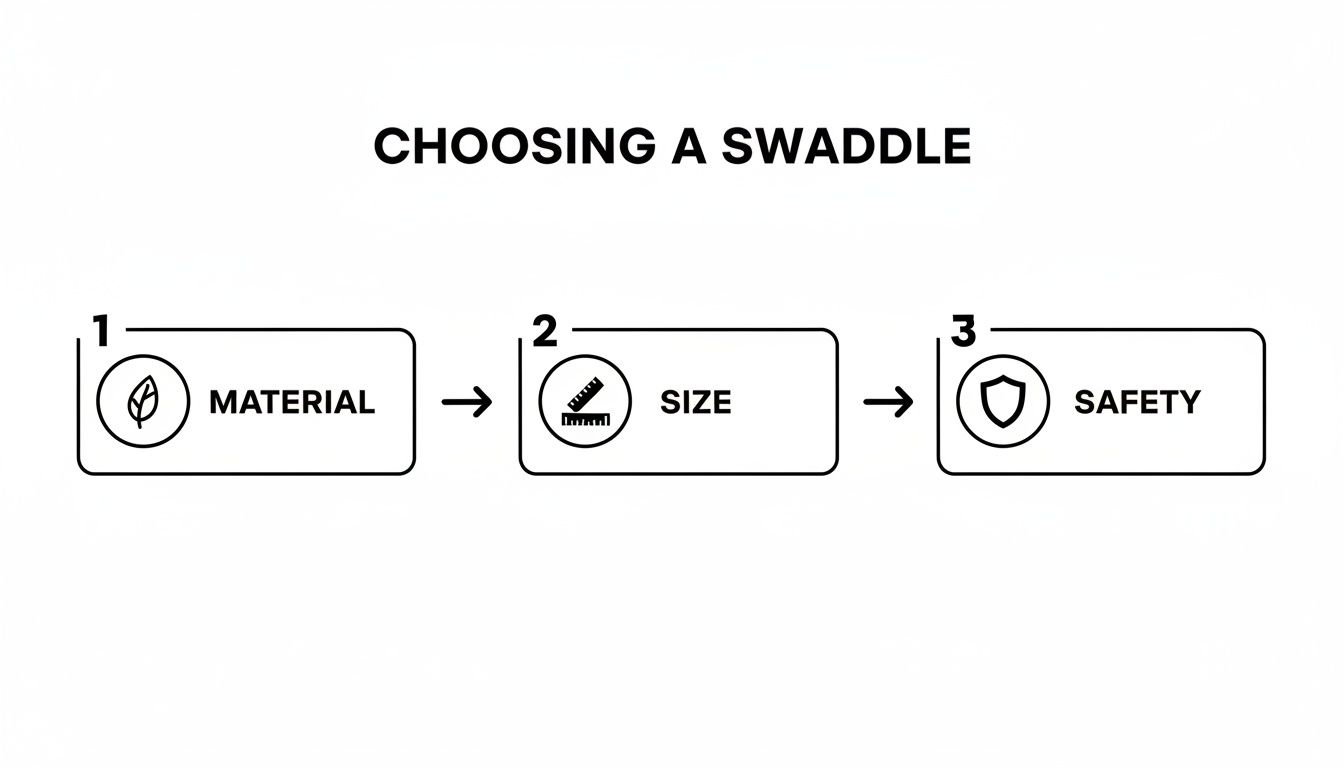
It all comes down to three things: starting with a breathable, skin-safe material, making sure you have the right size, and always following safe practices. Nail these, and you'll be on your way to a perfect swaddle every time.
Finding the Right Swaddle Style for Your Baby

Let's be honest: not every baby loves the classic, arms-down swaddle. Some little ones are natural self-soothers who need their hands by their face, while others are tiny escape artists who can wiggle out of any blanket wrap. If the traditional diamond swaddle is more of a struggle than a comfort, don't throw in the towel. There are plenty of other safe and effective ways to give your baby that secure feeling they crave.
The trick is to watch your baby and see what they're trying to tell you. Their little movements and preferences will guide you. Finding the right swaddling method isn't about giving up; it's about finding the perfect fit for your unique baby.
The "Hands Up" Position
Do you notice your baby constantly trying to get their hands to their mouth, even while sleeping? That's a classic self-soothing instinct. For babies like this, a tight arms-down swaddle can feel incredibly frustrating and will almost always lead to a fight.
That's where the Hands Up swaddle comes in. Sometimes called the "hands-to-heart" position, this technique allows your baby to keep their arms bent in a more natural pose, with their hands resting on their chest or near their chin. It gives them the freedom to self-soothe with their hands while still providing that snug wrap around their torso that calms the startle reflex.
For babies who seem to despise being swaddled, this method can be a total game-changer. You're working with their instincts, not against them, which can make all the difference.
Wearable Swaddles and Sleep Sacks
If you're tired of wrestling with blanket-folding geometry or you have a little Houdini on your hands, modern wearable swaddles are a lifesaver. These products are brilliant because they're designed for one purpose: to make swaddling simple, quick, and secure, usually with the help of zippers, snaps, or Velcro.
These clever designs offer some real advantages for sleep-deprived parents:
- They're practically foolproof. A wearable swaddle takes all the guesswork out of getting a good wrap, which is invaluable during those 3 a.m. diaper changes.
- They provide a consistent fit. The closures help you get a snug wrap every time, making it much harder for a baby to wriggle free and create a loose-blanket hazard in the crib.
- They grow with your baby. Many designs are incredibly versatile, offering options for arms-in, hands-up, or even one-arm-out swaddling as your baby gets older.
These products perfectly blend the cozy security of a swaddle with the safety and ease of a wearable blanket. For so many families, they quickly become an essential part of the sleep routine.
Choosing the Right Modern Swaddle
When you're looking at wearable swaddles, you'll want to focus on safety and comfort. A great swaddle should always be made from soft, breathable, and hypoallergenic fabric to prevent your baby from overheating and to feel gentle against their skin—just like you would with a traditional swaddle blanket.
The details in the design matter, too. Check that any Velcro is strong but not scratchy, and make sure zippers have protective fabric covers to avoid pinching your baby’s delicate skin. Look for products that are certified by safety standards like OEKO-TEX, which ensures they are free from harmful chemicals that could irritate the skin. The best designs also leave plenty of room for healthy hip movement.
You can dive deeper into how these products work and support safe sleep by reading our guide on what is a sleep sack. At the end of the day, the best swaddle is the one that keeps your baby safe, comfortable, and snug, helping both of you get the rest you truly need.
The Golden Rules of Swaddling Safety
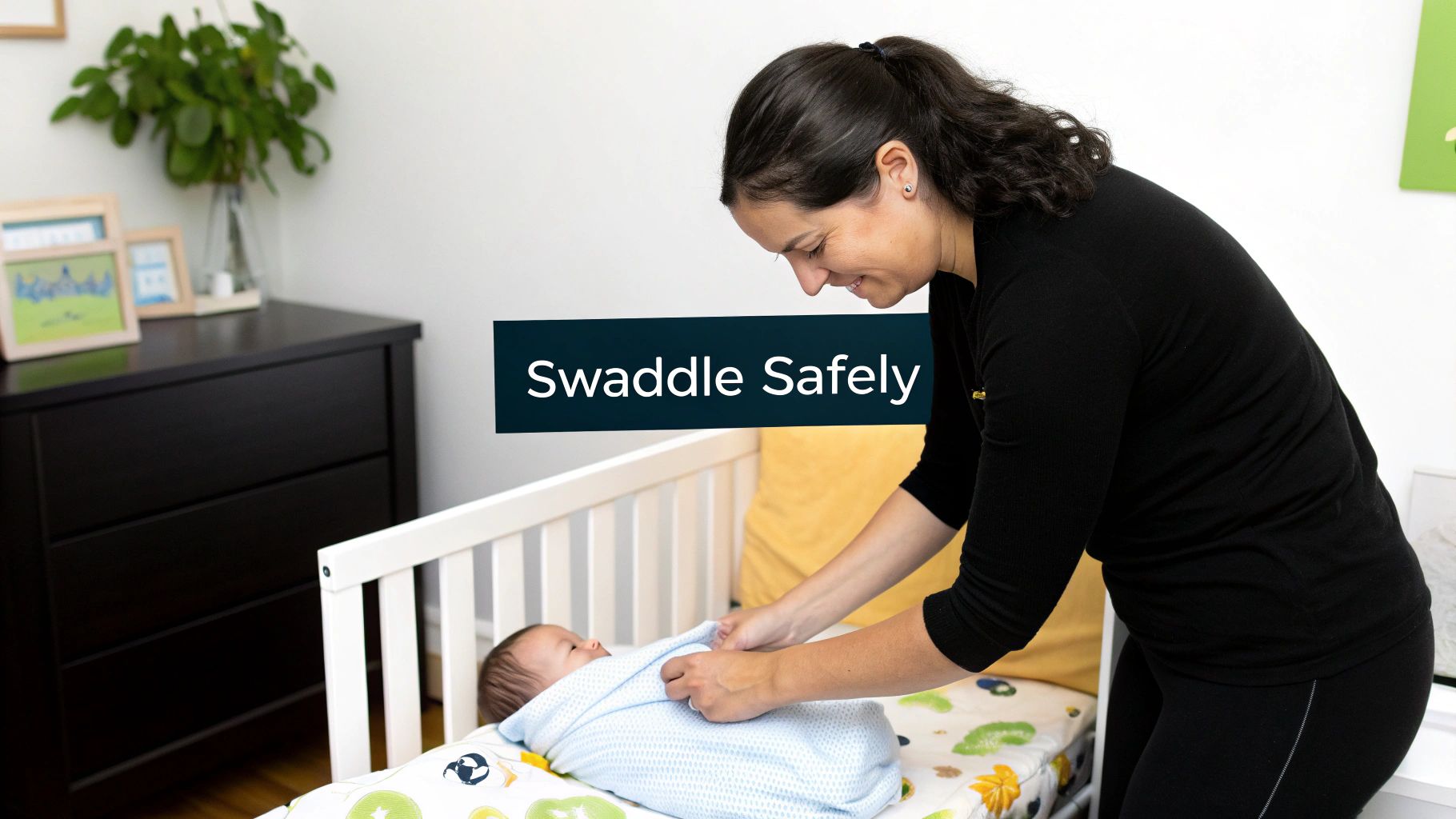
While getting that perfect, snug swaddle feels like a parenting win, safety always comes first. Getting it right isn't just about a happy, sleeping baby—it’s about following a few non-negotiable rules that give you total peace of mind.
The most important rule, the one you never, ever bend, is "Back to Sleep." Every single time, a swaddled baby must be placed on their back. Never on their tummy, never on their side. This simple practice is the bedrock of safe infant sleep and dramatically cuts the risk of Sudden Infant Death Syndrome (SIDS).
When you pair back-sleeping with a proper swaddle, it can be a powerful combination. In fact, studies from the 2010s showed that this duo can reduce the risk of SIDS by as much as 30%. It’s no wonder this advice has been adopted by 75% of U.S. pediatricians. If you're interested in the numbers, you can explore more about the data behind swaddling trends.
Avoiding Common Swaddling Hazards
It’s completely normal to have a running list of worries: Is this too tight? Is the baby too warm? What if the blanket rides up over their face? These are all valid concerns, but thankfully, they have straightforward solutions.
- Preventing Overheating and Skin Rashes: A simple organic cotton onesie is usually all your baby needs under a swaddle. Keep an eye out for flushed cheeks, a sweaty neck, or fast breathing—all signs they might be too hot. Overheating not only is a safety risk but also can cause heat rash. A good rule of thumb is to keep the room at a temperature that’s comfortable for a lightly clothed adult.
- Ensuring a Safe Fit: The swaddle needs to be snug around their torso but loose enough around the hips to allow for natural leg movement. You should be able to slide two or three fingers between the blanket and your baby’s chest. This ensures they can breathe easily without feeling constricted.
- Keeping the Face Clear: The top of the swaddle should never be higher than your baby’s shoulders. Make sure any excess fabric is folded down and away from their neck and face, so it can’t accidentally cover their mouth or nose.
Think of the swaddle as a gentle, comforting hug, not a straitjacket. Your goal is a secure wrap that calms them, not a restrictive bind that could cause overheating or skin irritation.
Knowing When It Is Time to Stop Swaddling
Like so many things in babyhood, swaddling is a temporary phase. You must stop swaddling the moment your baby shows signs of trying to roll over. This is a critical safety milestone. A baby who manages to roll onto their stomach while swaddled needs their arms free to push up and turn their head.
So, what should you watch for?
- Pushing up on their arms or lifting their head and shoulders during tummy time.
- Rocking from side to side or kicking their legs to scoot around the crib.
- Trying to get an arm free from the swaddle.
This usually starts happening between 3 and 4 months, but every baby hits milestones at their own pace. The second you see these early signs, it’s time to start the transition away from the swaddle. Continuing to swaddle at this stage becomes a serious safety risk. For a deeper dive, check out our guide to creating a safe sleep environment for infants.
Transitioning From the Swaddle to a Sleep Sack
Moving on from the swaddle doesn't have to mean sleepless nights for everyone. A gradual transition is often the smoothest path forward.
Start by swaddling with one arm out for a few nights. This gives your baby a little freedom to get used to the new feeling. Once they're comfortable with that, you can free the other arm before moving them into a wearable blanket or a sleep sack. This step-by-step approach helps make the change a little less jarring and keeps everyone sleeping soundly.
Answering Your Top Swaddling Questions
Even with the clearest instructions, actually swaddling a wriggly newborn for the first time brings up a ton of questions. It's totally normal to hit a few snags as you get the hang of it. Let's walk through some of the most common concerns I hear from new parents to help you feel more confident.
"My Baby Fights The Swaddle! What Am I Doing Wrong?"
This is probably the number one thing parents worry about. You've just finished a beautiful, snug wrap, and your little one immediately starts trying to Houdini their way out. Don't panic! This usually doesn't mean they hate being swaddled. More often than not, it's a sign that a small tweak could make all the difference.
First, think about timing. Trying to swaddle a baby who is already over-tired and screaming is a recipe for frustration for both of you. Aim to wrap them when they are calm and just starting to show sleepy cues.
Also, pay attention to their arm position. Some babies really want their hands up near their face so they can self-soothe. If they're fighting an arms-down swaddle, try the "hands-to-heart" position next time. You might also discover that a specially designed swaddle sack with secure fasteners gives you a more consistent, escape-proof fit than a regular blanket can.
"Is This Swaddle Too Tight? Or Is It Too Loose?"
Ah, the Goldilocks question of swaddling. Finding that perfect, "just right" fit is crucial for both safety and effectiveness. If it's too loose, it won't do much to calm that jumpy startle reflex and could even become a hazard if it unravels. But if it's too tight, it can interfere with breathing and healthy hip development.
Here’s a really simple way to check your work:
- Around the chest: You should be able to comfortably slide two or three fingers between the swaddle and your baby's chest. This gives them all the room they need to breathe deeply.
- Around the hips: The bottom half of the swaddle needs to be loose and roomy. Your baby’s legs should have plenty of space to bend up and out at the hips, almost like a little frog. This freedom is essential for proper hip joint development.
Think of a good swaddle as a secure, reassuring hug around their upper body—not a straitjacket. It’s all about calming their arms while leaving their legs completely free to wiggle and move.
"Should I Swaddle My Baby For Daytime Naps, Too?"
Yes, absolutely! Swaddling can be a game-changer for daytime naps, not just for nighttime sleep. That same startle reflex that wakes them at 2 AM can also cut a 45-minute nap down to 10 minutes. A good swaddle helps them connect sleep cycles for longer, more restorative rest during the day.
All the same safety rules apply, day or night. Always, always place a swaddled baby on their back to sleep in a clear, safe space like a crib or bassinet with no loose blankets or pillows.
Keep a close eye on their temperature, too. Knowing how to dress your baby for sleep underneath the swaddle is key to preventing overheating and skin irritation, especially when the nursery might be warmer during the day. A lightweight, breathable fabric is your best friend here.
From that very first swaddle to all the toddler adventures that follow, GuGuTon is here with high-quality, gentle, and safe products for your little one. Check out our collection of breathable swaddles and sleep sacks designed for your baby's comfort and your peace of mind at https://guguton.com.