

How to Dress Baby for Sleep Safely and Comfortably
When you're getting your baby ready for bed, the most important thing to remember is the temperature inside the room, not what the weather is like outside. A good, practical rule of thumb is to dress your little one in one more layer than an adult would comfortably wear in that same room. For safety, this almost always means using a wearable blanket or sleep sack instead of any loose blankets.
Why Safe Sleepwear Is a Must
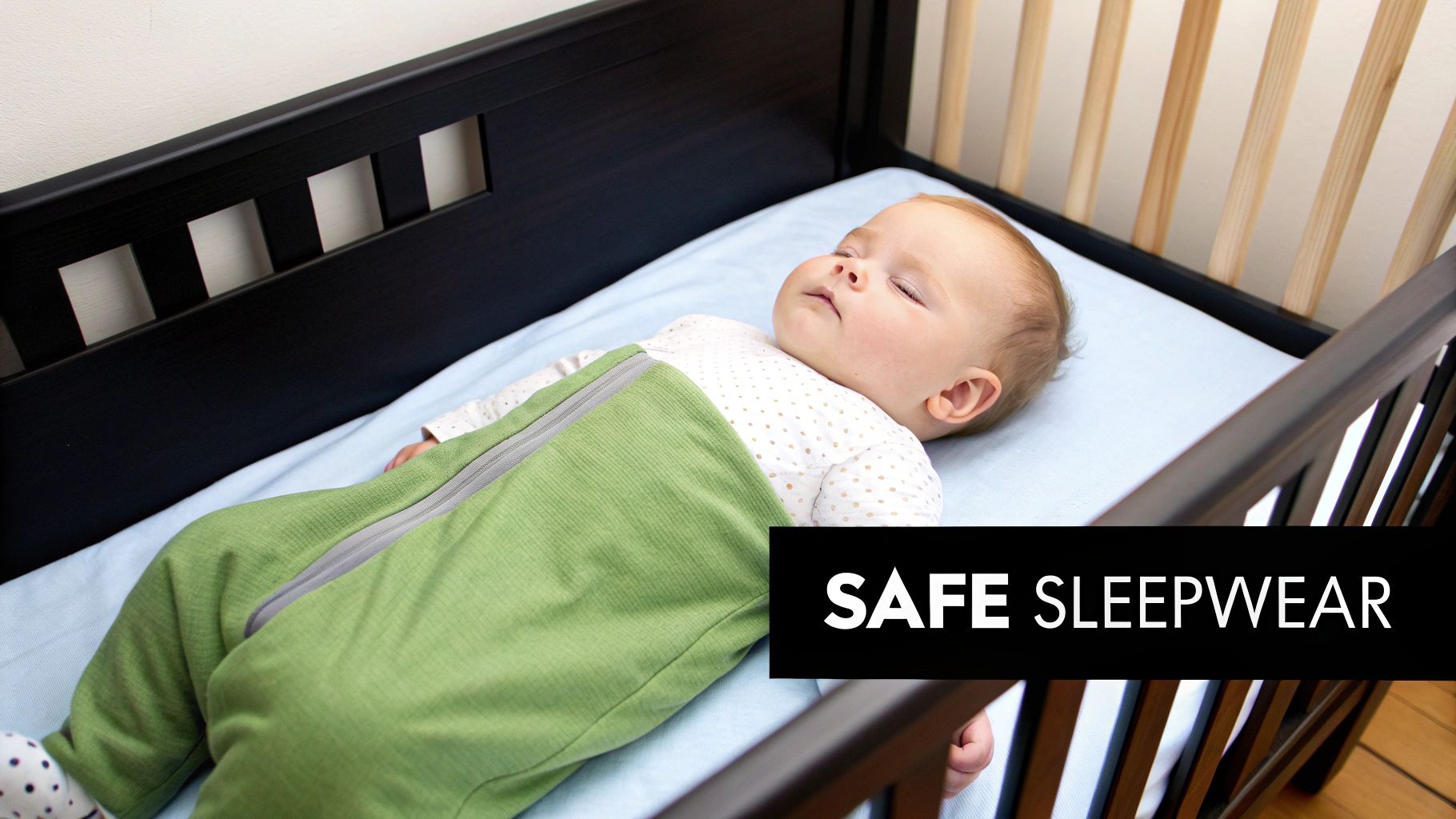
Figuring out what your baby should wear to sleep isn't just about making them cozy—it’s a crucial piece of the safe sleep puzzle. The layers and quality of fabric you choose have a direct impact on their well-being, from preventing skin irritations and rashes to reducing the risk of Sudden Infant Death Syndrome (SIDS). The main goal is simple: keep your baby comfortably warm, but never let them get too hot, as overheating is a known risk factor.
This is exactly why you'll hear pediatricians and sleep experts constantly advise against using loose blankets for any baby under one year old. A young infant simply doesn't have the motor skills or strength to move a blanket if it happens to cover their face, creating a serious suffocation hazard.
Building a Foundation for Safe Sleep Dressing
So, where do you start? Your best guide is always the temperature of the nursery. Aim to keep the room between 68°F and 72°F (20°C to 22.2°C), which is considered the ideal range for safe and comfortable sleep.
Once you know the room temp, you can go back to that simple rule of thumb: dress your baby in one more light layer than you’d wear. For example, if you feel comfortable sleeping in just your pajamas, your baby would likely need a onesie plus a lightweight sleep sack made from a high-quality, breathable fabric.
This basic approach sets you up perfectly for understanding more detailed tools, like TOG ratings, which help you dial in the exact warmth of their sleepwear based on the room's temperature.
A baby's body can't regulate its temperature nearly as well as an adult's can, making them much more vulnerable to overheating. Choosing the right layers made from breathable, skin-safe fabrics is one of the most powerful things you can do to reduce this risk and create a safer sleep space.
Why Wearable Blankets are the Gold Standard
The expert consensus on this is crystal clear. The CPSC specifically warns that because babies can't easily lift or turn their heads, soft bedding like blankets or pillows can block their nose and mouth, leading to suffocation. It's not just an American guideline; at least six countries, including the U.S., Canada, and the U.K., have official recommendations against overdressing and strongly promote safe alternatives like sleep sacks.
Wearable blankets, often called sleep sacks, give you all the warmth of a blanket without any of the risks. They're designed to be worn right over your baby's pajamas, so they can't be kicked off in the middle of the night or, more importantly, pulled up over their head. By choosing a sleep sack made from quality, non-irritating materials, you provide warmth while also protecting your baby’s delicate skin.
By using a sleep sack, you give your baby that secure, cozy feeling they love while completely removing the hazards of loose bedding. It’s a simple switch that offers so much peace of mind. For a deeper dive into this topic, you might be interested in our guide to creating a https://guguton.com/blogs/news/safe-sleep-environment-for-infants.
Choosing Fabrics That Are Kind to Your Baby's Skin
A baby’s skin is a world away from our own. It’s incredibly delicate—up to 30% thinner than an adult’s—which makes it highly sensitive and porous. This means whatever fabric rests against their skin for hours overnight really, truly matters. The right material can be the difference between a comfortable, restorative sleep and a night spent dealing with skin irritation, rashes, or even allergic reactions.
Your best bet is almost always a natural, breathable fiber. Think of these materials as working with your baby's body, not against it. They let air move freely, which is crucial for helping your little one regulate their temperature and avoid overheating—a major risk factor for SIDS.
Why Natural Fibers Are a Parent's Best Friend
When you're flipping through tiny sleep sacks or pajamas, keep an eye out for materials known for being gentle, high-quality, and effective at preventing skin issues.
- Organic Cotton: This is the gold standard for a reason. Because it’s grown without synthetic pesticides or harsh chemicals, you don't have to worry about residues irritating your baby’s skin or triggering allergies. It’s wonderfully soft, breathable, and a pro at temperature regulation.
- Bamboo Viscose: If you’ve ever felt bamboo fabric, you know it's silky-smooth. It's also incredibly breathable and a powerhouse at wicking moisture away. This is perfect for keeping your baby dry and comfy, preventing heat rash and discomfort, especially on warmer nights.
These options are a much safer choice than synthetic fabrics like polyester or heavy fleece, which often trap heat and moisture. That can create a damp, stuffy environment right next to your baby's skin, which can lead to common skin problems like eczema flare-ups, heat rash, and general discomfort that's sure to disrupt their sleep (and yours!).
A Quick Tip: Think of your baby's sleepwear as part of their immediate sleep environment. Just as you keep the crib clear of loose bedding, choosing high-quality, non-toxic, and breathable fabrics is a fundamental part of creating a safe and healthy space for them.
How to Read Labels for a Non-Toxic Nursery
To be certain the sleepwear you're buying is genuinely safe and high-quality, look for a stamp of approval from a third-party certification. These labels are your shortcut to peace of mind, guaranteeing the product is free from a long list of harmful substances that could cause skin reactions or allergies.
Here are the two most trusted certifications to look for:
- GOTS (Global Organic Textile Standard): This is a big one. It certifies that the fabric is organic all the way from the farm to the finished product, ensuring no harmful chemicals are used in the process.
- OEKO-TEX Standard 100: This certification means the final garment has been tested and found free of harmful chemicals, making it perfectly safe for your baby's sensitive skin.
Making smart fabric choices is a huge part of modern safe sleep practices. It’s a real concern, especially when you consider that research showed that between 2008-2010, 54.7% of U.S. infants were still found sleeping with potentially hazardous bedding like thick blankets. This stark number, detailed in a study on nichd.nih.gov, really drives home why wearable blankets made from safe, quality materials are so important.
For a deeper dive, check out our guide on choosing the right fabric for your baby’s sensitive skin.
Decoding TOG And Layering By Room Temperature
One of the biggest anxieties for new parents is figuring out if their baby is too hot or too cold while they sleep. It's a valid concern—overheating is a significant risk factor for SIDS, and being too cold can disrupt sleep. But keeping your baby comfortable doesn't have to be a nightly guessing game.
The secret is understanding the TOG rating, which stands for Thermal Overall Grade. Think of it as a simple measure of warmth, just like the tog rating on your own duvet. A higher number means more warmth. For example, a lightweight muslin sleep sack for a warm summer night might be a 0.5 TOG, while a cozy, padded one for winter could be 2.5 or even 3.5 TOG.
Matching Layers To Your Nursery's Temperature
The ideal room temperature for a baby is between 68-72°F (20-22°C). Once you have a handle on the nursery's temperature, you can layer your baby's sleepwear with confidence. It's all about combining the right base layers with the right TOG-rated sleep sack or swaddle.
Let's say it's a balmy evening and the nursery is around 75°F. A simple short-sleeve bodysuit under a 0.5 TOG sleep sack is probably all you need. On the flip side, if you have a drafty older home and the room dips to 65°F, you’d reach for long-sleeve, footed pajamas and a much warmer 2.5 TOG sleep sack.
The best way to check if your baby is comfortable is to feel the back of their neck or their chest. If it’s sweaty, they’re too warm. If it feels cool, they might need another light layer. Don't rely on their hands and feet; it's totally normal for them to feel a bit cooler than their core.
A Quick Guide To Dressing Your Baby For Sleep
To make those middle-of-the-night decisions easier, a simple chart can be a lifesaver. This table breaks down what your baby should wear based on the room temperature, taking the guesswork out of the equation.
Baby Sleepwear Guide by Room Temperature and TOG
This chart is your cheat sheet for matching room temperature with the right TOG rating and clothing layers, so you can rest easy knowing your little one is comfortable.
| Room Temperature (°F / °C) | TOG Rating | Suggested Sleepwear Layers |
|---|---|---|
| 75°F+ / 24°C+ | 0.5 TOG | Short-sleeve bodysuit or just a diaper. |
| 72-75°F / 22-24°C | 1.0 TOG | Short-sleeve bodysuit or a long-sleeve onesie. |
| 68-72°F / 20-22°C | 2.5 TOG | Long-sleeve pajamas (footed or footless). |
| 61-68°F / 16-20°C | 3.5 TOG | Long-sleeve bodysuit plus footed pajamas. |
Using a guide like this simplifies how to dress a baby for sleep. If you're curious to learn more about wearable blankets, we have a helpful article on our blog that explains what a sleep sack is and why they are a great, safe option.
Of course, the layers are only part of the story. The fabric you choose is just as important for your baby's comfort and safety.
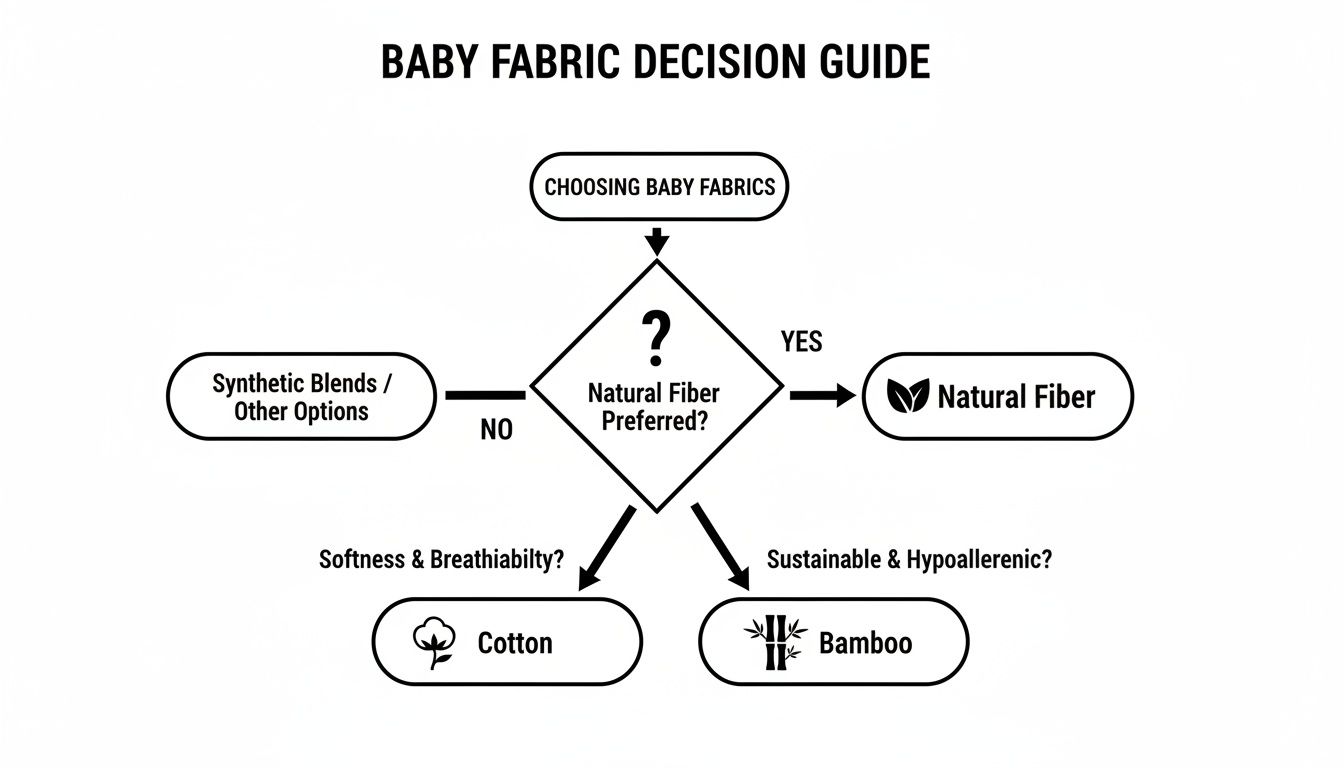
As you can see, natural, breathable fibers like cotton and bamboo are always the best choice for a baby's delicate skin. They help regulate body temperature and prevent irritation, rashes, and allergies. When you combine these soft, gentle fabrics with the correct TOG-rated layers, you create a sleep environment that’s both safe and incredibly comfortable, giving you some much-deserved peace of mind.
Navigating the Swaddle to Sleep Sack Transition
For so many of us, the swaddle is a lifesaver in those early newborn days. That snug, cozy wrap is pure magic, mimicking the womb and calming the Moro reflex (that jerky startle that wakes them up). It's an incredible tool for helping a new baby feel secure and get longer stretches of sleep.
But as with all things baby-related, the swaddle is just a phase. Knowing when to graduate from it is one of the most important safety milestones you'll navigate. The absolute biggest signal is when your baby shows any sign of attempting to roll over. This can happen as early as two months old, and at that point, a swaddle becomes a hazard because it restricts their ability to use their arms to reposition their head.
Recognizing the Signs to Transition
Moving on from the swaddle can feel a little scary, especially if it's the only way your baby seems to settle. But making the change at the right time is crucial for their safety.
You'll know it's time when you start seeing these clues:
- The Escape Artist: Your baby consistently wiggles and wrestles an arm (or both!) out of the swaddle.
- Rolling Practice: You spot them lifting their legs, arching their back, or shifting their hips in a clear attempt to roll from their back to their tummy.
- Less Startling: You notice their startle reflex isn't as pronounced anymore, and they aren’t waking themselves up with sudden movements as often.
Once you see these signs, it's time to start the process. A gentle, step-by-step approach usually works best and helps your baby adjust to their new freedom without turning nighttime upside down.
The goal isn't to rip away their sense of security overnight. It's about guiding them toward a new, safer way of sleeping that supports their incredible developmental progress.
Making the Move to a Sleep Sack
The sleep sack (or wearable blanket) is the gold standard for safe infant sleepwear. It keeps your little one warm and comforted without the suffocation risk that comes with loose blankets in the crib. It's the perfect next step.
Many parents, myself included, have found success by taking it slow.
Start by swaddling with one arm out for a few nights. This gives your baby a chance to get used to having a hand free while still feeling the familiar pressure of the swaddle. Once they’ve adjusted to that for a few nights, you can move to both arms out before ditching the swaddle completely for a sleep sack. There are even special "transitional" swaddles out there designed specifically for this in-between stage.
This is also a great time to double-check your other sleepwear habits. Brushing up on these 10 common baby clothing mistakes can help ensure you're on the right track. By managing this transition with a bit of patience, you're setting your baby up for safe and sound sleep as they grow—and giving yourself some much-deserved peace of mind.
Common Sleep Hazards You Need to Avoid

Getting your baby dressed for bed is about more than just finding cute PJs. It's about protecting them from very real dangers, from physical hazards to skin irritants. We're bombarded with images and advice online, and unfortunately, a lot of it is flat-out wrong and incredibly unsafe. Knowing what goes on your baby is just as important as knowing what needs to stay out of the crib.
It's shocking how much misinformation well-meaning parents see. A 2023 analysis of Instagram photos found that less than 2% actually followed the safe sleep guidelines from the American Academy of Pediatrics (AAP). That’s a scary statistic, especially with sleep-related infant deaths on the rise. Understanding the real hazards is the best way to keep your little one safe.
Unsafe Items to Keep Out of the Crib
Some accessories are perfectly fine when your baby is awake and you're right there with them, but they can become dangerous during unsupervised sleep. These items can cause overheating, suffocation, or even strangulation, and they simply don't belong in a crib.
Before putting your baby down to sleep, always remove these items:
- Hats, Beanies, and Headbands: Babies release a lot of heat through their heads to regulate their body temperature. Covering their head indoors can easily make them overheat, which is a significant risk factor for SIDS.
- Bibs and Necklaces: Anything tied or looped around a baby's neck is a clear strangulation hazard. No exceptions.
- Loose Socks or Mittens: It’s so tempting to keep those tiny hands and feet warm, but loose socks and mittens can easily fall off and become a choking hazard. Footed pajamas or a secure sleep sack are much safer choices.
The golden rule of safe sleep is a bare crib. All that should be in there is a firm mattress, a fitted sheet, and your baby. No bumpers, pillows, toys, or loose blankets. Ever.
The Dangers of Unregulated Sleep Products
It's not just the little accessories you have to worry about. Some popular baby products marketed for sleep are dangerously unsafe. The Consumer Product Safety Commission (CPSC) has issued multiple warnings and recalls for products that violate the most basic principles of safe sleep.
Here's why some of these items are never a good idea for unsupervised sleep:
- Weighted Swaddles and Blankets: These products can put dangerous pressure on a baby’s tiny chest and lungs, making it harder for them to breathe. Both the AAP and CPSC strongly warn parents against using them on infants due to the serious suffocation risk.
- Inclined Sleepers: Any product that puts a baby on an incline greater than 10 degrees—like the infamous Rock ‘n Play—is extremely hazardous. The angle can cause an infant's head to slump forward, cutting off their airway. Babies must always sleep on a firm, flat surface.
The Importance of a Proper Fit
The fit of your baby's sleepwear is the final piece of the safety puzzle. Whether it's pajamas, a swaddle, or a sleep sack, the fit should be just right—snug, but never tight. Poorly fitting clothes can bunch up, causing discomfort and rashes, while also posing safety risks.
If the fit is off, you run into problems. A neckline that’s too loose can ride up and cover your baby's face. A sleep sack that’s too big can let a baby slide down inside it. Both are serious suffocation risks. On the other hand, clothing that's too tight can restrict breathing, chafe the skin, and keep them from moving into a comfortable, safe position.
A good rule of thumb is to check the fit around the chest. You should be able to slide two fingers comfortably between the fabric and your baby. This simple check gives you peace of mind that they're not only cozy but, more importantly, safe.
Answering Your Top Questions About Dressing Your Baby for Sleep
It's completely normal to have a million questions when it comes to dressing your little one for bed. You’re trying to balance keeping them comfortable with keeping them safe, and it can feel a little overwhelming. Let's walk through some of the most common questions I hear from parents.
Is It Ever Okay to Use a Blanket in the Crib?
This is a big one, and the answer is a firm no—not for at least the first year. The American Academy of Pediatrics (AAP) is very clear on this: no loose blankets, pillows, or any soft bedding in the crib. The risk of suffocation and SIDS is just too high.
So what's the alternative? A wearable blanket, often called a sleep sack. It’s the perfect solution, giving your baby that cozy, bundled-up feeling without any of the danger. You can think about introducing a light blanket once they've graduated to a toddler bed.
How Can I Tell If My Baby Is Too Hot or Too Cold?
Every parent worries about this! The best way to check is to feel the back of their neck or their chest. Don't judge by their hands or feet; it's totally normal for their little extremities to feel cool because their circulatory system is still developing.
Their core (neck and chest) should feel warm and dry. If it feels a bit sweaty, clammy, or you see a heat rash developing, they're too hot, and you should take off a layer. If it feels cool, you might want to add a light one.
A key takeaway: It is always safer for a baby to be slightly cool rather than too warm. Overheating is a significant risk factor for SIDS, so when in doubt, err on the side of fewer layers.
Should My Baby Wear a Hat Indoors for Sleep?
Nope. Once you're home from the hospital, your baby should never wear a hat to sleep indoors. A huge amount of a baby's body heat is released through their head, which is how they regulate their temperature.
Putting a hat on them indoors can quickly lead to dangerous overheating. Keeping their head uncovered is a crucial part of safe sleep.
What Goes Underneath a Sleep Sack?
This really comes down to the temperature of your baby’s room and the TOG rating of the sleep sack you're using. The sleep sack is essentially their blanket, so you dress them in whatever they'd comfortably wear under a blanket in that same room.
Here’s how it might look in practice:
- Warm Room (72-75°F / 22-24°C): If you're using a lightweight, 0.5 TOG sleep sack, a simple short-sleeve bodysuit is probably all you need underneath.
- Cool Room (64-68°F / 18-20°C): For a cozier 2.5 TOG sack, you’ll want to layer up with something like long-sleeve footed pajamas made of a breathable, high-quality fabric like cotton to prevent skin irritation.
Most sleep sacks come with a little guide from the manufacturer, which can be a lifesaver. Always give that a quick look for their specific recommendations.
At GUGUTON LLC, we get it. Dressing your baby for sleep is about giving you peace of mind and keeping them safe. We’ve designed our sleepwear to be breathable, gentle, and perfect for your baby’s sensitive skin to prevent rashes and allergies. Shop our baby essentials now to find the perfect fit for your little one.