

Discover what is baby led weaning: A Practical Guide for Safe First Feeds
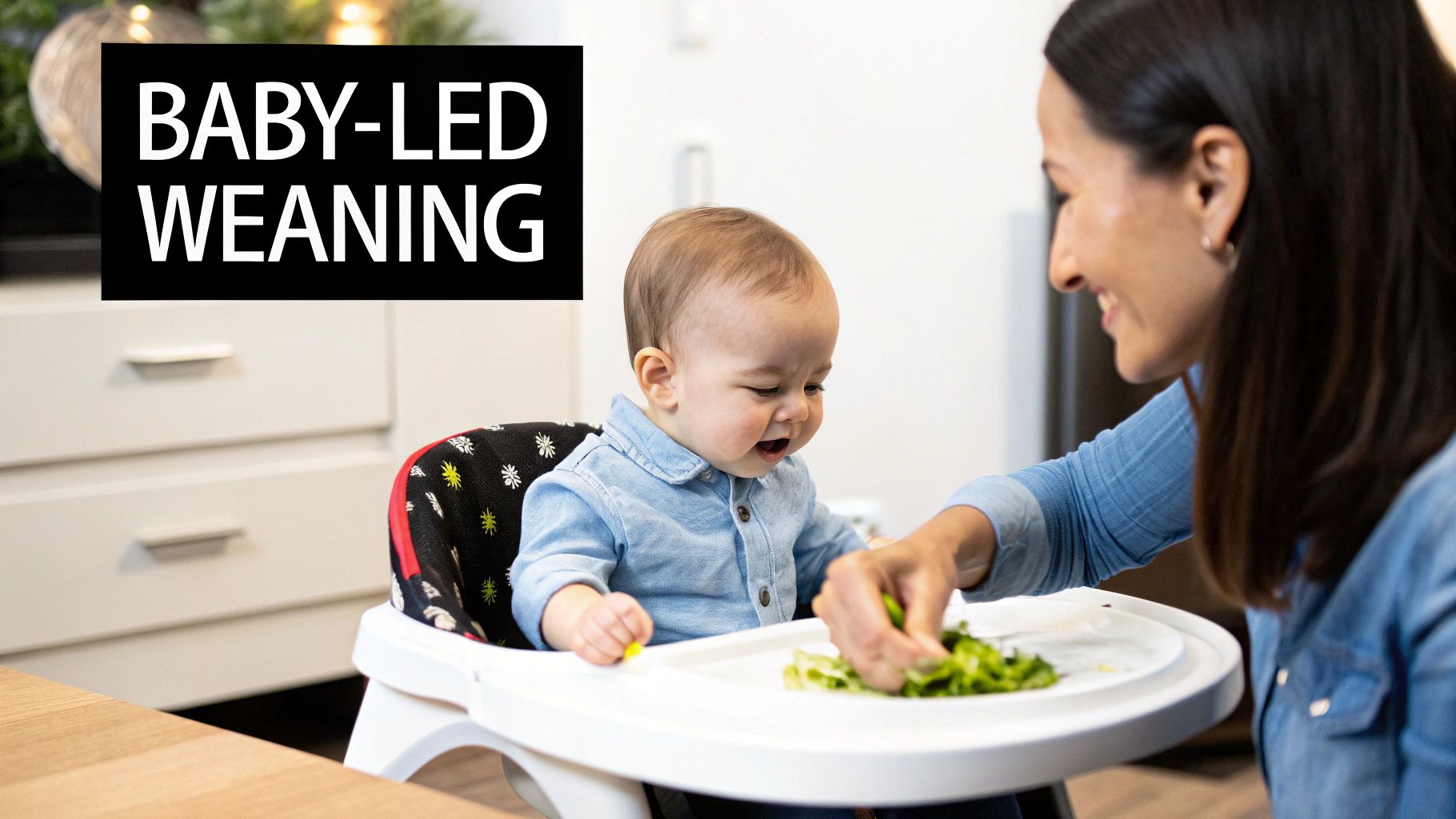
Picture this: your baby, sitting at the family table, exploring their first bites of real food with their own two hands. No spoons, no purées, just pure, joyful discovery.
That’s the heart of baby-led weaning (BLW). Instead of you spooning puréed food into their mouth, you offer your baby soft, graspable pieces of whole foods and let them take the lead. They decide what to pick up, what to try, and how much to eat, right from day one of solids.
1. What is Baby Led Weaning?
At its core, baby-led weaning is about trusting your baby. It’s a philosophy that respects their natural ability to explore food and self-regulate their appetite, setting the foundation for a positive, healthy relationship with eating for years to come.
The idea is refreshingly simple. Your baby joins you at mealtimes, eating slightly modified, baby-safe versions of the same high-quality food the rest of the family is enjoying. This makes meal prep easier and includes your little one in the social experience of eating together from the very beginning.
How BLW Builds Essential Skills
When babies feed themselves, they're doing so much more than just eating. They're engaging all their senses—touching different textures, smelling new aromas, and tasting a world of flavors. It's a full-on sensory learning experience.
This hands-on approach is a fantastic way to support key developmental milestones.
- Fine Motor Skills: Picking up a slippery slice of avocado or a soft spear of sweet potato is brilliant practice for hand-eye coordination and developing that all-important pincer grasp.
- Oral Motor Development: Gnawing and chewing on soft solids helps strengthen the jaw and tongue muscles that are crucial for speech development down the line.
- Self-Regulation: By being in charge of their own intake, babies learn to listen to their bodies' hunger and fullness cues. This is a vital skill that can help prevent overeating later in life.
BLW naturally aligns with the developmental leaps babies make around the six-month mark. It's no wonder it's becoming such a popular way to introduce solids. In fact, one study found that 79.9% of babies starting with BLW began solids between 6 and 7 months, perfectly in line with World Health Organization (WHO) recommendations. You can dive deeper into the research on baby-led weaning timing and safety if you're curious.
When we let our babies lead the way with food, we're not just feeding them—we're fostering independence and confidence. They learn that food is fun and that mealtimes are a happy, pressure-free part of the day.
Ultimately, BLW is a journey of food discovery. It’s about letting your little one set the pace and grow into a confident, adventurous eater. To help you prepare for this exciting new stage, check out our guide on the best baby products for newborns to make sure you're all set.
Recognizing the Signs Your Baby Is Ready for BLW
While the six-month mark is a great general guideline, the calendar alone doesn't tell the full story. True readiness for solids is all about developmental milestones, not just age. Looking for a few key physical signs will help you start this journey with confidence, knowing your little one has the skills to safely explore new foods.
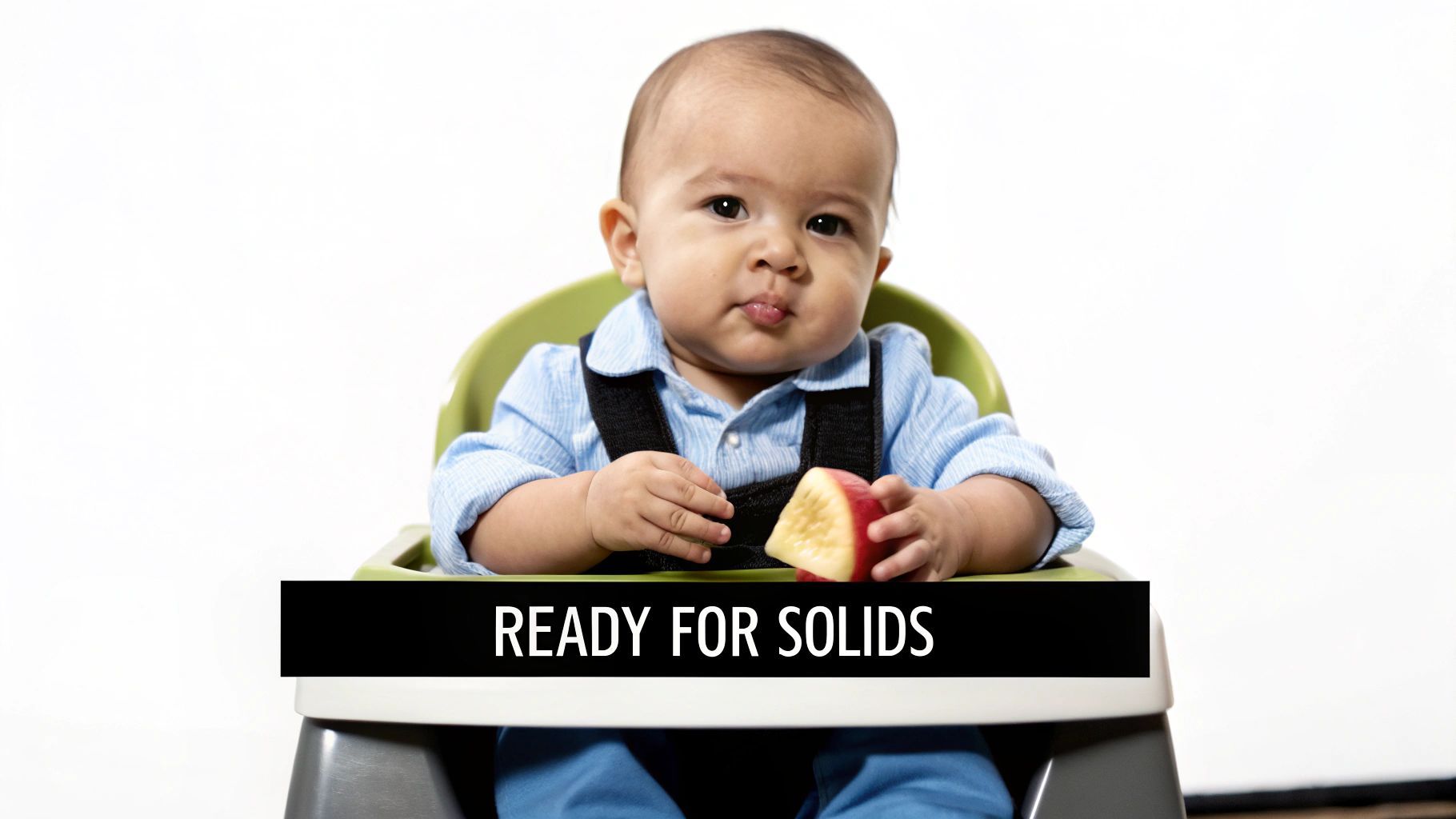
Think of these signs as your baby's "green lights" for starting their food adventure. Just as a builder needs a solid foundation before putting up walls, your baby needs a stable core before they can safely manage food at mealtimes.
Core Stability and Head Control
First and foremost, your baby must be able to sit upright with minimal support. This doesn't mean being propped up with pillows; it means they can hold their trunk steady on their own in a highchair.
Good head and neck control is just as critical. A stable head allows them to turn away when they're full and, most importantly, it protects their airway. If a baby is slumping over, they can't swallow safely, which is why this physical stability is non-negotiable for preventing choking.
The Tongue-Thrust Reflex Vanishes
You've probably noticed that young babies have a powerful instinct to push anything out of their mouths with their tongues. This is the tongue-thrust reflex, a brilliant protective mechanism that keeps them from choking before they’re ready for solids.
Before you start BLW, you need to see this reflex disappear. You can do a simple test by touching a clean finger or a baby-safe spoon to their lips. If their tongue no longer automatically pushes it out, it's a great sign they are developmentally ready to move food to the back of their mouth to swallow.
Watching for these developmental cues is about trusting your baby's body. They are naturally equipped with the instincts and reflexes they need to stay safe—our job is to recognize when their development says, "I'm ready."
Developing Hand-Eye Coordination
Finally, your baby needs to show a genuine interest in food and have the coordination to act on it. This is the fun part to watch!
You’ll know they’re getting there when they can:
- See food: They’ll watch you eat with intense curiosity, tracking the fork from your plate to your mouth.
- Reach for food: Their interest will soon turn into action as they start reaching for what's on your plate.
- Bring it to their mouth: The final piece of the puzzle is successfully picking up an object and bringing it to their mouth to explore.
This budding coordination is the engine that drives baby-led weaning, empowering them to take charge of their own feeding. Before you offer that first spear of avocado, though, it’s always wise to have a quick chat with your pediatrician to get their green light. They can confirm your baby is showing all the right signs and is truly ready for this exciting new phase.
The Upside of BLW (and How to Handle the Worries)
Starting baby-led weaning opens up a whole new world for your little one, but let's be honest—it can bring up a lot of questions for parents, too. Understanding both the exciting benefits and how to safely manage the common concerns is what makes it a positive experience for everyone. Knowing what to expect lets you move forward with confidence.
One of the biggest wins with BLW is the incredible boost it gives to their fine motor skills. Every time your baby reaches for a soft spear of sweet potato or tries to corral a slippery piece of avocado, they're getting a masterclass in hand-eye coordination. The simple act of feeding themselves strengthens all those tiny muscles in their hands and fingers, laying the groundwork for future skills like holding a crayon.
Beyond the physical, BLW is fantastic for teaching appetite self-regulation. When babies are in charge of what (and how much) they eat, they get really good at listening to their own bodies. They learn to stop when they're full, which is a powerful skill for building a healthy relationship with food for life. It can even help sidestep some of those classic picky eating battles down the road.
Addressing the Big Three: Choking, Nutrition, and Mess
While the benefits are great, it's completely normal to worry. Most parents have the same three concerns looping in their minds: choking, nutrition, and the epic mess. The good news is, with a few smart strategies, you can handle all of them.
A top concern is making sure your baby gets enough of the right nutrients—especially iron. Around the six-month mark, the iron stores they were born with start to run low, so it’s a crucial time to introduce iron-rich foods.
Here's how to serve up iron in a safe, baby-friendly way:
- Soft-cooked meats: Think tender strips of beef or dark-meat chicken that are easy for your baby to gum.
- Lentils and beans: Mash them just enough to be manageable and offer them on a pre-loaded spoon your baby can bring to their own mouth.
- Iron-fortified cereals: You can mix these with a little breast milk or formula to create a thick, scoopable texture they can grab with their hands.
A great pro-tip is to pair these iron sources with a food high in Vitamin C, like steamed broccoli florets or strips of bell pepper. The Vitamin C actually helps their body absorb the iron much more effectively.
Solid research backs this up. An NIH-funded trial showed that BLW babies took in similar amounts of energy as spoon-fed babies. Better yet, a major review of studies covering 898 infants found no significant difference in choking incidents or iron levels. You can learn more about these encouraging findings on infant growth and safety for peace of mind.
Simple Strategies for a Safe and Happy Start
Safety is everything, and a few ground rules make all the difference. Always make sure your baby is sitting completely upright in their highchair—no slumping. Stay with them for the entire meal, and prepare foods so they pass the "squish test." If you can easily mash it between your thumb and forefinger, it’s a good texture for them.
When it comes to allergies, the key is to go slow. Introduce common allergens one at a time, and wait a few days before trying the next one. This way, if a reaction pops up (like a rash or an upset tummy), you’ll know exactly what caused it. Keep an eye out for any skin changes, like hives, redness, or an eczema flare-up, which can be early signs of an allergy.
And finally, the mess. It’s going to happen! Try to reframe it as part of their sensory learning. A highchair with a good tray, a full-sleeved bib, and a splat mat on the floor are your best friends here. They make cleanup so much easier.
Remember, breast milk or formula is still their main source of nutrition for the first year. For parents who are supplementing or transitioning, our guide on how to choose baby formula can offer some valuable insights. By preparing thoughtfully, you can navigate the worries and truly enjoy all the amazing benefits of baby-led weaning.
Choosing Safe Starter Foods for Your Baby
This is where the real fun begins! Picking out the first foods for your baby’s culinary journey is such an exciting milestone. With baby-led weaning, the possibilities are wonderfully varied, but the main goal is always the same: choose foods that are packed with nutrition, easy for tiny hands to hold, and prepared with safety front and center.
A great rule of thumb I always tell parents is to use the "squish test." Can you easily mash the food between your thumb and forefinger? If so, it’s soft enough for your baby to safely gum. It's a simple gut check that works every time.
Delicious and Safe First Food Ideas
To start, you’ll want to cut foods into long, finger-like strips—roughly the size and shape of your pinky finger. This shape is perfect because your baby can grasp it in their fist and still have plenty sticking out the top to munch on.
Here are a few categories that are always a hit:
- Soft Fruits: Think avocado spears, a ripe banana (you can even leave a little peel on the bottom as a natural "handle"), or soft-baked pear slices. They’re naturally sweet and full of good stuff.
- Steamed or Roasted Veggies: Sweet potato spears, broccoli florets with a long stem to hold, and soft-cooked carrot sticks are fantastic. Roasting or steaming makes them soft and brings out their natural sweetness, making them extra appealing.
- Gentle Proteins: Flakes of cooked salmon, strips of well-done scrambled egg, or soft, shredded chicken are all excellent ways to introduce protein and vital nutrients like iron.
Once you get into a groove, preparing food in batches can be a huge time-saver. If you're looking for ways to store these little meals, our guide on the best baby food storage containers has some great ideas for keeping everything fresh.
To give you a clearer picture, here’s a quick guide on how to prep some of those first foods.
Sample First Foods Preparation Guide for BLW
This table shows you how to safely cut and cook some common starter foods, keeping them easy for your baby to handle and chew.
| Food Group | Example Food | Safe Preparation Method |
|---|---|---|
| Vegetables | Sweet Potato | Peel, cut into finger-sized spears, and roast or steam until very soft. |
| Vegetables | Broccoli | Steam florets with a long stem attached to act as a handle. |
| Fruits | Avocado | Cut a ripe avocado into thick spears. It should be soft enough to squish. |
| Fruits | Banana | Peel and cut in half. You can leave some of the peel on the bottom for grip. |
| Proteins | Chicken | Cook thoroughly (roast or poach) and shred into soft, easy-to-manage pieces. |
| Grains | Toast | Lightly toast a slice of whole-wheat bread and cut it into long "soldiers" or spears. |
Remember, the goal is always a soft texture and a grabbable shape. This approach helps your baby learn to self-feed with confidence.
Introducing Allergens Safely
Okay, let's talk about allergens. This can feel like a daunting step, but the latest research actually shows that introducing allergenic foods early and often can help reduce the risk of developing food allergies down the road.
The golden rule for introducing allergens is simple: "one at a time." Offer a single new allergen in a small amount, then wait 2 to 3 days before trying another one. This way, if there's a reaction—like a rash, hives, or tummy trouble—you'll know exactly what caused it.
Start with foods that are easy to work into meals and common in your own family's diet.
A Step-by-Step Approach for Common Allergens:
- Eggs: A small amount of well-cooked, scrambled egg is perfect. You can serve it in a thin strip.
- Peanut: Thin a tiny bit of smooth peanut butter with water or breast milk and spread a very thin layer on a toast spear. Never give a baby whole nuts or thick gobs of peanut butter.
- Dairy: Plain, whole-milk yogurt is a fantastic first dairy food. Soft pasteurized cheeses like ricotta also work well.
- Fish: A few flakes of a soft, low-mercury fish like salmon is a great choice. Just make sure it’s thoroughly cooked and free of bones.
- Wheat: A strip of lightly toasted whole-wheat bread is an easy way to introduce wheat.
By offering a wide variety of flavors and textures right from the start, you're doing so much more than just feeding your baby. You're building a foundation for a lifetime of happy, healthy, and adventurous eating.
Understanding the Difference Between Gagging and Choking
Let's talk about the number one fear that holds parents back from trying baby-led weaning: choking. It's a completely normal worry, but the key to moving past it is learning to spot the crucial difference between a harmless gag and a true choking emergency.
Once you know what to look for, you can approach mealtimes with confidence instead of anxiety, ready to respond the right way.
Gagging Is a Safety Reflex
Think of the gag reflex as your baby’s built-in safety mechanism. It’s an involuntary reaction that shoves food forward, away from their airway, when a piece is too big to swallow safely. It's actually a good sign—it means their body is doing exactly what it's supposed to do to protect them.
Gagging can look and sound pretty dramatic. You’ll hear coughing, sputtering, and maybe even some retching sounds. Your baby's face might get red and their eyes may water. It’s startling, for sure, but this is how your baby learns to manage different food textures and sizes in their mouth. It’s part of the process.
Choking Is Silent and Dangerous
Choking is the complete opposite. This is when the airway is actually blocked, meaning no air can get in or out. It’s a genuine medical emergency that requires you to act fast.
The most chilling sign of choking is the silence. A baby who is choking can't cry, can't cough, and can't make any noise at all because air isn't moving.
Key Takeaway: Gagging is loud and proud—it's your baby's body working things out. Choking is silent and scary. If your baby is making noise, they're breathing.
To feel truly prepared for any scenario, we can't recommend an infant first-aid and CPR course enough. Having that hands-on training gives you the muscle memory and confidence to know exactly what to do in a real emergency.
Gagging vs. Choking: A Quick Comparison
Knowing the signs at a glance will empower you to react correctly when it matters most.
| Sign | Gagging (Normal & Safe) | Choking (Emergency) |
|---|---|---|
| Sound | Loud coughing, sputtering, retching | Silent, unable to cry or make noise |
| Breathing | Able to breathe, though it may be noisy | Labored or no breathing at all |
| Skin Color | May get red in the face from the effort | May start to turn blue, especially around the lips |
| Action | Tongue thrusts forward to push food out | Looks panicked, may have an ineffective cough |
This flowchart is a great visual guide for thinking through food safety before it even gets to your baby’s tray. It’s all about making sure foods are soft enough and shaped for an easy grip to minimize any risk from the start.
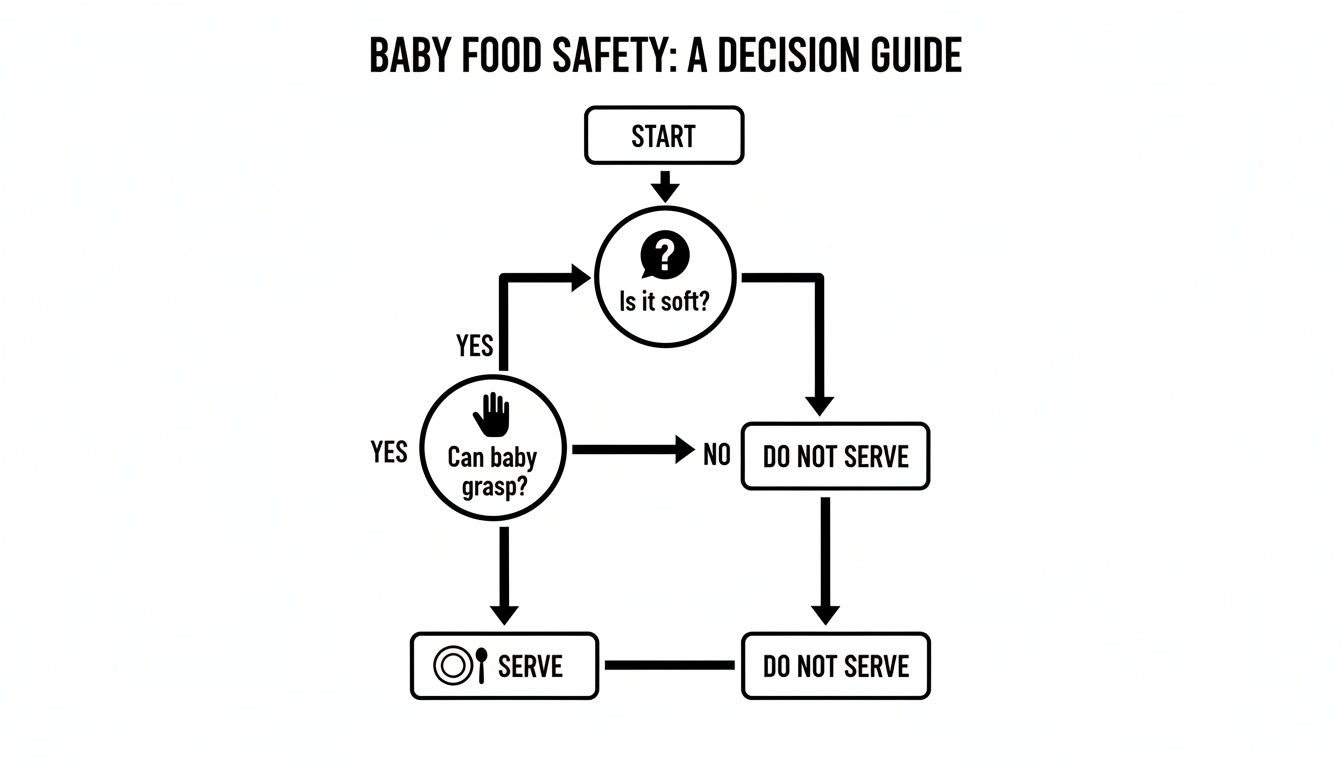
Ultimately, preventing choking begins with proper food prep.
By staying calm, observing your baby, and trusting their natural reflexes, you'll quickly become an expert at telling a harmless gag from a real problem. This understanding is what baby-led weaning is all about—creating a safe, low-stress space for your little one to explore and enjoy the world of food.
Creating a Positive and Safe Mealtime Environment
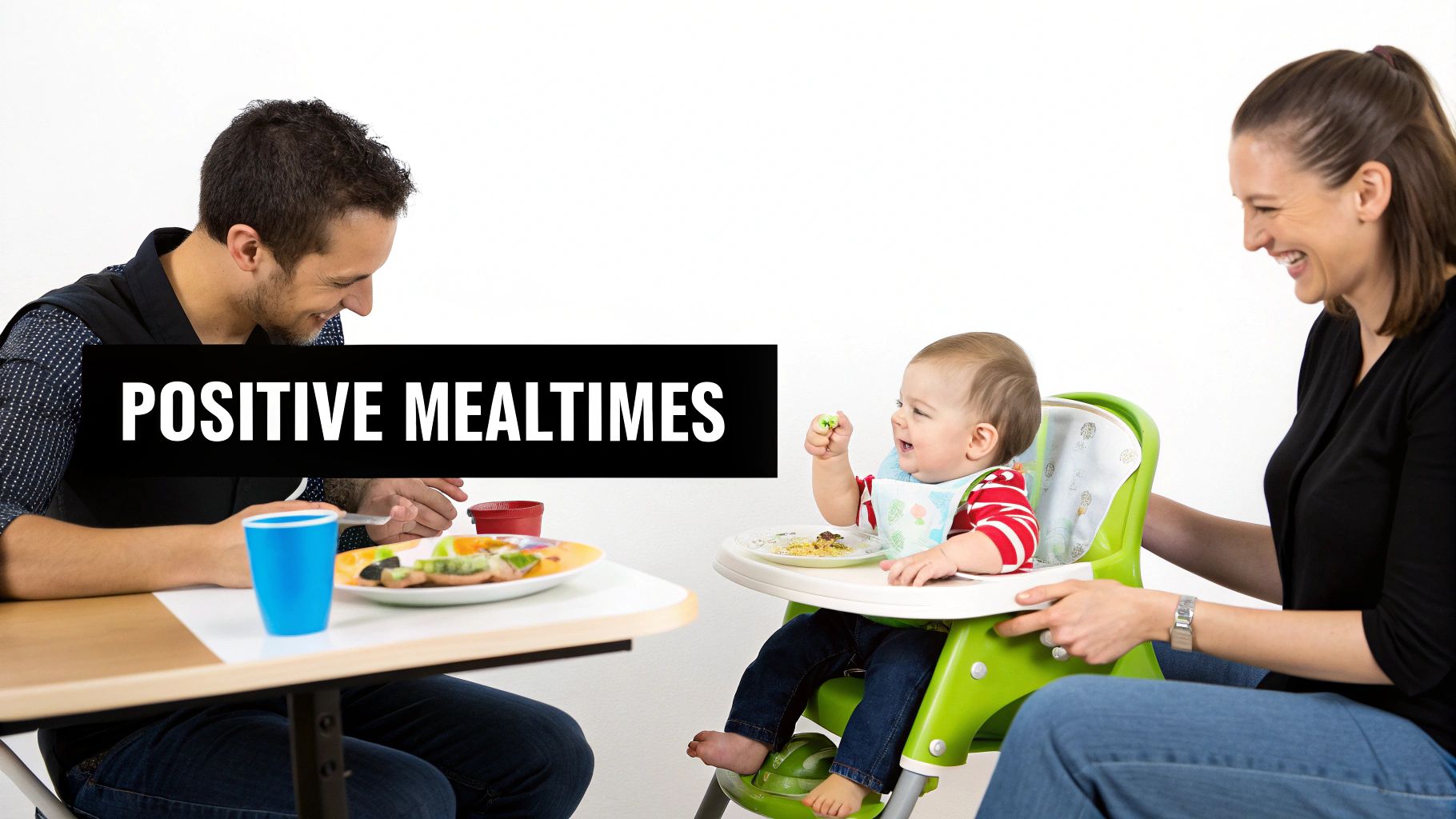
Setting the stage for success can turn your baby-led weaning journey from what feels like messy chaos into a really joyful bonding experience. The right environment is about so much more than just the food on the tray. It’s about creating a safe, positive, and encouraging atmosphere where your baby feels confident enough to explore. And it all starts with the right setup.
A supportive highchair is absolutely non-negotiable for safety. You’ll want one that lets your baby sit fully upright, with their hips at a 90-degree angle. Most importantly, their feet must be planted firmly on a footrest. Just imagine trying to eat while dangling your legs from a tall barstool—it's wobbly and distracting. A solid footrest gives your baby the stability they need to focus on the surprisingly complex skills of chewing and swallowing.
Cultivating a Pressure-Free Atmosphere
Beyond the gear, the emotional tone you set at mealtimes is everything. Your baby is incredibly tuned in to your energy. If you're stressed about the mess or worried about how much they're actually eating, they will be too. The real goal here is to make mealtime a happy, low-pressure social event.
One of the best ways to achieve this is to simply eat together as a family whenever you can. When your baby sees you enjoying the same healthy foods, they learn that eating is a positive, communal activity. This modeling is more powerful than you might think.
To keep the focus on food and connection, do your best to minimize distractions. This usually means turning off the TV and putting phones away. Let your baby’s attention be on the textures, tastes, and smells in front of them, not on a screen.
A relaxed and positive mealtime environment teaches your baby that food is a source of joy and exploration, not pressure or anxiety. Your calm presence is the most important ingredient you can bring to the table.
Essential Gear for Managing the Mess
Let’s be honest: baby-led weaning is messy. There's just no way around it. But the right gear can make cleanup so much more manageable, which in turn reduces your stress. Investing in a few key items will help you embrace the mess as part of the learning process instead of dreading it.
Consider these mealtime game-changers:
- Full-Coverage Bibs: A long-sleeved smock-style bib is a lifesaver. It provides maximum protection for clothes, preventing stains from foods like berries or beets and keeping irritating food residue off your baby’s skin. To explore different options, you can find helpful information about choosing the perfect baby bib smock.
- Splash Mats: Placing a large, wipeable mat under the highchair will save your floors and make post-meal cleanup a breeze. Seriously, just pick it up, shake it out, and wipe it down.
- Suction Plates and Bowls: These stick firmly to the highchair tray, which helps prevent your baby from gleefully tossing their entire meal onto the floor. It won't stop it every time, but it helps!
By creating a safe setup and a positive atmosphere, you're not just feeding your baby—you're nurturing a confident, adventurous eater for life.
Answering Your Top Baby-Led Weaning Questions
It's completely normal to have a million questions running through your mind as you get ready to start solids. This new phase is exciting, but it can also feel a little overwhelming.
Let's walk through some of the most common concerns parents have about baby-led weaning. Getting these answers sorted out now will help you feel more confident and relaxed, so you can actually enjoy watching your little one discover the world of food.
How Do I Know if My Baby Is Eating Enough?
This is the big one, isn't it? It’s probably the number one question parents ask. The key is to shift your perspective for a little while: in the beginning, food is for fun and learning, not the bulk of their nutrition. For your baby's entire first year, breast milk or formula is their primary source of calories and nutrients.
Instead of trying to count every tiny bite, pay attention to the signs that really matter. You'll know your baby is getting what they need if you see:
- Steady Growth: Your pediatrician is tracking their growth curve, and this is the most reliable sign they're getting enough nourishment.
- Plenty of Wet Diapers: A well-fed, hydrated baby will consistently produce wet diapers throughout the day.
- A Happy, Active Baby: If your baby is energetic, playful, and generally content, they're almost certainly getting enough to eat.
Trust your baby. They are born with an incredible instinct to regulate their own appetite. Your job is to offer a variety of safe, healthy foods; their job is to decide what and how much to eat. As their motor skills improve, you'll naturally see them eating more and more.
Think of the first few months as "food school." Your baby is learning about textures and tastes while building crucial hand-eye coordination. The actual amount of food that gets swallowed will be small at first, and that is completely okay.
Can I Do a Mix of Baby-Led Weaning and Spoon-Feeding?
Of course! You don’t have to pick a side. Many families find that a flexible, hybrid approach works best for them. You might offer finger foods for lunch but find that spoon-feeding oatmeal at breakfast is easier on busy mornings.
The most important thing, even when using a spoon, is to stay "baby-led." This means watching your baby’s cues and letting them be in control. Wait for them to open their mouth for the spoon, and respect them when they turn their head away to say, "I'm done."
A great way to bridge the two methods is to pre-load a soft-tipped spoon with something like yogurt or mashed avocado and hand it to your baby. This lets them practice bringing the spoon to their own mouth, giving them independence while still getting a taste of purees.
How Do I Deal With the Unbelievable Mess?
Oh, the mess is definitely real. But it's also a vital part of the learning process. When your baby is squishing avocado through their fingers or dropping green beans on the floor, they're conducting a science experiment. They're learning about texture, temperature, and gravity!
The first step is to embrace it. Once you accept that mess is part of the deal, you can focus on managing it. Here are a few sanity-saving tips:
- A full-sleeve bib is your best friend. It protects clothes and minimizes contact between food and sensitive skin, which can help prevent rashes.
- Put a splash mat or even an old bedsheet under the highchair to catch the fallout.
- On really messy meal days (hello, spaghetti!), just strip your baby down to their diaper.
- Start with just a few pieces of food on their tray and add more as they eat.
Remember, your calm reaction sets the tone. If you can laugh it off, your baby will learn that mealtimes are a fun, positive experience. This messy phase doesn't last forever, but the skills and positive food associations they're building will.
At GUGUTON LLC, we get it. We've been there. We offer a thoughtfully chosen collection of high-quality essentials to support you through every stage of parenthood. From comfortable maternity wear to safe feeding gear and adorable kids' clothing, we've got your back. See our collections at https://guguton.com.