

How to Choose Baby Formula: A New Parent's Guide to Safety and Quality
Walking into the baby aisle and seeing a wall of formula options can be seriously intimidating. Let's cut through the confusion right away. For most healthy, full-term babies, a standard cow's milk-based, iron-fortified formula is exactly what they need. The most important thing to know is that all formulas sold in the U.S. must meet strict FDA safety and quality standards, ensuring your baby gets the core nutrition they need to thrive.
The first real decision you'll make isn't about complex ingredients—it's about which form of formula works best for your life.
Your Starting Point: Picking a Formula Form
Before you start comparing DHA and ARA levels, let's talk logistics. Baby formula comes in three main forms. While they all deliver the same essential nutrition, they differ a lot in terms of cost, convenience, and how you prepare them.
This choice is more about your lifestyle than anything else. Are you looking for the absolute fastest option for those 3 a.m. feedings? Or is budget your top priority? Thinking about this first will make the rest of the process so much easier.

The Three Main Forms of Formula
Getting to know the pros and cons of each type is key. Here’s a simple breakdown of what you'll see on the shelves.
- Powdered Formula: This is the go-to for most families because it's the most affordable. You just mix a scoop of powder with water. A can is typically good for about a month after you open it, making it a reliable staple to have in the pantry.
- Liquid Concentrate: A step up in convenience, this form has you mix equal parts of the liquid formula with water. It costs a bit more than powder, but it's a breeze to prepare since it dissolves instantly with no clumps.
- Ready-to-Feed (RTF): This is the ultimate grab-and-go option. It's pre-mixed, sterile, and requires zero prep—just open it and pour. It's also the most expensive, and once you open a bottle, you need to use it up quickly. Many parents I know keep a few of these on hand for travel, diaper bag emergencies, or those nights when they're just too tired to measure and mix.
Choosing the right form is a huge first step. Here's a quick comparison to help you decide what fits your family's needs.
Quick Guide to Formula Forms
| Formula Form | Best For | Pros | Cons |
|---|---|---|---|
| Powdered | Budget-conscious families, everyday use | Most affordable, long shelf life (unopened) | Requires careful measuring, can be clumpy |
| Liquid Concentrate | A balance of convenience and cost | Dissolves easily, quicker prep than powder | More expensive than powder, shorter shelf life |
| Ready-to-Feed | Travel, late-night feedings, ultimate convenience | No mixing required, sterile, foolproof | Most expensive, bulky, must be used quickly |
Ultimately, there's no "wrong" choice here—it's all about what makes your life easier.
It's wild to think about, but the global infant formula market is expected to hit USD 125.46 million by 2035. That growth shows just how much parents are focusing on nutrition. And it's no surprise that powdered formula is projected to hold a whopping 65% market share—its long shelf life and lower cost are huge wins for busy families.
Once you’ve settled on a form, you’ve already narrowed down your options significantly. Getting this sorted out before the baby arrives can make stocking your pantry feel much less daunting. For more tips on what to buy, check out our complete newborn essentials shopping list. By starting here, you're building a great foundation for all the other little decisions you'll make down the road.
Decoding the Nutrition Label on Baby Formula
Flipping over a can of baby formula can feel like you're trying to decipher a secret code. But once you know what to look for, that nutrition label becomes your best tool for picking the right fuel for your baby. While every formula sold in the U.S. has to meet strict FDA safety and nutrition standards, knowing what’s inside helps you make a smarter choice, especially if you’re trying to prevent issues like allergies, skin rashes, or a fussy tummy.
At the end of the day, all formulas are built on a foundation of three core building blocks, all designed to get as close to breast milk as possible. Think of these as the non-negotiables for your baby’s first year of growth.
The Big Three: Proteins, Carbs, and Fats
First things first, look for the sources of protein, carbohydrates, and fat. These are the macronutrients that power all that incredible growth your baby is doing.
- Protein Source: Most standard formulas start with cow's milk protein. On the label, you'll see words like whey and casein. Whey digests pretty quickly, while casein is a bit slower. Most formulas use a blend of the two to mimic the protein profile of breast milk. The protein source is often the culprit behind allergies and skin sensitivities.
- Carbohydrate Source: In breast milk, the main carbohydrate is lactose, so that's what you'll find in most standard formulas. It’s the primary energy source. For babies with more sensitive digestion, you might see "gentle" or "sensitive" formulas that swap some or all of the lactose for something like corn syrup solids, which can be easier for some little ones to break down.
- Fat Source: Healthy fats are absolutely critical for brain and eye development. You'll see a blend of vegetable oils listed on the label—things like palm, soy, coconut, and sunflower oil. This mix provides the essential fatty acids your growing baby needs.
Getting a handle on this basic trio is a great start. Now, let's look at the "extras" that can make a big difference in supporting development and preventing common new-parent headaches.
"Every infant formula company is doing everything they can to get your attention as a consumer...but at the end of the day, they all have to meet the same rigorous standards set by the FDA." - Shannon Goff, RDN, Manager of Clinical Nutrition and Lactation Services at Children’s Hospital Los Angeles. This is so reassuring—it means you can feel confident in the baseline quality of any formula you buy from a reputable store.
Key Nutrients for a Thriving Baby
Beyond the basics, a few specific nutrients are game-changers for your baby's health. Companies often splash these on the front of the can, and for good reason. Paying attention to them is a smart move for supporting everything from brain growth to gut health, which can often keep issues like digestive upset and even skin conditions like eczema at bay.
Iron Fortification Is a Must This one is huge. The American Academy of Pediatrics is very clear on this: all formula-fed babies should get an iron-fortified formula from birth through their first year. Iron is vital for preventing anemia and supporting healthy brain development. Unless your pediatrician has a specific reason to tell you otherwise, always choose a formula that's labeled "iron-fortified."
Brain and Eye Boosters: DHA and ARA You’ve probably seen DHA (docosahexaenoic acid) and ARA (arachidonic acid) advertised on formula cans. These are omega-3 and omega-6 fatty acids that are naturally found in breast milk and are major players in your baby’s brain and eye development. While the research on long-term benefits is always evolving, the consensus among experts is that having them in formula is a definite plus.
Supporting a Happy Gut and Strong Immune System
A happy gut often means a happy baby. When a baby’s digestive system is running smoothly, they are less likely to be gassy, uncomfortable, or have skin flare-ups tied to inflammation or sensitivities. A healthy gut is your baby’s first line of defense.
To help with this, many formulas now include gut-friendly ingredients:
- Prebiotics: Think of these as fertilizer for the good bacteria already living in your baby’s intestines. On the label, you might see GOS (galactooligosaccharides) or FOS (fructooligosaccharides). A healthy gut microbiome can lead to better digestion and might even lower the risk of developing allergies and eczema.
- Probiotics: Some formulas go a step further by adding live, beneficial bacteria (probiotics) right into the powder. These little helpers can help balance the gut, which can be a game-changer for easing colic and strengthening the immune system.
By learning to read the label, you're doing so much more than just grabbing a can off the shelf. You're choosing the very building blocks for your baby's health, empowering yourself to understand exactly how each ingredient helps them grow and thrive.
Formulas for Sensitive Tummies and Allergies
Few things are as stressful as watching your baby struggle with constant fussiness, gas, or painful-looking rashes. As a parent, you instinctively want to find the cause, and very often, the answer can be found in their formula. For many families, making a switch to a formula designed to prevent allergic reactions isn't just a small change—it can be a total game-changer.
The first step is learning to recognize the difference between normal baby fussiness and something more. Persistent discomfort is your baby's way of telling you that their current formula might not be agreeing with their developing digestive system. This is precisely why specialized formulas exist—to offer relief by changing the very ingredients that can cause irritation.
Is It Time for a Specialized Formula?
It’s easy to dismiss fussiness as just a phase, but persistent symptoms often point to a formula intolerance. When these signs disrupt your baby's (and your) peace, it’s worth investigating.
Look for these common red flags:
- Digestive Distress: This is usually the most obvious sign. We're talking about excessive gas, frequent and forceful spit-up that seems like more than just a little burp, constipation, or diarrhea.
- Skin Reactions: An allergy or sensitivity to milk protein often shows up on the skin. You might see patches of eczema, hives, or other stubborn rashes that don't clear up with creams. This is a key sign that the formula could be causing skin irritation.
- Extreme Fussiness or Colic: All babies cry, but colic is in another league. It's intense, inconsolable crying that lasts for more than three hours a day, at least three days a week, for over three weeks. This is often linked directly to gut pain.
Spotting a consistent pattern in these symptoms is a strong signal that it's time to explore gentler options.
Keep in mind, a true cow's milk protein allergy (CMPA) affects about 2-3% of infants. However, a much larger number of babies experience some level of sensitivity or intolerance. Specialized formulas are designed to help across this entire spectrum.
Navigating the Different Types of Sensitive Formulas
Once you decide to switch, the "sensitive" formula aisle can look just as daunting as the standard one. The key is knowing that each type is engineered to solve a specific problem, usually by altering the protein or carbohydrate source.
Here’s a quick rundown of what you’ll find:
Soy-Based Formulas
If your pediatrician has confirmed a true lactose intolerance or a rare condition called galactosemia, soy-based formula is a solid choice. It swaps milk protein for soy protein and uses a different carbohydrate source, like corn syrup solids. One quick word of caution: many babies who are allergic to cow's milk protein also react to soy, so it’s not always the best first stop for suspected allergies.
Lactose-Free or Reduced-Lactose Formulas
These are often labeled with reassuring names like "Sensitive" or "Gentle." They still use cow's milk as a base, but the lactose (milk sugar) is either removed or significantly reduced and replaced with easier-to-digest carbs. This is an excellent starting point for babies who seem extra gassy and uncomfortable after feeding but don’t show signs of a full-blown protein allergy.
This simple guide breaks down how to look at the three main nutritional components of any formula.
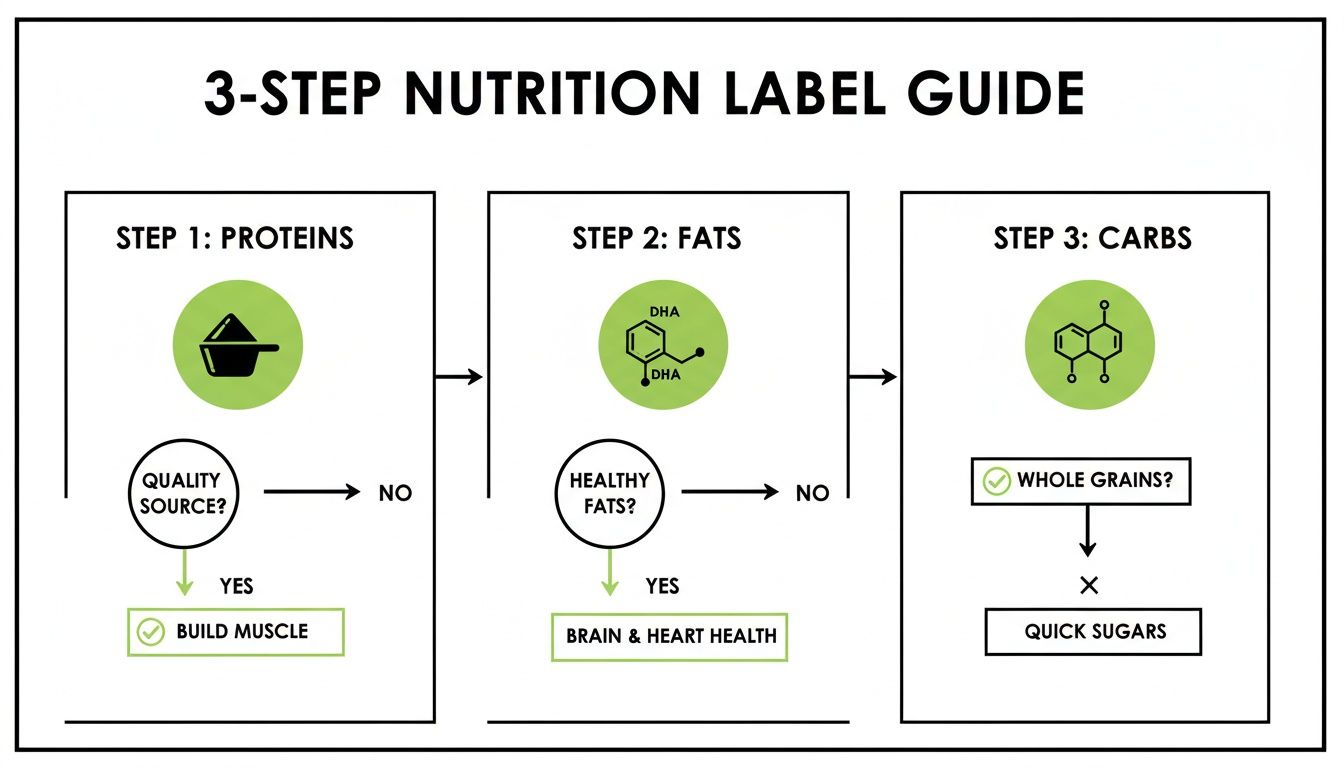
When you're dealing with a sensitive baby, the protein and carbohydrate sources are the two most important things to investigate on that nutrition label.
Sometimes, though, these initial changes aren't enough.
Advanced Options for True Allergies
If you’ve tried a "gentle" formula and your baby is still struggling with issues like rashes or severe discomfort, they may have a cow's milk protein allergy (CMPA). This is an actual immune response to the proteins in milk, and it calls for a formula where those proteins are broken down into a non-allergenic form.
- Extensively Hydrolyzed Formulas: Think of the milk proteins (whey and casein) in these formulas as being pre-digested. They are broken down into such tiny pieces that your baby's immune system doesn't recognize them as a threat. These "hypoallergenic" formulas are often the first recommendation from pediatricians for babies with confirmed allergies, persistent rashes, or severe colic.
- Amino Acid-Based Formulas: This is as broken-down as a formula can get. Instead of protein chains, it's made from individual amino acids—the fundamental building blocks of protein. These formulas are typically reserved for infants with the most severe allergic reactions, including those who can't even tolerate an extensively hydrolyzed formula.
Is It a Formula Intolerance? Symptoms to Watch For
It can be tough to know if your baby's behavior is normal or a sign of something more. This chart can help you identify patterns that might suggest their formula isn't the right fit.
| Symptom Category | Specific Signs to Look For | What It Could Mean |
|---|---|---|
| Gastrointestinal | Excessive gas, frequent spit-up or vomiting, constipation, diarrhea, or mucus/blood in stool. | The proteins or carbohydrates may be hard for your baby's system to break down and digest properly. |
| Skin Issues | Eczema, hives, rashes (especially around the mouth), or dry, scaly skin patches. | These can be classic signs of an allergic reaction to the proteins in the formula, causing skin inflammation. |
| Behavioral | Inconsolable crying (colic), extreme fussiness after feedings, pulling legs up to the chest in pain. | Discomfort and pain from gas or indigestion can make your baby miserable. |
| Respiratory | A stuffy or runny nose, wheezing, or coughing that isn't related to a cold. | Less common, but respiratory symptoms can sometimes be linked to a milk protein allergy. |
If you're checking off several boxes in this table, it's a clear signal to talk to your pediatrician about what's going on.
Ultimately, deciding to switch to a specialized formula is a conversation you should have with your pediatrician. They can help confirm the root cause of your baby's discomfort and point you toward the best option. Finding the right formula is all about listening to the cues your baby is giving you and finding a solution that brings them—and you—comfort and relief.
Safe Formula Preparation to Protect Your Baby
You've done the hard work of picking the right formula—that's a huge win! But how you prepare it is just as critical for your baby's health and safety. Think of proper handling, mixing, and storage as your first line of defense against harmful bacteria that can cause illness, tummy troubles, and even skin infections. A baby's immune system is still a work in progress, so getting into a safe routine from the very beginning is non-negotiable.
Following these practices ensures every bottle is not just full of nutrients but also completely safe. It’s not about perfection; it’s about being consistently careful to protect your little one.

The Golden Rule of Formula Mixing
When it comes to mixing powdered formula, accuracy is everything. I can't stress this enough: always follow the instructions on the formula can to the letter. Adding too much water can dilute the vital nutrients your baby needs to grow, while using too little can lead to dehydration and put a real strain on their tiny kidneys.
Treat it like a science experiment. Use the scoop that came with that specific can and level it off with a clean knife. Don't ever pack the powder down.
One crucial safety tip to remember is that powdered formula isn't sterile. For newborns under two months, preemies, or babies with a weakened immune system, your pediatrician will likely recommend mixing formula with water that's been boiled and then cooled to a safe temperature. This extra step wipes out any potential risk.
Sterilization and Cleanliness Best Practices
Before a single scoop of powder hits the water, your prep area and all your gear need to be spotless. A few simple habits can make a massive difference in keeping harmful bacteria at bay.
- Wash Your Hands: This one is obvious but so important. Scrub your hands with soap and water for at least 20 seconds before you start.
- Clean Surfaces: Give the countertop where you’ll be making the bottle a quick wipe-down.
- Sterilize Equipment: For the first few months, it's smart to sterilize bottles, nipples, and rings every day. You can do this by boiling them for five minutes or using a dedicated bottle sterilizer. Once your baby is a bit older and has a stronger immune system, washing everything in hot, soapy water or a dishwasher is usually enough.
Nailing these steps creates a safe foundation for every single feeding.
Safe Warming and Storage Guidelines
Once a bottle is mixed, knowing how to handle it is just as important. Time and temperature are the two biggest factors in keeping formula safe for your baby.
First, never, ever use a microwave to warm a bottle of formula. Microwaves create dangerous "hot spots" that can seriously burn your baby's mouth. This is a non-negotiable safety rule. To learn more about safely warming bottles, you can explore some of the best baby bottle warmers that are designed to heat milk evenly and safely.
Get familiar with these timelines—they’ll become second nature:
- After Mixing: A freshly made bottle can sit at room temperature for up to 2 hours (as long as your baby hasn't started drinking from it).
- During Feeding: Once your baby’s lips touch the bottle, the clock starts. The formula must be finished within 1 hour. Bacteria from their mouth can get into the milk and multiply quickly.
- In the Fridge: You can make bottles ahead of time and store them in the refrigerator for up to 24 hours. Any formula left after that point needs to be tossed.
- After Warming: If you warm a bottle from the fridge, it needs to be used within one hour. Never re-refrigerate or refreeze formula that has been warmed.
Sticking to these rules takes all the guesswork out of it and ensures every sip is a safe one.
Switching Baby Formula Without All the Drama
Let's be honest, the thought of switching your baby's formula can be a little terrifying. You've finally gotten into a routine, and now you have to change things up. The last thing you want is an unhappy baby with an upset tummy or a sudden skin rash.
A baby's digestive system is still a work in progress, so a sudden switch can sometimes backfire, leading to gas, fussiness, or constipation. The secret to a smooth transition? Take it slow. Give that little tummy time to get acquainted with the new menu.
Unless your pediatrician has you on red alert for an allergy and tells you to switch immediately, a gradual approach is almost always the best way to go. You'll slowly introduce the new formula by mixing it with the old one, which helps minimize any shock to their system and lets you keep an eye out for any issues.
The Slow and Steady Mixing Method
The whole idea is to ease your baby from one formula to the next, not just drop them in the deep end. It’s a simple process that usually takes about a week, but you know your baby best—feel free to adjust the pace if they need a little more time.
Here’s a tried-and-true schedule that works for most families:
- Days 1-2: Start by making each bottle with 75% of the old formula and just 25% of the new stuff. Pay close attention to how your baby acts after feeding. A little extra gurgle is one thing, but real discomfort is another.
- Days 3-4: If everything seems okay, you can move to a 50/50 mix. This is usually when you’ll get a good sense of whether the new formula is going to be a winner.
- Days 5-6: Now, flip the ratio. Prepare bottles with 25% old formula and 75% new formula. You're on the home stretch!
- Day 7: If your baby is content and feeding well, you can officially make the full switch to 100% of the new formula.
This gradual transition is the most reliable way to avoid the digestive chaos that can make switching formulas so stressful for both you and your little one.
One crucial tip: Always mix each formula separately according to its own directions before combining them in the bottle. One brand might call for one scoop per two ounces of water, while another is different. Mixing the powders together first can throw off the nutritional balance completely.
Playing Detective: What to Watch For
During the transition, you’ll want to put on your detective hat. You're looking for clues that tell you if this new formula is a good fit. Minor changes, like a different poop color, are totally normal. What you’re really watching for are signs that your baby is uncomfortable.
Keep an eye out for these potential red flags:
- Excessive Gas or Crying: A few more toots are expected. But inconsolable crying or signs of pain are not.
- Funky Poops: Watch out for constipation (hard, pebble-like stools) or, on the other end of the spectrum, diarrhea.
- More Spit-Up: Is the spit-up suddenly much more frequent or voluminous? Take note.
- Skin Problems: New rashes, hives, or worsening eczema can be a sign of an allergic reaction.
- Bottle Refusal: If your baby, who normally loves to eat, suddenly starts pushing the bottle away, it could be because of the taste or because it's making them feel unwell.
When You Have to Make a Quick Change
While the "go slow" method is ideal, sometimes you just don't have that luxury.
If your pediatrician diagnoses a serious issue like a cow's milk protein allergy (CMPA), they'll likely tell you to switch to a specialized hypoallergenic formula right away. In these cases, the priority is getting your baby off the ingredient causing the problem. The potential for a little temporary tummy upset from a fast switch is a much smaller concern than the ongoing allergic reaction.
When a doctor gives you direct instructions, always follow their advice. They’ll guide you through making the change as safely and comfortably as possible.
Knowing When to Talk to Your Pediatrician
While this guide gives you a solid foundation for picking a baby formula, think of your pediatrician as your most trusted co-pilot on this journey. They have the one thing an article never will: your baby’s unique health history. Always trust your gut—if something just doesn't feel right, it’s always worth making a call.
Some issues are more than just typical baby fussiness and really do need a professional opinion. These are the red flags that mean you should get in touch with your doctor right away.
Don't Ignore These Warning Signs
Knowing what to look for helps you be the best advocate for your little one. Don’t just wait and hope these things clear up on their own.
- Persistent Vomiting: I’m not talking about a little spit-up after a burp. We're talking about forceful, projectile vomiting that happens after most feedings. That’s a major concern.
- Signs of an Allergic Reaction: Keep an eye out for hives, a splotchy red rash, swelling around the face or lips, or any wheezing and trouble breathing. These can signal a serious allergy.
- Blood or Mucus in the Stool: This is never normal. It often points to a significant milk protein allergy or another digestive problem that needs to be addressed.
- Extreme Fussiness or Crying: Colic is one thing, but if your baby is inconsolable and seems to be in real pain, especially with other symptoms, it’s time for a check-up.
- Refusal to Eat: A baby who suddenly loses interest in feeding or consistently pushes the bottle away is telling you something is wrong.
Your goal is to partner with your doctor, not replace them. When you bring clear, specific observations about your baby's symptoms, you help the pediatrician connect the dots. This lets them recommend the right next step, which might be switching to a specialized formula.
Questions to Bring to Your Appointment
You'll get so much more out of your visit if you go in prepared. Just like you'd create a postpartum essentials checklist to get ready for baby's arrival, a little prep for a doctor's visit makes a huge difference.
Try jotting down a few questions beforehand. Here are some ideas:
- Based on what I’m describing, do you think this is a formula intolerance or a true allergy?
- What specific type of formula do you recommend we try next? For example, a hydrolyzed or soy-based one?
- How long should we give the new formula a try before we can expect to see any improvement?
- Are there any other tests or steps we should be thinking about?
Walking into that appointment with specific examples and thoughtful questions empowers you to make your next feeding decision with total confidence.
Answering Your Top Baby Formula Questions
Stepping into the world of baby formula can feel like learning a new language, and it's totally normal to have a few questions. Getting straight answers to these common worries can make all the difference, helping you feel more confident with every feeding. Let's tackle some of the things parents ask most often.
Can I Mix Breast Milk and Formula?
Yes, you can definitely mix prepared formula with expressed breast milk in the same bottle. It's a common strategy for many families.
However, a great tip I've picked up from lactation consultants is to offer the breast milk first, in its own bottle. That way, if your little one doesn't finish the entire feed, none of your hard-earned "liquid gold" goes to waste. If you do choose to mix, just be sure to prepare the formula according to the package instructions before adding it to the breast milk.
Are Generic Formulas Just as Good as Name Brands?
They absolutely are. Here in the United States, the FDA holds every single infant formula to the exact same strict nutritional and safety standards, whether it's a big name brand or a store brand. This means you can trust the quality and safety of generic formulas completely.
The real difference usually comes down to marketing budgets and price tags, not the quality of what's inside.
Choosing a store-brand or generic formula is a perfectly safe and effective way to feed your baby, and it can save you a significant amount of money. Just double-check the nutrition label to make sure it's a good match for your baby.
How Can I Be Sure My Baby Is Getting Enough?
It's easy to get fixated on the number of ounces, but it’s much more reliable to watch your baby for clear signs that they're thriving. A well-fed baby is a happy baby.
Look for these tell-tale signs:
- At least six wet diapers a day.
- They seem content and relaxed after a feeding.
- They are gaining weight consistently at their pediatrician check-ups.
Tracking these simple cues can bring a lot of peace of mind. Speaking of those check-ups, a well-packed bag can make any outing so much easier. We’ve got you covered with our guide on what to pack in a diaper bag.
At GUGUTON LLC, our mission is to support your family with high-quality, safe, and stylish essentials for every step of the parenting journey. From reliable formula options to thoughtfully designed baby gear, we have everything you need to feel prepared and confident. Discover our collections at https://guguton.com.