

Newborn Essentials Shopping List to Keep Baby Safe and Comfortable
Creating a newborn essentials shopping list narrows your focus to the items you truly need in those early weeks. A thoughtfully assembled list saves time, eases anxiety, and steers you toward products that honor your baby’s delicate skin. By focusing on safety, quality, and skin-friendly materials, you can minimize risks of allergies, rashes, or skin sensitivities. You’ll zero in on certified, hypoallergenic choices designed to prevent irritations from day one.
Why A Structured Newborn Essentials Shopping List Matters
Bringing baby home is like embarking on a cherished adventure. For parents juggling a million things, a clear list becomes your practical roadmap.
- Save Time when you’re hands-deep in diaper changes or middle-of-the-night feedings.
- Reduce Stress by ticking off items that meet rigorous safety standards.
- Protect Skin with dermatologist-tested, hypoallergenic fabrics and materials.
- Minimize Allergens by choosing fragrance-free, dye-free items.
This guide breaks down six core categories, giving you:
- Product overviews
- Recommended quantities
- Safety, quality, and purchase tips
- Budget vs. premium comparisons
- Clothing: Soft onesies, snug sleepers, swaddles free of common irritants
- Feeding: BPA-free bottles, easy-clean sterilizers, reliable pumps
- Diapering: Unscented wipes and barrier creams for rash protection
- Health & Safety Gear: JPMA-certified monitors, breathable mattresses
- Registry Tips: Curated bundles, subscription services, gift ideas by season
- Seasonal Adjustments: Light layers for summer, warm knits for winter
Planning Your First 0–3 Months Strategy
The first 0–3 months whirl by in a haze of feedings, naps, and sweet snuggles. In that time, versatility is your friend.
Reach for multi-use items—think swaddles that double as burp cloths or oversized muslin squares that become changing mats. A small stash of high-quality pieces can cover every diaper change, feeding session, and outfit swap.
“Choosing hypoallergenic fabrics and certified safety gear right away helps ward off skin reactions—and builds confidence in your newborn care routine,” says pediatric nurse Angela Kim.
Many families swear by setting up a solid registry with GuGuTon bundles, streamlining gift-giving and ensuring every piece suits sensitive skin.
Next up, we’ll unpack each category in depth with side-by-side budget vs. premium picks, plus climate-specific tweaks to keep baby comfy in any season.
What To Expect Next
- Quick, printable checklists for each core category
- Side-by-side comparisons of budget and luxury options
- Expert safety insights and buying tips
- Direct links to GuGuTon products for seamless shopping
By the end, you’ll have a complete, dermatologist-approved, wallet-friendly plan so you can breathe easy—and focus on what really matters: your new little one.
Prioritizing Safety, Quality, And Budget
Selecting newborn supplies is like building a home—you start with strong materials pulled together on a reasonable budget. We emphasize hypoallergenic fabrics, certified safety gear, and quality control to avoid harmful chemicals or untreated finishes that can trigger rashes.
- Hypoallergenic Fabrics: Soft, breathable materials free of dyes and harsh chemicals to guard against irritation.
- Certified Safety Gear: Items tested to JPMA and ASTM standards for added peace of mind.
- Budget-Friendly Choices: Durable and versatile picks that suit 0–3 months without hidden costs.
Balancing these three ensures you’re following pediatric advice, spotting the latest user trends, and sticking to a budget that works for your family.
A great example of this balance is a JPMA-approved car seat, which undergoes rigorous crash tests beyond the bare minimum.
“When you choose gear backed by solid certifications, you’re not just buying a product—you’re investing in peace of mind,” says child safety expert Maria Thompson.
Price tags can look very different from region to region, so it pays to shop around. Take climate into account too—light muslin might feel heavenly in summer, while a thicker sleep sack is a winter must.
- Compare regional pricing before you buy.
- Match textiles to local weather.
- Hunt for local certification labels on sale items.
Skin-friendly certificates like OEKO-TEX Standard 100 guarantee that fabrics are free from harmful dyes, formaldehyde, and heavy metals. Interestingly, a model approved for safety can cost 30% less in one market and still meet the same strict standards in another.
Choosing Hypoallergenic Fabrics
Start with the basics: cotton vs. bamboo. In warm months, reach for lighter muslin swaddles; when the chill sets in, switch to knit sleep sacks. Organic cotton and bamboo blends minimize friction and wick away moisture—ideal for babies who fuss at every seam.
Experts suggest having at least six onesies and four swaddles so you’re never caught short on laundry day.
- Use gentle, pH-neutral detergents to avoid leftover irritants.
- Look for tagless labels to keep necklines itch-free.
- Choose fabrics dyed with low-impact or natural colorants to reduce chemical exposure.
- Budget Pick: Simple cotton sets under $20.
- Premium Pick: Bamboo-cotton blends with an antimicrobial finish.
Selecting Certified Safety Gear
Think of safety gear as non-negotiable armor for your baby’s everyday adventures. Opt for non-toxic, phthalate-free plastics and latex-free components where possible.
Digital thermometers and monitors stamped with ASTM seals give you readings you can trust. While certified models might carry a higher price tag, their durability and accuracy pay off over time.
- Car Seats: Must be JPMA approved for enhanced side-impact protection.
- Bottles: Always pick BPA-free, medical-grade plastic or glass.
- Cribs: Look for ones certified to federal safety standards with sturdy rails and flame-retardant-free padding.
The global baby products market hit USD 320.65 billion in 2023 and is on track to reach USD 475.15 billion by 2030. Rising demand for safety-tested and dermatologist-approved items drives this growth. Learn more about baby products market on Grand View Research
Balancing Budget With Longevity
Cheap disposables rarely last. Instead, aim for pieces that adapt as your baby grows. A convertible crib and sleepers with adjustable sizing can save you a bundle in the long run.
Below is a quick comparison of budget versus premium sleep sack options:
| Feature | Budget Option | Premium Option |
|---|---|---|
| Material | 100% Cotton ($15) | Bamboo Blend ($35) |
| Size Adjustability | Limited stretch | Elastic waist and snap features |
| Breathability | Standard airflow | Enhanced moisture wicking |
| Hypoallergenic Finish | No | Yes |
Shop essentials now on GuGuTon today
Clothing And Bedding Essentials
Imagine your baby’s layette as a soft, protective nest—each piece wrapping them in comfort and keeping those tender little cheeks safe from irritation. Every layer plays a role in temperature control, skin care, and allergy prevention.
- Onesies in 100% organic cotton reduce friction and feel gentle against newborn skin.
- Sleepers with fold-over mittens keep tiny hands from scratching delicate faces.
- Hats and Socks lock in warmth, guarding against heat loss during naps and nighttime feeds.
- Swaddles and Sleep Sacks made of bamboo blends whisk away moisture for a dry, cozy feel.
- Natural Dyes: Fabrics dyed with low-impact or plant-based colorants minimize chemical contact.
- Layering Pieces adapt to any room temperature or outdoor chill without overheating.
For those first three months, aim to streamline your laundry routine by stocking:
- 6–8 onesies
- 4–6 sleepers
- 3 hats
- 4 pairs of socks
- 5 swaddles
- 2 sleep sacks
These quantities give you enough spares when spit-ups strike.
Recommended Quantities And Laundry Tips
Frequent changes are par for the course. To keep fabrics soft and free of irritants:
- Pre-soak heavily soiled items in cool water with gentle soap.
- Use a fragrance-free, sensitive-skin detergent—dermatologists recommend formulas without dyes or perfumes.
- Add ½ cup of white vinegar during the rinse cycle to remove any lingering soap residue.
- Skip fabric softeners, which can coat fibers and irritate newborn skin.
- Always double-check detergent labels for hidden irritants like optical brighteners.
Clean small loads on a warm or cool setting to rinse thoroughly. Proper washing cuts down on allergens and maintains softness.
“Using the right detergent can reduce allergic reactions by up to 40%, keeping newborn skin calm and rash-free,” notes pediatric dermatologist Dr. Lee Nguyen.
Storage Hacks For Easy Outfit Access
Late-night diaper changes get smoother with a simple organization system. Try these tricks:
- Assign clear bins for daytime outfits and nighttime sleepers.
- Use drawer dividers so socks and hats stay put.
- Hang swaddles on small hooks by the crib for quick grabs.
- Store out-of-season pieces in vacuum-seal bags to save space and keep them dust-free.
Seasonal swaps prevent over- or under-dressing. In summer, lightweight muslin onesies and single-layer bamboo wraps are your best friends. When it’s cold, fleece-lined sleepers and TOG 2.5 sleep sacks keep baby snug—without bulky layers.
- Check fabric weight labels and moisture-wicking ratings.
- Seek seamless designs for hot months to avoid chafing.
- Look for fitted cuffs on sleeves and socks to lock in warmth come winter.
Comparison of Clothing and Bedding Options
Below is a side-by-side look at the key essentials, recommended quantities, budget picks, and premium upgrades designed to protect newborn skin.
| Item | Recommended Quantity | Budget Option | Premium Option |
|---|---|---|---|
| Onesie | 6–8 | Cotton onesie ($15 each) | Bamboo-cotton onesie ($35 each) |
| Sleeper | 4–6 | Poly-cotton sleeper ($18 each) | Organic cotton sleeper ($45 each) |
| Swaddle | 5 | Muslin wrap ($12 each) | Antimicrobial bamboo wrap ($50 each) |
| Sleep Sack | 2 | Basic cotton sack ($20 each) | Knit sleep sack with TOG 2.5 ($60) |
This table makes it easy to compare price points, durability, and skin-friendly finishes. Premium fabrics with antimicrobial properties can be a lifesaver for extra-sensitive little ones.
For an in-depth look at must-have baby clothes, check out our guide on Top 7 Must-Have Baby Clothing Items for New Parents.
Explore GuGuTon’s curated collections for every season and budget—because every garment you choose becomes another layer of protection against environmental irritants and allergens.
Finding Safe Clothing At GuGuTon
Dive into our dermatologist-tested ranges that balance softness, safety, and style. Shop now on GuGuTon and wrap your newborn in the very best.
Feeding Supplies Essentials
Feeding your newborn is a bit like fine-tuning a high-performance engine—you want precision, cleanliness, and consistency. Whether you choose to breastfeed, formula-feed, or combine both, having the right bottles, nipples, pumps, storage solutions, and sterilizers will make all the difference. Don’t forget to look for BPA-free and medical-grade materials to protect your baby’s sensitive skin.
Choosing Bottles And Nipples
Begin with 6–8 bottles in assorted shapes and sizes to discover your baby’s favorite. Pair BPA-free polypropylene or glass bottles with soft silicone nipples for a gentle latch. Rinse thoroughly and check for micro-cracks where bacteria can accumulate, leading to potential skin or digestive sensitivities. Replace nipples every 2–3 months to prevent cracks and unwanted bacteria.
- Wide-neck bottles simplify cleaning and minimize trapped milk residue.
- Slow-flow nipples replicate a nursing pace and cut down on spit-up.
- Glass bottles survive countless sterilization cycles without leaching chemicals.
Setting Up Your Feeding Station
Pick a corner near your feeding chair or breast pump and dedicate it solely to mealtime. Keep a compact, dishwasher-safe rack for bottles, flanges, and nipples. Stash storage bags and containers within arm’s reach to limit countertop clutter. Keep surfaces sanitized to prevent mold growth that can trigger allergic reactions.
You might be interested in our guide on effective warming methods in our article on best baby bottle warmers.
Feeding Supplies Comparison
Here’s a quick look at the main feeding items you’ll need, what they do, and ways to save or splurge.
| Item | What It Is | Why You Need It | Budget Option | Premium Option |
|---|---|---|---|---|
| Bottles | Feeding containers | Reliable delivery of breastmilk or formula | Basic polypropylene set ($20) | Glass set with anti-colic vents ($60) |
| Nipples | Bottle teats | Controls milk flow and mimics latch | Standard silicone nipple ($5) | Variable flow nipple ($15) |
| Breast Pump | Milk expression device | Maintains supply for home or travel | Manual hand pump ($25) | Electric double pump ($200) |
| Sterilizer | Steam or UV cleaning unit | Eliminates bacteria and mold | Microwave steam bag ($10) | Countertop electric sterilizer ($80) |
| Storage Bags | Sealable milk containers | Safe freezing and thawing of milk | Disposable freezer bags ($8/25) | Reusable silicone pouches ($25/6) |
Note: Regularly inspect all parts for wear to prevent bacterial or fungal growth.

“Maintaining a clean, organized feeding station reduces contamination risk by up to 50%, helping prevent skin and digestive issues,” notes pediatric feeding specialist Dr. Harper.
Keep bottles sterilized, nipples fresh, and all supplies tucked away in airtight containers. That simple habit goes a long way toward protecting your newborn’s delicate skin.
Cleaning And Sterilization Best Practices
Follow a few straightforward steps to keep everything spotless:
- Rinse all parts under warm running water to clear away milk residue.
- Steam-sterilize or boil items for 5 minutes to kill any lurking bacteria.
- Let everything air-dry on a dedicated rack, safely away from sinks and pets.
- Refresh sterilizing water daily and wipe down surfaces with a pH-neutral cleaner to eliminate buildup.
Regular sterilization during the first 3 months cuts bacterial growth by 30% and supports your baby’s immune health.
Tip: Schedule your sterilizing routine around feeding breaks so you never run out of clean gear.
Diapering And Hygiene Essentials
Keeping your newborn clean and comfortable takes a bit of choreography. Every change, wipe, and cream application plays a part in protecting that delicate skin.
This section covers everything from diapers and wipes to barrier creams, changing pads, and gentle laundry detergents.
- Diapers: Choose between disposable convenience or reusable cloth.
- Wipes: Opt for unscented, hypoallergenic options free of alcohol, parabens, and dyes.
- Barrier Creams: Zinc-oxide ointments or plant-based balms to fend off rashes.
- Changing Pads: Waterproof layers to catch drips and protect surfaces.
- Laundry Detergents: Dye- and perfume-free formulas built for baby clothes.
Estimating Daily Diaper Needs
Newborns go through diapers fast, especially as they adjust to feedings.
- 0–1 Month: 10–12 diapers a day
- 1–3 Months: 8–10 diapers a day
Tracking wet and soiled diapers helps you spot hydration or digestion issues early.
“Frequent diaper checks and quick changes are your best defense against irritation,” advises pediatric nurse Anna Rivera.
Comparing Diapers And Wipes
Eco-friendly brands often rely on plant-based fibers that let air circulate. Conventional packs might feel softer at first but can hide fragrances, gels, or bleaches that irritate. Cloth diaper fans sometimes pick silver-infused inner layers for natural bacteria control.
| Product Type | Budget Option | Premium Option |
|---|---|---|
| Diapers | Basic disposable pack ($0.20 each) | Organic cotton cloth ($0.50 each) |
| Wipes | Generic unscented ($0.02 per wipe) | Dermatologist-tested unscented ($0.05 per wipe) |
| Barrier Cream | Standard zinc-oxide tube ($8) | Oatmeal-infused plant balm ($15) |
Cost Saving Strategies
Buying in bulk or signing up for subscriptions can shave dollars off every change.
- Stock up with multipacks on sale
- Enroll in diaper or wipe subscriptions
- Reuse cloth diapers and liners when you can
- Store supplies in a cool, dry spot
- Monitor for signs of irritation when switching brands
Learn quick-change essentials in our guide on what to pack in a diaper bag.
Industry forecasts predict that baby personal-care—wipes, shampoos, lotions, diapering supplies—will reach USD 9.36 billion by 2035, driven by a demand for organic and dermatologist-approved items. Check out the Future Market Insights report for full details.
Safe Changing Routines
A smooth diaper change feels like a well-rehearsed dance. Lay out everything first, then:
- Wash hands before you start
- Place a clean pad or liner under baby
- Wipe front to back to reduce bacteria
- Apply a thin line of barrier cream on trouble spots
- Seal soiled diapers in a covered pail
- Sanitize the changing surface daily
Maintaining Hygienic Laundry Practices
Your choice of detergent and drying method can make all the difference.
- Use fragrance-free, sensitive-skin detergents
- Run a double rinse to remove soap residue
- Air-dry items in sunlight to naturally eliminate germs
- Avoid fabric softeners that can trap irritants
Explore GuGuTon Diapering Collections
Visit GuGuTon for thoughtfully assembled kits that pair safety with style. Each collection includes:
- Dermatologist-tested wipes
- Absorbent waterproof changing pads
- Eco-friendly diaper bundles
Add these must-have sets to your registry or subscription, and enjoy free shipping on every order.
Health And Safety Gear Essentials
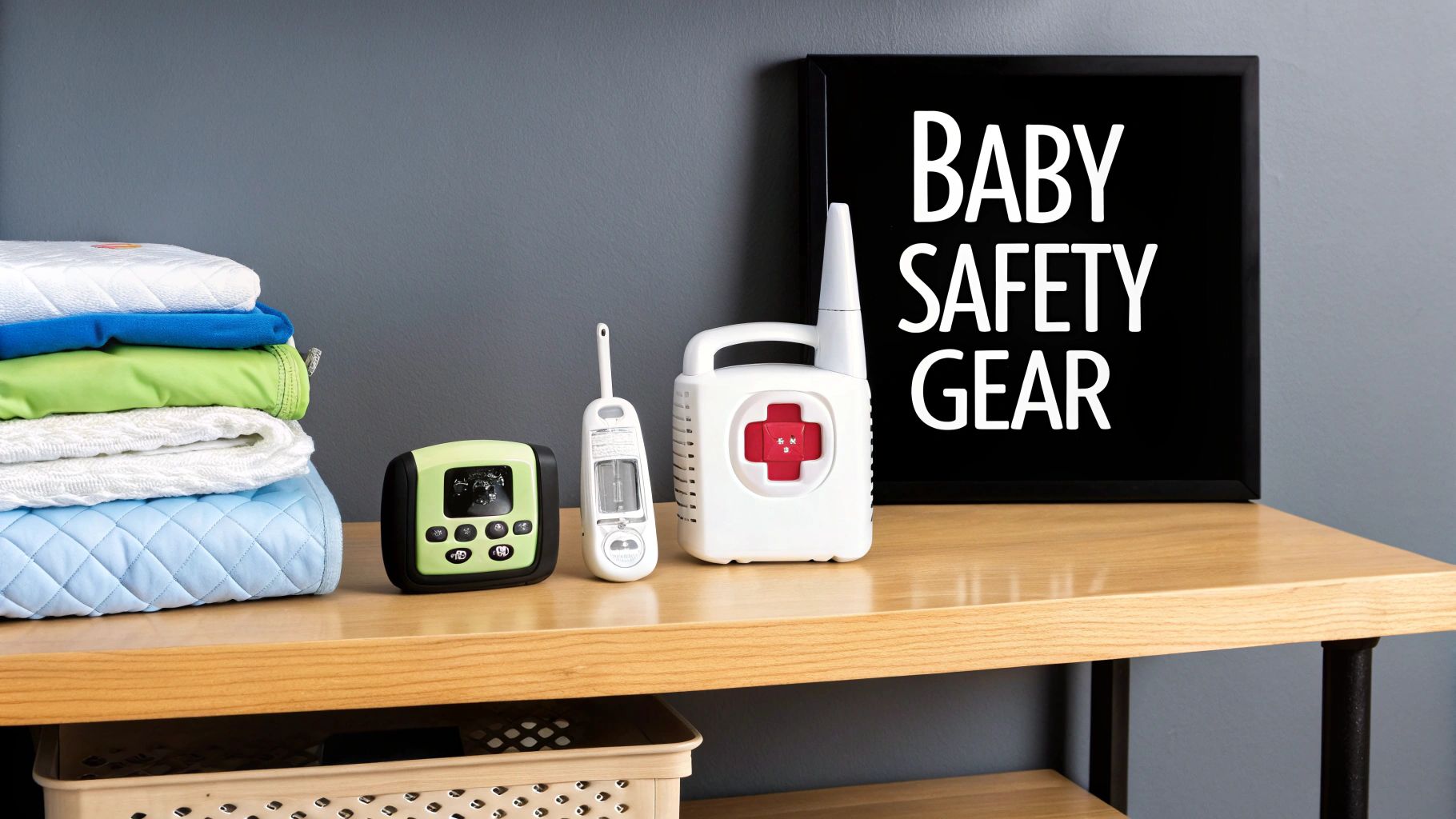
Think of safe-sleep mattresses, baby monitors, thermometers and sterilizers as your newborn’s personal safety team at home. They’re designed to spot risks and give you peace of mind in those first precious weeks.
By choosing certified, non-toxic products, you’re lowering hazards and protecting delicate skin. For example, a certified sleep mattress cuts down on suffocation dangers, while a medical-grade monitor can pick up the slightest breathing changes.
In 2022, about 2.3 million newborns died within their first month—a stark reminder to lean on tested gear. Learn more about these findings on Research Nester
- Safe-sleep mattress
- Baby monitor (basic or smart)
- Digital thermometer
- First-aid kit
- Sterilizing device
Choosing Safe Sleep Mattresses
A safe-sleep mattress is a firm, breathable pad that fits snugly in a crib. Brands certified by JPMA, ASTM or CPSC run tests on weight support and airflow before they reach your home. Ensure covers are free of flame retardants and allergens.
Key Features To Check:
- Certification label (JPMA, ASTM or CPSC)
- Organic or hypoallergenic cover to prevent rashes
- Recommended quantity: one mattress with two protective covers
| Feature | Budget Option | Premium Option |
|---|---|---|
| Price Range | $50 – $100 | $200 – $400 |
| Material | Standard foam | Breathable organic latex |
| Hypoallergenic | No | Yes |
| Waterproof Cover | Zip-off for wash | Built-in antimicrobial guard |
Always use tight-fitting sheets and wipe the surface regularly. A clean mattress is a safer mattress.
Picking Monitors And Thermometers
Baby monitors give you eyes and ears on your child, even when you’re in another room. Thermometers act like a quick health check whenever fever concerns pop up.
Make sure you’ve got at least one monitor and one thermometer before the big day arrives.
-
Basic Monitor
- Audio only, range of 100–150 feet
- Battery backup and low-emission signal
-
Smart Monitor
- HD video, breathing sensors and smartphone alerts
- Optional subscription for data tracking
Digital Thermometer Tips:
- Opt for instant-read models with a flexible tip
- Keep an extra battery and a small cleaning brush on hand
“Using a certified video monitor can reduce parental anxiety by over 30% and help spot issues early,” says pediatric tool specialist Dr. Carlos Mendez.
First Aid And Sterilizing Essentials
A stocked first-aid kit and a reliable sterilizer are like carrying a mini clinic. They handle minor bumps, feedings and everything in between. Use non-latex gloves to avoid sensitization.
Key First-Aid Items:
- Adhesive bandages and gauze
- Antiseptic wipes and pediatric pain reliever
- Medicine dropper and nasal aspirator
Sterilizing Device Options:
| Item | Budget Option | Premium Option |
|---|---|---|
| Microwave Bag | $10 per pack | — |
| Countertop Unit | $80 electric | UV + Drying cycle for $150 |
To keep allergies at bay, sterilize bottles and pump parts before every use. Fewer germs mean happier skin.
Check out our guide on creating a safe sleep environment for infants
Browse GuGuTon’s curated health and safety gear to invest wisely in newborn essentials.
Maintaining And Updating Your Gear
Routine checks make sure each item stays reliable as your baby grows.
- Inspect power cords, batteries and seals every month
- Replace thermometer sensors and monitor batteries per the manual
- Sanitize toy-safe surfaces with gentle, hypoallergenic sprays
- Rotate first-aid supplies and check expiry dates quarterly
“Consistent maintenance extends equipment lifespan by up to 25% while ensuring ongoing protection.”
Browse GuGuTon’s full range of baby monitors and sterilizing devices to keep your little one in safe hands.
Recommended Quantities For First 0–3 Months
- One safe-sleep mattress with two covers
- One or two baby monitors for multiple rooms
- Two digital thermometers (oral and forehead)
- One complete first-aid kit stationed in the nursery
- One sterilizing device with accessory set
Revisit this list every month to swap out expired items and adjust for your baby’s changing needs.
Prepared parents and reliable gear go hand in hand. Start building your health and safety list with GuGuTon.
Setting Up Your Registry And Seasonal Adjustments
Organizing your registry is like packing a lifelong suitcase for your little one—a thoughtfully chosen list eases gift-givers’ minds and keeps sensitive newborn skin safe. By offering a mix of budget-friendly and splurge-worthy bundles, you eliminate guesswork and ensure every present gets used.
Summer Bundle: lightweight organic cotton onesies, breathable swaddles, sun hats
Winter Bundle: fleece sleep sacks, knit hats, cozy cotton layers
Hygiene Collection: fragrance-free wipes, dermatologist-tested creams, refill packs
Registry Setup Steps
Getting started is simpler than it seems. Follow these three practical steps to build a registry that grows alongside your baby:
- Choose categories and set desired quantities for each bundle
- Add refill subscriptions for diapers and wipes to automate restocks
- Share your registry link with friends and family
These actions create a balanced registry, cutting down on duplicates and unwanted items. Tweak quantities and categories to match your own routine and priorities.
Seasonal Fabric Choices
Fabrics have personalities—some breathe in the heat, others hug in the cold. Selecting the right textile helps prevent rashes in summer and keeps baby snug when the temperature drops.
| Season | Fabric Type | Quantity |
|---|---|---|
| Summer | Muslin or bamboo wrap (4) | 4 |
| Winter | Fleece-lined sleep sack (2) | 2 |
Organic muslin wraps wick away moisture on sweltering days, while insulated sleep sacks rated TOG 2.5 lock in warmth on frosty nights.
Adjusting Bundles As Baby Grows
Babies change quickly, and your registry should too. Start with 6 onesies for 0–3 months, then add 4 more for the 3–6 month stage.
“Registries that adapt over time save parents up to 30% on unneeded items,” notes registry expert Laura Chen.
Think about where you live—dry climates call for ultra-gentle hydrating lotions, while sticky summers benefit from quick-dry fabrics. Subscription refills smooth out restocking chores. A monthly diaper or wipe delivery means fewer errands and more time for cuddles.
Build your registry with GUGUTON LLC