

What to Pack in a Diaper Bag A New Parent's Ultimate Guide
Figuring out what to pack in a diaper bag can feel a little like preparing for a mission to Mars, but it really just boils down to a few key categories. For a smooth, stress-free outing, you’ll need to cover the bases: diapering, feeding, clothing changes, and your baby's comfort. I’ve also learned that focusing on quality, hypoallergenic products makes a huge difference in protecting your baby’s delicate skin from irritation.
Your Essential Diaper Bag Quick-Start Guide

Stepping out the door with a baby requires a whole new level of planning. Think of every item you pack as a tool in your arsenal to keep your little one safe, cozy, and happy. It's not just about having stuff; it's about having the right stuff to support their well-being on the go.
This is especially true for anything that touches your baby’s skin. A baby’s skin barrier is so much thinner than ours, which makes it incredibly sensitive to irritants that can hide in low-quality wipes, diapers, or fabrics. Preventing rashes and allergic reactions starts with what you pack.
The Non-Negotiable Core Items
Before we get into all the "what-ifs," let's lock down the absolute must-haves for any quick trip. I like to think of this as the foundation of any successful outing. These are the items that address the most common and immediate needs your baby will have when you’re away from your home base.
Having these core essentials packed and ready means you can handle the basics without breaking a sweat:
- Diapering Supplies: This is the big one, and it’s more than just a couple of diapers. Choosing high-quality, hypoallergenic options is key to preventing skin irritation.
- A Change of Clothes: Spit-up, drool, and the dreaded diaper blowout are basically inevitable. Opt for soft, breathable fabrics to keep skin comfortable.
- Feeding Necessities: A hungry baby is an unhappy baby. Being ready for feeding time is non-negotiable.
- Safety and Comfort Items: These are the little things that can make a huge difference in your baby’s mood and overall well-being.
Choosing items designed for sensitive skin isn't a luxury; it's a preventative measure. Hypoallergenic wipes, fragrance-free creams, and soft, breathable fabrics like organic cotton can significantly reduce the risk of skin reactions.
To make this super simple, here’s a quick-reference table that breaks down these core essentials. Think of it as your cheat sheet for a typical trip out, explaining why each item is so important.
Quick-Reference Diaper Bag Essentials
| Item Category | Specific Items | Recommended Quantity (for a 4-hour trip) | Key Purpose & Safety Insight |
|---|---|---|---|
| Diapering | Diapers, Wipes, Diaper Cream, Portable Changing Pad | 4-5 diapers, a travel pack of wipes, a small tube of cream, 1 pad | To ensure clean, rash-free changes. Prioritize fragrance-free products to avoid allergic reactions. |
| Clothing | Full Outfit (Onesie/Bodysuit, Pants), Socks | 1-2 complete outfits | To handle messes. Choose soft, natural fabrics like cotton to prevent skin irritation. |
| Feeding | Bottles, Formula/Breast Milk, Burp Cloth | 1-2 prepared bottles, 1-2 burp cloths | To ensure your baby is fed and happy. Use BPA-free bottles to avoid chemical exposure. |
| Comfort & Health | Pacifier, Small Toy, Hand Sanitizer, Wet Bag | 1-2 pacifiers, 1 favorite toy, 1 travel-size sanitizer, 1 wet bag | For soothing and hygiene. Ensure toys are made from non-toxic, baby-safe materials. |
Once you’ve mastered this basic list, you’ll feel like a packing pro. It gives you the confidence to handle almost anything a short trip can throw your way and provides a great foundation for adding more specialized items as you learn your baby's unique needs.
Mastering On-The-Go Diaper Changes
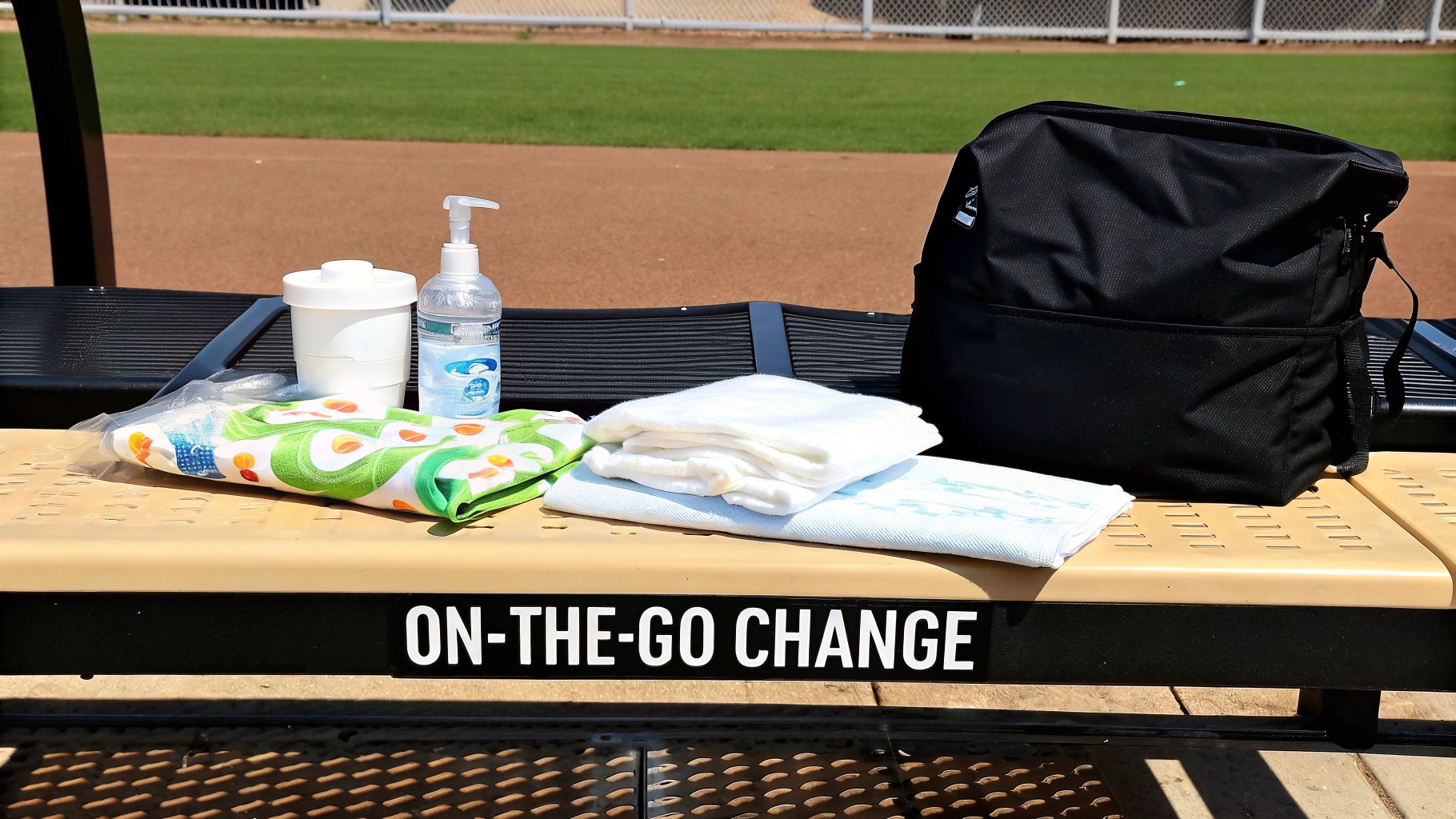
Let's be honest, the heart of any diaper bag is built around one crucial mission: handling diaper changes cleanly and safely, wherever you happen to be. It’s not just about having enough diapers stuffed in there; it’s about creating a little protective bubble for your baby's skin, shielding it from germs and irritants.
A baby’s skin is incredibly thin and way more absorbent than our own, which is why it's so prone to diaper rash and irritation from harsh chemicals. By being mindful about the supplies you pack, you’re actively preventing that discomfort and keeping your little one’s skin barrier healthy. Think of it less as a chore and more as an act of care.
Choosing Skin-Safe Diapers and Wipes
Your first line of defense is choosing diapers and wipes that are as gentle as possible. So many standard products are packed with fragrances, alcohol, or other chemicals that can easily throw off your baby's natural pH balance and lead to a world of pain (and tears).
When you're figuring out what to pack, always lean toward products made for sensitive skin. It seems like a small detail, but it can make a huge difference in your baby’s day-to-day comfort.
- Hypoallergenic Diapers: I always recommend looking for diapers free of chlorine, fragrances, and lotions. Those are the usual suspects when it comes to skin irritation.
- Fragrance-Free and Alcohol-Free Wipes: Wipes are used on the most delicate areas, so it's best to opt for simple, water-based ones with minimal ingredients. You want to clean, not strip away natural oils and cause more problems.
A good way to think about it is to treat your baby's skin like a piece of delicate silk. You wouldn't use a harsh detergent on it, right? The same logic applies here—gentle, minimalist products help preserve its natural integrity.
The Unsung Heroes: Diaper Cream and Changing Mats
Beyond the basics, there are two items I consider non-negotiable for keeping your baby’s skin healthy and hygienic on the go: a solid barrier cream and a portable changing mat. These are your secret weapons against diaper rash and public-restroom germs.
A good diaper cream creates a protective layer that keeps moisture away from the skin, stopping rashes before they can even start. And a changing mat? That gives you a clean, guaranteed surface anywhere, which is a must-have for public changing tables or even just a patch of grass at the park.
Having a clean surface is non-negotiable. Public changing stations can be a breeding ground for bacteria, and creating your own hygienic space is the best way to protect your baby. I'm a big fan of a high-quality, reusable baby changing cover pad because you can just wipe it down and reuse it. It’s a safe, sustainable choice.
How Many Diapers and Wipes Should You Actually Pack?
Figuring out how many diapers to bring can feel like a guessing game at first. Pack too few, and you're in for a stressful emergency run. Pack too many, and your bag is a disorganized, heavy mess. The trick is to pack for the time you'll be out, plus a small buffer for the unexpected.
Younger babies, for instance, need way more changes than toddlers. Most parents I know tend to pack 4–8 diapers for short outings (a few hours) and up to 12 for a full day trip. A great rule of thumb is to pack one diaper for every two hours you plan to be out, plus a couple of extras just in case. For wipes, a travel-sized pack of 40–80 wipes is usually more than enough for changes and wiping sticky hands.
Containing the Mess and Keeping Clean
Finally, let's talk about managing the aftermath. A surprise blowout is practically a rite of passage for parents, but being prepared means it won't derail your entire day.
These items are small but they are absolute lifesavers.
- Wet/Dry Bag: A waterproof, reusable bag is a game-changer for sealing away soiled clothes or cloth diapers. It keeps moisture and smells locked inside until you can get home.
- Disposable Bags: I always keep a few small plastic or biodegradable bags on hand for wrapping up a dirty disposable diaper, especially if a trash can isn't immediately available.
- Hand Sanitizer: When you can't get to a sink, a travel-sized hand sanitizer is essential for cleaning your own hands after you're done.
When you thoughtfully pull these essentials together, you’re not just packing a bag. You're building a mobile command center that puts your baby's health, safety, and comfort first.
Packing For Safe and Happy Feedings

Feeding your baby on the go involves a bit more strategy than just tossing a bottle in your bag. To keep your little one safe, healthy, and happy, you need to be prepared. This is true whether you're breastfeeding, formula-feeding, or have a toddler who suddenly needs a snack. The goal is simple: keep feedings clean, safe, and as stress-free as possible.
Think of the feeding section of your diaper bag as your mini, mobile kitchen. Your top priorities are keeping milk at a safe temperature, getting formula measurements just right, and using non-toxic containers for every sip and bite. A little planning here goes a long way in preventing tummy aches and unwanted chemical exposure.
Choosing Safe Bottles and Containers
It all starts with the gear you choose. What your baby’s food and drinks touch really matters, since some plastics can leach chemicals you’d rather avoid.
Always look for bottles, formula dispensers, and snack containers clearly labeled as BPA-free. Bisphenol A (BPA) is a chemical that has raised health concerns, so it's best to steer clear. While glass or stainless steel are fantastic alternatives, many high-quality BPA-free plastics offer a great, lightweight option for travel.
Packing for Bottle-Feeding Success
If you're using formula, a little organization will make your life so much easier. Pre-measuring formula into a dispenser is a game-changer. It takes the guesswork out of mixing a bottle and ensures your baby gets the right nutrition, which is crucial for their digestion. Plus, it saves you from wrestling with a giant formula can in the middle of a park.
For both formula and breast milk, temperature control is absolutely key.
- Insulated Carriers: An insulated bottle bag or a cooler pocket in your diaper bag is non-negotiable. It keeps milk cool, which is critical for slowing down bacterial growth.
- Safe Water Source: Always bring a separate, sealed bottle of purified or boiled (and cooled) water just for mixing formula. That way, you never have to rely on a public water fountain.
Keeping milk at the right temperature isn't just about what your baby prefers—it's about food safety. Bacteria thrive in lukewarm milk, and an insulated carrier is your best defense when you're away from a fridge.
Trying to get a bottle to the perfect temperature on a long day out can be a challenge. To see how to warm milk safely and conveniently, take a look at our guide on the best baby bottle warmers.
Snacks and Solids for Older Babies
As your baby gets older and starts on solids, your diaper bag’s contents will shift. Now you’re packing spoons, bibs, and snacks to handle mealtimes without creating a disaster zone.
Stick with snacks that are healthy, easy for little fingers to grab, and aren't major choking hazards. Small, reusable containers made of silicone or stainless steel are perfect for things like puffs, crackers, or cut fruit. And don't forget a dedicated spoon and a wipeable bib—it'll save your baby’s outfit and prevent skin irritation from smeared food.
A final piece of advice: always pack more than you think you need. You never know when a growth spurt will hit, and having one extra serving of formula or an extra snack pouch can be the difference between a meltdown and a happy day out.
Choosing The Right Clothing and Comfort Items
Let's be real: spit-up, diaper blowouts, and surprise weather changes are practically a parenting rite of passage. Tucking the right clothing and comfort items into your diaper bag isn't just about cleaning up messes—it's about keeping your baby comfortable and feeling secure when you're on the go.
A baby's skin is incredibly thin and sensitive compared to ours, so it's much more prone to irritation. The fabrics they wear and the items that comfort them can make all the difference between a happy outing and a meltdown. A little smart packing goes a long way.
Prioritizing Skin-Safe Fabrics
When you're packing that spare outfit (and you always need a spare outfit), the golden rule is to stick with soft, breathable, and hypoallergenic materials. Synthetic fabrics can trap heat and moisture against your baby's skin, which is a perfect recipe for rashes and discomfort.
Try to pack at least one full change of clothes made from high-quality, natural fibers. You really can't go wrong with these.
- Organic Cotton: There's a reason this is the top choice for so many parents. It’s unbelievably soft, lets the skin breathe, and is grown without harsh chemicals, which significantly lowers the risk of irritation.
- Bamboo: This fabric feels silky smooth and is a champion at wicking moisture away. It pulls sweat from the skin, keeping your baby dry and happy.
- Muslin: A lightweight, airy cotton that’s a lifesaver in warmer weather or for layering. It offers fantastic airflow to prevent overheating.
Getting a feel for the best materials is a game-changer. If you want to learn more, check out our guide on choosing the right fabric for your baby's sensitive skin.
Layering for Seasonal Comfort
The weather forecast isn't always reliable, and babies are still learning how to regulate their own body temperature. My best advice? Think in layers, not bulk. It gives you so much more flexibility to add or remove clothing as the temperature changes.
A lightweight swaddle or blanket is probably the most versatile thing you'll carry. It can be used for a little extra warmth, a makeshift nursing cover, a sun shield, or even just a clean spot for your baby to stretch out on the grass.
Think of a muslin swaddle as the swiss army knife of your diaper bag. In summer, it's a light sun shield. In a chilly, air-conditioned store, it's the perfect cozy layer. This single item adapts to countless situations.
For colder days, a fleece or wool blanket is a must, along with a soft hat and mittens to protect those tiny extremities. A quick glance at the weather before you leave the house will help you pack the right layers for the day.
Packing for Emotional Security
Beyond just physical comfort, your diaper bag is also a toolkit for emotional comfort. New places and sounds can be overwhelming for a little one, and a familiar object from home can be incredibly soothing and grounding for them.
A few small, familiar items can turn a fussy moment around in an instant.
- A Favorite Pacifier: If your baby takes one, always pack at least two. It's a law of nature that one will inevitably fall onto the grimiest floor imaginable.
- A Small, Safe Toy: A soft rattle or a little lovey can be a fantastic distraction during a long wait at the doctor's office or a fussy moment in the car.
- A Teether: For teething babies, a cool teether is a lifesaver. Just be sure to pop it in a clean bag to keep it ready for action.
Thinking about these little "just-in-case" comfort items shows you're one step ahead, anticipating not just your baby's physical needs but their emotional ones, too. It’s what helps make any outing feel a little less stressful and a lot more enjoyable.
The Mini First-Aid Kit Every Parent Needs
Let's be real: bumps, scrapes, and sudden fevers are just part of the parenting journey. Having a small first-aid kit tucked into your diaper bag isn’t about preparing for a catastrophe; it’s about handling those little surprises calmly and confidently. When your little one takes a tumble at the park, you’ll be so glad you can clean it up and stick a cute bandage on it right then and there.
Everything in this little kit should be chosen with your baby's delicate system in mind. It's your mini-pharmacy on the go, giving you peace of mind and the tools to soothe your baby's discomfort wherever you are.
Building Your Core First-Aid Kit
You don't need a massive, bulky kit. The goal is to pack smart, focusing on compact, infant-safe essentials. Think of this as your go-to pouch for dealing with life's little owies.
Grab a small, waterproof pouch and start with these basics:
- Infant-Safe Antiseptic Wipes: Perfect for cleaning a scraped knee. Look for alcohol-free wipes that won’t sting or irritate sensitive skin.
- Assorted Bandages: A few different sizes are a great idea. Trust me, a colorful character bandage can work wonders for a sad toddler.
- Baby Nail Clippers or File: A sharp little nail can pop up out of nowhere and lead to scratches. Having clippers on hand lets you smooth any jagged edges before they become a problem.
- A Reliable Digital Thermometer: Fevers can spike quickly. A quick temperature check helps you figure out what’s going on and decide what to do next.
A simple, well-organized first-aid kit is like a superpower. It empowers you to handle minor health hiccups swiftly, keeping your baby comfortable and you calm.
Medications and Soothing Remedies
A few key medicines can be a total lifesaver, but always, always chat with your pediatrician before giving your baby anything new. Dosing for babies is almost always based on weight, not age, and it's incredibly important to get it right. I used to keep a little note card with my baby's current weight and the correct dosages right inside the kit.
After getting the green light from your doctor, consider adding these:
- Infant Pain and Fever Reducer: A small, sealed bottle of infant acetaminophen or ibuprofen is a must-have for tackling unexpected fevers or miserable teething pain.
- Gas Drops: If your baby is prone to gassiness, simethicone drops can offer quick relief from that uncomfortable bloating and fussiness.
- Saline Nasal Spray & Aspirator: A stuffy nose makes for a miserable baby, especially when it's time to eat or sleep. Saline spray helps loosen everything up, and a good old bulb syringe or nasal aspirator can clear out those tiny passages.
Don't Forget Sun Protection
This is a big one that's easy to overlook. A baby’s skin is incredibly thin and doesn't have much melanin (the pigment that helps protect us from the sun), which makes them extremely vulnerable to sunburn. Did you know that just one bad sunburn in childhood can significantly increase the risk of skin cancer later on?
For babies under six months, your best bet is always shade and protective clothing. Once they're a bit older, a baby-safe sunscreen is non-negotiable. Look for mineral-based formulas with ingredients like zinc oxide or titanium dioxide—they create a physical barrier on the skin instead of being absorbed. It's always a good idea to do a patch test on a small spot of skin first, just to make sure there's no reaction.
Along with sunscreen, a wide-brimmed sun hat is your absolute best friend. It keeps the sun off your baby’s scalp, face, and neck, making it an essential part of your diaper bag arsenal for any sunny outing.
Adapting Your Diaper Bag For Different Outings
Just when you think you’ve finally mastered your diaper bag packing list, everything changes. Your baby gets older, a quick coffee run turns into a full-day adventure, or you realize you’re lugging around way too much stuff. The secret to a well-packed diaper bag isn't a rigid list; it's creating a flexible system that grows with your child and adapts to your plans.
Think of it this way: a sleepy newborn's needs are a world away from a curious, snack-hungry toddler's. Likewise, a quick dash to the store requires a far lighter load than a day at the zoo. Learning to adjust on the fly is what will make you feel confident and prepared, no matter where you're headed.
Newborn Needs Versus Toddler Takeover
The shift from the newborn days to the toddler years completely changes what's inside your diaper bag. While a few essentials will always have a home there, the main focus moves from constant infant care to managing the boundless energy and appetite of a little explorer.
With a newborn, your bag is probably overflowing with diapering gear, burp cloths for spit-up, and extra bottles. Once they’re a toddler, you’ll likely need fewer diapers per trip, but that space will quickly be filled with snacks, a sippy cup, and a few favorite toys to fend off boredom. This is also the stage where having your hands free becomes a lifesaver. Looking into the best baby carriers for newborns early on can help you find a great option that keeps your little one snug while you juggle everything else.
To see just how much things change, here’s a quick look at how your packing list will evolve.
Diaper Bag Packing Comparison: Newborn vs. Toddler
This table gives you a side-by-side look at what a typical day trip requires for a newborn versus a toddler.
| Item Category | Newborn Essentials (0-6 months) | Toddler Essentials (12-36 months) |
|---|---|---|
| Diapering | More diapers (6-8), extra burp cloths, gentle diaper cream | Fewer diapers (3-4), wipes for sticky hands, portable potty seat liners (optional) |
| Feeding | Bottles, formula/breast milk, insulated carrier, nursing cover | Sippy cup with water, a variety of healthy snacks, bib, small utensils |
| Entertainment | A pacifier, a soft rattle, or a small, high-contrast toy | A board book, small cars, crayons, or a favorite action figure to keep them busy |
| Health & Safety | Extra swaddle blanket, infant gas drops, a bulb syringe | Full first-aid kit with bandages for scrapes, child-safe hand sanitizer, sun hat |
As you can see, the core needs are the same, but the specific items shift to match their developmental stage—from soothing a tiny baby to entertaining a busy toddler.
From Short Errands to Full-Day Adventures
Besides your child’s age, the biggest factor in what you pack is how long you’ll be out. The goal is to avoid hauling a massive bag for a 30-minute grocery run but also not get caught unprepared on a longer trip.
For short outings (under two hours), you can get by with a much leaner setup. Think just a couple of diapers, a small pack of wipes, a single bottle or a few snacks, and maybe a pacifier. For a full-day adventure, you need to scale up significantly. That means enough diapers to last the whole day, multiple meals, a full change of clothes (or two!), and a wider range of toys and comfort items.
A great trick is to think of your diaper bag in "modules." Keep a core pouch with diapering essentials that never leaves the bag. Then, you can just grab and add other pouches—like a feeding kit or a toy bag—depending on where you're going and for how long.
This handy flowchart is a perfect example of how to think on your feet when it comes to first-aid supplies.
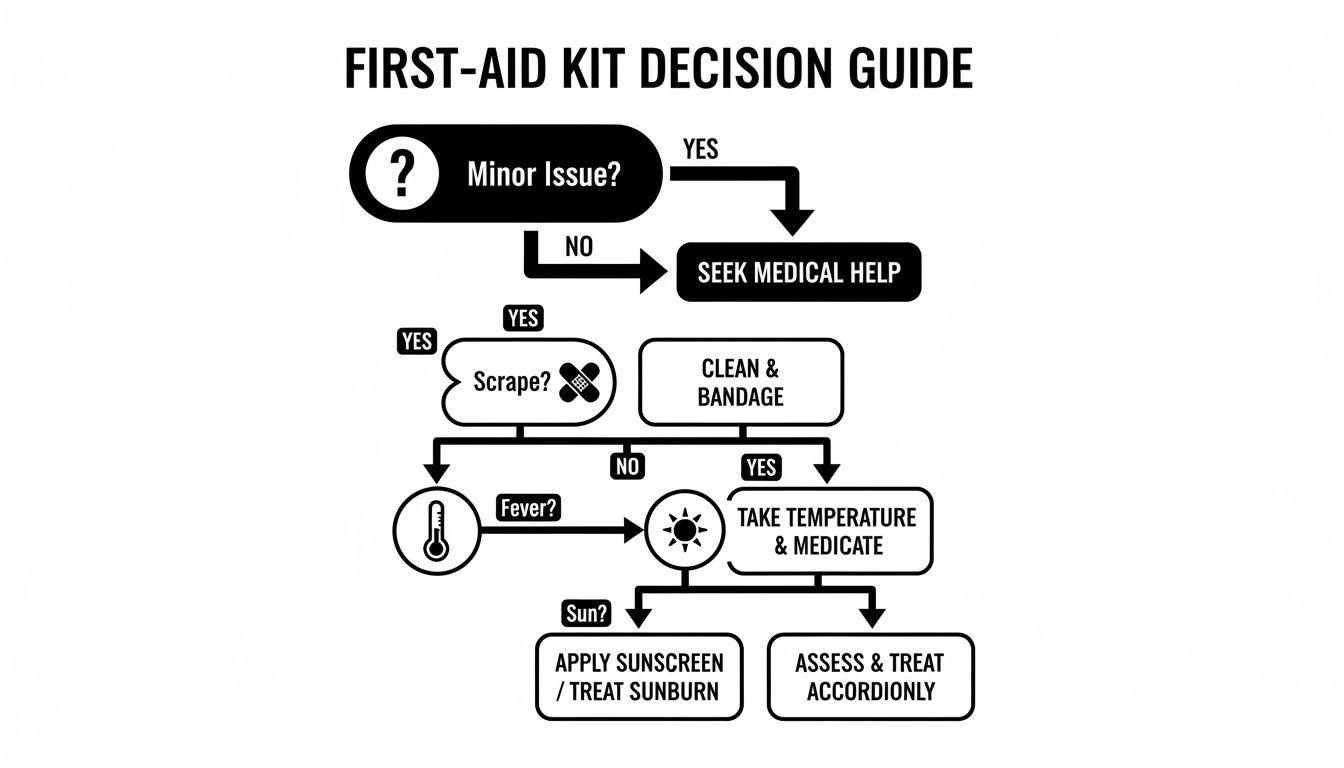
Whether it’s a scrape needing a bandage, a potential fever that calls for a thermometer, or just a sunny day requiring sunscreen, you can quickly see what you need to grab.
This idea of adaptable packing isn’t just a parent hack; it's reflected in global market trends. The diaper bag market, valued at around USD 0.83 billion in 2024, is shaped by how parents live. In North America, which makes up nearly 40% of the market, there's a huge demand for large bags with tons of compartments—perfect for parents who like to be prepared for anything. In Europe, however, parents often lean towards more compact, stylish bags, packing multi-use items for city life. This just goes to show how lifestyle directly influences bag design and what parents all over the world choose to pack.
A Few More Questions About Packing Your Diaper Bag
Even with the best checklist in hand, you're bound to have a few questions as you start packing. Let's tackle some of the most common ones that pop up for new parents, making sure you feel confident and prepared.
How Should I Clean My Diaper Bag Safely?
Keeping your diaper bag clean is a must, but you don't want harsh chemicals near your baby's gear. For everyday spills and smudges, your best bet is to spot-clean. A little warm water mixed with a drop of gentle, baby-safe soap on a cloth usually does the trick.
When it's time for a deeper clean, always check the care label first. Many fabric bags can go right into the washing machine on a gentle cycle—just let it air dry completely to avoid any mustiness. I also find that wiping down the inside with a non-toxic, fragrance-free disinfectant wipe once a week is a great habit to get into.
Should I Pack Toys in The Diaper Bag?
Definitely! A well-chosen toy can be a lifesaver. The key is to pick them with safety in mind. Look for toys made from materials like silicone, natural rubber, or unfinished wood. These are great because they don't contain yucky chemicals like BPA or phthalates that your baby might mouth.
Here's a pro tip I swear by: use a silicone tether to attach toys to the bag or stroller. It's a game-changer. No more toys hitting the grimy floor, which means less time for you spent retrieving and cleaning them.
What’s the Best Way to Store Breast Milk or Formula?
When it comes to milk, temperature control is everything. You need to keep it cool to prevent bacteria from growing. Always pack bottles in an insulated cooler pocket or a small, separate cooler with a good ice pack.
Freshly expressed breast milk is safe in a cooler for up to 24 hours. For pre-mixed formula, the rules are a bit stricter: you'll want to use it within two hours of making it, and once your baby starts drinking, it's only good for about an hour.
How Do I Prevent Leaks Inside the Bag?
Ah, the dreaded diaper bag leak. It happens to all of us, but you can get ahead of it. I highly recommend using waterproof pouches or dedicated wet/dry bags to quarantine anything that might spill.
Keep things like diaper cream, lotions, and hand sanitizer in their own sealed pouch. For bottles, double-check that the lids are screwed on tight and try to keep them upright in the pockets they were designed for. A little bit of smart organization can save your entire bag's contents from a sticky mess.
At GuGuTon, we get it. Every single thing you pack for your baby is chosen with so much thought and love. Our collection is designed around that very idea—safe, gentle, and high-quality essentials that give you one less thing to worry about. Let us help you build a diaper bag that brings you total peace of mind on all your adventures together.