

Postpartum Essentials Checklist: A Gentle Guide for Your Fourth Trimester
A good postpartum essentials checklist is more than just a list—it's your game plan for the fourth trimester. It helps you get everything ready for your own physical recovery while also preparing for your newborn's every need. Think of it as organizing all the moving parts, from healing supplies for you to the softest, safest items for your baby, so you can have a calmer, more comfortable start to parenthood.
Why Your Postpartum Essentials Checklist Matters
The time right after birth, often called the "fourth trimester," is a period of massive adjustment for everyone. Your body is healing from a marathon, your hormones are on a rollercoaster, and you're suddenly in charge of a tiny human. A well-thought-out checklist isn't just about shopping; it's about creating a peaceful, supportive space that cuts down on stress.
When you gather everything you need ahead of time, you're saving yourself from those frantic, middle-of-the-night runs to the store. This simple act of preparation gives you a sense of control during a time that can feel beautifully chaotic, letting you focus on what really matters: soaking up those newborn snuggles.
Prioritizing Safety and Preventing Irritation
A huge part of your checklist should focus on the quality and safety of the items you choose, especially for anything that will touch your baby’s skin. Newborn skin is unbelievably delicate and its protective barrier is still developing, making it highly susceptible to harsh materials or chemicals that can cause allergies, rashes, and irritation.
Here's where being picky about safety and quality pays off:
- Gentle, Skin-Safe Fabrics: Look for clothing, swaddles, and bedding made from soft, breathable materials like certified organic cotton or bamboo. Natural, chemical-free fibers are much kinder to sensitive skin, help regulate temperature to prevent heat rash, and are less likely to trigger contact dermatitis.
- Hypoallergenic Products: Stick with fragrance-free and dye-free diapers, wipes, lotions, and laundry detergents. These added chemicals are often the sneaky culprits behind skin flare-ups, allergies, and eczema. Always read the ingredient list to ensure products are truly mild.
- Thoughtful Recovery Aids for Mom: Your own comfort is key! Soft, high-waisted underwear and loose-fitting robes made from natural fabrics won't irritate healing incisions or sore spots, making a world of difference in your day-to-day comfort.
Preparing for your recovery isn't just about comfort—it's a crucial part of your health. Having healing aids ready supports your physical well-being and allows you to be more present for your newborn.
Setting Yourself Up for a Smoother Recovery
Your healing needs to be a top priority, but it's something that often gets pushed to the side. It's a shocking statistic, but as many as 40% of women don't attend their postpartum check-up. This can seriously delay recovery from common issues like pain, exhaustion, and heavy bleeding. This gap in care is a major reason why more than half of pregnancy-related deaths happen after delivery.
This underscores why items like peri bottles and stool softeners aren't just "nice-to-haves"—they're absolute musts. You'll also be dealing with lochia (the postpartum discharge) for up to six weeks, so having a large supply of oversized pads or disposable underwear is non-negotiable. For a deeper dive, you can learn more about optimizing postpartum care from ACOG.
To help you get organized, here’s a quick overview of the essential categories you'll want to cover.
Postpartum Checklist At a Glance
A quick summary of the essential categories for mom and baby to help you organize your preparations, focusing on items that promote healing, comfort, and safety.
| Category | Key Focus | Top 3 Must-Haves |
|---|---|---|
| Mom's Recovery | Healing, comfort, pain relief | Peri bottle, mesh underwear, stool softeners |
| Breastfeeding & Feeding | Nipple care, milk supply, baby's comfort | Nipple cream, nursing pads, burp cloths |
| Baby Care Essentials | Diapering, bathing, health & safety | Fragrance-free diapers, gentle wipes, nasal aspirator |
| Nursery & Home Prep | Creating a functional and soothing space | Bassinet, swaddles, white noise machine |
This table is just the starting point. This guide will walk you through creating a complete postpartum essentials checklist, covering everything you need to feel confident and ready to welcome your little one.
Your Essential Postpartum Recovery Kit
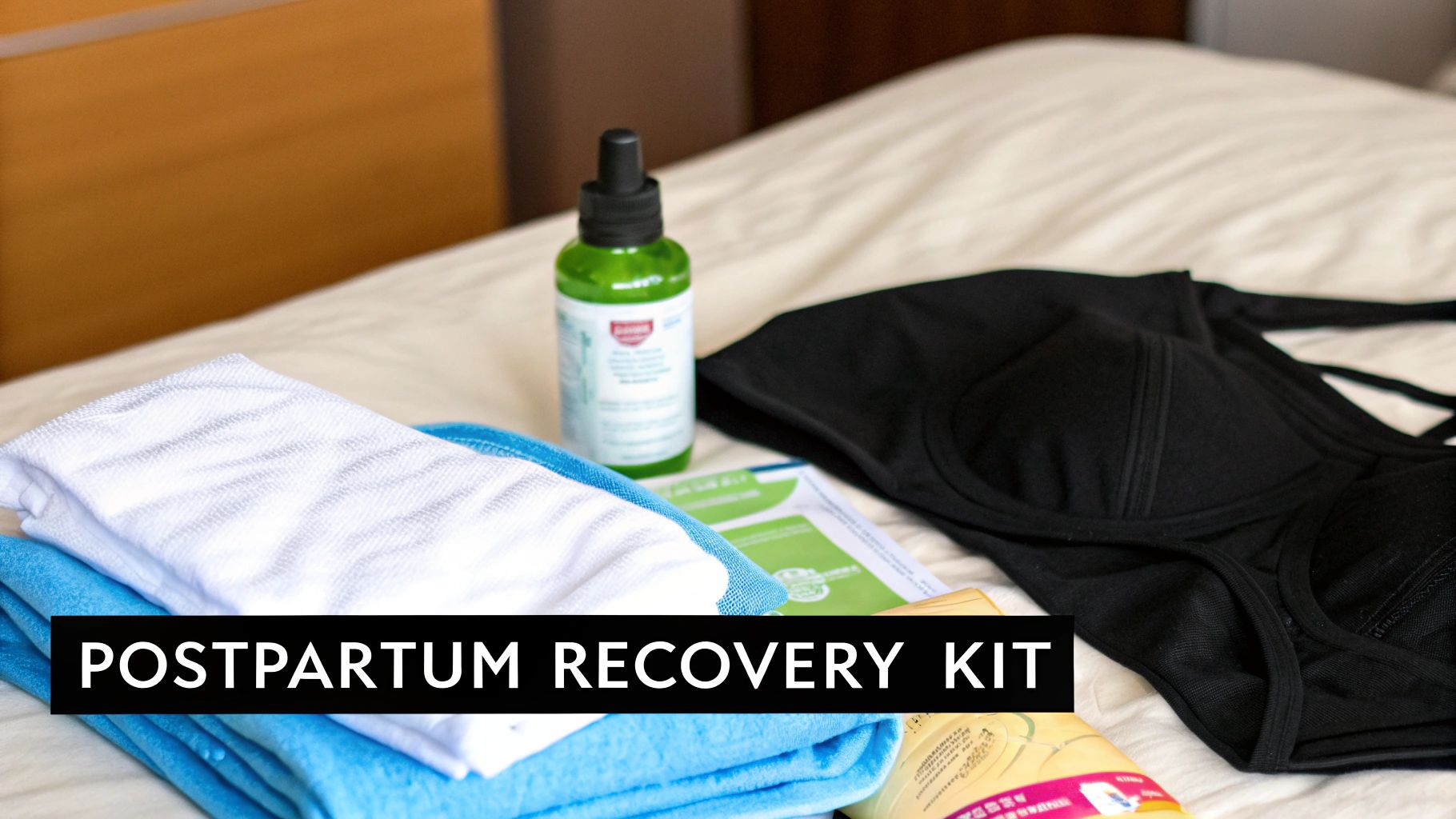
Let's be real: your healing journey after birth is every bit as important as your baby's arrival. Having a well-stocked recovery kit ready at home can make a world of difference for your comfort and sanity. This isn't about luxury—it's about giving your body the gentle, effective support it needs to mend.
We'll break down the absolute must-haves for your postpartum essentials checklist, covering everything from perineal care to incision comfort. The goal here is to help you navigate the fourth trimester with a little more ease and a lot less stress.
Foundational Items for Physical Healing
No matter how you delivered, your body has gone through an incredible ordeal. A few key items are completely non-negotiable for managing those first few days and weeks. Think of these as the building blocks of your recovery station.
Your first priority will be managing lochia, the postpartum bleeding that can last for up to six weeks. You’ll want a solid supply of:
- Heavy-duty maternity pads: These are way more absorbent than anything you use for a regular period. Don't skimp here.
- Disposable mesh underwear: The hospital will probably give you a few pairs, but having your own stash is a game-changer. They're stretchy, breathable, and you won't feel bad about tossing them.
- Peri bottle: This little squirt bottle is a true hero. You’ll use it to gently rinse your perineal area with warm water every time you use the restroom, because wiping with toilet paper is just not an option at first.
These simple tools will help you stay clean and comfortable, which is crucial for preventing infection and letting that very sensitive area heal.
Soothing Solutions for Discomfort and Swelling
Pain and swelling are completely normal parts of the process, but that doesn't mean you have to just grit your teeth and bear it. Assembling a "comfort cocktail" of soothing items can bring immediate relief and really help speed up your recovery.
Many moms I know swear by these gentle solutions:
- Witch hazel pads: You can layer these medicated pads right on top of your maternity pad to cool and soothe a sore perineum. They work wonders on swelling, stitches, and hemorrhoids.
- Perineal spray: A soothing spray with witch hazel or other calming ingredients offers instant relief. Keep a bottle right next to the toilet for easy access.
- Reusable hot & cold gel packs: These are so versatile. Freeze them to reduce swelling down there, or warm them up to ease those uterine cramps (afterpains) as your uterus shrinks back down.
Pro Tip: Set up small "recovery stations" in each bathroom you'll be using. Stock a little basket with pads, mesh undies, a peri bottle, witch hazel pads, and spray so you're never caught scrambling for what you need.
Comfort and Care for C-Section Recovery
If you had a C-section, your recovery will be all about caring for your incision and managing that abdominal soreness. The absolute key is to avoid anything that puts pressure on or irritates the area.
Your C-section recovery kit should definitely include:
- High-waisted underwear: Look for soft, breathable cotton undies where the waistband sits well above your incision. This prevents rubbing and lets air circulate.
- Loose-fitting clothing: Soft joggers, flowy nightgowns, and cozy robes are about to become your new uniform. Anything with a tight waistband is your enemy for a while.
- A supportive belly wrap: A gentle compression wrap can do wonders for supporting your weakened core muscles, helping your posture, and easing back pain. It just helps you feel a little more held-together as you start moving around again.
And of course, remember to follow your doctor’s instructions for keeping your incision clean and dry to ensure it heals beautifully.
Nurturing Your Well-being with Gentle Apparel
Your comfort is more than just physical—it has a huge impact on your emotional state. The clothes you wear should feel like a soft hug, not another source of irritation. Your skin can be incredibly sensitive postpartum thanks to all those hormonal shifts.
Choosing the right fabrics is everything. Stick with soft, breathable, and natural materials like organic cotton, bamboo, or modal. These fabrics are far less likely to trap moisture or cause a reaction, which is especially important for sensitive skin around your breasts if you're nursing or your abdomen after a C-section. You can learn more about navigating skin allergies from unsafe fabrics during maternity to see just how big a difference it makes.
Something as simple as a nursing-friendly pajama set or a comfy robe can make those hazy newborn days feel a bit more human. It's a small act of self-care that provides a significant emotional boost.
Gentle Care Essentials for Your Newborn
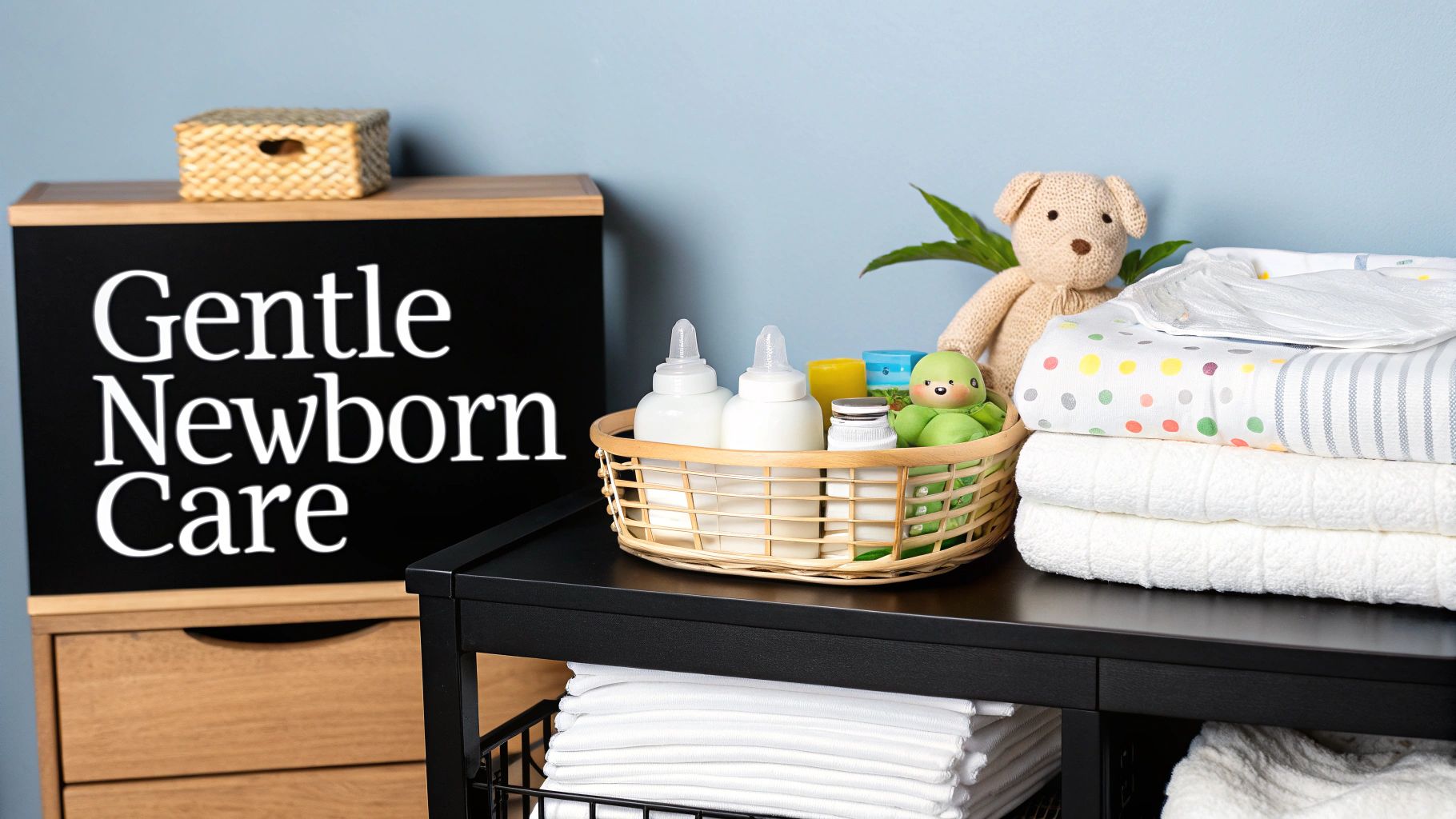
A newborn's skin is brand new to the world, making it unbelievably delicate. It’s still figuring out how to be a protective barrier, which means it’s prone to everything from dryness and irritation to little rashes. A huge part of your postpartum checklist is simply gathering a small collection of gentle, safe products to protect their sensitive skin right from the start.
This isn’t about running out and buying every baby product you see. It's really about being intentional and choosing quality over quantity. Think about creating a soothing, comfortable little bubble for your new baby—and from diapers to detergents, every small choice makes a difference in preventing allergies and skin issues.
Building a Diapering Station That Prevents Rashes
Your baby is going to spend a lot of time in a diaper, so this is one of the most important areas to get right for their skin's health. Constant moisture is the perfect setup for diaper rash, which is common but definitely no fun for your little one. A well-stocked, gentle diapering station is your best defense.
When you're pulling these items together, think simple and safe.
- Hypoallergenic, Fragrance-Free Diapers: Many popular diaper brands have added fragrances, lotions, and dyes that can easily bother a newborn's skin, leading to contact dermatitis. Look for brands that are explicitly free of these irritants, as well as chlorine.
- Water-Based, Unscented Wipes: Some baby wipes contain alcohol, perfumes, and other harsh ingredients. Your best bet is to find wipes that are at least 99% water or, for the most sensitive skin, just use soft cotton cloths and warm water to avoid triggering a reaction.
- A Quality Barrier Cream: A good diaper cream is a game-changer. It creates a physical barrier between your baby's bottom and moisture. Zinc oxide formulas are fantastic for both preventing and treating any redness, forming a protective seal against irritants.
A proactive diapering routine is everything. Changing your baby's diaper often—even if it just feels a little damp—and giving them some diaper-free time every day lets their skin breathe and makes a huge difference in preventing irritation and rashes.
The Importance of Skin-Safe Fabrics
From their very first onesie to their bassinet sheets, everything that touches your baby's skin should be soft, breathable, and free from harsh chemicals. A baby's skin is so much thinner than ours, making it more absorbent and vulnerable to irritants in synthetic fabrics. This is why choosing natural fibers isn't just a nice-to-have; it's a must for preventing rashes and allergic reactions.
Organic cotton and bamboo are both wonderful choices. They’re grown without pesticides and processed without nasty chemicals, making them naturally safer. These fabrics are also super breathable, which helps regulate your baby’s temperature and prevents overheating—another sneaky cause of skin rashes like heat rash.
Just remember to wash all their new clothes, swaddles, and bedding in a gentle, fragrance-free baby detergent before they wear them to remove any manufacturing residues. For a complete rundown, take a look at our detailed newborn essentials shopping list, which points you to some great, safe options.
Choosing Gentle Bathing and Skincare Products
When it comes to bath time for a newborn, less is definitely more. They really don't need a bath every day; too much time in the water can strip their skin of its natural, protective oils and lead to dryness. When you do give them a little wash, the products you use should be as mild as possible to prevent skin irritation.
Here’s what a simple, skin-safe bath kit looks like:
- Tear-Free, Fragrance-Free Baby Wash: Find a super mild cleanser with just a handful of ingredients, free from sulfates, parabens, and phthalates.
- Hypoallergenic Baby Lotion: If you notice any dry patches, a gentle, unscented lotion applied after the bath is perfect for locking in moisture without clogging pores or causing a reaction.
- Soft Washcloths and Hooded Towels: Stick with organic cotton or bamboo to avoid accidentally scratching their delicate skin with rough materials.
It's always a good idea to do a quick patch test before going all-in with a new product. Just dab a tiny bit on your baby's arm or leg and wait 24 hours to make sure their skin is happy with it.
Nurturing Feeding Essentials
Whether you're planning to breastfeed, bottle-feed, or do a mix of both, having your supplies ready will make those early days so much smoother. The goal here is simple: comfort and cleanliness.
For breastfeeding moms, having some good nipple cream and soft, reusable nursing pads on hand will make a world of difference for your own comfort. If you're bottle-feeding, choose bottles with a slow-flow nipple, which helps mimic breastfeeding and keeps your baby from gulping too much air.
And of course, always make sure any bottles or pump parts are properly sterilized to protect your baby's brand-new immune system. Getting these basics sorted out ahead of time builds a foundation of comfort and safety, letting you focus on soaking up all those sweet moments with your newborn.
Packing Your Hospital Bag vs. Stocking Your Home
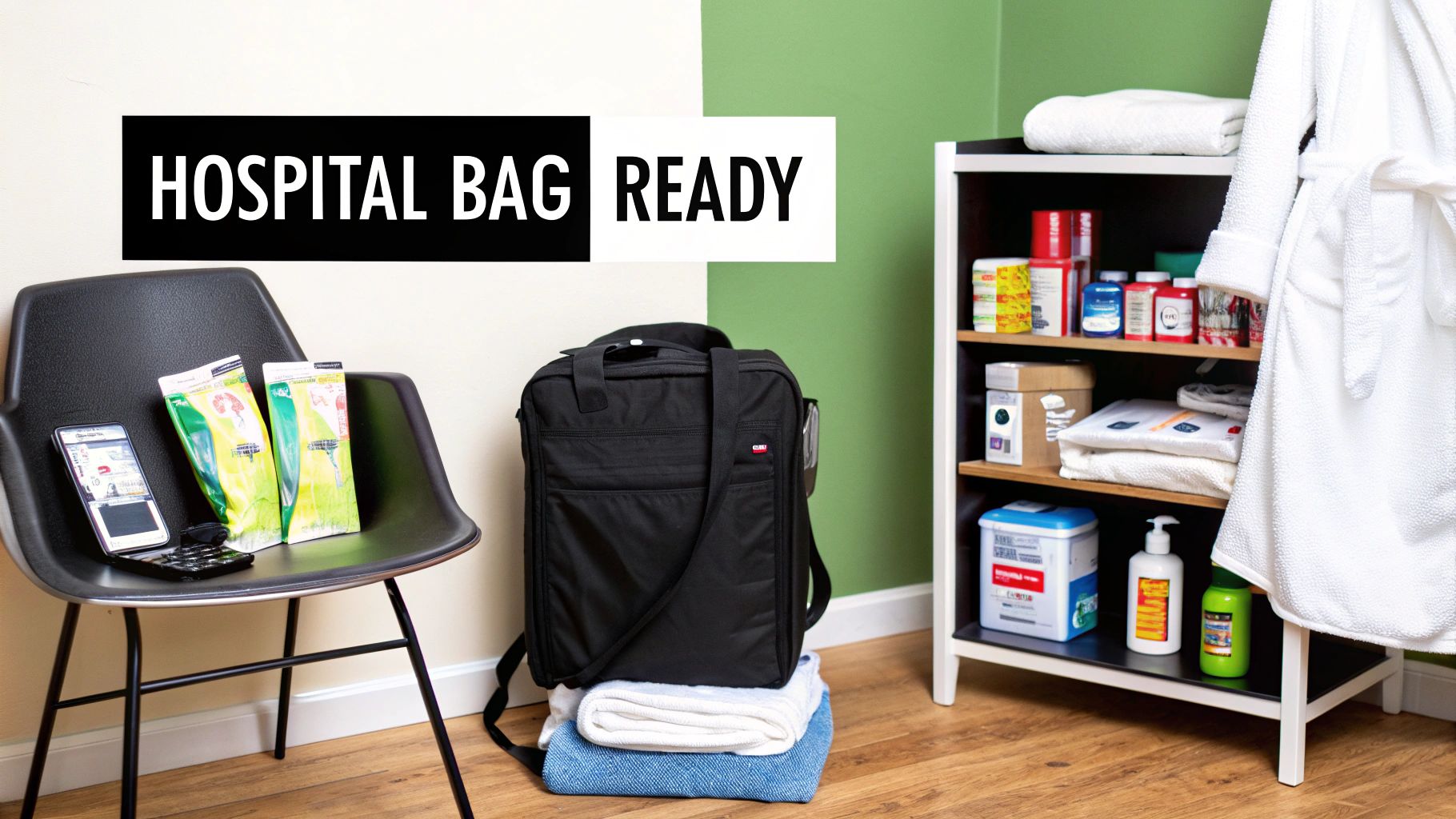
Figuring out what goes in the hospital bag and what stays at home can feel like a high-stakes guessing game. The simplest way to think about it is this: your hospital bag is for immediate comfort and the bare necessities, while your home setup is for long-term recovery and real-world convenience.
Splitting your postpartum essentials checklist this way keeps you from overpacking for the hospital and, more importantly, ensures you walk into a calm, prepared home. The goal for your "go-bag" isn't to pack for a week-long trip. It's about bringing a few key items that make you feel a little more human during those first 24 to 48 hours.
Curating Your Hospital Comfort Kit
Think of your hospital bag as your personal survival kit. Sure, the hospital provides the basics—those famous mesh undies and surfboard-sized pads—but having your own trusted items can make a world of difference in how you feel. Your body is going through a lot, and your skin might be extra sensitive, so it’s smart to bring things you know and love.
Here’s what I always recommend prioritizing for the bag:
- Your Own Toiletries: Travel-sized versions of your favorite shampoo, body wash, and face cream are little touches of home. Go for fragrance-free if you can, as it’s gentler on both your skin and your newborn’s.
- An Extra-Long Phone Charger: This is a non-negotiable. Hospital outlets are almost never where you need them to be. A long cord means you can text updates and scroll photos without being tethered to a wall.
- A Soft Robe and Slippers: A cozy robe is a game-changer for those first walks down the hall. Look for something in a breathable fabric like organic cotton to prevent irritation. Pair it with non-slip slippers to keep you steady on your feet.
- Comfy Going-Home Outfits: You’ll want one loose, soft outfit for yourself and two for the baby (pack both a newborn and a 0-3 month size, just in case). Natural, gentle fabrics are best for that first car ride to protect your baby's sensitive skin.
A good rule of thumb for the hospital bag: if it doesn't provide essential function (like the car seat) or emotional comfort (like your own pillow), it probably belongs at home.
For an even deeper dive, our guide on what to pack in a hospital bag for delivery gets into all the nitty-gritty details so you can feel completely ready.
Stocking Your Home Sanctuary
Back at home, the strategy shifts entirely. This is where you think in bulk. The last thing you’ll want to do is make a midnight run for maternity pads or diapers. The goal here is to set up "recovery stations" to make your life easier for those first few hazy weeks.
I suggest creating a caddy for your bathroom with all your healing essentials and another basket next to your bed or favorite feeding spot. This is where you'll stock up on larger quantities of everything you need, so it’s always within arm’s reach.
Key Differences in Your Home Stash:
| Item Category | Hospital Bag Approach | Home Stash Approach |
|---|---|---|
| Recovery Supplies | Just enough for 2-3 days (pads, peri bottle, witch hazel pads). | Buy in bulk. Have full packages ready to go. |
| Baby Diapers & Wipes | A small sleeve of 10-15 diapers and a travel pack of wipes. | Multiple large boxes of diapers and full-size wipe refills. |
| Clothing | 1-2 nursing-friendly tops, one pair of joggers, and a robe. | A full rotation of soft, loose-fitting loungewear. |
| Snacks & Hydration | A few easy-to-grab snacks and your favorite water bottle. | A fully stocked pantry with nutrient-dense snacks and drinks. |
By separating your lists this way, you make the whole packing process less overwhelming and set yourself up for a much smoother postpartum experience. Trust me, your future, sleep-deprived self will be so grateful for the prep work you did.
Shopping Smart for Postpartum and Baby Gear
Getting ready for a new baby can feel like an endless shopping trip, but it really doesn’t have to empty your wallet. With a little strategy, you can put your money toward the items that truly matter for safety and comfort, while saving on the things that are nice but not necessary.
Building your postpartum essentials checklist is less about just buying things and more about making smart choices for your family. It all comes down to knowing where to splurge and where you can save, without ever compromising on quality—especially for anything that will touch your baby’s sensitive skin.
Where to Splurge for Safety and Comfort
Some items are absolutely worth the investment. They’re built to last and, more importantly, they have a direct impact on your baby's safety and your own peace of mind. These are the non-negotiables.
Here’s where you want to prioritize quality:
- A High-Quality Car Seat: This is easily the most critical safety device you’ll buy. Look for one with advanced safety features, top-tier crash-test ratings, and high-quality, flame-retardant-free fabrics to minimize your baby's exposure to chemicals.
- A Comfortable and Ergonomic Baby Carrier: A great carrier supports your baby’s hips and spine in a healthy position while distributing their weight evenly for you. It’s a tool for bonding and getting things done that you’ll be grateful for.
- A Safe Sleep Space: Whether you choose a crib or a bassinet, make sure it meets all current safety standards. Pairing it with a firm mattress and soft, breathable organic cotton sheets creates a safer, more comfortable sleep environment that reduces the risk of overheating and skin irritation.
Putting your budget toward these key items means you can rest easier knowing you’ve prioritized your baby’s well-being.
Smart Ways to Save Without Sacrificing Quality
On the flip side, there are plenty of baby items where you can save money without cutting any corners. This is where you can get creative and make your budget stretch, freeing up funds for those bigger, more important purchases.
Try these budget-friendly tips:
- Clothing: Babies grow unbelievably fast. Instead of splurging on a closet full of pricey newborn outfits, stock up on soft, simple basics like organic cotton onesies and sleepers. You'll get more use out of them.
- Multi-Use Items: Look for gear that adapts as your child grows. A convertible crib that becomes a toddler bed or a high chair that adjusts for different stages offers amazing long-term value.
- Building a Smart Registry: A well-planned registry is your best friend. Use it to ask for the essentials you truly need. This helps loved ones contribute in a meaningful way and saves you from getting duplicates or things you’ll never use. For more ideas, check out our guide to the best baby products for newborns that are both practical and safe.
Your postpartum essentials checklist is more than just a shopping list—it's a critical health and safety tool. A well-thought-out list empowers you to prevent complications and ensures you have exactly what you need for a smoother recovery.
This approach is proven to work. In healthcare, simple checklists have a massive impact. For example, the WHO Safe Childbirth Checklist makes health workers 17 times more likely to properly manage maternal infections, which contribute to the 287,000 maternal deaths each year. Learn more about these life-saving checklist findings.
By planning ahead, you aren’t just shopping—you’re taking an active role in protecting your health and your baby’s.
A Few Lingering Questions Answered
Even with the most organized checklist, you're bound to have a few questions. It’s completely normal! Here are some answers to the most common things expecting parents ask, designed to give you that extra boost of confidence as you head into the fourth trimester.
When Should I Actually Start Buying All This Stuff?
I always tell moms to start gathering their postpartum supplies early in the third trimester. A great time to kick things off is right around the 28 to 30-week mark. Why so early? It gives you plenty of breathing room to research products, compare prices, and maybe even snag a few good deals without that last-minute pressure.
Spreading out the shopping also makes it easier on your budget. Plus, tackling your list bit by bit—maybe one category per week—feels way less overwhelming. The big goal is to have your hospital bag packed and waiting by the door no later than 36 weeks. Trust me, you'll be glad it's done if your little one decides to arrive ahead of schedule.
My best advice? Getting everything sorted out early is a gift to your future self. It lets you spend those final weeks resting and nesting, not running frantic errands.
How Should I Tweak My Kit for a C-Section?
While a lot of recovery items work for any new mom, a C-section recovery is a whole different ballgame. The main focus is on protecting your incision and avoiding anything that puts pressure on your abdomen. Adding a few C-section-specific items to your checklist is a must.
Here's what I consider non-negotiable for a C-section recovery kit:
- High-Waisted Underwear: Seriously, this is a game-changer. Look for soft, breathable pairs where the waistband sits far above your incision. This prevents rubbing and lets air circulate, which is exactly what the area needs to heal.
- Loose, Comfy Clothes: Think flowy nightgowns, joggers with a soft, foldable waistband, and button-up PJs. Anything that constricts your midsection is out. Comfort is key.
- A Gentle Belly Binder: Many moms find that a supportive belly wrap offers just the right amount of gentle compression. It can help you feel more secure and "held together" as you start moving around, and it does wonders for supporting your posture.
- Pillows, Pillows, Pillows: Keep a small pillow handy at all times. You’ll want to press it against your incision whenever you cough, laugh, or get up. It seems simple, but that little bit of counter-pressure makes a world of difference.
How Can I Pick Baby Products That Won’t Irritate My Newborn’s Skin?
A newborn's skin is incredibly delicate and so much thinner than ours, making it prone to rashes and irritation. The best approach is to be really mindful about what you put on their skin and what fabrics they’re wrapped in to avoid triggering allergies or discomfort.
When you're shopping for baby products, here are a few simple rules to live by:
- Become a Label Detective: Look for products clearly marked as hypoallergenic, fragrance-free, and dye-free. The fewer ingredients, the better. Avoid common irritants like parabens, sulfates, and phthalates, which can cause skin flare-ups.
- Stick to Natural Fabrics: For everything that will touch your baby—onesies, swaddles, sheets, towels—choose soft, natural fibers. 100% organic cotton and bamboo are fantastic because they're breathable and processed without harsh chemicals that can cause contact dermatitis.
- Wash Everything Before Use: Run all new clothes, blankets, and burp cloths through the wash with a gentle, baby-safe detergent first. This washes away any chemical residues left over from manufacturing.
- Do a Quick Patch Test: Before you slather on a new lotion or cream, test a tiny amount on a small patch of your baby's skin, like their arm or leg. Wait about 24 hours to make sure there’s no reaction before you use it all over.
By keeping things simple with minimal-ingredient products and soft, natural fabrics, you’re creating a safe, soothing world for your baby. It's the best way to keep their skin happy and comfortable from day one.
At GUGUTON LLC, we get it. Preparing for your baby is an exciting time, but it also comes with a lot of questions. We’ve put together a collection of gentle, high-quality essentials—from buttery-soft organic cotton swaddles to practical, safe baby gear—to support you on your journey. Explore our collections today and build your perfect postpartum essentials checklist with confidence.