

What to Pack in Hospital Bag for Delivery: A Mom's Essential Guide
Getting ready for your baby's arrival is one of the most exciting, and sometimes overwhelming, parts of pregnancy. When it comes to knowing what to pack in your hospital bag for delivery, the best advice I can give is to start early. Aiming to have things sorted between 30-35 weeks isn't about being over-prepared; it's about giving yourself peace of mind. When the big day comes, the last thing you want to be doing is scrambling for a phone charger or your toothbrush.
Your Hospital Bag Packing Timeline and Priorities
So, when is the perfect time to pack that bag? It’s a question every expecting parent asks. While it might feel a little premature, getting your bags mostly packed by 30 to 35 weeks is a strategy I recommend to every family. Think of it as a practical way to reduce future stress.
Babies have their own schedules, and they don't always align with our carefully planned due dates. Globally, about 8% of babies are born prematurely, and a good chunk of those arrivals happen between 32 and 37 weeks. Having your bag ready early means you're prepared for the unexpected, which is one less thing to worry about.
This simple timeline can help you visualize the process.
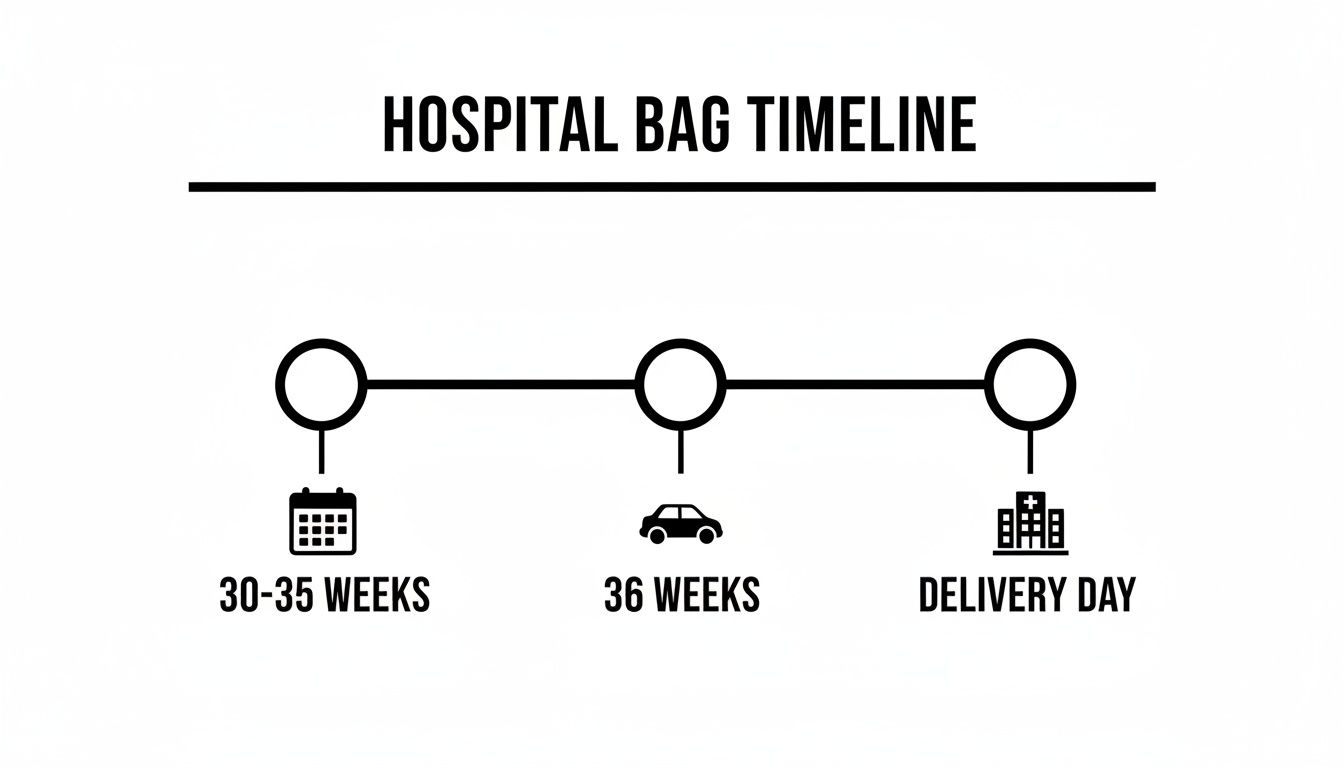
As you can see, the goal is to have your bag packed and sitting by the door (or even in the car) by 36 weeks. This way, you’re truly ready to go whenever your little one decides it's time.
Focusing On Baby's Skin Safety First
When you start packing those tiny outfits, your number one priority should be the fabrics that will touch your baby’s brand-new, delicate skin. A newborn’s skin is incredibly sensitive and much more prone to irritation, rashes, and reactions than ours. Common culprits include synthetic fabrics like polyester, which can trap heat and moisture, and conventional cotton treated with harsh pesticides and chemical dyes.
Choosing the right materials can make all the difference in preventing skin issues. Look for clothing made from soft, breathable, and hypoallergenic fabrics.
- Organic Cotton: This is always a top choice because it’s grown without harsh chemicals or pesticides, making it far less likely to cause irritation or allergic reactions.
- Bamboo: It's incredibly soft and amazing at wicking away moisture, which helps keep your baby’s skin comfortable, dry, and free from heat rash.
A tip from one parent to another: Always pre-wash everything—clothes, swaddles, blankets—before it goes in the bag. Use a gentle, fragrance-free detergent designed for sensitive skin. This simple step washes away any dust or irritants from the factory or store, ensuring everything is perfectly clean and safe for your baby’s first moments.
This focus on fabric safety is a great habit to start from day one. It’s just as important once you bring your baby home, especially for sleep. For more tips on this, our guide on how to dress baby for sleep can help you choose the safest and most comfortable options.
Taking care of these small details is a wonderful first step in protecting your little one from potential skin allergies. Before we dive into the full checklist, let’s quickly look at the absolute must-haves you should pack first.
Hospital Bag Priority Checklist At a Glance
If you do nothing else, get these core items packed. This table breaks down the non-negotiables for you, your partner, and the baby.
| Category | Essential Items | Why It's a Priority |
|---|---|---|
| For Mom | ID, Insurance Card, Phone & Charger, Comfortable Gown, Lip Balm | These are critical for check-in and personal comfort during a potentially long labor. |
| For Baby | Car Seat (Installed), Going-Home Outfit (hypoallergenic), Swaddle | You can't leave the hospital without a car seat, and a soft, skin-safe outfit is essential for the first ride home. |
| For Partner | Phone & Charger, Change of Clothes, Snacks & Water | Your partner is your support system; they need to stay charged, comfortable, and energized too. |
Having these items ready to go means that even if you have to leave in a hurry, you'll have the most important things covered.
Packing for Mom: A Focus on Comfort and Recovery
When you're packing that hospital bag, it’s easy to focus entirely on tiny baby clothes and forget about yourself. But let's be real: labor and postpartum are a marathon, and you're the one running it. Thinking strategically about your own comfort can make a massive difference in how you feel, both physically and emotionally. This isn’t just another checklist; it's your game plan for self-care during one of life's most intense and incredible moments.
Prioritizing Comfort During Labor
During labor, the little things become the big things. Hospital air is famously dry, and all that focused breathing will dry you out fast. A survey of 15,000 mothers actually found that lip balm was a top-forgotten item, with a whopping 65% saying chapped lips were a huge annoyance during their labor.
Beyond lip balm, think about what makes you feel grounded and calm.
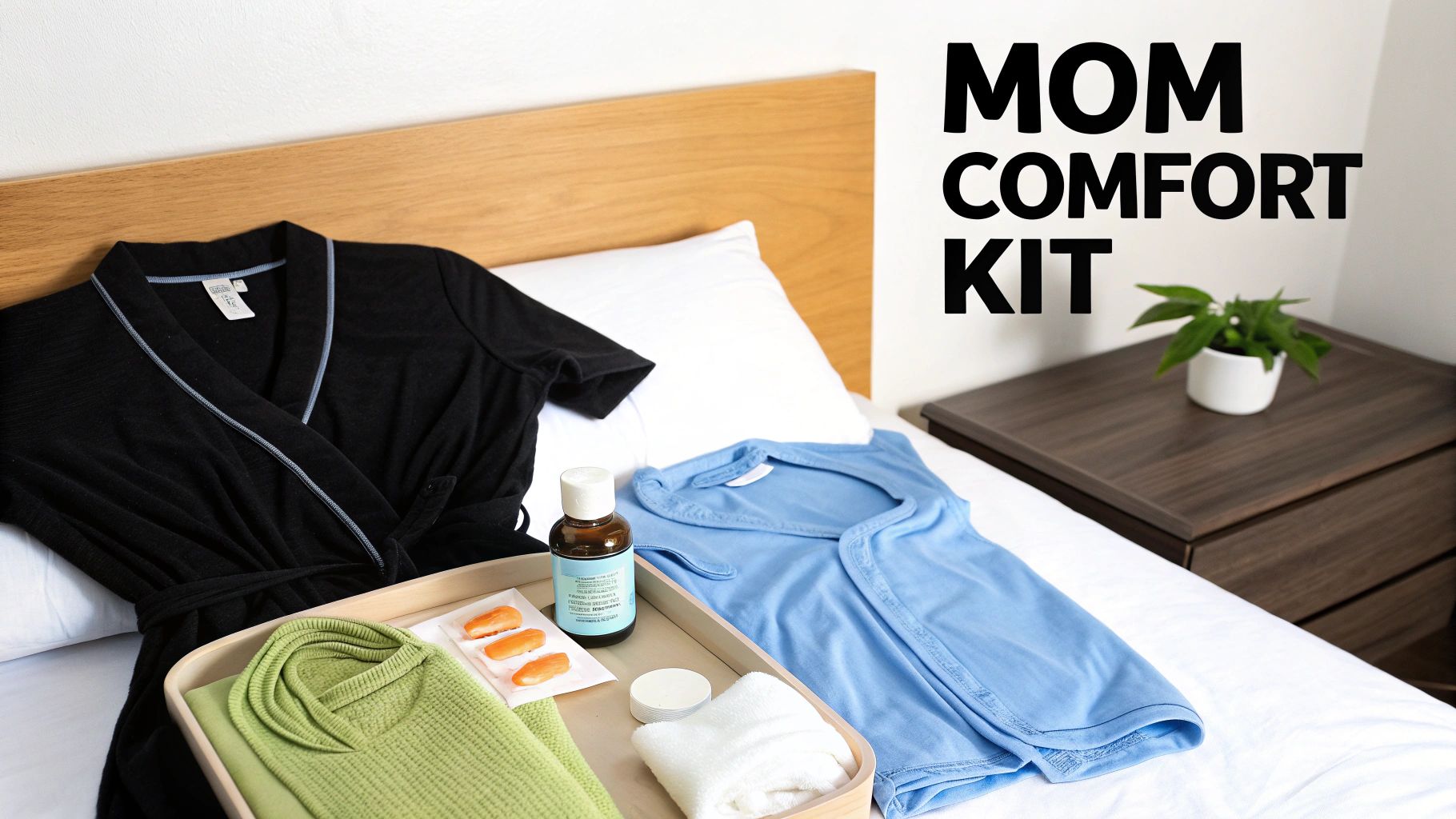
- A Soft Robe: Tossing a familiar, cozy robe over your hospital gown is a game-changer. It’s perfect for walking the halls, gives you a bit more coverage, and offers easy access for medical checks.
- Non-Slip Socks or Slippers: Hospital floors are cold! A good pair of socks with grips will keep your feet warm and help you feel more stable as you move around.
- Your Own Pillow: There’s just no substitute for your own pillow. Seriously. Just pop it in a colorful or patterned pillowcase so it doesn't get lost in the sea of hospital white linen.
Essentials for Postpartum Healing
Once your baby arrives, your body gets to work on the incredible task of healing. The items you packed should be all about supporting that process. This is especially true for your going-home outfit.
Your body won't snap back to its pre-pregnancy shape overnight—that’s completely normal. In fact, 85% of women are still carrying around 10-15 pounds right after birth, so be kind to yourself and pack loose, comfortable clothes. If you want to learn more about how fabric choices can impact your sensitive postpartum skin, check out our guide on rash realities from unsafe fabrics.
Your postpartum recovery kit should be all about gentle care.
If there’s one thing to remember for postpartum comfort, it’s this: choose items that won't irritate sensitive areas. Think soft, breathable fabrics and gentle, fragrance-free products. Your body has done something amazing, and now it deserves the kindest care possible.
High-waisted, soft underwear is an absolute must—you don't want anything pressing on your belly, especially if you have a C-section incision. With C-section rates at 32.1% in the U.S., having underwear that sits comfortably above the scar line is a non-negotiable for many new moms. While the hospital will give you mesh undies and giant pads, some women prefer to bring their own brand for a better fit and feel.
For clothes, a couple of nursing-friendly tops or a comfortable nursing bra will make those first feeds so much easier. Pair them with some soft joggers or a flowy maxi dress for the ride home. Packing these things means you can put your focus right where it belongs: on healing and bonding with your new baby.
Preparing for Baby: Gentle Essentials for a Safe Start
When you're figuring out what to pack in your hospital bag, your baby’s needs are front and center. It’s easy to forget just how delicate a newborn’s skin is—it's incredibly thin, porous, and far more sensitive than ours. This means every little thing that touches their skin, from fabrics to lotions, really matters.
Packing thoughtfully is your first real chance to wrap your little one in a protective bubble of quality and safety. While the hospital gives you the basics, bringing your own hand-picked items means you’re in complete control of what comes into contact with your baby’s skin, preventing potential rashes and allergic reactions from the start.
Choosing Skin-Safe Fabrics and Clothing
The foundation of a safe baby bag begins with the right fabrics. It’s surprising how easily synthetic materials or those treated with harsh chemicals can trigger rashes, eczema, or other allergic reactions on brand-new skin.
To avoid any issues, stick with natural, breathable materials.
- Organic Cotton: This is always a top-tier choice. It's grown without pesticides and processed without harsh dyes, which drastically minimizes the risk of irritation.
- Bamboo: Known for being silky soft and great at wicking away moisture, bamboo fabric is wonderful for keeping your baby’s skin dry and comfortable.
Here’s a crucial tip many new parents miss: pre-wash every single item. Before anything goes in the bag, run all the clothes, swaddles, hats, and blankets through a wash cycle with a gentle, fragrance-free, hypoallergenic detergent. This simple step washes away any residual chemicals or dust from the manufacturing and shipping process.
What to Pack for Baby: A Safety-Focused Checklist
When you're making your list, think beyond just cute outfits. Prioritize functionality and comfort, especially keeping in mind the sensitive umbilical cord stump.
Peace of mind is the most important thing you can pack. Knowing you've chosen safe, gentle, and properly prepared items for your baby allows you to focus completely on bonding during those precious first days.
Here are the absolute essentials to include:
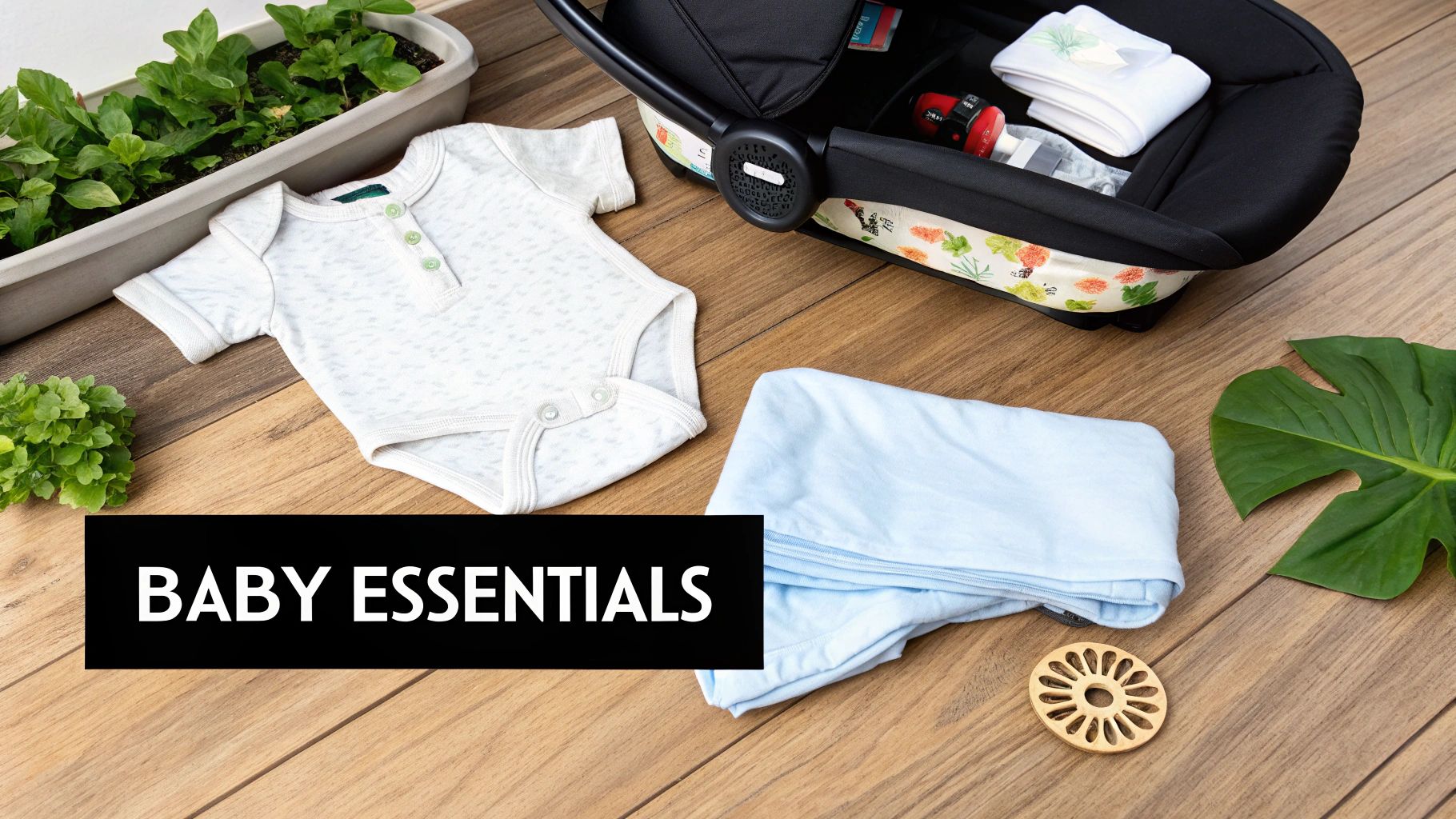
- Side-Snap or Kimono-Style Onesies (2-3): These are a game-changer. You don't have to pull them over your baby’s head, and they won't rub against the healing umbilical cord.
- Sleepers or Gowns (2-3): Perfect for napping and make those frequent diaper changes so much easier.
- Going-Home Outfit: Pick something soft, comfortable, and right for the weather. Pro tip: pack one in newborn size and another in 0-3 months. You truly never know which one will fit best!
- Soft Swaddles (2): A snug swaddle helps your baby feel secure, just like in the womb, which can lead to better sleep. Large, breathable muslin or organic cotton swaddles are fantastic options.
- Baby Hat and Socks: Newborns have a tough time regulating their body temperature, so a soft cap and socks are essential, even indoors.
For a deeper dive into building a practical first wardrobe, our guide on the top 7 must-have baby clothing items for new parents has even more great advice.
Beyond the Basics: Essential Safety Gear
While clothing is a big part of the picture, a few other items are non-negotiable for keeping your baby safe from the moment you leave the hospital.
First off, consider bringing your own gentle, non-toxic baby wipes. The wipes provided by the hospital can sometimes contain alcohol or fragrances that are just too harsh for that brand-new, sensitive skin. Packing your own ensures you are using a product you trust to prevent diaper rash.
Most importantly, let's talk about the car seat. This is a critical piece of safety equipment that must be properly installed in your vehicle before you go into labor. Many local fire departments or certified technicians offer free car seat safety checks—take advantage of them! You won't be allowed to leave the hospital without a correctly installed car seat, so get it ready to go well in advance. This simple preparation ensures your baby's first ride home is their safest one.
The Support Person's Survival Kit
Labor can be a marathon, and while you’re doing all the hard work, your partner is right there in the trenches with you. Their job is massive—providing comfort, being your advocate, and cheering you on. To be fully present, they need to stay energized and comfortable, too. Thinking ahead and packing a bag just for them is one of the smartest things you can do.
When your partner is well-prepared, they can focus entirely on you, not on a rumbling stomach or a dead phone battery. It's less about their comfort and more about their endurance to support you.
Fueling Up for the Long Haul
Hospital cafeterias keep weird hours, and let's be honest, vending machine food gets old fast. Packing a dedicated snack bag is a game-changer.
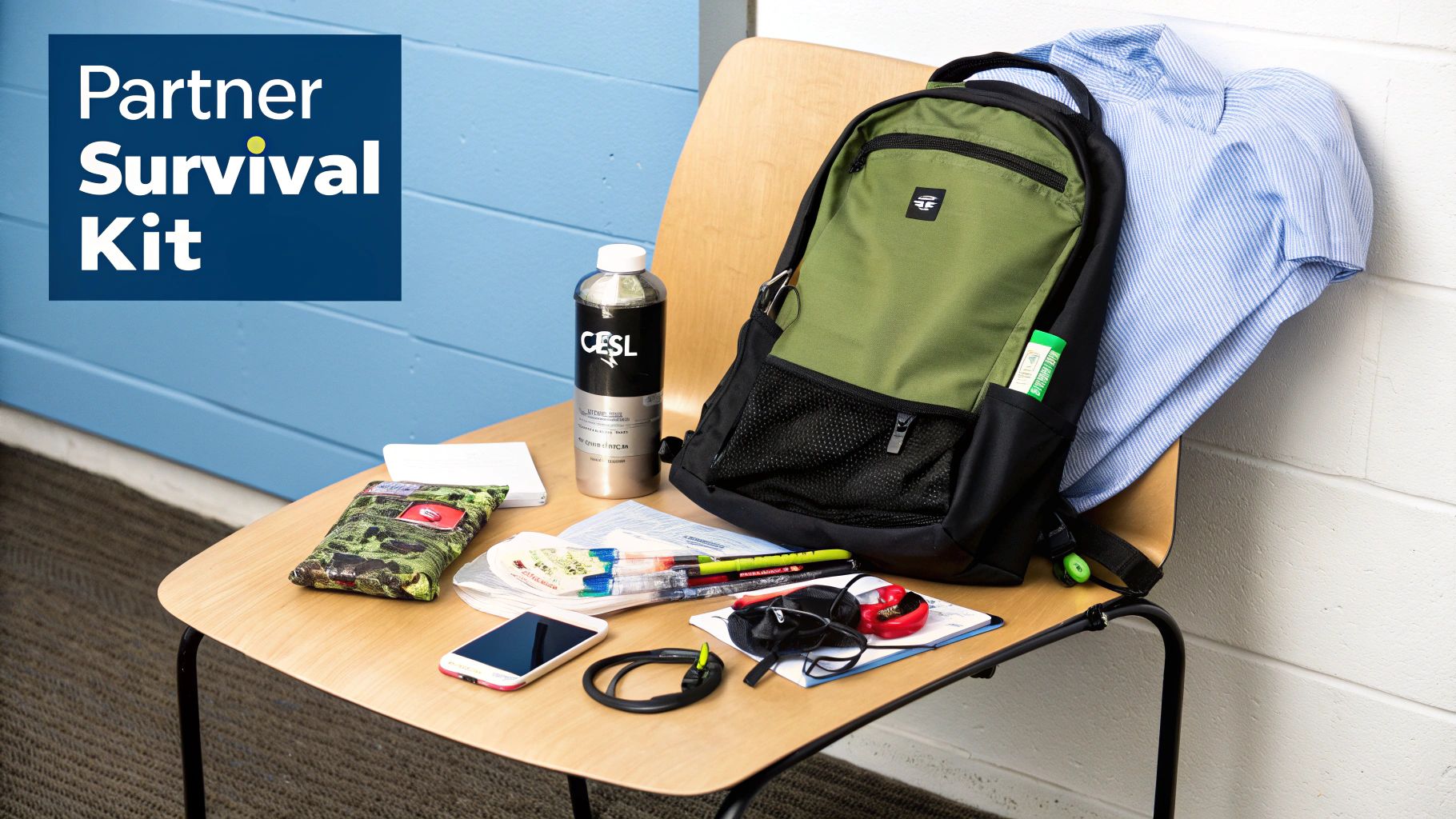
- High-Energy Snacks: Think trail mix, granola bars, and dried fruit. Anything that's easy to grab and eat, gives a quick boost, and doesn't make a mess is a winner.
- Reusable Water Bottle: Staying hydrated is critical. A big reusable bottle is so much better than trying to find and refill those tiny hospital cups.
- Caffeine Source: If your partner is a coffee drinker, throw in a canned coffee or an energy drink. You never know if you'll be heading to the hospital at 3 a.m.
Having these items on hand means your support person doesn't have to leave your side to hunt for food. They'll be right there when you need them most.
Comfort and Practicality Essentials
Nobody is comfortable spending hours (or even days) in a hospital chair. A few simple things can make all the difference.
Your partner’s comfort directly impacts their ability to support you. A comfortable, prepared partner is an attentive and effective one, ready for every stage of labor and delivery.
A change of clothes is an absolute must. Something cozy like sweatpants and a hoodie is perfect for a long night. And don’t forget basic toiletries—a toothbrush, toothpaste, and deodorant can make anyone feel a little more human after 24 hours.
The most critical item? A phone with an extra-long charging cord or a portable power bank. Hospital outlets are almost always in the most inconvenient spots. A charged phone is crucial for sending updates to family, snapping those first precious photos, and even just for a bit of distraction during quiet moments. Speaking of which, a book or headphones can be a lifesaver during lulls in the action.
Once the baby is here, they'll be helping with everything. You might even find yourselves browsing articles on the best baby carriers for newborns to make those first few weeks a bit easier on everyone. A little preparation ensures your support system is solid, so you can focus completely on your incredible journey.
Important Documents and Final Checks
You've prepped the nursery, the bags are almost zipped, and now it's time for the final details that will make your hospital arrival smooth and stress-free. When labor starts, the last thing you want to be doing is frantically searching for an insurance card. This is all about getting your administrative ducks in a row.
Think of it as the pre-flight check for the most important trip of your life. A little organization now prevents a major headache when you're trying to focus on your breathing.
Your Paperwork Go-File
Tuck all of these documents into a single folder or pouch in an easy-to-reach pocket of your hospital bag. You’ll thank yourself later.
- Photo IDs: Both you and your partner will need a driver's license, passport, or other government-issued ID.
- Insurance Card: Keep the physical card handy. As a backup, snap a photo of the front and back with your phone.
- Hospital Forms: Many hospitals let you pre-register online. If you did, bring a printout or digital copy of the confirmation. If you have any paper forms, make sure they're filled out and ready to go.
- Birth Plan: If you have one, bring 2-3 copies. You’ll want one for your chart, one to hand to your labor and delivery nurse, and an extra just in case of a shift change. This keeps everyone on your care team on the same page.
Getting your documents in order isn't just another task to check off. It’s about creating a calm, empowered environment where you can focus on yourself and your baby, not on administrative hassles.
The Final Home Stretch Checklist
Beyond the paperwork, a few last-minute checks will ensure you can leave at a moment's notice without any added panic. Experts suggest having your bags fully packed between weeks 35-38, since many full-term labors start spontaneously during this window. And don't be that person who forgets their phone charger—a poll of 20,000 moms found a whopping 40% left theirs behind, making those first baby updates a lot trickier. You can discover more insights about packing timelines and feel completely ready.
Last-Minute To-Dos:
- Install the Car Seat: This is a non-negotiable. Your baby can't go home without it. Get the car seat properly and securely installed well before your due date.
- Stage Your Bags: Around week 36, put all your bags in one spot. The best place is either right by the front door or already in the trunk of your car. No last-minute searching required.
- Power Up: In the final weeks, get into the habit of charging your phone, your partner’s phone, and any portable power banks every night.
Nailing these final checks means you can head to the hospital with total confidence, knowing everything is taken care of.
Common Questions About Your Hospital Bag
Even with the most perfectly curated checklist, a few last-minute questions always seem to pop up as you’re trying to zip that final bag shut. Getting those lingering "what ifs" sorted out can give you that last little boost of confidence, making you feel truly ready for the big day. Let's tackle some of the most common questions I hear from parents-to-be.
How Many Bags Should I Pack for the Hospital?
Trust me on this one: trying to cram everything into one giant suitcase is a recipe for chaos when you’re desperately searching for lip balm mid-contraction. The key is to think strategically. I always recommend a three-bag system to keep things organized and within easy reach.
- Bag 1 (Labor & Delivery): This is your grab-and-go bag. Keep it light with just the immediate essentials: your documents, a comfy robe, that all-important lip balm, and a long phone charger.
- Bag 2 (Postpartum & Baby): This one can happily wait in the car until after you've delivered. It’ll hold all your postpartum recovery items and those adorable first outfits and swaddles for your baby.
- Bag 3 (Partner's Bag): Giving your support person their own bag is a game-changer. It means their snacks, a change of clothes, and toiletries are all in one place, so they aren’t rummaging through your things when you need them focused on you.
This approach keeps your hospital room uncluttered and calm, letting you bring in only what you need, right when you need it.
What Should I Pack for a Planned C-Section?
If you know you’re having a C-section, your hospital stay will likely be a bit longer, usually around 3-4 days. This means your packing list needs a few thoughtful tweaks to help you recover from major surgery as comfortably as possible.
Your top priority? Protecting that incision. Think soft, gentle, and high-waisted. Pack high-waisted underwear and loose, flowy pants or dresses that won’t rub or irritate the area. Many moms find soft nightgowns far more comfortable than pajama pants, as they put zero pressure on your midsection and make nursing much easier. A little pro-tip: bring a firm pillow from home. Holding it against your abdomen when you cough, laugh, or shift in bed makes a world of difference.
When packing for a C-section, every item should be chosen with one goal in mind: gentle recovery. Soft, non-restrictive clothing and items that reduce the need to bend or strain are your best friends.
Are There Any Items I Should Definitely Leave at Home?
Yes! Packing light is an art, and knowing what not to bring is half the battle. Overpacking just creates more clutter to manage when all you want to do is get home with your new baby.
First, leave your valuables at home. This means expensive jewelry, large wads of cash, or any sentimental items you’d be heartbroken to lose. The hospital simply can’t be responsible for them.
Second, don’t go wild with baby clothes. Your newborn will likely spend most of their time snuggled up in a swaddle or a standard-issue hospital onesie. A couple of soft, pre-washed outfits and that special going-home outfit are really all you need. Also, you can leave the giant packs of diapers and wipes at home—the hospital has you covered there. Packing smart means a simpler stay and an even smoother checkout.
At GuGuTon, we know that preparing for your baby's arrival is a journey filled with so much love and anticipation. From the softest swaddles to the postpartum essentials that support your own recovery, our curated collection is designed with the safety and comfort of you and your little one in mind. Explore our collections today to find high-quality, gentle products for every step of your new adventure.