

A Parent's Guide to the Best Baby Food Storage Containers
When you're making your own baby food, the best containers are pretty straightforward: you want something made of glass or food-grade silicone. Look for ones with airtight, leak-proof lids and clear measurement lines. This combo is your ticket to making sure every bite is free from nasty chemicals and potential allergens, keeping your little one safe, sound, and comfortable in their own skin.
Your Quick Guide to Choosing the Safest Containers
So, you're diving into the world of homemade baby food—that's fantastic! The first step, and a really important one, is picking the right storage. This guide is here to cut through the clutter and show you exactly what to look for to keep your baby safe from potential irritants that might lead to allergies or rashes.
Think of this as your go-to cheat sheet. It’s all about helping you feel confident in your choice, so you know every meal you whip up is fresh, nutritious, and stored in a way that protects your baby's delicate system.
The Non-Negotiables for Your Baby's Health
When you’re browsing for containers, a few features are absolutely essential for safety and quality. Focusing on these will make your meal prep routine a whole lot smoother and worry-free.
- Safe Materials are a Must: Always, always check for containers that are clearly labeled BPA-free, phthalate-free, and lead-free. These are known endocrine disruptors that can leach into food, and their presence can be a trigger for sensitivities, including skin rashes or allergic reactions, in some babies.
- Airtight and Leak-Proof: A good, tight seal is non-negotiable. It does more than just prevent a puree explosion in your diaper bag; it locks in freshness and nutrients while keeping bacteria and potential environmental allergens out.
- Easy Portion Control: Containers with measurement markings are a lifesaver. This simple feature helps you keep track of your baby’s appetite and lets you portion out just the right amount, which means less food goes to waste.
It’s no surprise that parents everywhere are demanding better, safer options. The global baby food packaging market was valued at a huge USD 7.1 billion in 2023 and is expected to nearly double to USD 13.3 billion by 2033. This growth is all thanks to parents like you who want convenience without compromising on safety.
Picking the right container isn't just about storage—it's an active step you're taking to shield your baby from unwanted chemical exposure. Glass and food-grade silicone are the gold standard because they’re inert; they won’t leach anything into the food, even when you heat them up. This purity is crucial for minimizing the risk of irritation.
Figuring out all the baby gear can feel overwhelming, but when you focus on high-quality, safe materials, the decisions get a lot simpler. For more tips on what you'll need, check out our guide on the best baby products for newborns.
Quick Comparison of Top Baby Food Container Features
To make things even easier, here’s a quick-glance table breaking down the most important features to look for. Think of it as a checklist to ensure you’re getting the best for your baby's safety and your own convenience.
| Feature | Why It Matters for Your Baby's Safety | What to Look For |
|---|---|---|
| Material | Prevents harmful chemicals like BPA and phthalates from leaching into your baby’s food, reducing the risk of irritation, allergies, and rashes. | Look for 100% food-grade silicone or borosilicate glass. |
| Airtight Seal | Locks in nutrients, maintains freshness, and prevents bacterial contamination. | Lids that snap on securely; test for a leak-proof design. |
| Portion Markings | Helps you provide consistent meal sizes and monitor your baby's intake. | Clearly visible measurement lines in ounces (oz) or milliliters (ml). |
| Freezer-Safe | Allows you to batch-prepare and store meals for long-term use safely. | The product description should explicitly state it's "freezer-safe." |
| Microwave-Safe | Ensures you can reheat food directly in the container without chemical leaching. | Make sure both the container and lid are labeled "microwave-safe." |
Ultimately, choosing containers with these features will give you total peace of mind, knowing that the healthy food you're preparing is being stored in the safest way possible.
The Great Material Debate: Glass vs. Plastic vs. Silicone
When you’re starting your baby food journey, one of the first big questions you'll face is what to store all that lovingly prepared puree in. The material you choose is a bigger deal than it might seem—it's all about keeping your baby safe from unwanted chemicals while making your life easier. The big three contenders are glass, plastic, and silicone, and each has its own distinct personality.
This map breaks down the core things you need to think about: the container's material, its safety, and getting the size just right for your little one's appetite.
As you can see, these factors are all tied together. The material choice is your starting point, and it directly affects everything else, especially safety.
The Purity of Glass Containers
For many parents, glass is the undisputed champion of food storage, and for good reason. It’s an inert material, which is just a fancy way of saying it won’t have a chemical reaction with the food inside. This gives a lot of parents peace of mind, knowing there’s zero risk of anything funky leaching into their baby’s sweet potato puree.
Since glass is non-porous, its super-smooth surface means no stubborn stains from beets or lingering smells from peas. Everything washes away clean, ensuring each meal tastes fresh and is free from residue that could cause a reaction.
The obvious downside? It’s heavy and, well, breakable. But don't let that scare you off entirely. Many of the best glass baby food containers now come wrapped in a silicone sleeve, which provides a much-needed grip and a cushion against accidental drops.
Navigating the World of Plastic
Let's be honest: plastic is incredibly convenient. It’s lightweight, doesn't shatter, and is usually easier on the wallet. For a busy parent juggling a diaper bag, a baby, and a hundred other things, a lightweight plastic container can feel like a lifesaver.
But—and this is a big but—not all plastic is the same. It is absolutely crucial to look for containers that are clearly marked as BPA-free, phthalate-free, and PVC-free. These are chemicals you want to steer clear of. Even with "safe" plastics, a lot of parents still play it safe and avoid microwaving them, choosing to pop the food into a glass bowl for heating instead to minimize any risk of chemical transfer.
The Rise of Food-Grade Silicone
Silicone has quickly become a fan favorite, and it’s easy to see why. It offers a fantastic middle ground, blending the best features of glass and plastic. It’s flexible and unbreakable like plastic but has the non-toxic purity of glass.
Food-grade silicone is a game-changer because it can handle extreme temperature swings. You can take it straight from the freezer and pop it into the microwave or even the oven without a second thought. This makes it perfect for those handy freezer trays that let you pop out single-serving puree cubes.
So, which one is right for you? To make it even clearer, let's break it down side-by-side.
Material Showdown: Glass vs. Plastic vs. Silicone
| Material | Safety & Purity | Durability & Portability | Freezer & Microwave Safe? | Best For |
|---|---|---|---|---|
| Glass | Excellent. Non-leaching and non-porous. Won't stain or hold odors. | Can be heavy and is breakable, though silicone sleeves help. Lasts forever if not dropped. | Yes, both. Handles temperature changes well. | Parents prioritizing purity above all else; great for storing at home and reheating. |
| Plastic | Good, IF it's certified BPA-free, PVC-free, and phthalate-free. Can stain over time. | Excellent. Lightweight, shatterproof, and easy to transport. Can scratch or warp. | Yes, but many parents avoid microwaving plastic to be extra cautious. | Families on the go; a budget-friendly and practical choice for daycare, travel, and everyday use. |
| Silicone | Excellent. Food-grade silicone is non-toxic and inert, like glass. | Excellent. Flexible, unbreakable, and lightweight. Very durable and long-lasting. | Yes, both. Goes from freezer to microwave/oven seamlessly. | Freezing perfect portions in trays; a versatile option that combines safety with convenience. |
Ultimately, there's no single "best" material—it's about what works for your family's routine and values. Whether you lean toward the pristine nature of glass, the practicality of plastic, or the flexible convenience of silicone, understanding these differences helps you choose the best baby food storage containers with total confidence.
Decoding Safety Labels to Protect Your Baby
Walking down the baby aisle can feel like trying to decipher a secret code. Every product is covered in labels and certifications, and when it comes to baby food storage, these aren't just marketing fluff. They're your first line of defense against harmful chemicals that could cause anything from skin rashes to allergies.
Knowing what these labels mean is the key to choosing with confidence.
You’ll see “BPA-free” plastered on almost everything, and for good reason. Bisphenol-A (BPA) is an industrial chemical used in certain plastics since the 1960s. The big concern is that it can leach out of containers and into your baby's food, with studies suggesting potential effects on the brain and development.
Choosing BPA-free is a simple but really important step. This is especially true for any container you plan on heating, since warmth can accelerate how quickly chemicals seep out of plastic.
Looking Beyond BPA-Free Labels
While finding a "BPA-free" label is a great start, it doesn't always paint the full picture. Lower-quality plastics can contain other unwelcome chemicals, so it's smart to also check for containers that are free of phthalates and lead.
- Phthalates: Think of these as plastic softeners. They make containers more flexible and durable, but like BPA, they’re considered endocrine disruptors. Exposure to these chemicals can be particularly concerning for a baby's developing system.
- Lead: It's less common in food containers these days, but lead can still pop up in some glazes or paints. It's incredibly toxic, especially for a baby's developing brain.
True peace of mind comes from materials that are pure by nature. When you see labels like "100% food-grade silicone" or "borosilicate glass," you know you're getting something that won't react with food or leach anything nasty. Every spoonful stays clean and safe.
Parents are catching on, and the demand for safer options is driving huge market changes. In fact, cups and containers have become the fastest-growing part of the baby food packaging world, with a projected growth rate over 9% each year from 2024 to 2032. It’s clear proof that parents want convenient, portion-sized storage that doesn't cut corners on safety. You can read more about this trend in the global baby food packaging market analysis.
Spotting Genuinely Safe Products
So, how do you know if a container is actually safe? Look for clear, direct statements from the brand. Vague marketing terms like "eco-friendly" or "non-toxic" don't mean much without specific certifications to back them up.
Your safest bet is to stick with materials like glass and high-quality silicone from reputable brands that tell you exactly what their products are free from.
This extra bit of attention ensures the healthy food you prepare is stored just as safely. It's the same careful consideration you use for all their nutritional needs, like when you're figuring out how to choose baby formula. By learning to read the labels, you can be sure you're giving your baby the very best.
Essential Features for Convenience and Freshness
Once you’ve settled on the right material, it’s the little design details that separate a decent container from a truly great one. These are the practical, thoughtful features that make the best baby food storage containers an absolute lifesaver for busy parents. They're what streamline your routine and keep every spoonful of food fresh and safe for your little one.
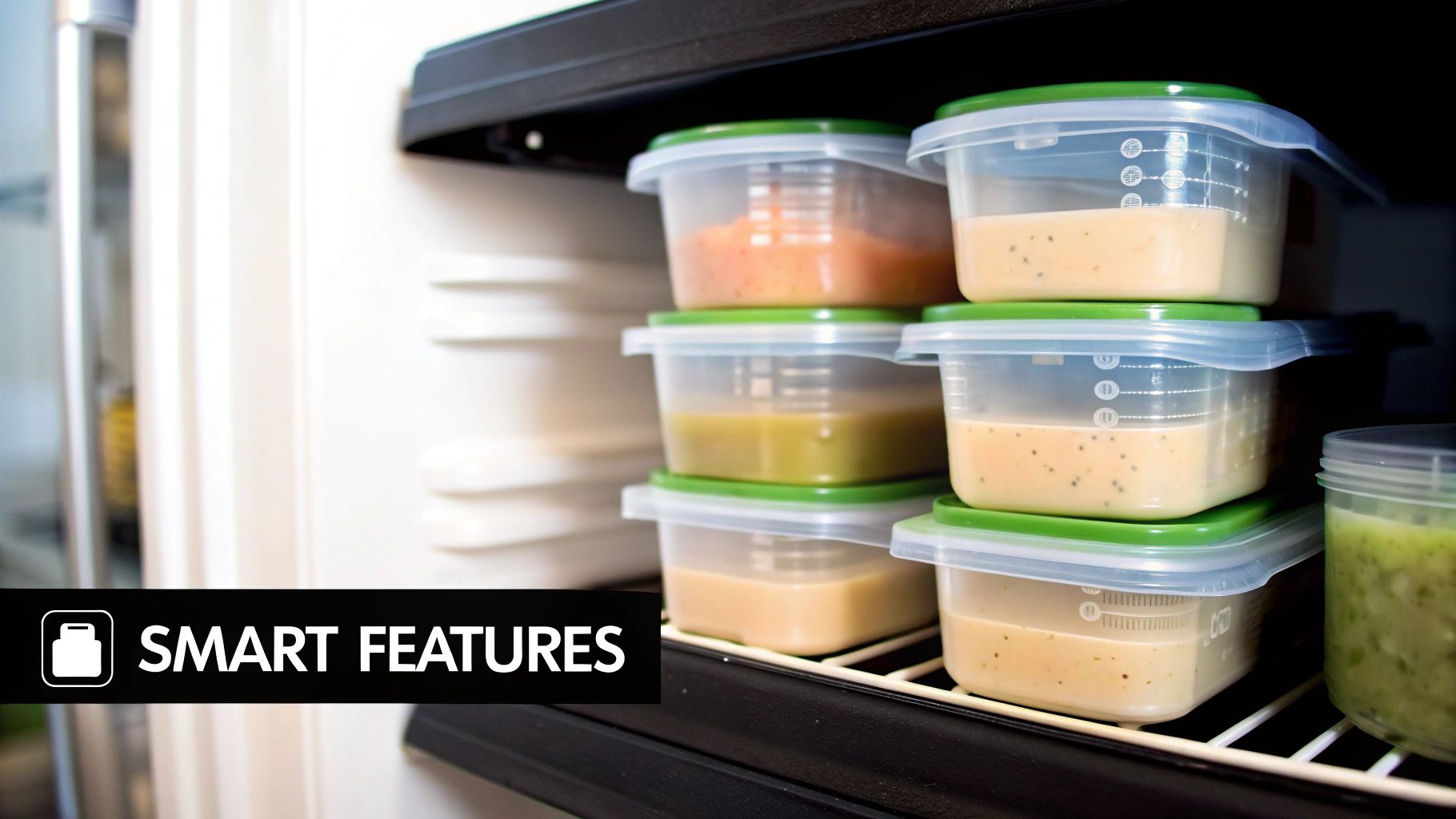
Let's start with the most important feature: the lid. A genuinely airtight and leak-proof seal is non-negotiable. It's the only way to lock in freshness, protecting the delicate vitamins in your homemade purees from breaking down due to air exposure.
A secure seal also gives you peace of mind. You can toss a container into your bag and not worry about discovering a puree explosion later. For more on-the-go tips, our guide on what to pack in a diaper bag has you covered.
Smart Designs for Easy Organization
Anyone with a baby knows that fridge and freezer space is prime real estate. This is where stackable designs come in to save the day. Containers that are made to fit neatly on top of each other can turn a chaotic jumble into a beautifully organized system, maximizing every inch of shelf space.
Another feature I can’t live without is measurement markings. Having clear volume lines etched onto the side—ideally in both ounces and milliliters—takes the guesswork out of portioning. You can see exactly how much your baby is eating and, just as importantly, you only thaw what you need, which cuts down on food waste.
Think of these features as your kitchen support crew. A leak-proof lid is your mess prevention specialist. Stackable designs are your personal organizer. And measurement lines? They’re your in-house accountant, tracking every bite.
Versatility for a Modern Parent's Needs
Life doesn’t slow down when you have a baby, so your gear has to be able to keep up. Your containers need to handle the journey from freezer to microwave to dishwasher without a hitch.
To make sure you’re covered, look for containers that are clearly labeled with these three key capabilities:
- Freezer-Safe: This is a must for batch-prepping. The material has to be durable enough to handle freezing temperatures without getting brittle or cracking.
- Microwave-Safe: For those times you need to warm up a meal quickly, you need to know it's safe. Make sure the container and lid are certified for microwave use to avoid any risk of chemicals leaching into the food.
- Dishwasher-Safe: Honestly, this is a non-negotiable for most parents. The ability to pop everything on the top rack for a sterilizing wash is a massive time-saver.
When you find containers that check all these boxes, you’ve found a reliable system that will support you through your entire homemade baby food journey. These aren't just minor perks; they're the features that provide the practicality and peace of mind every parent deserves.
Storing, Freezing, and Thawing Food the Right Way
There’s nothing quite like the feeling of batch-prepping a bunch of nutritious, homemade baby food for your little one. But all that love and effort can go to waste without the final, crucial step: proper storage. Getting it right ensures every spoonful is as fresh and safe as the moment you made it.
Think of it in three simple stages: storing in the fridge for the next few days, freezing for your long-term supply, and thawing safely when your baby gets hungry. Mastering this cycle is key to preserving those all-important nutrients and keeping nasty bacteria at bay.
Refrigerator Storage for Fresh Meals
For any purees you plan on serving in the next couple of days, the refrigerator is your best friend. Once you've finished cooking, let the food cool down a bit on the counter before popping it into airtight containers. This quick step helps stop condensation from building up inside, which can make the food watery.
Freshly made baby food keeps beautifully in the fridge for up to 3 days. A simple habit that saves a lot of headaches is to label every container with what’s inside and the date it was made. It takes all the guesswork out of mealtime and makes sure you’re using the oldest food first.
Freezing Techniques to Lock in Nutrients
Freezing is an absolute game-changer for building up a healthy stash of meals. The trick to keeping the most nutrients and avoiding that dreaded freezer burn is to freeze the food as quickly as possible once it has cooled.
Here’s a simple rundown for perfect freezing:
- Portion it out. Spoon the cooled puree into your freezer-safe containers or, my personal favorite, silicone trays. Standard ice cube trays are brilliant for this, as they create perfect 1-ounce portions for babies who are just starting solids.
- Leave a little space. Remember, food expands when it freezes. Leaving about a half-inch of room at the top of each container stops the lids from popping off and making a mess.
- Label everything! Grab a permanent marker and jot down the type of food and the date on every container or freezer bag. This will be a lifesaver when you’re trying to rotate your stock.
The whole point of freezing is to lock in that just-made freshness. Airtight containers are your most important tool here—they create a barrier against air, which is the main culprit behind freezer burn and the breakdown of taste and nutrition.
Once your puree cubes are frozen solid, you can pop them out of the trays and toss them into a larger, labeled freezer-safe bag. This little hack saves a ton of space and keeps your freezer from turning into a chaotic mess. Homemade purees can be safely stored this way for up to 3 months.
Safe Thawing and Reheating Methods
When it’s time to serve up one of your frozen meals, how you thaw it is just as important as how you froze it. The goal is to bring the food to a safe temperature gently, without creating dangerous hot spots or zapping all the nutrients. Microwaving might be fast, but a gentler approach is almost always better.
- Thaw overnight in the fridge. This is the gold standard for safety. Just move the container from the freezer to the fridge the night before you plan to use it.
- Use a warm water bath. In a pinch? Place the sealed container in a bowl of warm (not hot!) water until it thaws. Give it a swirl every now and then to help it along.
- Reheat gently. You can warm the food on the stove over low heat or use a dedicated warmer. If you're searching for a good one, our guide on the best baby bottle warmers has some great options that also work for food jars.
No matter which method you use, always give the food a good stir and test the temperature on your wrist before serving. You're looking for comfortably warm, never hot.
Cleaning Your Containers to Keep Your Baby Healthy
It’s easy to focus on the nutritious food you’re making, but the container holding it is just as important for your baby's health. Proper cleaning is your first line of defense against nasty bacteria or chemical residue that could cause an upset tummy, rashes, or even an allergic reaction. Think of it as a non-negotiable step in your food prep routine.
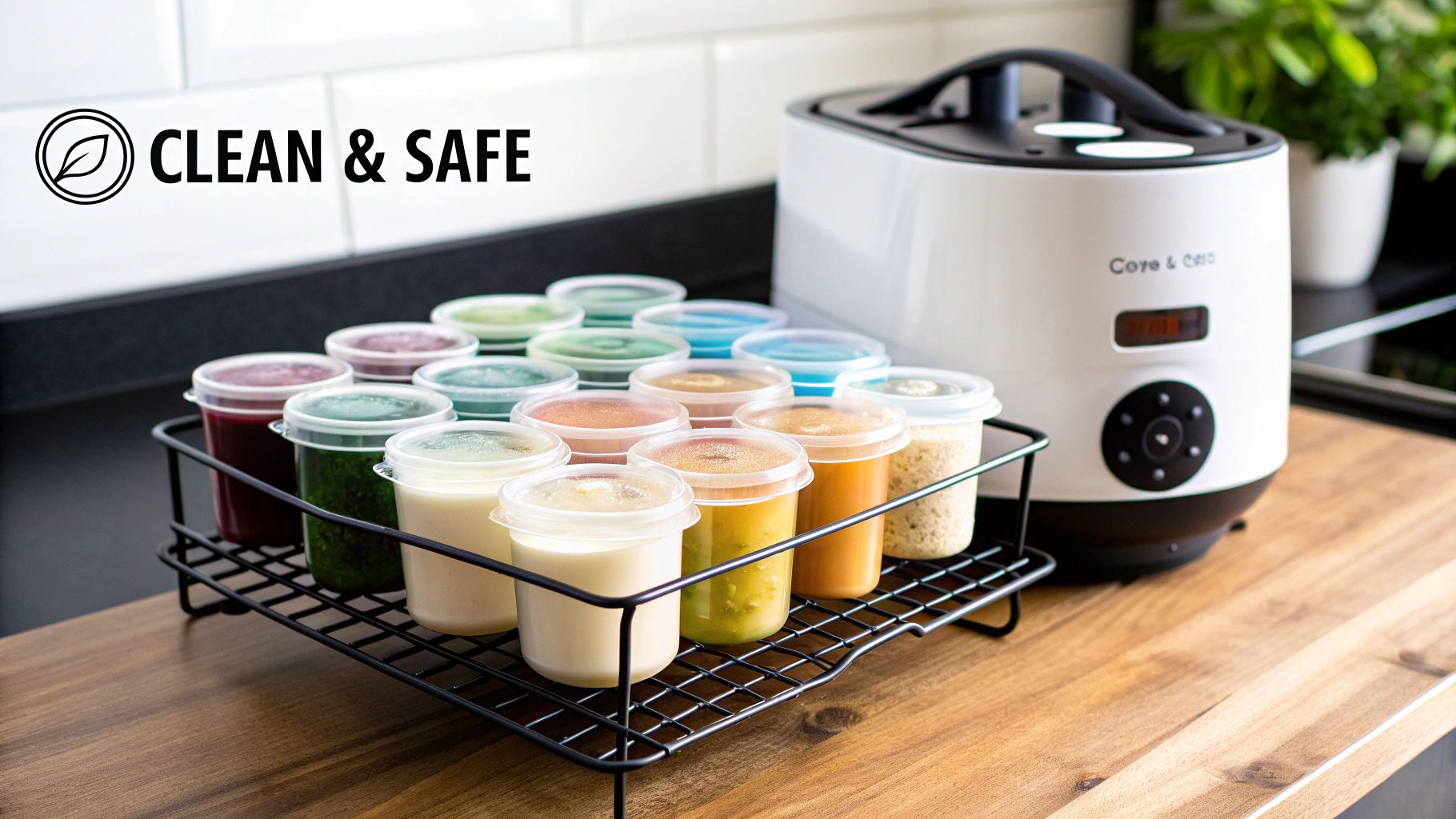
The best way to clean your containers really depends on what they’re made of. Glass, silicone, and plastic all have their own quirks when it comes to getting them sparkling clean and safe for your little one.
Best Practices for Each Material
The good news? Most quality containers these days are top-rack dishwasher safe, which is a huge time-saver for any parent. The high heat of a dishwasher cycle does a pretty great job of sanitizing. If you're hand-washing, just be sure to use a gentle, baby-safe soap that's free of heavy fragrances or harsh chemicals to avoid leaving behind residue that could irritate sensitive skin.
- Glass: This is the easiest material of the bunch. Glass is non-porous, meaning it won't hang onto stains or smells. A quick scrub with hot, soapy water or a run through the dishwasher is all it needs.
- Silicone: Super durable and almost always dishwasher-safe. One thing to watch for is that silicone can sometimes absorb the smell or taste of stronger foods (looking at you, garlic). If that happens, a soak in a mix of warm water and white vinegar usually clears it right up.
- Plastic: When using the dishwasher, always place BPA-free plastic containers on the top rack. The heating element is at the bottom, and that direct heat can cause the plastic to warp or break down over time.
Sterilization is that extra step beyond just cleaning. It's especially crucial for newborns and babies with delicate immune systems. It’s all about getting rid of any stubborn germs that a regular wash might leave behind, giving you complete peace of mind.
When and How to Sterilize
If your baby is under three months old or has a compromised immune system, it's a great idea to sterilize containers before you use them for the first time and every so often after that. It sounds intimidating, but it's actually really simple to do at home.
The boiling method is tried-and-true for a reason—it works. Just take the containers apart and place all the pieces in a big pot of boiling water for 5-10 minutes. Make sure everything is completely underwater. Use a pair of tongs to fish them out, then let them air dry on a fresh, clean towel. If you want something even easier, a dedicated steam sterilizer will give you the same germ-killing power with just the push of a button.
A Few Common Questions Answered
When you're diving into the world of making your own baby food, a few questions always seem to pop up. Let's tackle some of the most common ones so you can feel confident that every spoonful you serve is safe, fresh, and nutritious.
How Long Does Homemade Baby Food Last in the Freezer?
You can safely keep homemade baby food in the freezer for up to 3 months as long as it's in a truly airtight container. That said, for the best taste and to lock in the most nutrients, I always recommend trying to use it within 1 to 2 months.
A little tip that makes a huge difference: always, always label your containers with what's inside and the date you made it. It's a simple step that guarantees you're using the oldest food first and keeping things as fresh as possible for your little one.
Is It Really Safe to Microwave Food in Plastic Containers?
This is a big one, and for good reason. The worry about chemicals is completely valid. The official rule is that you should only ever microwave food in plastic if it has a clear "microwave-safe" label.
But, to be perfectly honest, most parents I know—myself included—prefer to just pop the food into a small glass or ceramic bowl before heating it up. It’s a foolproof way to remove any doubt about chemicals leaching into your baby's food and gives you total peace of mind, especially when considering potential skin sensitivities or allergies.
A crucial thing to remember: "BPA-free" does not automatically mean "microwave-safe." Always look for that specific symbol before you even consider putting it in the microwave.
What's the Best Container Size for a Baby Just Starting Solids?
When your baby is just beginning their food adventure (usually around six months), you’ll be surprised at how little they eat. Tiny 1-2 ounce containers are absolutely perfect for those first single-serving purées.
Before you know it, though, their appetite will grow. Having some 4-6 ounce containers on hand will save you from having to buy more later. My best advice? Look for a set that comes with a variety of sizes. It’s the most practical way to stay prepared as your baby grows.
At GUGUTON LLC, we get it—keeping your baby safe and healthy is everything. That's why we've put together a collection of high-quality, non-toxic baby essentials made to give parents one less thing to worry about. You can find the perfect gear for your little one at guguton.com.