

Your Ultimate Guide to the Baby Bib Smock: Safety, Quality, and Skin Protection
Think of a baby bib smock as your secret weapon for messy mealtimes. It’s essentially a superhero cape for your little one, offering full-coverage protection against the splatters, spills, and stains that come with exploring new foods. Unlike a standard bib, a smock shields your baby's entire upper body—arms, chest, and even their lap—which means way less laundry for you and better protection for their delicate skin.
Your Ultimate Guide to Mealtime Peace of Mind
We’ve all been there. You’re excited to introduce your baby to the wonderful world of solid foods, but that joy is quickly overshadowed by the mountain of stained clothes and the constant clean-up. Mealtimes and creative play can feel less like bonding and more like a battle against the mess. A traditional bib just doesn't cut it, leaving sleeves and laps as prime targets for that rogue spoonful of puréed sweet potato or a smear of finger paint.
This is where the baby bib smock truly shines. It's more than just a piece of fabric; it’s a tool that helps create a relaxed, stress-free space where your baby can learn, explore, and get messy without you hovering with a wipe.
Protecting Your Baby's Sensitive Skin
A baby’s skin is incredibly delicate—it’s thinner and more absorbent than an adult’s, making it highly susceptible to allergies, rashes, and irritation. When wet food or moisture gets trapped under their clothes, it creates the perfect environment for skin problems to develop. A quality, full-coverage bib smock acts as a reliable barrier, keeping them happy, dry, and free from discomfort.
- A Complete Shield: It stops moisture from soaking through to their clothes and skin. No more damp onesies that can lead to chilling or rashes after a meal!
- Reduced Irritation: By keeping food off their chest and arms, you minimize their skin’s contact with potential allergens or acidic foods that might cause a flare-up.
- Worry-Free Mealtimes: When you know your baby is protected from both messes and skin irritants, you can relax and focus on the fun parts of eating and playing together.
When you break it down, the difference between a regular bib and a bib smock is pretty clear.
Regular Bib vs. Baby Bib Smock at a Glance
| Feature | Regular Baby Bib | Baby Bib Smock |
|---|---|---|
| Coverage | Covers only the chest area. | Full upper body coverage, including chest, arms, and sometimes the lap. |
| Protection Level | Minimal. Protects against small dribbles and spills directly on the chest. | Maximum. Shields clothes and skin from all angles against major spills and splatters. |
| Best Use Cases | Teething, drooling, bottle-feeding. | Self-feeding, baby-led weaning, arts and crafts, messy play. |
| Laundry Impact | Often requires a full outfit change anyway. | Significantly reduces laundry by keeping the entire outfit clean. |
In the end, while a regular bib has its place for minor messes, a smock is the undisputed champion for anything truly messy.
These key features—full coverage, less laundry, and safe materials—are what make a bib smock a true parenting game-changer. They work together to make your life easier while keeping your little one safe and comfortable.
Choosing the right gear is about more than just convenience; it's about prioritizing your child's health and safety. A well-designed smock made from non-toxic, skin-safe materials is a non-negotiable for modern parenting.
Here at GUGUTON LLC, we get it. We’re all about creating practical, stylish, and safe solutions for parents. Our products are thoughtfully designed to give you one less thing to worry about, so you can embrace and enjoy every messy, wonderful moment of your baby’s journey.
Choosing the Safest Materials for Your Baby's Skin
When you’re picking out a baby bib smock, the material is everything. A baby’s skin isn’t just a smaller version of our own; it’s far thinner and more absorbent, making it incredibly sensitive to scratchy fabrics or lingering chemicals. The right material feels like a gentle hug and actively prevents skin issues, while the wrong one can easily lead to rashes, allergic reactions, and a very unhappy baby.
Think about it: this smock will be sitting against their neck, chest, and arms during every meal. That close, prolonged contact means we have to be extra picky about what we put on them to prevent skin problems.
Decoding Common Baby Bib Smock Materials
Walking down the baby aisle, you’ll see a bunch of different materials. It can feel a little overwhelming, but it really just boils down to a few great, skin-safe options. Let's break them down so you can feel confident in your choice.
- Food-Grade Silicone: This is a superstar for a reason. Silicone is naturally hypoallergenic and doesn't contain nasty chemicals like BPA, PVC, or phthalates. It’s also non-porous, meaning it won’t harbor bacteria or fungus—a huge win for keeping your baby’s skin clear and healthy.
- PUL Fabric (Polyurethane Laminate): You might recognize this material from modern cloth diapers. PUL is essentially a soft polyester fabric bonded with a thin, waterproof layer. It’s fantastic because it's breathable, which helps prevent heat rash, but it’s still tough enough to stop any liquid from seeping through and irritating the skin underneath.
- PEVA (Polyethylene Vinyl Acetate): A much safer alternative to old-school PVC, PEVA is a non-chlorinated vinyl you’ll see in lots of baby products. It’s free of BPA and phthalates, offering a lightweight, waterproof barrier that’s a breeze to wipe down after a messy meal.
While all these are great, PUL fabric really hits that sweet spot between softness, breathability, and waterproof protection. It makes for a bib smock that’s comfortable enough to wear through a long meal or even a messy art session. If you want to dive even deeper into fabric choices, you can check out our guide on choosing the right fabric for your baby's sensitive skin.
Understanding Safety Certifications
You've probably seen labels like "BPA-free" or "OEKO-TEX certified" on baby gear. These aren't just buzzwords; they’re your proof that a product has met rigorous safety standards for quality and purity. Think of them as a seal of approval from a neutral third party.
When a product is certified, it means an independent organization has verified that it’s free from a list of harmful substances. This third-party validation is a parent’s best tool for ensuring a product is genuinely safe and won't cause skin reactions.
Here’s a quick rundown of the labels that matter most when you’re shopping for a bib smock:
| Certification Label | What It Guarantees for Your Baby's Safety |
|---|---|
| BPA-Free | The product is made without Bisphenol A, an industrial chemical that has been linked to potential health issues. This is a non-negotiable for anything that touches your baby's food or mouth. |
| Phthalate-Free | This means the plastic wasn't made with phthalates, which are chemicals used to make plastics softer. They've also raised health concerns, particularly for babies and toddlers. |
| OEKO-TEX Certified | A gold standard for textiles, this label ensures that every single part of the item—from the fabric to the thread—has been tested for harmful substances and is safe for human health and direct skin contact. |
These certifications help you look past the cute designs and focus on what’s truly important: your baby’s well-being. And it’s clear other parents feel the same. The toddler bib market, which was valued at $1.16 billion, is projected to hit $1.86 billion soon. That growth is being fueled by parents demanding safe, durable, and waterproof options that can survive the beautiful chaos of self-feeding.
A Practical Checklist for Evaluating Materials
Ready to shop? Keep this simple checklist in mind to find a bib smock that’s both safe and comfortable.
- Scan for Non-Toxic Labels: Make sure the packaging clearly states that the smock is BPA-free, PVC-free, and phthalate-free.
- Look for OEKO-TEX: For fabric smocks, this certification is your best bet for confirming the material is free of nasty chemicals that can irritate the skin.
- Do the Touch Test: Does the material feel soft and flexible? It shouldn’t be stiff or scratchy. If you wouldn’t want it against your skin, you definitely don’t want it on your baby’s.
- Confirm It's Waterproof: A smock’s main job is keeping messes contained. Double-check that the material is fully waterproof to prevent liquids from soaking through and causing skin irritation.
- Check for Breathability: Especially for fabric smocks, breathable materials like PUL help air circulate, keeping your little one from getting sweaty and uncomfortable, which can lead to heat rash.
By focusing on these key points—safe materials, reliable certifications, and how the smock actually feels—you can choose a bib that keeps your baby’s skin protected and happy, no matter how messy things get.
Essential Design Features for Safety and Comfort
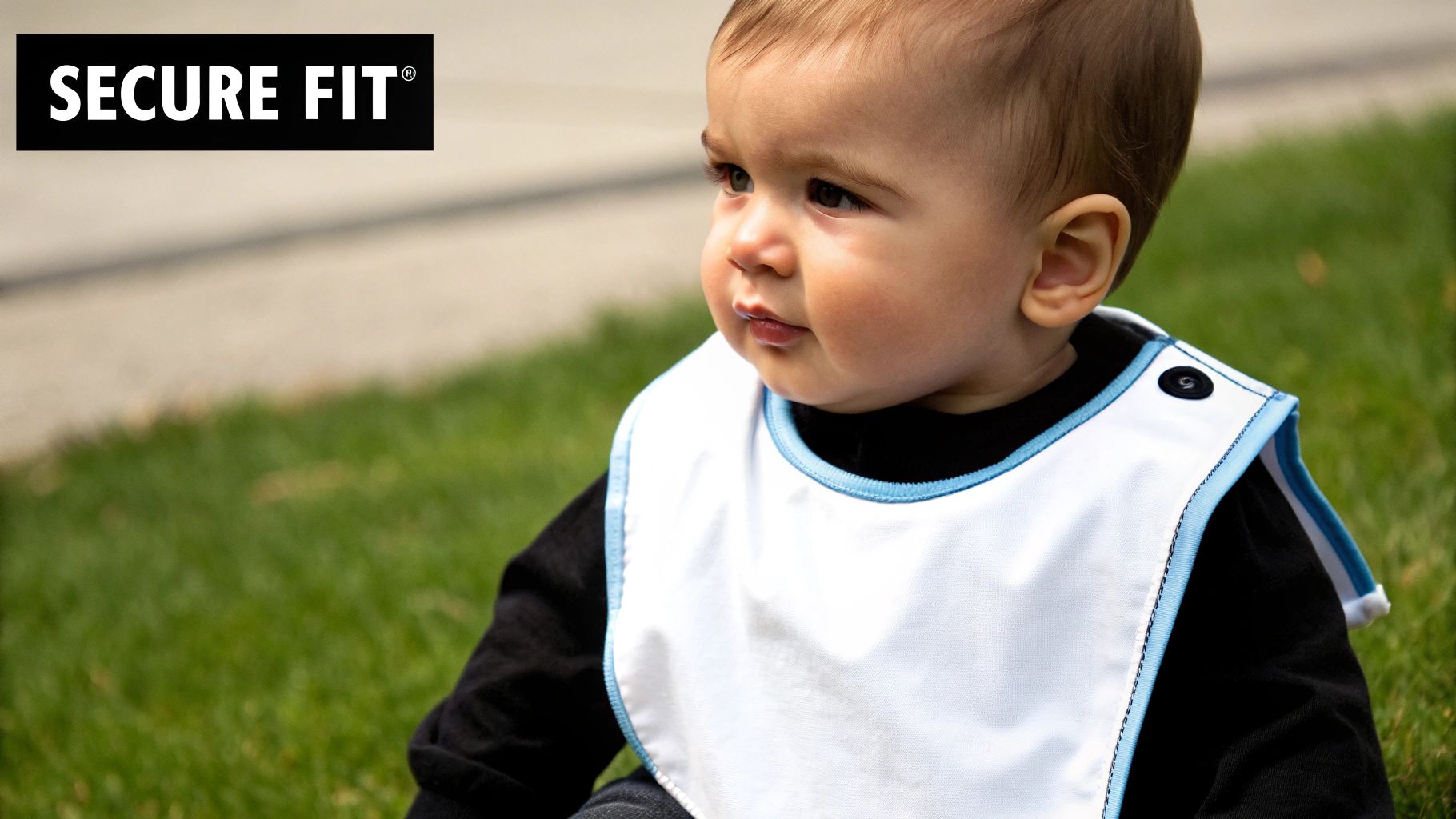
So, you've picked a safe, skin-friendly material. That's a huge first step! But now we need to look at the actual construction of the baby bib smock. The little details in the design are just as critical for your baby's safety and comfort, and they're what really make a smock great at its main job: containing the inevitable mess.
Think of it like buying a raincoat. You can have the most waterproof fabric in the world, but if the zippers leak and the cuffs are loose, you’re still getting wet. It’s the same idea here—small design choices make a massive difference in preventing rashes and ensuring safety.
The Neck Closure: A Critical Safety Checkpoint
Of all the features, the neck closure is probably the most important safety checkpoint. A poorly designed closure can be uncomfortable, but more seriously, it can be a hazard. You need something that’s secure enough to stay put but will release with a firm tug if it ever gets snagged.
This is exactly why most parents I know, myself included, have a strong preference for adjustable snaps over old-school ties.
- Adjustable Snaps: These are really the gold standard for safety. They let you find that perfect snug-but-not-tight fit and are tough for curious little hands to pull off. Most importantly, they pop open under pressure, which gives you incredible peace of mind.
- Velcro (Hook and Loop): Velcro is super easy to use at first, but it tends to wear out over time and lose its stickiness. It can also be scratchy against a baby's sensitive neck and becomes a magnet for lint and hair in the wash, making it less effective and potentially irritating.
- Ties: I’ll be blunt: string ties pose a real safety risk. They can accidentally be tied too tightly or get caught on parts of the high chair. Given the safer options available, snaps are easily the most reliable choice for a baby bib smock.
A secure, comfortable fit around the neck is non-negotiable. It’s what stops food from dribbling down onto your baby’s chest, which can lead to skin irritation and rashes, all while keeping them safe during mealtime.
Elastic Cuffs for Mess-Free Sleeves
Another must-have feature? Well-designed elastic cuffs. The sleeves of a smock are your front line of defense against mess, and the cuffs are what seal the deal, protecting your baby's arms and clothes from spills that can irritate the skin.
The ideal cuff creates a gentle seal. It should be snug enough to block yogurt or purees from sliding up the arm but never so tight that it leaves marks or cuts off circulation. A soft, stretchy elastic moves with your child, giving you maximum protection without any discomfort. Nailing details like this is how you avoid common baby clothing mistakes, which almost always come down to a poor fit or flawed design.
The All-Important Catch-All Pocket
The "catch-all" pocket is a true game-changer for cleanup. This little front pouch is designed to intercept crumbs, drips, and all those bits of food that get dropped on the way to the mouth. But be warned: not all pockets are created equal.
For a pocket to actually work, it needs to be wide, deep, and—this is key—designed to stay open. Some smocks have flimsy pockets that are sewn flat and catch absolutely nothing. A quality baby bib smock will have a more structured pocket that naturally gaps open, ready to do its job. This one feature can dramatically reduce how much time you spend on your hands and knees after a meal.
It’s features like these that explain why the global baby bibs market is valued at around $1.5 billion and growing. Parents are actively looking for these kinds of functional, thoughtfully designed products that make life easier. You can see more on these trends in this comprehensive baby bibs market report.
By keeping an eye on these three core elements—the neck closure, the cuffs, and the pocket—you’ll be able to choose a bib smock that’s not just safe and comfortable, but incredibly effective, too.
How to Find the Perfect Fit for Every Age
Getting the right fit on a baby bib smock isn't just about keeping your little one comfortable—it's one of the most important parts of keeping them safe and their skin rash-free. If a smock is too loose, food can easily slip down the neckline and irritate their sensitive skin. But if it’s too tight, especially around the neck or wrists, it can become restrictive and unsafe. You're looking for that perfect in-between fit that creates a mess-proof barrier without getting in the way.
Think of it like a good raincoat. Too big, and the rain gets in everywhere. Too small, and you can't move your arms. A bib smock is no different. It has to fit just right to do its job, keeping your baby clean, happy, and their skin protected from their first spoonful of purée to their most creative toddler masterpieces.
Key Fit Points to Check
Before you even add a smock to your cart, it helps to know what a great fit actually looks and feels like. When you're trying one on your baby, focus on these three spots to make sure they're both safe and comfy.
- The Neckline: This is your number one checkpoint. You should be able to slide one or two fingers easily between the smock's collar and your baby’s neck. This tells you it's not a choking risk, but it's still snug enough to catch any drips before they run down their chest—a common cause of nasty rashes.
- The Shoulders and Chest: The smock should drape smoothly over their shoulders without pulling or bunching. Make sure there’s plenty of room for them to move their arms without any resistance. They need to be able to reach for a spoon (or a paintbrush!) freely.
- The Wrist Cuffs: The best smocks have soft, gentle elastic at the wrists. The cuffs need to be snug enough to keep the sleeves from riding up and to block food from getting inside, but they should never, ever be tight enough to leave red marks or restrict blood flow on your baby's skin.
A proper fit is what turns a simple bib smock into your best friend at mealtime. It guarantees total coverage, keeps trapped food and moisture from irritating their skin, and lets your child explore the world one messy handful at a time.
Sizing Your Baby Bib Smock by Age
Every baby is different, of course, but using age as a starting point is a huge help. Look for smocks with adjustable snaps—they're a lifesaver because they grow right alongside your child, giving you more bang for your buck and a consistently safe fit. If you want a deeper dive into sizing, our baby clothing size chart is a fantastic resource.
To make things easier, here’s a quick sizing chart to help you pick the right smock for your little one’s current stage.
Baby Bib Smock Sizing Guide by Age
This table breaks down what to look for at each age, helping you choose a smock that’s perfectly suited for your baby’s developmental stage.
| Age Range | Recommended Neck Circumference | Ideal Sleeve Length | Key Fit Considerations |
|---|---|---|---|
| 6-12 Months | 9-11 inches | Just past the wrist | At this age, babies are just starting solids. A secure neck and full arm coverage are key to protecting their clothes and skin from purées and spills. |
| 12-24 Months | 10-12 inches | At the wrist | Toddlers are active eaters! The smock needs to allow a full range of arm motion for self-feeding practice without feeling tight or restrictive. |
| 24-36+ Months | 11-13 inches | At or slightly above the wrist | Older toddlers often use smocks for messy play. The fit should be roomy enough to go over clothes but not so baggy it becomes a tripping hazard. |
By keeping these tips in mind and checking the fit, you can find a baby bib smock that truly protects your baby and their clothes. That means less time stressing over messes and more time enjoying the fun.
Keeping Your Bib Smock Clean and Hygienic
A baby bib smock is your frontline defender against mealtime chaos, but a dirty one can quickly become a little petri dish for bacteria and mold. Keeping it clean isn't just about looks—it's crucial for your baby's health and skin safety. Lingering food and moisture can easily lead to skin irritation, fungal rashes, and allergic reactions, so a truly hygienic bib is just as important as the safe materials it's made from.
The good news? Keeping your smock in top-notch condition is probably easier than you think. The right cleaning method really comes down to the material, but the mission is always the same: get every last bit of food off so it’s fresh, safe, and ready for the next adventure.
Step-by-Step Cleaning Instructions
How you tackle cleanup depends on whether your smock is a soft fabric or a wipeable material like silicone or PEVA. Each needs a slightly different approach to get it sanitized without wearing it out.
For Fabric Smocks (like PUL or coated polyester):
- Rinse It Right Away: Once mealtime is over, shake any big food chunks into the bin and give the smock a quick rinse under the tap. This is the single best thing you can do to stop stains and bacteria growth.
- Toss It in the Wash: You can pop the smock in the washing machine with other bibs or a small load of baby clothes. Just use warm water and a gentle, baby-safe, hypoallergenic detergent to avoid skin reactions.
- Hang to Dry: Always let it air dry. Tossing it in the dryer on high heat can wreck the waterproof layer over time. Hanging it up is the safest bet to make it last and prevent mildew.
For Silicone or PEVA Smocks:
- Wipe or Rinse: Most of the time, a quick wipe with a damp cloth is all you need. For stickier messes, a simple wash in the sink with warm, soapy water does the trick.
- Use the Dishwasher: Many silicone smocks are a parent’s best friend because they’re top-rack dishwasher-safe. It’s an effortless way to get a deep, sanitizing clean.
- Dry Completely: This is key. Whether you hand-washed it or used the dishwasher, make sure the smock is totally dry before you put it away. This prevents any mildew from growing in creases.
Proper drying is a non-negotiable step. A damp bib smock, no matter how well it was washed, can quickly develop a musty smell and become a haven for bacteria that can irritate your baby's delicate skin. Always ensure it's bone-dry before putting it away.
Tackling Tough Stains and Storing for Longevity
Even with the best care, some foods just love to leave their mark. Berries, tomato sauce, and carrots are notorious stain-makers, but you can usually get them out before they become a permanent part of the smock's design.
For stubborn stains on fabric, try pre-treating the spot with a stain remover or a simple paste of baking soda and water before you wash it. If you have a silicone bib with an orange tint from carrots, here’s a neat trick: leave it in direct sunlight for a few hours. The sun works as a natural bleach and can fade the discoloration.
How you store your bibs matters, too. Once they're clean and dry, hang them up or lay them flat in a drawer. This keeps them from getting creased and lets the air circulate, keeping them fresh and free from mold.
It’s no surprise that parents are focused on hygiene. We’ve seen a 20-30% jump in demand for antibacterial smocks in recent years, which has really changed the market. After all, in many homes, a good smock can cut down on outfit changes by 50%—a massive win for any parent. You can read more about these trends in some insightful baby bib research.
More Than Just Meals: Creative Uses for a Bib Smock
The very same full-coverage design that makes a baby bib smock a lifesaver at the dinner table also makes it a secret weapon for all kinds of messy fun. When you start thinking beyond the high chair, you realize this one simple item can support your child's creativity and exploration while keeping clothes pristine and skin safe from potential irritants like paint or dirt.
It's all about getting the most out of your baby gear. Instead of buying separate aprons for art and cover-ups for outdoor play, your bib smock can do it all. It quickly becomes the go-to shield for any activity that promises a little bit of glorious chaos.
Unleash Creativity with Mess-Free Arts and Crafts
One of the most popular ways to use a bib smock is as a tiny artist's apron. We all know that activities like finger painting, playing with modeling clay, or stamping are fantastic for sensory development. But let's be honest—the potential for mess can be a huge deterrent.
This is where the smock shines. Its waterproof barrier and long sleeves give your little one total freedom to get creative without you picturing stained clothes or mystery goo on their skin.
- Finger Painting Fun: Let them dive in hands-first! You can relax knowing their outfit is completely shielded from those colorful smears.
- Modeling Clay Adventures: The smock catches all those tiny, colorful crumbles that would otherwise get ground into their clothes or the carpet.
- Water-Based Marker Sessions: It’s the perfect backup for those "oops" moments when the marker ends up on an arm instead of the paper.
The whole point of messy play is to let kids explore without hesitation. A bib smock gives them that freedom and gives you peace of mind, which is a win-win for everyone.
Sensory Play and Outdoor Adventures
The protective power of a baby bib smock goes way beyond the craft table. That durable, wipe-clean surface is perfect for a whole range of activities, both inside and out.
Think about sensory bin play with water, sand, or even cooked spaghetti. The smock keeps your child’s clothes totally dry and clean, letting them splash and squish to their heart's content. It’s also brilliant for a little helper in the garden, protecting their outfit from dirt and mud as they dig around and learn about nature.
A bib smock is also a lifesaver on the go. Tucking a spare one into your diaper bag means you're ready for anything, from an impromptu park picnic to a drippy ice cream cone. For more tips on being prepared, check out our guide on what to pack in a diaper bag. This kind of multi-use thinking is what turns a simple bib into one of your most indispensable parenting tools.
Common Questions About Baby Bib Smocks
Even after digging into the details, it's totally normal to have a few more questions pop up when you're trying to pick the right baby bib smock. Let's tackle some of the most common ones we hear from parents so you can feel 100% confident in your choice.
How Do I Know if a Bib Smock Is Truly Safe?
Your baby's safety is everything, so a quick check for a few key features can give you serious peace of mind. A genuinely safe bib smock does more than just stop stains—it’s designed from the ground up to be gentle on your baby’s skin and free of any hidden risks.
When you're looking at a smock, think of it as a quick safety audit. Here are the three things you should always confirm:
- Look for Non-Toxic Labels: Scan the packaging or product description for phrases like BPA-free, PVC-free, and phthalate-free. These aren't just buzzwords; they're your guarantee that the material is made without harsh chemicals that could leach out and irritate the skin.
- Check the Neck Fit: A good fit is crucial. The neck closure should be snug enough that food can't sneak down the front (a key cause of rashes), but loose enough that it's comfortable. The classic rule of thumb works perfectly here: you should be able to slide two fingers between the smock and your baby’s neck without any trouble.
- Always Supervise: This one’s a golden rule for all baby products. No matter how well-designed it is, you should always be present and supervising when your little one is wearing it, whether for meals or playtime.
A smock that ticks all these boxes—made from certified non-toxic materials with a secure, comfortable fit—is exactly what you want for a worry-free experience.
At What Age Can My Baby Start Using a Smock?
One of the best things about a bib smock is its versatility. You can really start using one whenever it makes your life easier, from the newborn days all the way through the toddler chaos.
Most parents find it becomes an absolute game-changer right around the six-month mark when solids are introduced. This is when things get really messy with purées, baby-led weaning, and those first clumsy attempts at self-feeding. But don't hesitate to use one earlier! For bottle-fed babies prone to major spit-up, a smock can save an entire outfit and prevent milk from sitting against their skin. And as they get older, it pulls double duty as the perfect little art apron for all their creative projects.
How Many Bib Smocks Should I Own?
This is a great practical question. While you could technically manage with just one, most experienced parents agree that having a few on hand is the secret to a smoother day. It means you’re never scrambling when one is covered in avocado and another is still damp from the last wash.
We usually recommend having at least 2-3 bib smocks in rotation. That way, you can have one in use, one in the laundry, and a clean one ready to go.
It’s a simple system, but it completely removes the pressure of having to wash and dry the same bib between breakfast, lunch, and dinner. It just makes life a little bit easier and ensures you always have a clean, hygienic option available to protect your baby's skin.
Ready to make mealtimes and messy play stress-free? Explore the thoughtfully designed, safe, and stylish collection of baby essentials at GUGUTON LLC. Find the perfect gear to support your little one's journey today at https://guguton.com.