

The Ultimate Baby Clothing Size Chart A Parent's Guide
Let's be honest, figuring out baby clothes sizes can feel like a total guessing game. You've got a tag that says "3 Months" from one brand and another that says "0-3 Months," and they fit your little one completely differently. It's a common frustration for every parent.
This is exactly why a good baby clothing size chart is your best friend. It helps you ignore the confusing age labels and focus on what actually matters for a good fit: your baby's weight and height. Using these measurements is the single best way to get it right, ensuring your baby is safe, comfy, and dressed perfectly every time.
Why a Baby Clothing Size Chart Is Your Most Important Tool
Shopping for your baby should be fun, not a frustrating puzzle of "will this even fit?" The heart of the problem is that there’s no universal standard for baby clothing sizes. A 6-month onesie from one company might be the same size as a 9-month from another, leading to a pile of clothes that don't fit, wasted money, and endless returns. Think of a size chart as your universal translator.
Getting the size right goes beyond just convenience—it’s about your baby’s safety and skin health.
- Safety and Comfort: Clothes that are too snug can restrict your baby's movement and dig into their soft skin, causing painful irritation or rashes. On the flip side, anything too big can be a real safety risk, especially loose fabric during sleep which can pose a suffocation hazard.
- Preventing Skin Issues: A perfect fit is crucial for preventing skin problems. Well-fitting clothes made from soft, breathable materials minimize friction and allow air to circulate, which helps prevent heat rash, chafing, and flare-ups of conditions like eczema.
- Financial and Environmental Impact: Let's face it, buying the wrong size over and over again is wasteful. The global baby clothing market is huge—estimated at around USD 227.0 billion in 2024—which means a ton of options, but also a lot of potential for returns. Nailing the sizing saves you time, money, and is a little kinder to the planet. You can read more about trends in the baby clothing market to see the bigger picture.
Ultimately, learning how to read and use a baby clothing size chart gives you the confidence to shop smarter. It means you can be sure your baby is always dressed in clothes that are not just cute, but truly comfortable, safe, and made for them.
The Complete Baby Clothing Size Chart From Newborn to Toddler
If you're trying to figure out baby clothing sizes, you've probably noticed one confusing truth: the age on the tag is often the least helpful guide. Every baby grows at their own pace, so relying on their current weight and height is the secret to getting a comfortable, safe fit every time.
Think of age ranges like "3-6 months" as a suggestion, not a rule. Your baby's measurements are what really matter.
To make things easier, here is a master chart that covers everything from the tiniest preemie outfits to clothes for an active toddler. It includes US and UK/European sizes and converts both imperial and metric measurements, so it’s a handy reference no matter where you're shopping.
Comprehensive Baby Clothing Size Chart (US & UK/EU)
This table is your quick-reference guide. Just find your baby's current height and weight to see which size range is the best fit.
| Age Range | US Size | UK/EU Size (cm) | Height (inches/cm) | Weight (lbs/kg) |
|---|---|---|---|---|
| Preemie | P / Pre | Up to 50 | Up to 17" / 43 cm | Up to 5 lbs / 2.3 kg |
| Newborn | NB | 50-56 | 17-21.5" / 43-55 cm | 5-9 lbs / 2.3-4.1 kg |
| 0-3 Months | 0-3M | 56-62 | 21.5-24" / 55-61 cm | 9-12.5 lbs / 4.1-5.7 kg |
| 3-6 Months | 3-6M | 62-68 | 24-27" / 61-69 cm | 12.5-17 lbs / 5.7-7.7 kg |
| 6-9 Months | 6-9M | 68-74 | 27-28.5" / 69-72 cm | 17-21 lbs / 7.7-9.5 kg |
| 9-12 Months | 9-12M | 74-80 | 28.5-30" / 72-76 cm | 21-25 lbs / 9.5-11.3 kg |
| 12-18 Months | 12-18M | 80-86 | 30-32" / 76-81 cm | 25-28 lbs / 11.3-12.7 kg |
| 18-24 Months | 18-24M | 86-92 | 32-34" / 81-86 cm | 28-30 lbs / 12.7-13.6 kg |
| 2 Years | 2T | 92 | 34-36" / 86-91 cm | 30-32 lbs / 13.6-14.5 kg |
| 3 Years | 3T | 98 | 36-38" / 91-97 cm | 32-35 lbs / 14.5-15.9 kg |
Remember, this chart is a fantastic starting point, but sizing can still vary between brands.
How to Use This Chart Effectively
To get the best fit, always start with your baby’s latest weight and height. Find the row in the chart that most closely matches their numbers.
If you find your little one is between two sizes, the best rule of thumb is to size up. This gives them a little extra room to grow and ensures the clothes stay comfortable for longer. If you’re building your baby’s first wardrobe, our guide on newborn clothing essentials is a great resource.
The image below breaks down the order of importance when it comes to sizing.
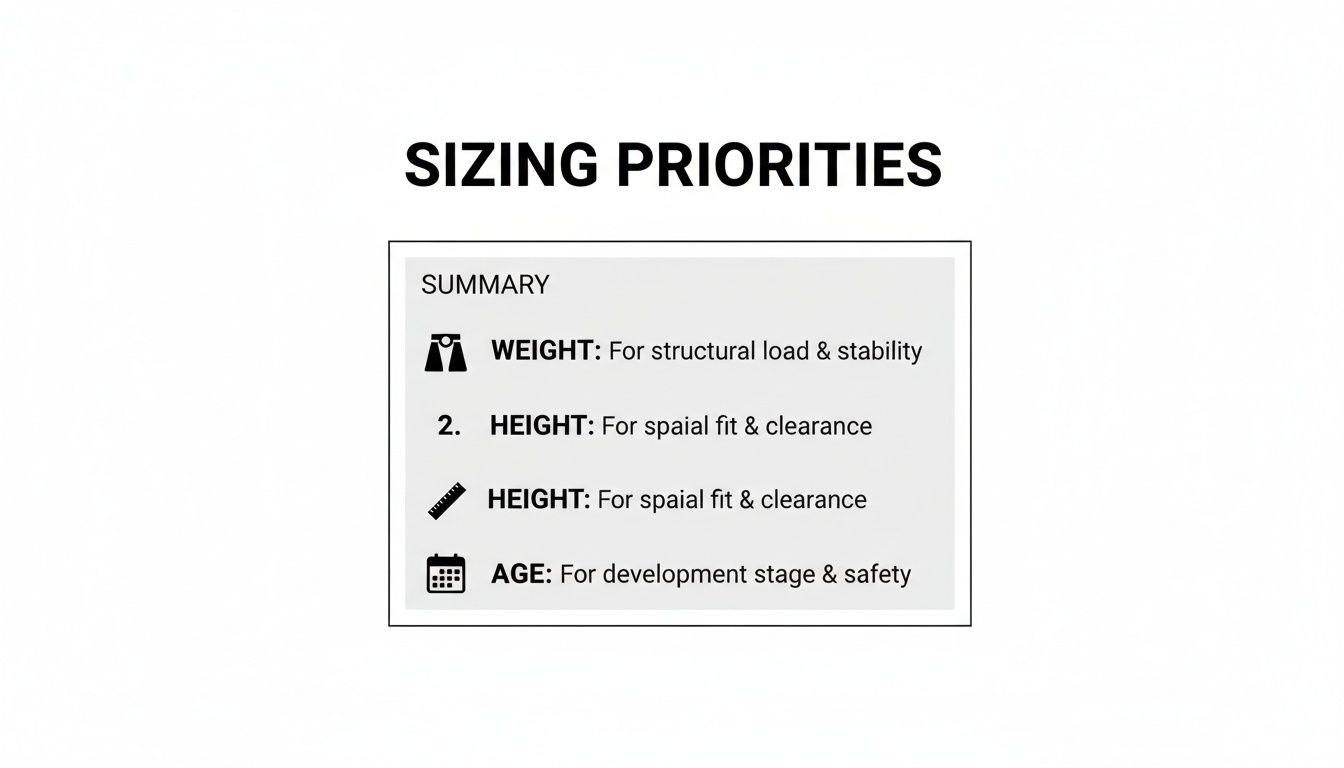
As you can see, weight is the most critical measurement, with height coming in a close second. Age is best used as a final, very general guideline.
Key Takeaway: Here’s something that trips up a lot of new parents: the difference between a size "3M" and "0-3M." A tag that says 3M is usually designed for a baby who is already three months old. A 0-3M tag, on the other hand, is meant to fit a baby from birth up to three months of age. When in doubt, always check the brand’s specific size guide.
How to Measure Your Baby Accurately for the Perfect Fit
To get the most out of any baby clothing size chart, you need accurate measurements. Simply relying on the age listed on the tag is a recipe for frustration, but having your baby's real numbers turns shopping from a guessing game into a simple science.
Getting a squirming baby to cooperate might seem like a challenge, but it's easier than you think. You’ll want a soft, flexible measuring tape, like the kind used for sewing. A stiff metal tape measure is a no-go—it’s not safe and can't wrap around your baby's body properly. No soft tape? No problem. Just use a piece of string, mark the length, and then measure the string against a regular ruler.
Your Step-by-Step Measuring Guide
For the best results, try measuring when your baby is calm and happy. After a feeding or during some quiet playtime is often a great window. You can even make it a fun game with some tickles and coos to keep them distracted.
Here are the four essential measurements you'll want to grab:
-
Height or Length: For infants who aren't standing yet, lay them flat on their back. Gently straighten their legs and measure from the very top of their head to the bottom of their heel. This is definitely a two-person job if you can swing it; one person can keep the baby still while the other measures.
-
Chest: Take your soft tape and wrap it around the fullest part of your baby’s chest, just underneath their armpits. Keep the tape level and snug, but not constricting. You should easily be able to slip one finger between the tape and their chest.
-
Waist: Find your baby's natural waistline—it's usually right around their belly button. Gently circle the tape measure around this spot to get the right number.
-
Inseam: This measurement is key for well-fitting pants. Measure from the inside of the crotch straight down to just below the ankle bone. Getting this right means no more pants that look like capris after the first wash.
Matching Measurements to Clothing Types
Different garments require different key measurements to fit comfortably and prevent rubbing, rashes, or chafing. Paying close attention to this will make a huge difference in your baby’s comfort and skin health.
-
For Onesies and Rompers: The most important numbers here are height (length) and chest. A onesie that's too short in the torso will constantly pull at the snaps, while a proper chest fit gives them room to breathe and move without constricting their delicate skin.
-
For Pants and Leggings: Zero in on the waist and inseam measurements. The right inseam ensures the pants actually cover their ankles, and a good waist measurement means they'll stay put without digging into their soft little tummy, which can cause irritation.
-
For Shirts and Tops: Here, the chest measurement is your main focus. It ensures the shirt isn't pulling tightly across their body, giving their arms plenty of freedom to wave around and preventing friction under the arms.
I highly recommend keeping a running note of these measurements on your phone. It makes any shopping trip, whether online or in-person, so much faster. You can say goodbye to the guesswork and confidently pick out clothes that are comfortable, safe, and just right for your little one.
Choosing Safe and Healthy Fabrics for Your Baby
While getting the right fit is a huge part of keeping your baby comfy, the actual material touching their skin is just as critical. A newborn’s skin is incredibly delicate—it’s much thinner and more absorbent than ours. This makes them extra sensitive to everything from scratchy textures to the chemicals used in fabric production, which can lead to allergies and rashes.
Choosing the right material goes way beyond softness. It's about protecting your little one's health and preventing skin irritation. Natural, breathable fabrics are your best defense because they help regulate body temperature and wick moisture away, keeping your baby's skin dry and happy.
The Best Fabrics for Sensitive Skin
When you're browsing the baby aisle, prioritizing natural, chemical-free fibers can make all the difference. These materials feel great, let the skin breathe, and are far less likely to harbor the irritants that can trigger skin reactions.
Keep an eye out for these skin-friendly heroes on the tags:
- GOTS-Certified Organic Cotton: This is the absolute gold standard for preventing allergies. It’s grown without harmful pesticides or chemicals, which means it’s exceptionally soft, naturally hypoallergenic, and a dream for sensitive skin. The GOTS (Global Organic Textile Standard) certification guarantees it’s pure from the farm all the way to the finished garment.
- Bamboo Rayon: You'll know bamboo by its silky, buttery-smooth feel. It's incredibly soft and gentle, plus it’s a fantastic temperature regulator, keeping your baby cool when it's hot and cozy when it's not.
- Linen: This classic natural fiber is known for being strong and lightweight. The best part? It gets softer with every single wash. Its amazing breathability makes it perfect for preventing heat rash in warm weather.
Pro Tip: Always, always pre-wash new baby clothes before they’re worn. This simple step rinses away any lingering dyes, dust, or potential chemical irritants from the manufacturing and shipping process. To be extra safe, use a gentle, fragrance-free detergent made specifically for sensitive skin to avoid triggering allergies.
Fabrics to Approach with Caution
Just as some fabrics are clear winners, others can cause real problems for a baby's skin. Synthetic materials might be durable and less expensive, but they often trap heat and moisture, creating the perfect environment for rashes, allergies, and eczema to flare up.
Try to limit or avoid these common synthetics:
- Polyester: As a plastic-based fiber, polyester simply doesn't breathe. It can trap sweat right against the skin, leading to heat rash and uncomfortable chafing.
- Nylon: Much like polyester, nylon is strong but not breathable. It’s a common culprit for skin irritation, especially for babies who are already prone to eczema.
- Acrylic: Often used as a wool substitute in knits, acrylic can feel rough and may contain residual chemicals from production that trigger allergic reactions in some little ones.
Understanding Safety Certifications
Want to shop with more confidence? Learn to spot the key certifications on clothing labels. These logos are your guarantee that the fabrics have been rigorously tested and are free from a long list of harmful substances that could affect your baby's skin.
- OEKO-TEX Standard 100: This is one of the most well-known and trusted certifications worldwide. A garment with this label means every single component—from the thread to the zipper—has been tested and cleared of harmful chemicals. To learn more, check out our guide on choosing the right fabric for your baby’s sensitive skin.
By paying a little extra attention to the fabric content and looking for these certifications, you can feel good knowing that every outfit in your baby's closet is as safe and gentle as it is cute.
Why Sizing Is So Different Between Brands
Ever held up two onesies from different stores, both tagged "3-6 Months," and noticed one is clearly bigger? It’s a classic, and frankly, frustrating, part of dressing a baby. This isn't just you—it happens to everyone.
The simple truth is there's no legally required sizing standard for baby clothes. This means a baby clothing size chart from one brand can look completely different from another's. Each company creates its own "fit model" based on its design philosophy. One brand might design for a chubbier baby, leading to wider, roomier clothes, while another might aim for a slimmer, European-style cut, resulting in longer, narrower pieces.
Common Brand Sizing Quirks
Over time, you'll start to notice patterns. While it's always smart to check a brand's specific size chart before you buy, many parents have found some general rules of thumb that can help you shop with more confidence and cut down on returns.
- Brands That Often Run a Bit Big or True-to-Size: You'll often hear parents say that brands like Carter's run generous or pretty true-to-age. This can be great because you might get a little more wear out of them.
- Brands That Often Run Small or Slim: Retailers such as H&M and Zara Baby are known for their sleeker, more modern cuts. A common trick here is to size up, especially if your baby is in the higher percentiles for their height and weight.
Your Game Plan for Getting the Right Fit
Getting the hang of these brand differences just takes a little strategy. Instead of just grabbing the size that matches your baby's age, you can build a system that ensures you’re buying clothes that are comfortable and won't chafe or irritate your baby's delicate skin.
Key Takeaway: The single best tool you have is the brand's own size chart. Seriously. Before you add anything to your online cart, find that chart and compare your baby's current measurements. This one step will save you from most sizing headaches.
Beyond the chart, tap into the wisdom of other parents. Take a minute to scroll through online reviews for the specific item you're looking at. Parents are usually refreshingly honest about whether something runs "small," "large," or "true to size."
Finally, when you discover a brand that just works for your baby’s shape, stick with it! Having a go-to for basics creates a reliable foundation for their wardrobe and saves you a ton of time and guesswork.
A Closer Look at Sizing for Different Types of Baby Clothes
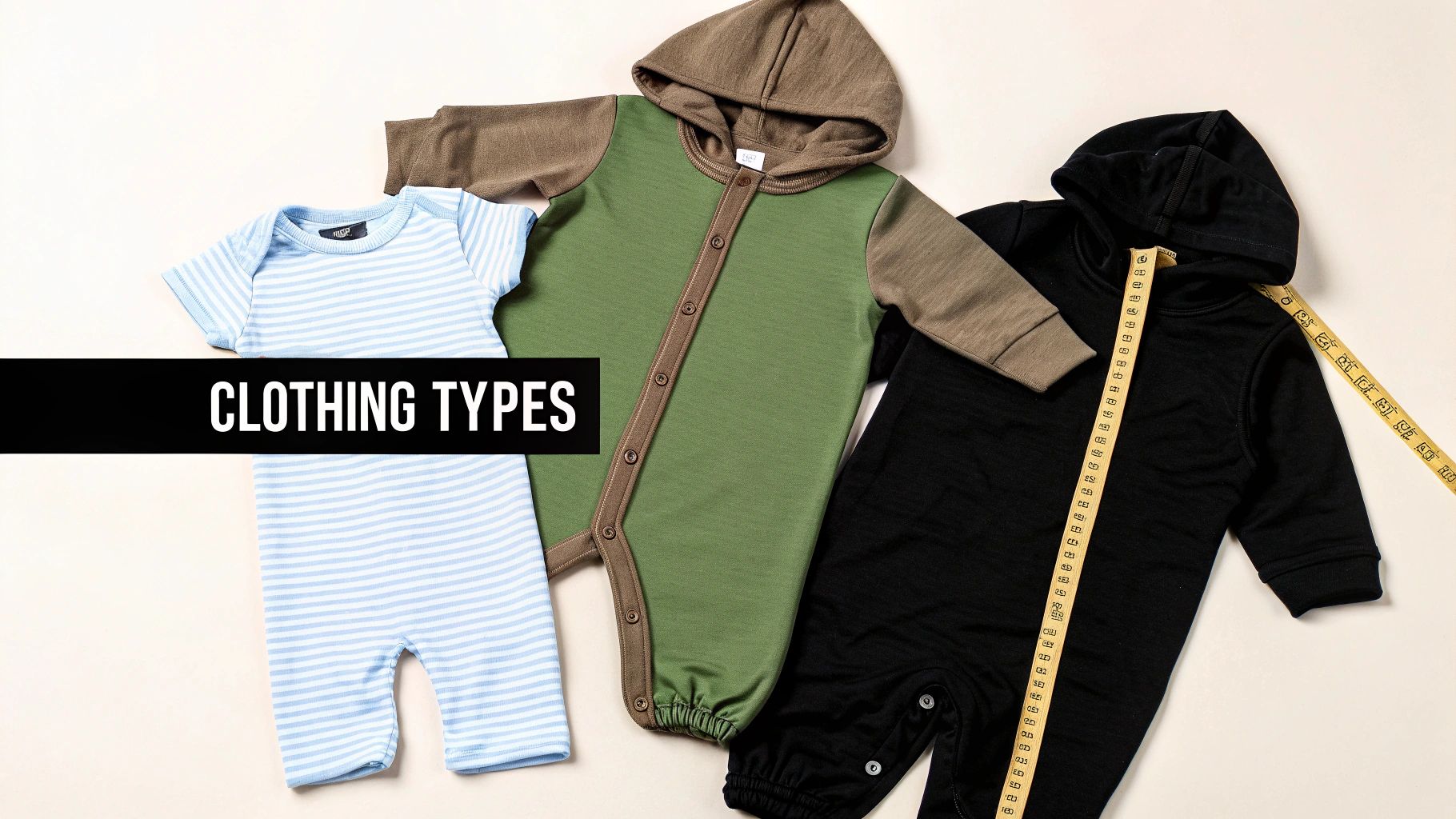
While a general baby clothing size chart is a great starting point, you'll quickly discover that a "6-month" label on a onesie fits completely differently than a "6-month" snowsuit. This isn't an accident; every type of baby garment is cut for a specific purpose, which shapes its fit and how you should think about its size.
Getting familiar with the nuances of each clothing category will help you make smarter purchases. The right fit means your baby will be comfortable and safe, free from tight seams that irritate their skin or bunchy fabric that gets in the way of wiggles and crawls.
Onesies and Bodysuits
The onesie (or bodysuit) is the undisputed workhorse of a baby's wardrobe. When you’re picking one out, the single most important measurement is the torso length. If it’s too short, it will pull at the snaps between the legs, creating uncomfortable pressure on their diaper area and shoulders, which can lead to chafing.
A quick fit-check is to make sure there's enough slack for a full diaper without stretching the fabric taut. You should also be able to easily slide a finger between the fabric and your baby's neck and thighs.
Sleepwear: Pajamas and Sleepers
When it comes to sleep, safety is everything. Per the Consumer Product Safety Commission (CPSC), baby sleepwear must either be made of flame-resistant fabric or fit snugly against the body. That snug fit is a critical safety feature, as loose-fitting garments pose a higher fire risk.
Because of this, you’ll notice that pajamas and sleepers are almost always designed to be more fitted than daytime clothes. It’s tempting to size up to get more wear out of them, but this should be avoided with sleepwear. A close, proper fit is key for safety and prevents excess fabric from bunching up, which could cause discomfort or overheating.
Outerwear: Jackets and Snowsuits
Outerwear is one area where intentionally sizing up is often the right move. You have to remember what goes underneath the jacket or snowsuit. A coat that fits just right over a thin bodysuit will be far too snug once you add a thicker shirt or sweater into the mix.
Expert Tip: In 2024, parents made outerwear the largest segment of the baby clothing market, demanding pieces that were both practical and stylish. This trend pushes brands to perfect the fit for specific uses, which explains why a jacket's sizing feels so different from a onesie's. You can learn more about these market findings to see how trends shape the clothes you buy.
As a rule of thumb, consider buying outerwear one size larger than your baby’s current size. This leaves plenty of room for layering without squishing the clothes underneath, which actually helps them stay warmer. It also gives your baby the freedom to move their arms and legs without feeling constricted.
What Washing and Fabric Care Does to Sizing
You finally found it—the perfect outfit. It fits your baby like it was made for them. Then, you wash it once, and suddenly it looks like it belongs to a much smaller doll. We've all been there. This is a classic case of fabric shrinkage, and it can turn a perfect fit into a tight, uncomfortable squeeze that irritates your baby's delicate skin.
Understanding how different fabrics behave in the wash is the secret to keeping your baby's clothes true-to-size and feeling soft. Natural fibers, especially 100% cotton, are famous for shrinking. During manufacturing, these fibers are stretched out. The heat and tumbling motion of your washer and dryer release that tension, causing the fibers to snap back to their original, shorter state.
How to Wash Baby Clothes to Keep Them Fitting Right
A gentle laundry routine is your best defense for making clothes last and protecting your baby's skin. Not only does it protect the fabric and prevent shrinking, but it also helps you avoid skin irritation from harsh chemicals or allergens.
- Go Cold: Hot water is the number one enemy of cotton. Washing in cold water is much kinder to the fabric, helps prevent colors from bleeding, and still gets everything perfectly clean.
- Pick a Gentle Cycle: The delicate or gentle cycle on your machine reduces the rough-and-tumble stress on clothes, which helps them hold their original shape and size.
- Use a Mild Detergent: Always reach for a hypoallergenic, fragrance-free detergent made for babies. Harsh soaps can leave behind residues that might cause rashes, eczema flare-ups, or allergic reactions.
- Air-Dry If You Can: The intense heat of a tumble dryer is what really shrinks clothes. The safest bet is to hang items on a line or lay them flat to dry. If you absolutely have to use a dryer, make sure it’s on the lowest heat setting.
For anything really special, like a hand-knitted sweater or an outfit with delicate embroidery, hand-washing is the way to go. It gives you total control, ensuring the garment keeps its intended shape and size so your baby can wear it comfortably for as long as possible.
Smart Shopping Tips to Minimize Returns and Exchanges
Getting the hang of a baby clothing size chart is a great start, but shopping smarter is what will really save you from the endless cycle of returns and exchanges. A good strategy saves you time and money, and more importantly, it ensures your little one is always comfortable and safe in their clothes, free from potential skin irritants.
First things first: when you're trying a new brand, buy in small batches. Babies grow at a mind-boggling pace, and what fits perfectly today might be too snug in just a few weeks. Picking up just a few key items lets you see how that brand's sizing works with your baby's unique shape before you commit to a whole new wardrobe. It's a simple way to avoid a drawer full of cute but unwearable clothes.
Create a Smart Shopping System
Here's a pro tip: keep a running note on your phone with your baby’s current height, weight, and chest measurements. It takes two seconds to update and makes it incredibly easy to check a size guide on the spot, whether you're scrolling online or standing in a store aisle. This little habit can be the difference between a perfect fit and a return slip.
Also, make it a rule to glance over the return policy before you click "buy." Every retailer is different, especially online. Knowing their rules for returns and exchanges ahead of time saves you from any frustrating surprises if something doesn't work out.
Plan for the Future (But Not Too Far): It's so tempting to load up on sale items for next season, but tread carefully. A baby who's perfectly average in the winter might hit a major growth spurt and need a much larger size by summer. If you're buying ahead, stick to just one or two sizes up to avoid overestimating their growth.
Embrace Sustainable and Economical Choices
Think about the long game. Choosing high-quality, gender-neutral basics made from durable, skin-safe fabrics like organic cotton is a brilliant move. These pieces are not only soft and gentle on your baby's skin but are also built to last through countless washes without losing their shape.
Plus, they can easily be passed down to a future sibling or a friend's baby, which makes every purchase more economical and sustainable in the long run. Making thoughtful choices like this is a big part of avoiding common baby clothing mistakes.
Your Top Questions About Baby Clothing Sizes, Answered
Even with a detailed baby clothing size chart in hand, questions always pop up. It's completely normal—you're trying to make sure your little one is comfortable, safe, and free from anything that could irritate their skin. Let's tackle some of the most common concerns parents have.
Should I Shop by Age or by Weight?
Here’s the golden rule: always shop by your baby's weight and height, not their age. Think of the age listed on the tag ("3-6 Months," for example) as a rough starting point, but never the final word. Every baby grows on their own unique schedule.
It's pretty common for a chunky four-month-old to be wearing "6-9 Month" sizes, while a more petite seven-month-old might still fit perfectly in clothes marked "3-6 Month." The most reliable way to get the right fit and avoid discomfort is to take your baby's measurements and compare them directly to the brand's size chart.
How Can I Tell if My Baby's Clothes Are Too Tight?
Getting the fit right is key to keeping your baby's sensitive skin happy and free from painful irritation. There are a few tell-tale signs that an outfit has gotten too small and it's time to move up a size.
- Red Marks: After taking off an outfit, check for little red marks or indentations on their skin. Pay close attention to the neck, armholes, chubby thighs, and around their belly. These marks are a sign of friction and pressure.
- Popping Snaps: Are the snaps on their bodysuit constantly straining or popping open? That's a clear signal the garment is too short for their torso and is putting uncomfortable tension on their body.
- Creeping Cuffs: If sleeves and pant legs are always riding up and leaving their little wrists and ankles exposed, it's definitely time for a bigger size.
You want clothes to be snug for safety, especially pajamas, but they should never restrict your baby’s wiggles or dig into their skin, as this can easily lead to rashes.
What Safety Features Should I Look for in Baby Clothes?
Beyond soft, breathable fabrics, a few key safety checks can protect your baby from potential harm. You want to make sure nothing on their clothing poses an unexpected risk, from choking hazards to skin allergens.
Your main job is to spot and avoid any potential choking, strangulation, or skin irritation hazards. This means giving decorations, fasteners, and materials a quick once-over before each wear.
Check that all snaps and buttons are sewn on tightly and can't be yanked off by tiny hands. Avoid clothing with long strings, loose ribbons, or decorative cords, particularly anywhere near the neck. For fasteners, look for nickel-free snaps, as nickel is a common skin allergen that can cause contact dermatitis. When it comes to sleepwear, follow the CPSC guidelines: choose pajamas that are either flame-resistant or fit snugly, as loose-fitting PJs are a fire hazard.
At GUGUTON LLC, we get it. Safe, comfy, and perfectly fitting clothes are a must for every baby's wardrobe. We invite you to explore our thoughtfully selected collection of high-quality, skin-friendly apparel and baby essentials. Shop our collection at https://guguton.com.