

Your Complete Newborn Clothing Essentials List
Bringing your baby home is one of life's biggest moments, and feeling prepared can make all the difference. When it comes to clothes, a simple newborn clothing essentials list is your best friend, helping you focus on practical, comfortable, and safe items for those precious first few weeks.
My advice? Forget the endless, overwhelming options out there. Your priority should be soft, non-irritating fabrics, easy-to-use snaps, and versatile layers that will protect your tiny one's delicate skin and keep them perfectly cozy.
Your Essential Newborn Clothing Checklist
Welcoming a newborn is an incredible journey, and putting together their first wardrobe should be a joyful part of the prep, not a stressful one. The goal isn't to buy every cute thing you see (I know it's tempting!), but to have the right things ready to go, focusing on quality and safety to prevent skin irritation.
Think of it as creating a "capsule wardrobe" for your baby. It’s a small, curated collection of essential pieces that work together seamlessly for all their daily needs. This smart approach saves you time, money, and a whole lot of laundry-day headaches.
The truth is, newborns don't need a massive closet. They spend most of their time sleeping, eating, and, yes, needing lots of diaper changes. That’s why comfort and practicality should be your guiding stars. Every single item should be easy to get on and off, exceptionally gentle against their delicate skin to avoid rashes, and tough enough to handle frequent washing.
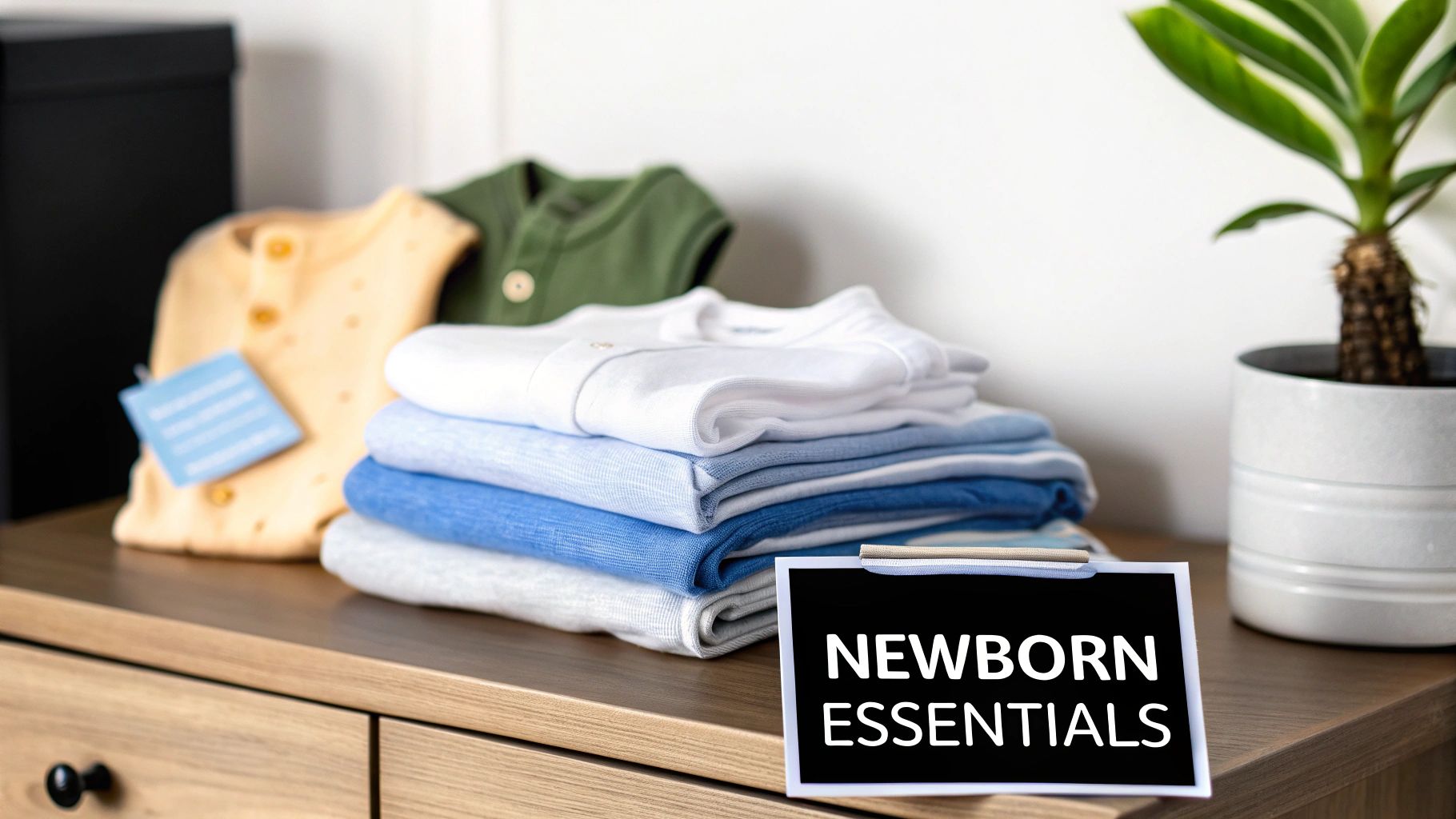
Core Items for Your Baby’s First Wardrobe
The global baby apparel market is huge—it hit around USD 227.0 billion in 2024. That number just shows how much parents everywhere rely on foundational items like bodysuits and sleepers that prioritize safety and comfort.
For your own list, a great starting point is 7-10 bodysuits and 5-7 sleepers. These two items alone will make up the bulk of what your baby wears, often accounting for over 60% of their early wardrobe.
Here's a pro-tip from one parent to another: functionality is everything. Look for bodysuits with envelope necklines. They let you pull the garment down over the baby’s body, which is an absolute lifesaver during a diaper blowout. For sleepers, two-way zippers are a game-changer for those middle-of-the-night changes, making them much faster and less disruptive for a sleepy baby.
To make your shopping trip a little easier, I've put together a quick checklist of the must-have items.
Quick-Look Newborn Clothing Essentials Checklist
This table breaks down the core clothing you'll need, how many to have on hand for the first few weeks, and the key features to look for. It’s all about prioritizing your newborn's comfort, safety, and your peace of mind.
| Clothing Item | Recommended Quantity | Key Features to Look For |
|---|---|---|
| Bodysuits (Onesies) | 7-10 | Soft, breathable cotton; envelope shoulders; nickel-free snap closures |
| Sleepers (Footed Pajamas) | 5-7 | Two-way zippers, built-in footies or mittens, flame-retardant-free |
| Pants or Leggings | 4-5 | Stretchy waistband, soft and breathable fabric |
| Newborn Gowns | 2-3 | Open bottom for easy diaper access, soft seams |
| Socks or Booties | 5-7 pairs | Stays on feet without being too tight, minimal seams |
| Hats (Beanies) | 2-3 | Soft, snug fit to keep head warm, breathable fabric |
| No-Scratch Mittens | 1-2 pairs | Prevents baby from scratching their face, elastic not too tight |
| Swaddles or Sleep Sacks | 2-3 | Secure closure (Velcro/zipper), breathable material like cotton or muslin |
Remember, this is just a starting point! You’ll quickly figure out what works best for you and your little one. And if you'd like to explore these items in more detail, check out our guide on the top must-have baby clothing items for new parents.
Choosing Fabrics to Protect Your Newborn’s Skin
A newborn's skin is incredibly delicate and brand new to the world. In fact, it's up to 30% thinner than our own, making it far more porous and easily irritated by rough materials, harsh dyes, or hidden chemicals. Think of it like a brand-new, super-sensitive sensor—it reacts to everything it touches. This is why picking the right fabric is one of the most important parts of creating your newborn clothing essentials list.
That simple little bodysuit or sleeper can be the difference between a happy, cozy baby and a fussy one dealing with an itchy rash or an allergic reaction. The right material acts as a soft, protective hug, helping to regulate their temperature and keep them dry. The wrong one can trap heat, trigger eczema, and expose their brand-new skin to things it just isn't ready for.
Why Natural Fibers Are a Newborn’s Best Friend
When you're looking at clothing labels, think of natural fibers as your best friends. Materials that come from the earth are just naturally more in sync with your baby’s sensitive skin. They breathe, they're soft, and they're far less likely to be processed with the harsh chemicals often found in synthetics that can lead to skin problems.
Here are the top fabrics to look for when shopping for your little one:
- GOTS-Certified Organic Cotton: This is truly the gold standard for baby clothes. The GOTS (Global Organic Textile Standard) seal means the cotton was grown without pesticides and processed without nasty chemicals, minimizing the risk of skin allergies. It’s about as pure and gentle as it gets.
- Bamboo Rayon: If you’ve ever felt bamboo fabric, you know it's silky smooth. It’s also incredibly soft, hypoallergenic, breathable, and a champion at wicking moisture away from the skin, keeping your baby perfectly dry and comfortable.
- Merino Wool: Don't let the word "wool" scare you! Merino isn't the scratchy stuff you might remember. It's an ultra-fine, soft fiber that works like a natural thermostat, keeping your baby warm when it’s chilly and cool when it’s hot, all while being gentle on the skin.
These fabrics let air circulate, which is key to preventing overheating and keeping pesky heat rash at bay. They’re nature’s perfect first layer for your baby. To learn more, feel free to explore our detailed guide on choosing the right fabric for your baby's sensitive skin.
Fabrics and Chemicals to Avoid
Knowing what to look for is half the battle; knowing what to steer clear of is just as crucial for preventing skin issues. Synthetic fabrics might seem like a good deal because they're often cheaper, but they can be a real problem for a newborn's skin.
"Think of synthetic fabrics like polyester or nylon as a plastic wrap for the skin. They don't breathe well, trapping moisture and heat, which can create a breeding ground for irritation, eczema flare-ups, and rashes. Sticking to natural, breathable materials is one of the simplest ways to protect your baby’s skin."
Materials like polyester, nylon, and acrylic are essentially plastics derived from petroleum. Not only do they lack breathability, but they're often treated with a cocktail of chemicals during manufacturing. We're talking about harsh dyes, flame retardants, and finishing agents that can leach out and trigger allergic reactions or contact dermatitis in sensitive babies.
It's no surprise that experienced parents overwhelmingly prefer natural materials. When putting together their baby checklists, breathable cotton is prioritized in 90% of preferences, while synthetic fabrics are known to irritate the skin of roughly 20% of newborns. This isn't just a hunch; it reflects a major trend. By 2024, U.S. spending on baby clothes hit $125 per capita annually, with a whopping 65% of that dedicated to clothes for babies aged 0-12 months. Parents are voting with their wallets for quality and safety. You can discover more insights about the baby clothes world market on IndexBox.io.
Reading Labels Like a Pro
Shopping for baby clothes can feel like a whirlwind, but a quick label check is your secret weapon for ensuring quality and safety. Don't just glance at the size; flip the garment inside out and find that fabric content tag.
Look for items labeled "100% cotton," "organic cotton," or a blend of natural fibers like bamboo or merino wool. If you see words like "polyester," "nylon," or "acrylic," it’s usually best to put that item back on the rack. This is especially true for pieces that will have direct, all-day contact with your baby’s skin, like bodysuits and sleepers.
By making soft, safe, and breathable materials a priority, you're building a wardrobe that truly nurtures your newborn from the outside in.
How Many Baby Clothes Do You Really Need?
One of the biggest questions I hear from expecting parents is, "How many tiny outfits do we really need?" It’s a great question. Babies grow at a mind-boggling speed, and that adorable sleeper that fits perfectly today might be too snug by next week. The real goal is to build a practical wardrobe that works for you, without ending up with drawers full of clothes that never get worn.
First, let's decode the confusing world of baby sizing. The two main sizes you’ll see right away are ‘Newborn’ (NB) and ‘0-3 Months’. They might sound almost the same, but knowing the difference is the secret to shopping smart and building a truly useful newborn clothing essentials list.
Newborn vs. 0-3 Months Sizing
Think of the 'Newborn' size as your baby's very first, short-term wardrobe. It's specifically designed for those first few precious weeks and typically fits babies weighing between 5 and 8 pounds. If your doctor is predicting an average or smaller baby, having a handful of Newborn-sized items on hand is a fantastic idea.
On the other hand, ‘0-3 Months’ offers a little more breathing room and a longer lifespan. This size generally fits babies from about 8 to 12.5 pounds. If you're expecting a larger baby, or if you just want to get more wear out of each piece, you might decide to focus more on this size from the get-go. Honestly, most experienced parents will tell you that having a mix of both is the safest bet.
A smart strategy is to purchase the absolute essentials—a week's worth of bodysuits and sleepers—in Newborn size. For everything else, including extra layers and cute outfits, opting for the 0-3 Months size gives your baby more room to grow into them.
To help you see the difference at a glance, here’s a quick breakdown.
Newborn vs 0-3 Months Sizing Guide
This little chart helps clear things up by putting the numbers side-by-side.
| Size Label | Typical Weight Range | Typical Height Range | When to Buy |
|---|---|---|---|
| Newborn (NB) | 5-8 lbs (2.2-3.6 kg) | Up to 21.5 in (55 cm) | Ideal for the first 2-4 weeks, especially for average or smaller babies. |
| 0-3 Months | 8-12.5 lbs (3.6-5.7 kg) | 21.5-24 in (55-61 cm) | Great for larger newborns or for items you want to last longer. |
Ultimately, having some of each size ready means you won't have to panic-buy clothes in those first chaotic days home.
This flowchart is a great visual for another huge piece of the puzzle: choosing baby-safe fabrics.

As you can see, natural fabrics are the clear winner for their softness and breathability, making them the best choice for anything that touches your baby’s delicate skin and helps prevent allergies or rashes.
Building Your Core Wardrobe Quantities
So, what's the magic number of outfits? The real answer comes down to one simple, practical thing: how often you plan on doing laundry. Newborns are champions of spit-up and diaper blowouts, which means you might go through several outfits in a single day. A good rule of thumb is to have enough clothing to last at least two to three days between washes.
For most new parents, a solid starting point includes:
- 7-14 bodysuits (a mix of short- and long-sleeve)
- 5-7 footed pajamas for sleeping
- 2-3 swaddle blankets
And don't forget the hats! Newborns can't regulate their body temperature very well, and they can lose up to 30% of body heat through their heads. Having a couple of soft beanies is a must.
This focus on having a well-stocked but practical wardrobe isn't just a parenting trend. Global consumption of baby clothing has skyrocketed to 405,000 tons post-2013, with a market value projected at $9.2 billion by 2024. You can learn more about these trends from Technavio's detailed market report.
Remember, this list is just a guide, not a strict rule. You can always add more pieces later once you get a feel for your baby's needs and your new daily routine. Starting with these core quantities ensures you’re prepared for those first few weeks without buying a mountain of clothes your baby will outgrow in a flash.
Dressing Your Baby Safely and Comfortably
Bringing home your tiny newborn is absolutely magical. But when it comes to the practical stuff, like wrangling them into a onesie, it can feel surprisingly nerve-wracking. Their little bodies are so delicate and floppy! My goal here is to help you build confidence by focusing on the core principles of safe and comfortable dressing.
Think of safety as the most important item on your newborn clothing essentials list. Before any garment touches your baby’s skin, give it a quick once-over for quality and potential hazards. The cutest outfit in the world can still hide risks that could cause harm or skin irritation.

Prioritizing Safety In Every Outfit
When you're looking at baby clothes, try to see them from your baby's perspective. Are there any parts that could come loose or poke them? You want to eliminate any risks before they become a problem, ensuring every piece is as safe as it is soft.
Run your hands over the garment, both inside and out. Feel for any scratchy tags, rough seams, or exposed elastic that could irritate their brand-new, sensitive skin and cause a rash.
Most importantly, keep an eye out for choking hazards. They're more common than you might think, especially on those adorable, decorative outfits.
- Avoid Loose Embellishments: Steer clear of clothes with decorative buttons, beads, sequins, or pom-poms. They might be cute, but they can easily pop off and become a serious choking risk.
- Check for Long Strings: Drawstrings on hoods or pants are a major no-go. The American Academy of Pediatrics actually recommends avoiding them altogether because they pose a strangulation hazard.
- Inspect Zippers and Snaps: Make sure all closures are secure and made from high-quality, nickel-free materials to prevent allergic reactions. The best ones have fabric flaps covering them to prevent the zipper or snap from accidentally pinching your baby’s delicate skin.
Being mindful of these little details helps you build a wardrobe that isn’t just adorable—it’s fundamentally safe for your little one.
Mastering The Gentle Art Of Dressing
Dressing a newborn is all about slow, deliberate movements. It’s a calm, gentle dance, not a race to the finish line. Always lay your baby on a soft, flat surface like a changing pad to keep them secure and comfortable.
Remember to support their head and neck at all times, since those muscles are still developing. A great trick is to bunch the clothing up like an accordion, which makes it much easier to slide over their head or feet without stretching their tiny limbs into awkward positions.
When putting on a top or bodysuit, stretch the neckline wide and bring it over the back of their head first, then gently guide it over their face. This little technique is much less startling for a baby than pulling a shirt straight down from the front.
The Importance of Snug And Safe Sleepwear
Nighttime safety is a top priority, and what your baby wears to bed plays a huge part in that. Cozy blankets might seem like a good idea, but they aren't recommended for infants due to the risk of suffocation. Instead, sleep sacks and footed pajamas are your best friends.
The key to safe sleepwear is a snug fit. This doesn't mean tight—it just means there shouldn't be lots of loose fabric that could ride up and cover your baby’s face while they sleep. Pajamas should also be free of chemical flame retardants, which can be harsh on the skin and are linked to health concerns. Opting for naturally flame-resistant fabrics like cotton is a much safer bet.
Mastering these details not only keeps your baby safe but also helps you sidestep common mistakes. For more practical advice, check out our guide on the 10 common baby clothing mistakes and how to avoid them. Before you know it, dressing your baby will become a sweet, cherished bonding routine.
Essential Outerwear and Functional Accessories
Once you've got the basics like bodysuits and sleepers sorted, it's time to think about the finishing touches. These are the key accessories that complete your newborn clothing essentials list. They might seem like small additions, but they play a huge role in keeping your baby safe, comfortable, and cozy, especially when they're sleeping or heading outside.
Think of these items as your baby's personal support system. They're designed for very specific jobs, from recreating the snug feeling of the womb to protecting their brand-new skin from those surprisingly sharp little fingernails.
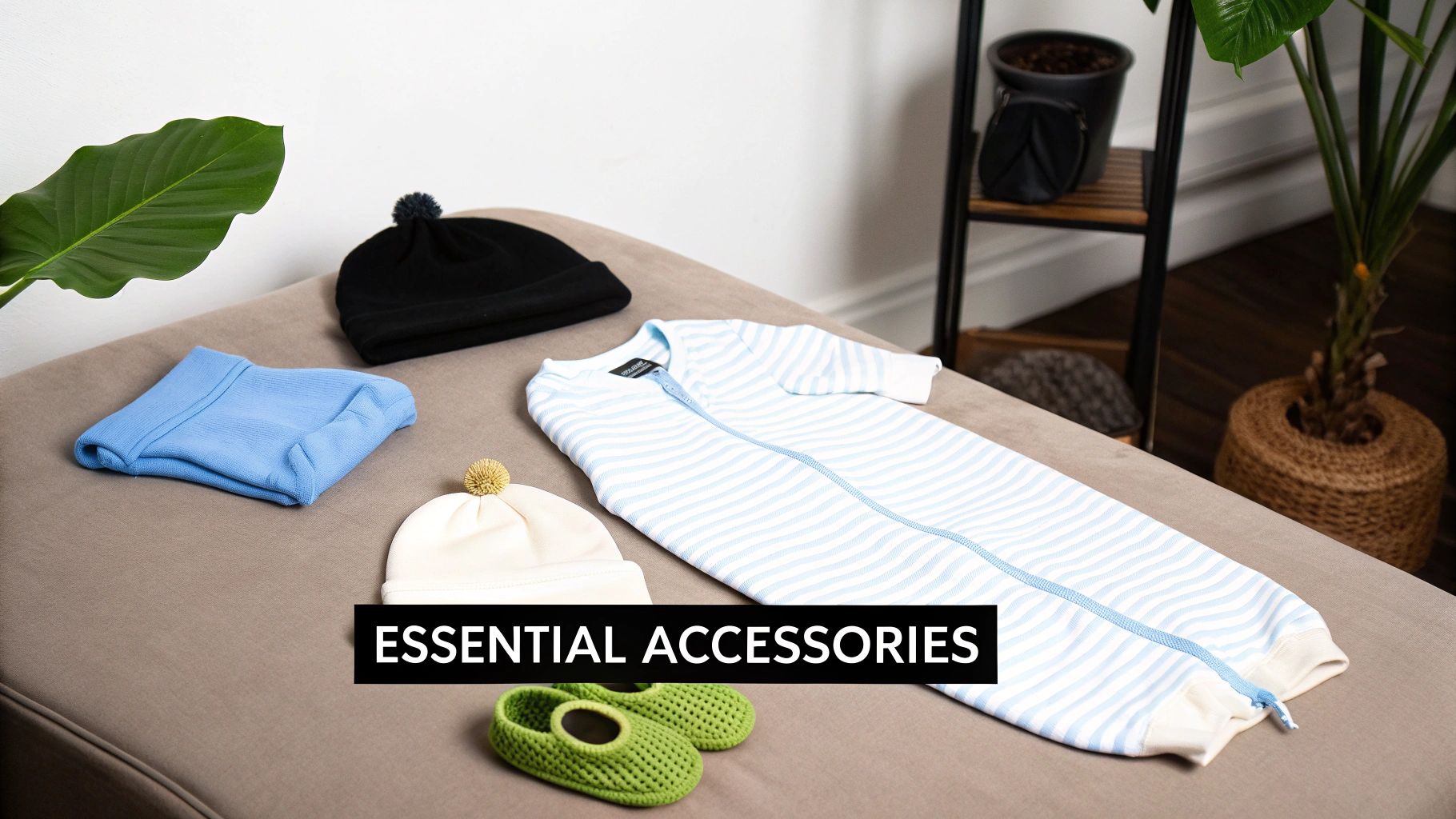
Promoting Safe Sleep with Swaddles and Sleep Sacks
If you’ve ever seen a newborn suddenly flail their arms in their sleep, you’ve witnessed the startle reflex. It's completely normal, but it can easily wake them up. A good swaddle is the perfect solution—it gives them a gentle, reassuring hug that calms that reflex and helps them (and you!) get longer stretches of sleep.
Once your baby starts showing signs of rolling over, it's time to graduate from the swaddle. This is where the sleep sack comes in. A sleep sack is basically a wearable blanket that keeps your baby warm without the danger of loose blankets in the crib, which are a major safety risk. Making this switch is one of the simplest and most important things you can do for safe sleep.
A sleep sack’s TOG (Thermal Overall Grade) rating tells you how warm it is. This is incredibly helpful for picking the right one based on the season and the temperature of your baby's room, which helps prevent overheating—a known risk factor for SIDS.
Getting these sleep tools right creates a much safer and more soothing environment for your little one. If you want to learn more, our guide answers the common question, what is a sleep sack?, and explains why so many parents consider it a must-have.
Crucial Accessories for Comfort and Protection
A few other small items make a big difference in your baby's day-to-day life. Each one is a simple solution to a very real newborn need.
- Soft, Breathable Hats: Newborns lose a lot of heat through their heads, so a soft little beanie is a must, especially in those first few weeks. Look for one made from a breathable, hypoallergenic fabric like organic cotton to help regulate their temperature without making them sweaty or causing scalp irritation.
- No-Scratch Mittens: Those tiny fingernails are like little razors! Since babies don't have much control over their movements yet, they can easily scratch their own faces. A pair of soft mittens keeps their delicate skin safe from accidental nicks and cuts.
These functional accessories aren't just for looks; they provide real, practical support for your baby’s health and comfort right from day one.
Gentle Laundry Care for Newborn Clothes
How you wash your baby’s clothes is just as important as what’s on your newborn clothing essentials list. A newborn's skin is incredibly delicate and much more permeable than ours, making it super sensitive to the harsh chemicals and fragrances found in standard laundry detergents, which can easily cause rashes or allergic reactions.
Getting into a gentle, skin-safe laundry routine from day one is one of the simplest ways you can prevent uncomfortable skin problems. Think of it as the final, loving touch before a garment gets to cuddle your baby.
The Importance of the Pre-Wash
This is a big one: always, always wash new clothes before your baby wears them. Even the softest organic cotton onesie can pick up dust, dirt, and chemical residues from manufacturing, the supply chain, or other customers in the store.
A quick spin in the wash gets rid of these potential irritants, leaving the fabric soft, fresh, and truly ready for your baby. It’s a simple but crucial step to protect that brand-new, sensitive skin from day one.
Choosing a Baby-Safe Detergent
When it comes to picking a laundry soap, the simpler, the better. Those powerful stain-fighting formulas and "fresh meadow" scents are usually packed with chemicals that can be tough on a baby’s skin.
Your best bet is a hypoallergenic, fragrance-free, and dye-free liquid detergent. I always recommend liquids over powders, as powders can sometimes leave behind a chalky residue that might irritate the skin and trigger conditions like eczema.
Also, it's wise to skip fabric softeners and dryer sheets altogether. They work by coating fabrics with a film of chemicals to make them feel softer and smell nice, but that same film can easily cause rashes or trigger allergies. A gentle detergent is all you really need.
Tackling Tough Newborn Stains
Let’s be real—newborns are tiny stain-making machines. From spit-up to those infamous diaper blowouts, you'll be dealing with your fair share of messes. While it’s tempting to grab a heavy-duty stain remover, a gentler approach usually works just as well.
For common culprits like spit-up or milk:
- Rinse Immediately: Get the stain under cold water as soon as you can. Hot water will actually "cook" the protein in, setting the stain permanently.
- Pre-Soak: Let the item soak for a bit in cool water with a little of your baby-safe detergent mixed in.
- Wash as Usual: Toss it in with the next load of baby laundry and wash normally.
This method gets the job done without harsh chemicals, keeping every piece of their wardrobe soft, safe, and perfectly comfortable against their skin.
Got Questions About Newborn Clothes? We've Got Answers.
Stepping into the world of baby clothes for the first time can feel like learning a new language. As you start putting together your newborn clothing essentials list, it's totally normal to have a million questions about the little things. You want your baby to be cute, sure, but more importantly, you want them to be safe, comfortable, and free from skin irritation. Let's tackle some of the most common questions we hear from new parents, so you can feel good about the choices you're making.
Many of these worries boil down to one thing: protecting that incredibly delicate newborn skin. From figuring out the right laundry detergent to getting a handle on sizing, every little decision plays a part in keeping your baby happy and avoiding pesky rashes or allergic reactions.
How Should I Dress My Newborn for Sleep?
When it comes to sleep, safety is everything. That’s why you'll want to dress your baby in either a snug-fitting sleeper or a sleep sack made from breathable material. Loose clothing or blankets are a serious suffocation risk and have no place in a crib. A great rule of thumb I always share with new parents is to dress your baby in one more layer than you’re wearing to be comfortable.
So, if you’re cozy in your PJs, your baby will likely be comfortable in a long-sleeved bodysuit with a sleep sack over it. This simple layering trick keeps their body temperature just right without the dangers of loose bedding, helping everyone get a safer night's sleep.
A baby's sleep environment is a key factor in their safety. One study found that soft bedding, which includes loose blankets, was implicated in 69% of infant sleep-related deaths. Switching to a wearable blanket or sleep sack is a simple change that dramatically lowers this risk.
Do I Really Need a Special "Going-Home" Outfit?
It's a really sweet tradition, but honestly, a fancy "going-home" outfit is not a must-have. The most important thing is choosing something that’s practical, comfortable, and safe for the car ride. That means you have to skip the bulky or puffy snowsuits—they can create a dangerous gap between the baby and the car seat harness, preventing a snug, safe fit.
A simple long-sleeved bodysuit, some soft pants, a hat, and a blanket tucked securely over the already buckled harness is a much safer bet. For that first important trip home, always choose function, comfort, and safety over fashion.
How Can I Tell if My Baby is Too Hot or Too Cold?
Newborns aren't great at regulating their own body temperature, so it's our job to play thermostat for them. Don't just go by how their hands or feet feel; it's normal for them to be a bit cooler than the rest of their body. The best way to check is to feel the back of their neck or their tummy.
- If they feel sweaty or hot to the touch, they're probably overdressed. It's time to remove a layer to prevent overheating and heat rash.
- If their skin feels a bit cool, they might appreciate an extra layer.
Watch for signs of overheating like flushed cheeks, fast breathing, or general fussiness. Sticking with breathable, natural fabrics like cotton is a great way to help them stay at a safe and comfortable temperature and avoid nasty heat rash on their sensitive skin.
At GuGuTon, we know how much every little detail matters for your baby’s comfort and safety. Our curated collection of baby essentials is made from soft, high-quality materials to give you one less thing to worry about. You can explore our gentle and practical clothing options today at https://guguton.com.