

Your Ultimate Newborn Baby Essentials List for New Parents
Getting ready for a new baby is one of life’s most exciting chapters, and having a solid newborn baby essentials list is the best way to feel prepared. When you're just starting out, it's easy to get lost in a sea of baby gadgets. Honestly, you can boil it all down to the basics for your baby's first month: feeding, sleeping, and diapering. Nail these, and you've got it covered.
Your Quick Guide to Newborn Must-Haves
Bringing home a newborn is a huge milestone, but staring down the baby aisle can feel like preparing for an expedition to another planet. There's just so much stuff. This guide is here to help you tune out the noise and focus on what you'll actually need. We’ll walk through a clear, practical checklist that puts your baby’s comfort, your convenience, and—above all—their safety first.
Picking the right products is about so much more than just what's cute. A newborn's skin is unbelievably delicate, and their immune system is just getting started, which means they're super susceptible to irritants. Things like harsh chemicals in lotions, synthetic fabrics, or poorly designed gear can cause everything from uncomfortable rashes to potential allergic reactions.
The Philosophy of Safe and Simple
When you stick to high-quality, safe materials, you're building a gentle, nurturing world for your little one. Think of it like cooking a meal with the best ingredients—the final dish is just better and healthier. For your baby, that means choosing soft organic cotton clothes to prevent skin irritation, making sure bottles are BPA-free to avoid chemical exposure, and checking that every piece of gear meets the latest safety standards. This approach does more than just protect their skin; it contributes to their overall health and well-being, reducing the risk of allergies and sensitivities. If you want to see some top-rated examples, take a look at our guide to the best baby products for newborns.
This chart really breaks down the most important things to keep in mind when you're shopping.
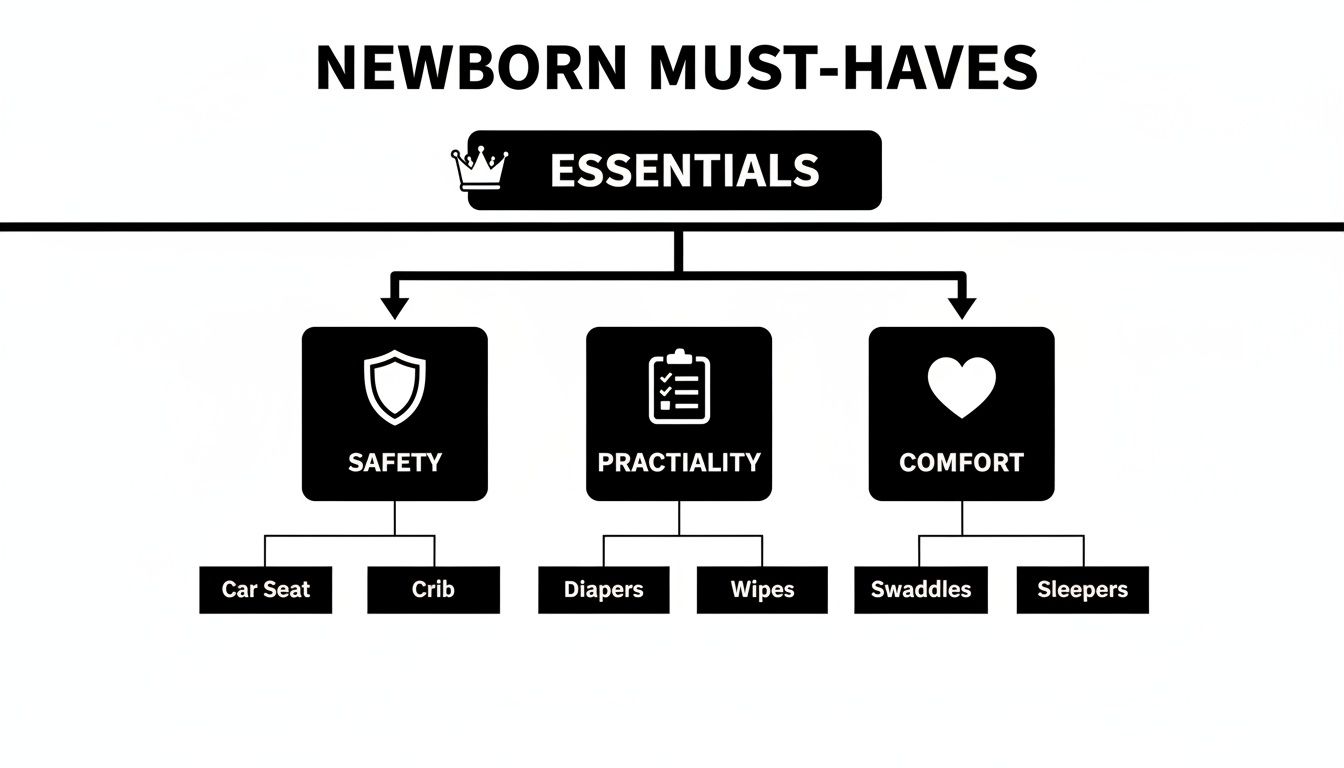
It’s a simple reminder that while things need to be practical and comfy, safety is the one thing you can't compromise on. It's the foundation for every decision you'll make.
When you prioritize safety, you're not just buying a product; you're investing in your baby’s health and your own peace of mind. Every gentle fabric and non-toxic material is a small but powerful act of love that helps prevent rashes and allergic reactions.
Focusing on quality over quantity doesn't just benefit the baby—it makes your life as a new parent smoother and a lot less stressful. In the sections ahead, we’ll dive into each category on your newborn baby essentials list, keeping these core ideas in mind to help you feel confident as you get ready for your family’s newest addition.
Creating a Safe Nursery and Sleep Sanctuary
Setting up a safe and calming space for your baby to sleep isn't just another task on the checklist; it’s one of the most important things you'll do. This part of your newborn baby essentials list is about more than just buying stuff—it's about understanding why each choice matters. The goal here is simple: build a peaceful little haven that keeps your baby protected, comfortable, and free from potential allergens and irritants.
Think of your baby’s crib or bassinet as their own little world. For the first few months, they'll spend a huge chunk of their time there, which makes the quality of that environment incredibly important. From the mattress they lie on to the air they breathe, every detail counts towards preventing skin issues and ensuring healthy development.
The Foundation of Safe Sleep
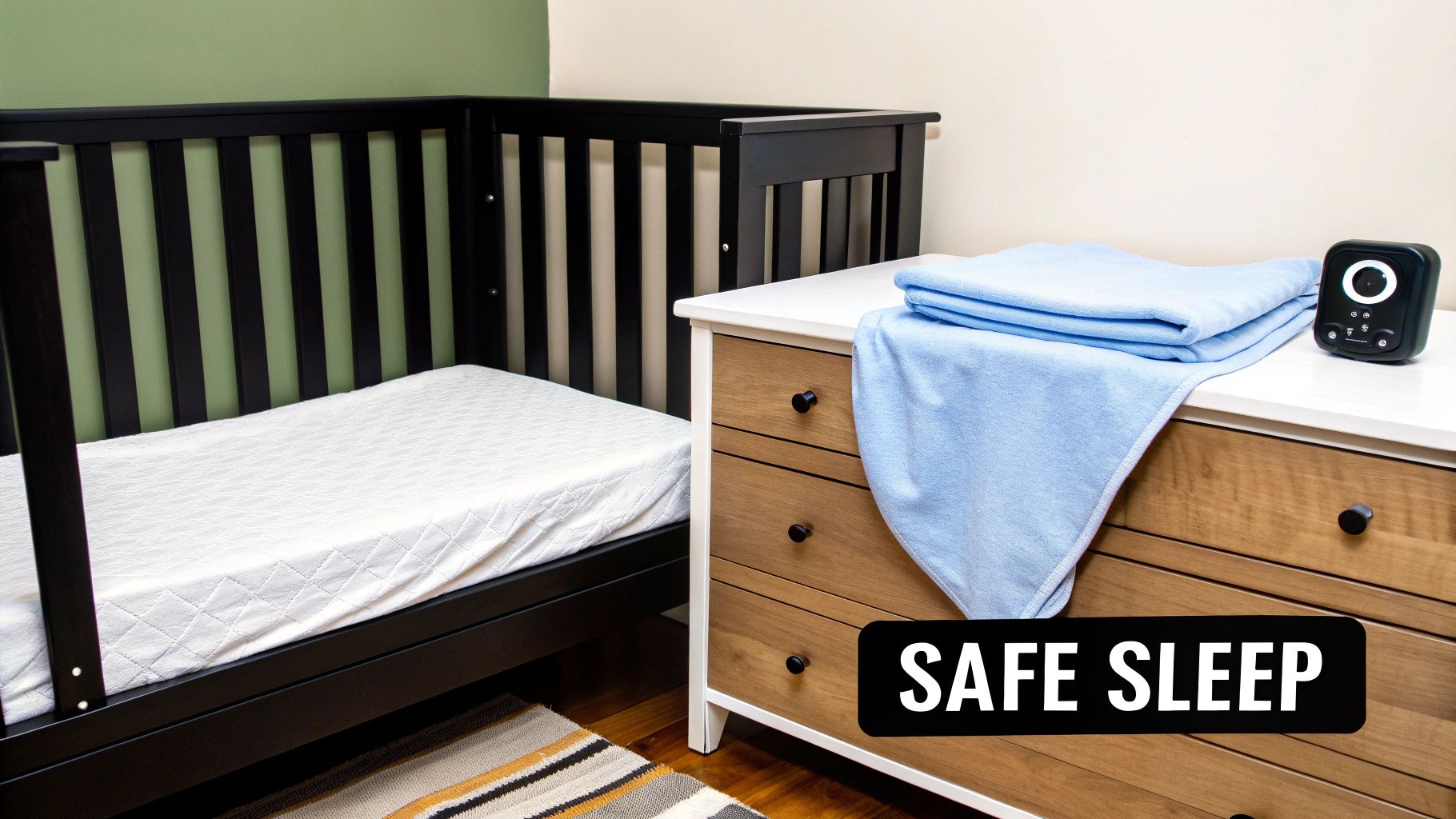
First things first: the single most critical piece of the puzzle is a firm, flat sleep surface. A soft, cushy mattress might seem cozier to us, but for a baby, it poses a serious risk. A firm crib mattress gives their developing body the support it needs and is a key recommendation for preventing Sudden Infant Death Syndrome (SIDS).
Of course, the mattress is only part of the equation. Pairing it with the right bedding is just as crucial for preventing rashes and allergic reactions.
- A Firm Crib Mattress: It needs to fit snugly inside the crib frame. If you can slide more than two fingers between the mattress and the side of the crib, it's too small and creates a dangerous gap. Look for certifications like GREENGUARD Gold to ensure it has low chemical emissions.
- Fitted Organic Cotton Sheets: A newborn's skin is incredibly sensitive and absorbent. Organic cotton is a great choice because it’s grown without harsh pesticides and isn't processed with irritating chemicals, which helps reduce the risk of rashes or allergic contact dermatitis. Plan on having at least three fitted sheets on hand—you'll be grateful during those inevitable middle-of-the-night changes.
- A Waterproof Mattress Pad: This is a total non-negotiable. It protects the mattress from spit-up, diaper leaks, and everything in between. Look for one that's free from PVC, vinyl, and phthalates to avoid off-gassing, and make sure it's breathable to prevent overheating.
Putting these three things together creates a clean, non-toxic, and truly safe foundation for sleep. To dive deeper into setting up the perfect space, check out our guide on creating a safe sleep environment for infants.
Keeping Your Baby Cozy and Secure
You've probably heard one of the golden rules of safe sleep: keep the crib totally bare. That means no blankets, no pillows, no bumpers, and no soft toys. As cute as they are, these items are all serious suffocation hazards. So, how do you actually keep your little one warm?
The best way to keep your baby warm without loose bedding is to dress them for sleep. Think of a swaddle or sleep sack as wearable bedding that provides warmth and security without the risks.
Swaddles and sleep sacks are brilliant because they mimic that snug, comforting feeling of being in the womb. Choose ones made from soft, breathable materials like organic cotton or bamboo to prevent overheating and skin irritation. Once your baby starts showing signs of trying to roll over, it's time to switch to a sleep sack, which keeps their body warm but leaves their arms free for safe movement.
Choosing high-quality, safe sleepwear is part of a bigger picture. Parents today are more focused than ever on safety and quality, which is why the newborn baby care products market is projected to grow at a 6.8% CAGR from 2025 to 2032. This boom is driven by parents seeking out essentials like safe bedding and safety monitors. It shows a real shift toward investing in organic, dermatologically tested products as awareness of neonatal risks grows. You can find more insights about this market trend and its impact on your newborn essentials list.
Nursery Essentials for Peace of Mind
Beyond the crib itself, a few other key items can help turn the nursery into a true sanctuary and give you some much-needed peace of mind.
A reliable baby monitor is a must. It lets you keep an eye (and an ear) on your baby without having to constantly peek into the room. Modern video monitors are fantastic, offering clear pictures, night vision, and even room temperature sensors to make sure it's not getting too hot or cold, which is crucial for preventing heat rash.
Finally, don't underestimate the power of a white noise machine. That gentle, constant hum is a game-changer for many families. It helps block out sudden household noises (like a barking dog or a dropped pan) and can be incredibly soothing for a fussy baby, as it sounds a bit like the constant whooshing they heard in the womb. These thoughtful additions truly help make the nursery a place where everyone can rest a little easier.
Navigating Your Newborn Feeding Journey
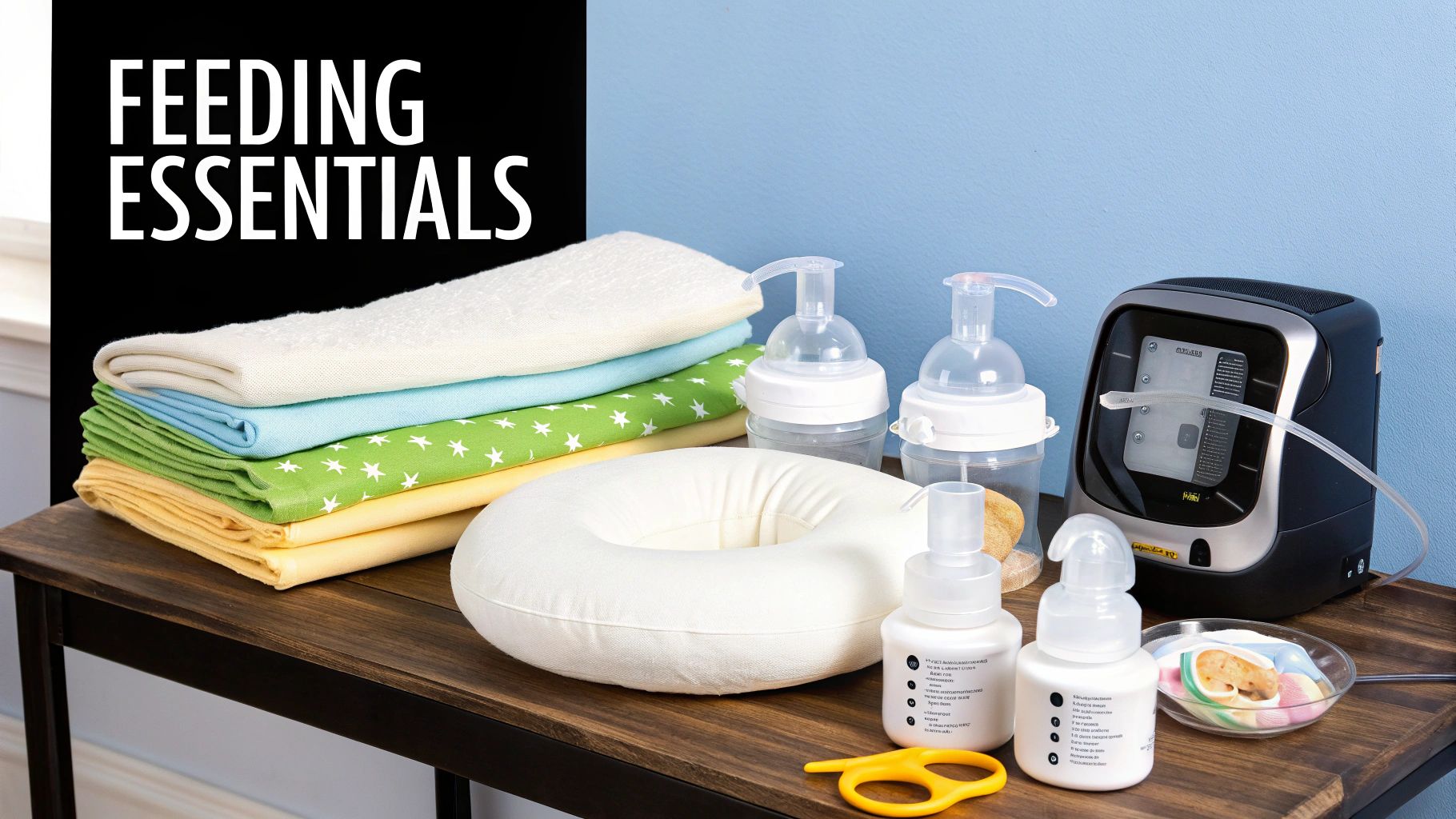
Whether you’re planning on breastfeeding, formula feeding, or doing a bit of both, being prepared can make those first few hazy weeks so much easier. Newborns eat around the clock, and having your feeding station ready to go makes all the difference when you're fumbling around for a 3 AM session.
Your feeding-focused newborn baby essentials list is really about two things: getting nourishment into your baby safely and keeping you both as comfortable as possible. A newborn's immune system is still a work in progress, so things like choosing the right materials and keeping everything clean aren't just details—they're crucial for preventing illness and allergic reactions.
Essentials for Breastfeeding Comfort and Success
If breastfeeding is your goal, a few key items can help you settle in and find your groove. Think of them as your support crew, helping you establish a good rhythm while also taking care of your own body.
A good nursing pillow is an absolute lifesaver. It brings your baby up to the perfect height, saving you from hunching over and straining your back, neck, and shoulders. When you're not wrestling with your own discomfort, you can focus on what really matters: helping your baby get a great latch. Look for covers made from natural, washable fabrics to keep the pillow clean and free from irritants.
A reliable breast pump is another must-have, especially if you plan to share feeding duties or build up a milk supply. From a hospital-grade double electric pump to a simple manual one for occasional relief, this gadget gives you freedom and flexibility. Paired with milk storage bags, it lets a partner or family member take a feeding, giving you a much-needed break.
Choosing the Safest Bottles and Formula
For parents using formula or pumped breast milk, the bottles you choose are a big deal. Your baby will be using them multiple times a day, so what they’re made of really counts.
Always check that any bottles you buy are clearly labeled as BPA-free. Bisphenol A (BPA) is a chemical you want to avoid, as it can be harmful to a baby's developing systems. Thankfully, it's easy to do by just looking for that label. It’s a simple step that offers huge peace of mind.
Many parents lean towards glass, stainless steel, or high-quality silicone bottles to be extra cautious and avoid plastic altogether. It's also worth looking for bottles with anti-colic features. They have special vents designed to reduce the amount of air your baby swallows, which can be a game-changer for cutting down on gas and fussiness. Figuring out the right formula can also feel like a journey, but we can help you get started. For a deeper dive, check out our guide on how to choose baby formula.
Hygiene and Cleanup Gear You Can’t Skip
When it comes to feeding a newborn, "clean" is the name of the game. Meticulous hygiene is your best defense against germs, so your newborn baby essentials list needs a few key players in the cleaning department.
- Bottle Sterilizer: An electric steam sterilizer or even simple microwave bags can eliminate up to 99.9% of germs, which is incredibly reassuring for protecting a new baby's immune system.
- Bottle Brush: Milk residue can hide in the tiniest crevices. A dedicated brush with both nipple and bottle bristles is essential for scrubbing every nook and cranny of bottles and pump parts.
- Drying Rack: A simple, space-saving rack keeps all your clean parts off the counter and allows them to air dry properly, preventing any yucky moisture or mold buildup.
Of course, feeding a baby is rarely a tidy affair. You'll want an army of soft, absorbent burp cloths and bibs at the ready. Look for gentle, high-quality materials like organic cotton or bamboo that won't irritate your baby’s skin. Constant dampness from dribbled milk can cause rashes on their chin and neck, so keeping that area clean and dry is a small but important part of keeping them comfortable. We recommend having at least 10-12 burp cloths on hand—you'll go through them faster than you think.
Mastering Diapering for Healthy Baby Skin
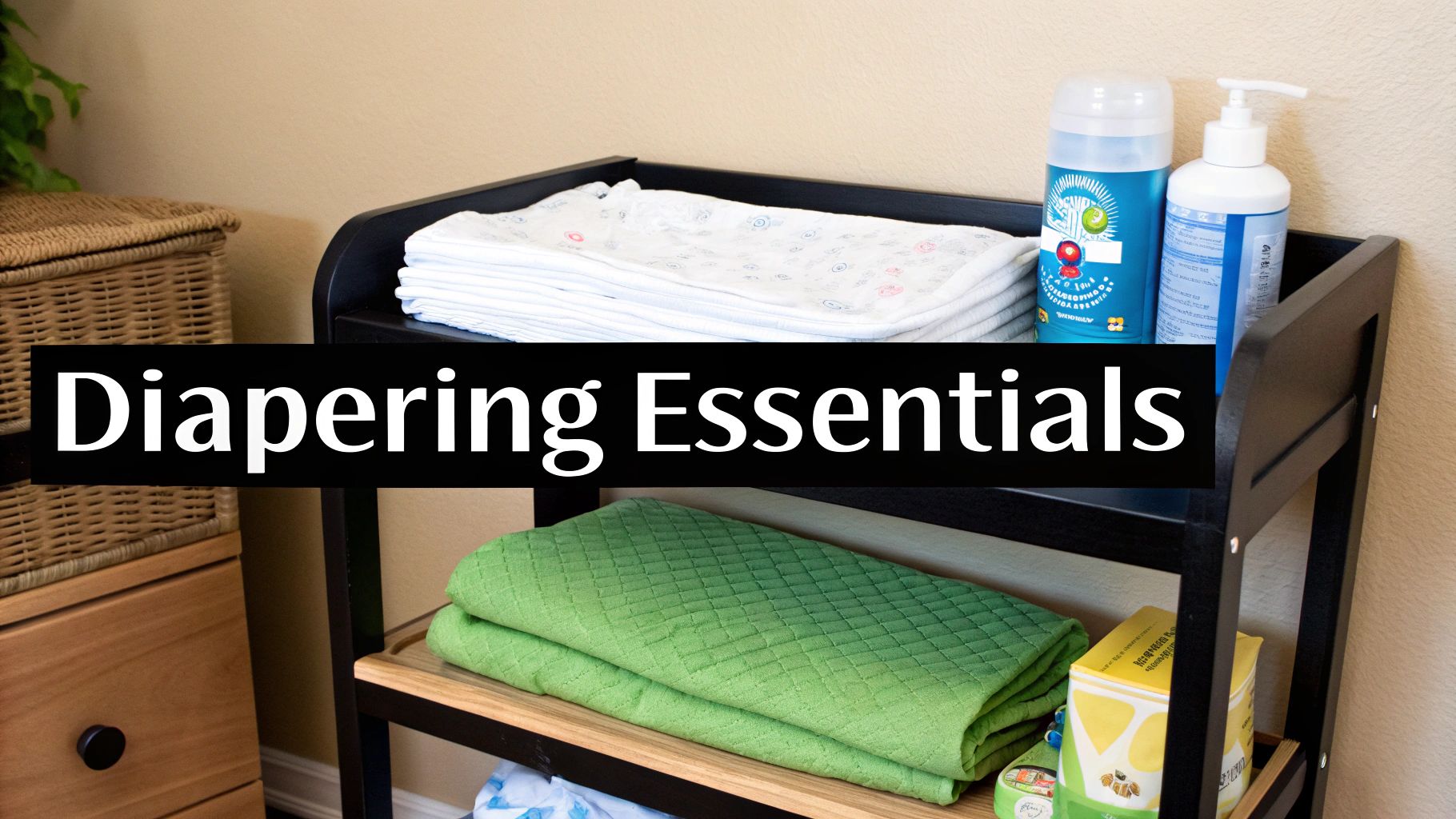
Get ready to become a diaper-changing expert! With a newborn, you'll be tackling this task up to 10-12 times a day. This part of your newborn baby essentials list is more than just about cleanup; it’s one of the best ways to keep your baby comfortable and protect their delicate skin.
Think of your baby’s skin like a brand-new, super-soft piece of silk. It’s incredibly sensitive and needs the gentlest touch. Every item at your changing station, from the diapers to the wipes, plays a huge role in preventing painful irritation and diaper rash.
Choosing Your Diapering System
One of the first big decisions you'll make is whether to go with disposable or cloth diapers. Honestly, there's no single "right" answer. The best choice is the one that fits your family's lifestyle, budget, and your baby’s skin sensitivity.
Disposables are famously convenient and super absorbent, pulling moisture away from the skin. On the flip side, some contain fragrances, lotions, or chlorine that can bother sensitive babies. Cloth diapers are reusable and often made from soft, natural fibers like cotton or bamboo, but they do require a solid laundry routine.
The real secret to preventing diaper rash isn't just the type of diaper you use—it's how often you change it. A wet diaper, whether cloth or disposable, creates a warm, moist environment that is a breeding ground for irritation and bacteria.
The global baby care market is set to grow from USD 98.2 billion in 2024 to USD 186.4 billion by 2035, and diapers are the biggest piece of that pie. This trend shows just how much parents are prioritizing safe, high-quality essentials. You can explore more about the baby care products market on metatechinsights.com.
Comparing Diaper Options For Your Newborn
Deciding between cloth and disposable diapers can feel overwhelming. This table breaks down the key differences to help you figure out what works best for you.
| Feature | Disposable Diapers | Cloth Diapers |
|---|---|---|
| Upfront Cost | Low initial cost, but ongoing expense. | Higher initial investment, but cheaper in the long run. |
| Convenience | Very convenient; simply toss when used. | Requires regular washing, drying, and folding. |
| Environmental Impact | Creates significant landfill waste. | Reusable, but uses water and energy for washing. |
| Skin Friendliness | Highly absorbent, but some have added chemicals. | Often made of natural, breathable fibers like cotton. |
| Travel | Easy to pack and use on the go. | Requires carrying wet bags for used diapers. |
Ultimately, many families find a hybrid approach works well—using disposables for travel and cloth at home. Don't be afraid to experiment to find your perfect routine.
Setting Up Your Changing Station
Having everything you need within arm's reach makes diaper changes quicker, safer, and a lot less stressful. A well-stocked station is non-negotiable for protecting your baby's skin.
- Hypoallergenic, Unscented Wipes: Newborn skin is too sensitive for perfumes or harsh soaps. Stick with water-based wipes that are free of alcohol and fragrance to clean gently. For super-sensitive skin, you can't go wrong with plain water and soft cotton cloths.
- A Washable Changing Pad: A contoured pad with a safety strap is a must-have. Grab a few soft, washable covers so you can easily swap one out after a mess without having to clean the whole pad.
- High-Quality Diaper Rash Cream: Look for a cream that contains zinc oxide and is free from parabens, phthalates, and fragrances. It creates a protective barrier on the skin to shield it from moisture. Think of it as a preventative tool—apply a thin layer at most changes, not just when you see redness.
When you're heading out, a well-organized diaper bag is your best friend. For great ideas on what to pack, check out our guide on what to pack in a diaper bag. It’ll help you keep all your skin-protecting essentials ready for anything.
Choosing Gentle Clothing and Bathing Gear
A newborn's skin is their first line of defense, but it's also incredibly thin and porous, making it super sensitive to irritation. This is why the clothes you choose and the products you use for bath time are more than just items on a list—they’re your best tools for preventing rashes, allergies, and general fussiness.
Think of your baby’s skin like a delicate little sponge. It absorbs much of what you put on it, so choosing gentle, non-toxic materials is one of the best things you can do for their well-being right from the start. Let's talk about how to wrap your little one in pure comfort and safety.
The Foundation: Soft, Breathable Fabrics
When you're putting together your baby's first wardrobe, the fabric really is everything. You're looking for materials that are soft, let their skin breathe, and are free from harsh chemicals or dyes. The right fabrics help regulate their body temperature and can dramatically reduce the risk of skin flare-ups like eczema or contact dermatitis.
Here are the top fabrics I always recommend for sensitive newborn skin:
- Organic Cotton: This is the gold standard for a reason. Grown without pesticides and processed without harsh chemicals, it’s unbelievably soft, breathable, and a safe bet for even the most delicate skin.
- Bamboo Rayon: Known for its silky, buttery-smooth feel, bamboo fabric is naturally hypoallergenic and fantastic at wicking moisture away from the skin. This keeps your baby dry and comfortable, reducing the chance of heat rash.
- Muslin: This lightweight, loosely woven cotton is exceptionally breathable. It’s perfect for swaddles and light blankets, especially if you live in a warmer climate.
One pro tip: wash all new clothing before your baby arrives. Use a fragrance-free, hypoallergenic detergent made for sensitive skin. This simple step gets rid of any dust, residual chemicals, or irritants left over from the manufacturing and shipping process.
Creating a Gentle Bath Time Routine
Bath time is such a sweet bonding experience, but the wrong products can easily strip a newborn's skin of its natural, protective oils. The goal here is simple: clean gently without causing dryness or irritation.
For your setup, a dedicated infant bathtub with a sling insert is a lifesaver. It gives fantastic support for a tiny baby who can't sit up yet, keeping their head safely above water and leaving both of your hands free for washing.
When it comes to bath products, less is absolutely more. Stick with fragrance-free, tear-free washes and lotions. Fragrances, even the “natural” ones, are one of the most common causes of skin irritation and allergic reactions in babies. Look for products specifically formulated for sensitive newborn skin.
The water should always be lukewarm, not hot. A quick check with your wrist or elbow is the best way to gauge the temperature. After the bath, gently pat your baby dry with a soft, hooded towel—never rub, as that can easily irritate their fragile skin.
Your Essential Clothing and Bathing Checklist
To keep things simple and practical, here’s a breakdown of what you'll want to have ready. This list should get you through the first few weeks without feeling like you're constantly doing laundry.
Clothing Essentials (Newborn or 0-3 Months):
- 7-10 Bodysuits or Onesies: Get a mix of short-sleeve and long-sleeve. The ones with side-snaps or shoulder-snaps are so much easier for changes.
- 5-7 Sleepers or Footed Pajamas: Zippers are a game-changer during those 3 a.m. diaper changes. Fumbling with snaps in the dark is no fun!
- 5-7 Pairs of Socks or Booties: Look for soft, stretchy ones that will actually stay on their tiny feet without being too tight.
- 2-3 Swaddle Blankets: Large, lightweight muslin or organic cotton swaddles are incredibly versatile. You'll use them for swaddling, as a nursing cover, a burp cloth, and more.
- 1-2 Newborn Hats: A simple, soft cap made from a breathable fabric is perfect for keeping their head warm, especially right after birth.
Bathing Gear:
- Infant Bathtub: A tub with a newborn sling or insert offers the best safety and support.
- 3-4 Hooded Towels: They’re cute, but they’re also really practical for keeping your baby’s head warm and cozy post-bath.
- Fragrance-Free Baby Wash & Shampoo: A gentle, tear-free formula is a non-negotiable. Look for products that are hypoallergenic and pediatrician-tested.
- Soft Washcloths: Organic cotton or bamboo washcloths are perfect for their sensitive skin.
- Unscented Baby Lotion or Oil: Great for locking in moisture after bath time to keep their skin soft and prevent dryness.
Health, Safety, and Travel Gear for Peace of Mind
Taking care of your baby's well-being goes way beyond the nursery walls. You'll be dealing with everything from tiny sniffles to your very first family adventure, and the right gear can make all the difference. This part of your newborn baby essentials list is all about the items that give you confidence, whether you're at home or on the go. Think of these as your go-to tools for proactive care.
One of the first things you'll want to get sorted is a first-aid kit. While you can buy pre-packaged ones, I've found that building your own lets you pick high-quality items you know you can trust. A reliable digital thermometer is a great place to start—for newborns, a rectal one gives the most accurate reading.
Must-Haves for Your At-Home Health Kit
When your little one is fussy or congested in the middle of the night, having the right tools on hand is a game-changer. These items are simple but incredibly effective for handling those common newborn discomforts.
- A Nasal Aspirator: Here’s a fun fact: newborns breathe almost exclusively through their noses. So, a little stuffiness can really throw off feeding and sleep. A simple bulb syringe or a hygienic nasal aspirator can gently clear their tiny nasal passages and bring instant relief.
- Safe Nail Clippers or a File: You’ll be shocked at how sharp and fast-growing those tiny nails are. To avoid face scratches (theirs and yours!), grab a pair of clippers with a safety guard or an electric file. Both are great options for preventing accidental nicks on their delicate skin.
- Infant Acetaminophen: It's always best to check with your pediatrician first, but it’s a good idea to have this ready for fevers or post-vaccination discomfort once they're old enough. Trust me, you don't want to be running to the store at 2 a.m.
These few items really form the core of your baby's health toolkit, setting you up to handle the small stuff with confidence.
Safe and Secure Travel Essentials
Getting out of the house with a newborn for the first time can feel like a huge mission, but the right gear makes it so much easier. Safety is priority number one, of course. Your infant car seat isn't just another purchase; it’s hands down the most important piece of safety equipment you will buy.
Choosing a car seat that fits your newborn snugly from day one is non-negotiable. Look for models with a robust infant insert and a five-point harness that can be adjusted to sit at or below their shoulders. Ensure the fabrics are free from harmful flame-retardant chemicals.
Another travel game-changer is an ergonomic baby carrier or sling. It keeps your baby snuggled up close and secure while leaving your hands free, which is perfect for navigating grocery aisles or just soothing a fussy baby while you walk. It’s no surprise that parents are increasingly focused on high-quality, safe gear. In fact, the market for premium baby care products is projected to reach USD 256.6 billion by 2035, largely because parents are prioritizing health and hygiene. This trend really highlights why essentials like a safe car seat are so important. You can see more about the growing baby care market on researchnester.com.
At the end of the day, a well-chosen car seat and a comfy carrier give you the two things every new parent craves: total safety for their child and a little bit of freedom for themselves.
Common Questions About Your Newborn Essentials List
Even after you've made the most detailed list, it's totally normal to have some lingering questions. Putting together your newborn baby essentials list can feel like a massive undertaking, but getting a few quick answers can clear things up and help you feel way more confident as you start shopping. It's all about making smart choices for your family's new life.
Parenthood is a learn-as-you-go adventure, and every family's journey is different. What one parent considers a must-have might just be clutter for another. The real goal isn't to buy everything in the store, but to have the right things on hand to keep your baby safe, comfortable, and happy.
How Many Newborn Clothes Do I Actually Need?
It's so easy to get carried away buying armfuls of tiny, adorable outfits—we’ve all been there! But you’ll be amazed at how quickly newborns grow. A good, practical place to start is with 7-10 onesies (bodysuits) and 5-7 sleepers (those cozy footed pajamas). This stash gives you enough of a buffer for the inevitable spit-up and diaper blowouts without forcing you to do laundry every single day.
When you're picking things out, always put soft, breathable fabrics like organic cotton at the top of your list. It’s one of the simplest and most effective ways to protect your newborn's super-sensitive skin from rashes and irritation. Oh, and don't forget to grab about seven pairs of socks to keep those little toes warm!
What Are Some Non-Essential Items Parents Love?
Once you’ve got the absolute must-haves checked off, there are a few "nice-to-have" items that can make your life so much easier. They aren't technically essential for survival, but many parents will tell you they were essential for their sanity.
A baby swing or bouncer isn't a core need, but it can be an absolute lifesaver when you need to soothe a fussy baby and give your arms a much-needed break. A white noise machine is another fan favorite; it often helps babies sleep longer by recreating the comforting sounds of the womb.
Other popular extras include a wipe warmer (especially for those middle-of-the-night changes) and a diaper caddy you can carry from room to room. When choosing these items, still consider the materials. Opt for swings with removable, washable covers made from natural fabrics to ensure they are gentle on your baby's skin.
When Should I Start Shopping for My Newborn?
The second trimester is usually the sweet spot for starting your baby shopping. Your energy is typically back up, and you have plenty of time to research what you really want without feeling the pressure of a looming deadline.
A great strategy is to create your baby registry around 20 weeks. This helps you organize your newborn baby essentials list and makes it easy to share with anyone who wants to celebrate with you. Aim to have everything bought, built, washed, and put away by the time you hit 36 weeks. That way, you can actually relax and focus on yourself during those final weeks of pregnancy.
At GUGUTON LLC, we believe that preparing for parenthood should feel exciting, not overwhelming. We offer high-quality, safe, and stylish essentials for your little one, from the softest organic cotton bedding to reliable feeding gear. Explore our curated collections at guguton.com to find everything you need to feel ready for your baby's arrival.