

Essential Must Have Items for Newborns A Parent's Guide
Bringing your baby home for the first time is a moment you'll never forget. To make that transition as smooth and calm as possible, it helps to be prepared. When we talk about the true must-have items for newborns, we're really focusing on things that guarantee their safety, comfort, and make your life a little easier. We'll zero in on high-quality, hypoallergenic materials that are perfect for protecting your baby’s delicate skin from rashes and irritation.
Your Guide to Welcoming a Newborn with Confidence
Staring at a baby registry list can feel like trying to read a map in a foreign language. There are so many products out there, all claiming to be "essential." But trust me, a successful start with your newborn boils down to just a few core needs: a safe place to sleep, good food to fill their tummy, and gentle care for their sensitive skin to prevent allergies or rashes.
Think of this guide as your simplified roadmap. We'll cut through the marketing noise and show you the non-negotiable items you'll actually use during those first few crucial weeks.
As you can see, a newborn's world really revolves around sleeping, eating, and diaper changes. Each of these areas requires specific, safety-checked items to make sure everything goes smoothly and your baby's skin stays healthy.
Prioritizing Safety and Skin Health
It’s easy to forget, but every single choice—from the crib sheets to the onesies—has a direct impact on your baby's well-being. A newborn’s skin is incredibly thin and porous, making it a magnet for allergens and irritants found in synthetic fabrics or harsh chemicals.
That's why choosing items made from natural, breathable materials like GOTS-certified organic cotton isn't just a luxury; it's a practical step to prevent discomfort and common skin issues like contact dermatitis or eczema flare-ups.
To help you get started, here’s a quick-glance table of the absolute basics.
Newborn Essentials Quick-Start Checklist
This table summarizes the core items you'll want ready for the first month. The focus here is on creating a safe, comfortable, and skin-friendly environment for your new arrival to prevent rashes and allergic reactions.
| Category | Top Priority Items | Key Focus for Sensitive Skin |
|---|---|---|
| Sleep | Bassinet or Crib, Swaddles (3-5), Fitted Sheets (2-3) | 100% GOTS-certified organic cotton; breathable fabrics to prevent overheating and skin irritation. |
| Feeding | Bottles (4-6), Burp Cloths (8-10), Formula/Breast Pump | BPA-free bottles; soft, absorbent, and unbleached cotton burp cloths to minimize contact with chemicals. |
| Diapering | Diapers (Newborn size), Wipes, Diaper Cream | Fragrance-free and hypoallergenic wipes; zinc oxide-based cream for protection against rash-causing moisture. |
| Clothing | Onesies/Bodysuits (7-10), Sleepers (5-7), Socks (5-7 pairs) | Soft-seam construction; tagless and dye-free options in natural fibers to avoid skin abrasion and allergic reactions. |
Think of this list as your foundation. Getting these essentials right sets the stage for a calmer, more joyful beginning.
This mindset of "less, but better" extends beyond just the nursery. As you get closer to the big day, you'll also want to think about what to bring with you to the hospital. You can learn more about what to pack in your hospital bag for delivery in our detailed guide.
Now, let's dive into each category to give you a clearer picture of what you really need and why.
Creating a Safe and Soothing Sleep Sanctuary
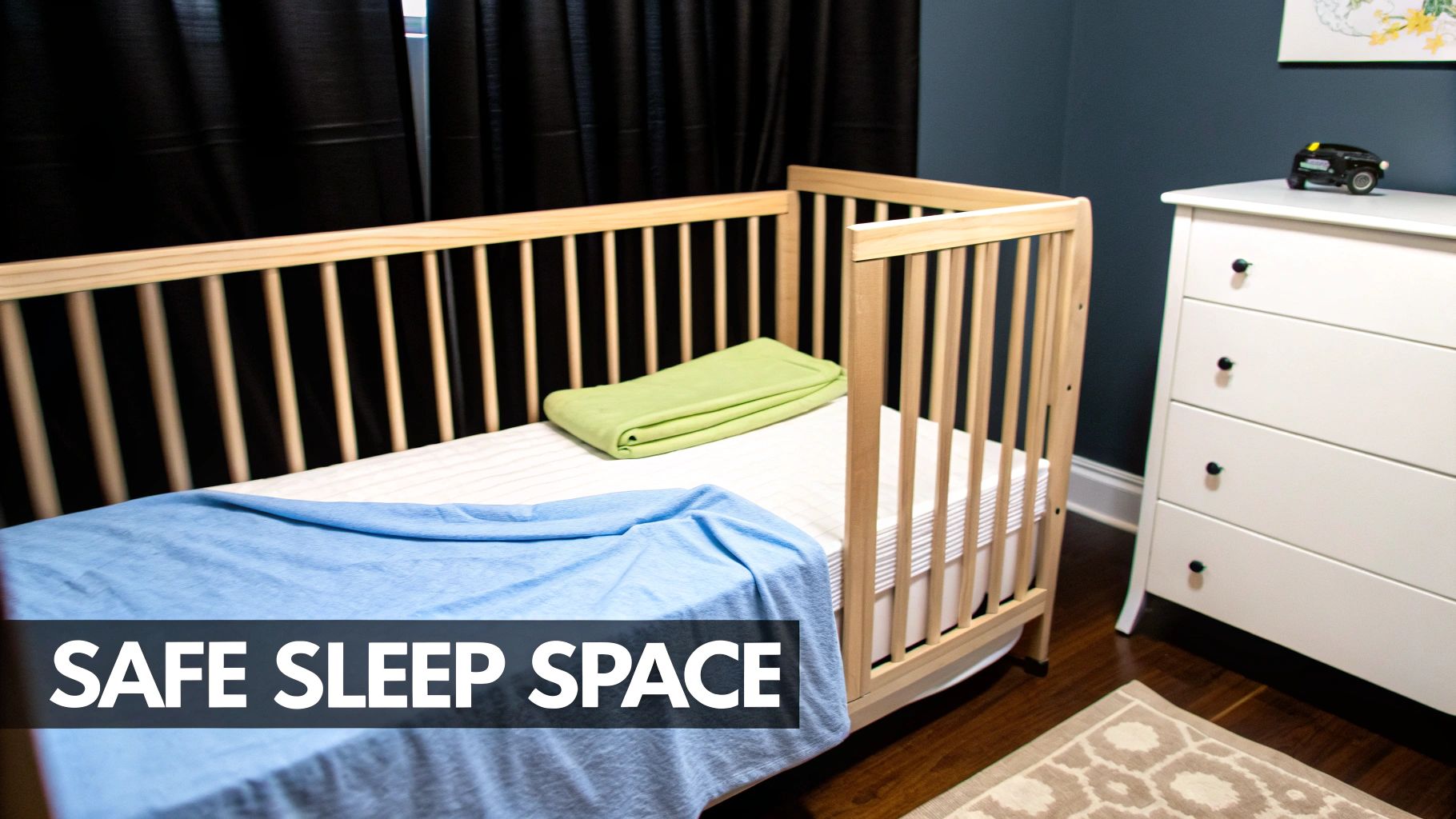
Newborns sleep a staggering 16 to 18 hours a day. That makes their sleep space the single most important environment you’ll create in your home. Setting up a safe, soothing sanctuary isn’t just about picking cute patterns; it’s about following proven safety guidelines to protect your baby and help them get the restorative rest they need.
Think of it as building a tiny fortress of comfort, where every single item has a specific job: keeping them safe, sound, and their skin free from irritation.
It all starts with the core principles of safe sleep laid out by the American Academy of Pediatrics (AAP). The most important rule is simple but non-negotiable: babies must always sleep alone, on their back, in a completely bare crib or bassinet. That means no soft bedding, no bumpers, no pillows, and no stuffed animals.
The Foundation: A Firm Mattress and Breathable Sheets
The cornerstone of a safe sleep space is a firm, flat mattress that fits snugly inside the crib. You should be able to fit no more than two fingers between the edge of the mattress and the crib frame. A firm surface is critical because it prevents your baby from sinking into it, which poses a suffocation risk, while the tight fit ensures no little arms or legs can get trapped.
With the right mattress in place, your next layer is a fitted sheet. This is where the choice of material really matters for your baby’s delicate skin.
- Prioritize Breathable Fabrics: Look for materials like cotton or bamboo. They allow for much better air circulation, which helps regulate your baby's body temperature, preventing overheating which can lead to heat rash.
- Choose Certified Organic: I always recommend looking for GOTS-certified (Global Organic Textile Standard) organic cotton. This certification is your guarantee that the fabric is free from harsh chemicals, pesticides, and synthetic fertilizers, which seriously reduces the risk of skin irritation or allergic reactions like eczema.
- Ensure a Snug Fit: The sheet absolutely must fit tightly over the mattress, with no loose or baggy fabric. A properly fitted sheet won't come undone as your baby wiggles, maintaining a safe, flat surface all night long.
As a practical tip, have two or three high-quality fitted sheets on hand. It's a lifesaver when you need to do a quick change in the middle of the night.
"A bare crib is a safe crib. The focus should always be on a firm mattress with a tight-fitting sheet and nothing else. Every additional item, no matter how soft or comforting it seems, introduces an unnecessary risk."
This minimalist approach is the gold standard for newborn sleep safety. To dive deeper, you can explore our comprehensive guide to creating a safe sleep environment for infants for more detailed advice.
Mimicking the Womb with Safe Swaddles
There’s a reason parents have swaddled babies for centuries: it recreates that snug, secure feeling of being in the womb. This gentle, constant pressure helps calm a baby's Moro reflex—that startling reflex that often jerks them awake. A good swaddle is one of the most effective tools in your arsenal for helping a newborn settle into a deeper, longer sleep.
Of course, the right technique and material are key to preventing overheating and skin irritation. Modern swaddle wraps are often safer and easier to use than trying to fold a traditional blanket. Look for options made from the same soft, non-toxic, and breathable organic cotton as your sheets. Many come with Velcro or zipper closures that create a secure fit that won't loosen and become a hazard.
Crafting the Perfect Sleep Atmosphere
Beyond the crib itself, the room's environment plays a huge role in your baby's sleep quality. From my experience, two items consistently make the biggest difference for newborns (and their exhausted parents).
- Room-Darkening Curtains: A newborn’s internal clock isn't developed yet. Blackout curtains are a powerful signal to their brain that it's time to sleep, whether it’s for a midday nap or for the night. This darkness helps their body produce melatonin, the natural sleep hormone.
- A White Noise Machine: The womb is surprisingly loud! Babies are used to the constant, rhythmic sounds of their mother’s heartbeat and blood flow. A white noise machine mimics that familiar acoustic environment, which is incredibly soothing. It also does a fantastic job of drowning out sudden household noises, like a dog barking or the doorbell ringing, that can startle them awake.
Put together, these elements create a consistent, predictable, and calming sleep sanctuary. By focusing on a safe setup inside the crib while carefully controlling the light and sound outside of it, you give your newborn the perfect conditions for the high-quality rest they need to grow and thrive.
Mastering the Essentials for Newborn Feeding
Feeding your baby is about so much more than just nutrition—it's one of the first and most powerful ways you'll bond. Having the right gear on hand can transform this daily routine from a source of stress into a calm, quiet time for connection. Whether you plan to breastfeed, formula-feed, or a bit of both, a few key items will make all the difference.
The name of the game is safety and comfort for your baby, and simplicity for you. That means finding products that are easy to clean, gentle on your little one's skin, and designed to support their brand-new immune system.
Essentials for Nursing Mothers
For breastfeeding moms, comfort is everything. When you're relaxed and well-supported, it's so much easier for your baby to get a good latch, which in turn makes the whole experience more effective and enjoyable for both of you.
A good nursing pillow is an absolute game-changer here. These are specifically shaped to bring your baby up to the right height, saving you from hunching over and putting a serious strain on your back, neck, and arms. My advice? Look for one that's firm and has a removable, washable cover—because spills will happen. Opt for a cover made of natural, hypoallergenic fabric to protect your baby’s face during feedings.
A couple of comfy nursing robes or tops with easy front access are also lifesavers, especially for those hazy, middle-of-the-night feedings. They keep you covered while making nursing quick and discreet.
Selecting the Safest Bottles and Nipples
If you're using formula or pumping breast milk, bottles are going to be a huge part of your daily life. With a million options out there, your focus should be laser-sharp on safety and materials that protect your baby’s health.
It’s absolutely critical to choose bottles that are clearly labeled BPA-free. Bisphenol A (BPA) is a chemical that has been linked to potential health concerns, and thankfully, it's been phased out of most baby products. Glass, silicone, or a high-quality, BPA-free plastic are all excellent choices.
The global baby feeding accessories market was valued at USD 2.6 billion in 2025 and is projected to reach USD 4.6 billion by 2035. This growth highlights how essential items like bottles and nipples are, with innovation driving demand for safer, more convenient products. Discover more insights about trending newborn items on accio.com.
Beyond the bottle itself, pay attention to the nipple flow. Newborns need a slow-flow nipple that mimics the pace of breastfeeding. This helps prevent them from gulping down too much air, which can lead to gas and spit-up. Many brands offer trial packs, which are a smart way to see what your baby prefers before you invest in a full set.
Prioritizing Hygiene and Sterilization
A newborn’s immune system is still a work in progress, making them extra vulnerable to germs. This means that properly sterilizing feeding equipment isn't just a good idea—it's a critical safety measure. When shopping, look for bottles and pump parts with fewer pieces; it makes them so much easier to take apart and clean thoroughly.
Here are a few tools that simplify the whole sterilization process:
- Bottle Brush: A dedicated brush with bristles for both the bottle and the nipple is a must-have for scrubbing every nook and cranny.
- Drying Rack: A simple countertop rack lets everything air dry completely, which is key to preventing mold or bacteria from growing.
- Sterilizer: You can always boil everything, but an electric steam sterilizer or even microwave sterilizer bags can be a huge time-saver, especially in those first few months.
This focus on cleanliness helps protect your baby from nasty bacteria and gives you some much-needed peace of mind. For those navigating the world of formula for the first time, you might be interested in our guide on how to choose the best baby formula.
Handling Messes with Gentle Care
Let's be real: spit-up is just part of the newborn experience. Having a massive stash of super-absorbent burp cloths is completely non-negotiable. I always recommend looking for cloths made from soft, natural materials like muslin or organic cotton. They're not only fantastic at soaking up messes but are also incredibly gentle on a baby’s sensitive skin, which helps prevent irritation or contact rash during cleanup.
Mastering Diaper Duty and Bath Time
Let's be honest: changing diapers and giving baths will quickly become a huge part of your daily life. But these aren't just chores to get through. They're some of the first routines you'll build with your little one, full of potential for bonding and making them feel safe and comfortable.
A newborn’s skin is incredibly delicate and sensitive, so the products you choose really matter. Picking the right gear helps you sidestep common problems like diaper rash and irritated skin, turning these everyday tasks into positive, soothing moments for both of you.
The baby care market is massive—we're talking a value of USD 254.8 billion in 2025, with diapering products leading the charge. This just goes to show how much parents prioritize keeping their babies clean and comfortable. In fact, pediatric studies have found that using high-quality diapers and wipes can head off up to 90% of rash cases. You can read more about the trends in the baby care products market to see how the industry is focused on safety.
Diapering Essentials for Happy Skin
Get ready for it: a newborn can easily power through 8-12 diapers a day. Your main goal is simple—keep that tiny bottom as dry and clean as possible to fend off the dreaded diaper rash. A good system makes all the difference.
First, you'll need to decide between disposable and cloth diapers. Disposables are the king of convenience, and many are super absorbent, some even have a handy wetness indicator strip that changes color. If you go this route, look for brands that are hypoallergenic, fragrance-free, and made without chlorine bleaching to keep harsh chemicals away from your baby's skin.
Cloth diapers, on the other hand, are a great eco-friendly choice and can be more breathable. Modern cloth diapers are surprisingly easy to use, with all-in-one and pocket styles. Just be sure to wash them in a gentle, dye-free detergent made for sensitive skin to prevent any irritating residue.
No matter which type of diaper you choose, you'll need a few key sidekicks:
- Fragrance-Free Wipes: Go for wipes that are thick, soft, and don't contain alcohol or fragrances. Water-based wipes are a fantastic choice for a newborn's super-sensitive skin, as they prevent drying and allergic reactions.
- Diaper Rash Cream: This is your best defense! A good barrier cream with zinc oxide creates a protective layer that shields your baby's skin from moisture.
- Changing Pad: A contoured pad with a waterproof cover gives you a safe, comfy, and easy-to-clean spot for every diaper change.
- Diaper Pail: Trust me, you'll want one. A dedicated pail with a solid, tight-sealing lid is a lifesaver for containing odors and keeping the nursery smelling fresh.
Getting all your diapering gear organized is a game-changer, especially when you're heading out. For tips on packing for an outing, check out our guide on what to pack in a diaper bag.
"Think of diaper cream as a shield, not just a treatment. Applying a thin, protective layer at each change, especially before long stretches of sleep, is one of the most effective ways to prevent the painful friction and moisture that lead to diaper rash."
Creating a Calm and Cozy Bathtime
Those first few baths are special moments. The goal is to make them warm, calm, and gentle. Having the right setup not only keeps your baby safe but turns bathtime into a relaxing ritual that can even help them sleep better. To start, you'll be giving sponge baths until their umbilical cord stump has fallen off.
Once it's time for the real tub, an ergonomic baby bathtub is a must-have. These tubs are designed to cradle a slippery newborn securely, usually with a non-slip surface and a reclined angle that keeps their head safely out of the water. This frees up your hands so you can wash them without worry.
When it comes to soaps and towels, gentleness is everything.
- Tear-Free, Natural Baby Wash: Look for a mild, pH-neutral wash that's free of sulfates, parabens, and synthetic fragrances. A gentle formula cleans your baby without stripping away their skin's natural protective oils, preventing dryness and eczema.
- Soft, Hooded Towels: Newborns lose body heat fast. A super-soft hooded towel made from organic cotton or bamboo is perfect for wrapping them up the second they're out of the water. The hood keeps their head warm while you pat them dry.
- Gentle Washcloths: Use washcloths made from the same soft stuff as the towels. They're much less abrasive than regular cloths and are ideal for their delicate face and those tiny skin folds.
Building a Newborn Wardrobe for Comfort and Safety
A newborn's skin is impossibly delicate. It's so thin and sensitive that the clothes they wear are one of the most important things you'll choose. When you're building that first tiny wardrobe, it's easy to get caught up in cute outfits, but what really matters are three things: comfort, practicality, and safety. Think of each piece of clothing as a soft, protective hug for your baby, not a source of scratchy irritation or allergic reaction.
The goal isn't to fill a dresser to the brim. It's about creating a small, functional collection that keeps your little one comfortable and makes your life easier. We're talking simple designs, buttery-soft fabrics, and easy access for the endless diaper changes you're about to become a pro at. This keeps things manageable and ensures every item is truly gentle on that new baby skin.
Choosing Skin-Friendly Fabrics
If there's one thing to obsess over, it's the fabric. A newborn’s skin barrier isn't fully developed yet, making them super susceptible to the allergens and irritants hiding in synthetic materials and harsh dyes. This is why picking natural, breathable fabrics is more than a preference—it’s a safety measure to prevent rashes.
GOTS-certified (Global Organic Textile Standard) cotton is the absolute best choice. This certification is your guarantee that the fabric was grown without pesticides and processed without nasty chemicals, which dramatically cuts down the risk of skin reactions. Plus, it's incredibly soft and breathable, helping to regulate your baby's body temperature and keep them from getting too hot.
The Essential Wardrobe Checklist
Trust me, you don't need a mountain of clothes. Babies grow at a dizzying pace, so focus on getting a practical number of key pieces to see you through those first few weeks.
Here’s a realistic list to get you started:
- Snap-Crotch Onesies (7-10): These are the true MVPs of a baby's wardrobe. The snaps at the bottom make diaper changes a breeze because you don't have to pull anything over their head.
- Sleep-and-Plays (5-7): Also called sleepers, these are the cozy, one-piece footed PJs perfect for both napping and playtime. Pro tip: look for zippers that run all the way down the front and leg for the easiest access.
- Soft Pants (3-5 pairs): Simple, pull-on pants with an elastic waist are perfect for layering over a onesie when there's a little chill in the air.
- Socks or Booties (5-7 pairs): A newborn's circulation isn't great, so their tiny feet get cold easily. Just make sure the elastic isn't too tight around their ankles.
- A Soft Hat (1-2): A simple little beanie is great for keeping their head warm, especially right after birth or when you're out and about.
- Swaddle Blankets (3-5): We cover these in the sleep section, but they’re also a clothing essential for keeping newborns feeling snug and secure.
Prioritize function over fashion, always. Features like zippers instead of a million tiny snaps for nighttime changes, and snap-crotches on every bodysuit, are small details that feel like a lifesaver when you're fumbling in the dark at 3 a.m.
Preparing Clothes for First Wear
Once you've got your baby's first outfits, there’s one last, non-negotiable step before they touch your baby’s skin: pre-washing everything. New clothes are often treated with chemicals like formaldehyde to keep them looking fresh in the store. Those residues can easily trigger rashes or other skin reactions.
Wash all new clothes, blankets, and sheets in a gentle, hypoallergenic, and fragrance-free detergent. This simple step washes away any potential irritants, ensuring the first thing that touches your newborn’s skin is nothing but clean, soft, and safe fabric.
Getting Out and About: Health and Travel Gear
Life with a newborn isn't just about what happens inside the nursery. From that very first car ride home to running errands, having the right health and travel gear is all about safety and peace of mind. These aren't just nice-to-haves; they are the absolute essentials that keep your baby protected when you’re on the move.
The Most Important Ride: Your Infant Car Seat
Let’s start with the big one: the rear-facing infant car seat. This is arguably the single most important piece of baby equipment you'll buy. It's the law, but more than that, it's a critical safety device designed to protect your baby's fragile head, neck, and spine during a sudden stop or, heaven forbid, a crash.
When you're shopping, make sure any seat you consider meets or exceeds federal safety standards. You'll also see features like side-impact protection and energy-absorbing foam, which add another layer of security. But here’s the thing: the best car seat in the world won’t work if it’s not installed correctly. Get it checked by a certified technician, and make sure it’s in there tight—it shouldn't move more than an inch side-to-side at the belt path.
Your At-Home Health Toolkit
Once you're settled in at home, you'll want a few key items to monitor your baby's health. Think of it as your own little nurse's station. A reliable baby monitor is a great place to start, giving you a set of eyes and ears on your little one when you’re in another room. Whether you go for a simple audio-only model or a high-tech video monitor, its job is to give you immediate awareness.
Beyond the monitor, a few simple tools will be your best friends. These are some of the most practical must have items for newborns.
- A Solid Digital Thermometer: For babies under three months, a rectal thermometer is the gold standard for accuracy. When you call the pediatrician, they will want to know that exact number.
- A Nasal Aspirator: Newborns breathe almost exclusively through their noses. When they get stuffed up, they can't eat or sleep comfortably. A simple bulb syringe or a fancier aspirator can clear out that congestion in a snap.
- Baby Nail Clippers or a File: You will be amazed at how fast—and how sharp—a newborn's nails are. Keeping them trimmed is the best way to prevent them from scratching their own delicate face.
Having these basics on hand means you can tackle little health hiccups with confidence.
"A well-stocked health kit is your first line of defense. Having a quality thermometer and a nasal aspirator on hand means you can address common issues quickly, often preventing a small problem from becoming a bigger source of stress for both you and your baby."
Gearing Up for Your First Adventures
When you feel ready to get out of the house, the right gear can make all the difference. For quick trips or navigating a busy store, an ergonomic baby carrier is a game-changer. It keeps your baby snuggled up close and secure, all while leaving your hands free.
When choosing one, look for carriers certified as "hip-healthy" (the International Hip Dysplasia Institute is a good resource). This means it supports your baby’s legs in a natural, frog-like "M" position, which is crucial for proper hip development.
For longer walks or bigger outings, nothing beats a stroller. Many parents love travel systems, which let you click the infant car seat right out of the car and into the stroller frame—no waking a sleeping baby required! Just make sure any stroller you pick has a secure five-point harness and can recline nearly flat, since newborns don't have the head control to sit upright.
Common Questions About Newborn Essentials
When you're expecting, the sheer volume of baby products can feel like a tidal wave. It's totally normal to feel a bit lost. Let's cut through the noise and tackle the questions that pop up most often for new parents, so you can build your registry with confidence.
How Many Newborn Sized Clothes Do I Really Need?
This is probably one of the biggest head-scratchers. Babies grow at lightning speed, so it's smart not to go overboard on the "newborn" size.
A great starting point is having just enough for a week's worth of changes. Think 5-7 onesies (those little bodysuits are a lifesaver), maybe 3-4 sleepers for cozy nights, and a couple of pairs of soft pants. Don't forget a few pairs of tiny socks! This stash gives you enough wiggle room for daily outfit swaps without sinking money into clothes they might only wear for a few weeks. Always prioritize high-quality, natural fabrics to protect their skin.
Is a Bottle Warmer Really a Necessity?
Another common debate is about those feeding gadgets. Are they truly essential?
While not a strict necessity, a bottle warmer is a major convenience, especially for late-night feedings. It safely and evenly heats breast milk or formula, preserving nutrients that can be damaged by microwaving.
Honestly, fumbling with a pot of hot water at 3 a.m. is nobody's idea of a good time. A bottle warmer is one of those "nice-to-have" items that quickly becomes a "can't-live-without" for many parents because it's just so much faster and safer.
What Are The Most Important Safety Features In A Crib?
Okay, let's talk about the big one: the crib. This is where your focus needs to be razor-sharp on safety above all else. When you’re shopping, look for a certification from the Juvenile Products Manufacturers Association (JPMA)—it’s a great sign that the crib meets current safety standards.
Here are the non-negotiables:
- Slat Spacing: The bars or slats should be no more than 2 3/8 inches apart. That’s about the width of a soda can. This is a critical rule to prevent a baby's head from getting trapped.
- Mattress Fit: The mattress must be firm and fit snugly inside the crib frame. You shouldn't be able to fit more than two fingers between the mattress and the side of the crib.
- Solid Construction: Look for a sturdy build with non-toxic finishes. And a major heads-up: steer clear of any cribs with drop-sides. These have been banned for years due to serious safety risks. A quality crib made with safe materials will prevent your baby from being exposed to harmful chemicals or finishes.
At GUGUTON LLC, we get it. We've handpicked a collection of high-quality, safe, and skin-friendly essentials to make your parenting journey a little easier. You can find everything from organic cotton swaddles to certified-safe gear by visiting us at https://guguton.com.