

What to Pack in Diaper Bag: Essentials for Every Outing
Of course, everyone knows a diaper bag needs diapers, wipes, a changing pad, and a spare outfit. That's the bare minimum. But the best-packed diaper bags are so much more than that—they're your mobile command center, ready to handle anything your little one throws at you when you’re on the go.
Your Essential Diaper Bag Checklist
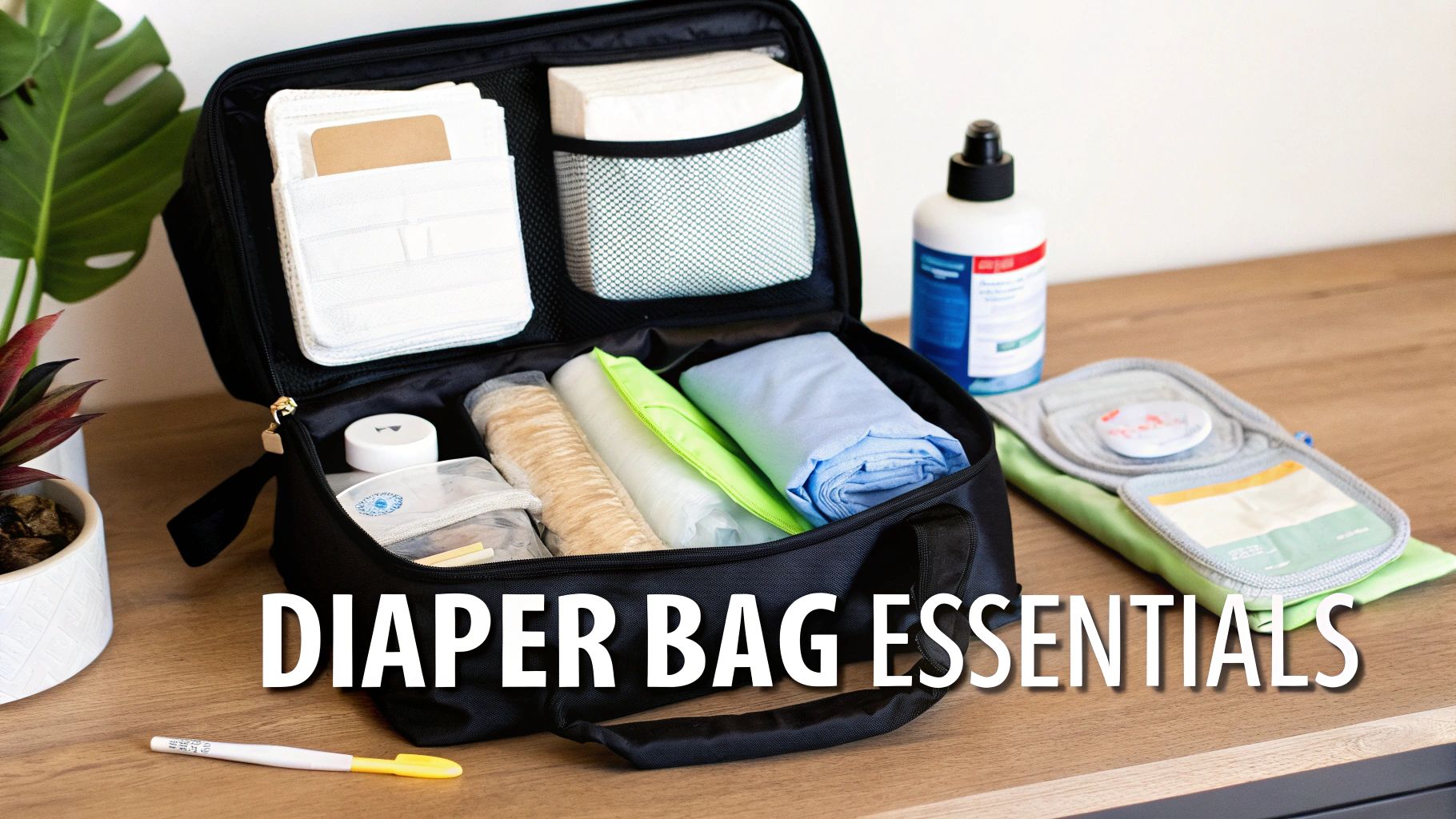
Let's be honest, leaving the house with a baby can feel like planning a major expedition. The secret to turning that potential chaos into a smooth adventure is to think of your diaper bag as a mini, portable nursery. It's not just about having stuff; it's about having the right stuff, chosen for quality and safety to protect your baby from potential skin irritants.
At the heart of it all is choosing items that are safe and gentle for your baby. Everything that touches their delicate skin, from the wipes you use to the extra onesie you pack, can make a difference in preventing rashes, allergies, and irritation. Choosing wisely means you can parent with confidence. And of course, starting with one of the best diaper bags for moms makes staying organized a whole lot easier.
The Five Core Categories
To avoid that "Did I forget something?" feeling, it helps to break down your packing into five simple categories. This little trick keeps you organized and ensures you never leave a crucial item behind.
- Diapering: This is ground zero. The absolute, non-negotiable stuff.
- Feeding: Whether you're breastfeeding, formula-feeding, or packing snacks, you’ll need supplies.
- Clothing: Because messes will happen. A backup outfit made from skin-friendly fabric is a lifesaver.
- Comfort & Health: These are the items that soothe, entertain, and keep your baby safe and happy.
- Parent Essentials: Hey, you matter too! Don't forget to stash a few things for yourself.
It’s no surprise the diaper bag market is huge—it's projected to hit USD 2.36 billion by 2030. When you consider that a baby under six months old can go through a diaper every 2-3 hours, you realize a full day out could mean packing 8-10 diapers. That alone shows why a smart packing strategy focused on high-quality, safe essentials is a game-changer.
To make it even easier, I've put together a quick-reference checklist of the essentials. Think of this as your baseline—the items you should have packed no matter where you're headed.
The Ultimate Diaper Bag Quick-Reference Checklist
| Category | Essential Items |
|---|---|
| Diapering | Diapers (one for every 2 hours, plus extras), Wipes (fragrance-free), Changing Pad, Diaper Rash Cream (hypoallergenic), Diaper Disposal Bags |
| Feeding | Bottles with Formula/Breast Milk, Water (if applicable), Burp Cloths (soft cotton), Bib, Pacifiers |
| Clothing | 1-2 complete backup outfits (breathable fabrics like cotton), Weather-appropriate layer (hat, sweater) |
| Comfort & Health | Favorite Toy/Teether (BPA-free), Hand Sanitizer, Basic First-Aid (band-aids, antiseptic wipes) |
| Parent Essentials | Keys, Wallet, Phone, Water Bottle, Snack for you |
This checklist covers your non-negotiables. Once you have these basics down, you can start customizing your bag for different ages, seasons, and trip lengths, which we'll dive into next.
Choosing Skin-Safe Essentials to Prevent Rashes and Allergies
Packing a diaper bag is more than just a checklist. Anyone can stuff a bag with supplies, but the real secret to a happy baby on the go is choosing why you pack certain items. A baby’s skin is incredibly delicate—it’s far thinner and more sensitive than ours, making it a prime target for irritation from chemicals, fragrances, and even rough fabrics.
This is why thinking about skin safety isn't just an extra step; it's essential. Every item you choose, from the diaper itself to the backup onesie, acts as a protective shield for your little one. Making the right choices can be the difference between a fun, carefree outing and a miserable afternoon with a fussy, rash-covered baby.
Decoding Diapering Essentials
When it comes to diapers and wipes, what you use is just as crucial as how often you change them. Your main goal is to keep that little bottom dry and happy, steering clear of the dreaded diaper rash that can pop up out of nowhere.
Start with the diapers. I always recommend looking for brands that are hypoallergenic and explicitly free from chlorine, fragrances, and lotions. Those additives might sound nice, but they're often the culprits behind allergic reactions and can mess with the skin's natural pH balance.
Next up are the wipes. It’s tempting to grab any old pack, but so many of them contain alcohol and perfumes that strip away the skin's protective oils, leaving it dry and irritated.
For sensitive skin, the best bet is always fragrance-free and alcohol-free wipes. They get the job done without causing a fuss. Water-based wipes with just a few simple ingredients are a godsend, especially for newborns or babies prone to eczema.
Don’t forget the changing pad! The portable one you toss in your bag should be made from non-toxic, easy-to-clean materials like food-grade silicone. This gives you a clean, safe surface anywhere you go, without exposing your baby to chemicals like phthalates or BPA.
The Importance of Breathable Fabrics
Your skin-safe strategy shouldn't stop at the changing station. The spare clothes you pack are just as important for keeping your baby comfortable. Little ones are still learning how to regulate their body temperature, so they can easily overheat, which often leads to heat rash and general crankiness.
Soft, breathable fabrics are your best friend here. Materials like certified organic cotton, bamboo, and muslin are fantastic because they let air flow, pulling moisture away from the skin. This simple choice helps keep your baby cool, dry, and significantly reduces the risk of irritation. Want to dive deeper? We have a whole guide on choosing the right fabric for your baby's sensitive skin that breaks it all down.
So, next time you're grabbing that backup outfit, take a second to feel the fabric and check the label. Try to steer clear of synthetics like polyester, which tend to trap heat and sweat. By being mindful about these choices, you’re not just packing a bag—you're creating a mobile comfort kit for your baby.
Packing Smart: How Your Diaper Bag Evolves from Newborn to Toddler
As your baby grows, their needs change in the blink of an eye. What was a must-have for your tiny newborn will quickly get swapped out for toddler snacks and toys. Knowing how to adapt your diaper bag for each stage is the real secret to staying prepared without hauling around a small suitcase.
Think of your diaper bag as a mobile command center that needs regular updates. A bag packed for a sleepy, milk-drunk newborn just won’t cut it for a curious, on-the-move toddler. By adjusting what you carry, you'll make every outing smoother and a whole lot less stressful.
The Newborn Phase: 0-6 Months
Newborns run on a simple, urgent schedule: eat, sleep, poop, repeat. Your diaper bag should be a direct reflection of this delicate stage, focusing entirely on comfort, warmth, and keeping that sensitive skin happy.
Your world will revolve around managing constant feedings and surprisingly frequent diaper changes. Prioritize hypoallergenic products and soft, natural fabrics to prevent rashes and allergic reactions.
- Extra Burp Cloths: You can never have too many. Pack at least two or three—soft, organic cotton or muslin cloths are amazing because they’re super absorbent and gentle on delicate skin.
- Swaddle Blanket: This is your multi-tool. A lightweight, breathable swaddle can be used for warmth, as a makeshift nursing cover, or to create a cozy, familiar space for a nap on the go.
- Pacifiers and Clips: If your baby takes a paci, bring at least two spares made from BPA-free silicone. A pacifier clip is a lifesaver for preventing the dreaded drop onto a questionable floor.
For a complete rundown of everything you might need in these early days, check out our detailed newborn baby essentials list for more great tips.
The Older Baby Phase: 6-12 Months
Once your baby is sitting up, grabbing everything in sight, and starting to explore solid foods, the contents of your diaper bag will need a serious update. This stage is full of huge developmental leaps, and your packing list has to keep pace with their new skills and boundless curiosity.
Safety and engagement suddenly become top priorities. Teething can turn a happy baby into a fussy one in seconds, and introducing solids means you’re entering a whole new world of mess.
This is when your diaper bag transforms from a simple care kit into an on-the-go entertainment and feeding station. Having the right teething toy or snack on hand can be the difference between a meltdown and a manageable meal out.
- Teething Toys: Pack a couple of safe, easy-to-clean teethers made from food-grade silicone or natural rubber. The kind you can chill in the fridge are a godsend for extra-sore gums.
- First Solids Supplies: Be ready for mealtime with a silicone bib, a soft-tipped spoon, and a small container of purée or easy-to-munch snacks.
- Sippy Cup: Now's a great time to introduce a sippy cup with a little water to help them practice and stay hydrated. Choose a BPA-free model.
The Toddler Phase: 1-3+ Years
Welcome to toddlerhood! It's a world of big feelings, strong opinions, and endless energy. Your diaper bag is now less about baby care and more about supporting a tiny, independent person with a bigger appetite and a very short attention span.
You'll still need the diapering basics, but the real MVPs of the toddler bag are snacks and activities.
- Healthy Snacks: Keep the "hangries" at bay with a variety of mess-free options. Think crackers, fruit pouches, or cheese sticks packed in a BPA-free, spill-proof container.
- Engaging Toys: A small board book, a few crayons and paper, or a simple puzzle can be a lifesaver when you’re stuck waiting in line or at a restaurant.
- First-Aid Kit: With walking, running, and climbing comes the inevitable collection of bumps and scrapes. Toss in some fun character band-aids and antiseptic wipes for those little mishaps.
Adapting Your Pack for Any Occasion
You wouldn't haul a giant suitcase to the grocery store, right? The same logic applies to your diaper bag. Overpacking is a real trap—it weighs you down and makes it impossible to find that one thing you desperately need right now.
The secret to stress-free outings is learning to pack for the occasion. Thinking in terms of trip length turns packing from a frantic chore into a simple, repeatable strategy. A quick errand calls for a minimalist approach, while a full-day adventure requires a bit more firepower. By tailoring what you carry, you’re always prepared without feeling like you're carrying the whole nursery on your back.
This is where a smart bag design becomes your best friend. There's a reason backpack-style diaper bags are so popular, claiming 36.5% of the market in 2023—being hands-free is a game-changer. Plus, good organization is non-negotiable. Studies have shown that a staggering 85% of parents forget a vital item on their first trip out, leading to a 40% spike in stress. A bag with multiple compartments lets you create dedicated "packs" for different trip lengths, so you're never left digging for a pacifier in a moment of crisis. You can dig into more of these diaper bag market findings on market.us.
The Quick Errand Pack (Under 2 Hours)
For those short trips—a coffee run, a stop at the post office—you only need the absolute essentials. This is your "grab-and-go" kit, designed for speed.
- Diapers: Two is the magic number. One for the change you expect, and one just in case.
- Wipes: A small, travel-sized pack of fragrance-free wipes is all you need.
- A Pacifier: If your baby uses one, keep it clipped somewhere you can reach it in a flash.
- A Small Toy: Just one simple BPA-free teether or rattle is perfect for heading off a fussy moment.
You can often fit this minimalist kit into a small pouch that you can either toss into your main bag or carry on its own. It's all about making those in-and-out moments as smooth as possible.
The Half-Day Adventure Pack (4-6 Hours)
When you're out for a longer stretch, like an afternoon at the park or a visit with family, your bag needs to be ready for feedings and the inevitable messes. This pack builds on your quick-errand kit with a few key additions.
- Full Change of Clothes: A onesie, pants, and socks are a must. I always recommend soft, breathable cotton to keep your baby comfortable and prevent skin irritation from sweat or spills.
- Feeding Supplies: If you're bottle-feeding, pack a bottle of prepared formula or breast milk. For babies on solids, a food pouch, a bib, and a spoon will do the trick.
- Burp Cloth: One soft, absorbent cloth should be enough to handle spit-up or small spills.
- Wet Bag: A waterproof, zippered bag is an absolute lifesaver. It seals away soiled clothes, keeping the rest of your bag clean and odor-free.
The Full-Day Expedition Pack (6+ Hours)
For an all-day trip, you have to be ready for just about anything. Think of this as your fully-loaded command center, complete with backups for your backups.
- Extra Diapers: Double what you'd normally pack. A good rule of thumb is one diaper for every two hours you'll be out, plus a few extra for good measure.
- Multiple Outfits: Don't just pack one spare—pack at least two complete changes of clothes made from skin-friendly fabrics. You'll thank me later.
- More Food: Bring enough formula, milk, or snacks to cover several feedings throughout the day.
- Parent Power: Seriously, don't forget yourself! Toss in a portable phone charger and a water bottle to keep your own energy levels up.
Mastering Diaper Bag Organization for Quick Access
We’ve all been there: a crying baby, a frantic search, and the one thing you need is buried at the bottom of a chaotic diaper bag. A disorganized bag can turn a simple errand into a full-blown stressful event. The secret to staying calm and in control is to give every single item a designated home, so you can find what you need in a flash.
Think of your diaper bag as a portable command center, not a catch-all tote. You wouldn't just dump all your kitchen utensils into one drawer, right? Apply that same logic here. Using packing cubes, small pouches, or even zip-top bags to group similar items together is a game-changer. It not only saves you precious time but also keeps everything clean and hygienic.
The Zone Method for Ultimate Efficiency
One of the best ways to get organized is to use the 'zone method.' This just means assigning specific areas of your bag to different categories of items. After a few trips, you'll build muscle memory and instinctively reach for the right spot without even thinking.
- Urgent Access Zone: This is your prime real estate—the easily accessible outer pockets. Think of things you need to grab in a hurry: pacifiers, hand sanitizer, your own keys, wallet, and phone. No digging required.
- Diapering Zone: Dedicate one main internal compartment or a large pouch entirely to diapering. Stock it with diapers, wipes, diaper cream, and a portable changing pad. This way, you can grab the whole "kit" and head to the changing table.
- Feeding Zone: Keep all food-related items together in another pouch or an insulated pocket. This is for bottles, formula, snacks, bibs, and spoons. It contains potential messes and keeps food separate from everything else.
- Backup Zone: The main, deeper part of your bag is perfect for the "just-in-case" stuff. This is where you'll store that spare change of clothes, extra burp cloths, a light blanket, or a favorite toy.
This flowchart shows how your packing strategy can adapt depending on where you're going and for how long.
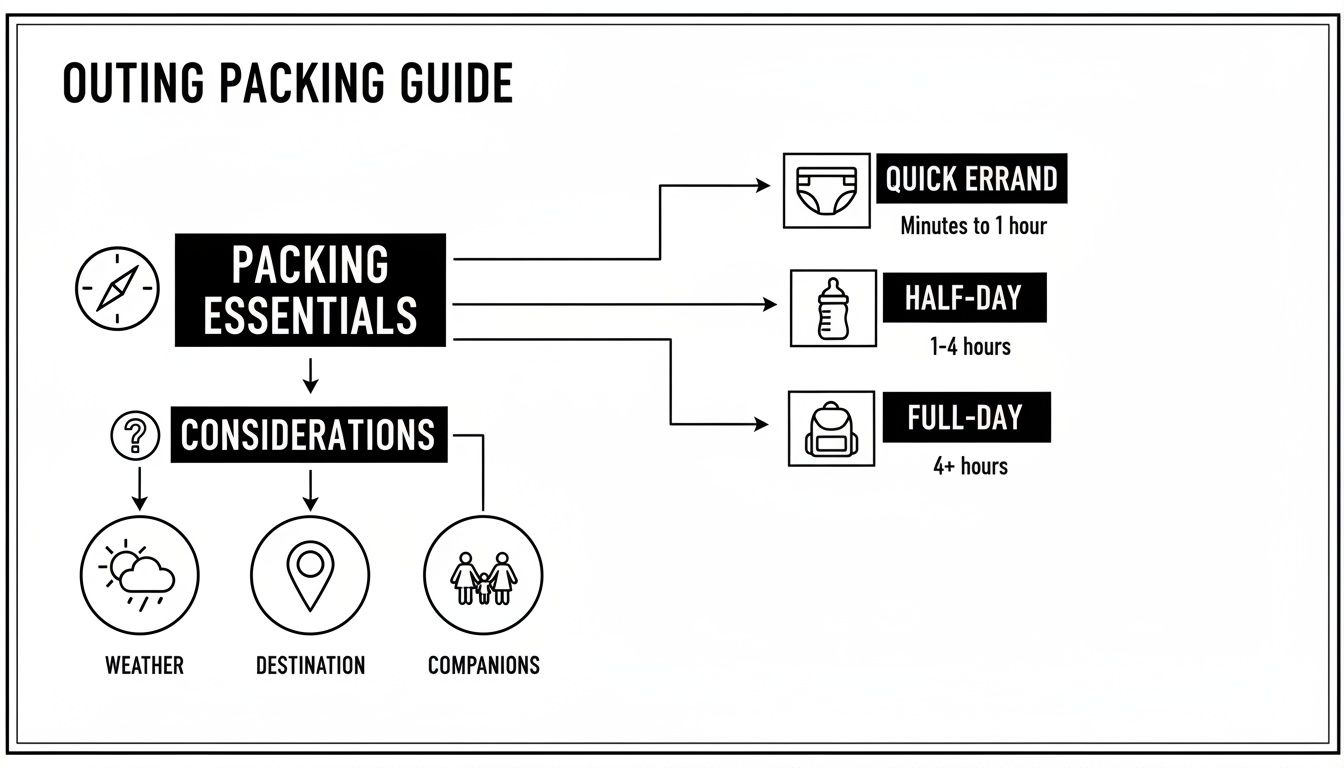
As you can see, your core essentials stay the same, but the quantity and variety of what you pack will grow with the length of your trip. A great organizational system means you can easily scale up for a full-day adventure or pare down for a quick trip to the store without having to repack from scratch every single time.
If you love creating efficient systems for all your baby gear, check out these helpful baby nursery organization ideas. By creating a predictable layout, your diaper bag goes from being a source of stress to a model of efficiency, ready for whatever the day throws at you.
Common Diaper Bag Questions, Answered
Let's be honest, even after you've packed your bag a hundred times, questions still pop up. It's all part of the parenting journey! Here are some straight answers to the most common head-scratchers, based on plenty of real-world experience.
How Many Diapers Do I Really Need to Pack?
A great rule of thumb is to pack one diaper for every two hours you'll be out, and then toss in a couple of extras. You never know when you'll hit traffic or have one of those blowouts.
So, for a full 8-hour day, that's at least five or six diapers. If you have a newborn, they go through diapers much faster, so always err on the side of overpacking. Trust me, you'll never regret having an extra diaper, but you'll definitely regret not having one when you need it.
What’s the Best Way to Deal with Soiled Clothes on the Go?
A waterproof wet bag is your best friend here. Seriously, it’s a game-changer. These are basically zippered, reusable pouches designed to lock in moisture and smells from messy clothes.
Just stuff the dirty outfit inside, zip it shut, and forget about it until laundry day. It keeps the mess completely isolated from all the clean things in your bag.
Investing in a wet bag is one of the smartest things you can do. It's a simple, hygienic way to contain messes and stops bacteria from getting anywhere near clean clothes, bottles, or snacks.
What Should I Pack for Myself?
Don't forget about you! A comfortable parent is a better parent, period. I always make sure to throw in a few things for myself.
A few must-haves include:
- A reusable water bottle to stay hydrated.
- A healthy snack (like a protein bar or trail mix) for a quick energy boost.
- Your essentials: keys, wallet, and phone.
Many modern diaper bags have dedicated "parent pockets" for exactly this reason, making it easy to grab your own stuff without digging through baby gear.
How Can I Be Ready for Sudden Weather Changes?
Beyond just an extra onesie, think about protection from the elements. A lightweight muslin blanket is incredibly versatile—it can work as a sun shield over the stroller, a nursing cover, or a light layer against a surprise breeze.
For sunny days, a wide-brimmed sun hat is non-negotiable. And if your baby is over six months old, a travel-sized, baby-safe sunscreen is a must to protect their delicate skin.
At GUGUTON LLC, we know that a perfectly packed bag is filled with things you can trust. From skin-safe clothing to smart gear, our collections are designed to give you peace of mind on every adventure. Find everything you need for your perfect diaper bag at guguton.com.