

10 Health-Focused Baby Nursery Organization Ideas for 2025
Welcome to the ultimate guide on creating a nursery that is not just organized, but fundamentally safe, healthy, and designed to protect your baby's delicate skin and developing immune system. While a tidy room is visually pleasing, true nursery organization goes deeper. It's about creating systems that prevent allergens, minimize skin irritants, and ensure every item, from clothing to bedding, contributes to a healthy environment. A well-organized space reduces parental stress and, more importantly, proactively safeguards your baby from potential rashes, allergies, and discomfort. This is where strategic baby nursery organization ideas become essential tools for new parents.
In this comprehensive guide, we will explore 10 actionable strategies that prioritize your baby’s well-being alongside a clutter-free space. We'll move beyond generic tips to provide practical, detailed plans for managing everything from diapering stations to seasonal wardrobes. You will learn how to set up efficient systems for clothing, feeding supplies, and safety documentation, all while keeping hygiene and your baby’s health at the forefront. Prepare to transform your nursery into a true sanctuary where your little one can thrive, supported by an environment that is as safe and clean as it is orderly and calm.
1. Closet Organization by Size and Season
A systematic approach to organizing baby clothes is one of the most effective baby nursery organization ideas for managing the constant influx of new outfits. By sorting items first by size (newborn, 0-3 months, 3-6 months) and then by season, you create an intuitive system that adapts as your baby grows. This method prevents the frantic search for a specific onesie and ensures you always have weather-appropriate clothing ready.
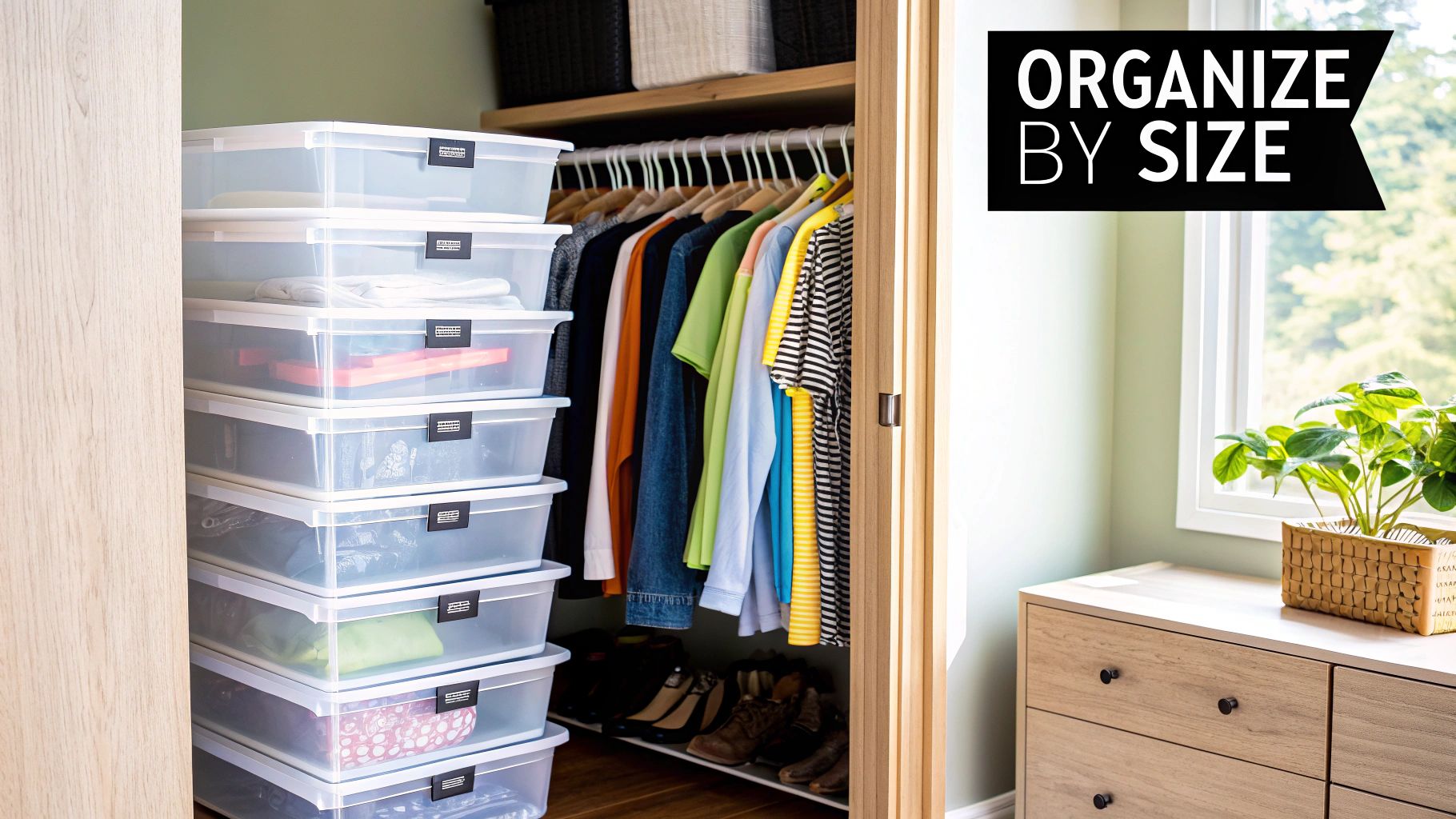
This strategy keeps the current rotation of clothes easily accessible while safely storing out-of-season or future-sized items. Proper storage is crucial not just for organization, but for protecting delicate fabrics and your baby’s skin from potential irritants like dust mites and mildew.
Actionable Tips for Implementation
- Use Clear, Labeled Bins: Store clothing your baby hasn't grown into yet in clear plastic bins with large, easy-to-read labels. A good label might read: "3-6 Months - Fall/Winter." Ensure bins are made from BPA-free plastic.
- Invest in Closet Dividers: Use labeled closet rod dividers to separate hanging clothes by size. This makes grabbing the right-sized outfit quick and simple.
- Prioritize Safe Storage: For long-term storage, especially for heirloom pieces, use acid-free tissue paper inside breathable cotton or canvas bins. Avoid plastic bags, which can trap moisture and lead to mildew, potentially irritating a baby’s sensitive skin.
- Create a "Too Small" Bin: Keep a designated basket or bin in the closet for outfits your baby has just outgrown. Once it's full, wash all items in a hypoallergenic detergent before sorting and storing them away.
2. Diapering Station Zones with Accessibility
Establishing a zoned and accessible diapering station is one of the most critical baby nursery organization ideas for daily efficiency. By organizing all necessary supplies like diapers, wipes, and creams into distinct zones, you can perform changes quickly and safely without ever having to step away from your baby. This method transforms a potentially chaotic task into a streamlined, stress-free routine.
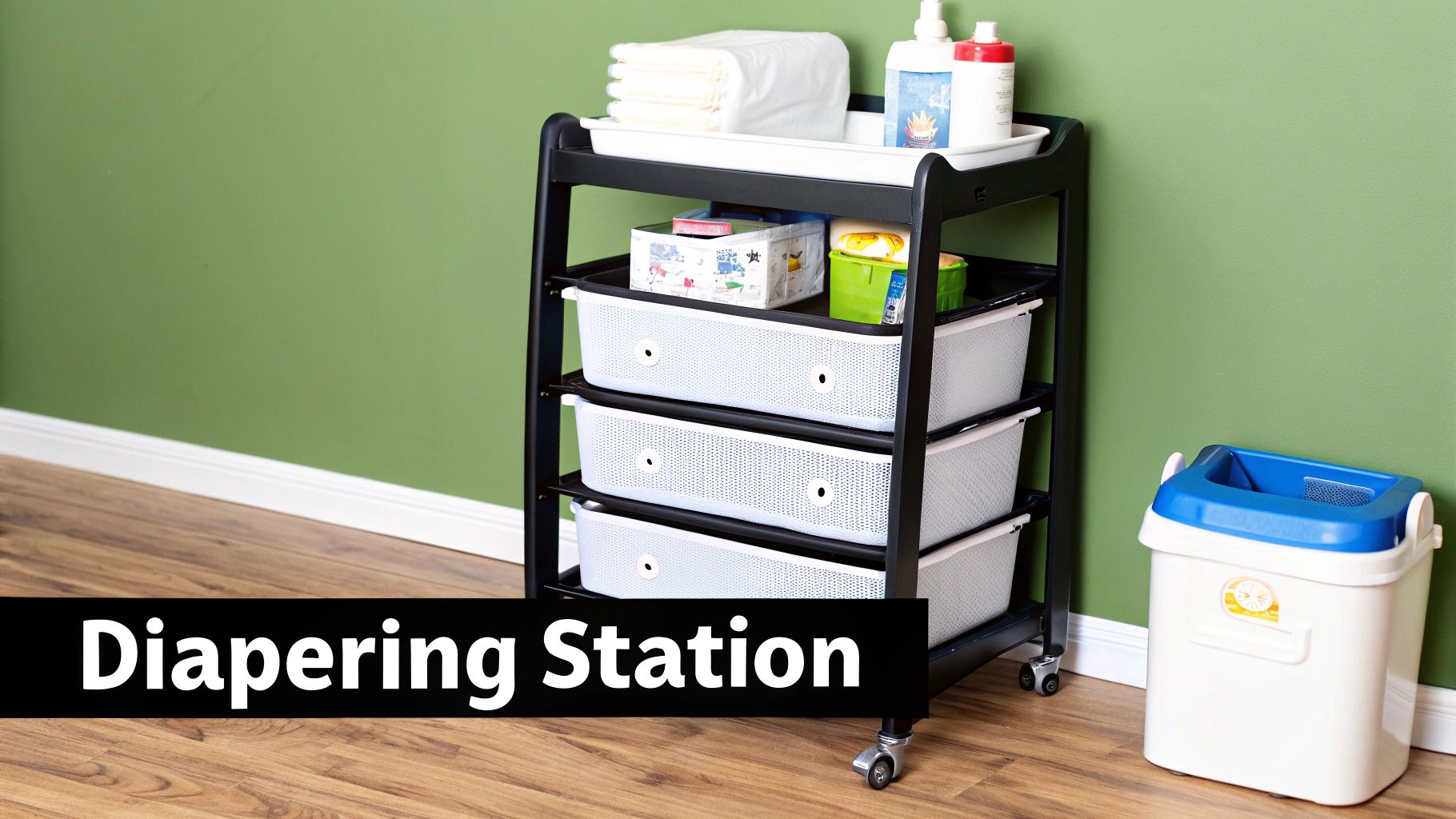
This setup not only improves speed but also enhances safety by keeping everything within arm's reach. A well-organized station means you can maintain contact with your baby at all times, preventing falls while ensuring you have immediate access to creams and balms to protect their delicate skin from irritation and diaper rash.
Actionable Tips for Implementation
- Use a Tiered Cart: A rolling three-tier cart, like the IKEA Raskog, is perfect. Dedicate the top tier to daily-use items like diapers and wipes, the middle to backup supplies, and the bottom to less-frequently used products like nail clippers or extra creams. Wipe down the cart regularly to keep it hygienic.
- Utilize Drawer Dividers: If using a changing table with drawers, use dividers to create specific compartments for diapers, wipes, ointments, and changing pad liners. This prevents items from becoming a jumbled mess and reduces cross-contamination.
- Keep Disposal Close: Position your diaper pail and a small trash can within arm’s reach of the changing table to dispose of soiled items immediately and hygienically, minimizing odors and bacteria spread.
- Create a Restock System: Keep a designated "restock" bin in a nearby closet. Check your station weekly to replenish supplies, ensuring you never run out mid-change. Mastering what you need at the station can also help you perfect your on-the-go setup; see what to pack in your diaper bag for more tips.
3. Sleep Accessories Organization by Type and Use
A streamlined system for organizing sleep essentials is one of the most practical baby nursery organization ideas for tired parents. By grouping items like crib sheets, swaddles, sleep sacks, and mattress pads by type and use, you create an efficient grab-and-go station for midnight changes. This approach ensures every bedding item is clean, accessible, and ready, eliminating stressful searches when you need a fresh sheet or a warmer swaddle.
This strategy keeps bedding sets together and prevents clean items from mixing with used ones. Proper organization and storage are essential for maintaining hygiene, protecting your baby's delicate skin from irritants found in poorly stored fabrics, and making bedtime routines smoother.
Actionable Tips for Implementation
- Use Drawer Dividers: Dedicate a dresser drawer to sleep items and use dividers to create separate compartments for fitted sheets, mattress protectors, and swaddles. This keeps everything visible and contained. Choose natural wood or food-grade plastic dividers.
- Leverage Under-Crib Storage: Utilize an under-crib storage drawer with labeled sections. This is a perfect spot for bulkier items like backup blankets and seasonal sleep sacks, keeping them dust-free but close by.
- Prioritize Breathable Storage: Store swaddles and sleep sacks in breathable cotton bags or open-weave baskets. This prevents moisture buildup, which can lead to mildew and skin irritants. To better understand the benefits of these items, you can learn more about what a sleep sack is and how it promotes safe sleep.
- Rotate and Inspect Weekly: Keep a small laundry basket nearby for used bedding. When you wash and put away clean sheets, take a moment to inspect them for wear and tear, ensuring a safe sleep environment. Always use a gentle, fragrance-free detergent.
4. Bottle, Formula, and Feeding Supplies Hub
A dedicated feeding hub is one of the most practical baby nursery organization ideas for streamlining mealtime preparation. By centralizing bottles, formula, a warmer, sterilizer, and cleaning tools, you create an efficient station that minimizes stress during late-night or early-morning feedings. This organized approach ensures every necessary item is clean, accessible, and ready for use, preventing frantic searches when your baby is hungry.
This system is essential not just for convenience, but for maintaining high standards of hygiene. A well-organized space makes it easier to track expiration dates and ensure all components are properly sterilized, which is critical for protecting your baby’s developing immune system from harmful bacteria.
Actionable Tips for Implementation
- Use a Rolling Cart or Tiered Shelf: A three-tier rolling cart placed near the kitchen sink is perfect. You can place a sterilizer and brushes on top, clean bottles on the middle shelf, and formula containers on the bottom.
- Implement a "First-In, First-Out" System: Organize formula containers using a lazy Susan or shelf organizer. Place newer containers at the back and older ones at the front, and label shelves with expiration dates to ensure you use the oldest stock first.
- Create a Sterilization Checklist: Post a small, visible checklist to track daily sterilization of bottles, nipples, and pump parts. This routine helps prevent the buildup of harmful bacteria that could irritate a baby’s sensitive system. You can discover more about the best baby bottle warmers and their features to complete your setup.
- Store Brushes and Tools Upright: Keep bottle and nipple brushes in a tall, open container to allow for proper air drying. This simple step helps prevent mildew growth and ensures your cleaning tools remain sanitary.
5. Bathing and Personal care Supplies Organization
A structured approach to organizing bathing and personal care items is a crucial component of effective baby nursery organization ideas. This system ensures all necessities, from soaps and lotions to first-aid supplies, are within easy reach during bath time, making the process safer and more efficient. By creating dedicated zones for different categories, you prevent frantic searching for a thermometer or nail clippers and maintain a hygienic environment for your baby's sensitive skin.
This method keeps wet and dry items separate, minimizing the risk of mold and mildew that can trigger skin irritation or allergies. Properly storing these supplies maintains their integrity and ensures that everything you use on your baby is clean, safe, and ready when you need it most.
Actionable Tips for Implementation
- Use Mesh Bags for Toys: Hang bath toys in a mesh bag with suction cups over the tub. This allows for complete air circulation, preventing moisture buildup and the growth of mold that could be harmful if ingested.
- Create a First-Aid Caddy: Designate a separate, clearly labeled basket for health and safety items like a digital thermometer, nail clippers, and antiseptic wipes. Keep this caddy on a high shelf away from the tub's humidity to preserve product integrity.
- Opt for Waterproof Storage: Use silicone or plastic caddies in the bath area for soaps and shampoos. These materials are easy to clean and won't degrade with constant exposure to water, ensuring a hygienic space.
- Organize with Drawer Dividers: Store backup supplies like extra lotions, cotton swabs, and diaper rash creams in a drawer using dividers. This protects them from bathroom moisture and keeps your inventory tidy and accessible. Check product expiration dates periodically.
6. Clothing Drawer Organization with Dividers and Subcategories
Transforming a chaotic dresser into an orderly system is a cornerstone of effective baby nursery organization ideas. Using drawer dividers to create distinct subcategories for items like bodysuits, pants, and socks allows you to see everything at a glance. This method maximizes space, prevents wrinkles in delicate fabrics, and simplifies the daily task of dressing your baby.
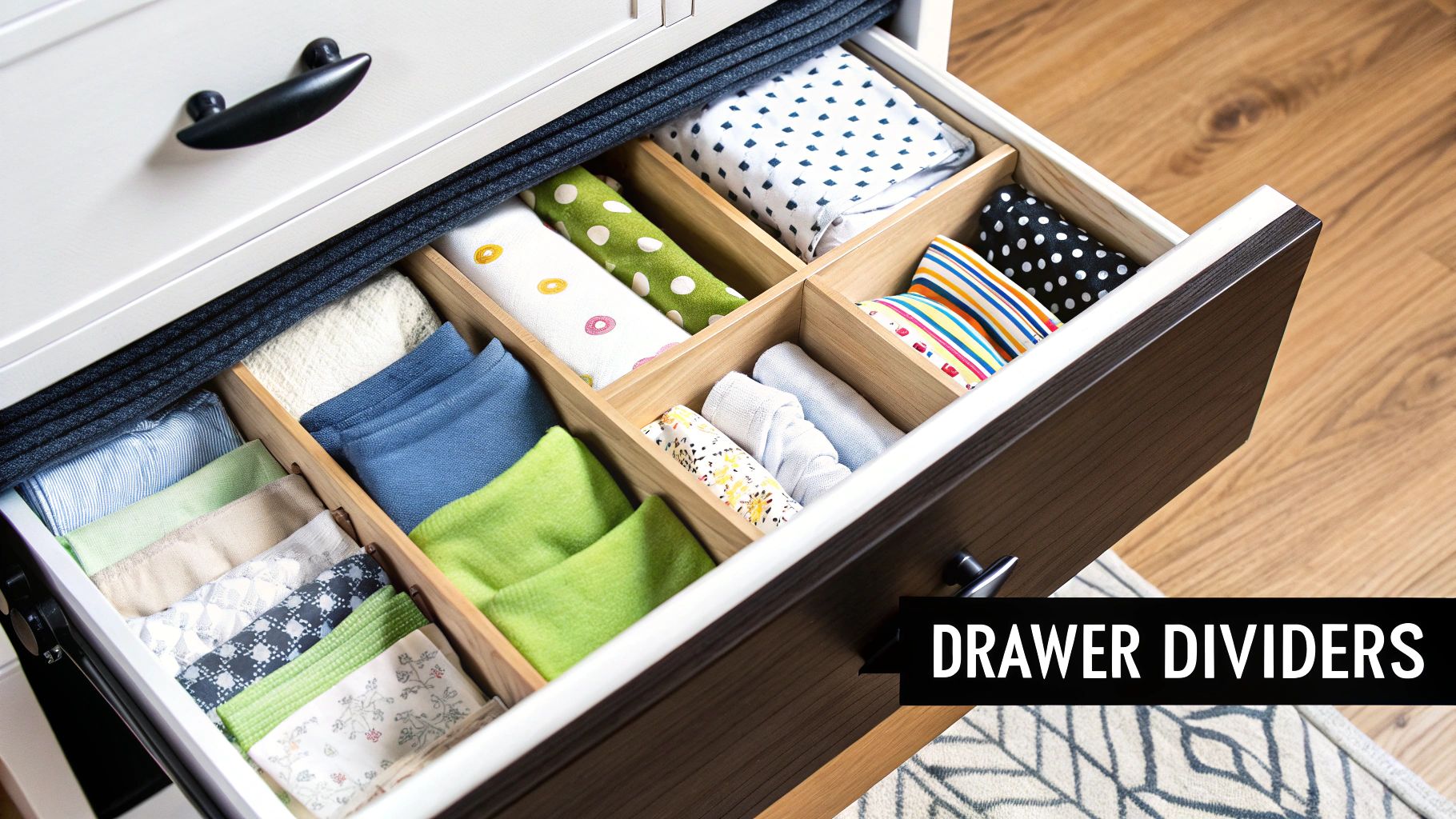
This systematic approach, popularized by organization experts like Marie Kondo, not only keeps the nursery tidy but also helps protect your baby’s clothes and skin. When items are neatly separated, airflow improves, reducing the risk of mustiness that can irritate sensitive skin. It also makes it easier to spot and remove items made from potentially irritating synthetic materials.
Actionable Tips for Implementation
- File-Fold for Visibility: Instead of stacking clothes, use the file-folding technique where each item stands vertically. This allows you to see every piece of clothing without disturbing the rest of the drawer.
- Use Adjustable Dividers: Opt for adjustable or spring-loaded drawer dividers. This allows you to customize compartment sizes as your baby’s clothing changes, from tiny newborn socks to bulkier toddler sweaters.
- Label Everything: Use simple labels (words or pictures) for each compartment. This is especially helpful for other caregivers who may not be familiar with your system, ensuring consistency.
- Install Protective Liners: Place non-toxic, breathable drawer liners at the bottom of each drawer. This protects high-quality, soft fabrics, like those from GuGuTon, from snagging on wood and adds an extra layer of cleanliness to prevent skin irritants. Cedar or lavender sachets can also naturally deter pests.
7. Gear and Equipment Storage with Accessibility in Mind
An organized approach to storing larger baby gear is one of the most practical baby nursery organization ideas for maintaining a safe and clutter-free space. Items like play yards, carriers, monitors, and humidifiers need designated spots that are both space-efficient and easily accessible. A smart system prevents tripping hazards and ensures essential safety and comfort equipment is ready at a moment's notice.
This method focuses on keeping frequently used gear within reach while safely stowing bulkier, less-used items. Proper storage also protects the equipment from dust and damage, ensuring it remains clean and functional, which is vital for your baby’s health and well-being, especially for items like humidifiers that impact air quality.
Actionable Tips for Implementation
- Utilize Vertical Space: Use sturdy wall shelves or corner units to store items like humidifiers, sterilizers, and the baby monitor base. Placing them at an adult's eye level keeps them accessible yet safely out of a child's reach.
- Hang Carriers and Slings: Install strong wall hooks or a tension rod in the closet for hanging baby carriers and slings. This keeps them off the floor, prevents straps from tangling, and makes them easy to grab. You can find guidance on choosing the right one by exploring the best baby carriers for newborns.
- Use Labeled Bins for Bulky Items: Store collapsible items like play yards in their original box or a clearly labeled, sturdy container on a high closet shelf or under the crib. This protects them from dust, which can harbor allergens.
- Implement Under-Bed Storage: Rolling drawers that slide under the crib are perfect for storing backup equipment, extra blankets, or portable changing pads. This keeps them out of sight but conveniently located.
8. Seasonal Rotation System with Labeled Storage
A seasonal rotation system is one of the most proactive baby nursery organization ideas for managing not just clothing but all your baby's gear. This method involves creating designated, clearly labeled storage for out-of-season items, from winter snowsuits and fleece blankets to summer sun hats and lightweight swaddles. It keeps the nursery functional and uncluttered by only having weather-appropriate items accessible.
This comprehensive approach ensures you are always prepared for changing weather while protecting delicate items from dust and pests. Storing items correctly also preserves their quality, which is vital for preventing skin irritation from materials that have degraded in storage.
Actionable Tips for Implementation
- Use a Clear Labeling System: Label storage bins on multiple sides with the season, size, and item type (e.g., "Winter - 6-9 Months - Outerwear & Heavy Blankets"). This prevents you from having to pull down every bin to find what you need.
- Create a Digital Inventory: Before sealing a bin, take a quick photo of the contents or create a simple spreadsheet. This digital reference helps you remember what you have stored away, preventing duplicate purchases.
- Prioritize Breathable Storage: For long-term storage, use breathable canvas or cotton bins instead of plastic for natural fibers like wool or cotton. This prevents moisture buildup, which can lead to mildew and musty smells that may irritate a baby’s sensitive skin.
- Schedule Seasonal Swaps: Set a calendar reminder a few weeks before each new season begins. This gives you time to wash all incoming clothes and bedding in a gentle detergent before use, removing any dust or allergens accumulated during storage.
9. Safety and Reference Documentation Center
Creating a centralized hub for all safety information and product manuals is a critical, yet often overlooked, component of baby nursery organization ideas. This dedicated center ensures that instruction manuals, emergency contacts, and product warranties are immediately accessible when you need them most. Instead of searching through drawers in a panic, you have a system that provides clear guidance on everything from crib assembly to car seat installation.
This organized approach is not just about convenience; it’s a foundational safety measure. Quick access to recall notices or allergen information on lotions or soaps can prevent potential harm, while having manuals on hand ensures that all equipment is used correctly, protecting your baby from misuse-related hazards.
Actionable Tips for Implementation
- Create a Master Binder: Use a three-ring binder with dividers labeled by product category (e.g., "Crib," "Monitor," "Stroller"). Store all related instruction manuals, warranties, and receipts in clear plastic sleeves within each section.
- Post Emergency Information: Laminate a sheet with key contacts like your pediatrician, poison control, and emergency services. Post it in a highly visible area, such as above the changing table. Include a list of any known allergies.
- Go Digital with Backups: Scan or take photos of important manuals and receipts, storing them in a dedicated folder in cloud storage like Google Drive or Dropbox. This creates a secure backup and allows for quick access from your phone.
- Schedule Recall Checks: Set a recurring monthly reminder on your calendar to check the CPSC (Consumer Product Safety Commission) website for recalls on any of your baby products. This proactive step helps ensure every item in the nursery remains safe for use.
10. Multi-Purpose Bin System with Clear Labeling and Inventory Tracking
Adopting a systematic bin-based approach is one of the most transformative baby nursery organization ideas for managing the vast array of supplies. This method uses uniform, stackable containers for everything from backup diapers to seasonal clothing and toys, creating a clean, cohesive look. By pairing clear labeling with a simple inventory tracker, you can instantly see what you have and know exactly when to restock.
This scalable system adapts as your child grows and their needs change. For instance, a bin for newborn swaddles can later be repurposed for toddler art supplies. Proper storage in breathable, non-toxic bins is also essential for protecting items from dust and potential irritants, safeguarding your baby’s sensitive environment.
Actionable Tips for Implementation
- Standardize Your Bins: Choose clear, uniform bins (like those popularized by The Home Edit) for easy stacking and a streamlined look. Ensure they are made from BPA-free, non-toxic plastic to avoid off-gassing chemicals.
- Create a Master Inventory: Use a simple digital spreadsheet or a physical notebook to list each bin, its location, and its contents. Note quantities of essential items like wipes or diaper cream.
- Set Restocking Alerts: On your inventory list or the bin label itself, add a reorder threshold (e.g., "Reorder diapers when 1 pack remains"). This prevents last-minute store runs.
- Use Multi-Layered Labels: For maximum clarity, create labels that include text, a color code, and even a photo of the contents. This makes it easy for any caregiver to find what they need. A QR code on the bin could even link to a digital inventory list.
10-Item Nursery Organization Comparison
| Method | Implementation Complexity 🔄 | Resource Requirements 💡 | Expected Outcomes 📊 | Ideal Use Cases ⚡ | Key Advantages ⭐ |
|---|---|---|---|---|---|
| Closet Organization by Size and Season | Moderate — initial sorting, labeling and seasonal swaps; ongoing upkeep | Bins, size-specific hangers, labels, shelf/closet space | 📊 Clear visibility of sizes/seasons; faster outfit selection | Seasonal wardrobes, siblings sharing clothes, pre-shopping planning | ⭐ Prevents duplicates; protects garments; simplifies hand-me-downs |
| Diapering Station Zones with Accessibility | Moderate — configure zones and mount organizers; regular restocking | Changing table, wall organizers, carts, diaper pail, labels | 📊 Faster, safer diaper changes; fewer forgotten items | Frequent changes, multi-caregiver homes, nighttime routines | ⭐ Keeps essentials within reach; reduces change-time stress |
| Sleep Accessories Organization by Type and Use | Low–Moderate — dedicate shelves/drawers and label sections | Drawers/shelves, breathable bags, moisture-proof containers | 📊 Faster bedtime prep; improved cleanliness and rotation | Households with multiple sleep products or rooms | ⭐ Reduces mix-ups; ensures clean rotation of bedding |
| Bottle, Formula, and Feeding Supplies Hub | Moderate — centralize workflow and sanitation areas | Counter/shelf space, warmer, sterilizer, labeled drawers | 📊 Streamlined feeding prep; safer formula handling | Kitchens with limited space, night feed routines, formula users | ⭐ Centralizes sterilization; speeds preparation; improves safety |
| Bathing and Personal Care Supplies Organization | Low — group waterproof storage near bath; maintain dryness | Waterproof caddies, hanging organizers, mesh bags | 📊 Quicker access during bath; reduced water damage risk | Small bathroom setups; routine bath times | ⭐ Keeps bath items accessible and hygienic; improves safety |
| Clothing Drawer Organization with Dividers and Subcategories | Low — fold and divide drawers; periodic refile | Drawer dividers, labels, file-folding technique | 📊 Faster outfit selection; maximized drawer capacity | Daily dressing routines, babysitter-friendly homes | ⭐ Maximizes space; prevents wrinkles; easy visibility |
| Gear and Equipment Storage with Accessibility in Mind | Moderate — plan shelving/hooks and heavy-item storage | Shelving, under-bed drawers, wall hooks, labeled bins | 📊 Reduced clutter and trip hazards; quick access to gear | Homes with bulky baby equipment or limited floor space | ⭐ Keeps large gear accessible yet out of sight; improves safety |
| Seasonal Rotation System with Labeled Storage | Moderate–High — inventory, label, and rotate seasonally | Large bins, climate-proof storage, inventory app/sheet | 📊 Year-round clutter reduction; better space utilization | Families with pronounced seasonal clothing needs | ⭐ Prevents duplicates; protects off-season items; simplifies transitions |
| Safety and Reference Documentation Center | Low — compile manuals and laminate key guides; update regularly | Binder/folders, laminator, digital backups, labels | 📊 Faster access to manuals and emergency info; recall tracking | New caregivers, complex gear setups, safety-focused households | ⭐ Centralizes critical info; reduces misuse and emergency delays |
| Multi-Purpose Bin System with Clear Labeling and Inventory Tracking | Moderate — uniform bins, labeling, and digital tracking setup | Stackable clear bins, QR/labels, spreadsheet/app for inventory | 📊 Flexible, scalable organization; easy restocking alerts | Growing families with diverse items and changing needs | ⭐ Highly customizable; scalable; simple visual inventory |
Your Blueprint for a Healthy, Happy, and Harmonious Nursery
Navigating the journey of preparing for a new baby is filled with countless decisions, but crafting a well-organized nursery stands out as one of the most impactful. The detailed baby nursery organization ideas shared in this guide are more than just tips for tidiness; they are a blueprint for creating a sanctuary of calm, safety, and health for your little one. By thoughtfully arranging your space, you’re not just making life easier for yourself during late-night feedings and quick diaper changes, you are actively building a healthier environment.
The core takeaway is that organization is a form of proactive care. When you implement systems like seasonal clothing rotation using breathable storage and organize your bathing supplies to prevent moisture buildup, you are directly minimizing risks like skin irritation, mildew, and contact with allergens. A meticulously planned diapering station ensures all creams and wipes are within your reach, preventing you from ever having to leave your baby unattended. Similarly, creating a designated safety and documentation center keeps crucial health information accessible, empowering you to act swiftly and confidently in any situation.
Key Pillars for a Nurturing Nursery
The true value of these strategies lies in their cumulative effect. Consider these foundational principles as you bring your nursery vision to life:
- Accessibility is Safety: Organizing with a "one-hand-free" mindset ensures essential items are always reachable, which is critical for maintaining safety during diaper changes and baths.
- Visibility Reduces Stress: Using clear bins, drawer dividers, and bold labels eliminates the frantic search for a specific onesie or pacifier, preserving your energy and patience.
- Health-Conscious Material Choices: Selecting storage solutions made from non-toxic, easy-to-clean materials and ensuring proper ventilation for clothing and linens is fundamental to protecting your baby's delicate skin and respiratory system.
- Systems Foster Adaptability: A nursery is not a static space. The organizational systems you establish now, from labeled bins to categorized drawers, are designed to evolve seamlessly as your baby transitions from newborn to toddler, making each new stage more manageable.
Ultimately, mastering these baby nursery organization ideas transforms the room from a collection of baby items into a functional, harmonious ecosystem. It’s an investment of time and effort that pays dividends in peace of mind, allowing you to focus less on clutter and more on the precious moments of connection with your child. Embrace this process as a tangible expression of love, creating a space where both you and your baby can thrive.
Ready to equip your beautifully organized nursery with high-quality, safe, and comfortable essentials? Explore the curated collection at GUGUTON LLC, where you will find thoughtfully designed clothing and accessories that complement a health-conscious and harmonious environment. Visit GUGUTON LLC to discover the perfect pieces to fill your newly organized closets and drawers.