

How to Burp a Baby Correctly for Comfort and Safety
Learning how to burp a baby correctly is one of those simple, must-have skills for any new parent. It's really just about gently patting or rubbing your baby’s back while holding them in a supported, upright position. This one small action releases the air they swallow during feedings, which can make a world of difference in their comfort, prevent a whole lot of fussiness, and even help protect their delicate skin.
Why Proper Burping Matters for Your Baby's Comfort
As any parent knows, a full tummy doesn't always equal a happy baby. More often than not, the missing piece of the puzzle is a good, solid burp.
The reason is simple. Whether you're breastfeeding or bottle-feeding, babies tend to swallow air right along with their milk. That air gets trapped, creating uncomfortable gas bubbles in their tiny stomachs that can lead to squirming, crying, and general misery for everyone involved.
Understanding why burping is so important can help you head off discomfort and even bigger issues like baby colic. It’s not just some old-fashioned advice; it’s about giving your baby immediate relief. Getting that trapped air out makes them feel better almost instantly, turning what could be a stressful post-feeding fuss-fest into a calm, quiet moment.
Beyond Gas Relief: The Impact on Spit-Up and Skin Health
Most of us think burping is all about preventing gas, but recent studies suggest its main benefit might actually be in managing spit-up. It's a bit surprising, but one trial found that babies who were burped actually spit up more often than those who weren't.
A randomized controlled trial showed that burped infants had an incidence rate difference of 4.36 more spit-up episodes per week, which definitely challenges what we've always been told. You can read the full research about burping and spit-up to dig into the findings yourself.
So, if that's the case, why bother burping at all? The goal really shifts from trying to prevent spit-up entirely to managing it better. A good burping technique helps release that trapped air in a more controlled way, which can result in smaller, less forceful spit-ups. This is a game-changer for your baby's skin health.
Constant dampness from spit-up that gets trapped in the folds of your baby’s neck and on their chest can quickly lead to irritation, allergies, and painful rashes. This is where having quality, absorbent, and skin-safe materials on hand makes all the difference.
Using a soft, high-quality burp cloth made from hypoallergenic material creates a much-needed protective barrier. It keeps your baby’s delicate skin dry and comfortable, preventing the kind of skin irritation that can be caused by dampness or contact with rough fabrics. This turns a messy job into a clean and safe bonding moment. Having the right gear is a huge part of the process, and you can see more of our top picks in our newborn essentials shopping list.
Ultimately, burping correctly is all about comfort—both for their little tummy and their sensitive skin.
Mastering the Top 3 Baby Burping Positions
Every baby is a little different, and finding the burping position that works best for both of you can feel like a huge win. Think of it as finding your go-to move. There are three classic holds that parents have relied on for generations simply because they get the job done. Each one uses gentle pressure on your baby’s tummy to coax those pesky gas bubbles up and out, all while keeping their head and neck safely supported.
First, let's quickly look at why burping is so important. When a baby eats, they can’t help but swallow some air along with their milk or formula. That air gets trapped, leading to a fussy, uncomfortable baby.
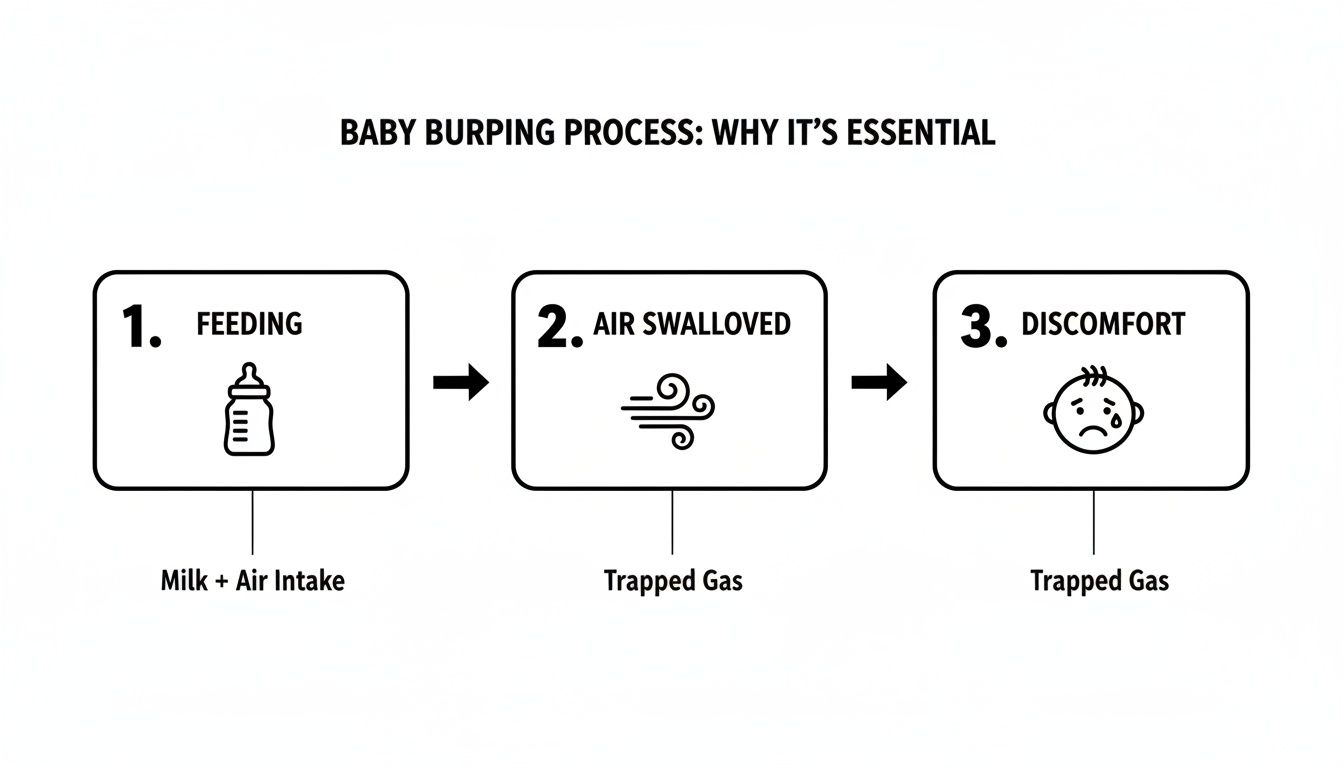
As you can see, that trapped gas is the real culprit behind a lot of after-feeding fussiness. A good burp is the simple solution that brings instant relief.
The Classic Over-the-Shoulder Hold
This is the one most people picture when they think of burping a baby. It's a natural, comforting position that’s easy to master.
Simply hold your baby up against your chest so their chin can rest on your shoulder. You’ll want them high enough that their little belly is gently pressed against your body. Support their bottom with one hand and use your other hand to gently pat or rub their back.
A quick but important tip: Make sure their head is turned to the side so their nose and mouth are clear and they can breathe easily. And trust me, draping a soft, absorbent burp cloth over your shoulder is a non-negotiable step—it saves your clothes and protects your baby's delicate skin from potentially irritating synthetic fabrics, dyes, or detergents on your shirt.
The Supported Sit-Up
This hold is fantastic because you can see your baby’s face, which is great for bonding and for spotting any spit-up before it happens. It's also a winner for babies who don't love having direct pressure on their tummy.
Sit your baby upright on your lap, facing sideways. Gently cup their chin in your hand, with the heel of your hand supporting their chest. Be very careful to support their jaw, not their throat. Lean them forward just a bit—this subtle tilt is what creates the gentle pressure needed to release gas. Now, with your free hand, pat or rub their back.
It’s amazing how a small tweak can make a big difference. One study found that adding a gentle rocking motion while in the sitting position was successful in nearly 80% of burping attempts.
Parenting Tip: A gentle, rhythmic pat is often more effective than a forceful one. Think of it as a steady beat, not a hard tap. Consistency is more important than strength, especially for a newborn's delicate frame.
The Across-the-Lap Lay
If you have a particularly gassy or fussy baby on your hands, this position can be a real lifesaver. It’s incredibly soothing and works wonders on stubborn bubbles.
Lay your baby tummy-down across your lap, so their belly rests on one of your legs and their head is on the other. The key here is to make sure their head is slightly higher than the rest of their body. This little bit of elevation helps prevent spit-up and uses gravity to your advantage.
Use one hand to keep them secure and the other to gently pat their back. The feeling of support and gentle pressure is often very calming, much like the snug hold they get in some of the best baby carriers for newborns.
Comparing the Top 3 Baby Burping Positions
Feeling unsure which hold to try first? This quick comparison can help you decide what might work best for your situation.
| Position | Best For | Key Safety Tip | Comfort Tip |
|---|---|---|---|
| Over the Shoulder | Newborns and sleepy babies; it's a very natural, cuddly hold. | Ensure the baby's face is turned to the side, not pressed into your clothing, to keep their airway clear. | Always use a high-quality burp cloth to protect your clothes and prevent your baby's face from touching fabrics that could cause a rash or allergic reaction. |
| Supported Sitting Up | Babies with some head control; great for eye contact and for babies who dislike tummy pressure. | Support their chin and jaw with the cup of your hand, never putting any pressure on their throat. | A slight forward lean is all that's needed to create gentle pressure on their abdomen. |
| Across the Lap | Very gassy or colicky babies; the position provides soothing pressure. | Position their head slightly higher than their chest to prevent reflux and help milk stay down. | Gently rubbing their back in a circular motion can be more calming than patting for some babies. |
Ultimately, there’s no single "right" way to burp your baby. The best approach is to try each of these positions and see what your little one responds to. You might find they prefer one hold during the day and another when they're sleepy at night. The key is finding that perfect combination of comfort and effectiveness for both of you.
Knowing the Best Times to Burp Your Baby
Knowing all the right burping positions is one thing, but figuring out when to burp your baby is a game-changer for keeping them comfortable and happy. If you time your burping breaks just right, you can get ahead of gas before it builds up into a major, tear-filled problem.
The idea is to release those little pockets of air before they have a chance to gang up and cause real discomfort. A proactive approach means a less fussy baby and, just as importantly, less spit-up.
For Bottle-Fed Babies
Babies who take a bottle often swallow air a bit more consistently. That steady flow of milk can sometimes cause them to gulp down air right along with their formula or breastmilk. The American Academy of Pediatrics has a great rule of thumb for this: pause for a burp about halfway through the bottle.
So, if your little one usually takes a four-ounce bottle, try stopping after the first two ounces for a quick burping session. This mid-feed break is the perfect opportunity to release any air they've already swallowed before they fill their tummy the rest of the way. Choosing the right bottle and nipple can make a difference, too, as you'll see in our guide on how to choose baby formula.
For Breastfed Babies
Yes, breastfed babies swallow air, too! It often happens if they have a shallow latch or if mom has a really fast let-down. Since you can't exactly measure ounces at the breast, the best cue for a burping break is simply when you switch sides.
As you get ready to move your baby from one breast to the other, use that natural pause to burp them for a minute or two. It’s the perfect built-in moment to clear out any trapped air. If your baby is one of those who fills up on just one side per feeding, just try burping them when they seem to be slowing down naturally, usually about halfway through their typical nursing time.
A consistent burping routine, no matter how you're feeding, is one of the pillars of a comfortable feeding experience. It's not just about reducing fussiness; it's also about minimizing spit-up that can irritate your baby's delicate skin and lead to contact rashes.
Don't Forget the Final Burp
Whether your baby had a bottle or nursed, always, always finish the feeding with one last burping attempt. Think of this as the grand finale—your last chance to get any lingering air bubbles out before you lay your baby down.
Even if they’ve drifted off to sleep or seem perfectly content, giving them a few minutes of gentle pats can prevent them from waking up fussy just a little while later. It's that final step that helps ensure they are truly settled, comfortable, and ready for some quality sleep.
What to Do When Burping Gets Tricky
Even with the best techniques, some burping sessions just don't go as planned. Your baby might be extra fussy, fall fast asleep mid-feed, or seem like they just can't get that bubble out. Don't worry, this is completely normal.
Having a few tricks up your sleeve can make all the difference. Remember, the goal is to gently guide the air out, not force it. If one position isn't working, just calmly try another. Staying relaxed helps your baby stay relaxed, too.
When Your Baby Just Won’t Burp
You’ve patted, you’ve rubbed, you’ve waited... and nothing. It’s a classic parenting puzzle, but it doesn't automatically signal a problem. Some babies are just efficient eaters and don't swallow much air, so they may not need to burp after every single feeding.
But if you have a hunch there's a bubble in there causing trouble, don't give up right away.
- Try a New Position: If the classic over-the-shoulder hold isn't working, switch things up. Gently move your baby into the sitting position on your lap or lay them across your knees. That simple change in posture can be all it takes to shift the air bubble and help it find its way out.
- Give It a Minute: Sometimes a little pause does the trick. Lay your baby down safely on their back for a minute or two. The motion of laying them down and then picking them back up to try again can help move that stubborn gas bubble.
If you’ve tried for a few minutes and still no burp, it’s perfectly fine to stop. Just keep an eye out for any signs of discomfort later, like squirming or fussing.
Navigating the Sleepy Feeder
Ah, the age-old dilemma. Your baby is finally drifting off into a peaceful milk-slumber, but you know there's a burp lurking. Waking them up feels like a crime, but skipping it could mean they wake up screaming from gas pains in 20 minutes.
The secret is to rouse them just enough to get the burp out without fully waking them. Try gently tickling their feet, rubbing their cheeks, or even loosening their swaddle. A quick diaper change right before you start burping can also be a surprisingly effective way to wake them up just the right amount.
A "dream feed" burp is totally achievable. Hold your sleepy baby upright against you and rub their back in a slow, steady circle. Often, this gentle pressure is enough to work out a burp without interrupting their sweet dreams.
Spit-Up vs. Reflux: What’s Normal?
A little spit-up is practically a rite of passage for new parents. It happens! A baby's digestive system is still a work in progress, and the little muscle that closes off the stomach isn't quite up to speed yet. This means a small amount of milk often makes a reappearance, especially during a burp.
Reflux, or gastroesophageal reflux (GER), can be a bit more intense. While some reflux is also normal, certain signs might mean it's time for a chat with your pediatrician.
Here’s a quick guide to help you spot the difference and know what to do next.
Burping Problem-Solver
| Common Problem | What It Looks Like | Practical Solution to Try |
|---|---|---|
| Normal Spit-Up | A small trickle of milk (1-2 tablespoons) dribbles out. Your baby seems happy, comfortable, and is gaining weight well. | Keep an absorbent burp cloth on your shoulder. Hold your baby upright for 20-30 minutes after feedings to let gravity help. |
| A Fussy Spitter | Your baby spits up but also seems uncomfortable, squirmy, or fussy after feedings. They might seem gassier than usual. | Try smaller, more frequent feedings. Make sure you’re burping them midway through the bottle or when switching breasts. |
| Possible Reflux (GER) | Spit-up is forceful or projectile. Your baby frequently arches their back, seems to be in pain during or after eating, or isn't gaining weight. | This is your cue to call the pediatrician. They can properly diagnose the issue and create a plan to keep your baby comfortable and healthy. |
Don't underestimate the power of a good burp cloth! Managing all that spit-up is key for keeping your baby’s skin healthy. The constant moisture can easily lead to irritation and contact dermatitis in those adorable neck folds. Using soft, hypoallergenic burp cloths creates a crucial barrier, keeping their sensitive skin dry and protected from potential allergens or irritants on your clothes.
Creating a Calm and Comfortable Feeding Environment
A good burp often feels like the finish line of a successful feeding, but the race is really won in the prep. Setting a peaceful stage before your baby even takes that first sip can make a world of difference. When you create a calm, well-prepared space, you'll find they swallow less air, which makes burping a whole lot easier for everyone.
Think about it from your baby's perspective. A quiet, dim room helps them focus on the task at hand—eating. Without the distraction of loud noises or bright, stimulating lights, they can settle into a better latch and a steady, rhythmic sucking pattern. That alone drastically cuts down on how much air they gulp down.

Choosing the Right Gear for Comfort and Safety
The gear you use can be your best friend or your worst enemy during feeding time. Smart choices in bottles, pillows, and even burp cloths directly impact your baby's comfort and can prevent a lot of fussiness and skin issues down the line.
- Anti-Colic Bottles: If you're bottle-feeding, look for bottles specifically designed to reduce air intake. Many have clever vents or internal systems that keep air from mixing with the milk. This means your baby gets more formula and less gas, which translates to less work for you during burping.
- Supportive Nursing Pillows: A good nursing pillow is a back-saver, but it's also a game-changer for getting the feeding angle just right. Whether you're breastfeeding or bottle-feeding, the pillow helps keep your baby in a more upright position. Gravity then does some of the work for you, helping milk settle and encouraging air to rise naturally.
- Hypoallergenic Burp Cloths: Spit-up is just a part of the deal, but rashes and skin irritation don't have to be. Your baby's skin is incredibly sensitive. Using soft, super-absorbent hypoallergenic burp cloths is a simple but critical way to protect them. They create a gentle barrier, keeping their skin dry and safe from any potential allergens or harsh dyes found in adult clothing.
Creating a soothing atmosphere goes beyond just the feeding itself. If you're looking for inspiration, you can find great tips on how to decorate a nursery for your baby to build a cozy, safe, and stylish space. A well-organized room really does help keep routines stress-free.
When you focus on the entire feeding environment, you're not just getting better at burping. You're proactively preventing the very discomfort that makes burping so necessary in the first place, and protecting your baby's skin from common irritants.
This mindset shifts feeding time from a chore into a calm, bonding experience. For more practical ways to set up a functional and peaceful space, check out our guide on baby nursery organization ideas. It’s all about creating a routine where every little detail, from the room’s vibe to the quality and safety of a burp cloth, supports your baby’s happiness.
Common Questions About Burping Your Baby
Even when you feel like you've mastered all the burping positions, a few questions always seem to pop up. Getting these little details sorted out can make a huge difference in your confidence and help feeding time feel less stressful for both you and your baby.
How Long Should I Try to Burp My Baby?
You really don't need to pat your baby's back for an eternity. If you've tried a position or two for a few minutes and nothing's happening, your little one probably doesn't have a big air bubble that needs to come out right then.
It's completely okay to stop and lay them down. Just keep an eye out for any signs of discomfort later, like a lot of squirming or fussing.
Do I Have to Wake a Sleeping Baby to Burp Them?
Ah, the classic dilemma: never wake a sleeping baby, right? Well, in this case, it's worth a gentle try. A baby who dozes off with trapped gas is often the same baby who wakes up crying in pain 20 minutes later.
You don't need to jolt them awake. Try holding them upright against your shoulder and softly rubbing their back. Often, a burp will sneak out without even rustling their dreams. A quiet attempt now can save you from a full-blown wake-up call later.
When Can I Stop Burping My Baby?
This is a milestone that sneaks up on you! Most babies are ready to move on from needing help with burping somewhere between four to six months old. Their little digestive systems get much better at handling gas all on their own as they mature.
You’ll be the first to notice the signs. They'll likely be less fussy after meals and the spit-up will decrease. When you see this, try skipping the burping after one feeding and see how they do. You can gradually phase it out as they show you they're comfortable.
Is It Normal for My Baby to Spit Up During Burping?
Yes, a little spit-up is totally normal—and very common. It's just a side effect of an immature digestive system. A bit of milk often comes back up with the burp.
That said, if the spit-up seems more like a forceful, projectile event, or if your baby seems genuinely distressed and is arching their back, it could be a sign of something more, like reflux. That’s a good moment to check in with your pediatrician.
For handling that everyday spit-up, a good, absorbent burp cloth is your best friend. It keeps your baby’s skin dry, which is so important for preventing the rashes and irritation that can happen when moisture gets trapped in those adorable neck folds. Using high-quality, hypoallergenic materials ensures you are not accidentally exposing their sensitive skin to harsh chemicals or allergens.
At GUGUTON LLC, we get that the right gear can make all the difference. Our collection of soft, hypoallergenic burp cloths and other baby essentials is designed with your little one's delicate skin in mind, giving you practical solutions you can count on. Shop our curated selection today and create a comfortable, caring environment for your baby.