

Finding the Best Convertible Cribs for Safety and Style
When you're setting up a nursery, picking the right crib feels like a monumental decision. It's more than just a piece of furniture; it's the centerpiece of your baby's first room and their primary sleep environment. A well-chosen convertible crib offers an incredible mix of long-term value, safety, and practicality. These cribs, especially those built from solid wood with non-toxic finishes, are designed to grow with your child, transforming from a cozy infant crib into a toddler bed and sometimes even a full-size bed. It becomes a familiar, secure space for them for years.
Why a Convertible Crib Is a Smart Nursery Investment
Preparing for a new baby comes with a seemingly endless to-do list, and the crib is usually right at the top. But think of a convertible crib as more than just a bed for your newborn. It's a foundational investment that adapts as your child hits new milestones, from tiny infant to rambunctious toddler and beyond. You're not just buying one piece of furniture; you're investing in years of comfort for your child and peace of mind for yourself.
This guide is here to walk you through everything, making sure you feel confident choosing that perfect centerpiece. We'll start with the non-negotiable for every parent: safety and quality. A baby’s skin is unbelievably sensitive and delicate, which means anything they come into contact with matters. The materials in a crib—from the wood and glue to the paint and finish—can directly affect their health, potentially triggering allergies, rashes, or other skin irritations.
Protecting Your Baby's Sensitive Skin from Allergies and Rashes
One of the biggest worries for new parents is the risk of allergic reactions or skin irritation. A baby's skin barrier is thinner and more porous than an adult's, making it highly susceptible to environmental triggers. Low-quality furniture can sometimes release chemicals or VOCs (Volatile Organic Compounds) that might lead to contact dermatitis, rashes, or even respiratory issues. This is why getting a handle on what makes a crib truly safe is so important. The best convertible cribs are always built with your baby’s health as the top priority.
Here are a few key things to look for to protect your baby's skin:
- Non-Toxic, Hypoallergenic Finishes: Always make sure the crib is finished with lead-free and phthalate-free paint that is tested for low or zero VOCs. This is crucial because babies inevitably go through a teething phase where they chew on everything, including the crib rails. A safe finish prevents them from ingesting harmful toxins.
- Solid Wood Construction: Solid woods like beech, oak, or poplar are a better choice than composite woods like MDF or particleboard. Those composite materials often use glues containing formaldehyde, which can release fumes ("off-gas") and compromise the air quality in the nursery, potentially irritating a baby's skin and lungs.
- Safety Certifications: Keep an eye out for certifications that prove the crib has been rigorously tested for both chemical emissions (like GREENGUARD Gold) and structural integrity (like JPMA). These certifications are your assurance that the crib meets strict standards for creating a healthy environment.
When you choose a crib made from high-quality, non-toxic materials, you’re creating a sleep space that isn't just secure, but pure. It's a simple, proactive step that helps shield your little one's sensitive skin and developing lungs from potential irritants from day one.
Picking a well-made convertible crib from the start is an investment in your child's health and comfort for years. This one decision sets the stage for a safe, adaptable nursery that will be there for your family through countless memories and milestones.
From Infant Crib to Full Bed: The Four Stages of Growth
So, what’s all the fuss about convertible cribs? The magic is in seeing how one piece of furniture can evolve with your child. Think of it less like a static bed and more like a set of Legos you can reconfigure as your little one hits each new milestone, from their first night home all the way through their pre-teen years.
It’s this long-term adaptability that has made them the go-to choice for modern nurseries. In fact, convertible cribs are so popular they command a whopping 55% of the market share as of 2022. Parents love them because they make sense financially and functionally, and their popularity is only expected to grow.
When you see a crib labeled "3-in-1" or "4-in-1," it's talking about these stages. Let's walk through the journey step-by-step.
Stage 1: The Secure Infant Crib
This is square one. Every convertible crib starts its life as a safe, standard crib with four high sides. For your newborn, you'll set the mattress to its highest position. Trust me, this saves your back during those countless times you'll be gently laying a sleeping baby down.
As your baby gets more mobile—learning to sit up and eventually pull themselves to a standing position—you'll lower the mattress. This is a crucial safety step to ensure they can’t hoist themselves over the top. This cozy, enclosed setup is perfect for the first 18 to 24 months.
Stage 2: The Safe Toddler Bed
The day your little one starts looking like a tiny escape artist trying to climb out of the crib is your cue for the first big conversion. This is a huge milestone! You’ll remove one of the long side rails and replace it with a low safety guardrail. Some cribs include this piece, but often it's an extra purchase—something to check before you buy.
This new setup gives your toddler the freedom to climb in and out of bed on their own, a big step toward independence. The guardrail is there to prevent any accidental tumbles during the night, and keeping the familiar headboard and footboard can make the transition feel a lot less scary for them. For more on this big step, check out this helpful guide to a smooth crib to bed transition.
The infographic below really brings home how a single smart purchase supports your child’s development for years.
As you can see, it’s all about providing a secure and comfortable space that grows right alongside them.
Stage 3: The Charming Daybed
Next up is the daybed. This is a simple but lovely transition where you just remove the toddler guardrail completely. What you're left with is a sweet, sofa-like bed that’s perfect for a child's room or even a playroom. It becomes a cozy spot for reading books or quiet time.
This stage is typically the final step for a 3-in-1 crib (Crib > Toddler Bed > Daybed) and really extends the life of the furniture. If you’re trying to figure out the right timing for these changes, our guide on how to transition baby to crib offers some great tips for the whole journey.
Stage 4: The Full-Size Bed Frame
This is the final, impressive transformation that sets a true 4-in-1 crib apart. By using the original headboard and footboard from the crib, you can attach them to a standard full-size metal bed frame. You'll almost always need to buy a separate conversion kit with rails for this last step.
This is where you see the ultimate value. You’re not just buying a crib; you’re investing in a piece of bedroom furniture that can potentially last for over a decade. It completely eliminates the need to shop for a new bed every few years as your child grows.
To make comparing these options easier, here’s a quick breakdown of what you get with each type of crib.
Convertible Crib Conversion Stages at a Glance
| Stage | Description | Typical Age Range | Included in 3-in-1 Cribs | Included in 4-in-1 Cribs |
|---|---|---|---|---|
| Infant Crib | A standard, four-sided crib for newborns and babies. | 0–24 months | ✔️ | ✔️ |
| Toddler Bed | One side is replaced with a low guardrail for safety. | 2–4 years | ✔️ | ✔️ |
| Daybed | The toddler guardrail is removed, creating a small sofa. | 3–5 years | ✔️ | ✔️ |
| Full-Size Bed | Headboard/footboard attach to a full-size frame. | 5+ years | ❌ | ✔️ |
Seeing the stages laid out like this really helps clarify the long-term value you're getting. Understanding these four distinct transformations will help you decide if a 3-in-1 or a 4-in-1 model is the right fit for your family's future.
Decoding Safety Certifications and Non-Toxic Materials
When you're shopping for a crib, nothing matters more than your baby's safety and health. It’s easy to get caught up in the style or how many years it'll last, but the actual materials your child will be breathing, touching, and eventually teething on are what really count. Understanding a few key safety certifications is your best defense against potential allergies, rashes, and skin irritation.
Navigating all the labels and acronyms can feel like learning a new language. But think of certifications as a shortcut—a seal of approval from health and safety experts. They aren't just marketing fluff; they prove a crib has gone through rigorous, third-party testing to make sure it's free from nasty chemicals and built to last.
The two big players you'll want to look for are JPMA and GREENGUARD Gold. They cover different, but equally critical, aspects of crib safety.
Understanding Key Safety Certifications
The JPMA (Juvenile Products Manufacturers Association) certification is all about the crib's physical construction. If you see the JPMA seal, it means the crib has been tested to meet or exceed government standards for things like slat spacing, hardware strength, and overall stability. It’s your peace of mind that the crib is structurally sound and won't fall apart.
On the flip side, GREENGUARD Gold certification is focused on the air your baby breathes. This is one of the toughest standards for low chemical emissions, testing for over 10,000 chemicals and Volatile Organic Compounds (VOCs). A crib with this certification won't pollute your nursery with invisible fumes that can cause skin or respiratory irritation.
A GREENGUARD Gold certified crib is a promise of cleaner air. It ensures that the furniture itself isn't releasing harmful fumes that could irritate your baby’s sensitive skin or developing respiratory system.
This is a huge deal, especially when you consider how much time babies spend sleeping. Creating a healthy sleep environment is one of your most important jobs as a new parent, and minimizing airborne chemicals is a big piece of that puzzle. For more on this, you might find our guide on creating a safe sleep environment for infants helpful.
Why Solid Wood and Non-Toxic Finishes Matter
The materials inside the crib are just as important as the certifications on the box. While a lot of cribs look the same, what's under the paint can make a huge difference for your baby’s health. That’s why solid wood is almost always the best choice.
Woods like poplar, beech, and New Zealand pine are not only incredibly durable, but they're also inherently safer than composite woods like MDF or particleboard. Here’s why it’s worth seeking them out:
- No Added Formaldehyde: Composite woods are basically wood fibers held together with industrial glues, which often contain formaldehyde—a known skin and respiratory irritant. Solid wood doesn't need these adhesives, which dramatically cuts down on chemical off-gassing.
- Durability and Longevity: Real wood is simply stronger. It can handle the bumps, kicks, and conversions from crib to toddler bed to full-size bed without falling apart.
- Natural and Pure: It’s a straightforward, natural material, free from the complex chemical cocktails used to create engineered wood products.
The finish is the final, crucial piece. Every baby explores the world with their mouth, and you can bet the crib rail will become a favorite teething toy. A non-toxic finish isn't just a nice-to-have; it's a must. Look for language on the product description that mentions multi-step painting processes using lead-free and phthalate-free, non-toxic finishes. This way, you know that even if your little one gnaws on the rail, they aren't ingesting anything harmful.
The Hidden Danger of VOCs
You’ll hear the term VOCs (Volatile Organic Compounds) a lot when it comes to nursery safety. These are invisible gases that get released from everyday items like paint, glue, finishes, and manufactured woods. In adults, they can cause headaches and dizziness. In babies, whose systems are still developing, they can trigger skin rashes, allergic reactions, and respiratory problems.
Because a baby’s immune and respiratory systems are just getting started, they are far more sensitive to poor indoor air quality. This is where that GREENGUARD Gold certification really shines. It's the most effective way to protect your nursery from VOCs, guaranteeing the crib has been tested and meets incredibly strict limits on chemical emissions.
By prioritizing these certifications and materials, you can choose a crib that not only looks beautiful but also creates a healthier, purer space for your little one to grow.
Choosing the Right Size Mattress and Fit for Your Nursery
Let's talk about the practical side of things: getting the fit right. We've covered materials and safety stamps, but if the crib and mattress don't fit perfectly—both with each other and in your nursery—you're in for a headache. A snug mattress is a non-negotiable safety rule, and a crib that fits the room just makes life easier for everyone.
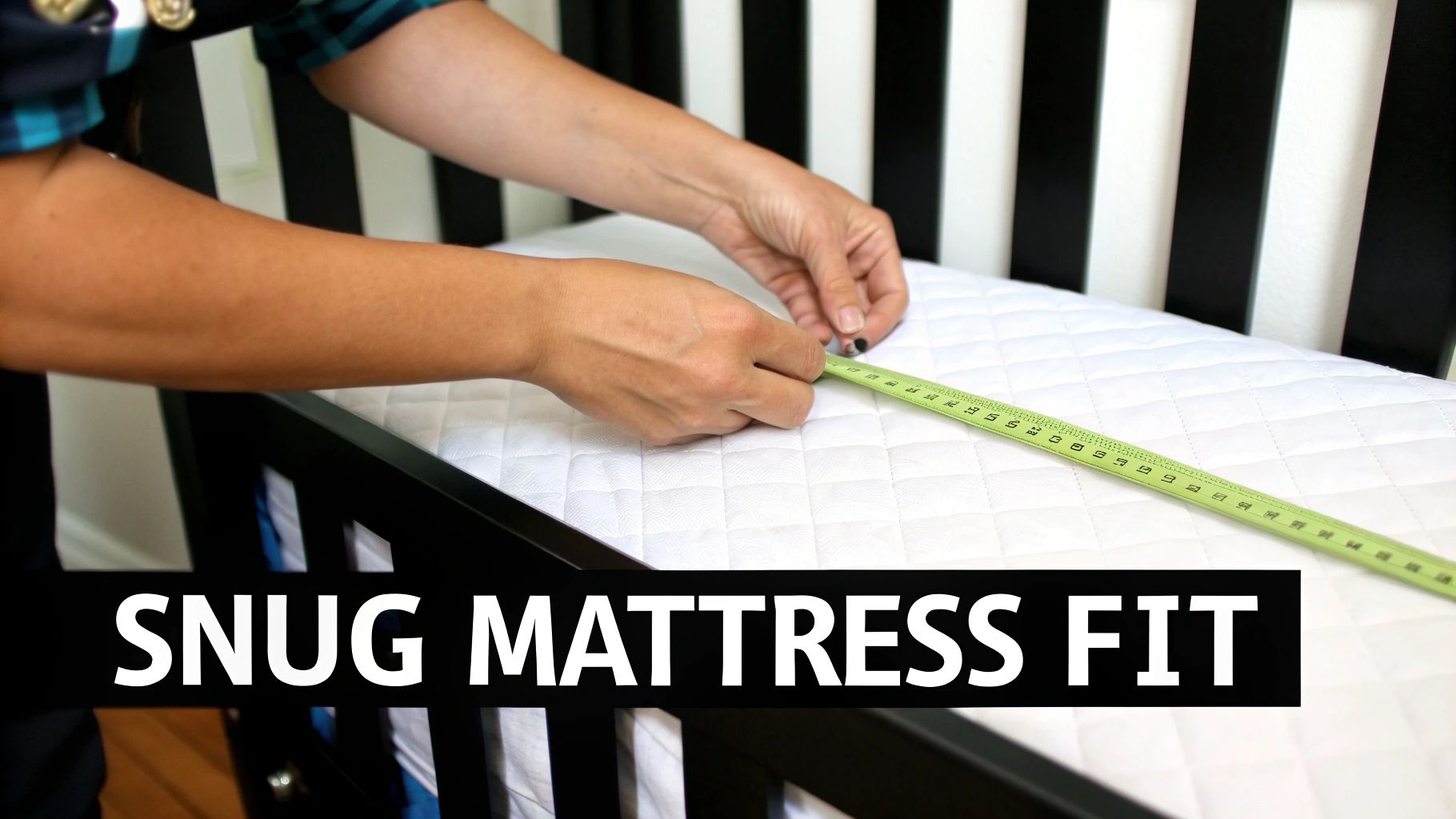
First up, the mattress. There are federal regulations that standardize the size of a full-size crib mattress, but tiny variations still happen from brand to brand. The goal is to leave absolutely zero gap between the edge of the mattress and the crib frame. That little space can be a serious hazard where a baby could get trapped.
To be certain your setup is safe, use the simple "two-finger test." After you place the mattress in the crib, try to slide your fingers down the side between the mattress and the frame. If you can fit more than two fingers, the mattress is too small and unsafe. You'll need to find one that fits tighter.
Mattress Firmness and Your Baby’s Development
The firmness of the mattress is just as critical. While we might love a soft, cushy bed, babies need the exact opposite. A firm, flat surface is crucial for infant safety. Mattresses that are too soft can create a little pocket around a baby's head or face, which increases the risk of suffocation and Sudden Infant Death Syndrome (SIDS).
A firm crib mattress gives a baby’s growing bones and muscles the solid support they need. Think of it as a sturdy foundation that won’t sag, which is a cornerstone of creating a safe sleep environment.
You can check the firmness yourself. Press down hard in the middle of the mattress and along the edges. It should pop right back into place without leaving a deep impression of your hand. For a deeper dive, our guide explains how to choose a crib mattress in much more detail.
Measuring Your Nursery Space
Before you get your heart set on that beautiful crib you saw online, grab a measuring tape. It’s so easy to misjudge how much room a piece of furniture will actually take up. A great little trick is to use painter's tape to mark the crib’s dimensions on the floor. This gives you a real-world visual of how it will fit and how much space is left for everything else.
Keep these things in mind as you measure:
- Walking Paths: You'll want enough room to move around the crib without squeezing, especially for those late-night checks. Aim for at least a 3-foot walkway.
- Other Furniture: Don't forget about the dresser, changing table, and rocking chair. Make sure you can open drawers all the way without them bumping into the crib.
- Windows & Vents: Never place a crib right under a window, especially one with blinds or curtains that have cords. You'll also want to keep it away from heating or cooling vents to keep your baby comfortable.
Assembly and Storing Conversion Kits
Okay, the crib has arrived! Now for the final step: assembly. Do yourself a favor and block out some quiet, uninterrupted time for this. It’s always easier with a partner, so grab someone to help you hold the pieces steady while you work. Follow the instructions to the letter and double-check that every single bolt is tight.
Once you’re done, you’ll have a pile of leftover parts—these are the conversion kits for the toddler and full-size beds. Trust me on this one: losing these is one of the most common and frustrating mistakes parents make.
To avoid a future scavenger hunt, gather all the extra rails, hardware, and the instruction booklet. Put everything into a big, sealed plastic bag or a dedicated box and label it clearly. Stick it on the top shelf of the closet or in a storage bin you won't forget about. A little organization now will save you a massive headache in a few years and ensure your crib can actually grow with your child.
The Real Bottom Line: Cost vs. Long-Term Value
When you're looking at convertible cribs, it's easy to get a little sticker shock. They often cost more upfront than a standard, no-frills crib. But thinking of it as just a "crib purchase" is missing the bigger picture. This isn't just a baby item; it's a long-term investment in your child's bedroom furniture.
A quality 4-in-1 crib can genuinely save you hundreds, if not thousands, of dollars down the road. You’re essentially buying a toddler bed and a full-size bed frame at the same time, just in a different form. This savvy approach is exactly why the convertible crib market is projected to hit USD 4.3 billion by 2033. Families are catching on that one durable piece of furniture can lead to savings of 30-50% compared to buying a new bed every few years. If you want to nerd out on the data, you can explore more findings on the convertible crib industry on datainsightsmarket.com.
Breaking Down the Price Tiers
So, what should you expect to spend? Convertible cribs generally fall into three budget categories. Knowing what to expect in each tier helps you match your wallet to your wish list.
-
Budget-Friendly (Under $300): These are great, no-nonsense options. They meet all the critical safety standards and will get the job done. The trade-off is usually in the materials—think softer woods like pine or composites—and you'll almost certainly need to buy the conversion kits separately.
-
Mid-Range ($300 - $600): This is the sweet spot for most parents. You get a fantastic balance of quality, style, and durability. Cribs in this range are typically made from solid woods like poplar or beech and come in a wider variety of non-toxic finishes. You might even find a model that includes the toddler guardrail, which is a nice bonus.
-
Premium ($600+): Here, you're paying for top-tier craftsmanship and materials, like solid oak or other sustainably sourced hardwoods. These cribs often boast extra certifications like GREENGUARD Gold, feature more unique designs, and are more likely to include all the conversion kits right in the box.
What Really Shapes the Final Price?
The price tag you see online is just the starting point. Several other factors play into the total amount you'll invest over the years. Being aware of these potential add-ons from the get-go is the key to avoiding surprises later.
The true value of a convertible crib isn't just in the money you save, but in the seamless, familiar environment you provide for your child as they grow. The crib that held them as a newborn becomes the headboard of their "big kid" bed, offering a sense of comfort and continuity for years.
Keep an eye on these key cost factors:
-
Conversion Kits: This is the big one. A crib might be labeled "4-in-1," but that doesn't mean everything you need is in the box. The rails to turn it into a full-size bed are almost always sold separately and can easily cost $100 or more. Always, always check what’s included before you click "buy."
-
Material Quality: Like we talked about, solid hardwood costs more upfront but pays off in the long run. It stands up to the inevitable bumps, dings, and years of use, ensuring the bed still looks good when your child is a teenager.
-
Brand Reputation: You’re often paying a bit more for a well-known brand, but that premium can be worth it. Established companies tend to have better warranties, responsive customer service, and a proven track record for safety—all things you’ll be grateful for if you ever need them.
Alright, you've absorbed a ton of information, and now it's time to put it all into practice. To help you feel confident walking into a store or browsing online, I've put together a final checklist. Think of it as your cheat sheet—it pulls together all the must-haves we've talked about so you can easily compare cribs and pick the right one for your family.
Health and Safety First
Let's start with the absolute non-negotiables. A safe crib isn't just about preventing bumps and tumbles; it’s about creating a healthy space where your baby can breathe easy, free from chemicals that might trigger rashes or allergies.
- JPMA Certified: Look for this seal. It's your guarantee that the crib has passed rigorous tests for things like slat spacing, structural strength, and hardware safety.
- GREENGUARD Gold Certified: This one is huge for indoor air quality. It means the crib has super low chemical emissions, so you don't have to worry about VOCs irritating your baby's delicate system.
- Snug Mattress Fit: Once you have the mattress in, do the "two-finger test." You shouldn't be able to fit more than two fingers between the mattress edge and the crib frame. No gaps mean a safer sleep.
Quality Materials and Finishes
Babies explore the world with their hands and mouths, which means they’ll be touching and probably gnawing on their crib at some point. That’s why the materials and finishes are so important. Focusing on high-quality, natural components gives you durability and peace of mind. And once you've picked the perfect crib, you can find the perfect bedding to go with it in our guide to the best baby bedding sets.
Your goal: Find a crib made from solid wood with a finish that's as safe as it is stylish. This combination is your best bet for avoiding off-gassing and ensuring the furniture will last through all the toddler years and beyond.
- Solid Wood Construction: Whenever possible, choose solid hardwoods like beech, poplar, or oak. They're much sturdier and safer than composite woods (MDF, particleboard), which often contain formaldehyde-based glues.
- Non-Toxic Finish: Double-check that the finish is explicitly lead and phthalate-free. A multi-step, non-toxic painting process is the gold standard here. To make sure you've covered all your bases, from the crib to the car seat, a good baby registry checklist can be a lifesaver.
Frequently Asked Questions About Convertible Cribs
When you're wading through the endless options for baby gear, a few questions are bound to pop up. Let's tackle some of the most common ones parents ask about convertible cribs so you can feel totally confident about your choice.
How Long Can My Child Actually Use A Convertible Crib?
Honestly, a good 4-in-1 convertible crib can be one of the smartest long-term investments you make for your child's room. Think about it: this one piece of furniture is designed to see them through from their first night home all the way until they're teenagers asking for the car keys.
A quality crib can easily provide a safe, familiar sleeping spot for a decade or more. Of course, the exact timeline depends on the specific model you choose and your child's own pace of growth and development.
Are Conversion Kits Always Included With The Best Convertible Cribs?
This is a huge one, and something you absolutely need to check before you click "buy." While some brands are thoughtful enough to toss in the toddler guardrail, the metal rails you'll need for that final full-size bed conversion are almost always sold separately.
To save yourself a headache and some unexpected costs down the road, comb through the product description. See exactly what comes in the box and what doesn't, so you can factor any extra kits into your budget from the start.
Pro tip: Buy the full-size conversion kit when you buy the crib. I can't tell you how many parents get stuck years later trying to track down a matching kit, only to find the color or model has been discontinued. Get it all at once!
What Is The Best Material For A Crib To Prevent Allergies?
If you want to protect your baby's delicate skin and tiny lungs, solid wood is the gold standard. Look for hardwoods like poplar, beech, or oak—they’re not only incredibly durable but also a much safer bet than engineered woods like MDF or particleboard.
Why? Those composite woods are held together with industrial glues that can contain formaldehyde and other chemicals. These can release fumes into the air (a process called "off-gassing") that might irritate your baby's skin and trigger allergies or rashes. Sticking with solid wood and a GREENGUARD Gold certification is a simple way to minimize those potential irritants in the nursery.
How Do I Safely Clean My Convertible Crib?
Keeping the crib clean and safe is easier than you think. All you really need is a soft cloth dampened with a little water. If you've got a stickier mess, use a mild, non-toxic cleaner made specifically for baby gear.
Steer clear of harsh chemical cleaners, furniture polish, or anything abrasive. Not only can they ruin the crib's non-toxic finish, but they can also leave behind a nasty chemical residue. And since every baby will eventually chew on the crib rail, a gentle, natural cleaning approach is always the safest way to protect their skin and health.
At GUGUTON LLC, we get it—creating a safe, healthy nursery is everything. We’ve put together a collection of baby essentials that we’d trust for our own families. Find the perfect pieces for your nursery at guguton.com.