

The Best Bottle Warmers for Breast Milk: A Complete Guide to Safety and Quality
The absolute best bottle warmers for breast milk are always the ones that use a gentle water bath. This method heats the milk evenly to body temperature, which is the secret to keeping all those vital nutrients intact. For your baby's ultimate safety and well-being, look for models with precise temperature controls and an auto shut-off—these features are non-negotiable for protecting the delicate antibodies in your liquid gold and ensuring the final temperature is safe against your baby's sensitive skin.
Why Warming Breast Milk Demands The Right Tool
When it comes to warming breast milk, picking a warmer isn't just about convenience. It’s a real decision that impacts your baby's health and safety. Breast milk is living, dynamic stuff, packed with a perfect mix of antibodies, live cells, and enzymes that are working hard to build your baby's immune system. But all that goodness is surprisingly fragile.
Using the wrong heating method, especially a microwave, can be a disaster. Microwaves create dangerous hot spots that can easily burn a baby’s mouth and delicate skin. Even worse, that intense, uneven heat can literally cook away the very nutritional components you’ve worked so hard to produce, seriously diminishing the milk's protective benefits. Proper warming is a key step in preventing potential digestive issues and ensuring every feed is a safe one.
The Science of Gentle Warming
To keep those nutrients safe, breast milk needs to be warmed gently and evenly to about 37°C or 98.6°F. This sweet spot mimics milk coming straight from mom, making it comfortable, safe, and easy for your baby to digest. A proper bottle warmer is engineered from high-quality, baby-safe materials to hit this exact temperature without ever going over.
The goal is to warm it, not cook it. Overheating can destroy the essential proteins and live immunological cells that shield your baby from infections. Gentle, controlled heating in a quality device is the only way to preserve the full nutritional power of your milk.
It's no surprise the global baby bottle warmer market is growing. Busy parents need safe, efficient ways to prep bottles. With the global urban population projected to hit 68% by 2050, the demand for tools that can quickly and properly heat milk to that pediatrician-recommended 37°C (98.6°F) is only going up. You can dive deeper into these trends in the full market report from Cognitive Market Research.
Setting the Standard for Safety and Quality
Once you understand why gentle warming is so critical, it becomes much easier to choose the right device. The focus shifts from pure speed to features that actively protect your milk's quality and your baby's health.
- Nutrient Preservation: A good warmer prevents overheating, which is the key to keeping the milk's proteins and antibodies effective.
- Baby's Safety: It gets rid of the risk of hot spots, ensuring every sip is a safe temperature, preventing burns to the mouth or skin.
- Comfort and Digestion: Milk served at body temperature is usually more appealing to babies and can be gentler on their little tummies.
- Material Quality: Top-tier warmers are made from BPA-free, non-toxic materials, ensuring no harmful chemicals can leach into the milk during the warming process.
Putting these factors first ensures your warmer is truly supporting your baby’s health. As you get ready for your newborn's arrival, building a safe and efficient feeding routine is one of the best things you can do. For more great ideas on what you'll need, check out our postpartum essentials checklist.
Comparing Water Bath, Steam, and Portable Warmers
When it comes to warming breast milk, the method you choose really matters. It's not just about getting the milk warm—it's about doing it safely and preserving all those incredible nutrients you've worked so hard to provide. The three main players on the market are water bath, steam, and portable warmers, and each works quite differently.
Figuring out which one is right for you means matching the technology to your family's routine and priorities. Let's break down what makes each type unique.
Water Bath Warmers: The Gentle Guardian of Nutrients
If your number one goal is protecting the nutritional integrity of your breast milk, a water bath warmer is almost always the best way to go. Think of it as the high-tech version of placing a bottle in a bowl of warm water, but with far more precision and safety.
These warmers work by gently circulating warm water around the bottle, bringing the milk to body temperature slowly and evenly. This method is fantastic at preventing "hot spots" that can not only burn a baby's mouth but also destroy the delicate proteins and antibodies in breast milk. The trade-off is time—it might take four to six minutes—but for many parents, that extra patience is well worth the peace of mind.
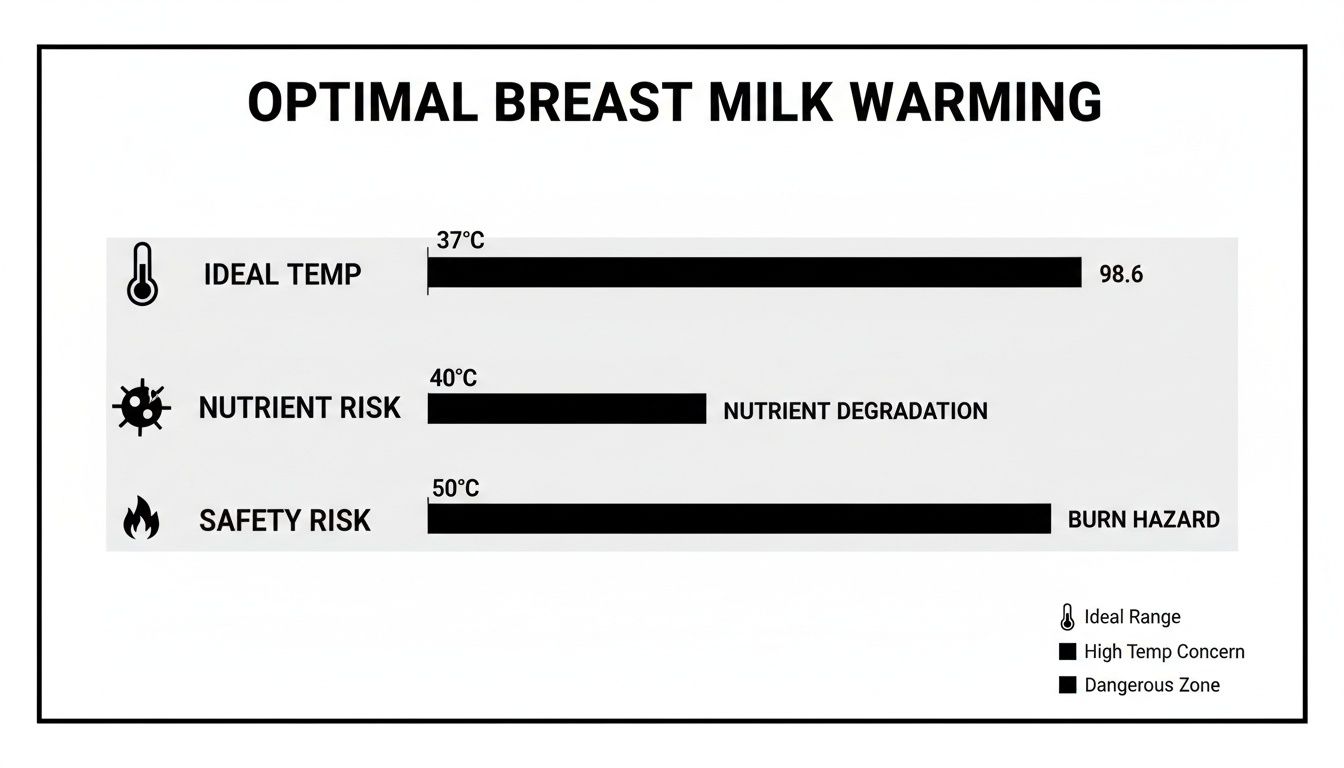
As you can see, keeping the milk right around 37°C (98.6°F) is the sweet spot. Anything hotter risks degrading the very components that make breast milk so beneficial.
Steam Warmers: The Need for Speed
It’s 3 a.m., the baby is screaming, and you need a warm bottle now. This is where steam warmers shine. They use a small reservoir of water to create a blast of hot steam, heating a bottle in as little as two to four minutes. That speed can feel like a lifesaver in those desperate moments.
But with great power comes great responsibility. The intense heat of steam can easily overheat the milk if you're not careful, creating dangerous hot spots and damaging nutrients.
Expert Tip: If you opt for a steam warmer for breast milk, look for one with an automatic shut-off and a specific "breast milk" or "gentle warm" setting. Always swirl the bottle (never shake it!) after warming to even out the temperature, and double-check it on your wrist before feeding to prevent any chance of burns.
Portable Warmers: Freedom and Flexibility on the Go
For the family that’s always on the move, a portable bottle warmer is an absolute game-changer. These compact, battery-powered devices let you warm a bottle anywhere—at the park, on a road trip, or even in the middle of a shopping center. No more asking for a cup of hot water or searching for an outlet.
When you’re shopping for a portable model, you’ll want to pay close attention to a few things:
- Battery Life: How many bottles can you warm on a full charge?
- Heating Speed: Will it work quickly enough when you have a fussy baby?
- Bottle Fit: Does it work with the bottles you already own, or will you need adapters?
Modern warmers are a world away from older, riskier methods. A good quality warmer can preserve up to 90% more nutrients than something like microwaving by ensuring the milk never exceeds that ideal 37°C. This focus on safety and technology has led to a 20% yearly increase in their use in homes and has helped reduce bottle-related infections by 35%, according to market insights from Grand View Research.
Bottle Warmer Technology Comparison for Breast Milk
To help you see the differences at a glance, here’s a quick breakdown of how these technologies stack up for warming precious breast milk.
| Warmer Type | Heating Method | Nutrient Preservation | Warming Speed | Ideal Use Case |
|---|---|---|---|---|
| Water Bath | Circulating warm water | Excellent. Gentle, even heat prevents nutrient degradation. | Slower (4-6 mins) | For parents at home who prioritize nutrient protection and safety above all else. |
| Steam | High-temperature steam | Good with caution. Risk of overheating and hot spots. | Fast (2-4 mins) | For parents needing a quick solution, especially for night feeds. |
| Portable | Battery-powered element | Very Good. Designed for controlled, gentle heating on the go. | Varies (5-10 mins) | For families who are frequently out and need a reliable mobile option. |
Ultimately, there’s no single "best" warmer—there's only the best warmer for you. If you're primarily at home and can wait a few extra minutes, a water bath model is unmatched. If speed is your top priority, a smart steam warmer with the right safety features is a great fit. And if you have an active lifestyle, a portable warmer isn't a luxury; it's an essential piece of gear.
For more ideas on what to keep with you on the go, check out our guide on what to pack in a diaper bag.
Key Features That Protect Breast Milk Quality
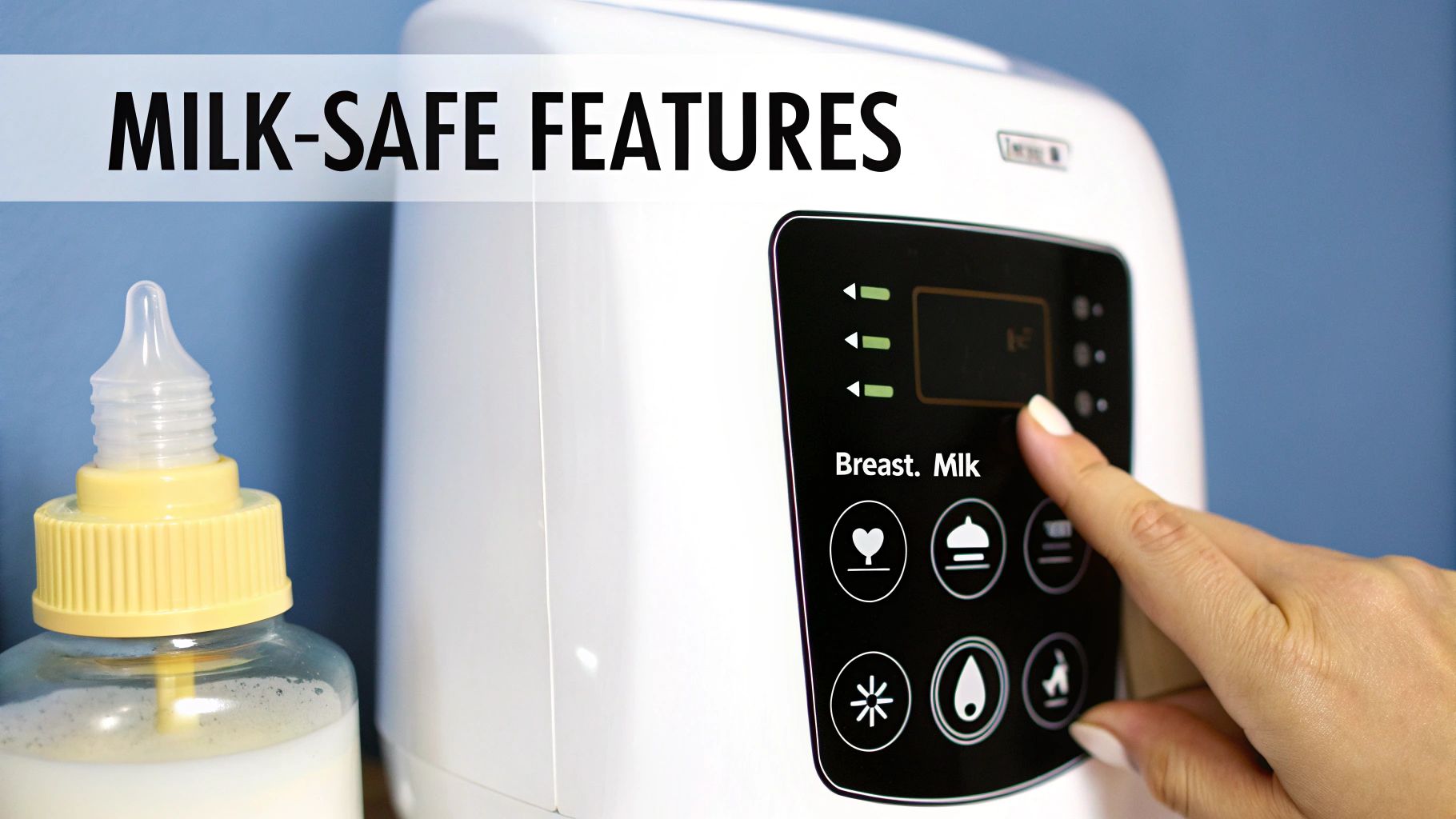
It’s not enough for a warmer to just heat milk. When it comes to breast milk, certain features are non-negotiable for protecting its nutritional value and ensuring your baby's safety. These aren't just fancy add-ons; they're the critical details that separate a basic warmer from one that truly respects your liquid gold.
This has become especially important for today's parents. With over 60% of families in many markets being dual-income households, parents need tools that are both efficient and safe. The demand for features like precise thermostats and automatic shut-offs is a direct response to this need, helping to prevent overheating when you’re multitasking. You can dig deeper into these market trends in this report from Allied Market Research.
Precise Temperature Control
Vague settings like "low," "medium," and "high" are a red flag when you're warming breast milk. You need precision. The best warmers let you set a specific target, ideally body temperature—around 37°C or 98.6°F. This accuracy is your first line of defense against overheating, which can destroy the precious proteins and antibodies your baby needs.
Look for models with a dedicated "breast milk" or "gentle warm" setting. This isn't just a marketing gimmick. It's a pre-programmed function that uses low, slow heat to warm the milk evenly, ensuring it never hits a temperature that could compromise its goodness or pose a burn risk.
Auto Shut-Off for Peace of Mind
New parent life is a blur of feeding, changing, and trying to catch a moment of sleep. It’s incredibly easy to get distracted. An auto shut-off feature is your safety net, turning the warmer off the moment the heating cycle is done.
Without it, a forgotten bottle can quickly become dangerously hot, ruining the milk and posing a real risk to your baby.
An auto shut-off function isn't just a convenience; it's a critical safety mechanism. It protects the milk's nutrients from heat damage and eliminates the risk of accidentally serving a bottle that's too hot, giving you one less thing to worry about during those hectic late-night feeds.
This single feature provides consistency and safety, turning the warming process into a "set it and forget it" task so you can focus on what matters most—your baby.
Universal Bottle Compatibility
There’s nothing worse than bringing home a new gadget only to find it doesn’t work with the bottles you already have. Before you buy, double-check that the warmer can handle your go-to bottles. The most versatile warmers are designed with a wide warming chamber to fit different shapes, sizes, and materials.
Here's what to check for:
- Material: Is it safe for glass, silicone, and plastic bottles? Prioritize warmers made from high-quality, BPA-free materials to prevent any chemical leaching.
- Shape: Will it fit wide-neck bottles (like Tommee Tippee or Comotomo), angled ones, or traditional narrow bottles?
- Size: Can the chamber accommodate both small 4oz newborn bottles and larger 8oz ones?
Many warmers come with adapter rings to create a snug fit for narrower bottles. This prevents steam from escaping and helps the bottle heat more efficiently. A quick compatibility check saves you the future headache of returns or having to buy all new bottles.
Of course, preserving milk quality starts with how you store it. To learn more, check out our guide on the best baby food storage containers. By focusing on these key features, you'll find a warmer that not only fits into your daily routine but also gives you confidence that you're providing the best for your baby.
Which Bottle Warmer Fits Your Parenting Style
Picking the right bottle warmer isn't about chasing the fanciest tech specs. It's about finding a piece of gear that actually fits into your life. A feature that saves one parent's sanity might just be an annoyance for another.
Let's step away from the product boxes and think about how these warmers work in the real, often messy, world of parenting. By looking at a few common scenarios, you'll get a much clearer picture of which warmer will become your go-to feeding partner.
For the Parent on Night-Feed Duty
It's 3 a.m. The house is dark, the baby is just starting to fuss, and the last thing you need is a gadget that's loud, complicated, or lights up the room like a Christmas tree. When you're on the night shift, simplicity and quiet are everything.
This is where a water bath model with a dead-simple interface shines. These warmers use a gentle circulation of warm water, so you don't get that startling hiss of steam that can wake everyone up. The best ones have a soft, dim light and a memory function that recalls your last setting. That means one press of a button is all it takes—no fumbling with controls in the dark.
A non-negotiable feature for those middle-of-the-night feeds is the auto shut-off. It's a huge peace of mind. If you get pulled away for a diaper change or even doze off for a second, you know the milk won't overheat. This keeps the milk safe and protects all those vital nutrients, even when you're running on empty.
For the Exclusively Pumping Parent
When you're exclusively pumping, you know that every single drop of that liquid gold is precious. You're warming up multiple bottles every single day, so your priority is a machine that heats milk gently and consistently every time to keep its nutritional value intact.
A high-quality water bath warmer is the undisputed champion here. Its slow, even heating method is the best way to protect the delicate antibodies and enzymes in breast milk. Sure, it might take a minute or two longer than a steam model, but the trade-off for perfectly preserved nutrients is well worth it when it's your baby's primary food source.
Look for a model with these key features:
- Precise Temperature Control: You need the ability to dial it in to exactly 37°C (98.6°F) for reliable, daily use.
- Keep Warm Function: This is a lifesaver. It holds the bottle at the perfect temperature for an hour or so, giving you a buffer if the baby isn't quite ready to eat when the bottle is.
- Material Quality: Ensure the warmer is constructed from food-grade, BPA-free plastic or stainless steel to guarantee no contaminants affect the milk.
For the Traveling Parent
For the family that's always on the go, warming a bottle at the park, in the car, or on an airplane is a whole different ball game. You need something portable, self-powered, and convenient. Let's be honest, begging a coffee shop for a cup of hot water is a gamble that often ends with dangerously hot spots in the milk.
A portable, battery-powered warmer is the clear solution. These are compact, cordless, and designed to disappear into a diaper bag. When you're comparing them, look closely at the battery life. How many bottles can it warm on a single charge? The top-tier models can handle several bottles, getting you through a full day's outing without a problem.
Many of these travel warmers also include a set of adapters to fit different bottle brands, which makes them incredibly versatile. This kind of freedom means you can keep your baby on their feeding schedule no matter where you are, turning a logistical headache into a non-issue. Having the right equipment is key, something we explore more in our guide to the best baby products for newborns.
How To Use and Maintain Your Warmer For Total Safety
Having a great bottle warmer is one thing, but knowing how to use and care for it properly is what really matters for your baby's safety and the warmer's performance. The right routine ensures every bottle is perfectly warmed, keeping all those precious nutrients intact while protecting your little one from bacteria that could cause illness or skin irritations.
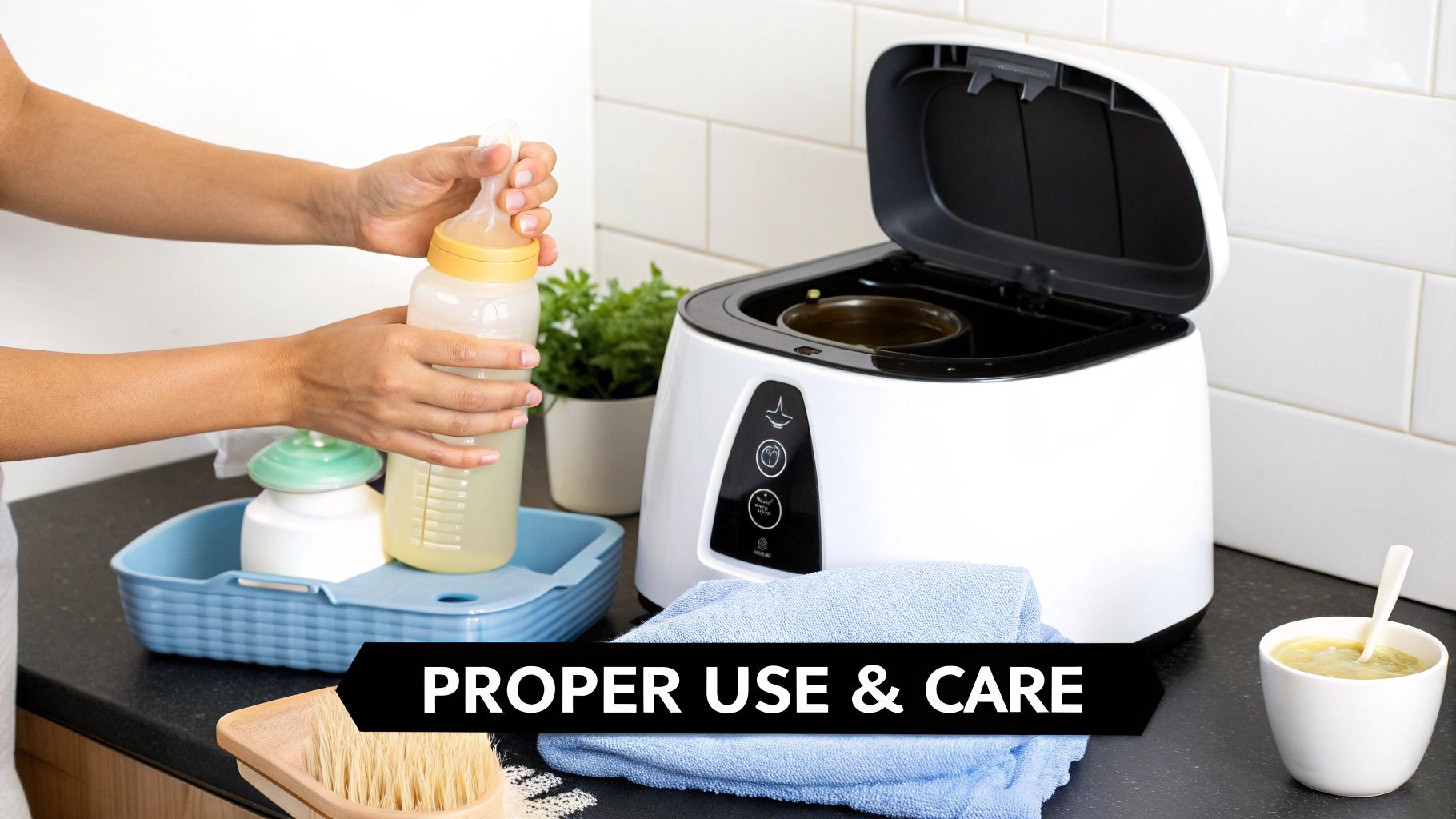
When you get into a consistent groove with warming and cleaning, your warmer becomes more than just a kitchen gadget—it’s a reliable partner in your baby's health. That consistency brings peace of mind, knowing every single feeding is both safe and convenient.
Best Practices For Warming Breast Milk
How you handle breast milk before and after it hits the warmer makes a huge difference in its nutritional quality. A few simple tweaks can preserve all the good stuff your baby needs.
- Milk from the Fridge: Stick to the specific setting for refrigerated milk on your warmer. This ensures the temperature rises slowly and gently, which is crucial for protecting the sensitive proteins in the milk.
- Milk from the Freezer: This is a two-step process. First, always thaw frozen milk in the fridge overnight or under cool running water. Never, ever try to thaw frozen milk directly in the warmer, especially on a high-heat or steam setting. That intense heat creates dangerous hot spots and destroys nutrients. Once it's thawed, you can warm it using the refrigerated milk setting.
Once the milk is warm, gently swirl the bottle—never shake it. Shaking breaks down the delicate protein structures and adds air bubbles, which can make your baby gassy and uncomfortable. A quick swirl mixes the fatty layers back in and evens out the temperature. Always do a quick wrist test before feeding; it should feel just lukewarm, not hot.
The cardinal rule for warming breast milk is simple: gentle and even. Aggressive heating, whether from a microwave or the wrong warmer setting, destroys the very components that make breast milk so amazing. Swirling, not shaking, is a small habit that makes a big difference in preserving its integrity.
Your Essential Cleaning and Maintenance Routine
A clean warmer is a safe warmer, period. Mineral buildup (limescale) from tap water and old milk residue can create a perfect environment for bacteria to grow. This gunk can also coat the heating element, making your warmer work less efficiently and even causing it to overheat. Poor hygiene can introduce contaminants that may cause digestive upset or skin rashes.
A simple maintenance schedule is all it takes to keep your device hygienic and working like new.
After Every Use:
- Unplug it and let it cool down completely.
- Pour out any leftover water from the chamber.
- Wipe everything down—inside and out—with a clean, damp cloth and dry it well.
Weekly Deep Clean:
- Wash any removable pieces, like baskets or adapter rings, in warm, soapy water.
- Rinse them well and let them air dry completely before putting the warmer back together.
Monthly Descaling:
- Mix up a solution of one part white vinegar and one part water.
- Pour it into the warming chamber so the heating element is completely covered.
- Let it soak for 15-20 minutes. Some models might have a cleaning cycle you can run instead.
- Dump the vinegar solution and rinse the chamber a few times with clean water to get rid of any lingering vinegar smell.
Of course, keeping your baby's environment clean goes beyond the warmer itself. For more ideas on keeping things hygienic, you can find great information on the best baby-safe cleaning products. By making these simple steps part of your daily routine, you can be sure your bottle warmer remains a safe and essential tool on your feeding journey.
Finding Your Perfect Warmer: A Final Checklist
Choosing the right tool to warm your baby’s milk feels like a big decision, because it is. Let's walk through a final checklist to help you feel confident in your choice, ensuring whatever you pick is safe for your baby and protects every last drop of that liquid gold.
First, think about your daily reality. A gentle water bath warmer is usually the gold standard for home use, especially when you want to be absolutely sure you're preserving nutrients. But if you’re a parent who values speed during those 3 a.m. wake-up calls, a steam model with precise temperature settings is a lifesaver. And if you’re always on the move, a good portable warmer isn't a luxury—it's a necessity.
Your Decision-Making Framework
Once you know which type fits your lifestyle, it's time to dig into the details. Use these points as your guide to make sure you're getting one of the best bottle warmers for breast milk that will actually make your life easier.
- Does it have precise temperature control? Look for a specific setting for breast milk, right around 37°C (98.6°F). This is the single most important feature for preventing overheating, which can destroy vital proteins and even be too hot for your baby's sensitive skin.
- Will it shut off by itself? An auto shut-off function is your best friend. It’s a simple but critical safeguard that prevents the warmer from continuing to heat after the cycle is done, protecting the milk and preventing any burn risks.
- Is it made from baby-safe materials? Check that the product is certified BPA-free and made from food-grade plastic or stainless steel. This prevents harmful chemicals from leaching into the water or onto the bottle, protecting your baby from potential allergens or irritants.
- How easy is it to clean? You'll need to descale and clean the warmer regularly to keep bacteria and mineral buildup at bay. If it's a pain to take apart and wash, you're less likely to do it.
In the end, you're looking for a warmer that just works—one that fits into your routine so seamlessly you don't even have to think about it. Use this checklist when you're reading product descriptions and reviews, and you'll be able to make a smart choice that truly supports your baby's health.
And a quick tip on organization: keeping track of bottles, especially at daycare, can be a challenge. For a durable, reusable labeling solution, check out Orbit Labels for baby bottles—they're a great way to keep everything straight.
Your Top Bottle Warmer Questions, Answered
Bringing home new baby gear always comes with a learning curve. When it comes to something as important as warming breast milk, you want to get it right. Let's walk through some of the questions I hear most often from parents about safety, hygiene, and keeping that liquid gold perfect for their little one.
Can I Just Leave Water in the Warmer?
It's tempting to leave the water in the chamber to save a step, but it’s a habit you’ll want to skip. Standing water, especially when it’s been warmed up, can quickly become a breeding ground for mold and bacteria. The best practice is to empty the water reservoir after every single use.
Just dump it out and give it a quick wipe with a clean cloth. It takes seconds but goes a long way in preventing germs from growing and making sure your warmer is always clean and safe for the next feeding.
How Long Can Warmed Breast Milk Sit Out?
Once you've warmed a bottle of breast milk, a new countdown begins. Pediatric guidelines are clear: you should use it within one hour of heating. After that hour is up, any milk left in the bottle needs to be thrown out.
And whatever you do, don't be tempted to pop it back in the warmer. Reheating breast milk a second time can degrade its precious nutrients and significantly increases the risk of bacterial contamination that could upset your baby's tummy. It's always best to start fresh.
Is a Water Bath Warmer Really Better Than Steam for Breast Milk?
When it comes to breast milk, yes, a water bath warmer is absolutely the better way to go. This method gently circulates warm water around the bottle, bringing the milk to temperature evenly and slowly. It’s the closest you can get to mimicking nature and is the best way to avoid overheating.
Why does that matter so much? Overheating destroys the fragile antibodies and proteins that make breast milk such a powerhouse for your baby's immune system. Steam warmers are fast, no doubt, but that intense heat can create dangerous hot spots, posing a burn risk and damaging the milk's nutritional quality. For preserving your liquid gold, the gentle approach of a water bath is unmatched.
Why Do I Need to Descale My Bottle Warmer?
Think of descaling like routine maintenance for your warmer's health and performance. The tap water you use contains minerals that build up on the heating element over time, creating a chalky residue called limescale. This buildup isn't just unsightly—it can trap bacteria and insulate the heating element, making it less efficient.
A clean heating element is crucial for accurate temperature control. Regular descaling ensures your warmer operates hygienically and heats consistently, which is vital for protecting breast milk nutrients and keeping germs at bay.
Most brands suggest descaling about once a month using a simple solution of vinegar and water. It's a quick task that keeps your device running safely and effectively, so every bottle is warmed just right.
At GUGUTON LLC, we are dedicated to providing high-quality, safe, and practical essentials for your family's journey. Explore our curated collection of baby gear designed with your little one’s well-being in mind.
Discover the perfect tools for your feeding routine at GuGuTon