

When Do Babies Start Teething A Parent's Guide to Signs and Relief
For many new parents, the big question is when do babies start teething? While every baby is on their own little schedule, you can generally expect that first tooth to peek through right around the six-month mark. But it's important to remember this milestone has a wide and perfectly normal range.
Understanding the Typical Teething Timeline
It’s helpful to think of teething as a natural developmental process, not an illness. It’s simply the journey of your baby's 20 primary teeth making their way through the gums. This isn't a sudden event but more of a gradual season of development that can span from early infancy right into the toddler years.
Some babies might surprise you with a tiny tooth bud as early as three months, while others might keep you waiting until closer to their first birthday. This variation is completely normal and often just comes down to genetics—if you or your partner were early or late teethers, your baby might be, too.
According to pediatric experts, the average arrival for that first pearly white is right on target at 6 months, which is always an exciting moment. Interestingly, baby girls sometimes get their first tooth just a little bit sooner than boys. You can find more great insights into the teething timeline from pediatric specialists.
Baby Teething At a Glance: Typical Milestones
For busy parents, having a quick reference can make all the difference. This table breaks down what to look for and when.
| Milestone | Typical Age Range | Common First Signs |
|---|---|---|
| First signs of teething | 3-6 months | Increased drooling, fussiness, desire to chew |
| First tooth appears | 6-10 months | Lower central incisor (bottom front tooth) |
| Complete set of baby teeth | By 3 years | All 20 primary teeth have erupted |
Just remember, these are just averages. Your little one will follow their own unique path!
First Signs to Watch For
Knowing what to expect can make navigating this phase a lot easier. While the exact timing varies, the first signs are pretty consistent across the board. The earliest clues are often a sudden increase in drool (get those bibs ready!) and a bit more fussiness than usual.
As their gums become tender, you'll also notice them trying to chew on everything they can get their little hands on—from their fists to your fingers. This is their natural way of trying to soothe the pressure.
Teething is a marathon, not a sprint. The entire process unfolds over about two and a half years, but the most intense periods of discomfort usually happen in the few days right before a new tooth breaks through the gums.
By understanding the typical timeline and recognizing these early signs, you can feel more prepared to support your little one. The goal is simply to provide comfort and care during this totally normal stage, keeping them as happy as possible while those new teeth make their grand entrance.
Recognizing the Common Signs of Teething
Now that you have a rough idea of the teething timeline, the real trick is learning to spot the signs. Every baby is different, of course, but a few classic clues usually announce that a new tooth is on its way.
Knowing what to look for helps you separate normal teething fussiness from something that might need a doctor's attention.
The most universal sign? Drool. So. Much. Drool. It can feel like someone left a faucet on, leaving you with a trail of soaked bibs and onesies. This is perfectly normal, but all that moisture can lead to a pesky "drool rash" on your baby's chin, neck, and chest.
Keeping that delicate skin protected is all about staying on top of the moisture without causing more irritation.
Managing Drool and Skin Irritation
A little gentle care goes a long way in preventing a drool rash from getting out of hand. Here are a few simple, safety-focused tips that work wonders:
- Soak It Up: Keep a stack of soft, absorbent bibs handy. Opt for high-quality materials like organic cotton or bamboo, which are less likely to cause skin reactions or allergies. The key is to swap them out as soon as they get damp to prevent irritation.
- Pat, Don’t Rub: When you wipe your baby's chin, gently pat the area dry with a clean, soft cloth. Rubbing can make redness and sensitivity much worse.
- Create a Barrier: A thin layer of a baby-safe, hypoallergenic ointment (like those with lanolin or petrolatum) creates a waterproof shield between your baby’s skin and the drool. Always check ingredient lists for potential allergens.
Behavioral and Physical Symptoms
Beyond the drool, you'll probably notice a shift in your baby's mood. Teething babies are often cranky and fussy for a good reason—that constant pressure in their gums is really uncomfortable!
This discomfort leads to another tell-tale sign: the desperate need to chew on everything. Their hands, your fingers, the remote control... anything they can get in their mouth is fair game. This isn't just a quirky habit; the counter-pressure actually helps soothe their aching gums.
Many parents jump to the conclusion that teething causes a high fever, but that's a common myth. A major 2016 study shed some light on this, finding that while irritability hits up to 90% of teething babies and drool rash affects 60%, a true fever (over 100.4°F) is incredibly rare, showing up in only 2% of cases. A high temperature almost always points to an actual illness, not just a new tooth.
You can explore more about baby tooth eruption charts to get a better visual on these milestones.
Here are a few other physical signs to watch for:
- Swollen or Red Gums: If you can get a gentle peek inside your baby’s mouth, you might see that their gums look puffy and tender right where a tooth is about to pop through.
- Disrupted Sleep: Unfortunately, teething pain doesn't clock out at bedtime. It's very common for teething to wreck sleep schedules, leading to more wake-ups for everyone. If this sounds familiar, our guide on understanding baby sleep regression might offer some helpful insights.
Your Baby's Complete Tooth Eruption Chart
Knowing the classic signs of teething is a great start, but figuring out which little tooth is causing all the trouble is the next piece of the puzzle. Baby teeth don't just pop up at random; they follow a surprisingly predictable pattern. Think of it like a well-rehearsed play where each tooth has its own cue to appear on stage.
This general roadmap helps you anticipate what's coming next, taking some of the mystery out of the journey from a gummy smile to a full set of tiny teeth. While every baby is on their own unique schedule, this sequence is a reliable guide for most.
The first to make an appearance are almost always the two bottom front teeth, the lower central incisors. These are the ones responsible for that iconic, single-toothed grin that melts every parent's heart.
The Order of Appearance
Once those first two teeth break through, the rest tend to follow in a specific order, usually arriving in pairs. The infographic below highlights the common early symptoms that signal this whole process is getting started.
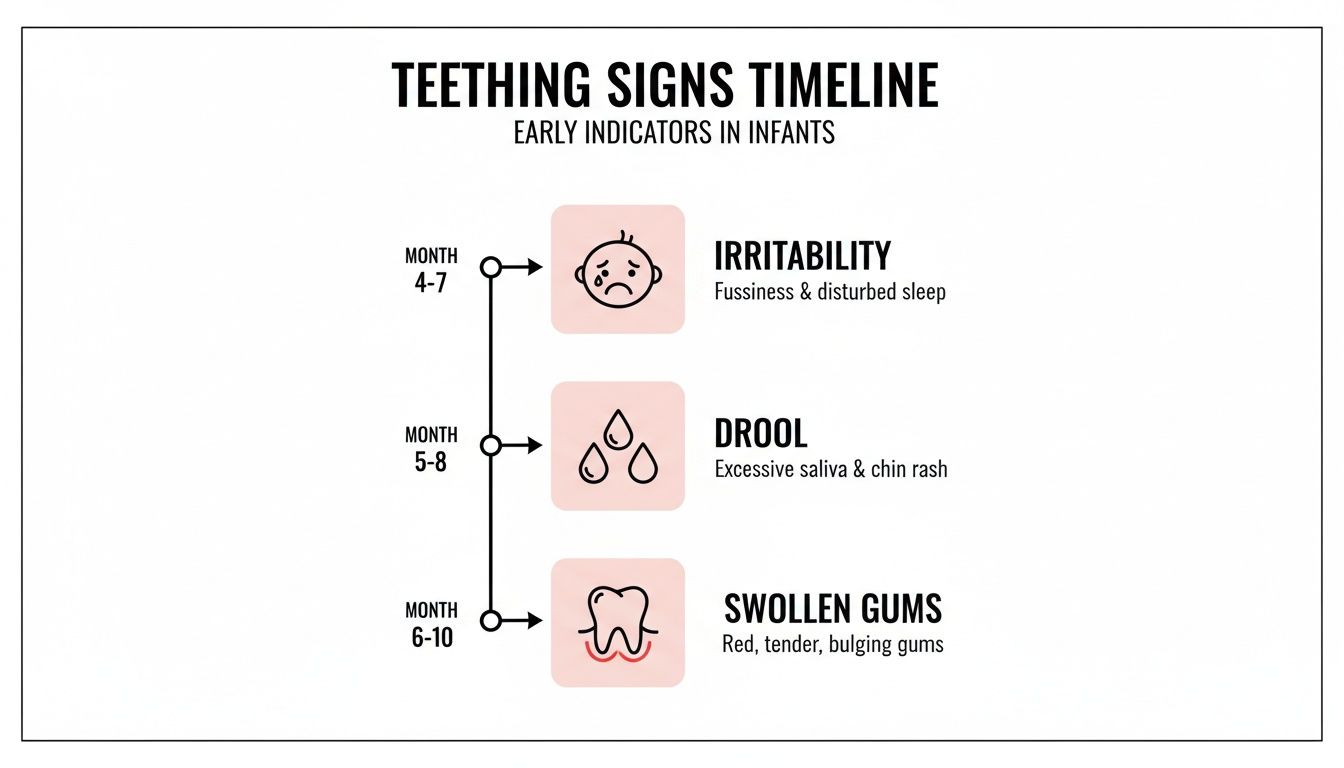
As you can see, crankiness, a river of drool, and puffy gums are the classic tell-tale signs that the first teeth are on their way.
Keep in Mind: Teething is a marathon, not a sprint. While that first tooth is a huge milestone, the final teeth—the big second molars way in the back—might not show up until your little one is almost three years old.
The entire process involves 20 primary teeth making their debut. After the lower central incisors arrive around 6-10 months, they're typically followed by the upper central incisors between 8-12 months. From there, you can expect the lateral incisors (9-16 months), canines (16-23 months), first molars (13-19 months), and finally, a second molars (23-33 months). You can find more in-depth timelines and information about baby teeth charts to help track your child’s progress.
Your Baby's First Teeth Eruption Timeline
To give you a clearer, at-a-glance view, here’s a chart detailing the typical order of appearance for all 20 of your baby’s primary teeth. Think of it as a handy reference guide you can come back to as your little one’s smile fills in.
| Tooth Name | Location | Typical Eruption Age |
|---|---|---|
| Central Incisors | Bottom Front | 6–10 months |
| Central Incisors | Top Front | 8–12 months |
| Lateral Incisors | Top Sides | 9–13 months |
| Lateral Incisors | Bottom Sides | 10–16 months |
| First Molars | Top Back | 13–19 months |
| First Molars | Bottom Back | 14–18 months |
| Canines (Cuspids) | Top Pointed | 16–22 months |
| Canines (Cuspids) | Bottom Pointed | 17–23 months |
| Second Molars | Bottom Far Back | 23–31 months |
| Second Molars | Top Far Back | 25–33 months |
Watching each new tooth emerge is such an exciting milestone. While this timeline provides a helpful guide, remember to focus on keeping your baby comfortable. Their own personal schedule is the only one that truly matters.
Safe and Effective Ways to Soothe Your Teething Baby
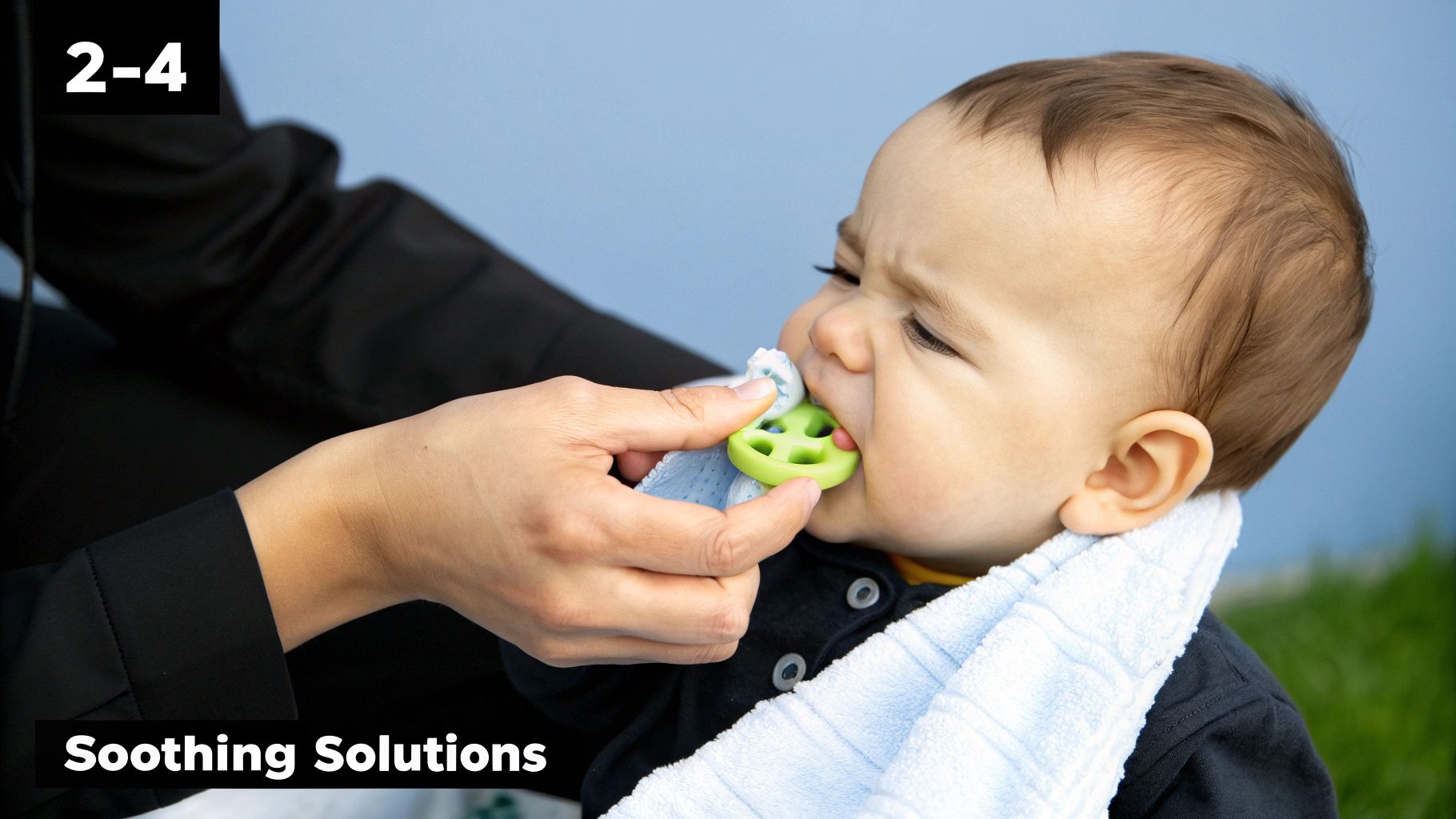
When your baby is fussy and in pain, all you want is to make them feel better. The good news is that the best ways to soothe teething discomfort are often the simplest—and the safest. Knowing what actually works (and what to steer clear of) will help you and your little one get through this milestone a lot more comfortably.
The secret to teething relief really comes down to one thing: gentle counter-pressure. Think about it—as that little tooth pushes up, applying a bit of pressure back down on the gums helps ease that ache. It's a simple idea, and there are several great ways to put it into practice.
Gentle Pressure and Chilling Techniques
Believe it or not, one of the best tools is attached to your own hand. After washing your hands well, you can gently rub your baby's sore gums with a clean finger. That little bit of pressure can provide instant relief, and it’s a sweet way to comfort them at the same time.
A bit of cold is another fantastic way to soothe those gums. The chill helps numb the area, bringing down some of the inflammation and dulling the pain.
- Chilled Teethers: Grab a solid (not liquid-filled) silicone teether made from high-quality, food-grade material and pop it in the fridge. The combination of coolness and something safe to chew on is a classic for a reason. Always check for BPA-free labels.
- A Damp Washcloth: This is an oldie but a goodie. Wet a clean washcloth, wring it out, and chill it in the refrigerator. It's soft, safe, and feels amazing on irritated gums.
- Safe Food Options: If your baby has started solids, a large, chilled piece of peeled cucumber or even a thick carrot stick can do the trick. Just make sure you are watching them like a hawk the entire time to prevent any choking.
A quick but important tip: chill, don't freeze. A frozen teether or washcloth can get rock-hard, which is too intense for your baby’s delicate gums and could even cause bruising.
Teething Products to Use with Caution or Avoid
When you're frantically searching for answers, it can feel like the baby aisle is overflowing with "miracle" teething products. But your baby’s safety is always priority number one, and some popular items come with serious risks.
- Amber Teething Necklaces: Steer clear of these. Pediatric experts are unified in warning against them. They pose a strangulation risk just by being around a baby's neck, and if the necklace breaks, the beads become a choking hazard. There's also no scientific proof they actually do anything to relieve pain.
- Homeopathic Remedies: Be very cautious here, especially with teething tablets or gels that contain belladonna. The FDA has issued multiple warnings about these products because the amount of belladonna can be inconsistent and potentially very dangerous.
- Topical Numbing Gels: Any over-the-counter gels with benzocaine are a no-go for children under two. They can cause a rare but serious condition called methemoglobinemia, which messes with the oxygen levels in the blood.
Stick with the simple, physical methods—they’re effective and don’t come with scary side effects. Sometimes, creating a peaceful environment can also make a huge difference for a grumpy baby. If teething troubles are wrecking naptime, a white noise machine designed for babies might help create a calm, sleep-friendly space.
Caring for Your Baby's First Teeth
It might seem early, but building a foundation for good dental health starts long before your child can even say "toothbrush." Kicking off a gentle oral care routine right from the beginning helps prevent decay and gets your little one used to the whole process, which can make things so much easier down the road.
You can actually start this routine before a single tooth pops through. Think of it as preparing a clean and healthy environment for those new arrivals by clearing away bacteria and milk residue.
Pre-Teething Gum Care
Even with a completely gummy smile, you can set the stage for great oral hygiene. Just grab a soft, damp washcloth or a clean piece of gauze, wrap it around your finger, and gently wipe your baby’s gums after feedings.
This simple act does more than just clean. It gets your baby comfortable with having their mouth touched and cleaned, making the eventual switch to a toothbrush feel like a natural next step instead of a surprise attack.
Brushing Those First Pearly Whites
That moment you spot the first little white nub breaking through the gums is a huge milestone! It's also your cue to level up your dental care game and start brushing. Once those first tiny teeth appear, knowing how to care for baby teeth is key.
Key Takeaway: The American Academy of Pediatrics suggests using a tiny "smear" of fluoride toothpaste for kids under 3, roughly the size of a grain of rice. This gives them all the cavity-fighting benefits of fluoride without overdoing it.
All you need to get started is an infant toothbrush with super-soft bristles and that tiny smear of fluoride toothpaste. Gently brush the front and back of each tooth twice a day, making the before-bedtime session a non-negotiable.
The real trick is to make it fun. Turn brushing time into a playful daily ritual by singing a song or making silly faces in the mirror. Creating these positive vibes now helps build a healthy habit that can last a lifetime.
As you navigate teething and new teeth, you're often exploring new foods, too. For parents in this phase, our guide on what baby-led weaning is might be a helpful resource. Pairing great oral hygiene with healthy eating habits is one of the best gifts you can give your child.
Knowing When to See a Doctor or Dentist
Teething is a completely normal rite of passage, but it can also turn parents into detectives. You start to wonder, "Is this just a cranky teething day, or is something else going on?" It's a fair question, because while teething gets blamed for almost everything, some symptoms are definite red flags.
It's a myth that teething causes a true fever. While you might notice a very slight rise in temperature from the inflammation, if your baby’s thermometer hits 100.4°F (38°C) or higher, it’s not the teeth. That's your cue to call the pediatrician, as it almost always points to an infection.
When to Call Your Pediatrician
Go with your gut. You know your baby best. If they seem more than just a little fussy or are showing symptoms that don't quite line up with the classic teething signs, a quick call to the doctor is always the right move.
Keep an eye out for these tell-tale signs that it's something more than teething:
- A real fever of 100.4°F (38°C) or more
- Vomiting or ongoing diarrhea, as this can quickly lead to dehydration
- A rash that spreads beyond the typical drool rash around their mouth and chin
- Crying that can't be soothed by any of your usual comforting tricks
Consulting a Dentist
Beyond the immediate "is my baby sick?" worries, there are also some dental milestones to watch for. If your little one is approaching 18 months and there's still no sign of that first pearly white, it's a good idea to schedule a chat with a pediatric dentist. It's often nothing to worry about, but a professional can check to make sure everything is developing as it should.
The American Academy of Pediatrics actually recommends that a child's first dental visit should happen by their first birthday or within six months of their first tooth popping through. This helps establish a "dental home" early on.
Once those first tiny teeth do make their appearance, it’s the perfect time to start the process of finding a trusted children's dentist. Getting this relationship started early is one of the best things you can do to set your child up for a lifetime of healthy smiles.
Your Teething Questions, Answered
Even when you know the basics, teething can throw some curveballs. It’s a time filled with "is this normal?" moments and late-night worries. Let's tackle some of the most common questions that pop up for parents.
Can Teething Cause a High Fever or Diarrhea?
This is probably the most persistent myth out there. While you might notice your baby's cheeks are a little flushed or their temperature is slightly elevated from gum inflammation, a true fever (100.4°F or 38°C and higher) is not caused by teething.
A real fever is a sign that your baby's body is fighting off an infection. The same goes for diarrhea. If your little one has either of these symptoms, it's time to call the pediatrician and not just chalk it up to a new tooth coming in.
Are Amber Teething Necklaces Safe?
In a word: no. They are not recommended and can be very dangerous. Leading health organizations, including the American Academy of Pediatrics, advise parents to avoid them entirely.
The risks are serious. These necklaces present a significant strangulation hazard, and if the necklace breaks, the tiny beads become a choking hazard. On top of that, there's no scientific proof that amber releases any substance that actually soothes pain.
My One-Year-Old Still Has No Teeth. Should I Be Worried?
It's so easy to worry when your baby seems to be on a different timeline than their peers, but try not to stress. The "average" age for a first tooth is just that—an average. The normal range is huge, and many perfectly healthy babies are still all gums on their first birthday.
The time to check in with a professional is if your child reaches 18 months with no teeth. At that point, a quick visit to your pediatrician or a pediatric dentist can give you peace of mind and make sure everything is developing as it should. And for any outing, whether it's to the park or the dentist, knowing what to pack in your diaper bag will make your life a whole lot easier.
At GUGUTON LLC, we believe in supporting parents through every milestone with products that blend quality, comfort, and safety. Explore our curated collections for all your baby and toddler needs at https://guguton.com.