

A Parent's Guide to Infant Car Seat Safety Ratings
Infant car seat safety ratings are basically a report card on how well a car seat can protect your child in a crash. These scores, which come from both government agencies and independent testing groups, go way beyond the basic legal requirements. They're designed to help parents like you cut through the marketing noise and pick the safest possible seat for your little one.
Your Quick Guide to Car Seat Safety Ratings
Let's be honest, picking out an infant car seat can feel like a monumental task. You're juggling brands, features, and price tags, and it’s easy to get lost in the details. But when you strip everything else away, one thing matters more than anything: safety.
This is where understanding infant car seat safety ratings becomes your secret weapon. Think of them less as technical jargon and more as a straightforward guide to a seat's performance when it counts the most.
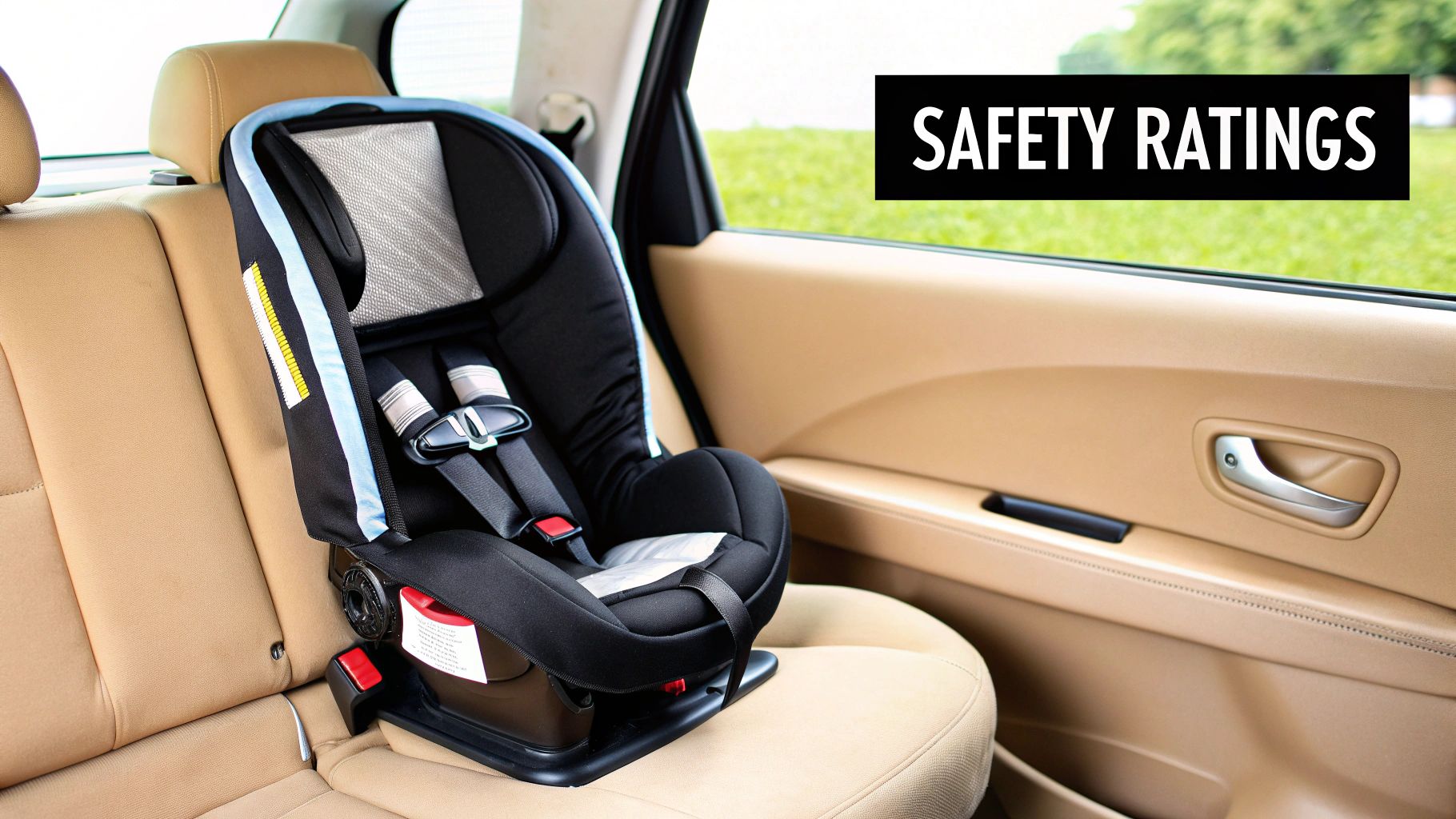
These ratings aren’t just arbitrary numbers. They're the result of intense, scientific crash tests run by organizations completely dedicated to keeping passengers safe. They simulate real-world collisions to measure exactly how a car seat absorbs impact and protects the crash-test dummy inside.
Why These Ratings Are So Important
When we talk about child passenger safety, the stakes couldn't be higher. The data from the National Highway Traffic Safety Administration (NHTSA) is pretty clear: when used correctly, infant car seats slash the risk of fatal injury by a massive 71% for babies under one.
That protection is absolutely critical. Consider this: in 2023, of the 555 children who died in car crashes, 190 were completely unrestrained. You can dig into these powerful child restraint statistics on the NSC website for a deeper look.
A high safety rating is more than a number—it’s an assurance that the car seat has been tested against forces far greater than your baby would ever experience in a typical drive, providing a critical layer of defense.
Putting proven protection first is the smartest way to shop for a car seat. While cool features and soft fabrics are nice, they are secondary to the seat's fundamental job. If you're building out your shopping list, our newborn essentials shopping list can help you stay focused on what you really need.
Key Car Seat Safety Rating Systems at a Glance
In the U.S., there are a handful of trusted organizations that issue these crucial safety ratings. Knowing who they are and what they prioritize makes it much easier to decipher the labels and stickers you’ll see on the box.
This table breaks down the main players:
| Organization | What They Rate | Key Focus |
|---|---|---|
| NHTSA | Ease-of-use, installation features, and basic crash performance. | Sets the federal minimum safety standards and provides a 5-star rating system for ease of use. |
| IIHS | LATCH system usability and fit in different vehicles. | Awards "Best Bet" and "Good Bet" ratings to seats that provide a good fit in a wide range of cars. |
| Consumer Reports | Crash performance, ease-of-use, and vehicle fit. | Conducts independent, rigorous crash tests that often exceed federal standards. |
Each of these groups offers a unique perspective. NHTSA sets the baseline, IIHS tells you how well a seat will likely fit in your car, and Consumer Reports often pushes the testing envelope to give you an even clearer picture of crash performance. Using all three gives you the most complete view.
Understanding the Experts Behind the Ratings
When you see a safety rating on an infant car seat, it's fair to ask, "Who says so?" Trusting these ratings means knowing who's doing the testing. It turns out, several key players—from government agencies to independent consumer groups—are all working to give parents a clear picture of car seat safety, each with their own unique role.
Think of it like building a house. You have the city inspector who makes sure everything is up to code. That’s the bare minimum, the legal requirement. Then, you might hire a private engineer to run extra tests to see if the house can handle a hurricane. Both are looking at safety, but from different angles and with different standards.
The Government's Baseline: The NHTSA
The National Highway Traffic Safety Administration (NHTSA) is the foundation of car seat safety in the United States. As a government agency, they set the legal safety standards that every single car seat sold here must pass. So, if you see a car seat on a store shelf, you know it's already met NHTSA's minimum crash test requirements.
But NHTSA goes a step further. They also have a public 5-star rating system, but it doesn't test for crash performance. Instead, it rates something just as crucial: ease of use.
NHTSA’s “Ease-of-Use” ratings don’t measure how a seat performs in a crash. They score how easy it is to install and use correctly, because a top-of-the-line seat is only safe if it's installed properly.
This is a huge deal. Research has shown that a staggering number of car seats are used incorrectly. A seat with confusing instructions or a tricky installation process can easily be misused, which undermines its safety features. NHTSA's star ratings help you find a seat you can install confidently every single time—and that's a cornerstone of real-world safety.
Independent Watchdogs Pushing for More
While the government sets the safety floor, independent organizations are working to raise the ceiling. These groups aren't tied to the federal minimums, so they can run tougher tests to see which products truly go above and beyond.
-
Insurance Institute for Highway Safety (IIHS): As a nonprofit funded by auto insurers, the IIHS has a vested interest in real-world safety. They focus intensely on how well a car seat’s LATCH system installs in a wide variety of vehicles. Their "Best Bet" and "Good Bet" ratings are incredibly helpful for figuring out if a seat is likely to fit your car securely, bridging that critical gap between a lab test and your back seat.
-
Consumer Groups: Organizations like Consumer Reports take things even further. They buy car seats just like a parent would and conduct their own independent crash tests, often using higher speeds or different criteria than the federal standards. Their goal is to simulate more severe, real-world crash scenarios to find the absolute top performers.
This layered system gives parents a powerful set of tools. NHTSA guarantees a baseline level of safety for every seat, while groups like the IIHS and Consumer Reports help you pinpoint the ones that offer an even greater margin of protection and are easier to live with day-to-day. By consulting all these sources, you get a much more complete picture of a car seat's true safety profile.
How Car Seat Crash Tests Really Work
When you see a safety rating on a car seat, it’s easy to just see it as a number or a star. But behind that rating is a high-stakes, incredibly precise science experiment designed to mimic the brutal forces of a real car crash. Understanding what goes on in these tests helps you see a rating not as an abstract score, but as a real measure of protection for your child.
The star of the show is the crash-test dummy. These aren't just plastic dolls; they're sophisticated instruments loaded with dozens of sensors. Each sensor is meticulously calibrated to measure the force on the most vulnerable parts of a baby's body, like the head and chest. As the simulated crash happens, these sensors capture a flood of data, telling engineers exactly how well the seat’s design and materials absorb impact and hold up under stress.
Frontal Impact vs. Side Impact Tests
It's important to know that not all crash tests are the same. The most common one, and the only type required by U.S. federal law, is the frontal-impact test. This test simulates a head-on collision, historically the most common type of serious accident. Every single car seat sold legally in the United States has passed this baseline test.
But many of the best car seat brands and independent safety groups don't stop there. They also conduct rigorous side-impact tests, which are often even more demanding. These simulate a "T-bone" collision, where the forces are very different. Seats that score well in these voluntary tests often have advanced safety features built specifically for this kind of crash.
- Deep Side Wings: Think of these as cushioned walls on either side of the seat. They're designed to absorb energy and shield your baby from the force of the impact.
- Energy-Absorbing Foam: You'll often see specialized foam (like EPS or EPP) lining the seat's shell. It's engineered to compress during a crash, pulling dangerous forces away from your child.
- Adjustable Headrests: A headrest that’s positioned correctly does more than just keep your baby comfortable. It provides critical support for the head and neck, which is vital in a side-impact collision.
Since side-impact testing isn't a federal requirement yet, a seat that performs well in these tests often represents a higher level of safety engineering.
The journey from a government standard to your own personal evaluation is a layered one, as this flowchart shows.
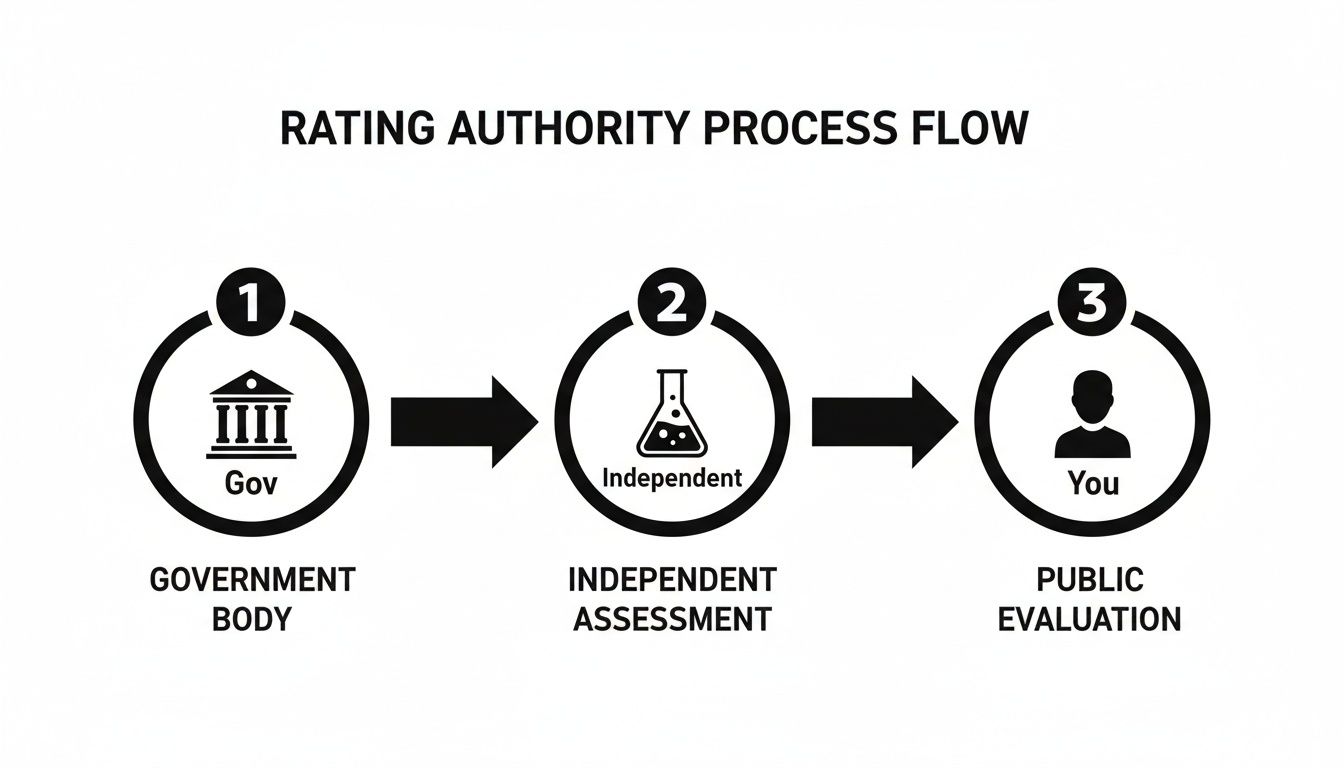
It all starts with a government baseline, which is then built upon by independent testers, all before you make the final call for your family.
Beyond the Crash: Why Materials Matter for Your Baby's Skin
While how a seat performs in a crash is the top priority, the materials it’s made from play a big part in your baby's overall well-being. A truly great car seat doesn’t just focus on impact forces; it also creates a healthy and comfortable space that helps prevent skin irritation, rashes, or allergic reactions.
True safety extends beyond crash tests. A high-quality car seat is also constructed with non-toxic, breathable fabrics that protect your baby’s sensitive skin and prevent issues like rashes and allergies.
Top-tier seats often use fabrics that are free from harsh chemical flame retardants and other treatments that can irritate a baby’s delicate skin. Keep an eye out for certifications like OEKO-TEX or GREENGUARD Gold, which signal that the materials have been screened for harmful substances. Breathable, hypoallergenic fabrics are also a huge plus, as they help regulate your baby's temperature and prevent moisture buildup, keeping them comfortable and secure on every ride.
How to Read and Compare Safety Ratings
Okay, so you know who tests car seats and the basics of how they do it. Now for the important part: turning all that data into a confident decision. This is where you go from theory to practice, learning to decode the scores and stickers to find the absolute best infant car seat for your family.
Think of it like reading the nutrition label on a cereal box. At first, all the numbers for sodium, sugar, and fiber can feel like a blur. But once you know what to look for—less sugar, more fiber—you can quickly compare two boxes and make a healthier choice. Car seat ratings work the same way; you just need to learn the language.
Decoding the Rating Systems
The two big players you'll see ratings from are NHTSA and the IIHS. Each one gives you a different, but equally important, piece of the safety puzzle. Understanding both will give you a much clearer picture of how a seat will perform in the real world.
-
NHTSA's 5-Star "Ease-of-Use" Ratings: This one doesn't actually score crash protection. Instead, it focuses on something just as vital: how easy the seat is to use correctly. A super-protective seat is useless if it's so complicated to install that you get it wrong. NHTSA scores everything from the clarity of the instruction manual to how simple the features are, awarding stars for usability. A 5-star rating is a fantastic sign that you'll be able to get a rock-solid installation every single time without wanting to pull your hair out.
-
IIHS's "Best Bet" and "Good Bet" Ratings: The IIHS is all about fit. They test how well a car seat installs using the LATCH system across a huge range of different vehicles. Their top "Best Bet" award goes to seats that provide a secure fit in the widest variety of cars, trucks, and SUVs. This is a huge deal because a snug, secure fit is non-negotiable. A "Best Bet" rating takes a ton of the guesswork out of the equation.
Crash Performance and Beyond
While the federal standards set the minimum safety bar, some seats go way beyond it. For example, a deep dive into NHTSA's own data shows the GB Idan earning a perfect 5.0 crash performance score. Others like the Doona Infant Seat and Britax B-Safe Gen 2 follow closely with a 4.78—that's miles ahead of the average score of 3.29. This kind of data shows how certain brands consistently engineer their seats to a higher standard. You can dig into the numbers yourself by exploring the full NHTSA car seat safety analysis.
It's crucial to remember that the "safest" car seat is a combination of excellent crash test performance and a high ease-of-use rating. A seat that aces crash tests but is consistently installed incorrectly is not safe in the real world.
When you're trying to decide between two seats, you have to look at the whole picture. One might have slightly better crash test numbers, but the other could have a 5-star ease-of-use rating from NHTSA and an IIHS "Best Bet" badge. For most parents, the second one is the smarter choice because it dramatically increases the odds of a perfect installation every single trip. Getting the right gear is a huge part of being ready for a newborn; for more ideas, check out our guide on the best baby products for newborns.
A Practical Comparison Example
Let's say you're stuck between two popular infant car seats: Seat A and Seat B.
- Seat A: It advertises advanced side-impact protection and scores really well in independent crash tests. But, it only has a 3-star ease-of-use rating from NHTSA, and you've seen reviews from parents complaining about the tricky installation.
- Seat B: This one also performs great in crash tests and meets all the same federal standards. The difference? It has a 5-star ease-of-use rating and is an IIHS "Best Bet."
While the fancy tech in Seat A sounds impressive, Seat B is the more reliable choice for day-in, day-out safety. Its top marks for installation and usability mean you are far more likely to get it right every time, ensuring its safety features can actually do their job if you ever need them. This is the key: balance the impressive crash scores with real-world, everyday usability. That’s how you make a truly informed decision.
Choosing Materials That Protect Your Baby's Skin
When we talk about car seat safety, our minds immediately jump to crash tests and impact protection. And rightly so. But a car seat's job isn't over once the buckles are clipped. True safety also means creating a healthy, comfortable space for your baby on every single trip, which is vital for preventing rashes, allergies, and other skin irritations.
The materials touching your little one’s delicate skin play a massive role in their well-being. It’s a factor that doesn't show up in a crash rating but is just as crucial for a parent to consider.
The Hidden Risks in Car Seat Fabrics
A baby’s skin is incredibly sensitive—far more permeable and prone to irritation than ours. That’s why the textiles and foams used in their car seat deserve a closer look.
To pass federal flammability tests, many car seats are treated with chemical flame retardants. While the intention is safety, some of these chemicals have been linked to health concerns and can irritate sensitive skin. They can be absorbed through the skin or inhaled as dust, and for a baby who spends a good amount of time in their seat, that exposure can add up.
On top of that, many synthetic fabrics just don't breathe well. They trap heat and moisture, which can quickly lead to an uncomfortable, sweaty baby, and even skin irritations like heat rash, especially on longer drives.
What to Look for in Healthier Materials
The good news is that many top brands are listening to parents' concerns and are now offering seats made with healthier, baby-friendly materials. When you're shopping, look for seats that are specifically advertised as being free from chemical flame retardants. Manufacturers are getting clever, using naturally flame-resistant fabrics like wool or developing new textile blends that pass safety standards without the added chemicals.
Here are a few things to keep an eye out for:
- Hypoallergenic Fabrics: These are designed to be gentle on the skin and reduce the risk of allergic reactions.
- Breathable Textiles: Look for materials that allow for good airflow. This helps regulate your baby's temperature, keeping them cool and comfortable.
- Moisture-Wicking Properties: Just like your favorite workout gear, these fabrics pull sweat and moisture away from the skin, preventing that clammy feeling that can lead to rashes.
A car seat made with non-toxic, breathable materials is more than a comfort feature—it’s a proactive measure to prevent skin problems like rashes and allergies, ensuring your baby’s environment is as safe as it is secure.
Certifications That Signal a Safer Choice
Thankfully, you don't have to be a textile expert to figure this out. Independent organizations have created certifications to help parents identify products made without harmful substances. Seeing one of these labels on a car seat is a great shortcut to finding a healthier option. For a deeper dive, you can learn more by choosing the right fabric for your baby's sensitive skin in our detailed guide.
Look for these gold-standard certifications in material safety:
- GREENGUARD Gold Certified: This is a big one. It means the car seat has been rigorously tested for over 10,000 chemicals and volatile organic compounds (VOCs). A GREENGUARD Gold certification ensures the seat isn't contributing to poor air quality inside your vehicle.
- OEKO-TEX STANDARD 100: This label certifies that every single component of the fabric—from the thread to the zippers—has been tested for harmful substances and is safe for human health.
By looking for seats with these features and certifications, you’re expanding your definition of safety beyond just crash protection. You're making sure every part of the car seat, especially the materials your baby touches, supports their health and comfort from that very first ride home.
Perfect Installation and Common Mistakes to Avoid
A top-tier infant car seat safety rating is a fantastic start, but it's only half the battle. Here’s the reality: the best-rated car seat in the world is only as safe as its installation. Think of it like a professional motorcycle helmet—it’s engineered for maximum protection, but it’s completely useless if it isn’t buckled correctly.
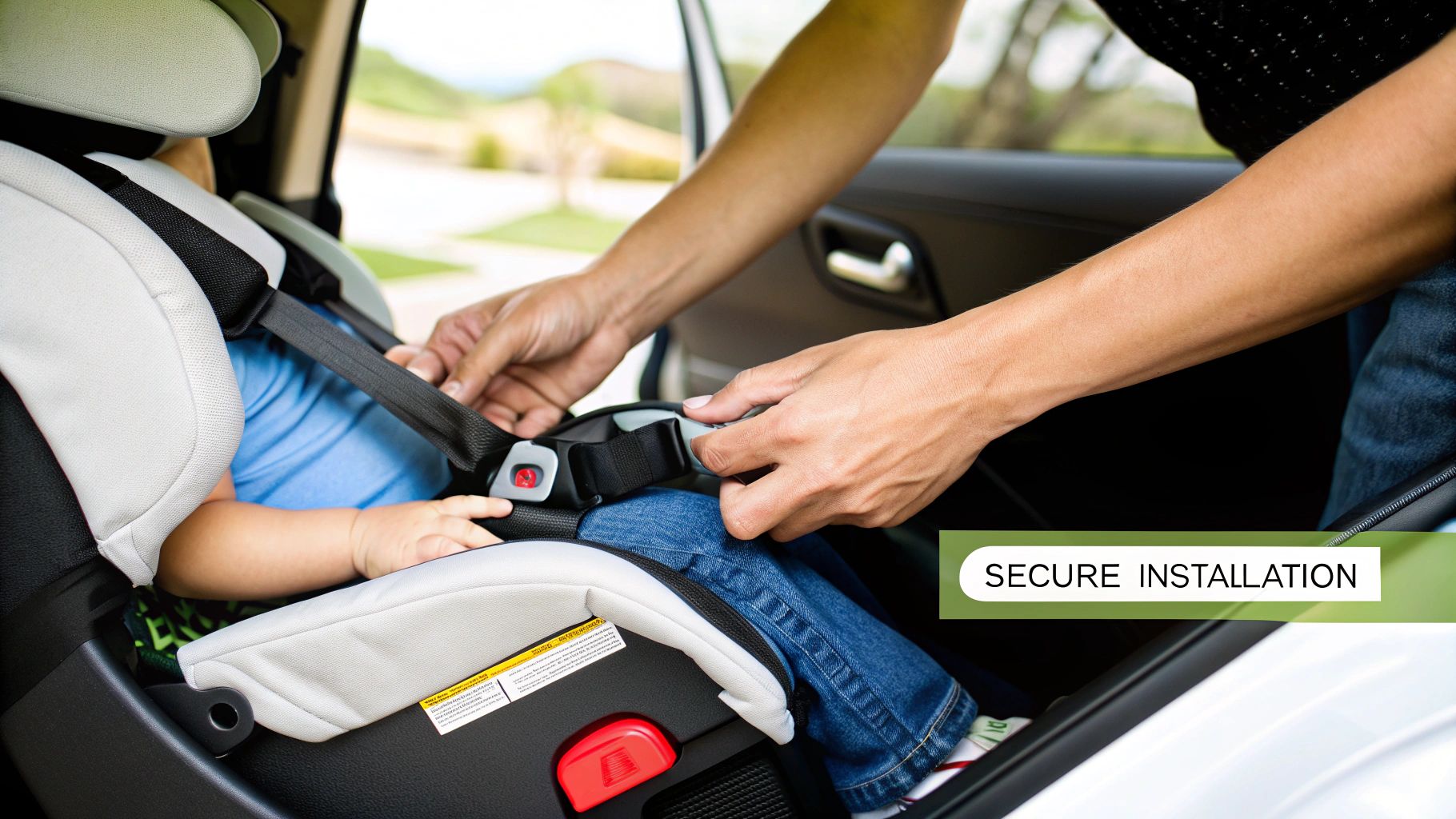
That same rule applies here. A rock-solid, correct installation isn't just a recommendation; it's absolutely crucial for keeping your baby safe. This can sound intimidating at first, but once you get the hang of the basic methods and learn what pitfalls to look for, you'll feel confident getting it right every single time.
LATCH vs Seat Belt Installation
Most cars and car seats today offer two ways to secure the base: the LATCH (Lower Anchors and Tethers for Children) system or your vehicle’s own seat belt. One isn't automatically safer than the other. The safest method is simply the one that gives you the tightest, most secure fit in your car. Just remember the golden rule: Never use both at the same time.
-
The LATCH System: This system uses dedicated metal anchors built into the crack of your vehicle's back seat. Many parents find it easier because you just click the car seat connectors onto the anchors. The catch? LATCH anchors have a strict weight limit (which includes the weight of the car seat itself), so you have to read your manuals to know when it's time to switch to the seat belt.
-
The Seat Belt Method: This involves running your car's seat belt through a specific path on the car seat base and locking it down tight. It can sometimes take a little more muscle to get all the slack out, but it's a universal method that works in almost any car and doesn't have the weight limits that LATCH does.
Fixing the Most Common Installation Errors
Even parents with the best intentions can make small mistakes that reduce a car seat's effectiveness. But knowing what to look for is half the battle. The demand for safer car seats is clear, with the market projected to reach a value of USD 10.4 billion by 2035. This growth is fueled by parents who, like you, are more focused on safety than ever before. You can find more details on this growing focus on baby car safety on Future Market Insights.
Here are the most frequent slip-ups and how to fix them on the spot:
-
A Loose Base: The base shouldn't wiggle more than one inch side-to-side or front-to-back when you test it at the belt path. If it moves more than that, it's not secure enough.
- The Fix: Put your body weight into the base with a knee or hand while you pull the LATCH strap or seat belt as tight as it can possibly go.
-
Incorrect Recline Angle: Infant seats need to be reclined just right to keep a baby’s delicate airway open. Too upright, and their head can flop forward.
- The Fix: Look for the recline indicator on the side of the seat—it’s usually a bubble or a line. Adjust the recline foot on the base until the indicator shows you're in the correct range.
-
Twisted Harness Straps: A twisted strap can’t spread crash forces evenly and can dig into your baby.
- The Fix: Before you buckle your baby in, always run your fingers along the harness straps to make sure they are lying perfectly flat.
-
Loose Harness: If you can pinch a horizontal fold of the webbing at your baby’s collarbone, the harness is too loose. This is often called the "pinch test."
- The Fix: Once buckled, pull the single tightening strap until the harness is snug against your baby's body.
-
Chest Clip in the Wrong Position: The chest clip’s only job is to keep the shoulder straps properly positioned. If it’s too low, the straps can slip off the shoulders.
- The Fix: The chest clip should always be at armpit level. Simply slide it up after you've tightened the harness.
For true peace of mind, the single best thing you can do is have your installation checked by a professional. A certified Child Passenger Safety Technician (CPST) is trained to teach you how to install your exact seat in your specific car and can spot issues you might miss.
Finding a local CPST is easier than you think. Organizations like Safe Kids Worldwide have searchable databases of technicians and host free checkup events. This expert guidance is what turns a good safety rating on paper into real-world protection for your child.
Your Car Seat Safety Questions Answered
Even after you've done your homework on safety ratings, it's completely normal to have more questions. Choosing the right car seat for your baby is a big deal, so let's walk through some of the things parents ask most often.
When Should I Transition My Baby From an Infant Car Seat?
The only time to move your baby out of their infant-specific car seat is when they hit the maximum height or weight limit—whichever happens first. You'll find this info printed right on a label on the seat and spelled out in the manual. There's no prize for graduating early, so don't rush it.
The American Academy of Pediatrics (AAP) is clear on this: keep your child rear-facing for as long as possible. It's the absolute best way to protect their delicate head, neck, and spine in a crash. Once they've officially outgrown the infant seat, the next step is a convertible car seat, which you'll continue to use in the rear-facing position.
Are More Expensive Car Seats Automatically Safer?
Not at all. Every single car seat sold in the United States has to pass the same tough federal safety standards just to make it to the store shelf. A higher price tag usually gets you things like softer, premium fabrics, extra cushy padding, or handy features like a no-rethread harness—not necessarily better crash protection.
While some pricier seats might score higher in independent tests, plenty of budget-friendly models earn top safety ratings, too. The safest car seat is always the one that fits your child, fits your car, and is easy for you to install correctly every single time.
Focus on the official safety ratings instead of letting the price tag be your guide. Having the right gear just makes you feel more prepared, in the same way that finding the best baby carriers for newborns makes getting out and about feel so much easier.
Can I Use a Second-Hand or Used Infant Car Seat?
This is a tricky one. Using a second-hand car seat is generally a bad idea unless you can get it from someone you trust completely—like a sibling or a very close friend—and you know its entire history. A car seat with an unknown past is just too big of a gamble.
If you're considering a used seat, you need to be absolutely certain about these things:
- It has never been in a moderate to severe crash.
- It is not expired (most seats have a lifespan of 6-10 years from their manufacture date).
- All the original parts, labels, and instruction manual are there and in good shape.
If you can't confirm every single one of those points without a shadow of a doubt, the safer move is to buy a new, affordable car seat. Your child's safety isn't worth risking over hidden damage or weakened materials.
At GUGUTON LLC, we believe true peace of mind comes from knowing your little one is protected by high-quality, safe, and comfortable essentials. From their first ride home to their daily adventures, our curated collection is designed to support your family every step of the way. Explore our selection of baby gear, clothing, and accessories today.
Discover thoughtfully selected baby and maternity essentials at guguton.com