

How to Care for a Newborn Umbilical Cord: A Guide to Safe Healing
When it comes to caring for your newborn's umbilical cord, the approach is surprisingly simple. Your main job is to keep the stump clean and dry so it can fall off on its own. That’s it.
This really just boils down to encouraging air circulation, being incredibly gentle if you need to clean the area, and dressing your baby in soft, comfortable clothing made from high-quality, non-irritating fabrics. By sticking to these basics, you’re not only setting your baby up for a safe healing process but also helping to prevent skin issues like rashes or allergies from the very start.
Understanding Umbilical Cord Care Basics
Bringing your newborn home is a whirlwind of joy and learning. One of the very first hands-on tasks you'll tackle is caring for that little umbilical cord stump—the remnant of their lifeline in the womb. It might look fragile, but the care routine is actually quite straightforward. The one and only goal? Prevent infection and protect your baby’s delicate skin.
Good hygiene here is non-negotiable. Think of the healing navel as a tiny open door for bacteria, and your job is to keep that door firmly closed. This is especially true in those first few weeks when your baby's immune system is still getting up to speed and their skin is highly sensitive to irritants.
Why Gentle Care Matters
The whole idea is to let the stump dry out naturally. This is what helps it detach on its own, and the best way to do that is by letting the air get to it. A few simple habits can make all the difference in ensuring a safe and comfortable experience for your baby:
- Promote Airflow: Always fold down the front of your baby’s diaper so it sits below the stump. This simple trick prevents moisture from getting trapped and stops the diaper from rubbing against the sensitive area.
- Choose Soft, Safe Clothing: Dress your baby in loose, breathable clothes made from high-quality, natural fibers like organic cotton or bamboo. You’ll find that kimono-style tops or side-snap shirts are fantastic because they don’t put any pressure on your baby’s tummy and are less likely to contain harsh dyes or chemicals that could cause a rash or skin irritation.
- Practice 'Dry Care': Most pediatricians have moved away from recommending rubbing alcohol or other antiseptics. These days, the advice is clear: if the area needs a little cleaning, plain water and a soft cloth are all you need. Harsh chemicals can disrupt the delicate balance of your newborn’s skin.
Keeping the cord area clean and dry isn't just a small detail—it's a critical part of your baby’s health. It directly protects their well-being by preventing complications that can easily arise from rough handling or the wrong products.
Globally, the focus on better cord care has had a massive impact. Neonatal deaths plummeted from 5 million in 1990 to 2.4 million in 2019, and preventing umbilical cord infections played a huge role in that. Neonatal sepsis is still the third leading cause of infant death in the first month, and in some areas, cord infection rates can be as high as 3% to 5%, often due to outdated traditional practices. As a parent, you can see why diligent, gentle care is so important.
To help you feel more confident, we've broken down the daily routine into a simple checklist. This table gives you a quick overview of what to do each day to keep things on track.
Daily Umbilical Cord Care Checklist At a Glance
A quick summary of the essential daily actions for proper newborn umbilical cord care to ensure a safe and healthy healing process.
| Action | Why It Matters | GuGuTon Product Tip |
|---|---|---|
| Air-Dry the Stump | Promotes faster drying and separation. Prevents moisture buildup, which can lead to bacterial growth. | Dress your baby in loose, kimono-style bodysuits that allow air to circulate freely. |
| Keep It Clean & Dry | A clean, dry environment is the best defense against infection. Avoid creams, powders, or oils. | Use our ultra-soft bamboo washcloths with a bit of warm water for gentle dabbing if needed. |
| Fold Down the Diaper | Prevents irritation from rubbing and keeps urine from soaking the stump, reducing infection risk. | Choose diapers with a built-in cord cutout or simply fold down the front of a standard diaper. |
| Gentle Sponge Baths Only | Submerging the stump in water can slow the drying process and increase the risk of infection. | Stick to sponge baths until the stump has fallen off and the area is fully healed. |
Following these simple actions consistently is the best way to support your baby’s natural healing process.
My goal with this guide is to take the guesswork out of the equation. When you choose high-quality supplies and stick to a gentle routine, you can feel confident that you’re creating the safest environment for your baby to thrive. And if you're in the middle of setting up your nursery, you might find our guide on the best baby products for newborns helpful for making sure you have all the essentials ready to go.
Your Daily Routine for a Clean and Dry Cord Stump
When it comes to daily cord care, you'll be happy to know that less is more. The goal isn't to follow a complicated medical routine but simply to keep the area clean and dry, letting nature do its thing. Think of every diaper change as a quick opportunity to check on the stump and protect it from moisture and irritation.
One of the best tricks you'll learn is the diaper fold-down. Just roll the top edge of the diaper down and away from the navel. This little cuff works wonders—it keeps the stump from getting soaked with urine and prevents the diaper from constantly rubbing against the sensitive tissue.
Keeping It Clean
Even with perfect diapering, blowouts are a fact of life. When the cord stump gets a little messy, don't panic. You don't need any special soaps or antiseptics to clean it.
In fact, the American Academy of Pediatrics stopped recommending rubbing alcohol years ago. Studies showed it didn't actually lower infection rates and could sometimes irritate a newborn's skin or even slow down the healing process. Using harsh substances can strip the skin's natural protective barrier, potentially leading to rashes or allergic reactions.
All you really need is:
- A soft washcloth or a few cotton swabs
- A little bit of warm water
Gently wipe away any grime from around the base of the cord. Once it's clean, the most important part is to pat it completely dry with a clean, absorbent cloth. Moisture is the enemy of healing, so a thorough but gentle pat-down is your best friend here.
Air It Out
Think about how a small scrape heals best—when you let it breathe. The umbilical stump is no different. Good old-fashioned air exposure is the fastest way to help it dry up, shrivel, and fall off naturally.
Honestly, the best thing you can do for that little stump is to leave it alone as much as possible. A hands-off approach that focuses on keeping it clean, dry, and open to the air is the gold standard.
This simple guide breaks down the whole process into three easy-to-remember actions.
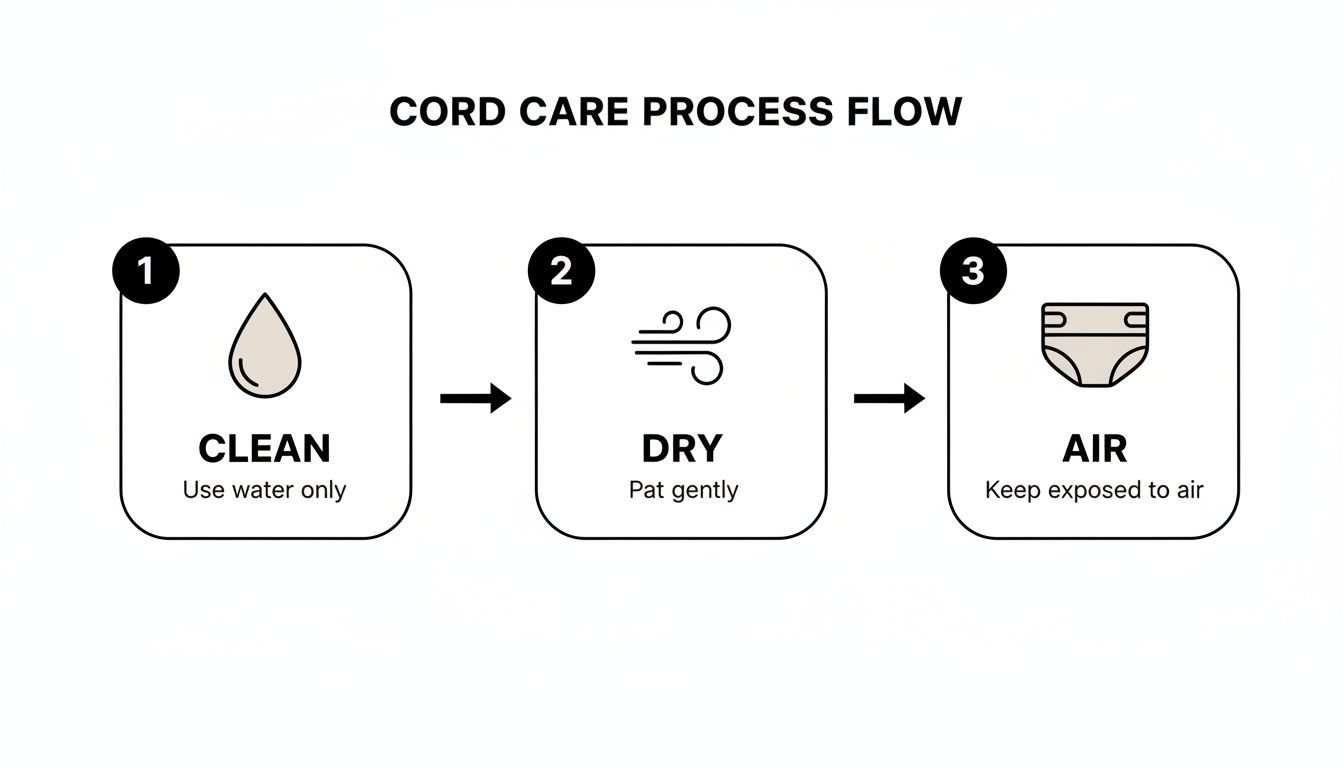
As you can see, the core idea is simple: clean only when you have to, dry it well, and let it get plenty of air. This minimalist strategy supports the body's natural healing process without introducing anything that might irritate your baby's brand-new skin. It’s not just easier—it’s more effective.
Safe Bathing Practices for Your Newborn
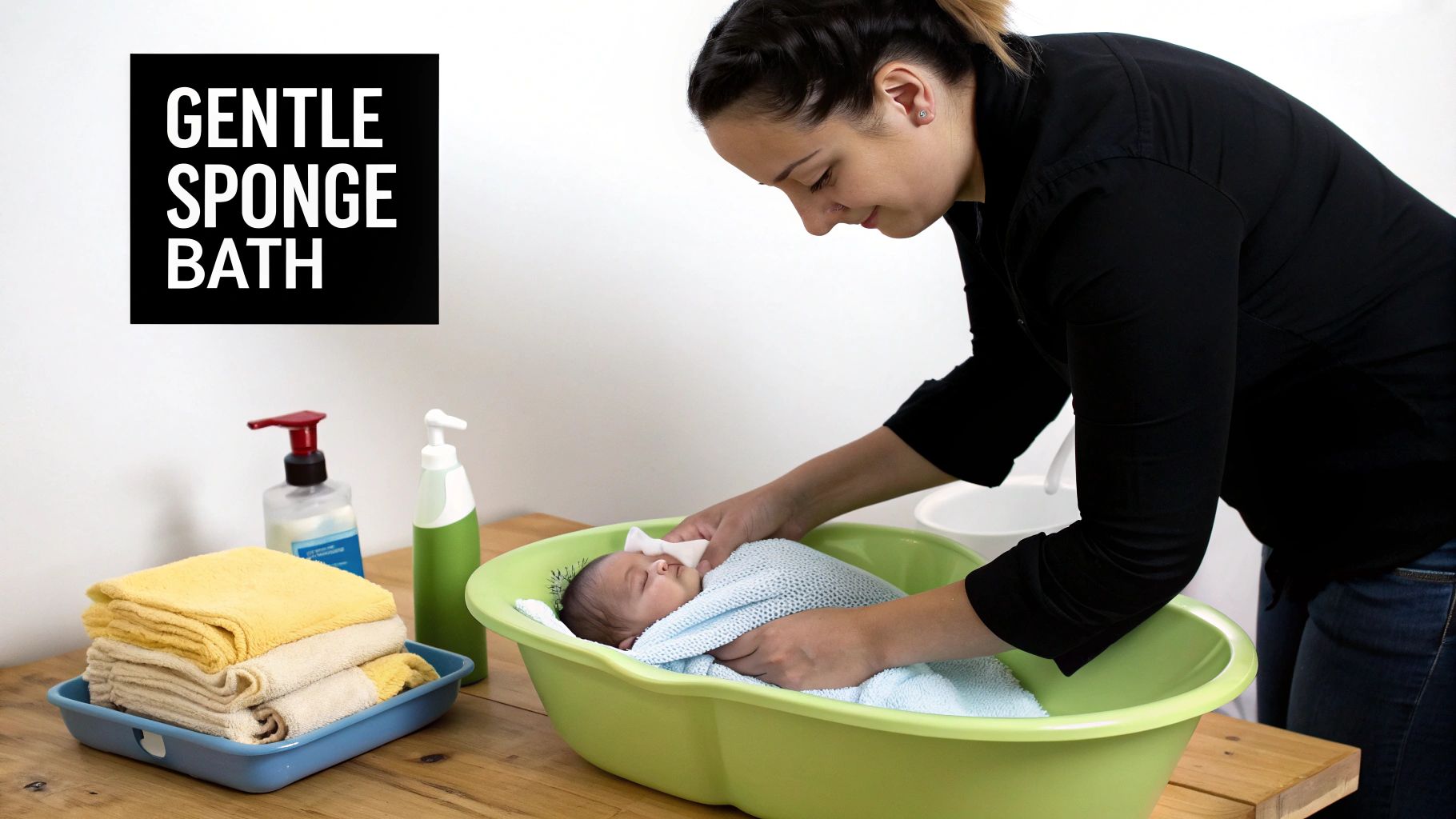
That first bath is such a sweet milestone, but with the umbilical cord stump still in place, you’ll need to adjust your approach. For now, it’s all about mastering the gentle art of the sponge bath. The goal is simple: keep that healing area completely dry.
Submerging the stump in water can slow down the healing process and, worse, create a damp environment that invites bacteria. A good sponge bath cleans your baby perfectly without ever soaking the cord, keeping them warm, secure, and comfortable. Before you even start, get everything you need within arm's reach. Trust me, having your supplies ready makes the whole experience so much smoother.
Setting Up a Stress-Free Sponge Bath
First things first, pick a warm, draft-free room. Lay down a soft towel or a padded changing mat to create a cozy spot for your little one. You'll need a small basin of warm water—always test it with your wrist or elbow—a mild, fragrance-free baby soap if you plan to use it, and a couple of soft washcloths.
A great tip is to keep your baby swaddled in a warm towel, only exposing the part of their body you’re washing. This keeps them from getting cold and fussy. Start with their face, using a clean washcloth and plain water, then work your way down, one section at a time.
A common mistake new parents make is over-bathing. A newborn’s skin is incredibly delicate and they don’t get very dirty. A sponge bath 2-3 times per week is more than enough until the cord falls off. This also helps preserve the natural oils that protect their skin from becoming dry or irritated.
To help you find a good rhythm, here’s a simple routine that works well:
- Eyes and Face: Gently wipe from the inner corner of each eye outward using a damp, soap-free cloth. Be sure to use a different part of the washcloth for each eye.
- Body: If you're using soap, choose a high-quality, hypoallergenic product and add just a tiny drop to the water. Wash the rest of their body, paying close attention to the little folds under their neck, arms, and in the diaper area where milk and lint can hide.
- Cord Area: This is the important part. Carefully clean around the base of the cord stump. A damp cotton swab or the clean corner of a washcloth works perfectly. Just avoid getting the stump itself wet.
- Final Pat-Down: Once you’re done, gently pat your baby completely dry with a soft, high-quality towel. Make sure every last bit of moisture is gone, especially around the navel.
When Can You Give a Real Tub Bath?
The big transition to a "real" tub bath can finally happen once the umbilical cord stump has fallen off and the navel looks completely healed—no more rawness, scabbing, or oozing. It’s a fun moment that marks another little step forward in your baby's journey.
Once you're ready for tub baths, you might wonder about bathing frequency. If you’re curious, you can learn more about how often to bathe a newborn in our detailed guide.
How to Spot Signs of an Umbilical Cord Infection
Most umbilical cords heal without a hitch, but knowing what to look for will give you invaluable peace of mind. Think of this as your safety checklist. It helps you tell the difference between the normal, sometimes quirky, signs of healing and the red flags of a potential infection.
Your baby's body is incredible at healing, but that little belly button area is vulnerable until it's completely closed up. A tiny bit of crusted blood on your baby's onesie or some yellowish clear fluid as the stump gets looser is perfectly fine—it’s just part of the natural process.

Red Flags That Warrant a Call to Your Doctor
An infection is pretty uncommon when you're keeping the area clean and dry, but it requires prompt medical attention if it happens. Don't dismiss any warning signs.
Keep a close eye out for these specific symptoms around the navel:
- Spreading Redness: A little bit of pinkness right at the base of the cord is normal. However, if that redness starts to spread out onto the surrounding belly skin, that's a concern.
- Foul Odor: A healthy cord stump shouldn't have a strong, unpleasant smell. A foul, pus-like odor is a major red flag.
- Yellow or Green Discharge: A thick, cloudy, or colored pus oozing from the navel is definitely not part of the normal healing process.
- Swelling or Tenderness: The area around the cord should not look puffy. If your baby cries or seems to be in pain when you gently touch the skin near the stump, it's time to call the pediatrician.
- Fever or Lethargy: Sometimes, an infection can affect the whole body. Look for a fever (a rectal temperature of 100.4°F or 38°C or higher), unusual sleepiness, or a sudden disinterest in feeding.
It is always better to be overly cautious than to wait. If your gut tells you something is wrong, trust that instinct. A quick call to your doctor can provide reassurance or catch a problem early.
Distinguishing between what's normal and what's not can feel tricky. This simple table breaks down the common signs to help you feel more confident.
Normal Healing vs. Signs of Infection
| Symptom | Normal Healing | Possible Infection (Contact Doctor) |
|---|---|---|
| Color | The stump changes from yellowish-green to brown or black as it dries. A little pinkness at the base is okay. | Redness that spreads from the base out onto the belly skin. |
| Discharge | A small amount of clear or slightly blood-tinged fluid is common, especially as the stump loosens. | Thick, cloudy, yellow, or green pus-like discharge. |
| Smell | There should be little to no odor. | A consistent foul or rotten smell. |
| Baby's Reaction | The baby is unbothered when you clean around the cord. | The baby cries, fusses, or seems to be in pain when the area is touched. |
| Surrounding Skin | The skin on the belly around the cord looks normal. | The skin looks swollen, puffy, or feels warm to the touch. |
| Overall Health | The baby is feeding well, active, and has no fever. | The baby has a fever (100.4°F / 38°C or higher), is overly sleepy, or feeds poorly. |
Seeing these signs laid out side-by-side can make it much easier to spot a potential issue. Never hesitate to reach out to your pediatrician if you notice anything in the "Possible Infection" column.
The stakes are high with a newborn's health. Sadly, poor umbilical cord care is linked to higher newborn mortality rates in some parts of the world. One study highlighted big gaps in follow-up care after birth, which is exactly when cord issues can be caught early. For parents, this reinforces just how important your vigilance is.
This means avoiding unproven home remedies, giving the cord plenty of air exposure, and calling for medical help right away if you see redness, pus, or a foul odor. You can discover more about these crucial health findings and see why this simple care routine is so vital.
Knowing what to look for isn't meant to make you anxious—it's meant to empower you. By confidently monitoring your baby's healing, you can make sure they get the right care, right when they need it.
What Happens After the Umbilical Cord Falls Off
The day that little umbilical cord stump finally lets go is one of those quiet, sweet milestones. One minute it's there, the next it’s gone, usually found in your baby’s diaper or onesie. This is the last step in the healing process, and knowing what comes next helps you feel totally at ease.
Once the stump is off, you’ll probably see a small, pinkish spot where it used to be. It might look a little raw or even a bit moist, and that's perfectly normal. It’s just the new skin of the belly button making its debut. Don’t be surprised if you see a tiny speck of blood, either—that’s very common as the last bit of tissue detaches.
What to Look for During Final Healing
For the next few days, the new navel will keep healing and drying out. Your job stays the same: keep it clean and let it breathe. A gentle pat with a soft, dry cloth after bath time is all it really needs.
Sometimes, a small, pink, and slightly weepy bump might appear inside the healing navel. This is usually an umbilical granuloma, which is just a harmless bit of scar tissue. Most of the time, it disappears on its own. If it sticks around or seems to get bigger, your pediatrician can easily treat it with a quick, painless dab of silver nitrate.
The rule of thumb for cord care is simple, both before and after the stump falls off: keep the area clean and dry. This straightforward approach is the safest and most recommended practice worldwide.
Cord care traditions vary quite a bit across the globe, from applying special herbs to using antiseptics. But a deep dive into practices from 15 different countries found a universal truth for parents: hygiene is everything. Clean hands, good air circulation, and watching for rare warning signs (which affect less than 5% of newborns with proper care) are what truly matter. You can explore the research on diverse cord care practices here.
The Exciting Transition to Tub Baths
Once the stump is gone and the navel looks completely healed—meaning it’s dry with no raw spots—you get to graduate to real tub baths! This is often a huge, heartwarming moment for both you and your baby. Just make sure the room is warm and the water is comfortably heated before you start.
As you move on to new routines and clothing, remember that your baby’s skin is still incredibly delicate. Choosing high-quality, gentle materials remains important to prevent rashes and skin sensitivity. If you're wondering about the best materials to use against their healing skin, you might find our article on choosing the right fabric for your baby’s sensitive skin helpful.
Your Umbilical Cord Care Questions Answered
Even with the best guide in hand, new questions always pop up when you're in the thick of it with your newborn. It’s completely normal. Let's walk through some of the most common things parents ask about umbilical cord care to give you that extra peace of mind.
How Long Does It Take for the Umbilical Cord Stump to Fall Off?
This is the big one everyone wants to know! Typically, the stump dries up and falls off on its own somewhere between one and three weeks after your baby is born.
Remember, this is just an average. Some fall off a bit sooner, some hang on a little longer. As long as you’re keeping it clean and dry, you’re doing everything right.
The most important thing? Resist the urge to pull it off. Even if it’s hanging by a thread, let it go on its own time. Pulling it can cause bleeding and create an opening for infection. If it’s still attached after four weeks, it's worth a quick call to your pediatrician just to check in.
Is a Little Blood Around the Umbilical Cord Normal?
Yes, a little bit of crusted blood right at the base of the stump is very common and usually nothing to worry about. You might also see a little clear or slightly yellowish ooze as it separates—think of it like a healing scab.
What's not normal is active bleeding or a steady trickle of blood. That warrants a call to your doctor right away. The same goes for any thick, foul-smelling yellow or green discharge, which is a telltale sign of infection.
A good rule of thumb: A tiny speck of dried blood shows it's healing. Fresh, flowing blood or colored pus means it's time to call the doctor. Knowing the difference can save you a lot of worry.
What Clothing Is Best for a Newborn with a Cord Stump?
When it comes to dressing your baby, think soft, breathable, and loose. The main goal is to avoid anything that could rub or irritate the stump and to let as much air circulate as possible to help it dry out. Prioritizing quality materials is key to preventing skin issues.
Natural, high-quality fabrics like soft, organic cotton or bamboo are perfect. They're gentle on that brand-new skin, don't trap moisture, and are less likely to contain harsh chemicals that can cause rashes or allergic reactions.
A few practical clothing tips:
- Rethink the Onesie: Instead of tight onesies, try side-snap shirts (sometimes called kimono-style tops) or loose-fitting gowns. They make dressing much easier and keep pressure off the healing belly button.
- Fold the Diaper Down: This is a classic parent trick for a reason. Always fold the top of the diaper down to create a little cuff that sits well below the stump. Some newborn diapers are even designed with a C-shaped cutout just for this purpose.
- Skip Tight Waistbands: Hold off on any pants or bottoms with snug elastic waistbands that could press against the cord area.
Should I Use Alcohol or Other Antiseptics on the Cord?
This is a great question, as the advice has changed over the years. Current pediatric guidelines overwhelmingly recommend "dry care." Research has shown that just keeping the stump clean with a little water and letting it air out helps it fall off faster without increasing infection risk.
In the past, swabbing with rubbing alcohol was standard practice. We now know it can irritate a baby's sensitive skin and might even slow down the healing process. Unless your doctor specifically tells you to use an antiseptic for a particular reason, plain old air and water are best.
As you get everything ready for your baby, don't forget about yourself! You might find our guide on building your postpartum essentials checklist helpful for your own recovery and comfort.
At GuGuTon, we are dedicated to supporting you through every milestone with soft, high-quality essentials designed for your baby’s safety and comfort. From breathable cotton bodysuits to ultra-gentle washcloths, find everything you need to care for your newborn with confidence at https://guguton.com.