

How Often to Bathe a Newborn A Gentle Guide for New Parents
When you first bring your brand-new baby home, a million questions run through your mind. One of the most common is, "How often am I supposed to be bathing this tiny human?"
The answer might surprise you: you don't need to bathe your newborn every single day. In fact, most experts, including the American Academy of Pediatrics, suggest that one to three baths per week is plenty to keep their delicate skin safe and healthy. This approach helps prevent skin irritation, rashes, and the development of allergies.
Finding the Right Bathing Rhythm for Your Newborn
Figuring out a bath schedule for your newborn can feel a little confusing at first, but the "less is more" rule is all about protecting their developing skin barrier. A baby's skin is incredibly thin and sensitive—much more so than ours—which makes it susceptible to dryness, rashes, and irritation.
Daily baths, especially if you're using soap, can strip away the natural oils that keep their skin soft and hydrated. This can weaken the skin's natural defenses, making it more vulnerable to environmental allergens and irritants.
This gentler approach also helps preserve the vernix caseosa, that waxy, white coating you might have noticed on your baby’s skin at birth. Think of it as nature's perfect moisturizer and first line of defense. It acts as a protective shield, has antimicrobial properties, and helps your baby's skin hold onto moisture, reducing the risk of skin problems from day one.
The Importance of a Delayed First Bath
It turns out there are some pretty significant health benefits to waiting a bit before that very first bath.
A 2022 systematic review in the Journal of Global Health discovered that delaying a baby's first bath for more than 24 hours can seriously reduce mortality risks. In one study, infant deaths were almost cut in half for the group that had a delayed bath. This simple change is also linked to higher rates of exclusive breastfeeding, which is a huge win for infant health and immunity. You can read the full research on newborn bathing benefits to see the science behind this gentle beginning.
“Experts recommend waiting up to 24 hours after birth for this first bath, which gives the baby time to regulate their temperature and bond with their parents.”
Ultimately, the goal is to create a routine that prioritizes safety and protects that brand-new skin. As you get your gear together, our newborn essentials shopping list can help you feel confident you have everything you need for a calm, safe, and happy bath time.
Newborn Bathing Frequency at a Glance
To make it even easier, here's a quick reference chart summarizing how often to bathe your baby as they grow.
| Baby's Stage | Recommended Frequency | Type of Bath |
|---|---|---|
| First Few Days | Wait at least 24 hours | None |
| First 1-2 Weeks | 1-3 times per week | Sponge bath only |
| Older Infants | Up to 3 times per week | Tub bath |
This approach helps prevent common skin issues like rashes and allergies, keeping your baby comfortable and healthy right from the start.
Why Less Is More for Your Newborn’s Delicate Skin
When you bring your newborn home, it’s natural to want to keep them perfectly clean. But when it comes to their skin, a “less is more” approach is genuinely the best for preventing allergies and rashes. A baby’s skin isn't just a smaller version of our own; it's a brand-new organ, still figuring out how to protect itself. Think of it like a high-tech fortress that’s still under construction—bathing too often can weaken its walls before they’re even finished.
The first line of defense is the vernix caseosa, that waxy, almost cheese-like coating your baby is born with. It might not look like much, but it's nature's perfect moisturizer and a powerful protective shield. This amazing substance provides a waterproof barrier, helps guard against germs, and eases their skin's transition from the womb to the outside world. It’s far from something you need to scrub away.
Protecting Their Natural Skin Barrier
Every time you give your baby a bath, especially with soaps and cleansers, you're washing away more than just dirt. You risk stripping the skin of its natural oils, which can disrupt the delicate skin barrier. A weak barrier can't do its job properly, leaving the skin prone to dryness, irritation, and even conditions like eczema.
Bathing too frequently also messes with the skin's developing microbiome—the community of good bacteria that lives on the skin and helps train their tiny immune system. A healthy microbiome is your baby’s ally against rashes and allergies, so keeping this balance intact is key. You can also support this delicate layer by choosing the right fabric for your baby's sensitive skin for their clothes and bedding, as harsh fabrics can also cause skin irritation.
By limiting baths to just a few times a week, you're giving your baby’s skin the chance to build its own strength, lock in moisture, and develop a healthy microbiome that will serve them for years to come.
Why Sponge Baths Come First
There’s another really important safety reason to hold off on tub baths right away: the umbilical cord stump. It needs to stay clean and, most importantly, dry until it falls off on its own, which usually happens in the first week or two. Getting it wet can slow down healing and open the door to infection.
This is exactly why sponge baths are the go-to for newborns. A full-on tub bath can soak the cord area, creating the exact environment you want to avoid.
- Sponge baths let you clean your baby one section at a time, making it easy to keep the umbilical stump completely dry and safe from infection.
- They also help your newborn maintain their body temperature, since most of their body stays wrapped up and warm in a towel.
- This gentle approach is far less overwhelming for a tiny baby who is still getting used to all the new sensations of the world.
Health organizations around the world agree. A 2023 study confirmed the risks of giving immersion baths too early, which can wash away the protective vernix and lead to hypothermia and infection. In a world where 2 million newborns die in their first week from preventable causes, simply delaying the first bath by at least 24 hours is a powerful first step in keeping them safe. You can learn more about the findings on newborn bathing practices and why this simple change matters so much.
Your Guide to a Calm and Safe Sponge Bath
Ready for that first bath? Before your baby’s umbilical cord stump falls off, sponge baths are the way to go. It’s the safest and gentlest way to keep your little one clean and protect their skin from irritation. Think of it less as a chore and more as a sweet, quiet moment for you both to connect. The whole secret is just creating a calm and safe little setup.
First things first: preparation is everything. Pick a warm room, free of any drafts, and get all your supplies together before you even bring your baby over. You’ll want everything within arm’s reach, because you can’t leave your baby unattended for even a split second. Getting this routine down is great practice for other parenting tasks, like figuring out what to pack in a diaper bag, where being prepared makes all the difference.
Setting Up for Success
To keep things smooth and stress-free for both of you, set up a little bathing station. A changing table or even a towel on the floor works perfectly.
- Warm Water: You’ll want two small basins of warm water—one for washing and a separate one for rinsing. The sweet spot for the temperature is around 100°F (37.8°C). The best way to check? Dip your inner wrist in; it should feel pleasantly warm, never hot. Water that is too hot can easily cause burns or skin damage.
- Soft Cloths: Grab a couple of soft baby washcloths and a cozy, hooded towel for afterward. Choose high-quality, natural fibers like organic cotton to avoid scratching or irritating the skin.
- Essential Supplies: Have a fresh diaper and a clean outfit ready to go. This makes the transition from bath time to getting dressed quick and seamless.
Now you’re ready. Lay your baby down on a soft towel. You can undress them, but keep them wrapped up in the towel to stay warm. The idea is to uncover, wash, and then re-cover one little part of their body at a time.
This gentle approach is so important because it protects the amazing, delicate layers of your newborn’s skin.
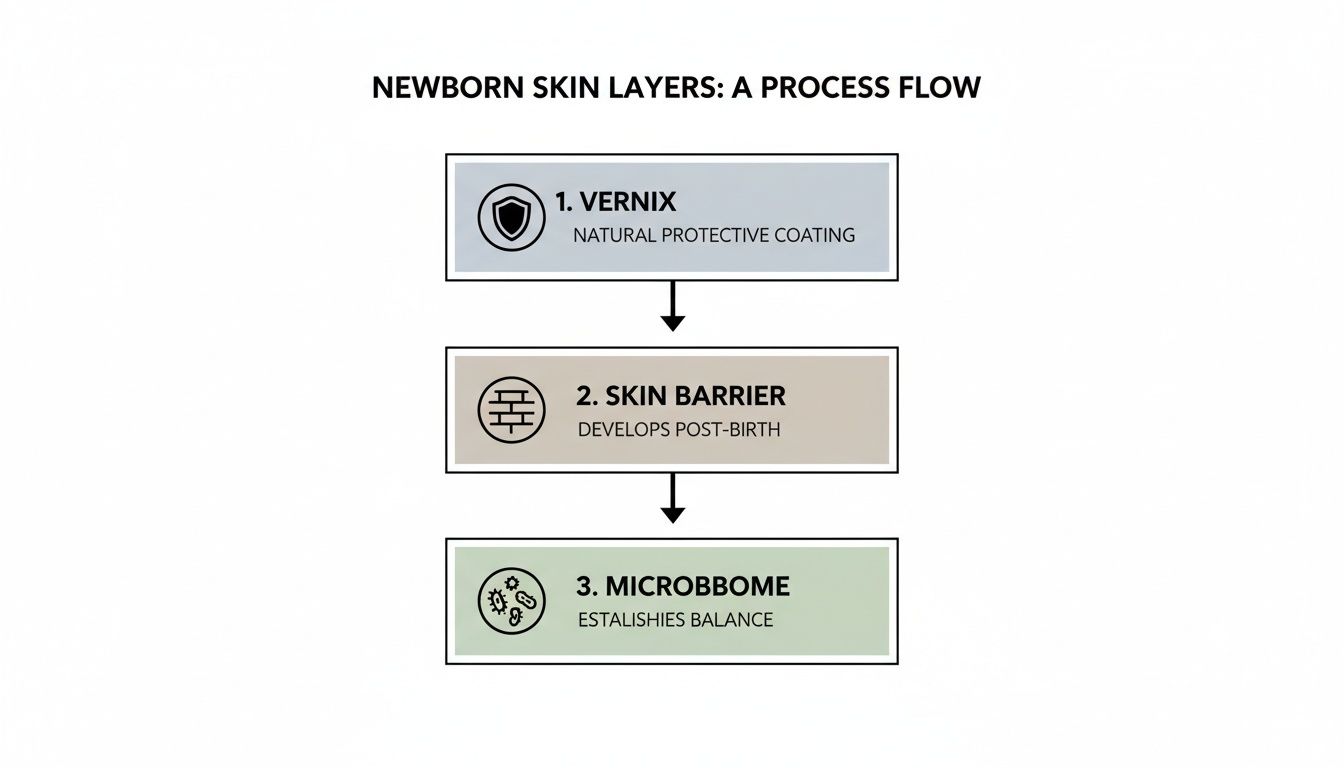
As you can see, the vernix, skin barrier, and microbiome are a powerful team. Gentle sponge baths help keep this natural shield intact while it’s still developing.
A Step-by-Step Sponge Bath Guide
With your baby snuggled up and comfortable, you can start the bath. Just remember to always keep the umbilical cord area dry to prevent infection.
- Start with the Face: Take a washcloth, dip it in the plain warm water (no soap for the face!), and gently wipe. Start from the inner corner of their eyes and move outward, using a clean part of the cloth for each eye.
- Wash the Body: Now you can add just a tiny drop of a mild, fragrance-free baby soap to your wash water. Uncover one section of your baby's body—like an arm or a leg—wash it gently, rinse with the clean water and second cloth, and then pat it completely dry before covering it back up. Then, move on to the next spot.
- Pay Attention to Folds: Don’t forget to gently clean inside those adorable neck folds, under their arms, and around the diaper area. Milk, sweat, and other gunk can get trapped in there, leading to irritation or rashes.
- Finish and Moisturize: All done! Quickly get your baby dressed in their clean clothes to keep them toasty. If you notice their skin is a little dry, this is the perfect time to massage in a small amount of a hypoallergenic, fragrance-free baby moisturizer. This helps reinforce the skin barrier and prevent dryness.
Transitioning to the Baby Tub
Once your baby’s umbilical cord stump falls off and everything is nicely healed up, you’ve hit a fun little milestone. It’s time for their first “real” bath in a baby tub! This is a sweet new phase, moving away from those careful sponge baths to a more immersive, splashy experience. And while it’s definitely a fun step up, it’s also when safety becomes more important than ever.
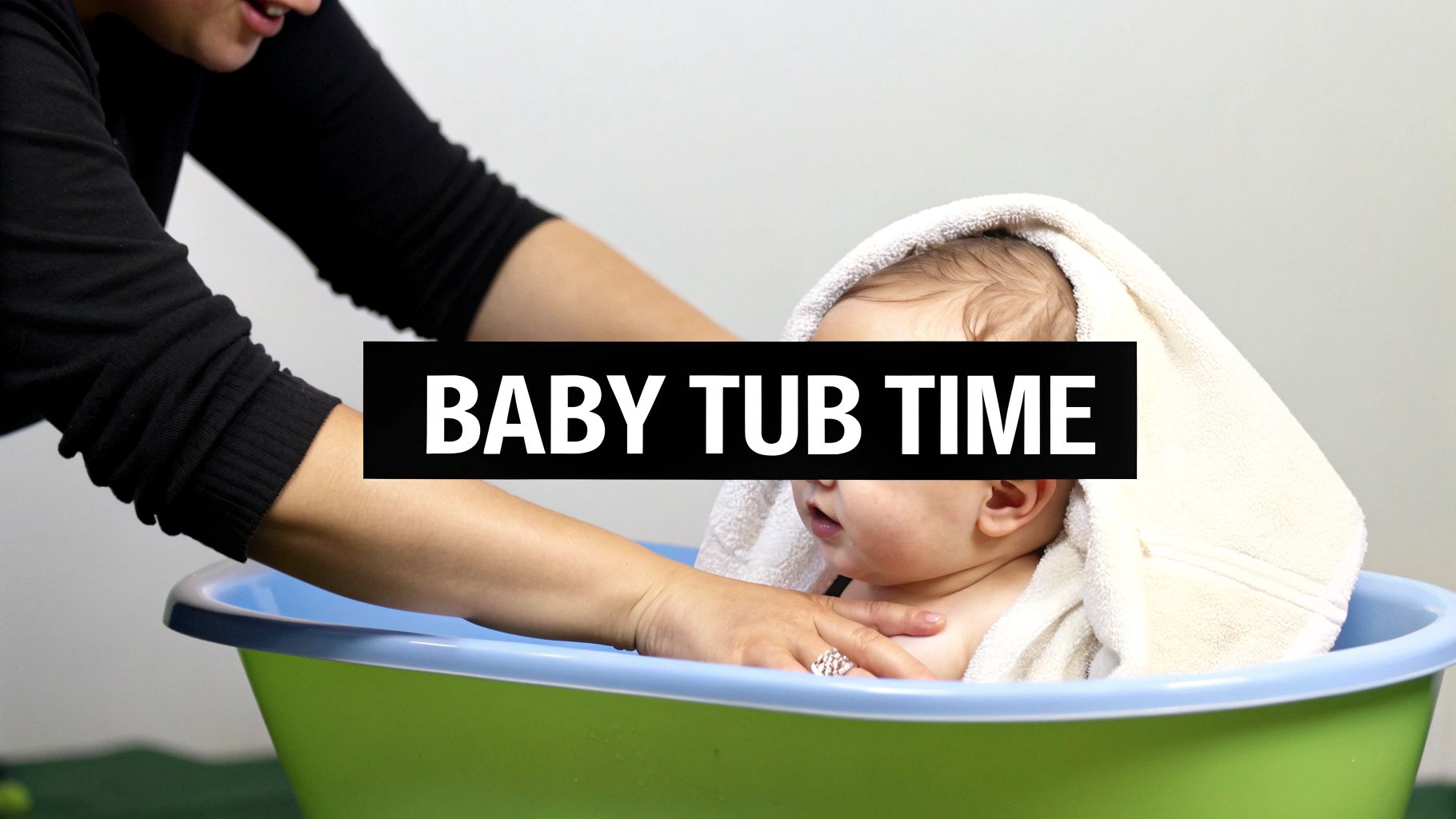
The trick is creating a setup that feels secure and comfortable for both of you. You’ll want a dedicated baby tub that gives them good support and has a non-slip surface. Set it up in a warm, draft-free room where you can easily kneel or sit right beside it without straining. And just like with sponge baths, having all your supplies within arm's reach before you start is absolutely non-negotiable.
Mastering Tub Bath Safety
When it comes to tub baths, there are a few golden rules that keep things safe and happy. Getting the water temperature and depth right before your baby even dips a toe in is probably the most critical part.
- Check the Temperature: You're aiming for water that’s around 100°F (37.8°C), which is pretty close to normal body temperature. The old-school way to check is with the inside of your wrist or elbow—it should feel pleasantly warm, never hot. If you want to be extra sure, a simple bath thermometer takes all the guesswork out of it.
- Use Just a Little Water: You only need about 2 to 3 inches of water. That's plenty to keep your baby warm and get them clean without creating an unnecessary risk.
- Mix the Water Well: A good habit to get into is running the cold water first, then adding the hot. Give it a good swirl with your hand to even out the temperature and get rid of any potential hot spots that could scald their sensitive skin.
These steps lay the groundwork for a safe bath, but the single most important rule is simply being there.
Never, ever leave your baby alone in the bath—not even for a second. Drowning can happen quickly, silently, and in less than an inch of water. If you absolutely have to grab something, wrap your baby in a towel and take them with you.
Essential Gear for a Stress-Free Bath
Having the right stuff on hand makes the move to tub baths so much easier and more fun. A few key items can really turn what feels like a chore into a sweet, calming routine.
Here’s a quick checklist of things you'll be glad to have:
- A Supportive Baby Tub: Look for one with a contoured, non-slip inside or a built-in newborn sling. This helps hold your baby securely before they can sit up on their own, which frees up your hands for washing.
- Gentle Cleanser and Soft Washcloths: Stick with the same mild, fragrance-free baby wash and soft cloths that you know won't irritate their skin and cause rashes.
- A Hooded Towel: There’s nothing better than a warm, hooded towel for scooping your baby up right after the bath. It keeps them cozy and prevents them from getting chilled.
By focusing on these safety basics and getting your space ready, you can make your baby's first tub bath a wonderful, worry-free memory. It’s the first of many happy splashes to come.
Choosing Products That Protect Your Baby’s Skin
Walking down the baby aisle can feel overwhelming. There are so many bottles and tubs, all promising the best for your little one. But when it comes to bathing your newborn, the products you choose are just as critical as how often you do it. The real goal is to gently cleanse while protecting their delicate, still-developing skin barrier to prevent allergies, rashes, and dryness.
Think of your baby’s skin like a brand-new, pristine canvas; you only want the mildest, purest things touching it. A great place to start is by looking for products labeled as fragrance-free, hypoallergenic, and pH-neutral. These formulas are specifically designed to be as gentle as possible and are far less likely to strip away the natural oils and balance of your baby's skin.
Decoding Product Labels
To make the best choices, you need to know what to look for and, just as importantly, what to avoid. A good rule of thumb? Stick with products that have short, simple ingredient lists you can actually recognize.
Here’s a quick rundown of what those key terms really mean for your baby's safety:
- Hypoallergenic: This simply means the product is formulated to minimize the risk of an allergic reaction.
- pH-Neutral: This ensures the product won't disrupt the skin's natural protective layer, often called the acid mantle, which fights off harmful bacteria.
- Fragrance-Free: This one is a biggie. Synthetic fragrances are one of the most common culprits behind skin irritation and rashes in babies. Always go fragrance-free, not "unscented," which can sometimes mean a chemical was added to mask another scent.
Beyond the soap and lotion, the towels and washcloths you use matter immensely. Always opt for soft, natural materials like 100% organic cotton. These fabrics are much less abrasive than synthetics and are grown without harsh chemicals, making them a safer, gentler choice for sensitive skin and reducing the chance of contact irritation or rashes.
Pro Tip: Lock in moisture right after the bath, especially if your baby has dry skin or is prone to eczema. Gently pat their skin until it’s just slightly damp, then immediately apply a thick, fragrance-free moisturizer. This simple step creates a protective seal that holds hydration in.
The Right Products for Your Newborn
Choosing the right products is all about gentle care. You want cleansers that don't strip natural oils and moisturizers that support the skin's barrier. Here’s a simple checklist to guide you when you're shopping.
Baby Bath Product Checklist What to Look For
| Product Type | Look For (Safe Ingredients) | Avoid (Potential Irritants) |
|---|---|---|
| Baby Wash & Shampoo | Plant-based cleansers (e.g., decyl glucoside), glycerin, oat extract, chamomile, calendula. pH-neutral and tear-free formulas. | Sulfates (SLS, SLES), parabens, phthalates, synthetic fragrances, dyes, and alcohol. |
| Baby Lotion & Cream | Shea butter, cocoa butter, ceramides, hyaluronic acid, colloidal oatmeal. Thick, creamy textures that are fragrance-free. | Mineral oil, petrolatum (can be occlusive), artificial colors, perfumes, and propylene glycol. |
| Towels & Washcloths | 100% organic cotton or bamboo. Soft, absorbent, and un-dyed or dyed with natural, non-toxic colors. | Synthetic materials like polyester, microfiber (can be abrasive), and fabrics treated with harsh chemicals or dyes. |
Ultimately, having a few trusted, high-quality products simplifies your routine and goes a long way in keeping your baby's skin healthy, soft, and comfortable.
Adapting to Your Environment
It’s also worth remembering that where you live can influence your baby's skincare needs. A global survey from 2023 found that bathing routines vary quite a bit depending on the climate.
For example, more frequent baths were common in hotter, more humid regions, while families in colder areas tended to use moisturizer more liberally. This just goes to show that there’s no single “perfect” routine. The key is to pay attention to your baby’s skin and adapt. If you're curious, you can discover insights on global bathing practices and see how routines differ around the world.
Choosing the right items makes bathing simpler and safer. For a deeper dive into all the newborn essentials, check out our guide on the best baby products for newborns.
Common Questions About Newborn Bathing
Even with the best-laid plans, a few questions always pop up once you're in the thick of it with a new baby. Getting a handle on these common concerns ahead of time can make bath time feel less like a chore and more like the calm, confident bonding experience it’s meant to be.
Here are some quick, clear answers to the things almost every new parent wonders about.
What Is the Ideal Water Temperature for a Newborn's Bath?
You’re aiming for lukewarm water, right around 100°F (37.8°C). This temperature is just about the same as your baby's own body temperature, which feels incredibly comforting and safe to them.
The old-school method of testing the water with the inside of your wrist or elbow works perfectly—it should feel pleasantly warm, not hot. If you want to take out the guesswork entirely, a simple bath thermometer is a great tool for peace of mind. Remember, water that's too hot can burn their delicate skin in an instant, and water that's too cold will make them uncomfortably chilly very fast.
My Baby Cries During Every Bath. What Can I Do?
First off, know that this is completely normal. For a newborn, being naked and wet is a bizarre and often unsettling sensation. The goal is to make the whole experience feel more secure. Start by ensuring the room is warm and free of any drafts. Dimming the lights can also help, as bright lights can be overstimulating.
A fantastic trick is to try a "swaddle bath." Wrap your baby snugly in a thin receiving blanket before you place them in the tub. You can then unwrap, wash, and re-wrap one limb at a time. This method keeps them feeling contained and secure the whole time.
Your calm voice and gentle touch are the most powerful tools you have. Keep these early baths short and sweet—just 5 to 10 minutes is all you need. Over time, your baby will start to associate the water with comfort and your reassuring presence.
Should I Use Lotion on My Newborn After a Bath?
Lotion can be a great idea, especially if your baby's skin seems a bit dry or you're seeing early signs of something like eczema. The trick is all in the timing and the type of product you use.
Right after the bath, gently pat your baby's skin with a soft towel, leaving it just a tiny bit damp. Applying a fragrance-free, hypoallergenic baby moisturizer at this exact moment is key, as it helps lock in all the hydration their skin just absorbed from the water. This one step is probably the single most effective way to keep their skin barrier healthy and prevent dryness and rashes.
Steer clear of anything with heavy perfumes, dyes, or other harsh chemicals. When it comes to newborn skin, simpler is always better.
When Should I Start Using Soap in My Newborn's Bath?
For the first few weeks, plain warm water is really all you need. Newborns don't get dirty like older kids do; you're mostly just rinsing away a bit of sweat or spit-up.
Once you’re past the first month or so, you can introduce a tiny amount of a very mild, pH-neutral, and fragrance-free baby soap. A little goes a long way. Focus only on the spots that actually need it, like:
- The diaper area
- Those adorable neck folds where milk can hide
- Under their arms
There's no need to lather up their entire body every time. In fact, overusing soap is a surefire way to dry out their skin and strip away its natural protective oils, which can lead to irritation and rashes. A gentle, minimal approach is the best thing you can do for your baby’s skin in the long run.
At GUGUTON LLC, we believe every moment with your baby should feel safe, comfortable, and full of connection. From the softest organic cotton towels to gentle, parent-approved bath accessories, we’ve gathered everything you need for a calming bath time routine. Explore our collection of high-quality baby essentials.