

The Best Swaddle Blankets For Newborns A Parent's Guide
When it comes to choosing the best swaddle blankets for your newborn, think soft, breathable, and gentle. Materials like organic cotton or bamboo are perfect for protecting a baby's brand-new, sensitive skin from irritation, rashes, and potential allergic reactions. A high-quality swaddle gives them that snug, womb-like feeling that calms their startle reflex, which almost always means longer and more restful sleep for everyone.
It really comes down to this: prioritizing skin-safe, certified non-toxic fabrics and a secure fit is the secret to a safe and soothing experience.
Why The Right Swaddle Is A Newborn Necessity
That first swaddle is so much more than a cozy blanket. It’s a beautifully simple tool designed to help ease your baby’s transition from the womb to the wide-open world. Think about it—for nine months, your newborn lived in a warm, snug, and secure space. Swaddling helps recreate that feeling, providing gentle, consistent pressure that can be incredibly calming for a tiny human.
This comforting hug does more than just soothe a fussy baby, though. It also plays a huge part in improving their sleep. Newborns have something called the Moro reflex, also known as the startle reflex. It’s that involuntary response where they suddenly fling their arms out, which often wakes them right up.
A proper swaddle keeps their arms secure, preventing this reflex from interrupting their nap. The result? Longer, more peaceful rest for your little one—which, as any new parent knows, means more rest for you, too.
Protecting Your Newborn’s Delicate Skin
A newborn's skin is incredibly sensitive and surprisingly permeable. This makes them prone to irritation, rashes, and allergic reactions, so the material of their swaddle matters immensely. It's going to be in direct contact with their skin for hours at a time, making it a critical choice for preventing skin issues.
Choosing materials that are breathable and gentle isn't just a nice-to-have; it's a must for preventing discomfort. Fabrics like organic cotton and bamboo allow air to circulate freely, which helps regulate your baby's body temperature and prevents overheating—a known risk factor for Sudden Infant Death Syndrome (SIDS). This breathability also helps prevent heat rash by wicking moisture away from the skin.
A well-chosen swaddle is a cornerstone of a safe sleep routine. By preventing overheating and calming the startle reflex, it supports the very principles pediatricians recommend for newborn rest.
Beyond just being breathable, the quality of the fabric is key. Swaddles made from materials free of harsh chemicals, dyes, and synthetic fibers significantly reduce the risk of skin irritation and allergic contact dermatitis. This is especially important for babies who might be prone to eczema or other skin conditions. Selecting a skin-safe swaddle is a simple way to prioritize their health and comfort right from the start.
Setting The Stage For Safe And Sound Sleep
Swaddling is a time-honored technique, and when it's done correctly, it’s endorsed by the American Academy of Pediatrics. A safe swaddle should be snug around the torso but leave plenty of room for the baby’s hips and legs to move freely. You want them to be able to bend their legs up and out into a natural "frog-like" position, which is crucial for healthy hip development.
As you start looking for the best swaddle blankets for your newborn, keeping these fundamentals in mind will make all the difference. This guide will walk you through the different materials, styles, and safety guidelines to help you feel confident in your choice.
For an even deeper look into creating the perfect sleep space, you can learn more about establishing a safe sleep environment for infants in our detailed article. With the right knowledge, you can choose a swaddle that provides comfort, promotes healthy development, and gives you precious peace of mind.
Decoding Swaddle Materials For Your Baby's Skin
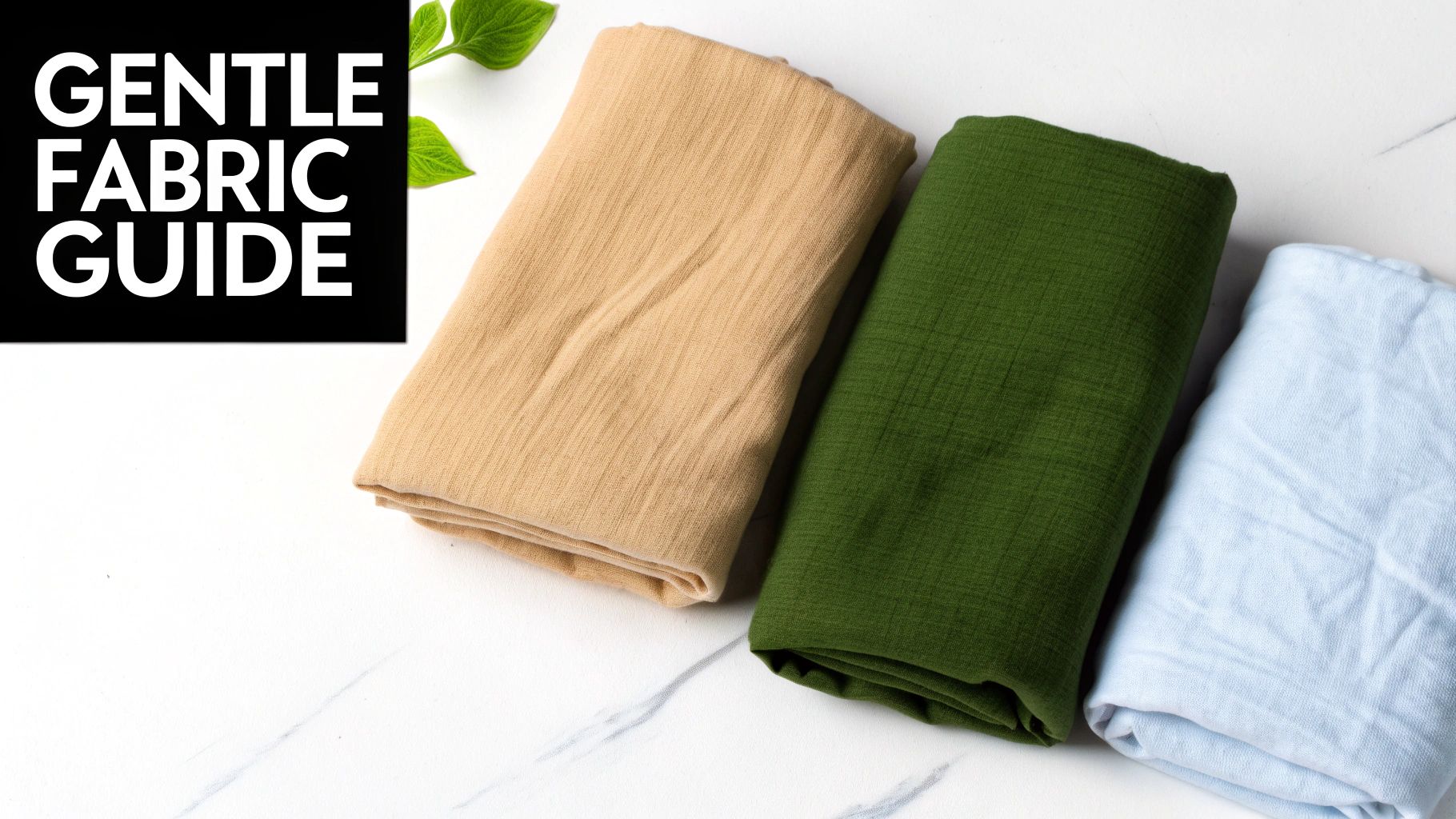
When you're standing in a store, staring at a wall of swaddles, the fabric labels can feel a bit overwhelming. But figuring out what material is touching your baby's skin is one of the most important decisions you'll make. A newborn’s skin is incredibly thin and porous compared to ours, making it super sensitive to irritants, chemicals, and allergens.
Think of a swaddle as your baby's very first outfit, worn for hours on end. It needs to be gentle, breathable, and completely non-toxic to prevent skin problems. That’s why we always recommend starting with natural fibers—it’s the simplest way to avoid common skin troubles like rashes, eczema, or other allergic reactions.
The Best Natural Fabrics For Newborns
When it comes to your baby’s comfort and skin health, natural fabrics are the clear winners. They’re far more breathable and soft than synthetics like polyester or fleece, which can trap heat and moisture right against the skin and create a recipe for irritation, heat rash, or even fungal growth.
Here are the top choices we trust for our own little ones:
- Organic Cotton: This is the gold standard for a reason. Grown without nasty pesticides or synthetic fertilizers, it’s one of the purest and safest options out there. Its soft, absorbent fibers are a dream on sensitive skin and let air flow freely to help regulate your baby's temperature, minimizing the risk of rashes.
- Muslin: You’ve probably seen these light, airy blankets everywhere. Muslin is a finely-woven cotton with a signature open-weave structure that makes it incredibly breathable, which is key to preventing overheating. Plus, it gets softer and softer with every wash, reducing friction on delicate skin.
- Bamboo Rayon: Known for its silky, almost luxurious feel, fabric made from bamboo is another fantastic choice. It’s naturally hypoallergenic and wicks moisture away from the skin, keeping your baby dry and comfortable all night long. This is especially beneficial for babies prone to eczema.
For an even deeper dive, our guide on choosing the right fabric for your baby's sensitive skin has more helpful tips.
To make it even easier, here’s a quick comparison of the materials you’ll most often find.
Swaddle Blanket Material Comparison
| Material Type | Breathability | Softness | Hypoallergenic | Best For |
|---|---|---|---|---|
| Organic Cotton | High | Very Soft | Yes | Everyday use, preventing skin irritation and allergies. |
| Muslin | Excellent | Gets softer over time | Yes | Warm climates, preventing heat rash, achieving a snug fit. |
| Bamboo Rayon | High | Silky Smooth | Yes | Babies with eczema or very sensitive skin, luxurious feel. |
| Knit Cotton | Moderate | Stretchy & Soft | Yes | A flexible, forgiving swaddle with a cozy feel. |
| Fleece/Polyester | Low | Soft | No | Colder climates, but poses a higher risk of overheating and skin irritation. |
As you can see, natural fibers consistently offer the best combination of breathability and gentleness, making them the safest bet for protecting your newborn's skin.
Certifications And What They Mean For Safety
Beyond the fabric itself, certifications give you peace of mind that a swaddle is truly free from harmful substances that can cause skin reactions. You don’t have to be a textile expert—just look for a few key labels.
The most important one to know is OEKO-TEX STANDARD 100. When you see this label, it means every single part of the product—from the thread to the zipper—has been tested and cleared of a long list of substances known to be dangerous to human health, including allergens and carcinogens. It’s a global benchmark for safety you can trust.
This isn’t just a niche concern; it’s a global trend. Parents are getting smarter about what they buy, especially in places like Europe. In fact, 68% of UK and German parents actively seek out these certified materials for their babies, especially if they have allergies.
Understanding TOG Ratings For Temperature Control
Another term you’ll see is the TOG rating, which stands for Thermal Overall Grade. It's simply a way to measure how warm a blanket or sleep sack is. A low TOG is for warm weather, and a high TOG is for chilly nights.
A swaddle’s TOG rating helps you dress your baby appropriately for the room temperature, ensuring they are never too hot or too cold. This is a key component of safe sleep and helps prevent heat rash.
Here’s a quick cheat sheet to match the TOG rating to your nursery:
| TOG Rating | Ideal Room Temperature | Recommended Attire Underneath |
|---|---|---|
| 0.5 TOG | 75-81°F (24-27°C) | Just a diaper or a short-sleeve onesie. |
| 1.0 TOG | 69-73°F (20-24°C) | A short-sleeve or long-sleeve onesie. |
| 2.5 TOG | 61-68°F (16-20°C) | A long-sleeve onesie and footed pajamas. |
By keeping an eye out for gentle fabrics, safety certifications, and the right TOG rating, you can create the perfect little cocoon for your baby. It’s all about making sure their delicate skin stays healthy and comfortable while they get the restorative sleep they need.
Finding Your Swaddle Style: Traditional vs. Modern Wraps
When you start looking for the perfect swaddle, you'll find yourself at a fork in the road. Do you go with the classic, traditional blanket or a more modern, structured wrap? There's no single "right" answer here. The best choice is whatever works for your baby and makes those 3 a.m. wake-up calls a little easier.
Think of it like this: one is a custom-tailored hug you fold yourself, while the other is a ready-made embrace that’s secure every time. One offers incredible versatility, the other gives exhausted parents foolproof convenience. Let's break down what that really means for you and your little one.
The Art of the Traditional Swaddle
At its heart, the traditional swaddle is just a large, square blanket, usually made from a super soft and lightweight fabric like muslin or cotton. This is the old-school method, and it does take a little practice to get the hang of it—a bit like learning to fold a fitted sheet, but way more rewarding. Once you master the technique, though, you can create a perfectly snug fit tailored exactly to your baby's body.
There are some real perks to going this route:
- Ultimate Versatility: This is the minimalist parent’s secret weapon. A simple square blanket isn't just for swaddling. It’s a nursing cover, a burp cloth, a soft mat for tummy time, a sunshade for the car seat, or a light stroller blanket.
- Customizable Snugness: You're in complete control. You can wrap it snugly around your baby's chest and arms while leaving plenty of wiggle room for their legs, which is crucial for healthy hip development.
- Breathability: Materials like the ones we use at GuGuTon are incredibly breathable. This helps reduce the risk of your baby overheating, keeping them comfortable and their skin free from heat rash.
The main challenge? The learning curve. If you don't wrap it securely, a wiggly baby can break free, and a loose blanket in the crib is a safety risk. Getting that perfect, tight wrap can feel like a puzzle when you're half-asleep.
The Convenience of Modern Wraps and Sleep Sacks
For parents who'd rather skip the folding lesson, modern swaddles are a lifesaver. These are wearable blankets designed with clever features like zippers, Velcro wings, and snaps that take all the guesswork out of the equation. You get a secure swaddle in seconds, every single time.
A modern swaddle wrap is the "plug-and-play" option for sleep-deprived parents. It provides the same calming benefits of a traditional swaddle with a fraction of the effort, ensuring a safe and consistent wrap.
Here’s why so many parents are choosing these updated designs:
- Ease of Use: There’s no intricate technique to remember. Just lay your baby down, tuck them in, and fasten the wings. This simplicity is an absolute game-changer during those blurry-eyed, middle-of-the-night diaper changes.
- Consistent Security: The fasteners are designed to stay put. This means your little escape artist is less likely to wiggle their arms out and startle themselves awake with the Moro reflex.
- Transitional Designs: Many modern swaddles are built to grow with your baby. They often have features that let you swaddle with arms in, one arm out, or both arms out, which makes the transition away from swaddling much smoother.
This modern approach isn't just a niche trend—it's a huge part of the market. The global swaddle blanket industry is expected to hit $2.1 billion by 2033, and innovative transitional swaddles make up more than 40% of sales. This boom is largely because parents are following safety advice from the American Academy of Pediatrics to stop swaddling when a baby shows signs of rolling. You can dive deeper into these market trends and projections in this report.
The only real downside is that modern swaddles are specialists. They do one job—swaddling—exceptionally well, but you won't be using one as a burp cloth. They also come in specific sizes, so you'll need to buy the next size up as your baby grows.
A Step-By-Step Guide To Safe Swaddling
Learning how to swaddle isn't about creating a perfectly folded, Instagram-worthy baby burrito. It's about safety and comfort. When you get it right, your baby feels snug and secure, which often leads to longer, more peaceful sleep for everyone.
This guide is all about swaddling with confidence, using simple steps that align with the American Academy of Pediatrics (AAP) safe sleep recommendations.
First things first, check the room temperature and dress your baby accordingly. A single, lightweight onesie is usually all they need underneath the swaddle. Overheating is a real risk, so keep an eye out for flushed cheeks or a sweaty neck—those are sure signs your baby is too warm and at risk for heat rash.
Mastering The Swaddle Technique
Whether you're using a classic muslin blanket or a modern swaddle with velcro, the basic idea is the same. You want a snug fit around their little torso while leaving plenty of room for their legs and hips to move freely.
Here’s how you do it:
- Lay the Foundation: Spread the swaddle blanket on a flat surface in a diamond shape. Fold the top corner down about six inches to create a straight edge.
- Position Your Baby: Gently place your baby on their back in the middle of the blanket. Their shoulders should be just above that folded edge.
- Create the First Tuck: Straighten your baby's left arm down by their side. Pull the left side of the blanket across their chest and arm, tucking it snugly under their right side. You want it secure enough that they can't wiggle that arm out.
- Secure the Bottom: Bring the bottom corner of the blanket up over your baby’s feet. This part should always be loose. Their little legs need to be able to bend up and out into a natural frog-like position for healthy hip development. Never pull their legs straight or wrap the bottom tightly.
- Complete the Final Wrap: Now, hold their right arm down and pull the right side of the blanket across their chest. Wrap it all the way around their back, tucking any extra fabric into the fold at the front to keep it all in place.
Feeling like you need to see it in action? We’ve got you covered. Check out our complete visual walkthrough in our guide on how to swaddle a newborn. Don't worry if it feels awkward at first—it’ll become second nature before you know it.
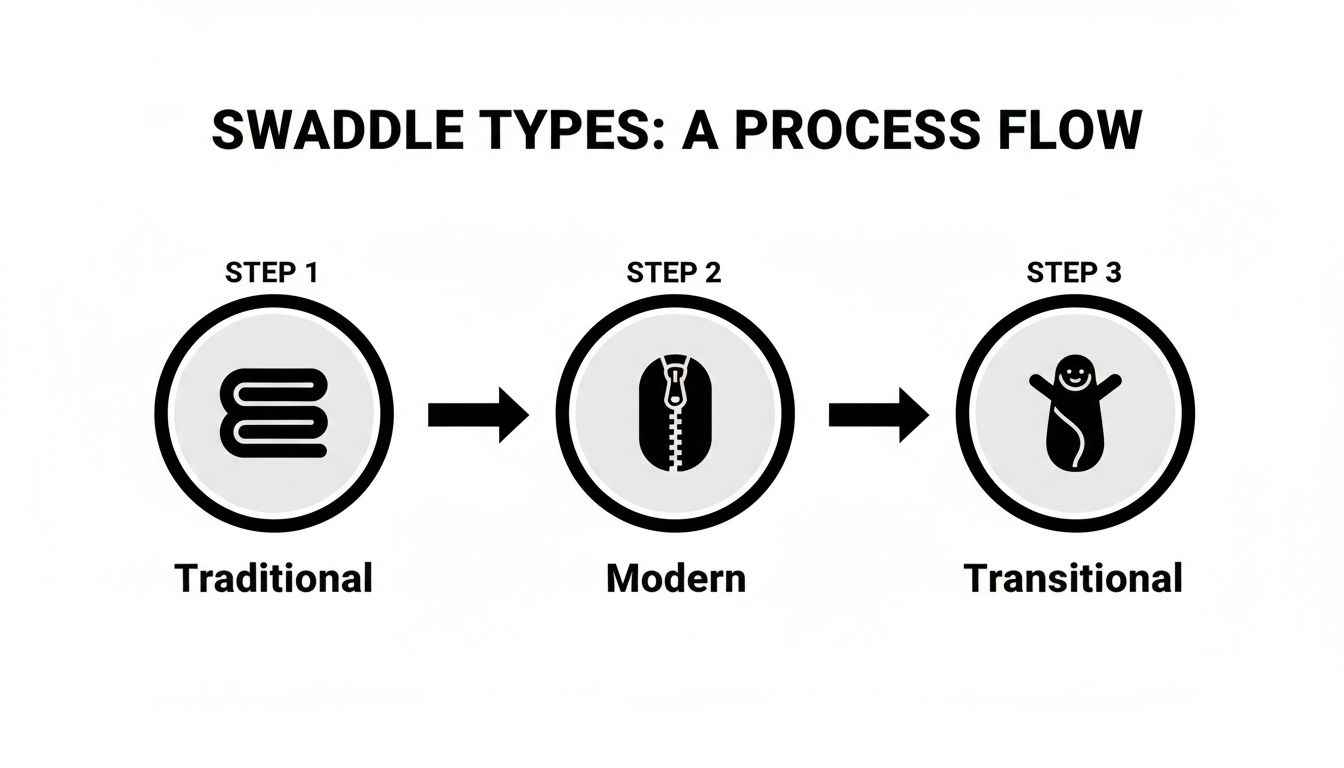
As you can see, swaddle designs have evolved a lot over time. Modern wraps often build in features that make it easier to follow safety guidelines and support a baby’s natural development.
Key Safety Principles To Remember
Swaddling can be a game-changer for sleep, but it has to be done correctly. A loose swaddle can unravel and become a suffocation hazard in the crib, while one that’s too tight can cause other health issues.
Crucial Swaddling Safety: Always, always place a swaddled baby on their back to sleep. The wrap should be snug around the chest but loose around the hips to allow for healthy hip development. A good rule of thumb: you should be able to fit two or three fingers between the swaddle and your baby’s chest. This ensures they can breathe comfortably and prevents restriction.
These rules aren't just suggestions—they are non-negotiable for every single nap and nighttime sleep.
Knowing When To Stop Swaddling
Think of swaddling as a temporary tool for the newborn phase. As your little one gets stronger and more mobile, it’s time to transition away from it for their safety.
The biggest signal to watch for is when your baby shows signs of starting to roll over. This typically happens somewhere between two and four months. Once they can roll, being swaddled with their arms pinned is dangerous. They need their hands free to push up and move their head if they end up face-down.
The moment you see those first attempts at rolling, it's time to stop swaddling, cold turkey. You can ease into this change with a transitional swaddle that lets you free one or both arms, helping your baby get used to a new way of sleeping safely.
Caring for Swaddles to Protect Your Baby's Skin
Your baby’s swaddle spends hours pressed against their brand-new, delicate skin. That makes how you care for it just as important as which one you choose in the first place. Keeping these blankets clean, soft, and hygienic is your first line of defense against irritation, rashes, and other skin sensitivities.
Think of it this way: you wouldn't use harsh chemicals directly on your baby, right? The same logic absolutely applies to their laundry. The goal is to wash every swaddle in a way that removes bacteria and allergens without leaving behind harsh residues.
Choosing the Right Detergent
When it comes to washing anything for your newborn, the golden rule is simple: gentle is always better. A baby’s skin is much thinner and more porous than our own, which means it can easily absorb the chemical residues that regular detergents often leave behind, leading to contact dermatitis or allergic reactions.
You’ll want to find a laundry detergent specifically made for babies or for sensitive skin. These are the key things to look for on the label:
- Hypoallergenic: This means it’s formulated to minimize the risk of an allergic reaction.
- Fragrance-Free and Dye-Free: Perfumes and dyes are two of the most common triggers for skin irritation. Plus, strong scents can be overwhelming for a baby's little nose.
- Plant-Based: These detergents tend to use natural, biodegradable ingredients that are gentler on fabric and skin alike.
It might be tempting to add fabric softener to make the blankets feel extra cuddly, but it's best to skip it. Fabric softeners leave a chemical coating on the fibers that can trap detergent residue, reduce the natural breathability of materials like cotton muslin, and irritate your baby's skin.
Washing and Drying Instructions for Different Materials
Not all fabrics are created equal, and a little extra attention during laundry can go a long way in keeping your swaddles in great shape. Washing natural fibers the wrong way can cause them to shrink, pill, or lose that softness you love.
Proper laundering doesn't just make your swaddles last longer—it’s a crucial part of maintaining a healthy and hygienic sleep space for your little one, free from skin irritants.
Here’s a quick guide to caring for the most common swaddle materials:
For Organic Cotton and Muslin:
- Always wash in cold water on a gentle cycle. This helps prevent the delicate fibers from shrinking and protects the fabric's weave.
- Tumble dry on a low heat setting. Better yet, hang them up to air dry. Muslin, especially, has a wonderful way of getting softer with every single wash, and air-drying helps that process along beautifully.
For Bamboo Rayon:
- Bamboo is famous for its silky-smooth feel, and washing it in cold water is the key to keeping it that way.
- Stay away from high heat. A hot dryer can damage the fine fibers, so stick with a low tumble-dry setting or let it line dry.
And one final tip: always wash a new swaddle blanket before its first use. This simple step rinses away any dust, loose dyes, or residual chemicals from the manufacturing process, making it perfectly clean and ready to comfort your newborn.
Your Swaddle Selection Checklist
Feeling ready to choose? I know, walking into the world of baby gear can feel like navigating a maze. But when it comes to finding the best swaddle for your newborn, it really just boils down to a few key things.
Let’s pull all that advice together into a simple, practical checklist you can use while you shop. Think of this as your confidence booster—a quick guide to make sure you’re choosing based on what truly matters for your baby's safety, comfort, and sensitive skin.
Your Mental Checklist Before You Buy
Choosing a swaddle is one of the first of many loving things you’ll do to help your little one sleep better. And you’re totally ready to pick a great one. It’s a huge market, on track to hit USD 2.6 billion by 2033, and for good reason: 92% of parents say it helps their baby sleep better. With so much out there, a clear focus is everything. If you're curious about the numbers, you can explore the baby swaddling market research.
Before you click "add to cart," just run through these questions in your head:
-
Is the fabric breathable and kind to their skin? Always lean toward natural, hypoallergenic materials like organic cotton, bamboo, or soft muslin. An OEKO-TEX certification is your gold standard—it’s a guarantee that the fabric is free from nasty chemicals that could irritate your baby’s skin or cause an allergic reaction.
-
Does the style actually fit our life? Be honest with yourself. Are you up for mastering the art of the traditional square blanket, or does a modern wrap with zippers or Velcro sound like a lifesaver for those 3 a.m. diaper changes? The best swaddle is the one you’ll actually use correctly and safely.
-
Will it let their little hips move freely? This one is non-negotiable. The swaddle absolutely must be loose around the legs. You want enough room for them to bend their knees up and out into that natural "frog" position. A tight wrap around the hips is a serious no-go for healthy development.
-
Is it the right size and TOG rating for our home? A good fit means snug (but not tight!) around their torso. Just as important is the TOG rating, which tells you how warm it is. Match it to your nursery's temperature to make sure your baby doesn't get too hot and develop a heat rash.
Thinking through these points makes it so much easier to sift through the options and land on quality gear.
As you get everything ready for your new arrival, don't forget to check out our complete newborn essentials shopping list for more tips on what you'll need. With this checklist in hand, you can feel great about choosing a swaddle that will make every nap a safe and peaceful one.
Got Questions About Swaddling? We’ve Got Answers.
It's completely normal to have questions, even after you think you've learned it all. Swaddling is an age-old practice, but making sure you're doing it safely for your little one is a modern concern. Let's tackle some of the most common questions new parents have so you can wrap your baby with total confidence.
Is It Safe To Swaddle A Newborn All Night?
Yes, it's absolutely safe to swaddle your newborn for nighttime sleep, provided you stick to the key safe sleep rules. The number one, most important rule is this: always place your swaddled baby on their back to sleep. No exceptions.
Make sure the swaddle is snug and secure, but never tight—especially around the hips. Your baby's legs should be able to move and bend naturally into that "frog-leg" position. Also, stick with breathable fabrics to avoid overheating, which can contribute to SIDS risk and cause uncomfortable heat rashes. Once your baby starts showing signs of trying to roll over (usually around 2 to 4 months), it's time to stop swaddling for good.
How Many Swaddle Blankets Do I Actually Need?
From my experience, having three to five swaddle blankets is the magic number. This gives you enough to manage the inevitable messes without constantly running the washing machine.
Here's how the rotation usually works:
- One swaddle is on the baby.
- One is in the laundry basket.
- One or two are clean, folded, and ready for action.
Spit-up and diaper leaks are a fact of newborn life. Having a few extras on hand means you won't be scrambling for a clean one during a 3 a.m. change, ensuring your baby is always in a fresh, hygienic swaddle.
Swaddling can be a game-changer for a fussy baby. That snug, secure feeling is a powerful reminder of the womb, which helps calm their nervous system and tamps down the startle reflex that can wake them up. It’s been shown to significantly cut down on crying time.
What Should My Baby Wear Under The Swaddle?
Keeping your baby at a comfortable temperature is the main goal here. A simple rule of thumb is to dress them in just one light layer underneath the swaddle. A simple short-sleeve or long-sleeve cotton onesie is usually perfect.
Overdressing is a real risk, so be careful not to bundle them up too much. The best way to check if your baby is too hot? Feel the back of their neck. If it's sweaty or feels hot, they're too warm and you should remove a layer to prevent overheating and rashes.
At GuGuTon, we know that nothing is more important than your peace of mind. That’s why our swaddles are crafted from the softest, safest, and most breathable materials we could find—all to help you and your baby get a secure night's sleep. Take a look at our collection and find the perfect swaddle for your little one at https://guguton.com.