

Best Baby Crib Sheets: A Guide to Safe, Skin-Friendly Sleep
When you're putting together a nursery, it’s easy to get caught up in themes and colors. But when it comes to crib sheets, the most important qualities have nothing to do with cute patterns. The best baby crib sheets are snug-fitting, breathable, and made from soft, gentle materials like GOTS-certified organic cotton. Their real job is to create a safe sleep surface that protects your baby's delicate skin and keeps them comfortable all night long.
Your Baby's Safe Sleep Starts with the Right Sheets
Choosing crib sheets is one of the most important decisions you'll make for your baby’s nursery. It’s about so much more than decoration. Think about it—your newborn will spend up to 16 hours a day with their face and skin pressed against this fabric. A sheet that's too loose, made from scratchy synthetics, or treated with harsh chemicals can cause painful rashes, trigger allergies, and even pose a serious safety hazard.
I like to think of the crib sheet as the very foundation of your baby’s first little home. You wouldn't build a house on a shaky foundation, and the same principle applies here. This guide will walk you through what really matters—from decoding fabric types to understanding safety certifications—so you can make a choice that protects your baby's health and gives you peace of mind.
More Than Just Bedding
The ultimate goal is a sleep space that is both cozy and, above all, safe. A sheet that fits the mattress like a glove, with no extra fabric to bunch up, is a non-negotiable part of that. This simple detail is a cornerstone of a secure sleep setup. For a deeper dive into this, you can read our guide on creating a safe sleep environment for infants.
The growing global focus on infant well-being has really pushed the industry forward. In 2023, the baby crib sheet market was valued at an incredible USD 6.57 billion, largely because parents are more aware of sleep safety and the impact of materials on their baby's health than ever before. Experts agree that a properly fitted sheet is a critical safety feature, which has led to better materials and smarter designs across the board.
Crib Sheet Essentials at a Glance
Before we get into the nitty-gritty of materials and certifications, it helps to have a quick overview of what defines the best baby crib sheets. Here’s a little cheat sheet to keep in mind while you shop.
| Feature | Why It Matters for Your Baby | What to Look For |
|---|---|---|
| Snug & Secure Fit | Prevents loose fabric from becoming an entanglement or suffocation hazard. | Strong, fully encased elastic that pulls the sheet taut under the mattress. The sheet should not bunch or wrinkle. |
| Breathable Material | Helps regulate baby’s body temperature, reducing overheating and preventing heat rash. | Natural fibers like 100% organic cotton (jersey or muslin) or bamboo. |
| Soft & Hypoallergenic | Protects delicate newborn skin from irritation, eczema flare-ups, and allergic reactions. | GOTS or OEKO-TEX® STANDARD 100 certifications, which ensure the fabric is free from harmful chemicals, dyes, and pesticides. |
| Durability | Needs to withstand constant washing (and spit-up, and diaper leaks!) without losing its shape or softness. | High-quality stitching, durable fabric weaves, and pre-shrunk materials that won't become rough over time. |
These four pillars—fit, material, skin-friendliness, and durability—are what truly separate a great crib sheet from a mediocre one.
Key Factors to Consider
Let’s break down those core elements a bit more. As you compare your options, keep these three fundamentals at the top of your list:
-
Safety and Fit: This is paramount. The sheet must fit the crib mattress snugly. Look for strong elastic that wraps all the way around the corners and under the mattress. When you press down on the center, the sheet should stay put with no loose or baggy fabric.
-
Material Quality & Skin Health: The fabric needs to be breathable to help your baby stay at a comfortable temperature, preventing overheating and heat rash. It should also be incredibly soft and free from harsh chemicals, pesticides, and dyes to protect their sensitive skin from irritation, allergic reactions, and conditions like eczema.
-
Durability and Care: Let's be real—baby sheets go through a lot. They need to stand up to frequent, often heavy-duty, washing. A high-quality sheet will stay soft, hold its shape, and maintain its snug fit after countless cycles in the machine, ensuring it stays both hygienic and safe for the long haul.
Understanding Crib Sheet Fabrics For Sensitive Skin
Your baby’s skin is brand new, incredibly delicate, and much more porous than our own. That means it's highly sensitive to everything it touches, especially the surface they sleep on for hours every day. Choosing the right material for their crib sheets isn't just a matter of color or pattern—it's a critical decision for their comfort and health, helping to prevent rashes and allergic reactions.
Think of it like this: you’d never choose to wear a scratchy wool sweater on a hot day. For a baby, whose skin is still developing its protective barrier, the wrong fabric can be just as uncomfortable and irritating. A soft, breathable, and chemical-free sheet keeps them from overheating and soothes their skin, creating the perfect little nest for sound, restorative sleep.
This simple flowchart nails down the absolute non-negotiables for any crib sheet you're considering.
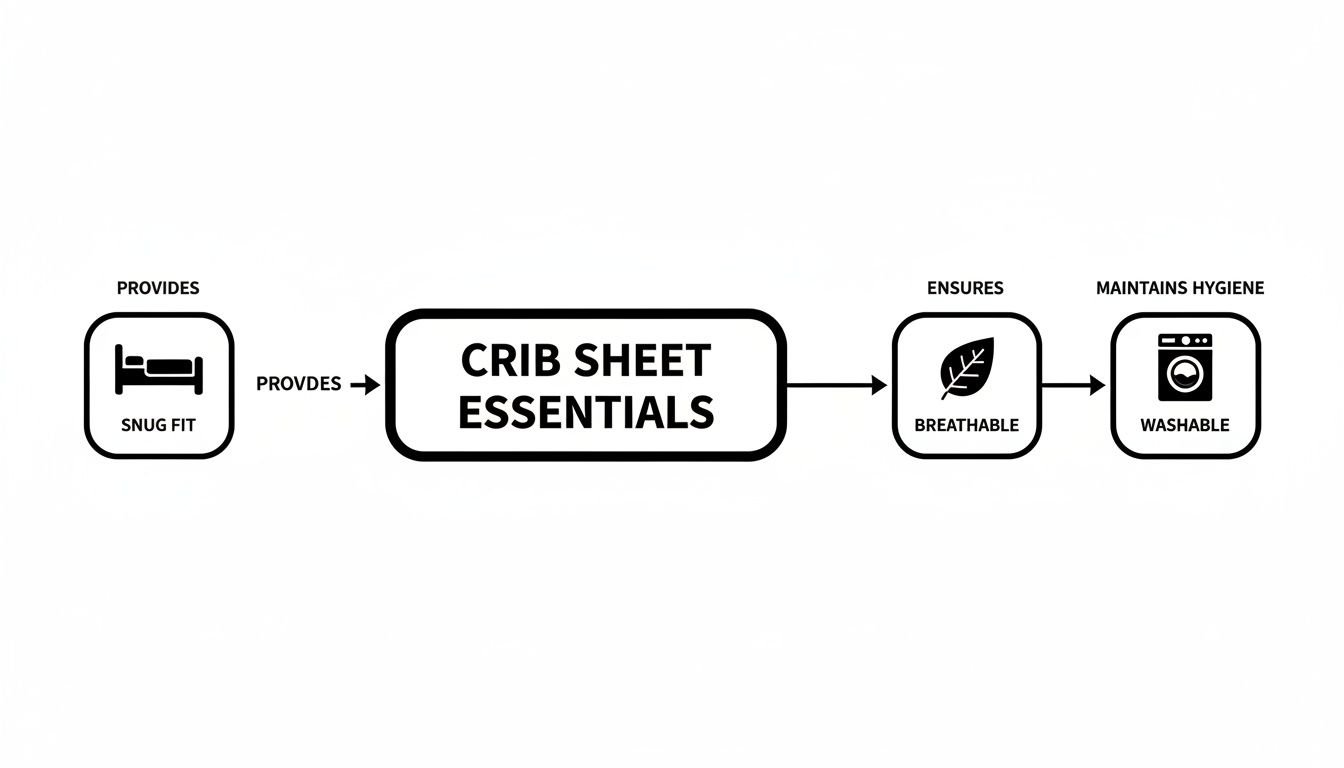
As you can see, it all comes down to a snug fit for safety, breathability for comfort and skin health, and easy washability for hygiene. These three pillars work together to create the ideal sleep environment.
GOTS-Certified Organic Cotton: The Gold Standard for Healthy Skin
If you ask any pediatric dermatologist or seasoned parent what the best baby crib sheets for sensitive skin are, you'll hear the same answer again and again: GOTS-certified organic cotton. There’s a good reason for that. Unlike conventional cotton that might be grown with pesticides or processed with harsh chemicals, organic cotton is pure from the moment it’s planted.
The Global Organic Textile Standard (GOTS) isn't just a fancy label; it's your assurance of safety and quality. This certification guarantees that the cotton was grown without toxic pesticides and manufactured without nasty additives like chlorine bleach, formaldehyde, or heavy metals. This purity is what makes it so incredibly gentle, significantly lowering the risk of skin flare-ups like eczema or contact dermatitis.
Key Takeaway: Opting for GOTS-certified organic cotton isn't just about finding a soft sheet. It's a proactive health choice that minimizes your baby's daily exposure to synthetic irritants and potential allergens when their skin is most vulnerable.
Parents are catching on. We're seeing a huge shift toward breathable, hypoallergenic bedding as more families look to avoid potential skin irritants. This trend is part of a larger movement, with demand for organic materials jumping by 25%. It’s no surprise, considering GOTS-certified fabrics can wick moisture 20% more effectively, which is a game-changer for reducing the risk of overheating and rashes.
Exploring Other Popular Fabric Choices
While organic cotton is the undisputed champion for sensitive skin, it’s not the only player in the game. Other materials have their own unique perks, and what works best can depend on your climate and your baby's individual needs.
To help you navigate the options, we’ve put together a quick comparison of the most common materials you'll find.
Comparing Popular Crib Sheet Fabrics
| Material | Best For | Breathability | Softness & Skin Impact | Care Instructions |
|---|---|---|---|---|
| Organic Cotton | Sensitive skin, year-round comfort, and preventing allergies. | Excellent | Soft and gets softer with each wash. Naturally hypoallergenic. | Machine wash warm, tumble dry low. |
| Bamboo Rayon | Hot sleepers and humid climates due to its cooling effect. | Very High | Silky, smooth, and drapey. Hypoallergenic but processing can involve chemicals. | Gentle cycle, cool water. Avoid high heat. |
| Microfiber/Polyester | Budget-conscious families looking for durability and wrinkle resistance. | Moderate | Very soft but less breathable. Can trap heat and irritate very sensitive skin. | Machine washable and dries quickly. |
| Cotton Jersey | Newborns and babies who love a cozy, stretchy feel. | Good | Feels like a favorite t-shirt. Stretchy and soft. | Prone to shrinking; wash cold and dry low. |
Ultimately, whether you choose the cloud-like softness of organic cotton or the silky-cool feel of bamboo, understanding the material is the first step. For an even deeper dive, check out our guide on https://guguton.com/blogs/news/choosing-the-right-fabric-for-your-babys-sensitive-skin.
Washing and Care: Maintaining a Safe and Soft Surface
Even the most luxurious, skin-friendly crib sheet can cause irritation if not cared for properly. A little extra attention on laundry day will preserve the fabric's integrity and keep it gentle and hygienic for your baby's delicate skin.
First thing’s first: always wash new sheets before you use them. This simple step removes any dust, residues, or potential irritants left over from the factory and packaging process.
Stick with a mild, fragrance-free, and dye-free detergent. The perfumes and dyes in standard detergents are common culprits behind infant skin irritation, rashes, and eczema flare-ups. Wash on a gentle cycle with cool or warm water, and maybe toss in an extra rinse to make absolutely sure all soap residue is gone. Finding the right fabric is only half the battle; learn more about the best laundry detergents for sensitive skin to ensure those sheets stay soft, clean, and irritation-free.
Why a Snug Fit Is the Cornerstone of Crib Safety
It’s easy to get caught up in cute patterns and super-soft fabrics when shopping for the best baby crib sheets. But before you even think about colors or materials, there’s one thing that trumps all else: the fit. A loose, bunchy sheet isn't just untidy—it's a serious safety hazard in the place your baby spends up to 16 hours a day.
Think of a crib sheet as a second skin for the mattress. It needs to be completely taut and smooth, with zero extra fabric for your baby to grab onto. This isn't just about looks; it's about creating a safe sleep space. The American Academy of Pediatrics is crystal clear on this—a bare crib with a snug-fitting sheet is the safest way for a baby to sleep.
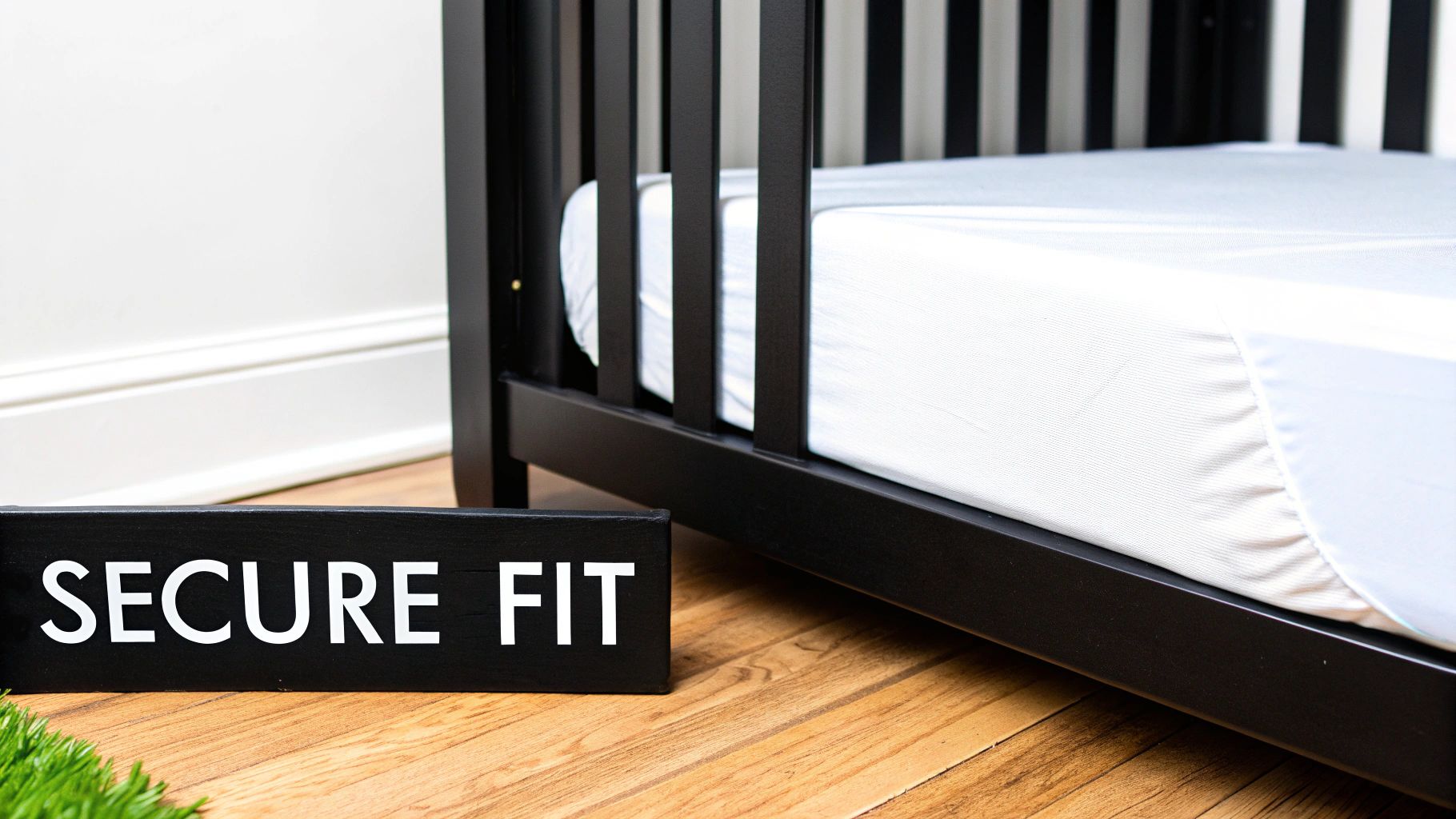
Any loose fabric in the crib can pose an entanglement or suffocation risk. That’s why a secure fit is absolutely non-negotiable. It’s the very foundation of a safe nursery, giving you peace of mind while your little one rests.
How to Check for a Perfect Fit
Making sure the sheet fits correctly is simple, but it's a step you can't afford to skip. You don't need any special tools, just a few seconds to do a quick "tug test" every time you make the bed.
Here’s a quick and easy way to check:
-
Anchor the Corners: Pull each corner of the sheet down and around the mattress corner. You want the elastic to tuck firmly underneath. Good sheets have strong, continuous elastic that grips all the way around, not just on the corners.
-
Scan the Edges: Run your hand along all four sides of the mattress. The sheet's elastic should be completely tucked under and hugging the mattress tightly. No gaps, no loose spots.
-
Do the Tug Test: Go right to the middle of the bed, pinch the sheet, and try to pull it up. If it's a good fit, you'll barely be able to lift it. If you can easily pull up a handful of fabric, the sheet is too big and unsafe to use.
Safety Tip: A well-fitted crib sheet won't pop off the corners, even with a firm pull. If a gentle tug is all it takes to dislodge a corner, the sheet's pockets are too shallow or the elastic is too weak. It's time to find a better sheet.
This little routine takes less than a minute but offers incredible peace of mind, knowing your baby’s sleep space is as secure as possible.
Sizing Matters: Standard Cribs vs. Mini Cribs
Not all cribs are the same size, and neither are their mattresses. One of the most common—and dangerous—mistakes is using a sheet that’s the wrong size. A standard crib sheet on a mini-crib mattress will be a pool of loose, hazardous fabric.
Before you buy anything, measure your mattress.
-
Standard Crib Mattress: In the U.S., a full-size crib mattress has legally mandated dimensions: 27 1/4" x 51 5/8", with a thickness no more than 6 inches. Sheets simply labeled "standard" are made for this size.
-
Mini-Crib Mattress: These are smaller, but sizes can vary. A common dimension is 24" x 38". Always check the exact measurements of your mini-crib and purchase sheets specifically designed for it.
-
Play Yards: Pack 'n plays and other play yards have even more size variations. Their mattresses are often just thin, foldable pads that need special sheets to fit safely. For a deeper dive, our guide on choosing the right pack and play sheet breaks down everything you need to know.
Never try to "make it work" with a sheet that doesn't fit. The small investment in a correctly sized sheet is one of the most important ones you can make for your baby’s safety. When a sheet fits perfectly, it stays put—creating a smooth, hazard-free surface for a good night's sleep.
Making Sense of Safety Certifications
When you're trying to find the best baby crib sheets, the labels can look like a bowl of alphabet soup. It’s easy to get lost in the acronyms, but these little logos are actually your best friend for finding genuinely safe, non-toxic bedding for your baby. They’re a third-party seal of approval that cuts right through the marketing fluff.
Think of these certifications as a detailed background check for your baby’s sheets. They confirm that everything, from the cotton fibers to the final thread, has been tested for harmful substances. Seeing one of these trusted labels means you can rest easy knowing you're protecting your little one from chemicals that could trigger rashes, allergies, or other skin conditions.
What Key Certifications Mean for Your Baby's Skin and Health
Let's break down what these labels actually promise for your baby's health and comfort. To make sure you're getting the safest gear, it helps to understand the most common bedding certifications that signal real quality and purity.
Here are the big ones to keep an eye out for:
-
OEKO-TEX STANDARD 100: This is one of the most common and reliable labels you'll see. If a sheet has this tag, every single part of it—the fabric, the elastic, even the sewing thread—has been tested for more than 100 harmful substances. It’s a solid guarantee that no harsh chemicals, pesticides, or heavy metals will touch your baby's skin.
-
Global Organic Textile Standard (GOTS): This is the gold standard for anything organic. It doesn't just mean the cotton was grown without pesticides; it certifies the entire supply chain. GOTS ensures the farming practices are sustainable, the factory workers are treated fairly, and the manufacturing process is free from toxic chemicals like formaldehyde and chlorine bleach. This makes it the top choice for preventing skin irritation.
-
Greenguard Gold: This one takes safety a step further by focusing on the air your baby breathes. Products with this certification have been tested for extremely low chemical emissions, especially volatile organic compounds (VOCs). It helps ensure you’re creating a healthier nursery, not one filled with invisible airborne irritants.
These labels aren't just for show; they represent a real commitment to your baby's well-being.
CPSC Standards A Reputable Brand Follows
On top of textile certifications, any brand worth your money will also follow the rules set by the Consumer Product Safety Commission (CPSC). The CPSC is mainly focused on the physical safety of things like cribs and mattresses, but its guidelines matter for bedding, too.
For crib sheets, this means making sure they are sized perfectly to avoid any loose, dangerous fabric. It also means they’re made without hazardous materials like lead or phthalates, which are banned in kids' products. When a brand follows CPSC guidelines, you know they’re hitting the non-negotiable federal safety marks. A snug sheet and a safe mattress are a team; you can dive deeper into how to choose the right crib mattress in our other guide.
Why This Matters: A brand that invests in getting certifications like GOTS or OEKO-TEX is showing you they care enough to go beyond the bare minimum. They are actively proving their products are pure and gentle enough for even the most sensitive newborn.
Once you know how to spot these key labels, you can shop with total confidence. You'll be able to quickly pick out the sheets that truly put your baby’s health first, making their sleep space not just cozy, but genuinely safe.
Your Smart Shopping Checklist for Crib Sheets
It’s easy to get overwhelmed by all the choices out there, but finding the best baby crib sheets really just comes down to knowing what to look for. When you can cut through the noise and focus on what genuinely matters for your baby's comfort and safety, picking the right sheet becomes simple.
Think of this checklist as your shortcut to a great purchase. It’s a quick-glance guide that brings together all the key points we've discussed, helping you feel confident you're bringing home something soft, safe, and made to last.
The Non-Negotiable Essentials
Before you fall in love with a cute pattern, run through these must-haves. These are the absolute cornerstones of a high-quality crib sheet, designed to protect your baby’s skin and create a safe sleep space.
-
A Skin-Friendly Material: The fabric is everything. Look for materials that are naturally soft, breathable, and hypoallergenic. You really can’t go wrong with GOTS-certified organic cotton, which is known for its purity and how well it prevents skin irritation and allergic reactions. Bamboo is another fantastic choice, especially if your baby tends to get warm, thanks to its silky-cool feel.
-
Verified Safety Certifications: Don't just take a company's word for it; look for proof. Certifications like OEKO-TEX STANDARD 100 or GOTS are your guarantee that the sheets have been tested and are free from harmful chemicals, pesticides, and harsh dyes that could affect your baby's sensitive skin or breathing.
-
A Snug and Secure Fit: This is a non-negotiable safety rule. The sheet has to hug the mattress tightly, with deep pockets and strong elastic that wraps all the way underneath. Measure your mattress first and buy sheets made specifically for those dimensions—whether it’s a standard crib, a mini-crib, or a play yard. This is the only way to avoid loose fabric, which is a serious hazard.
Smart Shopper Pro-Tips
Got the basics covered? Great. A few extra considerations can make the difference between a good sheet and a great one you’ll recommend to all your friends.
A great crib sheet feels like an investment in peaceful nights. When you trust the quality and safety of what your baby is sleeping on, it brings an invaluable sense of calm and reassurance to your home.
One of your best tools is the experience of other parents. Spend a few minutes reading recent customer reviews. They’ll give you the real story on things the label won't tell you, like whether the fabric pills after washing, if the colors bleed, or if the sheet shrinks and loses that essential snug fit.
Finally, take a peek at the return policy before you buy. Sometimes, even after doing all your homework, a sheet just doesn't fit your mattress quite right. A straightforward return process means you can find that perfect fit with zero stress.
Your Crib Sheet Questions, Answered
Let's face it, when you're prepping for a baby, the sheer volume of "must-haves" can be overwhelming. When it comes to something as essential as your baby's crib sheet, you want straightforward answers, not more confusion.
We’ve rounded up the questions we hear most often from parents just like you. Think of this as your cheat sheet for creating the safest, coziest sleep spot for your little one.
How Many Crib Sheets Do I Actually Need?
You'll want to have three to five crib sheets on hand. This isn't about having a huge linen closet; it's about being practical. Life with a baby is unpredictable, and spit-up or leaky diapers are a given.
Here's the simple system that works for most families:
- One sheet on the crib mattress.
- One in the laundry hamper.
- At least one clean spare ready to go for those 2 AM changes.
Trust us, having that clean sheet ready to grab in the dark is a sanity-saver.
Are Waterproof Crib Sheets Safe?
Yes, they can be a great, practical choice—as long as you pick the right kind. The key is to find one that's waterproof but still breathable to avoid trapping heat, which can lead to rashes. Modern waterproof sheets often use a TPU (thermoplastic polyurethane) lining. It's a game-changer because it's quiet (no crinkly plastic sounds!) and doesn't trap heat the way old-school vinyl covers did.
Pro-Tip: Another fantastic approach is to layer. Use a separate, breathable waterproof mattress protector directly on the mattress. Then, you can top it with any soft fitted sheet you like, such as organic cotton. This way, you get the best of both worlds: leak protection and maximum airflow right next to your baby’s skin.
What’s the Difference Between Muslin and Jersey Cotton?
It all comes down to the feel and the weave, which impacts breathability and softness on the skin. Think of muslin as light, airy, and open. Its loose weave is what makes it incredibly breathable, perfect for preventing overheating and heat rash in hot sleepers or warm climates.
Jersey cotton, on the other hand, is a knit fabric—it has that buttery-soft, stretchy feel of your favorite t-shirt. That little bit of give helps it hug the mattress corners for a perfectly snug fit. It’s a super cozy and popular choice for any season that is very gentle on the skin.
Can I Just Tuck a Regular Adult Sheet onto the Crib Mattress?
This is a hard no. You should never use an adult bed sheet on a crib mattress, no matter how tightly you think you can tuck it. It's a major safety hazard.
Standard sheets aren't designed with the deep corner pockets and sturdy, all-around elastic that a proper crib sheet has. Any loose, bunched-up fabric in the crib poses a serious risk of suffocation or entanglement. For a safe sleep space, always stick with a sheet made specifically for your crib mattress.
Ready to find the perfect foundation for your baby’s sleep? Explore a curated collection of soft, safe, and stylish crib sheets that meet the highest standards at GuGuTon. See our full range at https://guguton.com.