

Baby Formula Comparison Chart: A Guide to Safety and Quality
When you're standing in the baby aisle, staring at a wall of formula options, it’s easy to feel overwhelmed. The best choice always comes down to what meets your baby's specific health needs, especially if you're trying to prevent allergies, rashes, or other skin sensitivities.
A good baby formula comparison chart can be a lifesaver, cutting through the marketing jargon to show you the real differences in ingredients, nutrients, and cost. Just remember, it's crucial to chat with your pediatrician before switching things up to ensure your choice is the safest and healthiest for your little one.

Navigating Your Baby Formula Options
Choosing how to nourish your baby is a huge decision, and the dozens of formula tubs on the shelf don't make it any easier. Each one promises to be the best for growth, digestion, or brain development. This guide is here to clear away the noise and give you a straightforward, factual resource focused on safety, quality nutrition, and preventing issues like rashes or allergies.
My goal is to help you feel confident reading labels and truly understand what makes one formula different from the next. We'll zero in on the big-ticket items: protein sources, essential nutrients, and specific ingredients designed to help with common troubles like rashes, allergies, and upset tummies. The comparison chart is your main tool, but knowing why these details matter for your baby's safety is just as important.
Key Factors in Formula Selection
When you're comparing formulas, some criteria carry more weight than others, particularly for babies with sensitive skin or a family history of allergies. Here’s a quick rundown of what you should be looking for to ensure safety and quality.
| Factor | Why It Matters for Safety and Quality |
|---|---|
| Protein Source | The type of protein—be it from cow's milk, soy, or a hydrolyzed (broken down) source—is often the main culprit behind allergic reactions, rashes, eczema, and digestive woes like gas and colic. |
| Carbohydrate Source | Lactose is the natural sugar found in breast milk. Some formulas use other carbs like corn syrup solids. Understanding the source is key if your baby has a lactose sensitivity. |
| Key Nutrients | While all U.S. formulas are regulated by the FDA to be nutritionally complete, some add extras like DHA for brain health or prebiotics to support a healthy gut, which is linked to a stronger immune system. |
| Allergen Information | Clear labeling is your best friend. It helps you steer clear of common allergens and pick a formula that’s truly safe for your baby to prevent skin flare-ups or digestive distress. |
To get a better handle on these factors, you can find more information in our detailed guide on how to choose baby formula. This background knowledge will make the upcoming comparison chart much more useful.
Understanding the Different Types of Infant Formula
Walking into the baby formula aisle for the first time can be overwhelming. The sheer number of options is enough to make any new parent's head spin, which is why a good baby formula comparison chart is an invaluable tool. It’s not just about picking a brand; it’s about making a safe, informed choice for your baby’s very specific needs. With so many formulas on the market today, the potential for confusion—and for triggering issues like rashes or allergies—is higher than ever.
To simplify things, you can break down your options into two main categories: the form it comes in and the protein source it’s made from. Each of these decisions has real-world implications for your budget, your lifestyle, and most importantly, your baby’s digestive comfort and skin health. Getting a handle on these fundamentals is the first real step toward choosing with confidence.
Formula Formats: Convenience Versus Cost
The first choice you'll likely face is between the three main formats: powder, liquid concentrate, and ready-to-feed. This decision is almost always a trade-off between how much time you have and how much you want to spend.
Powdered Formula: This is the most common and cost-effective option you'll find. It requires mixing with water, which means an extra step during prep time, but it also gives you the flexibility to make as much or as little as you need.
Liquid Concentrate: This format is a solid middle-of-the-road choice. You still have to mix it with water, but it’s generally a bit quicker and less messy to prepare than powder.
Ready-to-Feed: For ultimate convenience, nothing beats ready-to-feed. This liquid formula requires zero mixing—just open and serve. It's a lifesaver for late-night feedings or when you're out and about, but it's also the priciest option and needs to be refrigerated once opened.
Here's a little secret from seasoned parents: you don’t have to stick to just one format. Many families use powdered formula for day-to-day feedings at home to keep costs down and keep a stash of ready-to-feed bottles on hand for travel, daycare, or those middle-of-the-night emergencies.
This kind of hybrid approach is a practical way to balance your budget with your need for convenience. It’s a smart strategy in a market that has more than doubled in value in the last decade alone. Globally, the infant formula category is projected to grow from about USD 90.91 billion in 2025 to USD 178.83 billion by 2032—that’s a jump of roughly 97% in just seven years. Powdered formulas are expected to hold around 65% of the global market share by 2025, largely because they cost less per ounce and have a much longer shelf life. You can dive deeper into these trends by reading the full industry analysis on Fortune Business Insights.
Protein Sources and Your Baby's Health
Beyond the format, the protein source is arguably the most critical factor in your decision. This is especially true if your baby has a sensitive tummy, allergies, or skin conditions like eczema, as the protein is often what triggers digestive upset or an allergic reaction.
Here’s a breakdown of the main types you'll see:
- Cow's Milk-Based Formula: The standard for a reason—this type makes up about 80% of all formulas sold. The protein from the cow's milk is altered to be more like breast milk, making it easy for most babies to digest.
- Soy-Based Formula: This is a plant-based option for infants who can't tolerate cow's milk protein or for families who prefer a vegetarian diet. It’s a good idea to chat with your pediatrician before switching to soy, as some babies with a cow's milk allergy can also react to soy protein.
- Hypoallergenic (Hydrolyzed) Formula: For babies with diagnosed allergies or significant protein intolerances, these formulas can be life-changing. The proteins are broken down (or "hydrolyzed") into such tiny pieces that the baby's immune system doesn't recognize them as a threat, preventing an allergic reaction. This is often the go-to for infants with severe eczema, rashes, colic caused by protein sensitivity, or other clear allergy symptoms.
By understanding these core differences, you’ll be able to look at any baby formula comparison chart and know exactly what you’re looking for. This knowledge empowers you to find an option that truly supports your baby’s unique growth and well-being.
Your Go-To Baby Formula Comparison Chart
Trying to pick the right baby formula can feel overwhelming. The aisle is a wall of confusing labels, and it's hard to know where to even begin. That's why we created this straightforward baby formula comparison chart—to cut through the noise and give you the essential information at a glance.
This isn’t about just comparing brand names. It's about looking deeper at what truly matters for your baby's health: the specific nutrients, potential allergens, and how a formula is designed to address common issues like colic, gas, or skin reactions. Think of this chart as your cheat sheet for having a productive conversation with your pediatrician.
How to Get the Most Out of This Chart
Everyone's priorities are different, so start by focusing on what matters most for your family. If you're worried about a potential allergy or a skin rash, zero in on the "Type" and "Allergen Info" columns. If you're on a tight budget, the "Price Range" will be your most important guide.
Keep in mind that there’s no single “best” formula for every baby. What works perfectly for one might not agree with another. The real goal here is to help you build a shortlist of options that make sense for your child, so you can walk into your pediatrician's office feeling prepared and confident.
Below is our comprehensive chart breaking down some of the most popular formulas on the market.
Comprehensive Baby Formula Comparison Chart
This table offers a detailed look at popular baby formula brands, comparing them across crucial criteria. Use it to help you make a well-informed decision that supports your infant's unique nutritional needs and overall well-being.
| Brand & Product Name | Type (e.g., Cow's Milk, Soy, Hypoallergenic) | Key Nutrients (DHA, ARA, Iron) | Allergen Info | Form (Powder, Liquid, Ready-to-Feed) | Price Range ($/oz) | Best For (Situational Use-Case) |
|---|---|---|---|---|---|---|
| Enfamil NeuroPro Infant | Cow's Milk-Based | Yes (DHA, ARA, Iron) | Contains Milk & Soy | Powder, Ready-to-Feed | $1.50 - $1.80 | Standard nutrition for healthy, full-term infants. |
| Similac 360 Total Care | Cow's Milk-Based | Yes (DHA, ARA, Iron, 5 HMOs) | Contains Milk & Soy | Powder, Ready-to-Feed | $1.60 - $1.90 | Infants needing extra immune support from prebiotics. |
| Gerber Good Start GentlePro | Partially Hydrolyzed | Yes (DHA, ARA, Iron) | Contains Milk & Soy | Powder, Ready-to-Feed | $1.40 - $1.70 | Babies with mild fussiness, gas, or spit-up. |
| Enfamil NeuroPro Gentlease | Partially Hydrolyzed | Yes (DHA, ARA, Iron) | Contains Milk & Soy | Powder, Ready-to-Feed | $1.60 - $1.90 | Easing fussiness, crying, gas, and spit-up within 24 hours. |
| Similac Pro-Sensitive | Lactose-Free | Yes (DHA, ARA, Iron) | Contains Milk Proteins | Powder, Ready-to-Feed | $1.60 - $1.95 | Infants with lactose sensitivity (not a milk allergy). |
| Enfamil ProSobee | Soy-Based | Yes (DHA, ARA, Iron) | Contains Soy | Powder, Concentrate | $1.20 - $1.50 | Infants with cow's milk allergy or for vegetarian families. |
| Similac Alimentum | Extensively Hydrolyzed | Yes (DHA, ARA, Iron) | Corn-based, Hypoallergenic | Ready-to-Feed | $4.50 - $5.50 | Severe cow's milk allergy, colic, and protein sensitivity. |
| Nutramigen with Enflora LGG | Extensively Hydrolyzed | Yes (DHA, ARA, Iron) | Corn-based, Hypoallergenic | Powder, Concentrate | $2.50 - $3.00 | Managing colic due to cow's milk allergy, often quickly. |
| Kendamil Organic Stage 1 | Whole Cow's Milk-Based | Yes (DHA from algae, ARA, Iron) | Contains Milk | Powder | $1.30 - $1.60 | Families preferring whole milk fats and organic ingredients. |
| HiPP Dutch Organic Combiotic | Cow's Milk-Based | Yes (DHA, ARA, Iron, Prebiotics) | Contains Milk & Fish Oil | Powder | $1.40 - $1.70 | Babies who may benefit from added prebiotics for gut health. |
Note: Prices are estimates and can vary based on retailer, location, and package size.
This chart gives you a bird's-eye view, but a few key differences are worth drilling down into, especially when it comes to your baby's comfort and safety.
Key Differentiators to Consider
1. Standard vs. Gentle Formulas
So, what’s the real difference? Standard formulas like Enfamil NeuroPro use intact cow's milk proteins. On the other hand, gentle formulas like Gerber Good Start GentlePro use partially hydrolyzed proteins—meaning they’re already broken down into smaller pieces. This makes them easier for some babies to digest and can be a fantastic first step if you’re dealing with mild gas or fussiness.
2. Lactose Sensitivity vs. Milk Allergy
This is one of the most important distinctions to understand. A formula like Similac Pro-Sensitive is made for babies who have trouble digesting lactose, the sugar in milk. They are not allergic to the milk protein itself.
In contrast, a hypoallergenic formula like Similac Alimentum is designed for babies whose immune systems actually react to the milk protein. This can cause symptoms like rashes, hives, or severe digestive distress.
The protein source is often the root cause of formula-related issues. If your baby develops a rash, eczema, or persistent digestive problems after starting a standard formula, it's a strong signal to consult your pediatrician about a potential protein sensitivity or allergy.
3. The Role of Prebiotics and Probiotics
You'll see a lot of talk about extras like prebiotics and probiotics. Many modern formulas, like Similac 360 Total Care, now include Human Milk Oligosaccharides (HMOs). These are prebiotics naturally found in breast milk that help feed good bacteria in the gut and support a healthy immune system. These additions can be especially helpful for babies born via C-section or those who have recently been on antibiotics.
Ultimately, this baby formula comparison chart is a tool to help you spot patterns, understand your options, and ask better questions. Your pediatrician is your best partner in this journey and can offer personalized advice to ensure you find the safest, most nourishing choice for your little one.
Decoding Formula Ingredients for Your Baby’s Safety
Staring at the back of a formula can might feel like you're trying to read a foreign language. But getting comfortable with those ingredients is the single best way to protect your baby from common issues like skin rashes, allergies, and painful tummy troubles. It lets you see past the flashy marketing on the front and make a choice based on what your baby actually needs.
Every formula on the shelf is designed to mimic breast milk, but how they do that—the specific sources of proteins, fats, and carbs—can make a huge difference for your little one. Learning to spot these key players on an ingredient list will change how you see our baby formula comparison chart. It'll stop being a jumble of brands and become a real tool for your baby's health.
The Building Blocks of Nutrition: Protein Sources
Protein is where you should look first. It's the most common reason for allergic reactions and digestive upset, and understanding the different types is crucial.
- Cow's Milk Protein: This is the standard foundation for most formulas. The two main proteins, whey and casein, are processed to make them easier for an infant's system to handle than regular milk.
- Soy Protein: As a plant-based option, soy formula is often chosen by vegetarian families or for babies with a confirmed allergy to cow's milk protein. Keep in mind, though, some babies who react to cow's milk also have a sensitivity to soy.
- Hydrolyzed Proteins: These are the go-to for babies with diagnosed allergies or severe sensitivities. In these hypoallergenic formulas, the proteins are broken down (hydrolyzed) into such tiny pieces that a baby's immune system doesn't even recognize them, which helps prevent an allergic reaction.
When a baby has a persistent rash, is constantly fussy, or develops eczema, the first thing a pediatrician usually looks at is the formula's protein. For mild fussiness, a "gentle" formula with partially hydrolyzed proteins can be a great starting point. For true allergies, you'll need an extensively hydrolyzed option.
This quick guide to the visual icons in our chart will help you quickly identify nutrients, allergens, and price points.
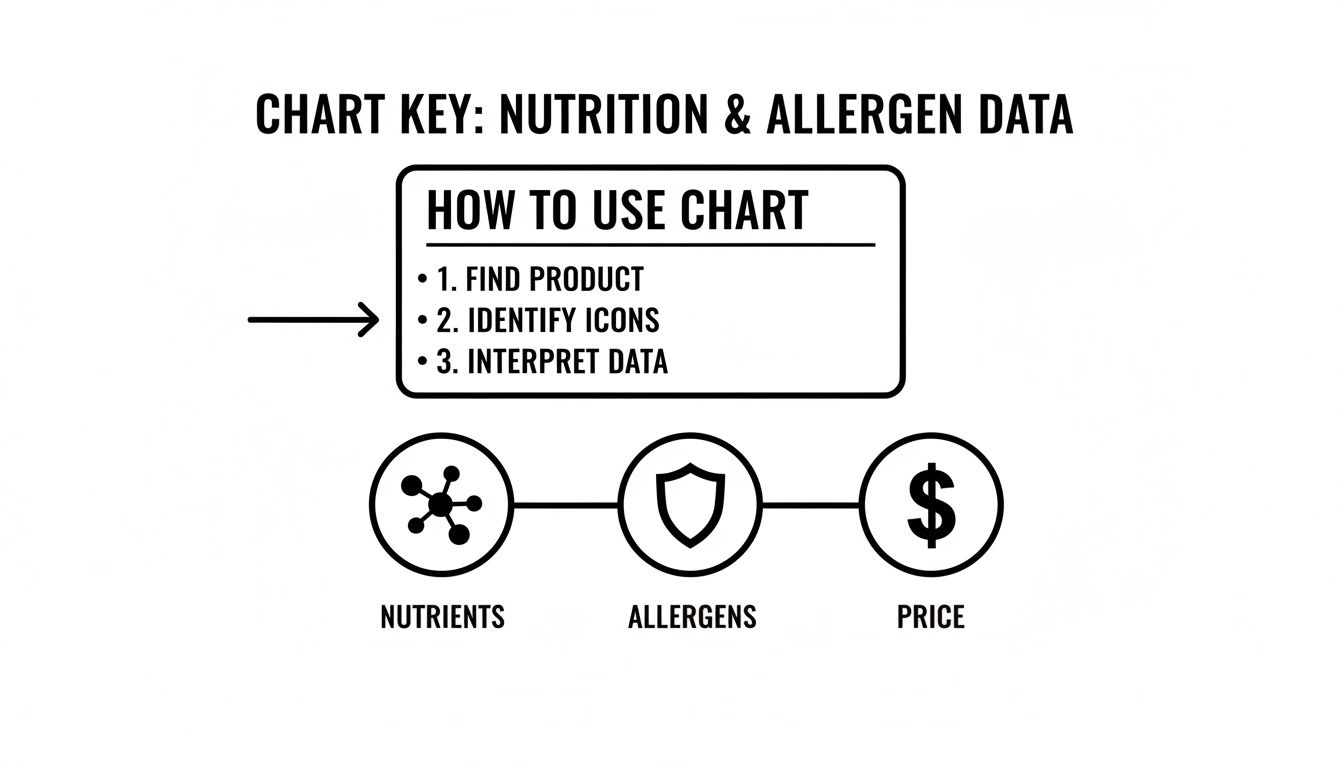
This visual key helps you scan for the most important factors—from vital nutrients to potential allergens—making your formula comparison faster and more effective.
Beyond the Basics: Added Nutrients for Development
While the core recipe is key, today's formulas are often fortified with extra ingredients meant to support everything from brain growth to gut health. This is where brands really try to stand out from the competition.
In 2024, basic ingredients like cow’s milk proteins, fats, and carbohydrates still made up 60.2% of the infant formula market. But what’s really interesting is the growing demand from parents for more specialized nutrition. We're seeing a huge rise in "functional" additions like DHA, ARA, prebiotics, and probiotics as brands look for ways to offer more than just the basics.
Here are a few of the most important extras to look for:
- DHA and ARA: These are crucial omega-3 and omega-6 fatty acids that are naturally present in breast milk. They play a vital role in building your baby’s brain, eyes, and nervous system.
- Prebiotics (like GOS and FOS): Think of these as food for the good bacteria in your baby's digestive system. A healthy gut is linked to a stronger immune system and can help prevent allergies and digestive woes.
- Probiotics: These are the "good" bacteria themselves. Adding them directly to formula can help populate your baby's gut with the right microbes, which may help with colic and even reduce the risk of eczema.
Understanding these ingredients is just one piece of the puzzle. For more tips on creating a safe and comfortable world for your little one, take a look at our guide on the best baby products for newborns. When you carefully choose both their nutrition and their daily care items, you’re giving them a wonderfully nurturing start to life.
When and How to Safely Switch Baby Formulas
Sometimes, the first formula you pick from a baby formula comparison chart just isn’t the right one for your little one. Don’t worry—this is a super common part of the feeding journey, and figuring out what to do next doesn't have to be stressful. The key is recognizing the signs of an issue, like a rash or allergy, and knowing how to make the change gently and safely.
Your baby has ways of telling you they’re uncomfortable, even if they can't use words. Trusting your gut is a big part of being a parent, but knowing a few specific signs can give you the confidence to decide if it's time for a change.
Recognizing the Signs for a Formula Change
If your baby seems unhappy after feedings, formula intolerance is often the reason why. A consistent pattern of symptoms is a good signal to chat with your pediatrician about trying something new. Your baby’s digestive system is still brand new, so even small differences between formulas can cause big problems.
Keep an eye out for these common red flags:
- Digestive Distress: Is your baby extra gassy, spitting up a lot (and seeming like it hurts), or struggling with constipation (hard, pebble-like poop)? On the flip side, diarrhea is also a clear sign their formula isn't sitting well.
- Skin Reactions: Unexplained rashes, hives, or worsening eczema can sometimes be linked to a formula sensitivity, especially to cow's milk protein. This is a critical sign that something needs to change for your baby's comfort.
- Extreme Fussiness or Colic: All babies get fussy, but if your little one is crying inconsolably for hours, particularly after eating, it could be colic sparked by their formula.
- Poor Weight Gain: A baby who consistently pushes the bottle away or isn't gaining weight as expected might be feeling discomfort that’s affecting their appetite.
Always talk to your pediatrician before changing your baby's diet. They can rule out other medical issues and recommend a new formula that’s a better match, especially for things like allergies, rashes, or reflux.
The Safe and Gradual Transition Process
Once you and your pediatrician have a new formula picked out, the key is to introduce it slowly. A sudden switch can shock your baby's delicate digestive system and cause even more tummy trouble, making it impossible to tell if the new formula is actually working.
Here’s a simple, step-by-step method to try over about a week:
- Day 1-2: The Introduction: Start by mixing 75% old formula with 25% new formula for every bottle. It's a small change that lets their system get used to the new ingredients.
- Day 3-4: The Halfway Point: Move on to a 50/50 mix of the old and new formulas. Keep a close eye on your baby to see how they're handling it, especially watching for any skin changes.
- Day 5-6: The Final Stretch: If everything seems okay, change the ratio to 25% old formula and 75% new. Their tummy should be adapting by now.
- Day 7: The Full Switch: You’re ready to make bottles with 100% of the new formula.
Having all the right supplies on hand can make this transition so much smoother. For a great rundown of what you might need, check out our postpartum essentials checklist.
Special Considerations for Unique Needs
Some babies need specialized formulas right from the start due to medical reasons, and these situations always require a doctor's guidance. For example, preemies often need formulas with more calories and nutrients to help them catch up on growth.
Babies with a diagnosed cow's milk protein allergy might need a hypoallergenic formula—either an extensively hydrolyzed or an amino acid-based one. In these formulas, the proteins are broken down so tiny that they don't trigger an immune reaction, which is essential for preventing symptoms like severe rashes, hives, and digestive pain. With expert support, you can confidently give your baby the exact nutrition they need to grow and feel great.
Smart and Safe Shopping for Baby Formula
So you’ve used a baby formula comparison chart to narrow down your choices—now what? The next step is actually buying it, and where you get your formula is just as important as the brand you pick. Your top priority is making sure the formula is authentic, stored correctly, and well within its expiration date to ensure your baby's safety.
The absolute safest route is to buy from reputable, well-known retailers. Think major supermarkets, big-box stores like Target, or your local pharmacy. These places have strict supply chains, which means the chances of getting a counterfeit or tampered product are incredibly low.
Where to Buy and What to Avoid
Convenience is tempting, but safety has to win every time. The source really, really matters.
- Authorized Retailers: Large, established stores like Target, Walmart, or CVS are your most reliable options. They get their formula straight from the manufacturers, so you know it’s the real deal and has been stored properly.
- Specialized Baby Stores: Shops that focus only on baby products are another great bet. They often have a wider selection of specialty formulas, too.
- Direct from Manufacturer: Some brands let you buy directly from their websites. This is a surefire way to guarantee you’re getting an authentic product.
- Unverified Third-Party Sellers: Be extremely careful with online marketplaces like eBay or Facebook Marketplace. You have no way of knowing how the formula was stored, if it's expired, or if it's even genuine. It’s a huge risk for your baby’s health.
Always give the packaging a once-over before you buy or use it. Look for dents, leaks, or broken seals. If the container looks damaged at all, just don't use it. Protecting your baby from contaminated formula is never worth the risk.
Smart Shopping Practices for Safety and Value
Making safe choices doesn’t mean you can’t also be a savvy shopper. In 2024, supermarkets and hypermarkets accounted for a massive USD 16.6 billion chunk of the global infant formula market. Still, the boom in e-commerce is definitely changing the game. Many parents now research prices online before heading to the store or just ordering for home delivery. You can dive deeper into this growing market by checking out the full infant formula market analysis.
No matter where you buy, always check the expiration date on the container—it should be clearly printed and easy to find. Once you bring it home, preparing it safely is the final piece of the puzzle. Having the right tools, like the best baby bottle warmers, helps preserve the formula's nutrients and makes feeding time a little smoother and safer. When you combine smart shopping with safe handling, you’re giving your baby the best protection possible.
Common Questions Parents Ask About Baby Formula
Even with a detailed baby formula comparison chart in hand, you're bound to have more questions. That’s completely normal. Feeling confident about what you’re feeding your baby is everything, so let's tackle some of the most common concerns parents bring up about safety, allergies, and even skin health.
Choosing the right formula goes beyond just reading labels—it's about understanding how it fits into your daily life with your little one.
Can I Mix Different Brands of Baby Formula?
It can be tempting, especially if you're running low on one brand and have another on hand, but it's best to avoid mixing different formulas. You should always run it by your pediatrician first.
Even formulas that seem similar—like two standard cow's milk options—have their own unique recipes. Blending them could throw off the precise nutritional balance and might cause some digestive upset or even a skin reaction for your baby. To keep their nutrition consistent and avoid any tummy troubles, stick with one formula and follow its specific preparation instructions.
How Can I Tell if My Baby is Allergic to Their Formula?
Catching a formula allergy early is key to keeping your baby comfortable and happy. An allergic reaction happens when your baby's immune system overreacts to a protein in the formula, which is most often a protein from cow's milk.
Here are the key signs to watch for:
- Skin Problems: Be on the lookout for new or worsening skin issues like hives, eczema, or red, blotchy patches. These are often the first and most visible signs of an allergy.
- Tummy Troubles: This is more than just a little spit-up. Red flags include forceful vomiting, diarrhea, or seeing blood in their stool.
- Unusual Fussiness: If your baby is crying inconsolably after feedings or seems to be in pain, it could be a sign of a reaction.
- Breathing Issues: While less common, things like wheezing or a persistently stuffy nose right after a bottle can also point to an allergy.
If you spot any of these symptoms, call your pediatrician right away. They can give you a proper diagnosis and guide you on what to do next.
Is Generic Store-Brand Formula Just as Good as the Name Brands?
Absolutely. Store-brand formulas are a perfectly safe and nutritious option. In the United States, the Food and Drug Administration (FDA) regulates all infant formulas with the exact same strict standards for nutrition, quality, and safety. Brand names don't get a pass.
This means a generic formula is required by law to have the same key vitamins, minerals, and nutrients as its more expensive name-brand counterpart. The biggest difference you'll likely notice is the price. If you put the ingredient labels side-by-side, you'll see they're often nearly identical. Just be sure to read the label and chat with your pediatrician, but you can feel good about choosing a store brand to feed your baby.
At GUGUTON LLC, we know that every decision you make for your baby comes from a place of love. We've carefully selected trusted formula brands and high-quality baby essentials to support you. You can explore our collection of safe, practical, and comfortable products for your little one at https://guguton.com.