

What to Buy for Your First Baby: A Guide to Safe and Gentle Essentials
Figuring out what to buy for your first baby can feel like packing for a trip to a country you’ve never visited. You know you need the essentials, but what are they? The truth is, it all boils down to three core categories: safe sleep gear, gentle feeding supplies, and skin-friendly diapering products.
Getting these three areas right with high-quality, non-toxic items builds a foundation of comfort and safety for your little one. It helps prevent skin irritation, rashes, and allergies, and just as importantly, gives you some much-needed peace of mind.
Your Practical First Baby Checklist
Bringing home your first baby is an incredible feeling, but staring at those long shopping lists can be paralyzing. It's easy to get swept up in a sea of gadgets and gear, leaving you wondering what you actually need. Our goal is to cut through that noise and give you a clear, practical starting point that prioritizes safety, quality, and your baby's delicate skin needs.
Instead of feeling like you have to buy everything at once, think of it as building a strong foundation. The most important purchases are the ones that ensure your baby can eat, sleep, and stay clean safely and comfortably. That means focusing on items made from materials that won’t cause rashes, allergies, or other skin irritations.
The Must-Have Categories
By zeroing in on the non-negotiables first, the whole process becomes much more manageable. When you choose high-quality basics for these core areas, you're creating a safe, nurturing environment where your baby can thrive from their very first day, free from common skin irritants.
- Safe Sleep: This starts with a crib or bassinet that meets all current safety standards. Pair it with a firm mattress and a few fitted sheets made from a soft, breathable, and hypoallergenic fabric like organic cotton.
- Gentle Feeding: Whether you plan to breastfeed or formula-feed, you’ll want items like BPA-free bottles, a comfortable nursing pillow, and gentle cleaning supplies that are free of harsh chemicals that could be ingested or touch the skin.
- Skin-Friendly Diapering: A newborn’s skin is incredibly sensitive, especially in the diaper area. Stock up on fragrance-free wipes, a protective barrier cream, and diapers made from soft, absorbent materials free of chlorine and dyes to prevent rashes.
This simple flowchart shows how to think about your baby's needs, starting with the absolute basics.
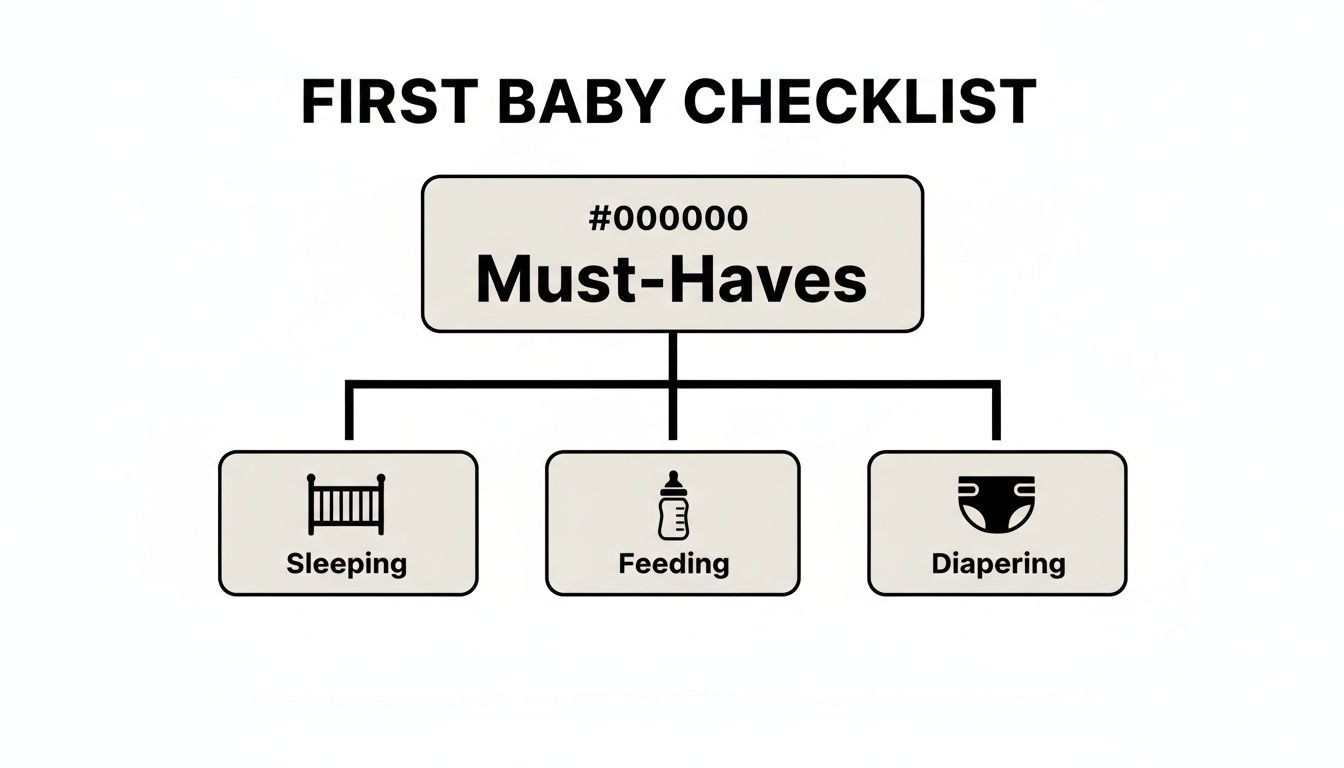
As you can see, everything stems from the core needs of sleeping, feeding, and diapering. Thinking this way helps you build a baby registry with confidence, knowing that every item on it is practical, safe, and will actually get used.
To make it even easier, here’s a quick-glance table with the absolute must-haves.
The First-Time Parent's Quick-Start Checklist
A summary of the most critical items for your newborn, categorized to simplify your shopping and registry planning.
| Category | Essential Items | Key Focus Point |
|---|---|---|
| Safe Sleep | Bassinet or crib, firm mattress, fitted sheets (2-4), swaddles or sleep sacks (3-5) | Prioritize breathable, natural fabrics like cotton to regulate temperature and prevent skin irritation and allergies. |
| Gentle Feeding | Bottles (4-6), bottle brush, nursing pillow, burp cloths (8-10) | Look for BPA-free bottles and hypoallergenic materials in pillows and cloths to avoid chemical exposure. |
| Skin-Friendly Diapering | Diapers, fragrance-free wipes, diaper cream, changing pad | Choose diapers and wipes free of harsh chemicals and fragrances to protect sensitive skin from rashes. |
This table covers the crucial bases first, making the entire shopping experience feel far less stressful. For a more detailed breakdown with specific product ideas, you can dive into our complete newborn essentials shopping list.
Creating a Safe and Soothing Sleep Space
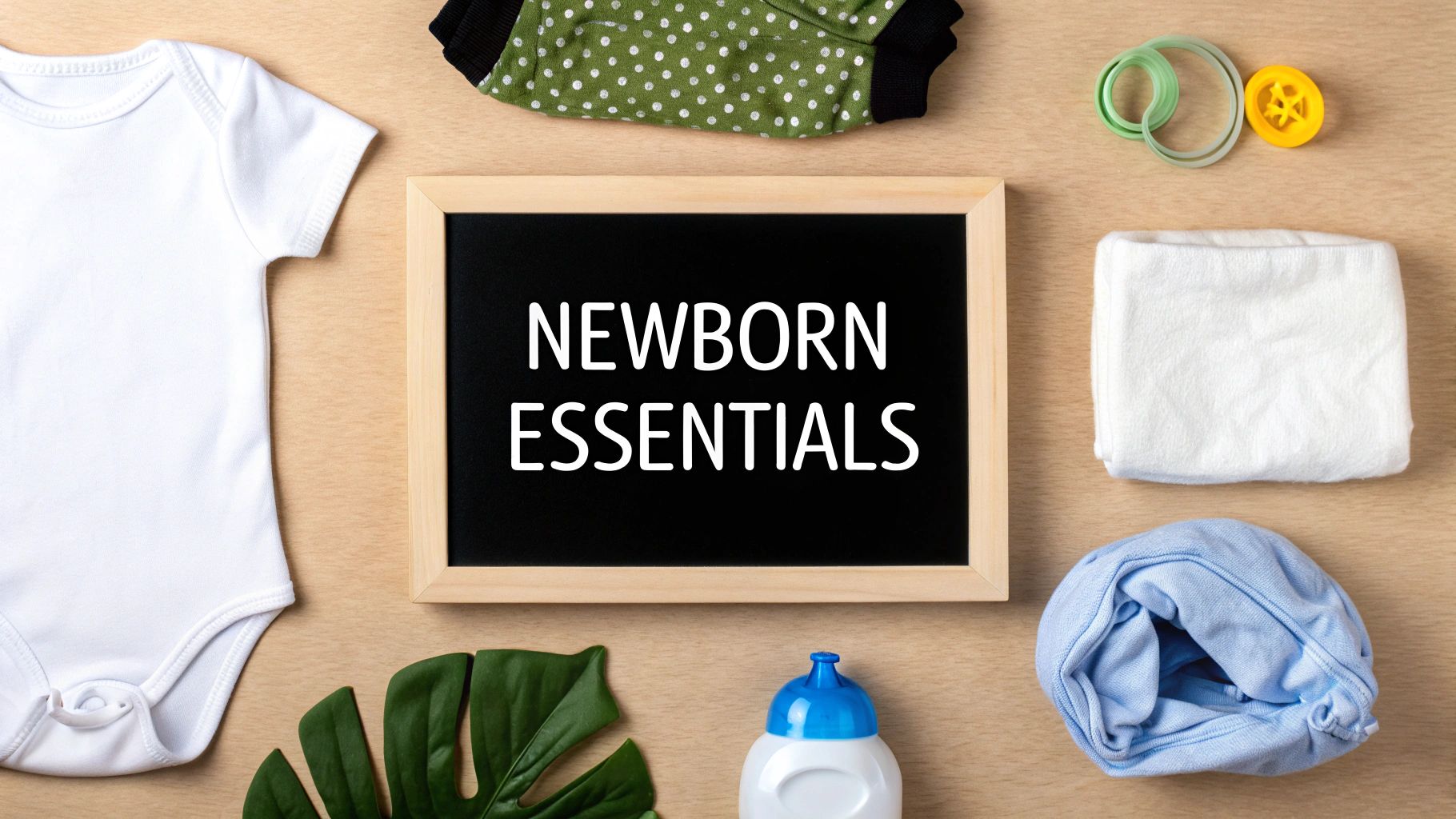
When you're making your list of what to buy for your first baby, nothing deserves more attention than where they'll sleep. Your newborn will spend most of their time sleeping, so their well-being literally depends on an environment that’s not just cozy, but completely safe. This means choosing a crib or bassinet that meets all the latest safety standards—which are updated regularly to protect our little ones.
Think of the crib as the cornerstone of your nursery. It’s the one spot where your baby will be unsupervised for hours, so its construction and setup are critically important. The single most vital piece of the puzzle is a firm, flat mattress that fits perfectly inside the crib frame. You shouldn't be able to squeeze more than two fingers between the mattress and the crib's side.
This snug fit isn't just a suggestion; it’s a non-negotiable safety rule that eliminates dangerous gaps where a baby could get trapped. A firm surface is just as crucial, as it dramatically reduces the risk of suffocation and provides the necessary support for their tiny, developing spine.
The Importance of Skin-Friendly Bedding
Once the crib and mattress are sorted, it’s time to think about what will be touching your baby’s skin all night. A newborn's skin is incredibly delicate—up to 30% thinner than an adult's—which makes it highly absorbent and prone to irritation. This is why choosing the right bedding is a health decision, not just a style choice.
Opting for materials like 100% organic cotton for crib sheets is one of the smartest moves you can make to prevent rashes and allergic reactions. Synthetic fabrics like polyester can trap heat and are often treated with harsh chemicals, but organic cotton is naturally breathable, hypoallergenic, and free from harmful residues.
A baby’s sensitive skin barrier is still developing, making it less resistant to bacteria and irritants. Soft, breathable, and chemical-free fabrics are essential for creating a sleep space that is gentle and non-toxic, promoting both comfort and health.
That breathability is key for helping to regulate your baby's body temperature and prevent overheating, which is a known risk factor for Sudden Infant Death Syndrome (SIDS). By investing in high-quality, natural-fiber sheets, you're building a sleep surface that is fundamentally safer and more comfortable.
Beyond Sheets: Swaddles and Wearable Blankets
When it comes to a safe sleep space, the golden rule is simple: bare is best. The crib should only contain a firm mattress, a fitted sheet, and your baby. That's it. No pillows, no bumpers, no stuffed animals, and absolutely no loose blankets, as these are all suffocation hazards.
So, how do you keep your little one warm and feeling secure? This is where swaddles and wearable blankets come to the rescue.
- Swaddles: For the first few months, a snug swaddle works wonders. It helps calm the Moro (or startle) reflex that can wake a sleeping baby. Look for swaddles made from that same soft, breathable organic cotton to be gentle on their skin and reduce the risk of overheating.
- Wearable Blankets (Sleep Sacks): As soon as your baby shows signs of trying to roll over, it’s time to graduate from the swaddle to a sleep sack. It’s basically a blanket they can wear, which means they can't kick it off or pull it over their face. This makes it a much safer way to stay warm.
These items give your baby all the warmth and comfort they need without introducing any hazards into the crib. For a deeper dive, our complete guide on setting up a safe sleep environment for infants has even more detail. By sticking to these core principles—a secure crib, a firm mattress, and breathable, skin-safe fabrics—you can build a nursery that truly puts your baby’s well-being first.
Feeding Your Baby: Keeping It Safe & Simple
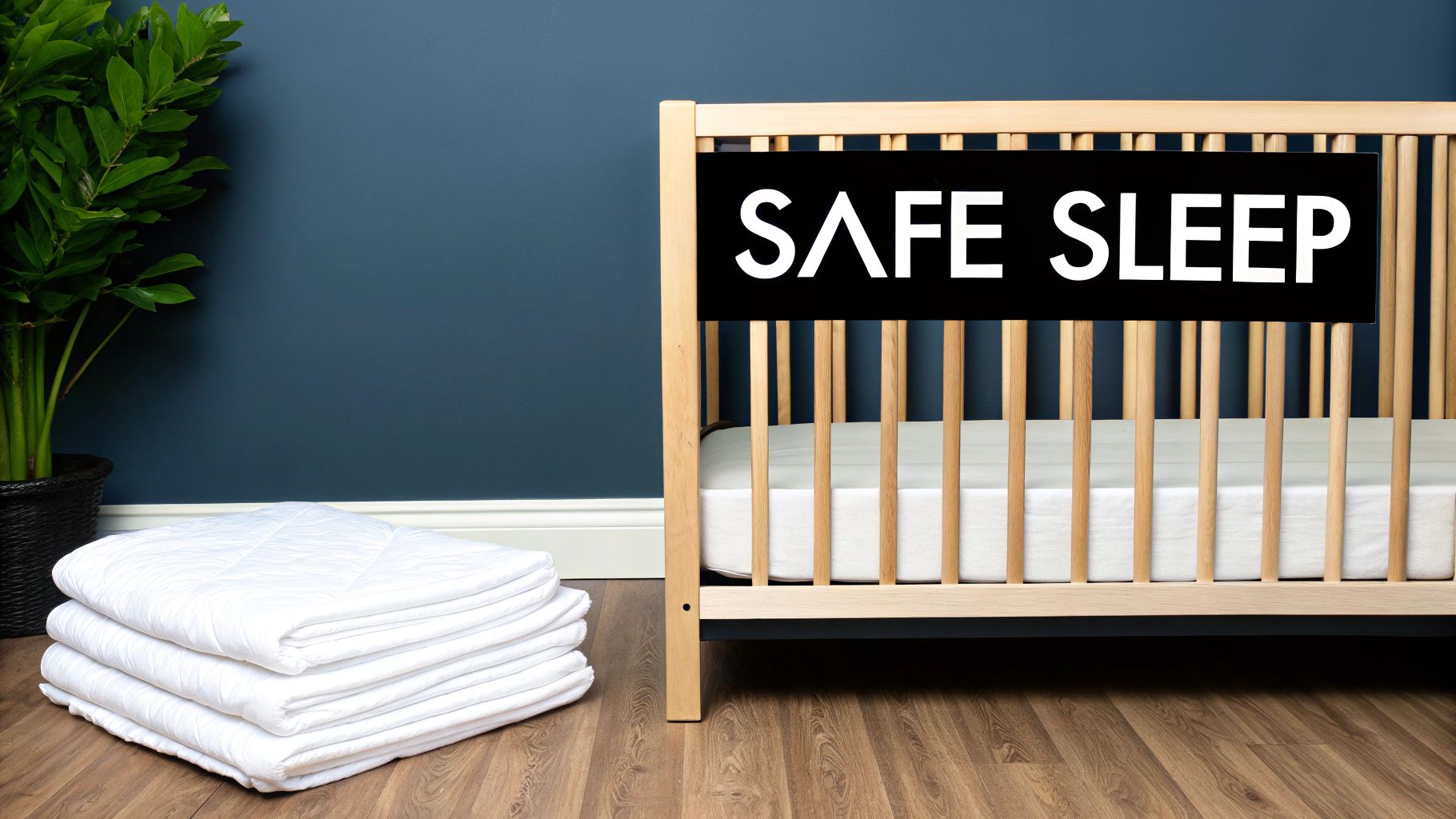
Whether you're planning to breastfeed, formula feed, or a mix of both, having the right gear can make all the difference. It can turn a potentially stressful task into a calm, sweet bonding experience. Because your baby’s immune system is still developing, the top priorities here are hygiene and choosing non-toxic materials.
Anything that touches your baby’s milk or formula—from the bottles to the storage bags—needs to be a fortress of safety. You'll want products that are gentle, super easy to clean, and free from any harmful chemicals that could leach into your baby's food.
Choosing the Right Bottles and Cleaning Tools
The baby bottle is a classic for a reason, and today's designs have come a long way in both safety and comfort. When you’re shopping, make sure any bottle you consider is clearly labeled BPA-free. Bisphenol A (BPA) is an industrial chemical linked to potential health issues, so it's one you definitely want to avoid.
Many parents swear by anti-colic bottles. These are cleverly designed with special vents or liners to cut down on the amount of air your baby swallows during feeding. Less air means less gas, less fussiness, and less spit-up. It's a simple feature that can make a huge difference for a gassy baby.
To keep everything clean, you'll absolutely need a dedicated bottle brush and some gentle, baby-safe soap. For that extra peace of mind, especially in the first few months, a sterilizer ensures every nook and cranny is free from lingering bacteria.
Gear for Breastfeeding vs. Formula Feeding
No matter how you choose to feed your little one, the core principle of safety is universal. But the specific tools you'll need might differ.
-
For Breastfeeding Moms: A good nursing pillow is a game-changer. It helps your baby latch properly and saves your back and arms from getting sore. When it comes to storing milk, only use BPA-free bags or containers specifically made for breast milk to keep it safe and preserve all those vital nutrients.
-
For Formula-Feeding Parents: A happy tummy loves consistency. An electric kettle with temperature control can help you mix bottles at the perfect warmth every single time. To make life even easier, check out our guide on the best baby bottle warmers to find a gadget that does the work for you.
This demand for high-quality, safe gear isn't just a hunch; it's a massive trend. The global baby products market hit a value of USD 320.65 billion in 2023 and is expected to grow to USD 475.15 billion by 2030. That growth is powered by parents like you who are actively looking for premium products they can trust.
The rule of thumb for all feeding gear is simple: if it touches your baby's food, it must be non-toxic and easy to sterilize. Following this one rule protects their delicate system from harmful chemicals and bacteria, giving you one less thing to worry about.
By sticking to materials like food-grade silicone, glass, and certified BPA-free plastics, you're building a safe and healthy feeding environment right from the very first sip.
Choosing Baby Clothes That Protect Delicate Skin
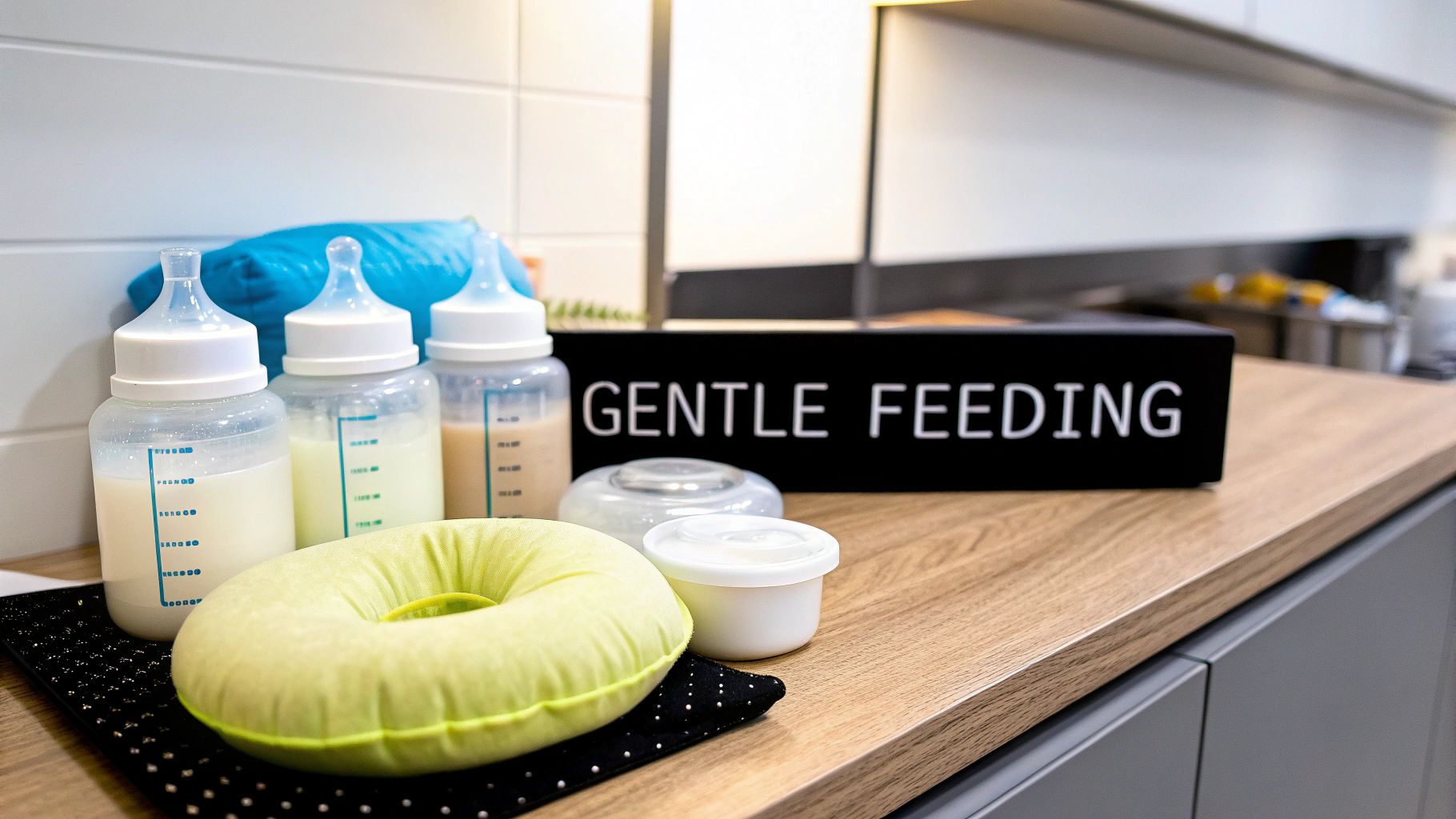
Let’s be honest—shopping for those tiny, adorable baby clothes is one of the most fun parts of preparing for your little one. But beyond the cuteness factor, a newborn’s first wardrobe serves a critical purpose: it's their very first layer of protection. A baby's skin is incredibly thin and porous, making it extra sensitive to irritation and rashes from scratchy fabrics or lingering chemicals from dyes and pesticides.
Choosing the right clothing is really a form of proactive skincare. Think of every onesie and sleeper as a soft little shield, carefully selected to be as gentle as possible. You're not just dressing your baby; you're wrapping them in comfort and preventing the fussiness that comes from irritating materials that can trigger allergies or eczema.
Why Fabric Choice Is So Important
The material that’s against your baby’s skin all day makes a huge difference in their health and happiness. Some fabrics are naturally soft and let the skin breathe, while others can trap heat and moisture—creating the perfect storm for issues like eczema or heat rash. This is exactly why so many parents make high-quality, natural fibers a top priority.
For instance, GOTS-certified organic cotton is a fantastic choice for newborns. The certification is your assurance that the cotton was grown without nasty pesticides and processed without harsh chemicals, so it’s incredibly pure and less likely to cause a reaction. Bamboo is another parent favorite, loved for its silky-smooth feel and its ability to wick moisture away, keeping your baby comfortably dry. If you want to dive deeper, our guide on choosing the right fabric for your baby's sensitive skin breaks it all down.
This move toward skin-safe products is a huge trend. In fact, baby skincare is one of the fastest-growing parts of the baby care market. Valued at USD 17.87 billion in 2025, it’s expected to hit USD 31.14 billion by 2034 as more parents seek out natural, gentle products. You can explore more on this market growth to see how this is changing the products available to us.
Smart Details That Boost Comfort
It’s not just about the fabric—the way a garment is made also plays a huge part in keeping your baby’s skin happy. The little details can make all the difference in preventing skin irritation.
When you're shopping, keep an eye out for features designed specifically for sensitive skin. These aren’t just nice extras; they actively prevent friction and keep your newborn comfortable.
Here are a few key things to look for:
- Tagless Designs: Who likes a scratchy tag at the back of their neck? Nobody. Tagless clothing, where the info is printed right on the fabric, gets rid of that common annoyance that can cause redness.
- Flat Seams: Bulky seams can dig into a baby’s delicate skin, especially when they’re lying down for hours. Flat-sewn seams create a smooth finish that won’t rub or chafe.
- Nickel-Free Snaps: It’s surprisingly common for babies to have a sensitivity to nickel. Choosing clothes with nickel-free or plastic snaps is a simple way to avoid potential rashes and allergic contact dermatitis, particularly around the diaper area.
Building a Practical and Protective Wardrobe
It's so easy to go overboard buying every cute outfit you see, but a more practical approach will save you time, money, and laundry-day headaches. For the first few months, your best bet is to build a solid collection of comfy, easy-to-wash basics made from skin-safe materials.
Here’s a realistic checklist to get you started:
- Onesies/Bodysuits (7-10): The absolute workhorse of any baby wardrobe.
- Sleepers/Pajamas (5-7): Go for the footed kind for warmth and simplicity.
- Soft Pants (4-5 pairs): Perfect for layering with onesies on cooler days.
- Socks or Booties (5-7 pairs): To keep those ten tiny toes warm.
- Newborn Hats (2-3): A must-have for regulating body temperature, especially in the first few weeks.
By prioritizing skin-friendly fabrics and these thoughtful design details, you can feel confident that every item in your baby's closet is helping them stay cozy, happy, and comfortable.
Navigating Diapering and Bath Time Routines
Diaper changes and bath time aren't just items on your to-do list; they're daily rituals that put your baby’s comfort and skin health front and center. A newborn’s skin barrier is still a work in progress, which makes it incredibly sensitive to irritants. Stocking your changing table and bathroom with gentle, protective products is a must when figuring out what to buy for your first baby.
Since you'll be doing these things multiple times a day, every product you choose has a ripple effect. Focusing on skin-safe essentials right from the start can help you sidestep common problems like diaper rash and allergic reactions. This way, these moments can stay positive and soothing for both of you.
Building a Skin-Friendly Changing Station
The diaper area is ground zero for irritation, thanks to all that moisture and friction. Your best line of defense is a simple one: gentle cleansing and proactive protection. It all starts with the right diaper. Whether you go with disposable or cloth, the goal is to find materials that are super absorbent and don't contain a bunch of extra chemicals.
Look for diapers that are clearly labeled fragrance-free, lotion-free, and chlorine-free. These are often the sneaky culprits behind skin sensitivity and rashes. The idea is just to keep your baby's skin as dry and clean as possible, without adding anything that could cause a problem.
A newborn's skin can lose moisture up to five times faster than an adult's. This is why it’s so prone to dryness and irritation. Choosing products designed to protect this delicate barrier is key to preventing discomfort and promoting healthy skin from day one.
Of course, it’s not just about the diapers. Your other changing table essentials matter just as much.
- Fragrance-Free Wipes: Opt for water-based wipes that don't have alcohol or perfumes. They get the job done without stripping the skin of its natural, protective oils, which can lead to dryness and rashes.
- A Solid Barrier Cream: A good diaper cream is like a little shield for your baby's skin. Look for one with zinc oxide, which creates a physical barrier between their skin and moisture. A thin layer at each change can work wonders as a preventative step against diaper rash.
Gentle and Safe Bath Time Essentials
Bath time is a fantastic chance to bond, but it can also stress out a baby's skin if you're using the wrong stuff. A baby’s skin has a naturally acidic pH that acts as a protective layer, and harsh soaps can throw that delicate balance way off.
The single most important thing to get right is a gentle, tear-free, and pH-balanced wash. Soaps made for adults are way too harsh and can strip a baby's skin, leaving it dry, irritated, and vulnerable to eczema. A baby-specific formula will give a mild cleanse that works with their skin, not against it.
A secure, comfortable baby bathtub is also a safety non-negotiable. Find a tub with a non-slip surface and an infant sling or insert to support your newborn. This keeps them safely in place so you can focus on a calm, gentle wash.
After the bath, how you dry your baby is just as important as how you wash them. Rubbing with a rough towel is a recipe for friction and irritation. Instead, gently pat their skin dry with an ultra-soft, highly absorbent towel.
Hooded towels are a fantastic choice, especially those made from natural fibers like organic cotton or bamboo. They’re exceptionally soft, soak up moisture in a flash, and the hood keeps your baby’s head warm and cozy right after they get out of the water. This little touch makes sure the whole experience ends on a safe, soothing, and comfortable note.
How to Budget and Build Your Baby Registry
So, you have a list of what you need. Now comes the big question: how are you going to get it all? Budgeting for a baby and building a registry can feel a little overwhelming, but breaking it down makes it completely doable. The secret is to put your money where it counts the most—on your baby’s safety and skin health.
A great way to think about your budget is like a pyramid. The absolute essentials, the non-negotiable safety items, sit right at the top. This is where you want to invest in the best quality you can. As you move down the pyramid, you'll find more places where you can be flexible and save some money.
Prioritizing Your Purchases
The first things to account for in your budget are the items directly tied to your baby's safety. It’s tempting to get caught up in the cute stuff, but these pieces are the true foundation of your nursery.
- Top Priority (Invest Here): This is for things like a brand-new car seat and a crib that meets all the latest safety standards. These products go through intense testing for a reason, and you just don't want to compromise here. Peace of mind is priceless.
- Mid-Priority (Balance Quality and Cost): Here you’ll find strollers, a good firm mattress, and soft, skin-friendly clothing. You're still looking for great quality (think GOTS-certified organic cotton for clothes that touch baby's skin), but you can often find fantastic mid-range options that are safe and reliable.
- Lower Priority (Save Here): This category includes the "nice-to-haves" like a special diaper pail, cute nursery decorations, or that adorable but impractical outfit. These are the perfect places to find budget-friendly alternatives without affecting your baby's well-being one bit.
Organizing your list this way helps you focus on what's truly essential, making your shopping plan both practical and protective.
Building a Well-Rounded Registry
Think of your baby registry as a helpful roadmap for friends and family who want to celebrate with you. A great registry makes it easy for them to give you something you’ll actually use and love. The trick is to offer a variety of price points, so everyone can find something that works for them.
Don't be shy about adding the big-ticket items, but also fill your registry with plenty of smaller essentials like burp cloths, diaper cream, and soft washcloths.
Your registry isn't just a wish list—it's a thoughtful collection of safe, gentle, and practical gear for your new life. A good mix of prices makes it welcoming for every guest.
The good news for new parents is that you're shopping in a better market than ever before. Today's parents are incredibly well-informed, and they've demanded safer, higher-quality options. This has really pushed the baby product industry in the right direction.
This isn't just a local trend, either. It's happening worldwide. The Asia Pacific region, for example, now makes up over 36.90% of the global baby care market, and that growth is fueled by families who are just as focused on quality as they are on their budget. You can discover more insights about this global market trend if you're curious.
What does this all mean for you? It means that retailers everywhere, from big box stores to online boutiques like GuGuTon, are stocking their shelves with products that meet these higher standards. You can shop with confidence, knowing that safe, skin-friendly options are out there and within reach, no matter what your budget looks like.
Common Questions from New Parents
When you're expecting, the questions can feel endless. It's completely normal! Here, we'll tackle some of the most common things new parents ask, clearing up the confusion so you can feel confident in your choices.
How Many Clothes Do I Really Need for a Newborn?
This is probably one of the most-asked questions, and for good reason! A great starting point is to have 7-10 onesies and 5-7 sleepers on hand. Add in a few pairs of soft pants, several pairs of socks, and 2-3 newborn hats, and you're in good shape.
Most experienced parents will tell you to focus on the 0-3 months size, as many babies skip the 'newborn' size entirely or outgrow it in a matter of days. Above all, look for soft, breathable fabrics like organic cotton that won't irritate their brand-new, sensitive skin.
When Is the Best Time to Buy a Crib and Car Seat?
Aim to get these two major purchases sorted out during your second trimester. This buffer gives you plenty of time to research, compare safety ratings, and get everything assembled without that last-minute rush.
Remember, you absolutely cannot leave the hospital without a properly installed car seat—it's mandatory. Having the crib set up early also lets any "new furniture" smells air out long before the baby arrives, ensuring their nursery is a safe, welcoming space from day one.
Are More Expensive Baby Products Always Safer?
Not at all. A high price tag is often more about branding than it is about safety. Instead of looking at the cost, train your eye to look for official safety certifications (like the JPMA seal), non-toxic materials (think BPA-free plastics), and solid construction.
You'll often find that reputable mid-range brands offer the perfect sweet spot of safety, durability, and value.
Your focus should always be on verified safety standards and skin-friendly materials, not the brand name or price. Reading recent parent reviews and checking for product recalls is far more valuable than assuming a higher cost equals better protection.
What Should I Avoid Putting on My Baby Registry?
It's tempting to add every cute gadget, but it’s best to skip items that don't meet current safety standards. This includes things like crib bumpers and sleep positioners, which are suffocation risks. You should also pass on any used car seats, as you can't be sure of their accident history.
Another common rookie mistake is adding too many trendy or fussy outfits in newborn sizes. They're adorable, but babies outgrow them in the blink of an eye! Stick to the practical, high-quality basics that will keep your baby safe and comfortable—that’s what will truly make a difference.
At GuGuTon, we've done the hard work for you by creating a collection of baby essentials that meet the highest standards of safety and quality. From skin-friendly organic cotton bedding to gentle feeding gear, you can find everything you need to welcome your baby with confidence at GuGuTon.com.