

Choosing the Best Raincoat for Boys That Protects and Lasts
A good raincoat for boys has to do more than just fend off a downpour. It's a critical layer of defense for their sensitive skin, making sure that a puddle-stomping adventure is remembered for the fun, not the itchy discomfort afterward. For young children, whose skin is more delicate, choosing the right material is a key part of preventing potential allergies, rashes, or other skin irritations.
Why a Good Raincoat Is About More Than Just Staying Dry
When you're shopping for a boy's raincoat, it's natural to fixate on one thing: will it keep him dry? But the best jackets do a whole lot more. A poorly made raincoat can actually trap moisture inside, creating a stuffy, humid environment. This enclosed, damp space against the skin is a perfect recipe for chafing, heat rash, and even triggering allergic reactions in sensitive children.
Think about it. Active kids are always on the move, which means they're going to sweat, even on a cool, rainy day. The raincoat's material is what makes all the difference here. Older, cheaper plastics are notorious for being non-breathable. It's basically like wearing a plastic bag—sure, the rain isn't getting in, but nothing is getting out, either. That trapped sweat leaves their skin damp, which can weaken its natural barrier and make it more susceptible to irritation.
It’s About Health and Safety, Not Just Rain
Today's best rain gear is designed to manage moisture from both the inside and the outside. The goal is to create a comfortable, healthy microclimate inside the jacket that keeps your child's skin perfectly dry and safe.
A truly great raincoat for boys keeps them dry from the inside out. It lets sweat escape while blocking rain, so their skin never gets that damp, sticky feeling that can lead to rashes and ruin a perfectly good adventure.
Parents are catching on, and it shows. The global market for kids' raincoats is projected to hit $2.1 billion by 2033. More than 50% of those sales are happening online, as parents are getting savvier about researching and buying high-performance gear that puts safety and skin health first.
At the end of the day, picking the right coat is a decision that impacts your child's health and comfort. When you prioritize materials that are both waterproof and breathable, you’re not just buying a jacket; you're ensuring every rainy day is another chance for a safe and happy adventure. If this is a top concern for you, our guide on choosing the right fabric for your baby's sensitive skin has some great insights that apply to all their clothing.
Decoding Raincoat Materials for Healthy Skin
When you're picking out a raincoat for your son, the material it's made from is more than just a style choice—it's his frontline defense against getting soaked and, just as importantly, against skin irritation. The best raincoat strikes a delicate balance, keeping rain out while letting skin breathe. This is the secret to avoiding the rashes and clammy discomfort that can quickly end a puddle-stomping adventure.
Think of it this way: a non-breathable coat, like one made from old-school PVC (polyvinyl chloride), is essentially a wearable plastic bag. Sure, it stops rain from getting in, but it also traps every bit of sweat and body heat. This creates a warm, damp environment right next to your child's skin, which is the perfect recipe for heat rash, chafing, and that miserable sticky feeling.
Luckily, modern fabrics are much smarter. Materials like PU-coated polyester or nylon are engineered to be both waterproof and breathable, a must-have combination for kids who are always on the move.
This diagram breaks down how a raincoat’s real job is to provide comfort by keeping kids dry from the rain on the outside and from their own sweat on the inside.
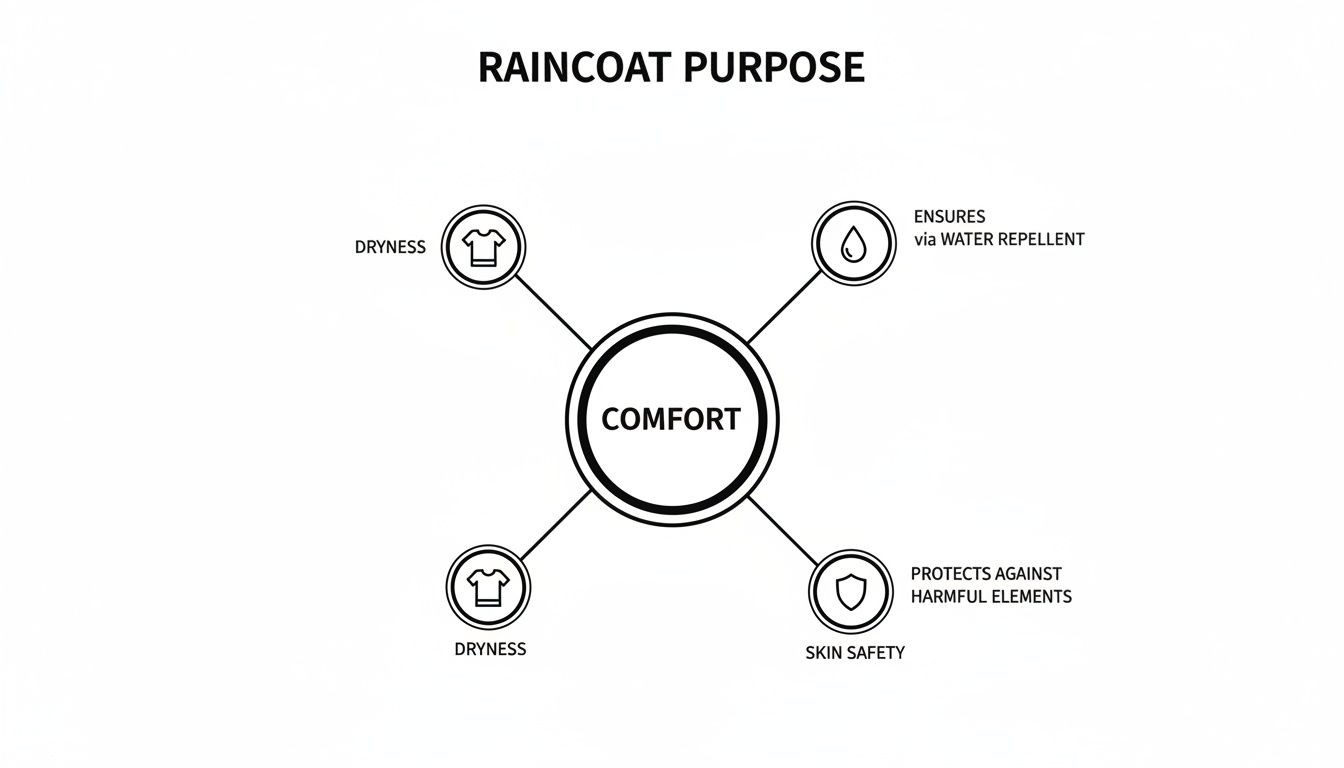
As you can see, true comfort isn't just about blocking water; it's about protecting the skin from the irritation that trapped moisture can cause.
Common Materials and Their Impact on Skin
Getting familiar with the most common raincoat fabrics will help you make a confident choice. Did you know nylon holds a massive 55% of the market share for kids' raincoats? That's because it hits the sweet spot of being waterproof and breathable. Vinyl still accounts for about 30% of the market, mostly because it's a budget-friendly option.
This table breaks down the key players to help you decide.
Raincoat Material Comparison for Boys
A quick guide to common raincoat fabrics, highlighting their impact on waterproofing, breathability, and skin safety to help parents make an informed choice.
| Material | Waterproof Level | Breathability and Skin Safety | Best For |
|---|---|---|---|
| PU-Coated Fabrics | Excellent | Excellent. Pores allow sweat to escape, preventing clamminess and rashes. | Active kids who play hard in all weather; a great all-rounder. |
| Nylon Taslan | Very Good | Very Good. Soft, fabric-like feel is comfortable and less likely to chafe. | Everyday wear and active play; a durable and lightweight choice. |
| PUL | Excellent | Excellent. Very soft, flexible, and gentle. Ideal for sensitive skin. | Toddlers and young children with very sensitive or eczema-prone skin. |
| Vinyl (PVC) | Excellent | Poor. Traps moisture, leading to a sticky feeling and potential heat rash. | Quick trips in the rain or as a budget-friendly backup. |
As you can see, materials like PU-coated fabrics and PUL really shine when it comes to keeping a child's skin happy and dry from the inside out.
The Best Fabrics for a Boy's Sensitive Skin
Let's take a closer look at the top contenders for skin-friendly rain protection:
-
PU-Coated Fabrics (Polyurethane): This is the modern go-to for a reason. A super-thin layer of polyurethane is bonded to a base fabric like polyester. This coating is a bit of a marvel—it has microscopic pores that are big enough to let tiny water vapor molecules (sweat) out but way too small for big liquid water droplets (rain) to get in.
-
Nylon Taslan: If your son hates that "plasticky" feel, Taslan is a great pick. It’s known for being both lightweight and tough, and it feels much softer than other synthetics, which means it’s more comfortable against the skin.
-
PUL (Polyurethane Laminate): You might recognize this material from modern cloth diapers—and if it’s gentle enough for that job, you know it’s great for rainwear! PUL is exceptionally soft, flexible, and breathable, making it the perfect choice for boys with very sensitive skin. The core principles of choosing safe gear are universal, and you can find more tips in our guide to girls' rain jackets.
Look for Skin-Safe Certifications
Beyond just the type of fabric, certifications are your best friend for ensuring a jacket is free from nasty chemicals that could trigger allergies or irritation.
The gold standard to look for is Oeko-Tex Standard 100. When a raincoat has this label, it’s a guarantee that every single part of it—from the fabric and thread to the buttons and zippers—has been rigorously tested and proven to be free of a long list of substances harmful to human health.
Choosing a jacket with an Oeko-Tex certification is one of the easiest ways to get peace of mind. It’s a simple check that tells you the product is genuinely safe for your child's skin.
Making Sense of Waterproof and Breathability Ratings
When you’re shopping for a raincoat for boys, it can feel like you’re trying to decipher a secret code. You see tags with numbers like "5,000mm" or "8,000g/m²/24h," and it’s easy to feel a little lost. But don't worry—these numbers are actually your best friends in finding a jacket that will keep your son genuinely dry and comfortable, not just clammy.
Think of it this way: a good raincoat has to do two jobs perfectly. First, it has to block rain from getting in. Second, it has to let sweat out. If a jacket only does the first job, your kid will end up soaked from the inside anyway, which is a recipe for a miserable time and potential skin irritation.
What Waterproof Ratings Really Mean
A waterproof rating, measured in millimeters (mm), is a straightforward test of how much water pressure a fabric can take before it starts to leak. The higher the number, the better the jacket will stand up to a real downpour.
Picture a one-inch square tube sitting on the jacket's fabric. The rating tells you how high you could fill that tube with water before it would finally push through. It’s a simple, effective way to measure rain resistance.
- Up to 5,000mm: Perfect for light drizzle or those quick sprints from the car to the front door. This is your everyday, light-duty protection.
- 5,000mm to 10,000mm: This is the sweet spot for most kids. It’s more than enough for playing in a steady rain, sitting on a wet park bench, or any typical rainy day adventure.
- Over 10,000mm: This is for serious weather. Think hiking through a storm or camping in the rain. It’s heavy-duty protection for big outdoor trips.
For most families, a raincoat for boys rated between 5,000mm and 10,000mm hits that perfect balance. It keeps them bone-dry without going overboard for daily wear.
Why Breathability Is Just as Important
Now for the other side of the coin: breathability. This is what prevents that sticky, clammy feeling inside the jacket after your son has been running around. It’s measured by how many grams (g) of water vapor (sweat) can escape through a square meter (m²) of the fabric in 24 hours. Again, a bigger number is better.
A totally waterproof jacket with zero breathability is just a wearable plastic bag. It’s great at keeping rain out, but it also traps every bit of sweat inside. That trapped moisture can lead to chills and skin irritation, which is exactly what you’re trying to avoid.
A highly waterproof jacket without good breathability will keep your child dry from the rain but wet from their own sweat. True comfort comes from a fabric that manages moisture from both the inside and the outside.
Here’s a quick guide to what those breathability numbers mean for your active kid:
- Up to 5,000g/m²/24h: Good for low-key activities, like a calm walk or waiting for the bus.
- 5,000g to 10,000g/m²/24h: This is an ideal all-around rating for kids. It can handle running, jumping, climbing, and all the things they do at the park.
- Over 10,000g/m²/24h: Choose this for high-energy sports or activities where you know they’ll be working up a major sweat, like a long bike ride or a soccer game in the rain.
By finding a jacket with a good balance of both ratings, you’re not just buying a raincoat. You're getting a piece of gear that will keep your son comfortable and happy, no matter what the weather—or his energy level—throws at him.
Essential Safety Features for Active Boys
A great raincoat does more than just keep your son dry. While it’s easy to get caught up in waterproof ratings and fabric types, the small safety details are what truly give you peace of mind when he’s out playing. These features are designed to keep him safe and prevent unnecessary risks, especially on those grey, drizzly days when visibility isn't great.
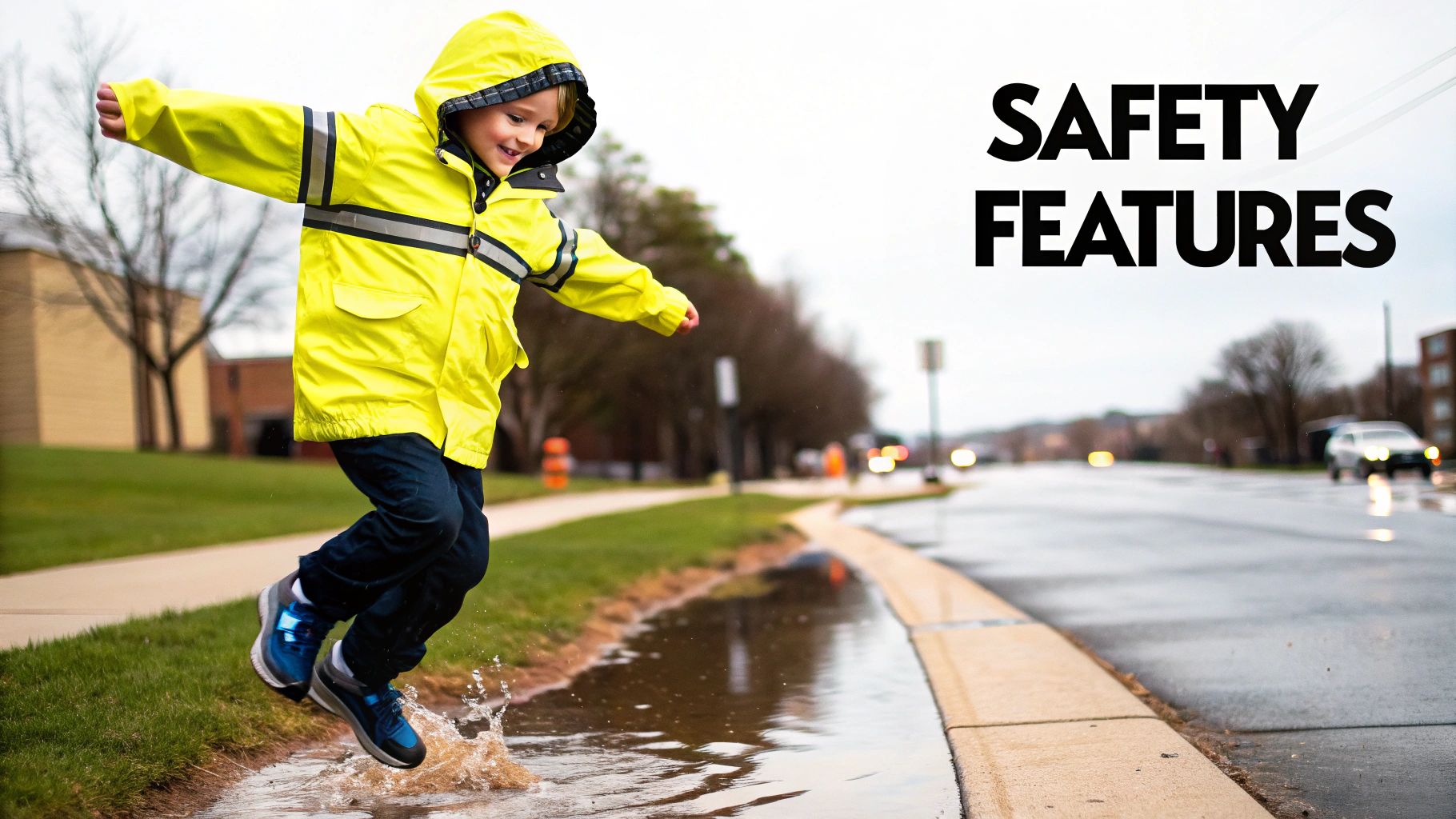
Let's be honest, visibility is probably the most critical safety element. On an overcast afternoon or as dusk sets in, a small child can be surprisingly hard for drivers to spot. This is why reflective strips and patches are a non-negotiable feature. They’re designed to catch the light from headlights, making your child instantly stand out. Bright, almost neon colors also do wonders for daytime visibility, helping your little guy pop against a gloomy background.
Smart Design That Prevents Accidents
Beyond just being seen, the actual construction of the raincoat plays a huge role in preventing common playground mishaps. A well-designed coat anticipates the tumbles, snags, and rough-and-tumble play that boys are known for.
Here are a few essential design details to look for:
- Breakaway Hoods: These are a game-changer. The hood attaches with snaps instead of being sewn on permanently. If it ever gets caught on a tree branch or playground equipment, it simply pops off, preventing a dangerous snagging situation.
- Zipper Garages: You know that little fabric flap at the very top of the zipper? That’s a zipper garage. It covers the metal pull when the coat is zipped all the way up, so it can’t painfully scrape against your boy’s chin or neck.
- No Long Drawstrings: Long, dangling drawstrings on hoods or waists are a serious hazard because they can easily get caught on things. The safest raincoats use internal toggles, simple elastic, or have very short, secured drawstrings instead.
These safety considerations aren't just good ideas; they're becoming a global priority. In Europe, for instance, new regulations mandating fluorescent elements on children's outerwear have led to a 22% jump in sales for compliant raincoats. As a result, many modern kids' raincoat models now include these kinds of advanced features to meet parents' concerns. You can read more about these trends in this detailed industry report from datainsightsconsultancy.com.
Ensuring the Coat Itself Is Safe
Finally, you want to make sure the materials touching your child's skin are actually safe. Keep an eye out for coats with an Oeko-Tex Standard 100 certification. This label guarantees that every single component—from the fabric to the thread and zippers—has been tested and proven to be free of harmful substances like harsh dyes and chemicals. It’s your assurance that the raincoat won’t cause any nasty rashes or allergic reactions.
A truly safe raincoat is one that protects from the weather, enhances visibility, and is built to prevent accidents before they happen. It’s a combination of smart materials and thoughtful design.
Keeping this simple safety checklist in mind will help you choose a coat that offers complete protection. For more tips on dressing kids for any weather, take a look at our guide on a checklist for dressing your baby safely in every season.
How to Find the Perfect Fit for Comfort and Growth
Even the most technical, waterproof raincoat is pointless if it doesn't fit right. A good fit isn't just about matching numbers on a tag; it’s about giving your son the freedom to be a kid—to run, jump in puddles, and explore without his gear getting in the way. A jacket that’s too tight restricts movement and can cause chafing, but one that’s massive can easily become a tripping hazard.
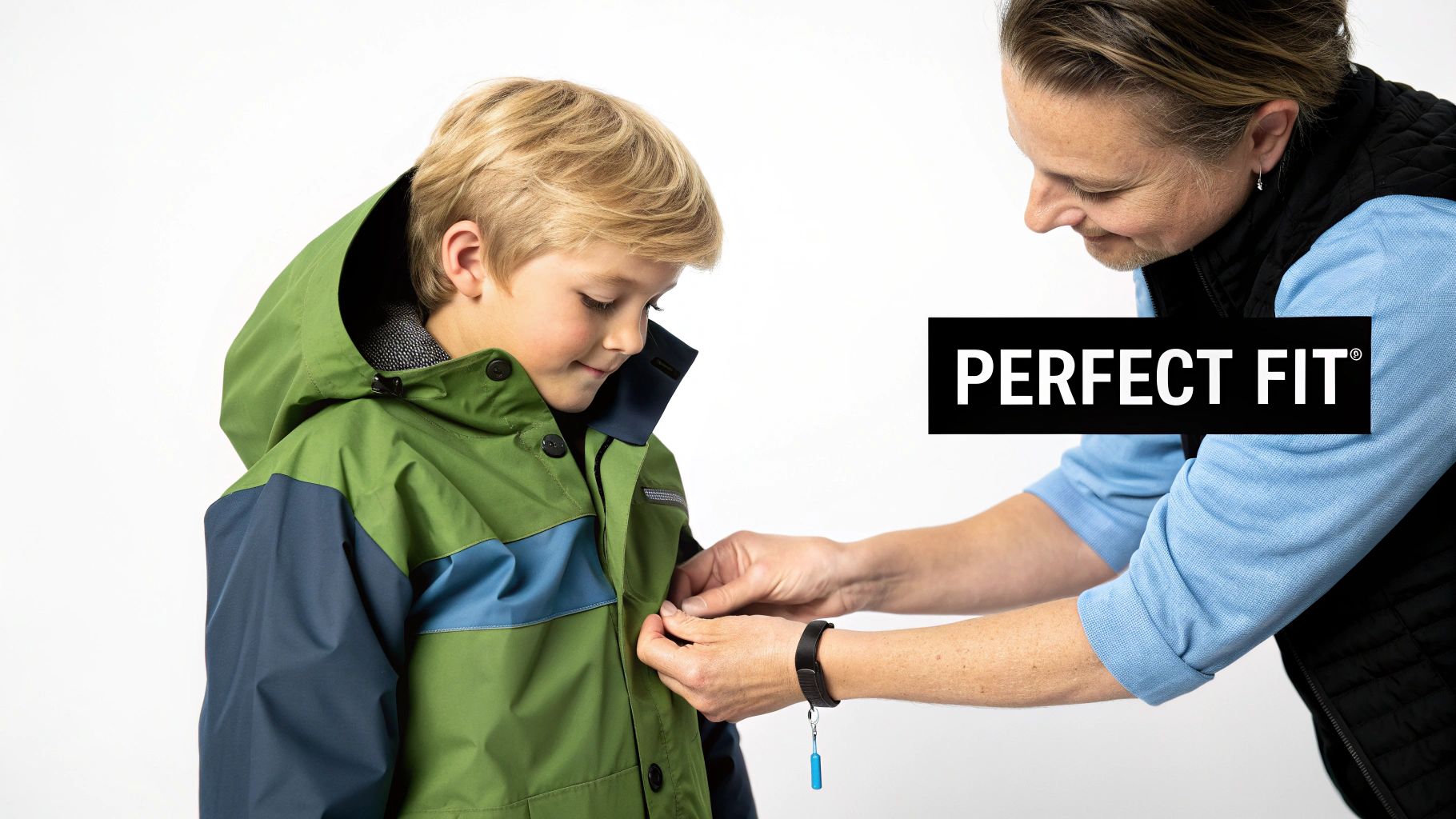
Here’s a trick most seasoned parents swear by: size up. Just going up one size gives you that crucial bit of room for layering a cozy sweater or fleece underneath on those unexpectedly chilly, damp days. It also buys you time, giving him plenty of room to grow so you're not shopping for a new coat every single season.
Look for Smart, Adjustable Features
The key to making the "size up" strategy work is to look for raincoats with smart, adjustable features. These little details help you cinch up the extra material so it doesn't interfere with his adventures.
- Adjustable Cuffs: This is a non-negotiable. Velcro tabs or stretchy elastic cuffs are a lifesaver for keeping sleeves from dangling over his hands. They also do a fantastic job of sealing out rain and chilly drafts.
- Soft Inner Linings: A comfy lining made of mesh or soft fleece isn't just for a cozy feel. It also helps pull moisture away from his skin, which is key to avoiding that sticky, clammy feeling that can sometimes cause irritation.
- Well-Designed Pockets: Let's be real—pockets are for treasures. Whether it's cool rocks or a half-eaten snack, you'll want pockets that have flaps or zippers to keep his finds (and his hands) dry.
It’s these small but mighty features that really elevate a raincoat for boys from just okay to truly practical and comfortable.
Shell vs. Insulated: Which One Is Right?
Finally, you'll need to decide between a shell or an insulated jacket. Think about your local climate, because this choice will dictate your whole approach to layering and sizing.
A simple shell jacket is your go-to outer layer. It’s designed for one main purpose: to be a windproof and waterproof barrier. Shells are incredibly lightweight and perfect for wearing over his everyday clothes or a warmer mid-layer, which makes them a fantastic, versatile option for three-season wear.
An insulated raincoat, on the other hand, is an all-in-one package. It combines that waterproof outer layer with built-in warmth, usually a fleece or synthetic fill lining. This is a brilliant, grab-and-go solution if you live in a colder, wetter region, though you do lose some of the layering flexibility you get with a shell.
If you need more help with sizing, our baby clothing size chart has some great general guidelines that can help you feel more confident in your decision.
Keeping That Raincoat Working Like New
Think of a good raincoat for boys as an investment in dry, happy adventures. A little bit of care goes a long way in making sure it holds up, season after season. It’s not just about washing off mud; proper cleaning is key to keeping the high-tech fabric doing its job and ensuring it remains hygienic and safe for your child's skin.
When dirt, sweat, and oils build up, they can actually clog the microscopic pores in the fabric. This is what causes that sticky, clammy feeling inside the coat—it's not leaking, it's just not breathing. Keeping it clean means your son stays dry from the rain outside and comfortable on the inside, preventing the buildup of bacteria that can thrive in damp environments.
The Right Way to Wash and Dry
Always check the care tag first, but most modern raincoats are surprisingly easy to clean. Just a few simple tweaks to your laundry routine will protect the jacket’s performance.
-
Prep for the Wash: Zip up everything—the main zipper, pockets, you name it. Fasten any Velcro straps or snaps. This little step prevents the hardware from snagging the delicate fabric in the wash.
-
Pick the Right Soap: Use a small amount of a liquid detergent made for technical gear or a gentle, hypoallergenic detergent. Whatever you do, skip the fabric softener and bleach. Those products are the enemy of waterproof fabrics; they leave behind residues that clog the material and strip away the water-repellent coating.
-
Dry with a Purpose: Toss the coat in the dryer on a low, gentle heat. That bit of warmth is actually a crucial step—it helps reactivate the Durable Water Repellent (DWR) finish on the outside of the jacket. That’s the magic that makes raindrops bead up and roll right off.
That factory-applied DWR coating isn't permanent. You'll notice it's wearing off when the jacket starts to look dark and wet in the rain, a sign the fabric is absorbing water instead of shedding it. When that happens, it’s time to bring it back to life with a simple spray-on or wash-in DWR treatment.
Taking a few minutes to care for the coat properly ensures it keeps protecting your son on all his puddle-stomping, mud-pie-making adventures. It's a small effort that pays off big in comfort and durability.
Your Top Questions About Boys' Raincoats, Answered
Picking out kids' rain gear can feel surprisingly complicated. You're not alone if you've got questions! We've rounded up some of the most common ones we hear from parents to give you quick, straightforward answers. Our goal is to help you feel confident you’re choosing a raincoat for boys that's safe, comfy, and actually keeps the rain out.
What Is the Best Raincoat Material to Prevent Skin Rashes?
When it comes to sensitive skin, you want a material that's both waterproof and breathable. The last thing you want is a jacket that traps sweat against the skin, which can lead to heat rash, chafing, and other irritations.
Look for fabrics like PU-coated polyester or PUL (Polyurethane Laminate). These are fantastic because they lock rain out while letting moisture from sweat escape, keeping his skin comfortably dry. A soft inner lining, like mesh or cotton, is a great bonus for wicking away any dampness.
Pro Tip: For total peace of mind, check for an Oeko-Tex certification. This label means the fabric has been tested and is completely free of harmful chemicals that might cause allergies or rashes.
Should I Buy a Size Up for My Boys Raincoat?
In most cases, yes! Going one size up is a smart strategy. It leaves just enough room for layering a cozy fleece or a thick sweater underneath on those chilly, damp days, all without feeling bulky or restricting his movement.
The key is to make sure the slightly larger size won't be a safety issue. This is where adjustable features come in. Adjustable cuffs are a must-have—they let you cinch the sleeves so they don't slide down over his hands and help create a tight seal against the wind and rain.
How Often Should I Re-Waterproof a Kids Raincoat?
You'll know it's time for a refresh when you see water starting to soak into the fabric instead of beading up and rolling off. Think of it like a freshly waxed car versus one that's been through a few storms.
This usually happens after a busy season of wear and tear, or after about 15-20 washes. A quick spray with a DWR (Durable Water Repellent) product will bring that factory-fresh waterproofing right back, keeping your little guy dry on his next big adventure.
At GuGuTon, we believe the right gear turns any forecast into an invitation to play. Check out our collection of high-quality, skin-safe outerwear, all designed to keep your child protected and happy, rain or shine. Find the perfect raincoat for your little explorer at GuGuTon's official website.