

The Ultimate Guide to Girls Rain Jackets: Protecting Sensitive Skin on Rainy Days
Every parent has seen it: the pure joy of a kid splashing in a puddle. But right behind that joy is often a little worry—will they get soaked? Will they catch a chill? The best girls' rain jackets do more than just keep the water out; they are designed to protect your child's sensitive skin from irritation, harmful chemicals, and discomfort, preventing issues like rashes or allergies.
This guide is here to help you turn those rainy-day worries into carefree, healthy adventures.
Why a Quality Rain Jacket Is a Bigger Deal Than You Think
Picking the right rain jacket isn’t just about blocking a downpour. It's about protecting your child’s health and comfort while they’re out there exploring the world. Think of a good jacket as their personal shield, one that ensures outdoor play stays fun and healthy, no matter what the sky is doing.
When a cheap jacket fails, it’s more than just a wet t-shirt. It can lead to a serious chill, clammy skin from trapped sweat, and even rashes or allergic reactions from materials that don't agree with their delicate skin. Taking a few minutes to learn what makes a jacket great means your kid stays happy, warm, and safe from skin irritants.
Moving Beyond "Just Dry"
The sweet spot is a jacket that does three things perfectly: keeps rain out, lets sweat escape, and feels soft and safe against the skin. Most people stop at the first point, but all three are crucial for a healthy, happy kid. A jacket that isn't breathable will leave your child feeling sticky and cold from their own sweat, which is almost as miserable as being soaked by rain. This damp environment can also contribute to skin irritation.
And the materials themselves? They matter. A lot. A child's skin is far more delicate and absorbent than an adult's, making them much more vulnerable to irritants, allergens, and harsh chemicals.
A truly great girls' rain jacket isn't just a tiny version of an adult's. It's a piece of technical gear designed specifically for a child's needs—tough on the weather, but exceptionally gentle on their skin to prevent rashes and allergies.
What This Guide Will Cover
Think of this as your complete roadmap to finding the perfect rain jacket. We’ll walk through everything that matters, from the fabrics that won't cause a rash to the little safety features that give you peace of mind.
Here’s a sneak peek at what we’ll get into:
- Skin-Friendly Materials: We'll show you how to spot fabrics and linings that are hypoallergenic and free from nasty chemicals that could harm sensitive skin.
- Waterproof vs. Breathable: I'll break down the techy terms in simple language so you can find a jacket that keeps your kid comfortable, not clammy and prone to irritation.
- Essential Safety Features: We'll talk about the non-negotiables, like reflective details for visibility and hoods that actually stay up.
- Fit and Layering: Get practical tips on choosing a size that leaves room for growth spurts and cozy sweaters underneath.
Decoding Waterproof and Breathable Technology
Shopping for a girls' rain jacket can feel like trying to decipher a secret code. You're hit with terms like "waterproof rating" and "breathability," but what do those numbers and buzzwords really mean for your daughter on a soggy school day? The difference between a jacket that keeps her happy and dry versus one that leaves her clammy and miserable is all in the tech.
What Waterproof Ratings Actually Mean
Think of a jacket's waterproof rating as its forcefield against the rain. It's measured in millimeters (mm) and tells you how much water pressure the fabric can withstand before a single drop seeps through.
A higher number means a stronger shield. For dashing to the bus in a light drizzle, a jacket rated at 5,000mm is perfectly fine. But if you’re planning a weekend hike where a serious downpour is a possibility, you'll want the peace of mind that comes with a 10,000mm rating or higher. That’s the kind of protection that guarantees she stays bone-dry, no matter what the sky throws at you.
Breathability: The Unsung Hero of Comfort and Skin Health
Keeping rain out is only half the story. The real game-changer for skin health is breathability.
Ever worn one of those cheap plastic ponchos and felt like you were in a personal sauna after just a few minutes of walking? That’s because it traps every bit of your body heat and sweat inside. For a kid who’s always on the move, that’s a recipe for skin problems.
Trapped sweat quickly cools against the skin, making a child feel cold and chilled, even when they’re technically dry from the rain. Worse, that damp, warm environment is a perfect breeding ground for bacteria, which can lead to chafing, skin irritation, and rashes—a real concern for kids with sensitive or allergy-prone skin.
A truly great rain jacket acts like a one-way street for moisture. It has to be tough enough to block big rain droplets from getting in, but clever enough to let tiny sweat vapor molecules out, protecting the skin from irritation.
This incredible dual-function fabric is what separates a quality rain jacket from a simple plastic shell. It's also why the global rainwear market is projected to climb from USD 1.48 billion in 2025 to USD 2.31 billion by 2032, according to market analysis from firms like Research and Markets. Parents are catching on that a jacket needs to do more than just block water; it needs to protect their child's health.
This diagram nails the three essentials for a top-tier kids' jacket: keeping them dry from rain, keeping them visible for safety, and keeping their skin happy.
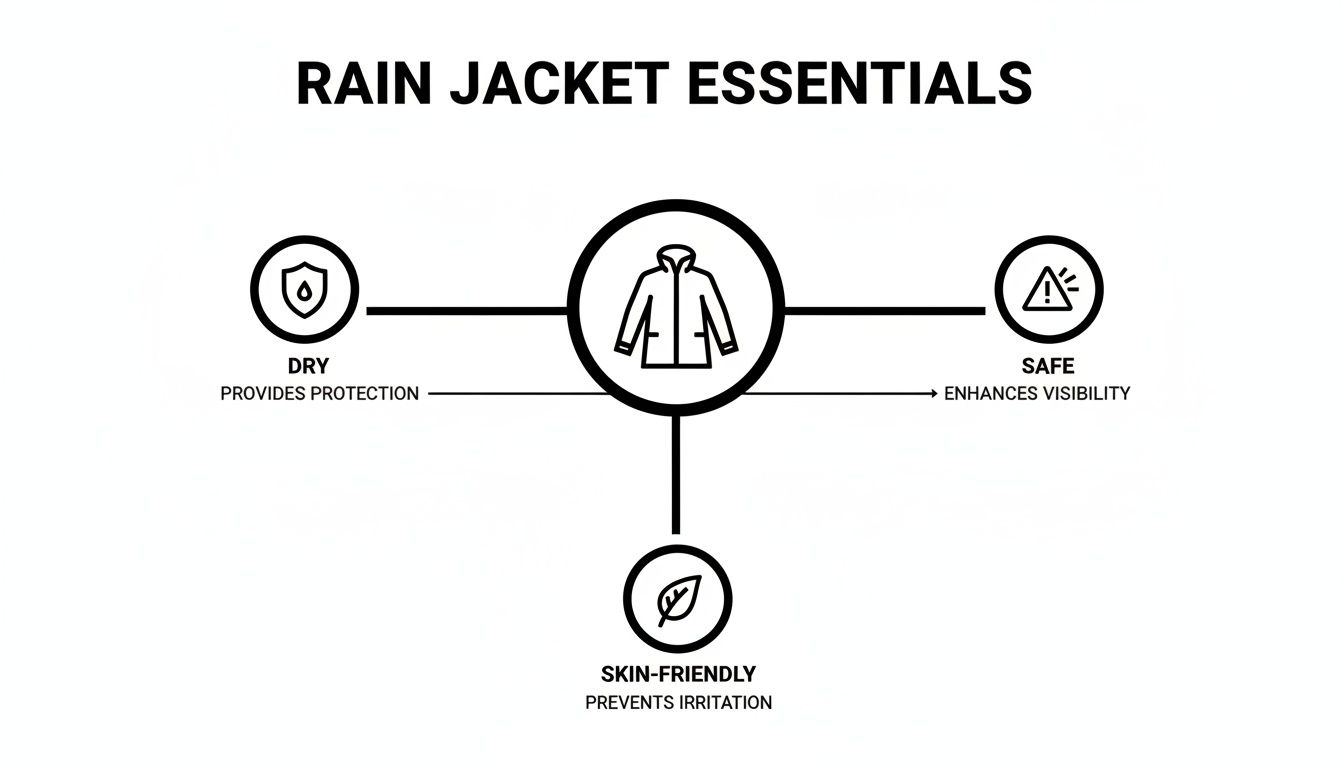
As you can see, it's about a complete system of protection, not just one feature.
Understanding Waterproof and Breathability Ratings
Navigating the technical specs can be confusing, so here’s a simple table to help you match the numbers to your needs. Waterproofing is measured in millimeters (mm), while breathability is measured in grams (g/m²/24h)—the amount of water vapor that can pass through a square meter of fabric in a day.
| Rating Level | Waterproof Rating (mm) | Best For | Breathability Rating (g/m²) | Comfort Level |
|---|---|---|---|---|
| Basic | 1,500 - 5,000 | Light rain, quick dashes, daily wear | 1,500 - 5,000 | Okay for low-energy activities |
| Good | 5,000 - 10,000 | Moderate rain, active playground fun | 5,000 - 10,000 | Good for active kids, prevents clamminess |
| Excellent | 10,000 - 20,000+ | Heavy, sustained rain, hiking | 10,000 - 20,000+ | Best for high-energy sports, maximum comfort |
A balanced jacket is key. A super waterproof jacket with low breathability will still feel clammy inside during active play, potentially leading to skin irritation.
Why Seams Are a Jacket's Weakest Link
You could have the most waterproof fabric on the planet, but if the seams aren't sealed, the jacket will leak. Period. Every stitch creates thousands of tiny pinholes where water can invade.
Think of it like building a boat. You can use the strongest wood, but if you don't caulk the gaps between the planks, it's going to sink. Sealed seams are the caulk for a rain jacket. Manufacturers apply a special waterproof tape over the stitch lines, creating an impenetrable barrier.
When you're shopping, look for these terms in the product description:
- Fully Taped Seams: This is the gold standard. Every single seam—on the body, arms, and hood—is sealed for total protection.
- Critically Taped Seams: This is a more budget-friendly approach where only the most exposed seams (shoulders, chest, hood) are sealed. It's fine for light showers but might not hold up in a serious storm.
By understanding these three fundamentals—waterproof ratings, breathability, and seam sealing—you can cut through the marketing jargon and pick a rain jacket that truly protects your daughter. You’ll be choosing one that not only keeps the rain out but also keeps her comfortable, happy, and free from skin irritation.
Choosing Skin-Friendly Materials and Linings
A good rain jacket does more than just block the rain. It has to feel good against your child's skin to prevent rashes, allergies, and general discomfort. The materials—both inside and out—are a huge part of what makes a jacket a go-to favorite instead of an itchy, uncomfortable last resort.
Kids' skin is naturally more delicate and sensitive than ours. It reacts more quickly to rough textures or irritating chemicals. That’s why digging into what a jacket is actually made of is just as important as checking its waterproof rating for ensuring your child's well-being.
The Outer Shell Battle: Nylon vs. Polyester
When you look at the tag on most rain jackets, you'll almost always see nylon or polyester listed for the outer shell. They’re the workhorses of the industry for a reason, but they have slightly different strengths.
- Nylon: Think of nylon as the tough one. It’s incredibly strong and handles scrapes and tumbles like a champ, making it perfect for kids who play hard.
- Polyester: This material is fantastic at holding onto its color, so it won't fade after a few seasons in the sun. It's also naturally water-repellent (hydrophobic) and dries out in a flash.
Honestly, you can't go wrong with either. The real magic for skin comfort happens with the layer that sits closest to the skin.
The Importance of a Gentle Inner Lining
The lining is what your child actually feels. A scratchy, clammy lining can ruin the whole experience, turning a fun puddle-jumping adventure into a whiny ordeal. This is especially true for kids with eczema, allergies, or sensitive skin.
A soft, breathable, hypoallergenic lining is the secret ingredient that turns a functional rain shell into a cozy, wearable hug. It's the buffer between the rugged outside world and your child's delicate skin.
Here are the most common linings you'll come across:
- Fleece: The go-to for warmth. Fleece linings are super soft and insulating, making them ideal for those cold, drizzly days in fall or early spring. They can be a bit warm for high-energy running, though.
- Mesh: If your kid is always on the move, a mesh lining is your best friend. It creates a tiny bit of space for air to circulate, letting sweat and moisture escape so they don't feel sticky and their skin stays healthy.
- Jersey or Cotton Blends: These feel just like a comfy t-shirt. While wonderfully soft, you’ll want to be careful with pure cotton linings, as they tend to soak up sweat and can end up feeling cold and damp against the skin, which can lead to chafing.
How to Guarantee Chemical Safety
This is a big one. The textile industry often uses chemicals that can stick around in the finished product, potentially causing skin irritation or allergic reactions. Luckily, there are independent watchdogs that do the safety checks for us.
Look for certifications on the product tag. These labels are a promise that the girls rain jacket has been tested and is free from a long list of harmful substances, making it safe for even the most sensitive skin.
The two most trusted certifications in the industry are:
- Oeko-Tex Standard 100: This is a global standard. If a jacket has this label, it means every single part of it—from the fabric and thread to the buttons and zippers—has been tested and found to be safe for human skin.
- bluesign®: This certification goes even further. It looks at the entire manufacturing process to ensure it's safe for workers, consumers, and the environment, which means harmful chemicals were never used in the first place.
Finding one of these labels gives you incredible peace of mind. To learn more about this topic, check out our guide on choosing the right fabric for your baby's sensitive skin.
Key Features: What Really Makes a Great Rain Jacket
Beyond the technical specs of waterproof ratings and breathable fabrics, it’s the little things that make a kids' rain jacket truly exceptional. These are the smart, practical features that combine safety with day-to-day convenience, turning a good jacket into one your child will actually love to wear.

When a jacket is designed with a kid's world in mind, it becomes more than just rain gear. It’s a tool that lets them explore, splash, and play without feeling held back. From the hood down to the cuffs, every detail matters.
The First Line of Defense Against the Elements
A jacket’s main job is to keep wind and rain out. Period. Smart design features are what seal the deal, closing off any weak points where water or chilly air might try to sneak in.
- A Hood That Stays Put: A flimsy hood that flips back with the first gust of wind is pretty much useless. Look for one with a structured brim that acts like a tiny umbrella for her face. Elastic around the edges or adjustable toggles are also a must-have for a snug fit that turns when her head turns.
- Sealed Cuffs: Basic elastic cuffs are fine, but adjustable ones with Velcro or snaps are so much better. They let you create a tight seal around her wrists or over a pair of gloves, stopping water from trickling up her arms when she's digging in a muddy puddle.
- Storm Flaps Over Zippers: A zipper is the most common entry point for rain. A storm flap—that extra strip of fabric covering the main zipper—is an absolute necessity. Some are on the outside (fastened with snaps or Velcro), while others are on the inside, providing a double barrier against leaks.
Think of these features as the final fortifications on a rain-proof fortress. They work together to keep your child warm, dry, and happy, no matter what the weather throws at them.
Safety First: Visibility Is Non-Negotiable
As a parent, your number one concern is safety. On those gray, drizzly days or as evening approaches, visibility drops dramatically, making it harder for drivers to spot a small child. This is where a jacket's color and reflective details become crucial safety tools.
A rain jacket isn't just about style; it's a piece of safety equipment. Bright colors and reflective accents make your child stand out to drivers and cyclists, turning a simple coat into a high-visibility beacon.
It's no surprise that the global rainwear market, valued at USD 4.25 billion in 2024, is growing. A big part of that growth comes from the kids' segment, as more parents seek out gear that blends smart safety features with fun, stylish designs. You can dig deeper into these trends and see why innovative gear for young adventurers is taking off.
Here’s what to look for when you're shopping:
- Bright Colors: Go for vibrant hues like sunny yellow, hot pink, bright orange, or lime green. These colors pop against a gloomy background, making your child much easier to see.
- Reflective Details: A good jacket will have reflective strips, logos, or piping strategically placed on the front, back, and sleeves. These little details brilliantly catch and reflect the light from headlights, making your child glow in low-light conditions.
Little Touches That Make Life Easier
Finally, a great rain jacket has to work for a busy family. Features that make it easy to pack, carry, and care for can be a real game-changer.
A lightweight and packable design is a huge win. Some jackets are designed to fold up into their own pocket or a tiny stuff sack, which is perfect for tossing into a school bag or stroller for those "just in case" showers. You'll never regret having one on hand.
Jackets like the Ilai Spring Autumn Hoody Waterproof Coat are great examples of how to balance all these needs, offering serious protection that’s still lightweight and easy for parents to manage.
Finding the Perfect Fit for Growing Kids
We've all been there: a jacket that looks great on the hanger ends up being a total pain. If it’s too tight, it ruins the fun of an outdoor adventure by restricting movement. But if it’s way too big, it becomes a safety risk—long sleeves can snag on branches or playground equipment, and an overly long hem is a trip waiting to happen.
Finding the right size for a girls rain jacket is all about hitting that sweet spot. You want a fit that gives her total freedom to run, jump, and climb, but with just enough extra room to accommodate a growth spurt and a cozy sweater underneath. Nailing the size means the jacket will actually last, keeping her dry and comfortable for more than just one season.
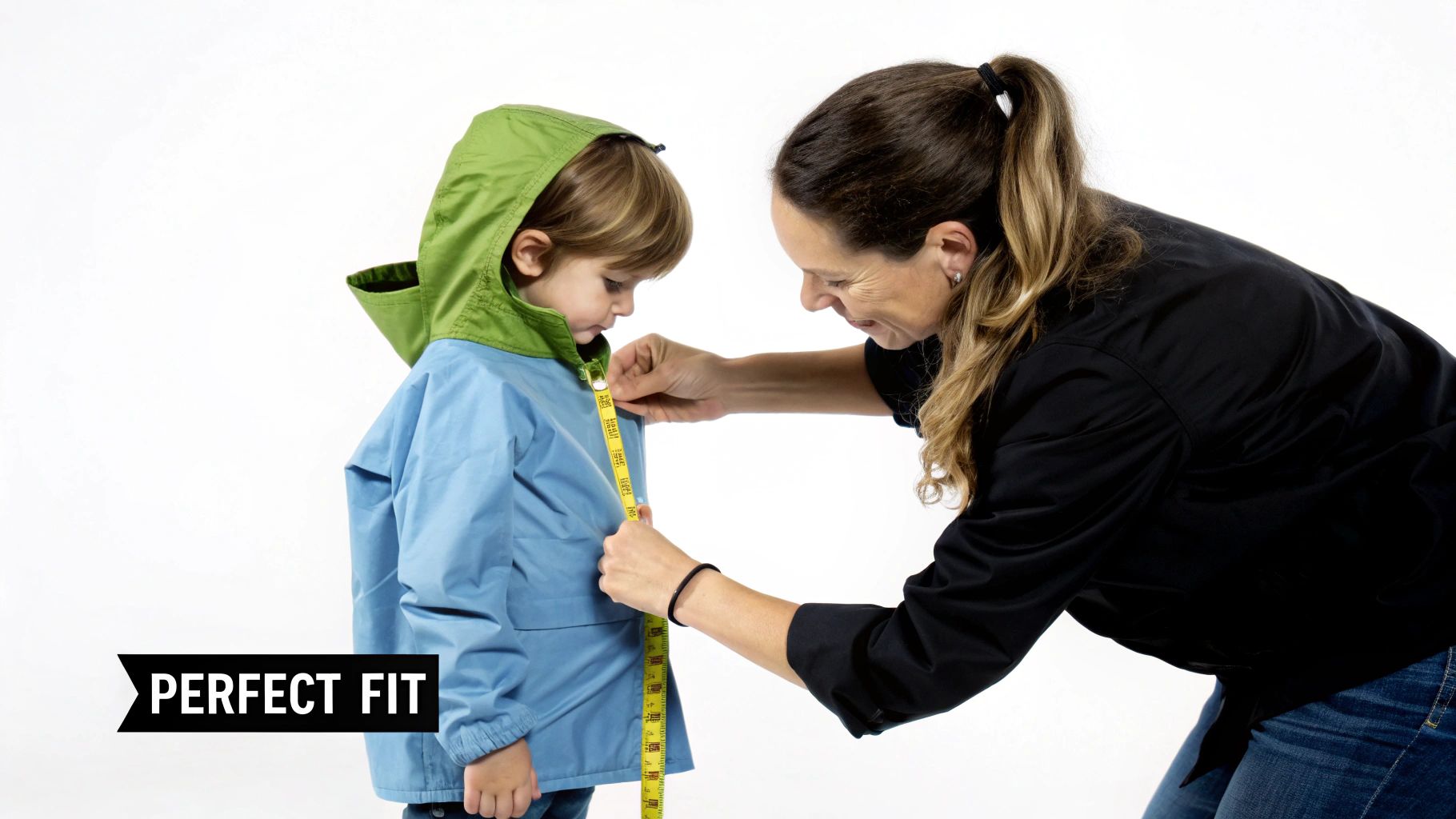
The Art of Measuring Your Child
Before you start clicking "add to cart," take a moment to grab a soft measuring tape. Age-based sizing is a good starting point, but we know kids grow at their own unique pace. Taking a few quick measurements is the secret to getting the fit right on the first try.
- Chest: Measure around the fullest part of her chest. The tape should be level and snug, but not tight.
- Sleeve Length: This one's a bit different. Have her stand with her arm bent slightly. Measure from the center of the back of her neck, run the tape across her shoulder, and go all the way down to her wrist bone.
- Torso Length: Start at the base of the back of her neck and measure down to her waist or hips, depending on how long you want the jacket to be.
With these three numbers in hand, you're ready to tackle any size chart.
Decoding Size Charts and Planning for Growth
Now you can compare your child’s measurements to the brand's size chart. It’s a small step, but a crucial one—never assume sizing is consistent from one brand to the next. Always, always check the specific chart for the jacket you're looking at.
The golden rule for kids' outerwear is simple: when in doubt, size up. A little extra room is your friend. It leaves space for those inevitable growth spurts and, just as importantly, for layering on colder days.
That bit of extra space is what turns a simple rain shell into a year-round workhorse. It allows you to pop a fleece or a thick sweater underneath, making the jacket adaptable for chilly autumn mornings and crisp spring afternoons. For more detailed advice, our baby clothing size chart has some great tips for getting it just right.
Fit Features That Make a Difference
Beyond the basic chest and sleeve measurements, some jackets have clever features that help you fine-tune the fit. These details are fantastic because they allow a slightly larger jacket to fit well right away, extending its lifespan even further.
- Adjustable Cuffs: Velcro tabs or snaps at the wrist are a lifesaver. You can cinch them down so the sleeves don’t fall over her hands.
- Adjustable Hem: Look for a drawcord along the bottom hem. Pulling it snug helps block out wind and keeps the jacket from riding up during play.
- Articulated Sleeves: This is a more premium feature, but it’s great for active kids. The sleeves are pre-shaped with a slight bend at the elbow, allowing for a much more natural range of motion.
By paying attention to these practical features, you can choose a girls rain jacket that not only fits perfectly today but can also adapt as she grows—a smart investment for any parent.
Keeping That Rain Jacket Looking (And Working) Like New
A good girls rain jacket is more than just a piece of clothing; it's an investment in your child’s comfort and health. With just a little bit of care, you can make sure it’s just as effective on its hundredth puddle-jumping adventure as it was on its first. The right maintenance routine protects its waterproof powers and keeps it breathable, ready for whatever the weather throws at it.
The demand for high-quality kids' rainwear is on the rise, part of a global market projected to grow steadily through 2033. Parents are actively looking for gear that is not only functional but also colorful, safe, and built to last. As more families prioritize sustainability, materials like recycled polyester are becoming a major draw. To dig deeper, you can explore the growth of the kids' rainwear market on cognitivemarketresearch.com.
Safe and Simple Cleaning Routines
Over time, everyday grime—dirt, sweat, and oils—can clog the microscopic pores in a jacket's breathable membrane, which is what stops it from feeling clammy inside. A regular wash is the best way to keep it performing at its peak. But it's not as simple as tossing it in with the towels.
One of the biggest mistakes I see parents make is using standard laundry detergent or fabric softener. These products are designed to break down oils and leave behind residues, which is exactly what you don't want. They can strip the waterproof coating and leave a film that actually attracts water, causing the fabric to soak through.
Instead, follow these simple steps to get it clean without compromising its performance:
- Use a Specialized Cleaner: Look for a technical wash made specifically for waterproof gear. Brands like Nikwax Tech Wash or Grangers Performance Wash are excellent choices.
- Prep the Jacket: Make sure all pockets are empty and close all the zippers and Velcro tabs. This prevents snagging.
- Wash Gently: Use a gentle cycle with warm water.
- Rinse Thoroughly: It’s a good idea to run an extra rinse cycle to make sure every last bit of soap is gone.
These small details can make a huge difference in how long your child's gear lasts. For more tips on common pitfalls, check out our guide on 10 common baby clothing mistakes.
Bringing the Waterproof Shield Back to Life
Most rain jackets come with what's called a Durable Water Repellent (DWR) finish. This is the magic coating that makes water bead up and roll right off the surface. If you notice that rain is starting to soak into the fabric instead of beading, it's a sign the DWR needs a little refresh.
Often, a bit of heat is all it takes. After washing, toss the jacket in the dryer for about 20 minutes on a low, gentle heat. This is usually enough to reactivate the DWR coating.
If that doesn't do the trick, it’s time to reapply a waterproofing treatment. You can find simple spray-on or wash-in products that will restore the jacket's water-shedding power, making it feel brand new again.
Common Questions About Girls Rain Jackets
When you're trying to pick out the right rain jacket, it's easy to get bogged down in the details. But getting clear, simple answers helps you feel confident you're choosing a jacket that keeps your child dry, safe, and comfortable against their sensitive skin.
Let’s tackle some of the most common questions I hear from parents.
What Is the Difference Between Waterproof and Water-Resistant?
Think of it this way: a water-resistant jacket is like a temporary shield. It can handle a light mist or a quick dash from the car to the store, but in a real shower, that water is eventually going to soak through.
A waterproof jacket, on the other hand, is built like a fortress against the rain. It uses special materials and sealed seams to create a true barrier, meaning your child will stay bone-dry even if they’re jumping in puddles for an hour.
How Do I Stop My Child from Overheating in a Rain Jacket?
The key here is one word: breathability. Kids run hot, and if their jacket traps all their body heat and sweat, they’ll end up feeling damp and clammy. That can lead to everything from skin irritation and rashes to getting a chill when they finally stop moving.
To avoid that sticky, uncomfortable feeling, look for jackets with good breathability ratings (often measured in g/m²). Features like mesh linings or little vents under the arms also do wonders for letting hot air escape. Pro tip: dress your child in moisture-wicking layers underneath—never cotton, which just holds onto sweat.
Are More Expensive Rain Jackets Actually Better?
Sometimes, yes. A higher price tag often means you're paying for more advanced technology—higher waterproof ratings, better breathability, and more durable construction that will last for years and multiple kids. If your family spends a lot of time outdoors hiking or camping in all kinds of weather, that high-performance jacket is absolutely a worthwhile investment.
But for everyday use like walking to school or trips to the playground, a well-made, more affordable jacket can do the job just fine. It’s all about matching the jacket’s features to how your family actually spends its time.
A jacket's value isn't just in its price, but in its ability to protect your child's health and comfort. The right choice is the one that provides peace of mind, knowing their skin is safe from both the rain and potential irritants.
How Can I Ensure a Jacket Is Free from Harmful Chemicals?
This is such an important question, especially for parents of kids with sensitive skin, rashes, or allergies. The most reliable way to know a jacket is safe is to look for independent certifications on the label.
- Oeko-Tex Standard 100: This is your guarantee that every single part of the jacket has been tested for a long list of harmful substances and was found to be clean.
- bluesign®: This standard takes it a step further, ensuring the entire manufacturing process is safe for the environment, the workers, and your child.
Seeing one of these labels means you can trust that the material touching your child's skin is genuinely safe and won't cause a surprise reaction or allergy.
At GuGuTon, we believe every child deserves to explore the world safely and comfortably. Our collection of rain jackets is thoughtfully curated to meet the highest standards of quality, safety, and skin-friendly design, giving you one less thing to worry about on a rainy day. Discover the perfect jacket for your little adventurer at https://guguton.com.