

A Guide to Postpartum Essentials for New Moms
Bringing a new baby home is one of life’s most incredible moments. But that period right after birth—often called the fourth trimester—is a whole new world that deserves just as much preparation. The best postpartum essentials for new moms aren't just about stuff; they're about choosing items that genuinely support your physical healing and your baby's delicate needs. It all comes down to picking safe, high-quality materials that prevent skin irritation, allergies, or rashes and keep everyone comfortable, letting you focus on what really matters: recovery and bonding.
Thriving in Your Fourth Trimester
The journey into motherhood is a whirlwind of joy, massive changes, and some serious healing. This guide is here to cut through the overwhelming advice and give you a clear, practical roadmap to the postpartum essentials you'll actually use. It’s more than just a shopping list; it’s about understanding why certain things are so crucial for your recovery and your newborn's first few months.
Let’s talk about quality and safety. A newborn's skin is incredibly delicate and much more porous than ours, which means it’s prone to rashes and irritation from rough fabrics or harsh chemicals in dyes and detergents. At the same time, your own body is in full-on recovery mode and needs the gentlest, most comfortable materials to heal properly.
Prioritizing Needs for Mom and Baby
When you choose the right products from the start, you can spend less time stressing and more time soaking in those precious newborn moments. A great way to think about it is to break down your needs into categories that support you, your baby, and your new life together.
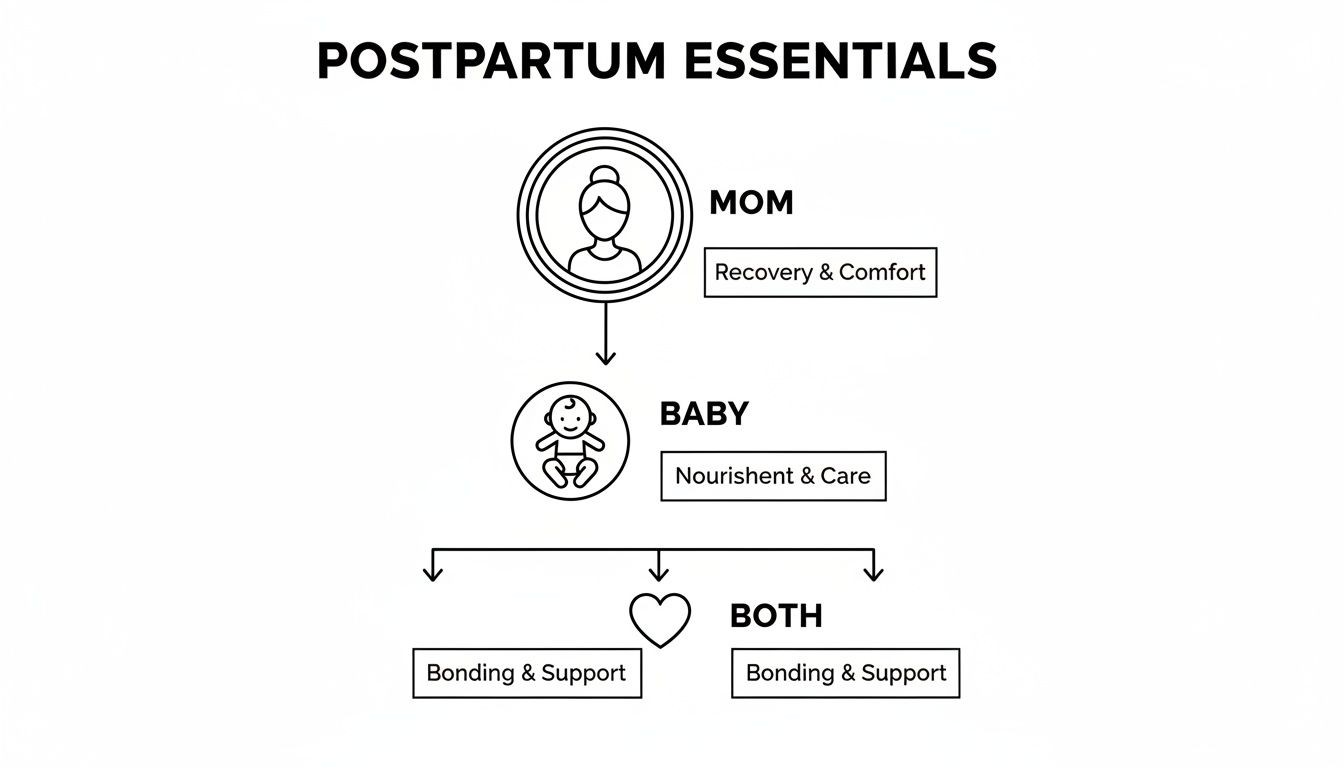
As you can see, a solid postpartum plan covers the unique needs of both mom and baby, along with the things that help you both feel connected and cared for.
Thinking ahead is your best friend here, especially when it comes to your hospital stay. A well-packed bag is a game-changer for reducing that last-minute scramble and ensuring you have your own comfort items close by. If you’re not sure where to start, our complete guide on what to pack in your hospital bag for delivery lays out a detailed checklist to get you ready.
The goal isn’t just to get through the fourth trimester—it’s to thrive. By thoughtfully choosing gentle, effective products, you create a peaceful environment that helps you transition into parenthood more smoothly and confidently.
This deliberate approach makes sure every item you bring into your home has a purpose. From the softest organic cotton swaddles for your baby to soothing, fragrance-free recovery balms for you, each product plays a part in giving your family the most comfortable, irritation-free start possible.
To make things even easier, here's a quick look at the main categories you'll want to cover.
Your Postpartum Essentials Checklist At-a-Glance
This table gives you a high-level overview of the key areas to focus on when you're gathering your supplies. Think of it as your cheat sheet for postpartum preparedness!
| Category | Key Items You'll Need | Why It's Essential for Recovery & Comfort |
|---|---|---|
| Recovery Care | Peri bottle, sitz bath, padsicles, witch hazel pads, stool softeners | These items directly soothe, cleanse, and support the healing of your perineal area, making those first few weeks much more comfortable. |
| Nursing & Feeding | Nursing bras/tanks, breast pump, nipple cream, nursing pads, bottles | Whether you're breastfeeding or bottle-feeding, having these on hand ensures you and your baby are comfortable and supported during every feed. |
| Comfortable Clothing | High-waisted underwear, soft robes, nursing-friendly pajamas, loose pants | Your body needs a break. Gentle, non-restrictive clothing made from breathable, hypoallergenic materials allows your body to heal without pressure or skin irritation. |
| Baby Care Basics | Diapers, wipes, swaddles, burp cloths, soft onesies, gentle soap | Having these basics ready means you can focus on your baby's needs without having to run to the store. Prioritize chemical-free, soft items to prevent rashes. |
| Home & Personal Comfort | Large water bottle, healthy snacks, comfortable pillows, sit-down donut | Staying hydrated, nourished, and physically supported is crucial for your energy levels and overall recovery process. |
Remember, this is about setting yourself up for a smoother, more peaceful fourth trimester. A little preparation goes a long way.
Supporting Your Physical Recovery After Birth
Your body just did something incredible, and the weeks that follow are all about healing and being gentle with yourself. Think of this as your "fourth trimester"—a time when the right support isn't just a nice-to-have, it's essential. The right postpartum essentials for new moms are more than just comfort items; they are the tools that help you heal properly, manage pain, and keep your skin happy during an incredibly sensitive period.
Whether you delivered vaginally or had a C-section, your body has specific needs. This is the time to focus on clean, gentle ingredients and soft, breathable materials that won’t irritate healing incisions or delicate skin.
Essentials for Perineal and Lochia Care
For most new moms, the first week or so is all about managing soreness down there and dealing with the postpartum bleeding, known as lochia. A few key items will quickly become your absolute best friends.
First up, the peri bottle. Trust me, this is a non-negotiable. It’s a simple little squirt bottle that lets you gently rinse the perineal area with warm water after using the toilet. It’s so much kinder than toilet paper and helps keep everything clean, which can prevent infection and soothe tender spots.
Next, you'll want something for cooling relief. "Padsicles" (maternity pads you pop in the freezer) and witch hazel pads are game-changers for reducing swelling and that burning sensation. When you're buying anything like this, always, always go for fragrance-free formulas. The last thing you need is irritation from perfumes or harsh chemicals near stitches or sensitive skin.
To handle the lochia, you’ll want a stockpile of super-absorbent maternity pads and comfy postpartum underwear. Many new moms swear by the disposable mesh underwear the hospital provides—they’re soft, stretchy, and hold those giant pads in place without squeezing your belly or perineum.
Choosing Safe and Gentle Materials
There's a reason the market for postpartum products is booming. It was valued at USD 2.78 billion globally and is expected to hit USD 5.64 billion by 2035. That's because these products meet a very real need. With up to 85% of first-time moms experiencing some degree of perineal tearing, the demand for effective, gentle solutions is huge. It's no surprise that postpartum underwear is a top seller, often made with soft organic cotton and high-waisted designs for maximum comfort. You can dig into more of these trends in the full postpartum products report.
So, when you're stocking up, here’s what to look for to promote healing and prevent irritation:
- Organic Cotton: For pads and underwear, this is your best bet. It’s breathable and much less likely to cause an allergic reaction or trap moisture, which is key for healing.
- Fragrance-Free Formulas: Check the labels on any sprays, foams, or wipes. No added scents means no unnecessary irritation to delicate, healing tissue.
- Dye-Free & Chlorine-Free Products: Simple is better. Dye-free and chlorine-free materials are less likely to contain chemicals that could interfere with your body's natural healing process.
Supporting C-Section Recovery
If you had a C-section, your recovery playbook will look a little different. You'll still be managing lochia, but your main focus will be on caring for your incision and supporting your abdomen.
High-waisted postpartum underwear is your hero here. You want something that sits well above your incision line so it doesn’t rub or aggravate the area. Look for soft, seamless styles made from breathable cotton that offer gentle compression—not tight, just a light "hug" that can help you feel more secure as your core muscles start to mend. A good supportive pillow will also be a lifesaver for bracing yourself when you sit up, cough, or feed the baby.
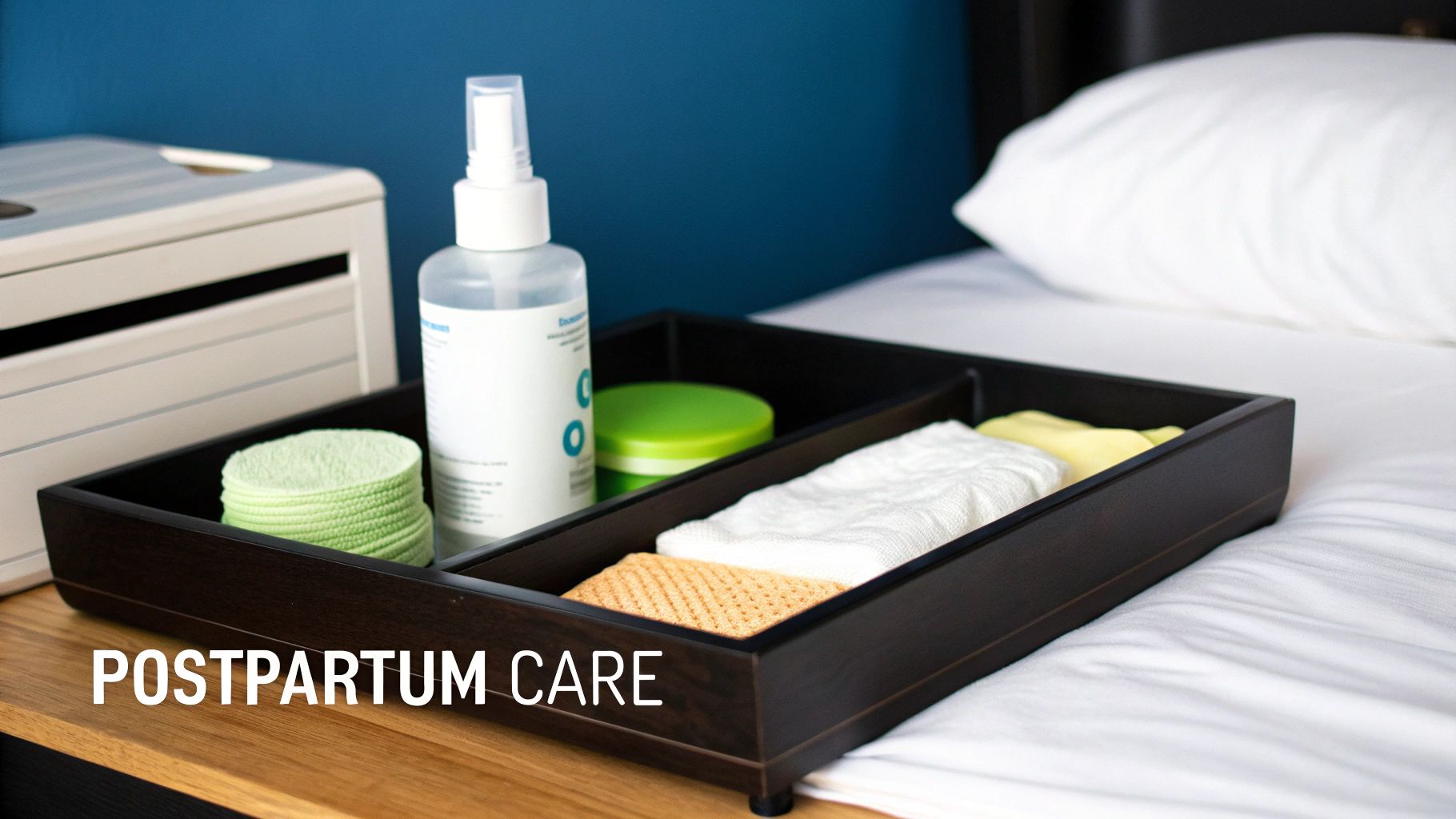
Here's a pro tip: create a "recovery station" in your bathroom. Get a small basket and keep your peri bottle, pads, witch hazel, and any soothing sprays right next to the toilet. Having everything within arm's reach makes you feel more in control and comfortable when you need it most.
Don't forget about your back, either. You’ll be spending a lot of time sitting and feeding your newborn, and it's easy to start slouching, which puts a ton of strain on your recovering abs and back. A well-designed cushion can make all the difference. For instance, a quality waist support cushion provides the stability you need to maintain good posture during those long feeding sessions, helping reduce pain and support your overall recovery.
Choosing Comfort During the Fourth Trimester
Those first few months with a new baby—the fourth trimester—are a whirlwind. In the middle of all the newness and learning, your own comfort can easily get pushed to the back burner. But it shouldn't. Choosing the right clothing and comfort items isn't a luxury; it's a core part of your recovery toolkit and one of the most practical postpartum essentials for new moms. This is your time to be gentle with yourself, and that starts with what you put on your body.
Your skin, not to mention your baby's, is incredibly sensitive after birth. Breathable fabrics are key to preventing irritation, rashes, and overheating, especially around healing stitches or incision sites. Think of your clothing as a soft, protective layer that helps your body heal.
Fabric First: Materials to Soothe and Support
The secret to true postpartum comfort starts with the fabric. Your postpartum wardrobe should feel like a safe haven—soft, stretchy, and soothing against your skin, while also being safe for your baby’s delicate skin to touch.
-
Organic Cotton: There's a reason this is a top pick for both moms and babies. It’s grown without harsh chemicals, so it's less likely to cause rashes or allergic reactions. Plus, it's wonderfully breathable, helping to regulate your temperature and keep you dry.
-
Modal and Bamboo: These fabrics feel like pure luxury. They're silky-soft, drape beautifully without clinging to your changing body, and are amazing at wicking away moisture (hello, postpartum sweats). They are generally considered hypoallergenic and gentle.
-
Fleece and Flannel: When you just need to feel cozy, nothing beats fleece or flannel. A soft robe or a pair of flannel pajama pants can feel like a warm hug during those late-night feeding sessions. Opt for cotton flannel for better breathability.
It's a good idea to steer clear of synthetic fabrics like polyester when you can, especially for items that have direct contact with sensitive skin. They tend to trap heat and moisture, which can lead to skin irritation you just don't need right now.
Must-Have Clothing for Easy Days and Nights
Just as important as the fabric is the function. Your clothes need to make your life easier, not harder, accommodating a healing body, easy nursing access, and all the snuggles.
High-waisted leggings and joggers become the unofficial new-mom uniform for a good reason. They offer gentle compression for a recovering abdomen without digging into a C-section scar. Throw on a loose, nursing-friendly top, and you're set for anything from a visit from a friend to a quick walk around the block.
A versatile robe is another absolute must. It's perfect for tossing on over your PJs for those early morning wake-up calls or whenever you need an extra layer of comfort. Pro tip: look for one with deep pockets—they’re perfect for stashing your phone, a rogue pacifier, or a much-needed snack.
Remember, postpartum clothing isn't about "bouncing back." It's about giving your body the space, softness, and support it needs to heal at its own pace. Choose pieces that make you feel cared for and comfortable in your own skin.
Don't forget about other supportive items, either. A belly band can provide gentle compression to support your core muscles and lower back, which can feel amazing as you get used to carrying your baby. A good nursing pillow isn't just for feeding—it props up your arms and back, easing the strain of holding your baby for long stretches. These little things make a huge difference, letting you focus on recovery and bonding instead of aches and pains.
Nourishing Your Body and Mind for Healing
Healing after childbirth is truly an inside-out job. While all the physical recovery aids are a huge help, what you eat and drink—and how you care for your mental health—are just as critical. Think of it as building a strong foundation for this whole new chapter of your life.
Your body is working overtime, healing tissues and, if you're breastfeeding, producing milk around the clock. The best thing you can do is keep things simple. A large, reusable water bottle should be your constant companion; staying hydrated helps with everything from flushing toxins to keeping your energy from tanking.

Fueling Your Body for Recovery
Let's be real: no one is cooking gourmet meals in those first few weeks. This is where a stash of nutrient-dense, easy-to-grab snacks becomes your lifeline. Think of them as small, powerful deposits into your energy bank account.
Having these ready to go can make all the difference, especially when you're hit with that sudden, ravenous hunger during a 3 a.m. feeding session.
- Protein-Packed Options: Nuts, seeds, Greek yogurt, and hard-boiled eggs are fantastic for helping your body repair itself and keeping you feeling satisfied.
- Healthy Fats: Avocado, nut butters, and chia seeds give your brain and hormones the good stuff they need to function well.
- Complex Carbs: Things like whole-grain crackers and oatmeal offer that slow-burn energy, so you don't get that dreaded sugar crash.
Your body has just run a marathon. Refueling it with consistent, high-quality nutrition isn't an indulgence—it's a necessary part of the healing process that supports everything from your mood to your milk supply.
While continuing your prenatal vitamins is a good start, your body often needs more targeted support after delivery. Childbirth is incredibly demanding and can drain your nutrient stores. In fact, after birth, a staggering 70-80% of moms face some form of nutrient depletion. Iron stores can drop by 30%, and vitamin D levels can plummet in up to 90% of new mothers. This "nutrient crash" can make fatigue feel so much worse and even contribute to the "baby blues."
That's where postnatal supplements come in. They are specifically formulated to replenish these key vitamins and minerals. Some research even suggests they may help reduce the odds of postpartum depression. You can dive deeper into the latest postnatal supplement market trends to see how this space is evolving.
Nurturing Your Emotional Well-being
Your mental and emotional health is just as important as your physical recovery. The fourth trimester is a whirlwind of hormonal shifts, sleep deprivation, and adjusting to a completely new reality. It is 100% normal to feel a whole spectrum of emotions, from pure joy to moments of deep sadness or anxiety.
You don't have to go through this alone. Building an emotional support system is key.
- Designate a Point Person: Choose a partner, friend, or family member you can call or text anytime, day or night, without feeling like you're bothering them.
- Connect with Other New Moms: Find a local or online support group. There's incredible comfort and validation in hearing someone else say, "Me too."
- Know When to Seek Professional Help: Get familiar with resources like Postpartum Support International. Reaching out for help is a sign of incredible strength, not weakness.
Ultimately, your physical well-being and mental resilience are deeply connected. When your body is well-fed and hydrated, it's so much better equipped to handle emotional stress. You're building a more stable, centered foundation for yourself and your new baby.
Selecting Safe Essentials for Your Newborn
Your newborn's skin is brand new to the world. It’s thinner, more delicate, and far more sensitive than ours, making it susceptible to everything from rough fabrics to hidden chemicals in dyes. That’s why choosing the right baby items isn’t just about what’s cute—it's about prioritizing safety and gentleness above all else to prevent allergies and skin rashes.
Think of it this way: everything that touches your baby, from their first little onesie to their crib sheets, helps build a safe, soothing environment for them. When you focus on what’s truly gentle, you can spend less time troubleshooting mysterious rashes and more time soaking up those newborn snuggles.
Choosing Gentle Fabrics for Clothing and Bedding
The foundation of your baby’s comfort starts with the fabrics they wear and sleep on. Since these materials are in constant contact with their skin, picking soft, breathable, and natural options is one of the best things you can do to avoid irritation.
Organic cotton is really the gold standard here. It’s grown without harsh pesticides and processed without nasty chemicals, so it’s incredibly gentle and hypoallergenic. Its natural breathability also helps regulate your baby’s body temperature, keeping them from overheating. When you’re shopping for sleepers, swaddles, or crib sheets, keep an eye out for certifications like GOTS (Global Organic Textile Standard) to know you’re getting the real deal.
Other fantastic fabric choices include:
- Bamboo Rayon: This fabric feels silky-soft and is amazing at wicking away moisture, making it a great choice for babies with extra sensitive skin.
- Muslin: You’ll love this lightweight, airy cotton for swaddles and burp cloths. It’s incredibly breathable and just gets softer with every single wash.
As a general rule, try to avoid synthetic fabrics like polyester for anything that will be right up against your baby's skin. Synthetics tend to trap heat and moisture, which can easily lead to irritation and rashes.
Safe Diapering to Prevent Rashes
You’ll be changing a lot of diapers, so this is one area where safety and quality really count. Diaper rash is one of the most common baby skin woes, but choosing the right products can make a huge difference.
When picking out diapers and wipes, always go fragrance-free. Fragrances are one of the biggest culprits behind skin irritation in infants. Look for wipes that are mostly water and have just a few simple, plant-based ingredients. For diapers, many parents swear by chlorine-free and dye-free options to minimize reactions.
A great diaper cream is your best friend in the fight against rash. It creates a protective layer that shields your baby's delicate skin from moisture.
Look for a diaper cream with zinc oxide as the main active ingredient. It creates an effective, yet gentle, barrier. Steer clear of products packed with heavy perfumes, parabens, or phthalates.
The goal is simple: keep the diaper area as clean and dry as possible. That means changing diapers often and letting your baby have some "air time" without a diaper whenever you get the chance.
Creating a Safe Sleep Environment
Nothing is more important than giving your baby a safe place to sleep. It’s the cornerstone of your peace of mind as a new parent. The American Academy of Pediatrics (AAP) has clear guidelines: always place your baby to sleep on a firm, flat surface with no soft bedding, pillows, or crib bumpers.
A firm mattress that fits snugly in the crib or bassinet is non-negotiable. You shouldn’t be able to fit more than two fingers between the mattress and the side of the crib. Use a tightly fitted sheet—again, organic cotton is a perfect choice for breathability and to reduce the risk of skin allergies.
Instead of loose blankets, which are a suffocation hazard, use a sleep sack or a wearable blanket. These brilliant inventions keep your baby cozy and secure without any risk of fabric covering their face. They come in different weights for every season, so your baby will always be at a comfortable temperature. For more ideas, you can explore a handpicked list of the best baby products for newborns that keeps these safety principles front and center.
Navigating Your Baby Feeding Journey
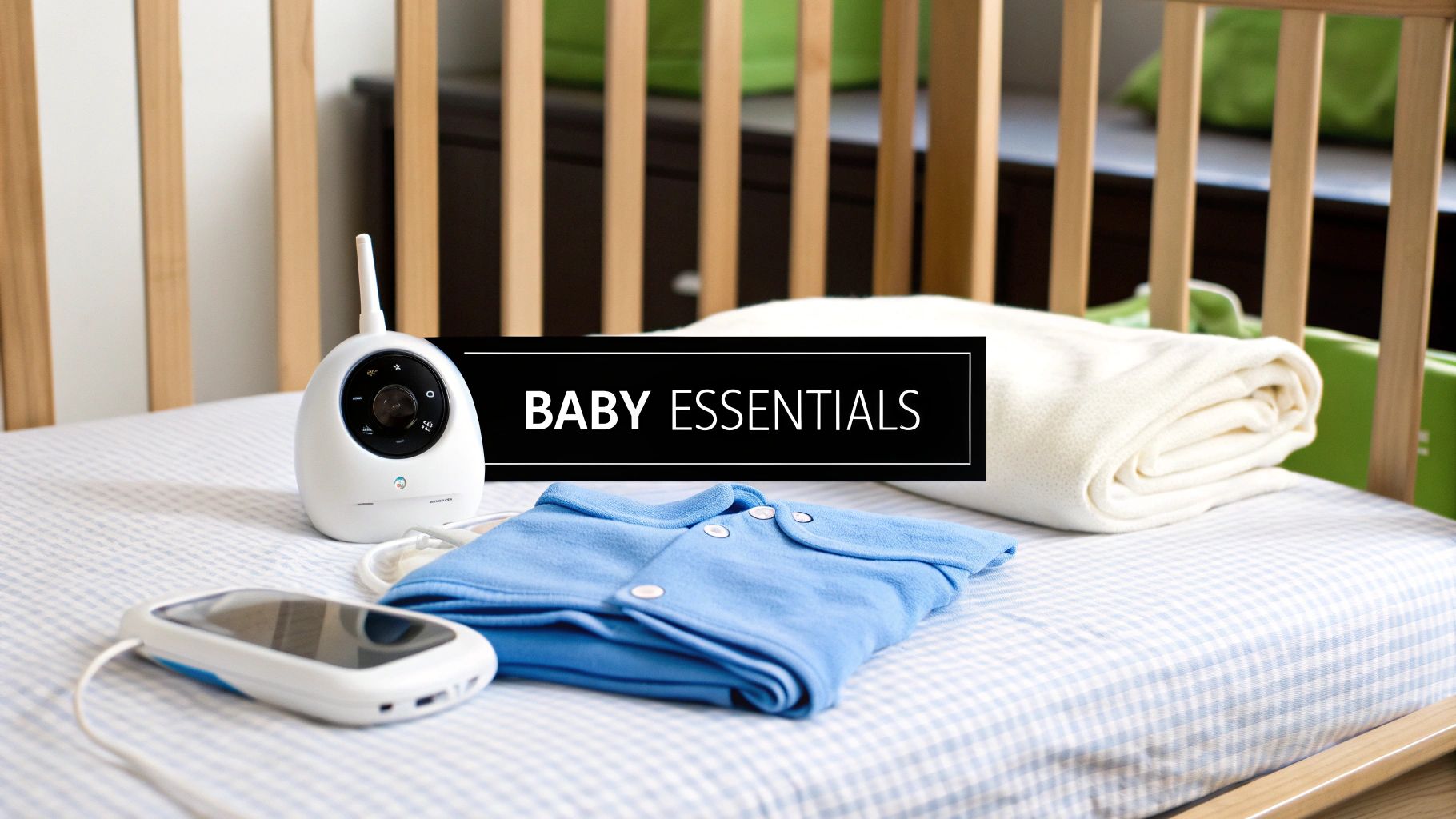
Whether you’re planning on breastfeeding, formula feeding, or doing a bit of both, having the right gear on hand can make all the difference. This is a deeply personal journey, and the goal isn't just to feed your baby—it's to do so with comfort, confidence, and peace of mind.
For moms who are breastfeeding, a few items will quickly become your best friends. A good nursing pillow isn't just a comfort item; it's a back, neck, and arm-saver that helps you get the baby positioned just right for a good latch. You’ll also want a high-quality, lanolin-free nipple cream. Look for natural, single-ingredient formulas like shea butter or olive oil to soothe soreness without worrying about what your baby is ingesting.
A reliable breast pump is another must-have, whether you're building a supply, getting relief from engorgement, or letting a partner take over a feeding. Don't forget nursing pads to handle unexpected leaks and a few comfortable nursing bras that make access quick and easy, even with one hand.
Essentials for Bottle Feeding
If bottle feeding is part of your plan, your checklist looks a little different. The focus here is on giving your baby a safe and comfortable meal every single time. It all starts with the right bottle—many are now designed with anti-colic vents that cut down on how much air your baby swallows, which can mean a lot less gas and fussiness later. Look for bottles made from BPA-free materials like glass or safe plastics to ensure no harmful chemicals leach into the milk.
Keeping everything clean is absolutely critical for your baby’s tiny immune system. A dedicated bottle brush, a drying rack, and a sterilizer will streamline this daily chore. An electric bottle warmer is also a game-changer, gently heating milk to a consistent and safe temperature. If you're not sure where to start, check out our guide on the best baby bottle warmers.
The Importance of Feeding Support
Beyond the gadgets and gear, one of the most powerful postpartum essentials isn't something you can buy in a store: it's support. Feeding can have a steep learning curve, and knowing who to call for help is priceless. This is exactly why postpartum services like lactation consultancy have become so essential.
Postpartum essentials are not just the items you can buy; they are also the network of support you build. Giving yourself access to professional guidance is a powerful way to care for both yourself and your baby.
There's a reason lactation consultancy holds a 28.1% share of the postpartum services market. While many moms start breastfeeding, rates often decline without the right help. A great consultant can help you troubleshoot challenges and feel more empowered, blending time-tested wisdom with modern expertise. You can learn more about how these services are revolutionizing postpartum care for new moms.
Got Questions About Postpartum Essentials? Let's Talk.
When you're trying to figure out what you really need after having a baby, a lot of questions pop up. It can feel like information overload. Let's cut through the noise with some straight answers so you can feel confident and prepared, not overwhelmed.
Our goal here is to get you ready for that fourth trimester, without you having to buy a bunch of stuff you’ll never touch.
When Should I Pack My Hospital Bag?
The magic number is 36 weeks pregnant. Seriously, aim to have your hospital bag packed and ready by then. Labor can be unpredictable, and the last thing you want is to be scrambling around the house between contractions.
Stash the bag by the front door or even in the trunk of your car. That way, when it’s go-time, all you have to do is grab it and head out.
How Many Postpartum Supplies Do I Actually Need?
Every mom's recovery is a little different, but a solid rule of thumb is to have enough supplies for two to three weeks of heavy use. This applies to things like those super-absorbent pads and disposable underwear.
The hospital will give you a starter kit, but having your own stash of high-quality, comfortable items at home makes a world of difference. It's smart to start with a decent supply and then buy more if you need it. This way, you're always prepared but don't end up with a closet full of extras.
Your postpartum journey is your own, and having the right supplies isn't an indulgence—it's a form of self-care. Choosing things that are comfortable and gentle on your body will make your recovery that much smoother.
What Are the Top 3 Must-Haves I Shouldn't Skip?
If you're trying to narrow it down, don't leave these three things off your list. They’re game-changers for a more comfortable recovery.
- A Peri Bottle: This little squirt bottle is your best friend for staying clean, especially if you have stitches. It helps you avoid irritation and infection without having to wipe a very tender area.
- High-Quality Postpartum Underwear and Pads: Comfort is everything. You want soft, breathable, and super-absorbent options that will manage bleeding without making you feel chafed or miserable. Look for organic cotton and chlorine-free options.
- A Soft, Nursing-Friendly Robe or Pajamas: You are going to be living in comfy clothes while you rest, recover, and feed your baby around the clock. Having clothing that’s easy to open for nursing and made from gentle, breathable fabric will make your life so much easier.
At GuGuTon, we know that real comfort starts with soft, high-quality materials that are gentle on your skin and safe for your baby. Check out our collection of maternity and postpartum-friendly pieces, all designed to support your recovery and help make your fourth trimester as cozy as possible. Discover your postpartum essentials at GuGuTon.