

How to determine how many onesies for newborn you need
When you're staring down a baby registry list, the question of "how many onesies do I really need?" can feel surprisingly stressful. Let’s cut through the noise: a great starting point for the newborn size is 15-20 onesies. This magic number gives you enough breathing room to handle the constant cycle of spit-up and diaper blowouts without living in your laundry room, while ensuring your baby always has a clean, dry layer against their delicate skin.
Why Your Newborn Needs a Onesie Wardrobe
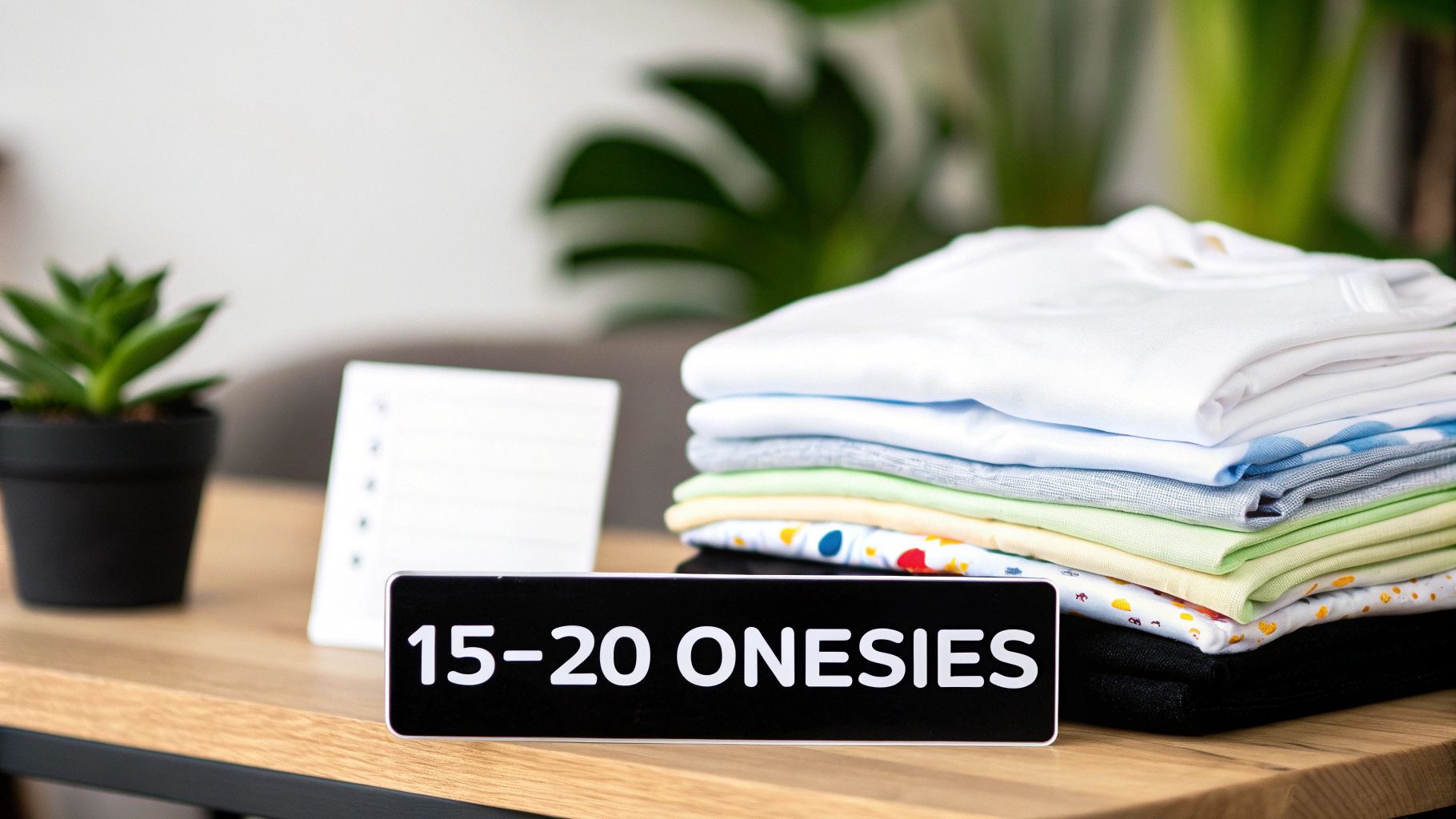
Getting ready for a baby is about more than just hitting a target number of items. It’s about building a system that prioritizes your baby's health and safety during those first few chaotic weeks. The onesie is the undisputed MVP of a baby’s closet—it’s practical, comfy, and the first line of defense in protecting a newborn’s sensitive skin.
The Daily Mess Factor
Let's be real: newborns are mess-making machines. It's not uncommon for a new baby to go through 8-12 outfits in a single day. Between spit-up, drool, and the inevitable diaper leaks, a clean onesie can sometimes only last a few minutes.
Think of your onesie collection as a buffer. Having a healthy stash of 15-20 means you can focus on cuddling your baby, not stressing about whether you have a clean outfit ready to prevent skin irritation.
Balancing Practicality and Comfort
Having enough onesies on hand is more than just a convenience—it's about keeping your baby comfortable and healthy. A wet or soiled outfit can easily irritate a newborn’s sensitive skin, potentially leading to rashes or discomfort. A fresh supply ensures your little one stays clean, dry, and happy.
As you're getting everything set for the big arrival, don't forget the other essentials. Our guide on what to pack in your hospital bag for delivery can help make sure you’re totally prepared.
The Messy Reality of Life with a Newborn
It’s one of those things you just can’t grasp until you’re in it: how can one tiny, adorable human being produce so much laundry? Before your baby arrives, the idea of owning 15-20 onesies can sound a little crazy. But trust me, that number is less about fashion and more about your baby's skin safety.
Newborns are, to put it mildly, mess-making machines. The two biggest culprits? Spit-up and diaper blowouts. A simple, gentle burp can suddenly turn into a milky waterfall that soaks through everything. And these little messes aren't just inconvenient—a damp onesie can make your baby chilly and is a breeding ground for skin irritation.
Spit-Up and Diaper Blowouts
Think of a fresh onesie as more than just a cute outfit; it's a key part of keeping your baby comfortable and healthy. A newborn’s skin is incredibly delicate and sensitive, and leaving them in a wet outfit for even a short time can quickly lead to a nasty rash. A quick change is your best defense against moisture-related skin problems.
I like to think of each clean onesie as a "life" in a video game. Some days, you might burn through three or four of them before you’ve even finished your morning coffee. This is totally normal, and being prepared makes all the difference.
Having a deep bench of clean onesies means you won’t be scrambling to do an emergency load of laundry while your little one is uncomfortable.
- Spit-Up: This is a daily, often hourly, occurrence. It can easily soak the entire front (and sometimes back) of an outfit in seconds.
- Diaper Leaks: Even the most high-tech, leak-proof diapers meet their match sometimes. These "blowouts" often require a full head-to-toe change to prevent bacteria from irritating the skin.
Ultimately, keeping your baby in a dry, clean onesie is one of the easiest ways to prevent common skin problems like diaper rash or heat rash. Stocking up isn't about spoiling your baby; it's about making sure you have what you need to keep them safe, comfortable, and happy.
So, How Many Onesies Do You Really Need?
While starting with 15-20 onesies is a solid baseline, the "perfect" number is less of a magic formula and more of a personal calculation. Think of it as your own unique recipe—the final count depends entirely on your lifestyle, where you live, and even your baby's personality.
Figuring this out ahead of time is the secret to avoiding a onesie shortage or an overflowing dresser. By thinking through a few key factors, you can build a practical wardrobe that keeps you prepared without drowning you in laundry.
Consider Your Laundry Style
First things first, let's talk laundry. Are you someone who enjoys doing a small load every day, or are you a once-a-week marathoner? Your answer here will make a huge difference.
- Daily Washers: If you don't mind running the machine daily, you can easily get by with a smaller stash. 10-12 onesies should be plenty since you’ll have a constant supply of clean ones ready to go.
- Weekly Washers: If laundry is a weekend-only affair, you’ll need more to carry you through the week. Aim for 20-25 onesies to make sure you don't run out by Wednesday.
It's easy to underestimate just how many outfits a tiny baby can go through. Between spit-up and the inevitable diaper blowouts, it's not uncommon for a newborn to need 6-8 changes in a single day. Having a few extras on hand is your best defense against laundry-related stress.
This little flowchart pretty much sums up the daily decision-making process.
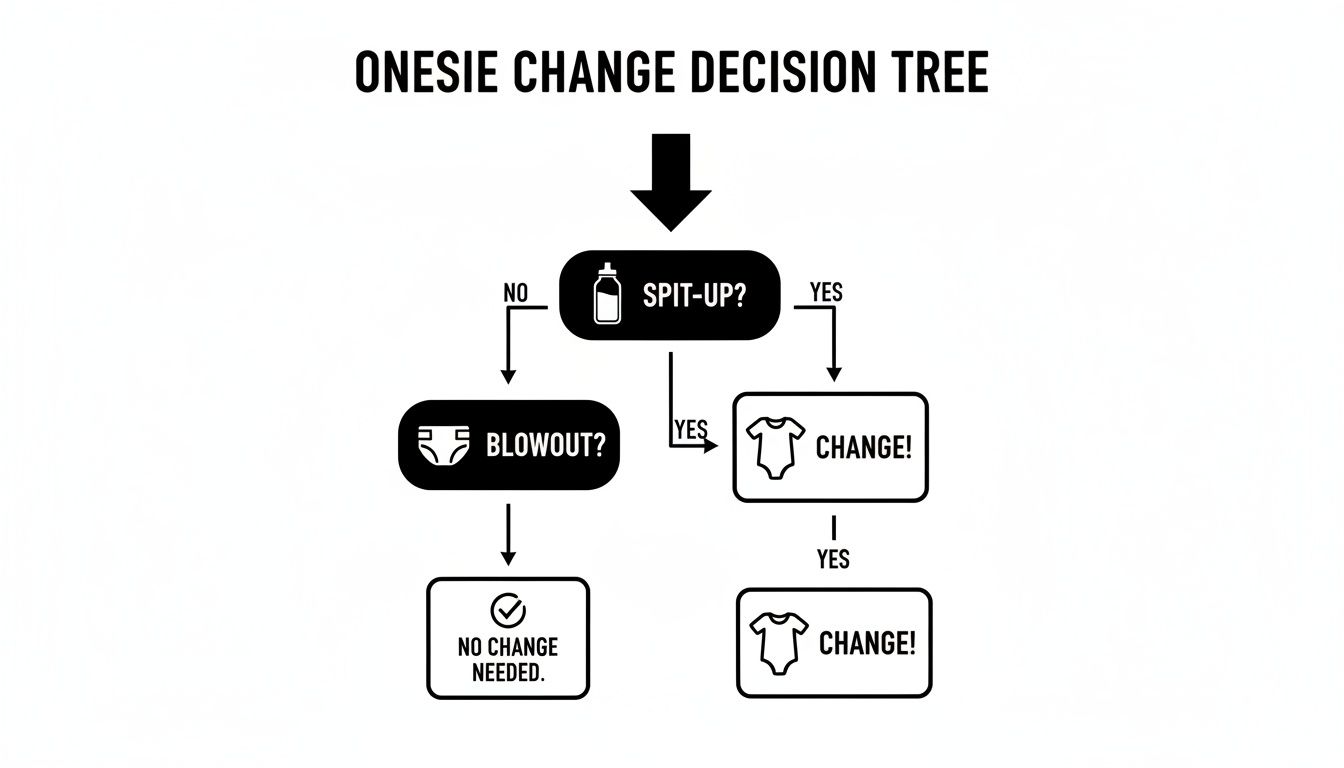
As you can see, whether it's a little spit-up or a major diaper situation, the answer is almost always a fresh onesie.
Factor in the Weather
The climate where you live is a major player in this decision. It dictates not just how many onesies you'll need, but also what kind to stock up on. Newborns aren't great at regulating their own body temperature, so layering is your best friend. For a full rundown of baby wardrobe must-haves, take a look at our complete newborn clothing essentials list.
If you’re expecting a baby in a colder region, you’ll want to lean heavily on long-sleeved onesies for layering under sleepers, swaddles, and snowsuits. On the flip side, a baby born in the middle of a heatwave will spend most of their time in light, breezy, short-sleeved bodysuits.
Choosing Onesies That Protect Your Baby’s Skin

Okay, so you have a target number for how many onesies you need. But that's only half the battle. The next, and arguably more important, step is ensuring every onesie is a safe, cozy layer that protects your newborn's incredibly delicate skin from allergies and irritation.
A baby’s skin isn’t just a smaller version of our own; it’s thinner, more absorbent, and far more sensitive. This makes them prone to irritation, rashes, and reactions from scratchy fabrics or lingering chemicals from the manufacturing process. Think of the onesie as your baby’s second skin—it needs to be soft, breathable, and pure.
Fabrics That Soothe and Protect
When you're sorting through racks or scrolling online, the fabric label is your most important tool for ensuring safety and quality. Look for natural, breathable fibers that let air flow freely, helping to prevent overheating and wicking away moisture that can cause rashes.
- GOTS-Certified Organic Cotton: This is the gold standard for safety. The GOTS (Global Organic Textile Standard) certification guarantees the cotton was grown without harmful pesticides and processed without harsh chemicals, dyes, or formaldehyde. It’s pure, gentle, and the best choice for preventing skin allergies.
- Bamboo Viscose: If you’ve never felt bamboo fabric, you’re in for a treat. It’s unbelievably soft and silky, plus it's naturally hypoallergenic, thermal-regulating, and pulls moisture away from the skin, helping to keep rashes at bay.
Your goal is to create a soft, chemical-free barrier between your baby and the world. Choosing high-quality fabrics is one of the most effective ways to prevent common skin ailments like eczema, contact dermatitis, and heat rash.
Smart Designs for Safety and Convenience
Beyond the feel of the fabric, the actual design of a onesie can make a huge difference in your day-to-day life and your baby's safety. For a deeper dive, check out our guide on choosing the right fabric for your baby's sensitive skin.
Here are a few game-changing features to look for to ensure quality and safety:
- Nickel-Free Snaps: Nickel is a surprisingly common allergen that can cause an itchy, red rash known as contact dermatitis. Always check that snaps are certified nickel-free.
- Envelope Shoulders: Those little overlapping flaps at the neck are pure genius. They let you pull a soiled onesie down over your baby’s body instead of up over their head, preventing messes from touching their face.
- Two-Way Zippers: A zipper that opens from the bottom up is a lifesaver for 3 a.m. diaper changes. Ensure it has a fabric guard to prevent the zipper from pinching your baby's delicate skin.
A Gentle Laundry Routine for Baby’s Clothes
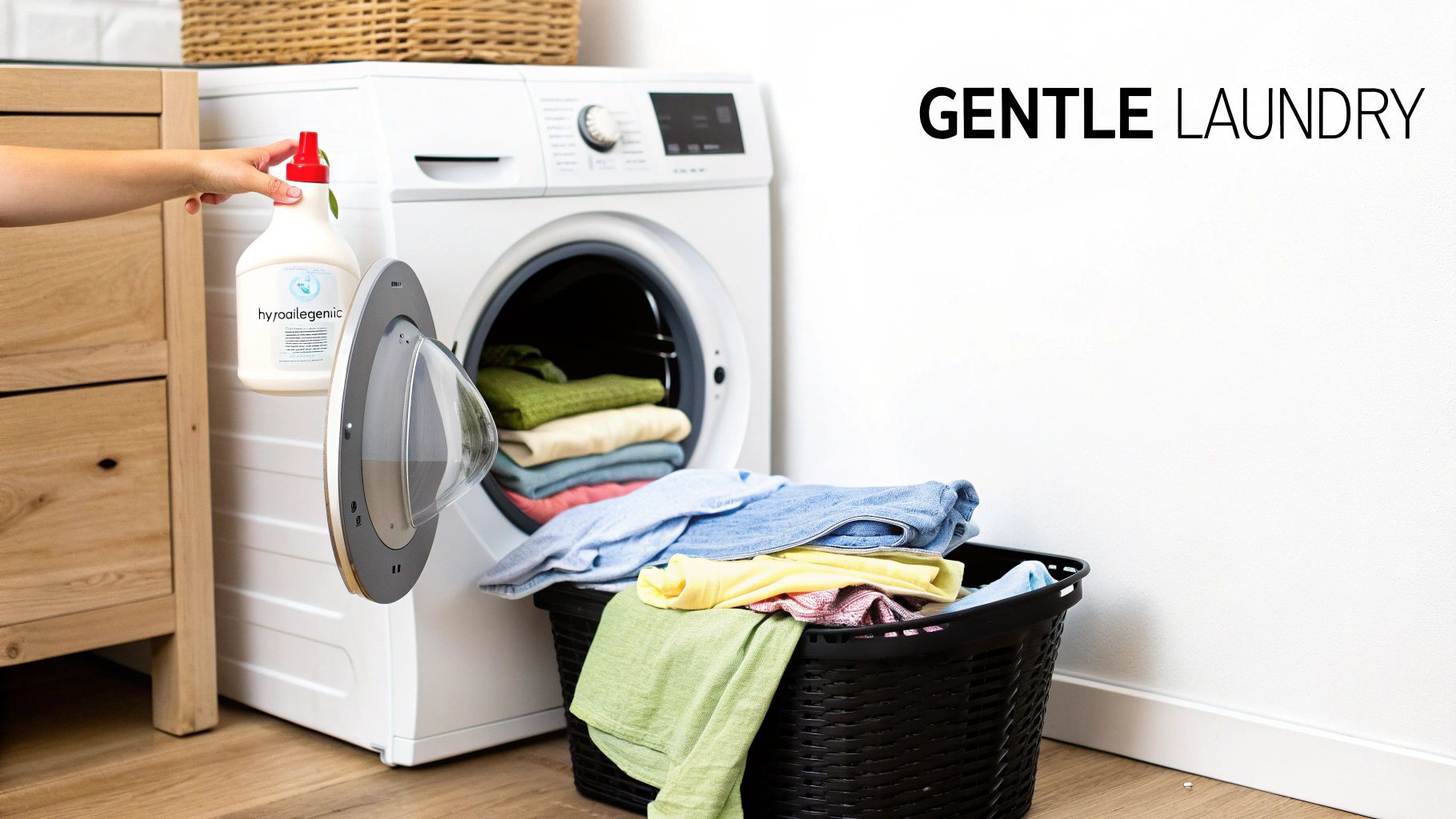
How you care for those tiny onesies matters just as much as which ones you buy. A newborn’s skin is incredibly delicate and permeable, which means it can easily absorb harsh chemicals from standard laundry detergents, leading to rashes, allergies, and irritation. A gentle, safety-focused laundry routine is your first line of defense.
The golden rule? Always pre-wash everything before your baby wears it for the first time. This simple step is non-negotiable; it washes away any dust, factory residues, or chemicals from the fabric, ensuring the material touching your baby's skin is truly clean and safe.
Choosing the Right Detergent
When it comes to baby laundry, less is more. Look for a liquid detergent specifically labeled as hypoallergenic, fragrance-free, and dye-free. Powdered detergents can sometimes leave behind a flaky residue, and those added scents and colors are common triggers for skin reactions and respiratory irritation in babies.
A quick pro-tip: Ditch the fabric softeners and dryer sheets. They work by coating fabrics with chemicals and perfumes, which is the last thing you want near a newborn's sensitive skin and developing respiratory system. These can cause allergic reactions and diminish the flame-retardant qualities of sleepwear.
For a little extra peace of mind, use the "extra rinse" cycle on your washing machine. This helps make sure every last bit of detergent is washed away, leaving the onesies perfectly pure and soft.
Don’t worry, you can still tackle those inevitable spit-up and blowout stains without harsh chemicals. A simple pre-soak in a bit of baby-safe detergent and water often does the trick.
Once everything is clean and dry, keep that growing collection of clothes in order with our tips on how to store your baby’s wardrobe efficiently.
Common Questions About Newborn Onesies
Even after you've made your list, a few questions always seem to pop up when you're actually shopping for your newborn. Let's tackle some of the most common ones so you can buy with confidence.
Getting these details right means your baby will be comfortable and safe, and you won't waste money on clothes they'll outgrow in a flash.
Should I Buy More Newborn or 0-3 Month Sizes?
Here’s a tip from experienced parents: focus most of your energy on the 0-3 month size. Newborns grow at a truly shocking rate. Many babies, especially those weighing over 8 pounds at birth, might only wear "newborn" size for a couple of weeks—or they might skip it entirely.
A good game plan is to have a small set of 7-10 newborn-sized onesies ready for those first few days. From there, build the core of your collection with 15-20 onesies in the 0-3 month size. This way, you’re prepared from day one but haven’t invested too much in a size that will be packed away before you know it.
And remember, sizing can be all over the place between brands, so always glance at the specific weight and height guidelines on the tag.
What Is the Difference Between a Onesie and a Sleepsuit?
Great question! While people often mix up the names, they are actually two different staples for your baby’s closet.
- A onesie (also called a bodysuit) is a shirt that snaps at the crotch. It can have long or short sleeves and is perfect as a base layer for daytime outfits or worn on its own in warm weather.
- A sleepsuit (you'll also hear it called a sleeper or footie) is a one-piece pajama that covers the arms, legs, and often the feet. Think of it as a cozy, all-in-one outfit designed specifically for naps and nighttime.
You’ll definitely want a good mix of both.
How Do I Know if a Onesie Is Safe and High Quality?
A baby’s skin is incredibly delicate, so this is where it pays to be a little picky. Look for trusted certifications like GOTS (Global Organic Textile Standard) or Oeko-Tex Standard 100. These are your assurance that the fabric is free of harsh chemicals, pesticides, and nasty dyes that could irritate your baby's skin.
Beyond the label, use your hands and eyes. The seams should feel flat and smooth, not rough. Check that the snaps are nickel-free (to avoid potential allergic reactions) and are attached firmly. It's best to steer clear of anything with decorative add-ons like buttons, ribbons, or ties, as these can be choking hazards. At the end of the day, a quality onesie puts your baby’s comfort and safety first.
At GUGUTON LLC, we're all about creating essentials that are safe, comfortable, and genuinely practical for new parents. Explore our collection of high-quality baby apparel and accessories to build a wardrobe you can feel good about.