

Finding the Best Baby Clothes Online for Sensitive Skin
Let’s be honest, shopping for baby clothes online should be fun. You get to browse all those adorable little outfits from the comfort of your couch. But it can also feel like a minefield. How do you know what’s actually good for your baby’s sensitive skin and won't cause rashes or allergies?
The secret isn't just about finding the cutest prints. It’s about looking a little deeper at the things that really count: the fabric, the fit, and the safety of each piece. This guide is here to cut through the noise and show you exactly what to look for, so you can shop with total confidence, knowing you're protecting your baby from potential skin irritants.
Your Guide to Worry-Free Shopping
If you're a new parent, the sheer number of online baby stores can be dizzying. Every site promises the best, but what does that even mean? A baby's skin is incredibly delicate—up to five times thinner than an adult's—and highly susceptible to irritation from rough materials, harsh dyes, or leftover chemicals from the manufacturing process. The wrong fabric can easily lead to painful rashes, discomfort, or allergic reactions like contact dermatitis.
Think of this guide as your personal shopping assistant, one that’s obsessed with quality and safety. We're going to skip the fluffy stuff and get straight to the details that protect your baby’s well-being.
Our mission is simple: to help you spot high-quality, genuinely safe baby clothes online, every single time you shop.
By the time you're done reading, you'll be able to pick out clothes that are not only cute but also comfortable, safe, and truly gentle on your baby's skin, preventing issues like allergies and rashes.
What You Will Learn
We’re going to break down the whole process into easy, manageable steps. Instead of just telling you what to buy, we'll teach you how to think like a pro so you can make smart choices anywhere you shop.
Here’s a sneak peek at what’s inside:
- Skin-Friendly Fabrics: We'll explain why materials like GOTS-certified organic cotton are a game-changer for preventing skin reactions and which common fabrics are best to avoid.
- The Perfect Fit: You'll learn the tricks to reading size charts (they're not all the same!) and how a proper, non-restrictive fit can prevent chafing and irritation.
- Safe Construction: We'll show you how to spot the little details that matter, like nickel-free snaps that prevent allergic reactions and flat seams that won't chafe delicate skin.
Ultimately, you’ll walk away with a clear plan for choosing clothes that keep your baby happy, comfortable, and free from skin troubles. Let's make online shopping a genuinely easy and joyful part of your parenting journey.
Choosing Fabrics That Nurture Your Baby's Skin
A baby’s skin is a whole different world. It’s incredibly delicate—in fact, it can be up to five times thinner than our own and absorbs substances much more easily. This means the clothes you put on your little one aren't just about looking cute; they're a crucial layer of protection against rashes, irritation, and allergic reactions.
When you're shopping for baby clothes online, it helps to think of the fabric as part of their daily skincare. You want materials that are soft, breathable, and pure to keep them comfortable and healthy around the clock, free from harmful chemicals that could trigger a skin reaction.
As you can see, picking the right material is the first step toward worry-free shopping and a happy baby.
Why Natural Fibers Are a Parent's Best Friend
There's a reason experienced parents swear by natural fibers. Materials like cotton and bamboo are naturally breathable, allowing air to circulate and keep your baby's skin comfortable. This is a big deal, as it helps regulate their body temperature and wicks away moisture before it has a chance to cause trouble.
The result? Less risk of overheating and a much lower chance of dampness leading to skin irritation or eczema flare-ups.
Here are the top choices you'll find:
- GOTS-Certified Organic Cotton: This is the best of the best for preventing skin issues. The Global Organic Textile Standard (GOTS) certification is your guarantee that the cotton was grown without nasty pesticides and processed without harsh chemicals or toxic dyes. It’s pure, soft, and exactly what you want next to your baby’s sensitive skin.
- Bamboo Rayon: If you’ve never felt bamboo fabric, you’re in for a treat. It’s silky-smooth, incredibly gentle, and a champion at pulling moisture away from the skin to keep your baby perfectly dry and comfortable.
On the other hand, synthetic fabrics like polyester and nylon are best saved for outerwear. Since they're essentially plastics, they don't breathe well and can trap heat and moisture, creating a perfect storm for heat rash and irritation.
If you want to go deeper on this, we've put together a full guide on choosing the right fabric for your baby's sensitive skin.
Comparing Fabrics for Your Baby's Comfort and Safety
To make it even easier, here's a quick reference guide to help you choose the best materials for your baby's sensitive skin.
| Fabric Type | Key Benefits | Best For | Potential Concerns |
|---|---|---|---|
| GOTS-Certified Organic Cotton | Ultra-soft, hypoallergenic, breathable, and free from chemicals. | Everyday wear, sleepwear, and direct skin contact for sensitive babies prone to eczema or allergies. | Can be more expensive than conventional cotton. |
| Bamboo Rayon | Silky texture, moisture-wicking, and naturally temperature-regulating. | Warm weather, active babies, and those prone to sweating. | The manufacturing process can be chemically intensive unless specified. |
| Conventional Cotton | Affordable, widely available, and generally soft. | Budget-friendly basics and everyday clothing for less sensitive skin. | Often grown with pesticides and processed with chemical dyes and finishes that can cause rashes. |
| Polyester/Nylon | Durable, stain-resistant, and quick-drying. | Outerwear like jackets or rain gear that doesn't sit on the skin. | Traps heat and moisture; not breathable and can cause irritation or heat rash. |
Ultimately, sticking with natural, certified fibers is the safest bet for your baby’s daily wardrobe.
How to Decode Safety Certifications
Product labels can be a maze of logos and text, but a few key certifications are your shortcut to peace of mind. When you spot these, you know the item has been independently tested and is safe for your baby, minimizing the risk of skin reactions.
The most important one to look for is OEKO-TEX STANDARD 100. This certification means every single part of the garment—the fabric, the thread, the buttons, and even the dyes—has been tested and found free from a list of over 100 harmful substances known to cause allergies and other health issues.
Think of it as a safety seal. It guarantees that no hidden chemicals or irritants are lurking in the clothes you bring home. By prioritizing brands that invest in this kind of testing, you're not just buying an outfit; you're choosing a product designed with your baby's health as the absolute top priority.
How to Get the Perfect Fit Every Time
Trying to figure out baby clothes sizes can feel like a guessing game. If you’ve ever shopped online, you know the frustration: a "3 Months" tag from one brand fits completely differently than another. This is why just going by the age on the label often leads to outfits that are either way too tight or ridiculously baggy.
Getting the fit right isn't just about your baby looking cute—it's about their comfort and safety. Clothes that are too snug can dig into their delicate skin, restrict movement, and cause chafing or irritation. On the flip side, anything too loose, particularly sleepwear, can become a safety hazard. The secret to avoiding all this is simple: ignore the age and focus on their actual measurements.
Master the Sizing Chart
The single most important tool you have is the brand's sizing chart. It cuts through the confusion by linking those vague age ranges to concrete numbers, usually your baby's height and weight. Before you even think about clicking "add to cart," take a second to find that little sizing guide on the product page. It's a tiny step that can save you a ton of time on returns.
If you want to get really good at this, our complete baby clothing size chart guide breaks it all down with more in-depth tips to make you a pro.
Think of the size chart as the clothing's actual measurements, not just a friendly suggestion. Taking two minutes to measure your baby's height and weight gives you the hard data you need to shop with confidence, no matter where you're buying from.
Pro Tips for a Consistently Great Fit
Even with a size chart, a few insider tricks can help you lock in that perfect fit. Babies grow incredibly fast, and a little bit of planning can make their clothes last longer and keep them comfortable through those growth spurts.
Here are a few simple but effective things to keep in mind:
- When in Doubt, Size Up: If your little one is right between two sizes, always go for the bigger one. It gives them room to grow and easily fits over a bulky diaper without being restrictive or causing friction against their skin.
- Read Customer Reviews for Clues: Other parents are your best friends here. Look for comments about the fit—phrases like "runs small" or "generously sized" are gold. They give you the real-world scoop that a sizing chart can't.
- Consider the Fabric Type: A 100% cotton bodysuit won't have the same give as a blend with a bit of spandex. For items meant to be snug, like pajamas, that little bit of stretch can offer a more forgiving fit. For woven fabrics with no stretch at all, you'll need to be much more precise with your sizing.
Prioritizing Safe and Practical Design Features
Great baby clothes are about so much more than just soft fabric and a cute fit. The best pieces are the ones designed with your baby's safety—and your sanity—in mind. Once you know what to look for, you can spot these thoughtful details right in the product photos, long before you add anything to your cart.
This is a skill every parent develops. You learn to see past the adorable patterns and focus on the little things that can make a big difference, spotting potential hazards that aren't always obvious at first glance.
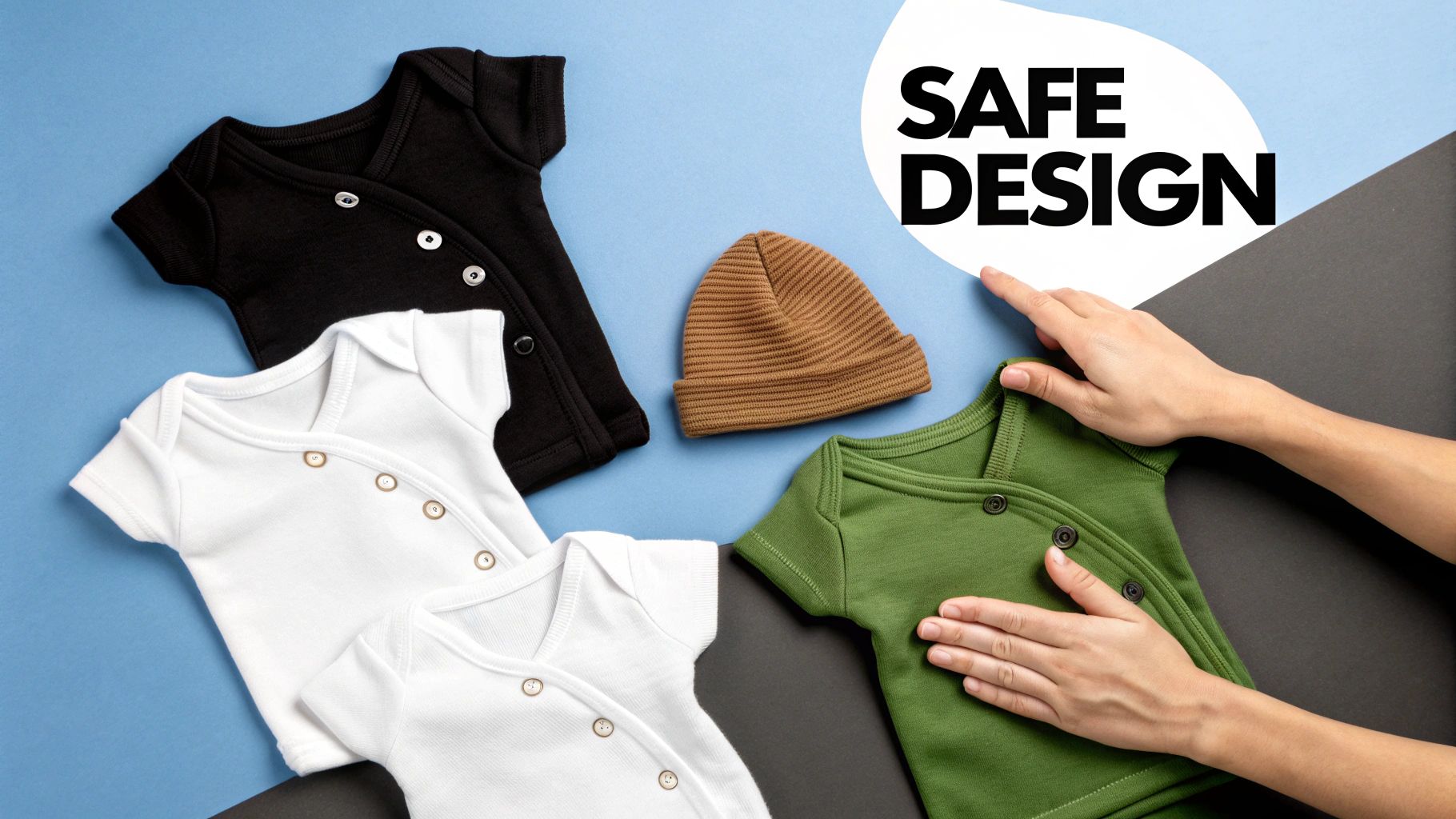
What to Avoid for Baby’s Safety
When you’re shopping online, it’s the small details that matter most. These are the red flags that experienced parents learn to sidestep to prevent accidents and skin problems.
Here are a few common hazards to keep on your radar:
- Loose Buttons and Embellishments: Those cute little decorative buttons, bows, or sequins? They're major choking hazards just waiting to happen. It's always safer to choose clothing with minimal, securely stitched decorations.
- Long Drawstrings or Ribbons: Any kind of cord around the neck or hood area is a serious no-go. The American Academy of Pediatrics actually recommends avoiding them entirely due to the risk of strangulation.
- Scratchy Tags and Seams: A baby’s skin is incredibly sensitive. A rough tag rubbing against the back of their neck or a bulky internal seam can quickly lead to irritation, redness, and rashes. Tagless designs or items with flat-lock seams are a much gentler choice.
A simple rule of thumb: If any part of the clothing looks like it could be pulled off by a curious baby, it’s best to skip it. Safety should always come before style.
Smart Designs That Make Life Easier
Just as crucial as avoiding hazards is seeking out practical features that simplify your day. Dressing, diaper changes, and keeping your little one comfortable are so much easier with the right design. These clever elements are a sign of a brand that truly understands the needs of both babies and parents.
Look for these convenient and safe features when shopping:
- Envelope Necklines: You know those bodysuits with the overlapping fabric at the shoulders? They're genius. They let you pull the garment down over your baby's body instead of up over their head, which is a total lifesaver during a diaper blowout.
- Nickel-Free Snaps: Snaps are a parent's best friend—far more secure than buttons. But some babies can have an allergic reaction to nickel, resulting in an itchy, red rash. Brands that specifically mention using nickel-free snaps are showing they care about protecting your baby's skin.
- Fold-Over Mittens and Cuffs: Built-in mittens on the sleeves of newborn sleepers are perfect for preventing those tiny, sharp fingernails from scratching their face. Similarly, fold-over cuffs on pants can be unfolded to give you a little more wear-time as your baby grows.
Learning to spot these design elements helps you choose clothes based on real-world function, not just looks. For more tips on what to watch out for, check out our guide on the 10 common baby clothing mistakes and how to avoid them.
Becoming a Savvy Online Shopper
The internet is a seemingly endless aisle of adorable baby clothes, but it can also feel overwhelming. The real trick to finding the best pieces for your little one is learning to shop like a pro—looking beyond the cute patterns and focusing on the details that actually matter for quality, safety, and comfort.
This digital shift is more than just a passing trend. By the mid-2020s, e-commerce was already capturing about one-third of all baby apparel sales in major markets. It’s easy to see why—online, you can quickly compare safety certifications and zero in on organic materials, which is much tougher to do when you’re navigating a busy brick-and-mortar store. For a deeper dive, you can explore the latest research on the baby apparel market.
Master the Website Filters
Think of website filters as your personal shopping assistant. They're your first and best tool for cutting through the noise and instantly narrowing down thousands of options to just the good stuff.
Start by filtering for specific fabrics like "100% organic cotton" or "bamboo." Then, keep an eye out for checkboxes that let you select important credentials like "OEKO-TEX certified" or "GOTS certified." Taking this simple step first ensures everything you see already meets your safety standards, saving you a ton of time.
How to Analyze Product Photos and Reviews
Once your options are narrowed down, it’s time to put on your detective hat. High-quality product photos are full of clues if you know where to look.
- Zoom In on Seams: Are the stitches neat, flat, and even? Any messy or puckered seams are a dead giveaway of poor construction and can easily irritate your baby's delicate skin.
- Assess Fabric Texture: Does the fabric in the picture look soft and breathable, or does it seem stiff and synthetic? High-resolution photos should give you a pretty good idea of how the material feels.
- Check the Details: Pay close attention to the snaps, zippers, and necklines. You want to see smooth edges and designs that look practical and safe, not just cute.
Next, dive into the customer reviews. This is where you get the real-world scoop that product descriptions leave out. Skip the generic "so cute!" comments and hunt for specifics. Search for keywords like "rash," "sensitive skin," "shrinkage," "softness after washing," and "true to size"—these are the reviews that will tell you about an item's durability and actual fit.
Don't underestimate the power of a good return policy. A flexible, hassle-free return process isn't just a convenience; it's a sign that a brand truly stands behind its quality. It gives you a risk-free way to feel the fabric and check the construction for yourself.
By combining smart filtering with a careful look at photos and reviews, you can shop with confidence. If you're looking for more ideas on must-have items, be sure to check out our guide to the best baby products for newborns.
Got Questions About Buying Baby Clothes Online? We've Got Answers.
Shopping for baby clothes online can feel like navigating a maze. You want what's best—safe, soft, and high-quality—but it's easy to get bogged down with questions. Am I choosing the right thing? What if it irritates my baby's skin?
Don't worry, these are the exact questions every thoughtful parent asks. We've compiled some of the most common ones and answered them with straightforward, practical advice to help you shop with total confidence.
Do I Really Need to Wash New Baby Clothes Before My Baby Wears Them?
Yes, absolutely. Think of this as a non-negotiable first step to prevent skin reactions. A brand-new onesie might look pristine, but consider its journey: from the factory floor, to a warehouse, through shipping, and finally to your door.
Along the way, clothes are often treated with chemicals like formaldehyde to keep them looking crisp and wrinkle-free. They can also pick up dust, germs, and other unseen irritants. A quick wash in a gentle, baby-safe detergent rinses all that away, leaving the fabric soft, clean, and ready for your baby’s delicate skin. It’s a simple action that dramatically cuts the risk of a surprise rash or allergic reaction.
What Are the Most Important Safety Labels to Look For?
When you can't touch and feel the fabric, safety certifications are your best friend. They're proof that an independent third party has thoroughly tested the clothing for harmful substances that can cause rashes or allergies.
Two labels are the gold standard in the baby world:
- GOTS (Global Organic Textile Standard): This is the top-tier certification for organic fabric. It guarantees the material is organic from seed to finished product and ensures the entire manufacturing process meets strict environmental and social standards. No toxic chemicals or harsh dyes allowed.
- OEKO-TEX STANDARD 100: This label is your assurance that every single part of the garment—the fabric, the thread, the snaps, the dyes—has been tested and cleared of a long list of harmful substances. It’s a comprehensive safety check for anything that could bother your baby's skin.
Spotting these logos in a product description is a huge green flag. It tells you the brand has gone the extra mile to create something truly safe.
For many parents, seeking out these certifications is a key part of their shopping strategy. It takes the guesswork out of finding gentle, non-toxic clothes and helps prevent skin issues before they even start.
Is It Worth Paying More for Organic Baby Clothes?
When it comes to the items your baby lives in—bodysuits, pajamas, swaddles—the short answer is often yes, especially for babies with sensitive skin. The biggest benefit is peace of mind. Organic clothes are grown without harsh pesticides and processed without aggressive chemicals, which means a much lower risk of skin irritation, eczema flare-ups, and allergic reactions.
But it's not just about what's left out. Organic fibers, especially cotton, tend to be naturally softer and more durable than conventionally grown ones. They stand up better to the endless cycle of washing, too. The price tag might be a little higher upfront, but for the enhanced comfort, safety, and longevity, many parents feel it’s a worthwhile investment in their baby's well-being.
How Can I Stop Baby Clothes from Shrinking?
Ah, the dreaded shrinkage. It’s a common frustration, especially with natural fibers like cotton. The number one culprit? Heat. Both hot water in the wash and high heat from the dryer will cause those tiny outfits to shrink.
Here's how to keep everything fitting just right:
- Always wash baby clothes in cold water on a gentle cycle with a hypoallergenic detergent.
- When it comes to drying, your best bet is to tumble dry on the lowest possible heat setting.
- Even better? Line dry them. Air drying is the gentlest method of all and will keep the fabric looking and fitting great for much longer.
At GuGuTon, we get it. Finding clothing that is safe, comfortable, and practical is what matters most. Our collections are designed with your baby’s sensitive skin as our top priority, which is why we focus on ultra-soft, high-quality materials and smart, parent-friendly designs that prevent irritation.
Explore our essentials and find pieces that give you style, function, and complete peace of mind.