

Toddler Potty Training Tips for a Calm and Confident Journey
Diving into potty training is one of those big parenting moments, and I've found the best toddler potty training tips always come back to one thing: a gentle, child-led approach. Forget rigid timelines. Real success is all about your attitude and creating a positive, low-pressure vibe at home. This isn't a battle of wills; it's a chance to work together and turn what could be stressful into a new way to bond.
Your Gentle Start to Potty Training Success
Let's be honest, potty training is a massive developmental leap. When you approach it with patience and a whole lot of understanding, you set everyone up for a much smoother ride. Think of it as a journey you're taking together, where your encouragement is the most important thing you can offer. When you focus on your child's readiness and comfort instead of pushing them, this whole transition becomes a positive milestone they can be proud of.
This guide is here to walk you through it with confidence, giving you practical strategies that respect your child’s individual pace while still providing the gentle structure they need to get the hang of it.
Prioritizing Comfort and Safety
A gentle start really begins with making sure your child feels physically safe and comfortable. If their skin gets irritated from poor-quality materials or the potty seat feels scary, you're going to hit a wall of resistance pretty fast. Protecting their sensitive skin from rashes or allergies is paramount.
To head off any physical discomfort, keep these things in mind:
- Skin-Friendly Materials: Look for potty seats made from high-quality, non-toxic, and smooth materials. This helps prevent skin irritation that can create a negative association with potty time.
- Breathable Training Pants: When you move on from diapers, choose training pants made from soft, breathable organic cotton. This material is gentle on the skin, reduces the risk of rashes, and is less likely to trigger allergies. Crucially, they still let your child feel the sensation of being wet, which is a key part of the learning process.
- Stable and Secure Gear: A wobbly potty seat can feel terrifying to a little one. Ensure whatever you're using is sturdy, fits them well, and is made from quality materials that won't crack or pinch. Feeling secure helps them relax and feel in control.
Building a Foundation of Confidence
Beyond the physical setup, their emotional security is everything. This is one of your toddler's first real steps toward managing their own body. Every little win, from just sitting on the potty for a few seconds to actually going, is a chance to build up their self-esteem.
How you react to accidents is just as important as how you celebrate successes. Frame them as no big deal—just part of learning. Try saying something calm and reassuring like, "Oops, an accident! That's okay. We'll try to get the pee in the potty next time."
Getting your space organized before you start can be a game-changer. Having the potty, gentle wipes, and fresh clothes all within easy reach cuts down on stress for both of you. And speaking of clothes, you might find our guide on how to organize and store your baby’s wardrobe efficiently helpful for managing the inevitable increase in laundry.
Is Your Toddler Ready for the Potty? Decoding the Signs
When it comes to potty training, timing is everything. But here’s the secret: it has almost nothing to do with their age and everything to do with where they are developmentally. If you try to start too soon, you’re just setting yourself up for a frustrating power struggle. The real key is learning to spot the specific signals—physical, mental, and emotional—that tell you it’s go-time.
It's interesting how much the goalposts have moved on this. Today, only about 61% of toddlers are fully potty trained by age 2.5. Back in 2004, that number was a staggering 95%. A big reason for this shift? Modern diapers are so incredibly absorbent that kids often don't even feel the wetness, which can delay their awareness of what their body is doing.
In fact, a fascinating 2023 survey of 6,000 parents found that starting a bit later can actually lead to finishing much faster. Kids who began between 3 and 3.5 years old often mastered it in just nine days, on average. You can read more about these toilet training trends to get the full picture.
The Physical and Cognitive Green Lights
Before your child can even think about using the potty, their body and brain have to be working together. These aren't things you can force; they're milestones you simply have to watch for.
Think of it like a readiness checklist. Is your child starting to show these signs? This simple tool can help you track what you're seeing.
Toddler Potty Training Readiness Checklist
Use this checklist to observe your toddler's behaviors and skills to determine if it's the right time to start potty training.
| Readiness Sign | What to Look For (Examples) | Check If Observed |
|---|---|---|
| Physical Coordination | Can walk to and from the bathroom independently. Is able to sit down and stand up from a small chair. |
☐ |
| Bladder Control | Stays dry for at least 2 hours at a time. Wakes up from a nap with a dry diaper. |
☐ |
| Bowel Predictability | Has fairly regular, predictable bowel movements. | ☐ |
| Cognitive Connection | Can follow simple 2-step instructions. Points to or names body parts. |
☐ |
| Verbal Communication | Uses words like "pee," "poop," or "potty." Tells you when they need to go or have already gone. |
☐ |
| Emotional Desire | Shows curiosity about the toilet. Expresses a desire for independence ("I do it!"). |
☐ |
Once you start seeing a few of these boxes checked, you’ll know you're heading in the right direction. It's all about recognizing their progress, not rushing the process.
The Emotional and Social Cues to Watch For
Just as critical as the physical signs are the emotional ones. That budding desire for independence is your secret weapon in potty training. When they start wanting to do things "all by myself," they're often ready to take charge of this, too.
Potty training is a huge step toward autonomy. When a child starts saying "I can do it myself!" for tasks like dressing or feeding, it's often a clear signal they're ready to take charge of their body, too.
Here are some of those key behavioral shifts to look for:
-
The Bathroom Shadow: Suddenly, you can't go to the bathroom alone. They follow you in, watch intently, and are full of questions. This curiosity is a fantastic sign!
-
The Diaper Complaint: They start telling you—sometimes very loudly—that their diaper is wet or dirty. They might pull at it, try to take it off, or demand a change right away. This is a huge win because it means they're finally making that mind-body connection.
-
The Privacy Seeker: This one is a classic. Does your toddler suddenly start hiding behind the couch or running into another room to poop? This means they're developing an awareness of what's happening and want a little privacy.
Catching these cues helps you launch into potty training at the perfect moment, making it feel more like a team effort and less like a battle of wills.
Creating a Positive Potty Training Environment
Before you even think about ditching the diapers, the first real step is transforming your bathroom into a potty-positive zone. This isn't just about plopping a tiny toilet in the corner; it’s about creating a space that feels welcoming, safe, and even fun. A little bit of prep work here can make all the difference, turning what could be an anxious experience into an exciting new adventure for your toddler.
The idea is to build a space where your child feels secure and in control, not intimidated.
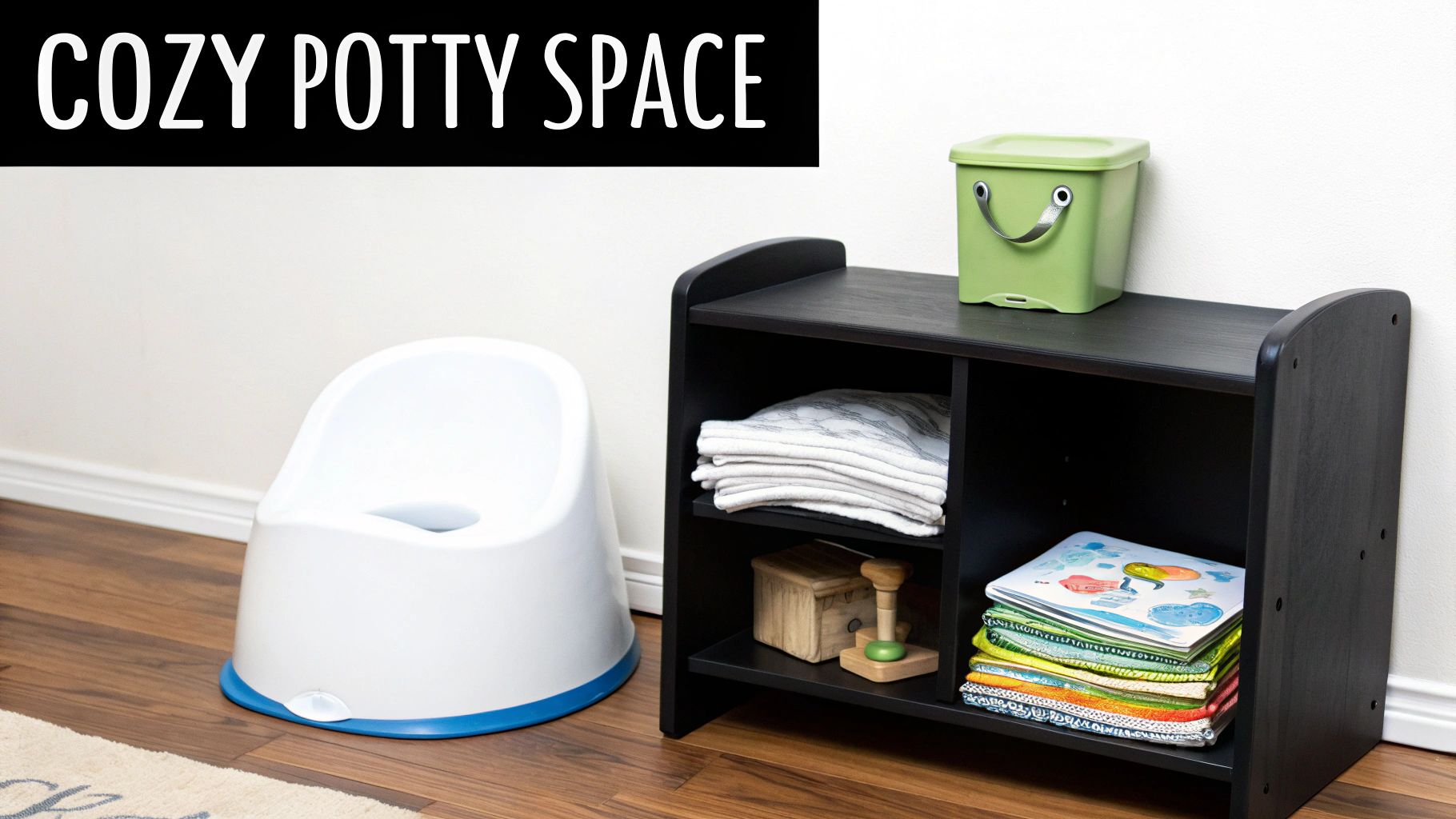
This process really starts long before the first official "potty training day." It's all about setting the stage with the right equipment and an encouraging attitude, making sure every detail is chosen with your little one’s comfort and safety top of mind.
Choosing the Right Gear for Safety and Comfort
The gear you pick is more than just a tool—it's your toddler's first real introduction to this huge life skill. The right potty can prevent tears and resistance, while the wrong one can create roadblocks you didn't see coming. Your focus should be on safety, quality, and materials that are gentle on your child's skin to prevent rashes or allergic reactions.
Here’s what I’ve learned is most important when selecting potty training equipment:
- Skin-Friendly Materials: Always look for potty chairs and toilet seat inserts made from smooth, non-toxic, BPA-free plastics. This is a big one. The last thing you want is a rash or skin irritation creating a negative association with the potty. High-quality materials are less likely to harbor bacteria or degrade over time.
- Stability is Non-Negotiable: A wobbly potty seat is absolutely terrifying for a small child. Find a standalone potty with a wide, non-slip base or a toilet insert that locks securely onto the adult toilet. When they feel stable, they can relax and focus on the task at hand.
- The Right Fit: Make sure the potty is the correct size for your child. Their feet should rest flat on the floor or on a sturdy step stool. This position not only makes them feel more secure but actually helps them bear down more easily for bowel movements.
It’s no surprise that the global market for potty training aids and step stools hit USD 231.4 million in 2023 and is still growing. It just goes to show how much parents are prioritizing tools that support their child's independence safely and comfortably. You can learn more about the growing potty training products market and see how innovation is making this journey a little smoother for everyone.
Making the Bathroom a Potty-Friendly Space
Once you have the gear, it's time to make the bathroom a place your child actually wants to visit. A sterile, all-white, adult-focused bathroom isn’t exactly inviting for a two-year-old. But a few simple tweaks can turn it into their own personal potty headquarters.
Consider creating a dedicated "potty station." This can be a cozy corner where their little potty lives, along with a few special things just for potty time. This little touch gives them a sense of ownership and makes the whole process feel special, not like a chore.
Your goal is to make the potty seem like a fun, new piece of furniture that belongs to them, not a scary new toilet they are being forced to use. Familiarity breeds comfort.
Here are a few practical tips to bring this to life:
- Introduce the Potty Early: A week or two before you plan to start, just bring the potty out. Let them sit on it with their clothes on, decorate it with stickers, or even have a favorite doll "try" it first to break the ice.
- Create a Potty Library: Keep a small basket of books right next to the potty that they only get to look at while they’re sitting there. It's a fantastic distraction and can encourage them to sit for the minute or two it might take.
- Sing a Potty Song: Make up a silly little song about going to the potty. Music is an amazing tool for easing tension and making routine activities more fun for kids.
Empowering Your Toddler with Independence
A positive environment is also one that empowers your child. The more they feel like they're a part of the process, the more invested they'll be. This means giving them age-appropriate control over their own potty journey.
For example, let them choose their potty chair from two or three options you've already approved for safety and quality. Simple choices, like picking which potty book to read or which pair of "big kid" underwear to wear, go a long way in reinforcing their autonomy.
Also, make everything accessible. Keep the potty, a step stool, and a small stack of easy-to-pull-down pants within their reach. This setup encourages them to start listening to their body and heading to the potty on their own.
Remember, organization is key for those quick dashes to the bathroom, especially when you're out and about. Having a well-packed bag is a lifesaver. For some ideas on keeping all your essentials ready to go, check out our guide on the best diaper bags for moms.
Building a Gentle and Consistent Routine
Toddlers thrive on predictability. It’s what helps them feel safe and secure, especially when you’re introducing a big new skill like potty training. The secret weapon here isn’t a rigid, minute-by-minute schedule, but a gentle and consistent routine that creates natural, low-pressure moments for success.
Think of it as creating a predictable rhythm for your day. This rhythm helps your child’s body and mind get in sync, making it much easier for them to anticipate when a trip to the potty is coming.
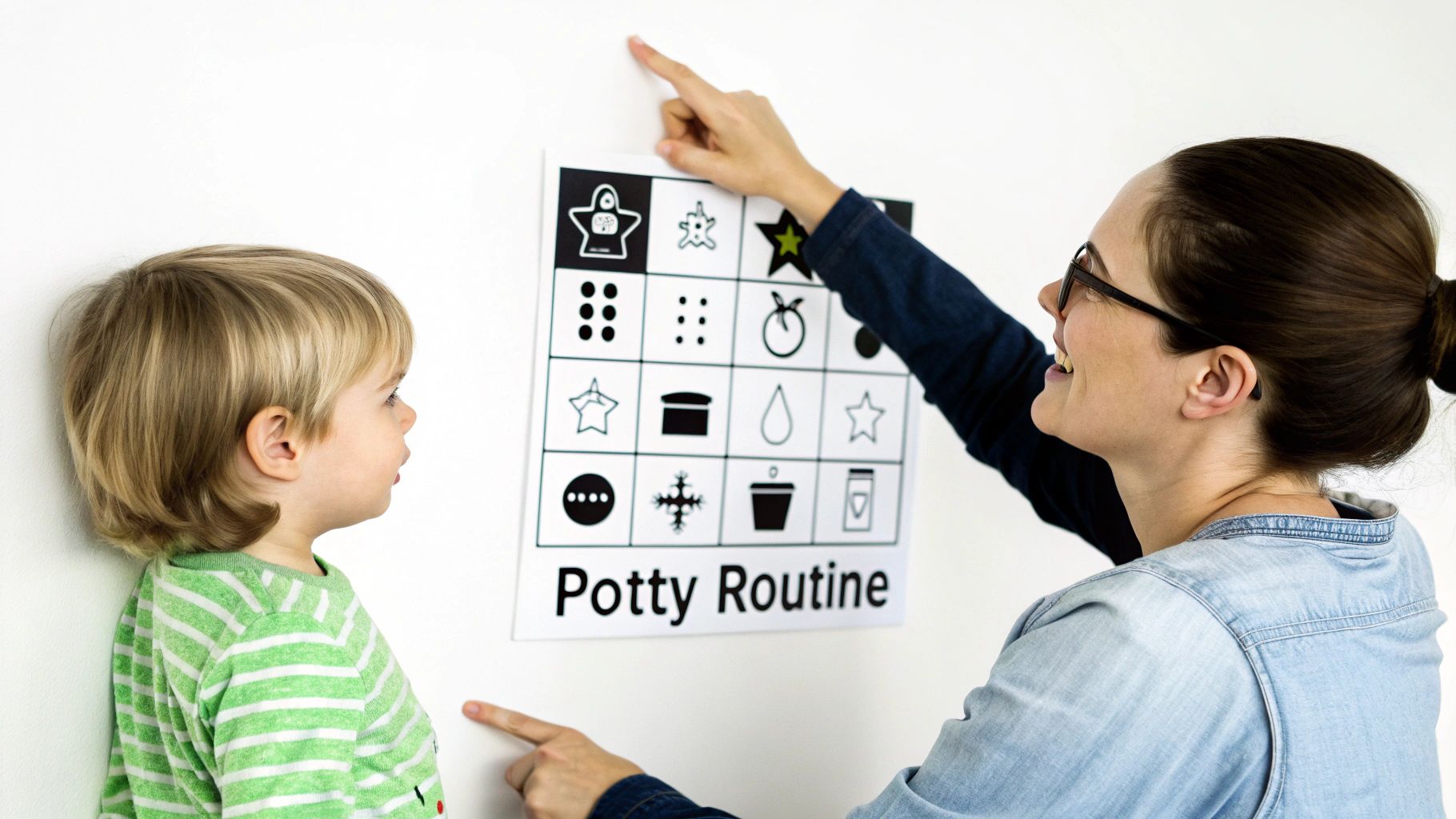
When the potty is just part of the day's flow—like washing hands before a meal—it stops being a demand and becomes just another normal activity. This simple shift removes the element of surprise and can dramatically reduce the chance of a power struggle.
Anchoring Potty Time to Daily Events
The easiest way to build a routine is to "anchor" potty breaks to things you already do every day. These are the moments when a trip to the bathroom just makes sense. Look at the natural transitions in your toddler's day and start there.
Some of the best times to build in a potty visit are:
- Upon Waking: The bladder is almost always full first thing in the morning and right after a nap. Making a potty trip the very first thing you do is a classic strategy for a reason—it works!
- Before and After Meals: Try to build in a potty attempt before sitting down to eat and then again once the meal is over.
- Before Leaving the House: This is a practical habit that will save you countless times. Always try the potty before buckling into the car seat or heading out to play.
- Before Bedtime: Make it the final step in the bedtime routine, right after brushing teeth and before that last story.
The Art of the Gentle Invitation
How you ask is just as important as when you ask. Toddlers are hardwired to seek independence, so a direct command like "You have to go potty now!" is practically guaranteed to trigger resistance.
Your phrasing can turn a potential battle into a team activity. Instead of a command, offer a gentle transition: "Let's try the potty before we head outside to play!" This simple shift respects their autonomy and makes them a willing participant.
Try framing it as a collaborative effort with phrases like these:
- "It's almost lunchtime. Let's go visit the potty first."
- "We're getting ready to go see Grandma. Time for a quick potty stop!"
- "Your nap is all done! Let's see if your body has any pee for the potty."
This approach keeps the whole process light and positive. It communicates that using the potty is just a normal part of the day, not a test they have to pass.
Making the Transition from Diapers to Underwear
A huge part of establishing this new routine is finally making the switch from diapers to training pants. This is a big milestone! Choosing the right underwear is vital for both learning and skin health.
Choosing soft, breathable cotton training underwear is a fantastic next step. Look for high-quality fabrics free from harsh dyes or chemicals that could irritate sensitive skin. They’re comfortable, but more importantly, they allow your toddler to immediately feel the sensation of wetness. That connection—"I feel wet because I peed"—is a fundamental lesson that helps accelerate their body awareness.
Empowering Through Easy-Access Clothing
You can set your toddler up for success by making sure their clothes are as potty-friendly as possible. Overalls, complicated buttons, and tight pants are the enemy of potty training. Even the material of their clothes matters; synthetic fabrics can trap moisture and contribute to skin irritation or rashes.
The solution is simple: dress them for success.
- Elastic Waistbands Are Your Best Friend: Stick to soft pants, leggings, and shorts with simple elastic waistbands they can easily push down themselves.
- Dresses and Skirts for Easy Access: For girls, dresses can make potty trips even faster, especially in the early stages.
- Choose Natural, Breathable Fabrics: Opt for clothing made from cotton or other natural fibers. These materials are gentle on the skin and allow for better airflow, reducing the risk of rashes.
- Avoid Belts, Zippers, and Snaps for Now: Save the more complex outfits for after their potty skills are solid.
The goal is to remove any obstacle that might stand between them and the potty. When they feel capable of managing their own clothes, it builds a powerful sense of accomplishment that acts as a huge motivator. And for those times you do need to head out, knowing what essentials to have on hand is key. You can find helpful ideas in our guide on what to pack in a diaper bag to stay prepared for any situation.
Navigating the Bumps in the Road
Let's be real: even with the perfect plan, potty training is rarely a straight shot to success. Setbacks are going to happen. It's not just common; it's a completely normal, expected part of the whole process. The real key is learning to see these bumps—the potty standoffs, the sudden fears, and of course, the accidents—as learning moments, not failures.
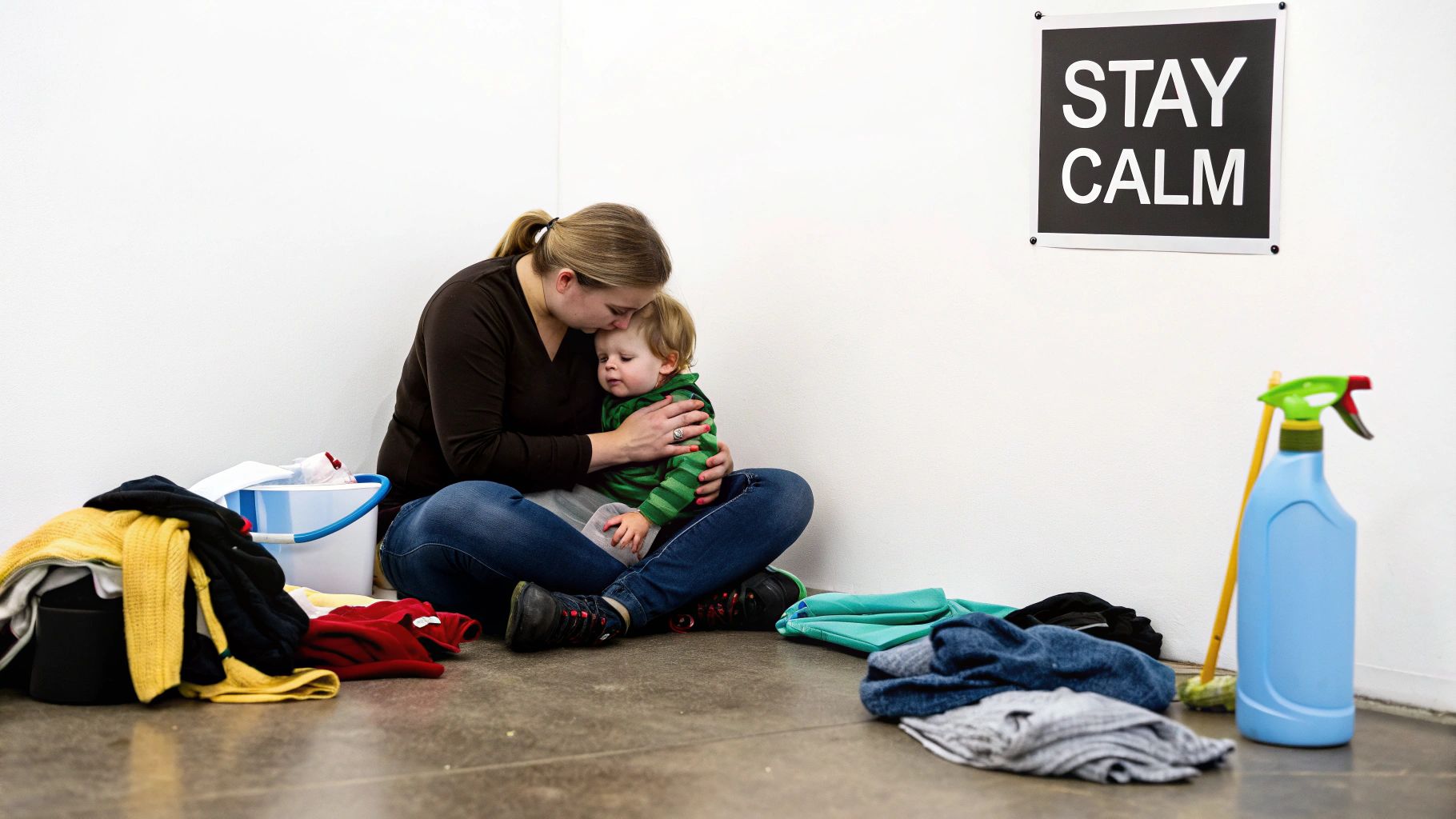
How you react when things go off-script sets the emotional tone for this entire journey. Staying calm and compassionate protects your little one's self-esteem and makes them feel secure enough to keep trying.
Dealing With Potty Resistance
It’s that moment every parent dreads. The toddler who seemed excited yesterday now absolutely refuses to even sit on the potty. This kind of resistance is almost always a sign of their budding independence, not a personal rejection of your potty-training efforts. They're just discovering they have a say in things, and "no" is a powerful new word in their vocabulary.
The trick is to avoid turning it into a battle of wills.
- Offer choices. Instead of demanding, "It's time to go potty," give them a sense of control. Try asking, "Do you want to use the potty before we read our book or after?"
- Keep it low-pressure. If they dig their heels in, just back off for a few minutes. A simple, "Okay, let's try again in a little bit," is all you need. Forcing them to sit when they're upset will only create negative feelings about the potty.
- Investigate the "why." Sometimes, the reason is physical. Is the potty seat comfortable? Can their feet touch the floor or a stool? Feeling stable and secure makes a huge difference.
Addressing Common Fears
Out of nowhere, a fear of the potty or the toilet can pop up. The loud flush, the feeling of being so small on a big toilet, or even the fear of falling in are all very real anxieties for a toddler. Your job is to be their safe person and validate those feelings.
Acknowledging their fear with empathy is powerful. Just saying, "I can see that loud flushing sound is scary for you," shows you understand. That simple validation is often the first step toward helping them move past it.
For a fear of the flush, one easy trick is to wait until your child has left the bathroom before flushing. If the big toilet is the issue, stick with a standalone potty chair for a while longer to help build their confidence. Consistency is everything here; research has found that potty users succeed 4.22 times faster without interruptions. Finding ways to work through fear without stopping the process is critical. You can read more about the factors influencing potty training duration to see just how much consistency matters.
The Inevitable Accidents
Accidents are going to happen. Period. Your reaction is what truly matters. Getting angry or showing frustration can create feelings of shame, which is a major roadblock to progress. Instead, think of accidents as just part of your child learning to listen to their body's cues.
When an accident happens, keep your tone neutral and matter-of-fact.
- Acknowledge calmly. Use a simple, non-judgmental phrase like, "Uh oh, you had an accident. That's okay. We put pee and poop in the potty."
- Involve them in the cleanup. Have them help in an age-appropriate way, like putting their wet clothes in the hamper or wiping the floor with a cloth. This teaches responsibility without any shaming.
- Move on quickly. Once it's cleaned up, get right back to your day. Dwelling on it reinforces that it was a big, negative event.
Nighttime Training: A Different Milestone
It’s so important to understand that staying dry at night is a totally different ballgame. It's not a skill you can teach; it's a physiological development. It happens when a child's body starts producing a hormone that slows down urine production overnight, and their brain learns to wake them up when they need to go. This can happen months, or even years, after they've mastered daytime potty use.
To keep nights as low-stress as possible:
- Use absorbent protection. There’s no shame in using nighttime diapers or pull-ups until you start seeing a consistent pattern of dry mornings. Look for options made with skin-friendly, breathable materials to prevent rashes.
- Protect the bed. A good quality, non-toxic mattress protector is a must-have. For extra peace of mind and super easy cleanup, you can lay a waterproof diaper changing urine absorbent nappy changing pad right on top of the fitted sheet.
- Manage evening liquids. Try to limit drinks an hour or two before bed, but never restrict water if they're thirsty. Just make sure they use the potty one last time right before you tuck them in.
Your Top Potty Training Questions Answered
Even the best-laid potty-training plans hit a few bumps. It’s totally normal to have questions pop up along the way—every child is different, and what works for one might not work for another. Let’s tackle some of the most common concerns I hear from parents, so you can navigate this big step with a little more confidence.
Should I Use Rewards for Potty Training?
This is a big one. While rewards can be a great motivator, the real goal is to help your child feel proud of themselves for listening to their body. You want the win to be about their own achievement, not just about getting a prize.
A simple sticker chart works wonders here. It celebrates the effort and creates a fun ritual without making candy or toys the main event. Honestly, your own excitement is the best reward you can offer. A big "Wow, you listened to your body and went on the potty! That's amazing!" goes a long way. If you do opt for small treats, just be sure you have a game plan to slowly phase them out once using the potty becomes routine.
What Causes Potty Training Regression?
First, take a deep breath. Potty training regression is incredibly common and rarely a sign that your child is being defiant. It's usually a signal that they're feeling a bit overwhelmed by something else in their life. Think big changes: a new baby in the family, the start of preschool, or even just getting over a cold.
The best thing you can do is respond with patience. Don't make a big deal out of it. Just go back to the basics for a couple of days—more frequent reminders, lots of praise, and zero pressure. Shaming or scolding will only create anxiety around the potty, which is the last thing you want. A simple, "Accidents happen, let's get you cleaned up. We'll try the potty again soon," helps them feel secure and ready to get back on track.
How Is Nighttime Training Different from Daytime?
This is a crucial distinction that can save you a ton of stress. Daytime potty use is a skill your child learns. Staying dry at night, however, is a matter of physical development. They have absolutely no conscious control over it. It all comes down to two things: their body producing a specific hormone that slows down urine production at night, and their brain being mature enough to wake them up when their bladder is full.
Staying dry all night often happens months, or even years, after a child has mastered daytime potty skills. Pushing this milestone can lead to unnecessary frustration for everyone.
Instead of pushing for nighttime dryness, focus on managing it comfortably. A good pair of absorbent, breathable nighttime pants will protect their skin, and a soft, waterproof mattress protector is a must-have. It saves you from endless laundry and keeps your child from feeling bad about a wet bed.
How Do I Handle Potty Training When We Are Out?
Leaving the house can feel like a high-stakes mission in the early days, but a little bit of planning makes all the difference. The key is to stay cool and have your toolkit ready.
Here are a few practical tips for taking your potty-training toddler on the go:
- Make a pre-trip potty stop. This one’s non-negotiable. Always have them try to go right before you head out the door.
- Bring a portable potty seat. A simple, folding seat insert can make a big, scary public toilet feel familiar and safe for your little one.
- Scout out the bathrooms. The first thing I do when I get anywhere new is locate the nearest restroom. No last-minute panic.
- Pack a "go bag." This is your secret weapon. Keep a small bag stocked with a full change of clothes (don't forget socks!), gentle, hypoallergenic wipes, and a couple of plastic bags for any wet items.
Being prepared means you can handle an accident calmly, which helps your toddler feel secure and confident, even when you're not at home.
At GUGUTON LLC, we believe in supporting your family through every milestone with products that prioritize safety, comfort, and quality. Explore our collection of baby and toddler essentials designed to make parenting a little easier. Visit us at https://guguton.com to find everything you need for your journey.