

How to Measure Kids Shoe Size The Ultimate Guide for Parents
Figuring out how to measure kids shoe size is about so much more than just avoiding a meltdown in the shoe aisle. It’s one of the most important things you can do for your child's healthy foot development. Getting the fit right supports their natural movement, prevents painful blisters, and makes sure every adventure is a comfortable and safe one.
Why Getting the Right Shoe Size Is Non-Negotiable
It’s tempting to think a shoe that’s a little snug or a bit roomy is no big deal. But for a growing kid, it's a critical piece of their overall health. A child's feet are incredibly soft and pliable, which means they're easily affected by poorly fitting shoes.
When shoes are too tight, they can actually restrict growth, cause painful ingrown toenails, or even alter your child's gait and posture down the road. On the flip side, shoes that are too big are a genuine safety hazard. They’re a one-way ticket to tripping and falling, and all that sliding around inside the shoe creates blisters and uncomfortable skin irritation. This is especially true for active toddlers who are still getting the hang of balance and coordination. Choosing shoes made from breathable, high-quality materials can also help prevent the rashes and skin issues that come from trapped moisture and friction.
Debunking Common Sizing Myths
We’ve all seen it done—the classic "thumb test" to check for space at the toe. While it seems like a good idea, this method is surprisingly unreliable. Many kids will instinctively curl their toes the second they feel that pressure, making you think there's plenty of room when there isn't.
And simply asking, "How do they feel?" won't get you very far either. Young children often can't tell you if a shoe is uncomfortable, or they might be too excited about the flashy new design to notice a bad fit.
A precise measurement is your best tool for ensuring foot health. It removes the guesswork and provides a clear, data-driven starting point for finding the perfect pair of shoes that support, protect, and feel great.
The numbers don't lie. Shocking research from RunRepeat.com reveals that only 35% of parents actually buy the correct shoe size for their children. That means roughly 1 out of 3 children is walking around in properly fitted shoes.
Even more surprising, 47% of parents admitted to buying shoes that were a size too small, and a whopping 52% never use any proper measuring tools, relying on just a quick glance.
This focus on proper fit and material choice extends beyond just shoes. Just as the wrong fit can cause problems, the wrong fabrics in their clothing can also lead to skin irritation or allergies. You can learn more by checking out our guide on 10 common baby clothing mistakes and how to avoid them. With that in mind, let's dive into a simple, stress-free process for measuring at home.
Getting Set Up for an Accurate At-Home Measurement
Turning your living room into a makeshift shoe-fitting station is simple. You don’t need any high-tech gadgets, just a few things you probably already have lying around the house. A little bit of prep work now will save you a ton of hassle later.
Before you wrangle your little one, grab these essentials:
- A piece of paper that’s bigger than your child's foot.
- A pencil or pen you can hold straight up and down.
- A ruler or a rigid tape measure to get the final numbers.
Where you measure matters just as much as what you use. Make sure you’re on a hard, flat surface. A hardwood or tile floor is perfect. Trying to do this on a plush carpet can cause the paper to bunch up, throwing off your entire measurement.
Creating a Wiggle-Free Zone
Let's be honest, the hardest part of measuring a kid’s foot isn't the tracing—it's getting them to stand still for more than three seconds. The secret is to make it a game, not a chore. Try calling it a "superhero foot project" or a contest to see who in the family has the biggest footprint.
I can't stress this enough: timing is everything. A tired, hungry, or fussy kid is not going to cooperate. Aim for a time when they're happy and relaxed, like after a nap or a snack.
For toddlers and younger children, an extra set of hands can be a lifesaver. One person can focus on keeping your child steady and distracted while the other gets a clean, accurate tracing. A favorite toy or a quick peek at a cartoon on your phone can work wonders.
This little bit of prep makes the whole process smoother and helps you get a reliable measurement. It's a lot like organizing their clothes to make them last longer. For more on that, check out our guide on how to organize and store your baby’s wardrobe efficiently. Taking a few moments to set the stage really does pay off.
The Foolproof Foot Tracing Method
Alright, you’ve gathered your supplies. Now it's time to get that measurement. The foot tracing method is a classic for a reason—it’s simple, surprisingly accurate, and gives you a concrete outline to work with. Let's walk through it.
First things first: get your child to stand on the paper with their feet about hip-width apart. The most important part here is making sure they put their full weight on the foot you're tracing. Feet spread out under pressure, so if they're sitting or leaning, you'll end up with a measurement that’s too small.
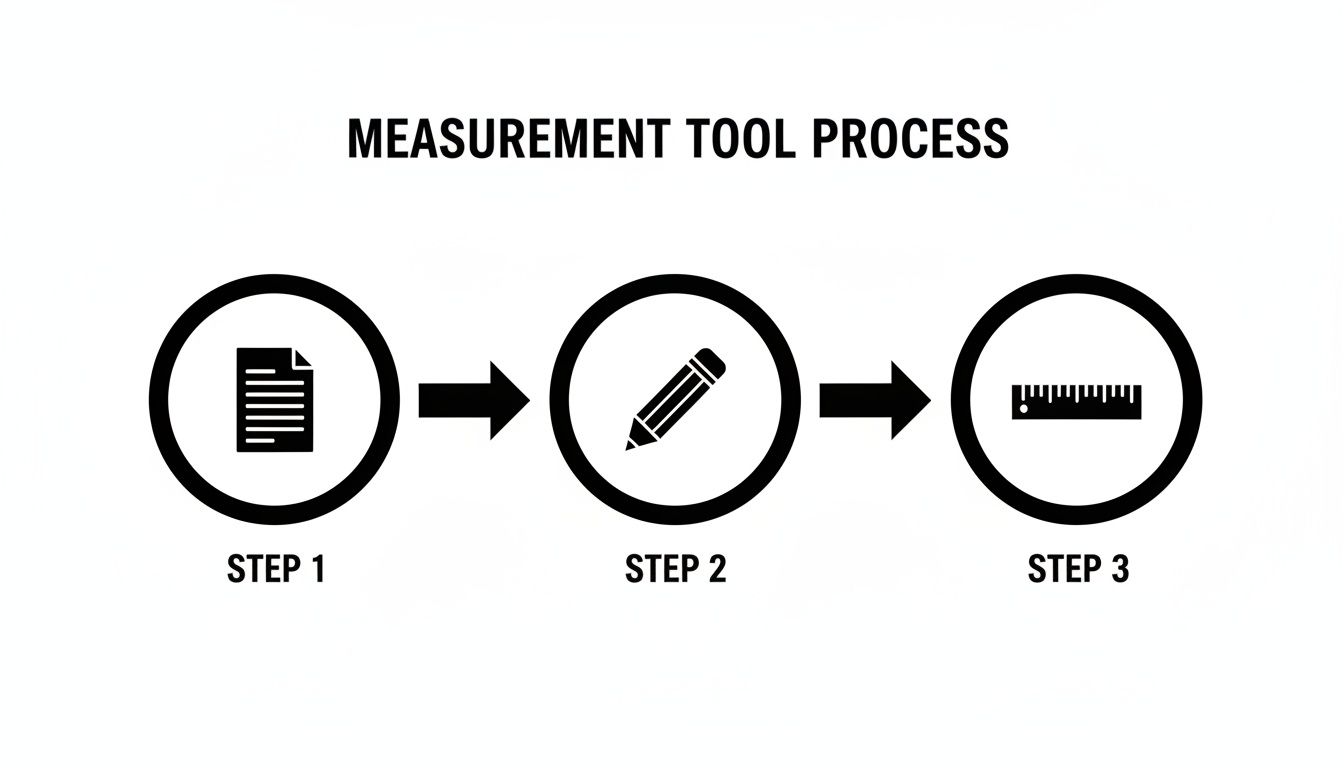
As you can see, you really don't need anything fancy—just a piece of paper, a pencil, and a ruler will do the trick.
Capturing the Perfect Outline
With your child standing steady, grab your pencil and hold it straight up and down, at a perfect 90-degree angle to the paper. If you slant the pencil inward or outward, you're going to distort the tracing and get an inaccurate size. Carefully draw a line all the way around the foot, keeping the pencil snug against the skin but not digging in.
Here’s a common mistake I see parents make: they only measure one foot. Just like us, most kids have one foot that’s a little bigger than the other. You absolutely have to trace both feet and then use the measurement from the larger one. This simple step can mean the difference between a comfy shoe and one that causes painful blisters.
Another pro tip? Have them wear the kind of socks they’ll typically use with their new shoes. A thick winter sock can easily change the fit compared to a thin summer one. Factoring this in from the start ensures a perfect fit right out of the box.
From Tracing to Measurement
Okay, you’ve got your two outlines. Now, take your ruler and draw a straight line from the very back of the heel to the tip of the longest toe on each tracing. For some kids, that's the big toe; for others, it's the second toe. That final number is your child's foot length.
While you're at it, it’s a good idea to measure the width, too. Just find the two widest points on the tracing—usually around the ball of the foot—and draw a line straight across. Not every shoe brand offers different widths, but knowing this measurement helps you steer clear of styles that are obviously too narrow for your child’s foot.
Remember to measure in the late afternoon or evening. Feet naturally swell throughout the day, so an evening measurement will give you the most accurate size, preventing shoes from feeling too tight after a long day of play.
This is also where we need to think about growth. A child's feet can grow incredibly fast—sometimes as much as one millimeter per month at kindergarten age! That’s why experts recommend leaving about 12 to 17 millimeters (roughly ½ to ¾ of an inch) of wiggle room at the front of the shoe. This space is essential for natural toe movement and gives them room to grow. It’s a crucial detail, especially when you learn that a shocking 93% of children's shoes are reportedly too short. You can read more about these important growth allowance findings on Wildling.shoes.
Translating Measurements into Shoe Sizes
Now that you have your final length in inches or centimeters, it's time to figure out the actual shoe size. A good conversion chart is your best friend here, taking all the guesswork out of the process.
The chart below will help you convert your measurement into the right US, UK, and EU shoe sizes.
Kids Shoe Size Conversion Chart
Use this table to convert your child's foot measurement (in inches or centimeters) to the corresponding US, UK, and EU shoe sizes. Always use the measurement from the larger foot.
| Foot Length (Inches) | Foot Length (CM) | US Size | UK Size | EU Size |
|---|---|---|---|---|
| 4" | 10.1 cm | 3 | 2 | 18 |
| 4.5" | 11.3 cm | 4.5 | 3.5 | 20 |
| 5" | 12.6 cm | 6 | 5 | 22 |
| 5.5" | 13.8 cm | 7.5 | 6.5 | 24 |
| 6" | 15.1 cm | 9 | 8 | 25 |
| 6.5" | 16.4 cm | 10.5 | 9.5 | 27 |
| 7" | 17.7 cm | 12 | 11 | 29 |
| 7.5" | 18.9 cm | 13.5 | 12.5 | 31 |
| 8" | 20.2 cm | 2 | 1 | 33 |
| 8.5" | 21.4 cm | 3.5 | 2.5 | 35 |
Remember, this is a great starting point, but sizes can still vary a bit between brands. Always check the brand's specific size guide if one is available.
So, What Do You Do With That Number? Navigating Size Charts and Brands
You’ve carefully traced and measured your child's foot, and you have that magic number in millimeters or inches. Great! But the moment you start shopping, you’re hit with a wall of confusing sizes. A US size 9 in one brand looks tiny, while another brand’s 9 seems huge.
Trust me, you're not imagining things. This is the frustrating reality of shopping for kids' shoes.
There’s no universal sizing standard, which means a sneaker from one company can fit entirely differently than a sandal from another, even if they're both labeled a "size 10." The culprit? Different manufacturing processes, shoe styles (a boot versus a ballet flat), and even the country where the shoes were made. This is why knowing your child's measurement is only half the battle.
Decoding US, UK, and European Sizes
One of the biggest hurdles is trying to figure out how sizes translate across different systems. The United States, the United Kingdom, and Europe all have their own sizing metrics, and they don't line up neatly. This can make buying shoes online feel like a total guessing game.
The conversion challenges are real. For example, a men's size 10 shoe in the United States is a size 9 in the United Kingdom and a 42.5 or 43 in Europe. Even with official conversion tables, many online charts are just plain wrong. This is why seasoned parents often recommend using cardboard stencils of their kid's feet or pulling out a shoe's insole to physically check the fit. If you're curious about the nitty-gritty of these global differences, you can read more about shoe size conversions on World Population Review.
Here's the most important takeaway: Always consult the specific brand's size chart before you buy. Never assume a size 11 is a size 11 across the board. This one simple step will save you from a mountain of returns and get your child a much better, safer fit.
A shoe that doesn't fit well isn't just an inconvenience; it can cause real problems. Shoes that are too tight can lead to chafing, blisters, and angry red pressure marks. On the flip side, a shoe that’s too loose lets the foot slide around, creating friction that irritates their delicate skin. When you use the brand's chart, you're not just getting the right size—you're protecting your child's feet from unnecessary rashes and discomfort.
Why Shoe Style and Material Matter, Too
Beyond the number on the box, the quality and style of the shoe play a huge part in its safety and comfort. A narrow, pointy dress shoe will feel completely different than a roomy rain boot. A stiff, synthetic shoe won't breathe or have the same give as a flexible mesh sneaker, which is often a safer, more forgiving option that helps prevent skin irritation.
Think about these common scenarios:
- Sneakers: High-quality sneakers often use breathable mesh to prevent sweaty feet, which can lead to rashes and fungal issues. A supportive fit is key for stability during play.
- Sandals: An open-toe design might seem airy, but check the straps. If they are made of harsh materials or dig into the skin, you're headed for painful rubbing and irritation.
- Boots: Don't forget about thick winter socks! Always factor in that extra bulk when buying boots, or you'll end up with a pair that's way too tight come the first cold day, restricting circulation.
This is why understanding how to measure kids shoe size is part of a bigger picture that includes what the shoe is made of and how it’s designed to protect your child's skin. For a deeper look at how sizing works for clothes, you can also check out our baby clothing size chart, which deals with similar issues.
In the end, your measurement is your starting line, but the brand’s chart and a focus on quality materials are your most reliable map to the finish.
The Final Fit Check When Shoes Arrive
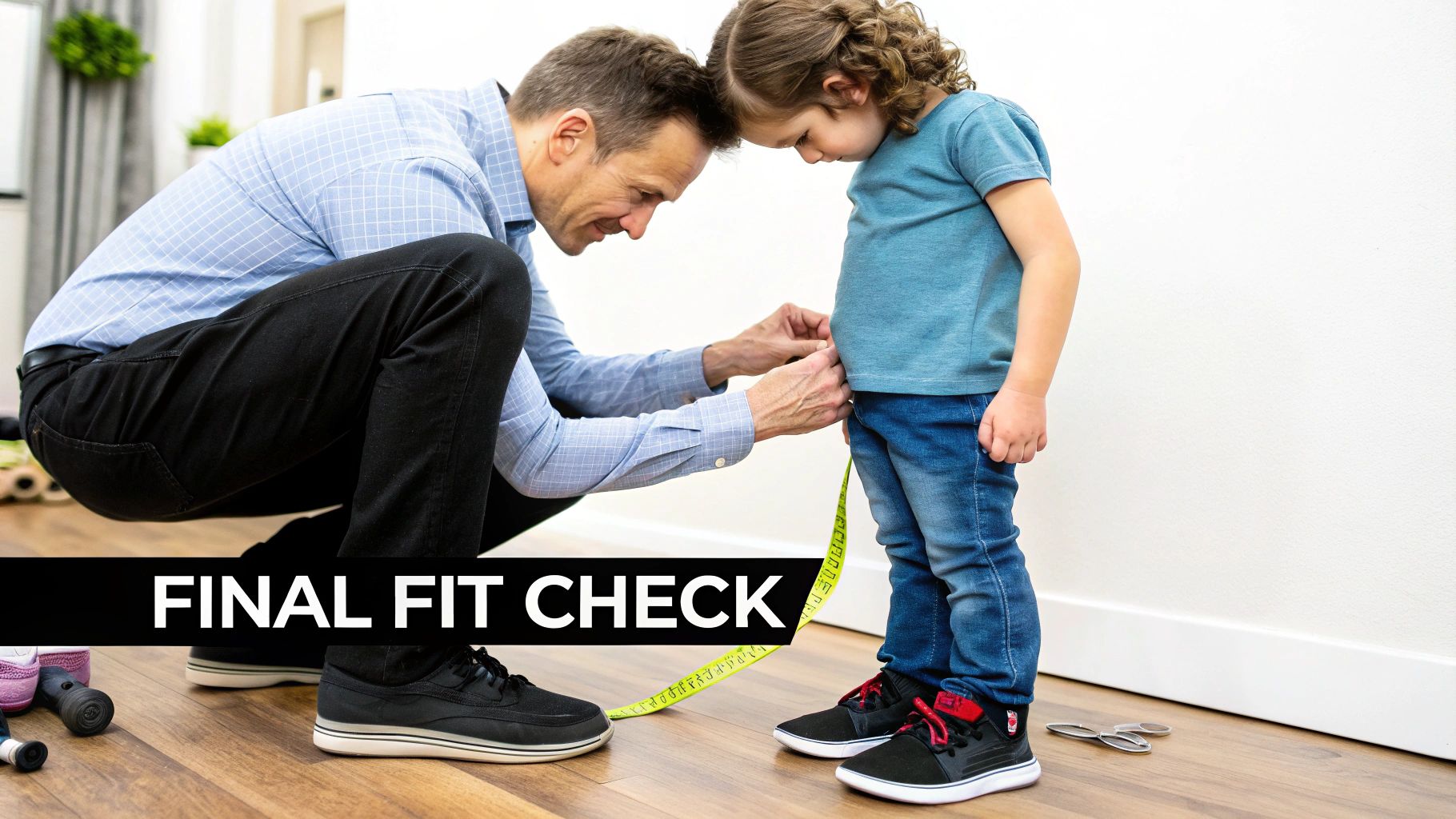
The package is here, and the new shoes are out of the box. But you’re not done just yet! This last step—the at-home fit check—is where you confirm all your careful measuring paid off.
We all grew up with the classic "thumb press" at the front of the shoe, but I’ve learned from experience that it’s not the most reliable trick. Kids instinctively curl their toes when they feel that pressure, which can easily trick you into thinking there's more space than there actually is.
Let's walk through a few better methods to get a true feel for the fit and ensure skin safety.
Beyond the Thumb Press
First, get your child to stand up straight. Feet naturally splay out a bit when they’re bearing weight, so checking the fit while they're sitting down won't give you an accurate picture.
Now, gently feel around the front of the shoe to locate their longest toe—and remember, that isn’t always the big toe! You’re looking for about a half-inch of space between the end of that toe and the tip of the shoe. A good rule of thumb (pun intended) is that this space is roughly the width of your own index finger.
That extra room isn't just for growth; it’s crucial wiggle room. It allows their foot to move forward naturally as they walk and run, preventing blisters and painful pressure on their toes.
Next, check the width. The shoe should feel comfortably snug, never tight, across the widest part of their foot. If the sides are bulging over the edge of the sole, that's a clear sign the shoe is too narrow and will cause painful friction and skin problems. You should be able to pinch just a little bit of the material on top.
Checking for Heel Slippage and Overall Comfort
For stability and safety, a secure heel fit is absolutely essential. If a shoe is slipping off at the back, it’s not only a recipe for blisters and rashes but can also throw off their balance and become a serious tripping hazard.
Here's a quick way to check it:
- With your child standing, try to slide your pinky finger between their heel and the back of the shoe.
- It should be a snug fit. If your finger slips in with lots of room to spare, the shoe is too big.
- If you can't get your finger in at all without force, it's likely too tight.
The real test, of course, is a quick road test. Let them wear the new shoes inside for a few minutes. Watch them walk, skip, and maybe even do a little jump. Do they seem clumsy or hesitant? That could be a sign something feels off.
Don't forget to ask them directly! Use simple questions like, "Do your toes feel squished?" or "Does anything feel pokey or weird inside?" Their honest feedback is the final piece of the puzzle. It confirms the shoes aren’t just the right size on paper but are actually comfortable and safe for action.
A genuinely comfortable shoe made from breathable materials, like these Carlos Unisex Toddler Slip-On Shoes, can make all the difference for a happy, active kid.
Common Questions About Measuring Kids' Feet
Even with the best instructions, you're bound to have a few questions when you start measuring your child's feet at home. It’s completely normal! Getting these answers straight will give you the confidence that you're getting the right fit every single time.
Let's walk through some of the most common things parents ask. Think of this as your personal cheat sheet for navigating those tricky little details. After all, a good fit isn't just about comfort—it's about protecting their feet from the blisters, rashes, and irritation that come from shoes that just don't fit right.
How Often Should I Remeasure My Child's Feet?
Kids' feet grow astonishingly fast, and it can be tough to keep up. Having a regular measurement schedule helps you catch growth spurts before their shoes become painfully tight and potentially harmful to their skin and development.
Here’s a good rule of thumb to follow:
- Toddlers (under 3): Their feet can grow a half-size or more in just a couple of months. Plan to measure them every two to three months.
- Preschoolers (3 to 6): Growth slows down a little, but it's still steady. Checking every four to six months is a good bet.
- Older Kids (6+): At this stage, measuring twice a year—maybe once before school starts and again in the spring—usually does the trick.
But here’s the most important tip: listen to your child. Growth spurts don’t follow a calendar. If they suddenly start saying their shoes feel "pinchy" or "ouchy," measure them right away, even if you just checked last month.
Should I Buy Shoes a Size Up for Them to Grow Into?
It’s tempting, I know. You want to get a little more mileage out of their shoes, but buying a full size up is a bad idea. While that recommended half-inch of wiggle room is perfect, a shoe that’s way too big can be a real safety hazard.
When shoes are too large, kids are more likely to trip and fall. Their foot also slides around inside, causing painful friction, rashes, and blisters. To compensate, they often curl their toes or change how they walk just to keep the shoes from falling off, which isn't great for their developing gait. It's always better to get a shoe that fits properly now with the correct amount of growing room.
What Are the Signs My Child's Shoes Are Too Small?
Sometimes a child will tell you their shoes hurt, but often the signs are much more subtle. You have to play detective a bit. The best time to check is right after they take their shoes off for the day.
Keep an eye out for these tell-tale clues:
- Red marks or indentations: Pressure marks on the tops of their feet, around the ankles, or on the sides of their toes are a dead giveaway of a poor fit.
- Blisters or raw spots: These are caused by constant rubbing and mean the shoe is definitely too snug, creating a risk for skin irritation.
- Curled or overlapping toes: If you can see that their toes look bunched up or squished together, the shoe is too short or narrow.
Also, pay attention to their behavior. Has your usually active kid started avoiding running or jumping? Are they desperate to kick off their shoes the second they get home? That could be their non-verbal way of telling you their feet are hurting.
Does Sock Thickness Matter When I Measure?
It absolutely does! A thick, fluffy sock can easily take up a half-size worth of space inside a shoe, turning a perfect fit into a tight squeeze. This can trap heat and moisture, potentially leading to skin rashes.
This is why you should always measure your child's feet while they're wearing the type of socks they'll actually use with the new shoes. If you're buying snow boots, measure with their thickest winter socks. Shopping for everyday sneakers? Use their regular cotton or athletic socks. It’s a simple step that makes a huge difference in getting an accurate, comfortable, and skin-safe fit.
At GUGUTON LLC, we believe that well-fitting, high-quality shoes are the foundation for happy, healthy adventures. Explore our curated collection of stylish and comfortable footwear designed with your child’s growing feet in mind. Find the perfect pair today at https://guguton.com.