

A Savvy Mom's Guide to Affordable Maternity Clothes Online
Finding affordable maternity clothes online is much easier than you might think. With so many brands out there, the real trick is knowing what to look for: versatile basics in soft, safe, and breathable fabrics that will grow right along with you. A little planning goes a long way, helping you build a fantastic wardrobe without draining your wallet, while also protecting your skin and your future baby's.
Starting Your Maternity Wardrobe Journey
That moment your favorite jeans officially declare war on your waistline? That’s your cue. It’s a common myth that you need to buy an entirely new wardrobe. The real goal is to find a few key, affordable maternity pieces online that are comfortable, functional, and, most importantly, safe for both your sensitive skin and your baby's.
When to Begin Your Search
There's no magic week to start shopping, but many women notice their regular clothes feeling tight somewhere between weeks 12 and 16. Honestly, the best advice is just to listen to your body.
If you’re relying on the old rubber-band-through-the-buttonhole trick or just feel constricted all day, it's time. Grabbing a few comfort pieces early, like a great pair of leggings or a supportive tank top, can make a huge difference long before you're rocking a full-on bump.
Set a Realistic Budget
You really don't have to spend a fortune. Before you buy anything, take a look through your current closet. You'd be surprised what can be repurposed—stretchy dresses, flowy tops, and open-front cardigans are your best friends right now. Once you see what you have, you can set a clear budget for the maternity-specific essentials you actually need.
A smart way to think about it is to put most of your budget toward the things you'll live in: supportive pants, good nursing bras, and versatile tops. You'll wear these items on repeat, so making sure they're high-quality, comfortable, and made from baby-safe fabrics is money well spent.
Prioritize Safety and Versatility
The most budget-friendly maternity wardrobe is built on a "less is more" foundation. Zero in on core basics you can mix and match to create dozens of different outfits. Even more important, though, is what those clothes are made of. Your skin can become extra sensitive during pregnancy, and once your baby arrives, their delicate skin will be snuggled up against whatever you're wearing.
Choosing safe, non-toxic fabrics is a simple way to help prevent skin irritation, allergies, or rashes for your newborn. I always recommend looking for pieces made from:
- Organic Cotton: It's incredibly soft, breathable, and grown without harsh chemicals or pesticides.
- Bamboo: Silky-smooth and naturally moisture-wicking, which is a lifesaver.
- Tencel™/Modal: These are eco-friendly fabrics made from wood pulp, and they are exceptionally gentle on sensitive skin.
By focusing on a small, curated collection of safe and versatile pieces, you’re not just saving money—you’re creating a wardrobe that gives you total peace of mind. This simple plan ensures every item you buy is a smart, comfortable, and conscious choice for both you and your baby.
Choosing Fabrics for Your Comfort and Your Baby's Safety
It’s one of the weird, unexpected parts of pregnancy: your skin can suddenly become incredibly sensitive. Fabrics that never bothered you before might now feel itchy or irritating. What you wear suddenly matters on a whole new level, not just for your own comfort, but because your newborn’s delicate skin will soon be snuggled up against those very same clothes.
Choosing the right fabric is one of the smartest (and easiest) ways to build a maternity wardrobe that feels great, keeps you comfortable, and is gentle enough to prevent rashes and allergies for your baby.
Soft, Safe, and Breathable: Your Fabric Go-To's
Think of natural, breathable fabrics as your new best friends. They let air flow, which is a lifesaver for regulating that internal pregnancy furnace, and they seriously cut down on the risk of skin irritation. On the flip side, some synthetics can trap heat and moisture, creating a perfect storm for uncomfortable rashes or skin problems for both mom and baby.
When you’re browsing online, make it a habit to check the material composition. You'll quickly find a few favorites:
- Organic Cotton: It’s unbelievably soft and, because it's grown without harsh pesticides, it’s one of the safest bets for sensitive skin.
- Bamboo Rayon: Famous for its silky-smooth feel and moisture-wicking magic, bamboo helps keep you feeling dry and fresh.
- TENCEL™ (Lyocell/Modal): Made from wood pulp, these eco-friendly options are exceptionally soft, breathable, and just feel amazing.
This handy wardrobe plan gives you a great visual for piecing it all together—from setting a budget to picking out the right basics and, of course, focusing on those all-important safe fabrics.
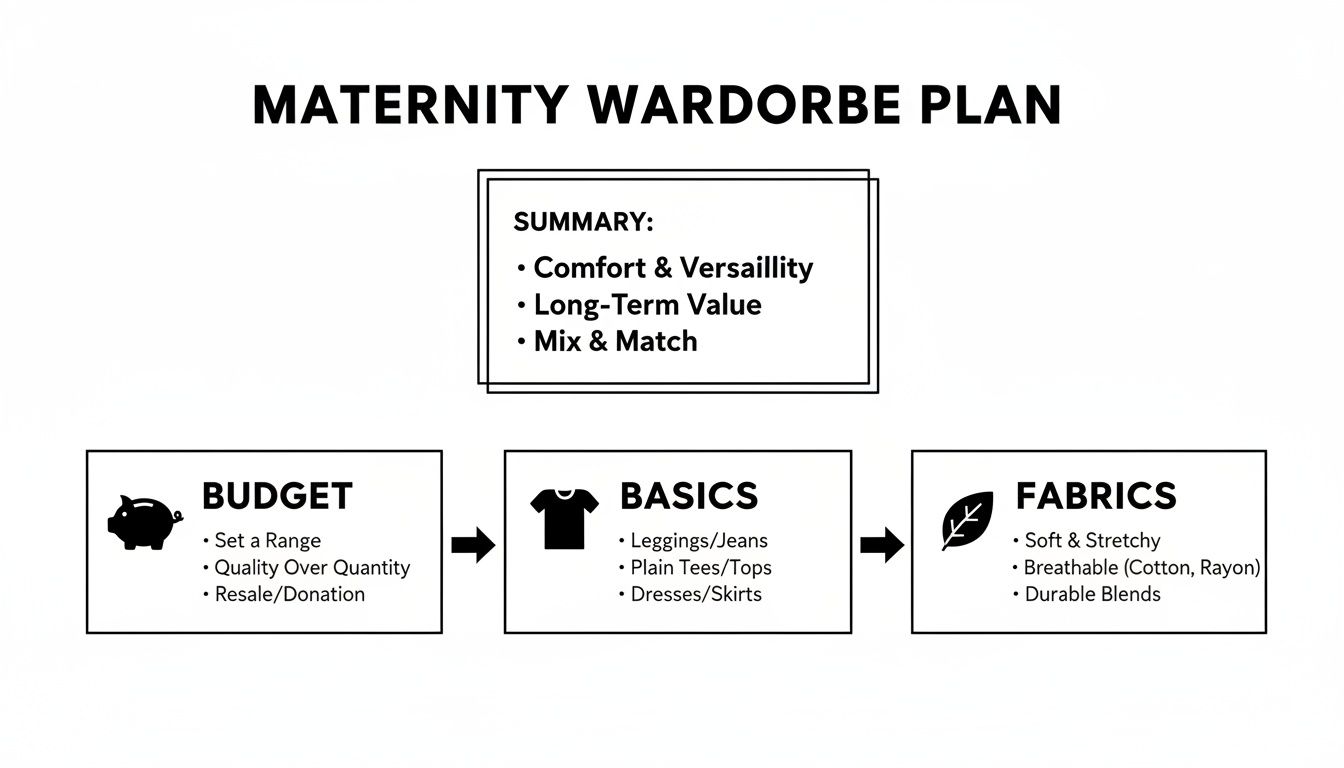
As you can see, fabric selection isn't just a detail; it's a cornerstone of building a maternity wardrobe that’s practical, safe, and doesn't break the bank.
Here’s a quick guide to help you compare some common maternity wear fabrics at a glance.
Maternity Fabric Safety and Comfort Guide
This table breaks down popular fabrics, highlighting how they benefit you and why they're a safe choice for your baby's delicate skin, helping to prevent rashes or allergies.
| Fabric Type | Key Benefits for Mom | Safety for Baby's Skin | Best For |
|---|---|---|---|
| Organic Cotton | Highly breathable, soft, hypoallergenic, and durable for everyday wear. | Grown without pesticides or harsh chemicals, making it exceptionally gentle and reducing allergy risks. | Everyday basics like tees, leggings, and nursing bras. |
| Bamboo Rayon | Silky-smooth texture, moisture-wicking, and naturally antibacterial. | Incredibly soft and non-irritating, perfect for close contact and sensitive newborn skin. | Loungewear, sleepwear, and fitted tops. |
| TENCEL™ Modal | Luxuriously soft, drapes beautifully, and resists shrinking and fading. | Eco-friendly production process and smooth fiber surface prevents irritation and is safe for baby. | Dresses, blouses, and versatile layering pieces. |
| Linen | Lightweight and highly breathable, ideal for warm weather. | A natural fiber that softens with each wash, becoming gentler over time and less likely to cause a reaction. | Summer dresses, loose-fitting pants, and tunics. |
| Spandex Blends | Provides essential stretch and support for a growing belly. | Safe when blended with natural fibers; ensures a comfortable, non-restrictive fit that won't irritate skin. | Leggings, fitted tops, belly bands, and activewear. |
Focusing on fabrics like these ensures every piece you buy is a win for both comfort and peace of mind.
Become a Label Detective for Ultimate Peace of Mind
Beyond just the type of material, it's worth thinking about the dyes and chemicals used to make the garment. Harsh chemicals can sometimes linger in the fabric, becoming a trigger for rashes or allergies. It’s a real concern for both your sensitive skin and your baby’s. You can learn more about how certain fabrics can cause skin issues in our deep-dive on navigating rash realities during maternity.
An easy way to shop with confidence is to keep an eye out for third-party certifications.
The OEKO-TEX® Standard 100 label is your golden ticket. It’s a globally recognized certification that guarantees every single part of a garment—from the thread to the buttons—has been tested and is free from a long list of over 100 harmful substances known to be dangerous to human health.
Spotting this label is a fantastic shortcut. It immediately tells you that the clothing is safe enough for even the most delicate newborn skin, actively helping prevent allergies and rashes.
The good news? Safe, comfortable, and affordable options are more available than ever. The global maternity wear market is on track to hit USD 24.12 billion by 2025, largely because e-commerce has made it so much easier for moms to find what they need. In 2024 alone, expecting parents purchased over 620 million maternity garments, and cotton-based clothing made up a whopping 41% of that.
This shift proves that moms everywhere are prioritizing value and skin-safe comfort, empowering you to find high-quality, safe clothing without having to overspend.
Getting the Right Fit Without a Dressing Room
Buying clothes online when your body is changing by the week can feel like a total gamble, but it doesn't have to be. Finding affordable maternity clothes that actually fit is completely doable with a few smart strategies. Forget the frustration—you can click 'buy' with confidence.
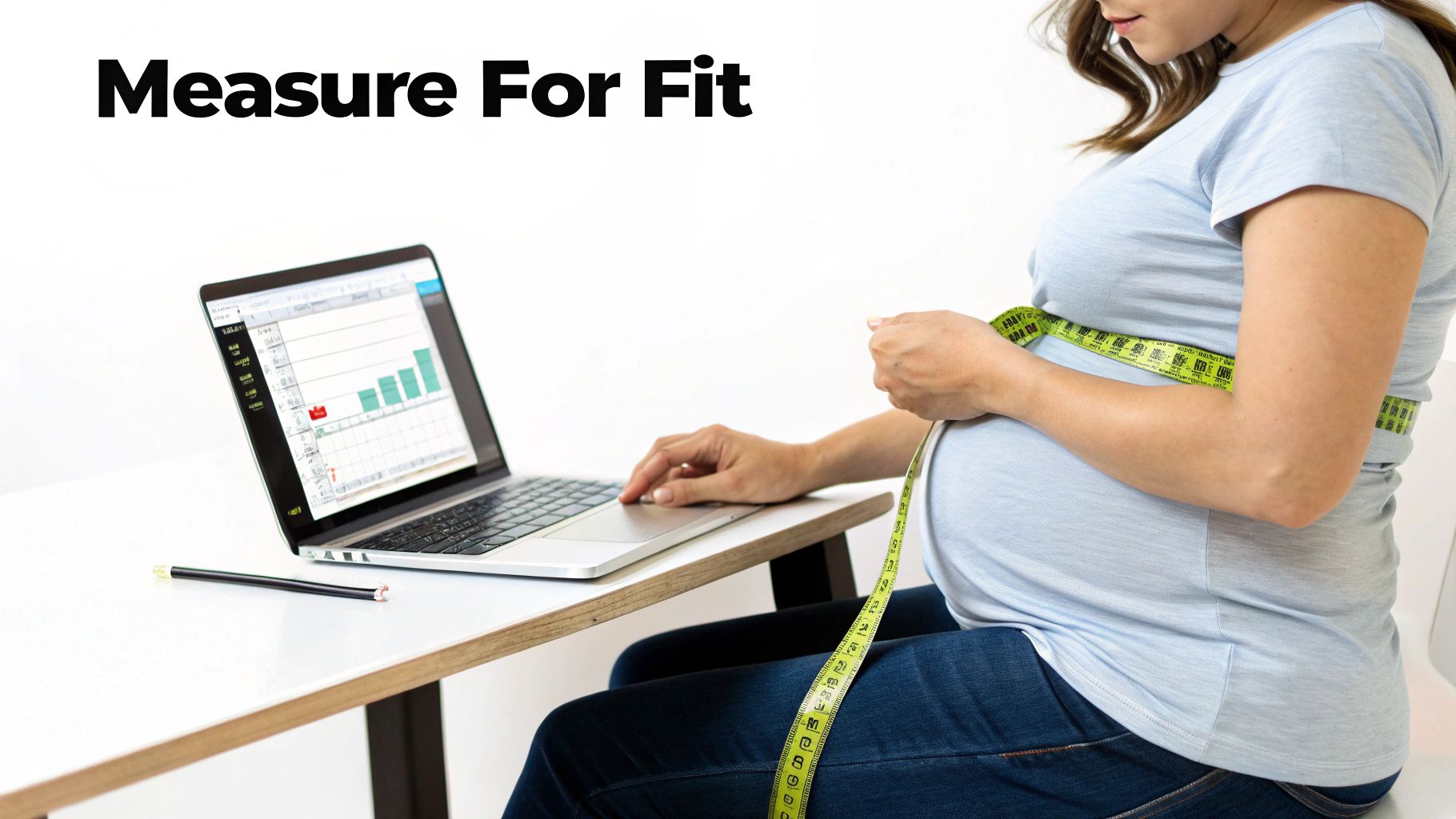
First things first: grab a soft measuring tape. Honestly, knowing your current measurements is the single most powerful tool you have for navigating the world of online maternity shopping.
Your Three Key Measurements
Before you even look at a size chart, get these three numbers. They’re your new best friends for figuring out how any brand's sizing will actually translate to your body.
- Bust: Measure around the fullest part of your chest. This one is absolutely critical for tops, dresses, and especially bras, since your cup size can change dramatically.
- Under-Bust: Wrap the tape right underneath your bust, where your bra band sits. This measurement is key for nailing the fit of empire-waist styles and supportive nursing bras.
- Hips: Go around the widest part of your hips and bum. This is your go-to number for finding comfy jeans, leggings, and skirts that won’t dig in or feel too tight.
Once you have these numbers jotted down, you can directly compare them to the size chart on every product page. It takes all the guesswork out of the equation.
Decoding Maternity Sizing Advice
You'll constantly see retailers say, "just shop your pre-pregnancy size." This is a decent starting point, but it's definitely not a hard-and-fast rule. It tends to work for brands that specifically design their clothes with a pregnant body in mind, adding extra fabric and stretch where it counts.
But there are plenty of times to ignore this advice. If you've gained a bit more than you expected, are carrying multiples, or just notice a brand seems to run small, sizing up is probably the right move. This is where a little detective work pays off.
The secret weapon for any online shopper is the customer reviews section. I always look for comments from women with a similar pre-pregnancy size and height. They’ll give you the real scoop on whether an item is true-to-size, runs small, or has more give than the pictures let on.
Spotting Clothes That Grow With You
To get the best bang for your buck, keep an eye out for design features meant to accommodate your changing shape. These clever details mean a piece will fit you for months, not just a few weeks.
- Side Ruching: That gathered fabric on the sides of tops and dresses is a lifesaver. It expands beautifully over a growing belly without permanently stretching out the garment.
- Over-the-Belly Panels: For pants and leggings, a soft, stretchy panel that pulls up over your bump offers gentle support and grows with you seamlessly.
- Wrap or Tie-Waist Styles: Dresses and tops with adjustable ties are incredibly versatile. You can loosen them as you need more room, customizing the fit day-to-day.
By focusing on these adaptable styles, you end up with a wardrobe that’s both comfortable and economical. For more inspiration, check out our guide on what to wear during pregnancy for ideas on pieces that go the distance. Making these strategic choices is how you find affordable maternity clothes online that you’ll actually love wearing from the first trimester all the way through postpartum.
Shopping Smarter for Maximum Savings
Building a maternity wardrobe you actually love without breaking the bank is totally possible. It just takes a little strategy. This isn't just about spotting a sale—it's about knowing exactly when and how to shop to get the absolute best value on pieces that are safe, comfortable, and make you feel good.
The real secret is timing. You can score some of the best deals during big retail holidays like Black Friday or during end-of-season clearances in late winter and late summer. That's when stores are desperate to clear out old inventory, letting you snag high-quality essentials at their lowest prices all year.
Master the Art of Stacking Savings
My number one rule? Never, ever check out without hunting for an extra discount first. One of the easiest tricks in the book is to stack savings. Before you even start adding things to your cart, check if the store offers a 10-15% discount just for signing up for their newsletter. It's an instant win.
Once you’ve got that, do a quick search for the brand’s name plus "coupon code" or "promo code." You’d be surprised how often you can find another code to layer on top. Combining these little discounts is how a good deal becomes an amazing one.
Keep an eye out for these common ways to save:
- Newsletter Sign-Up: The quickest, easiest discount for first-time shoppers.
- First-Time Buyer Codes: Some retailers have a special code just for your very first purchase.
- Free Shipping Thresholds: Be strategic with your cart. Meeting the minimum spend for free shipping can easily save you an extra $5-$10.
- Seasonal Sales: Plan your bigger purchases around major holidays to hit the deepest markdowns.
Prioritize Bundles and Look for Direct-to-Consumer Brands
Here’s another pro tip: buy your most-used essentials in multi-packs or bundles. Think about the things you’ll live in—nursing tanks, basic tees, comfy leggings. Buying them in packs of two or three almost always brings the per-item cost way down. It's the most efficient way to build the foundation of your wardrobe.
You should also get familiar with direct-to-consumer (DTC) brands. Because they sell straight to you online, they cut out the middleman and the traditional retail markup. This often means you get access to better quality and safer fabrics without the designer price tag—a key consideration when you're deciding if expensive baby clothes are worth the investment.
The online market for affordable maternity wear is bigger than ever, with North America alone holding 27.4% of the global share. This boom is fueled by moms just like you who want style, comfort, and value. With e-commerce projected to handle 60% of sales in a market expected to hit USD 24.12 billion by 2025, you have more power than ever to find incredible deals. This is your playbook for building a maternity wardrobe that works for your budget and your well-being.
Building a Wardrobe That Lasts Beyond Pregnancy
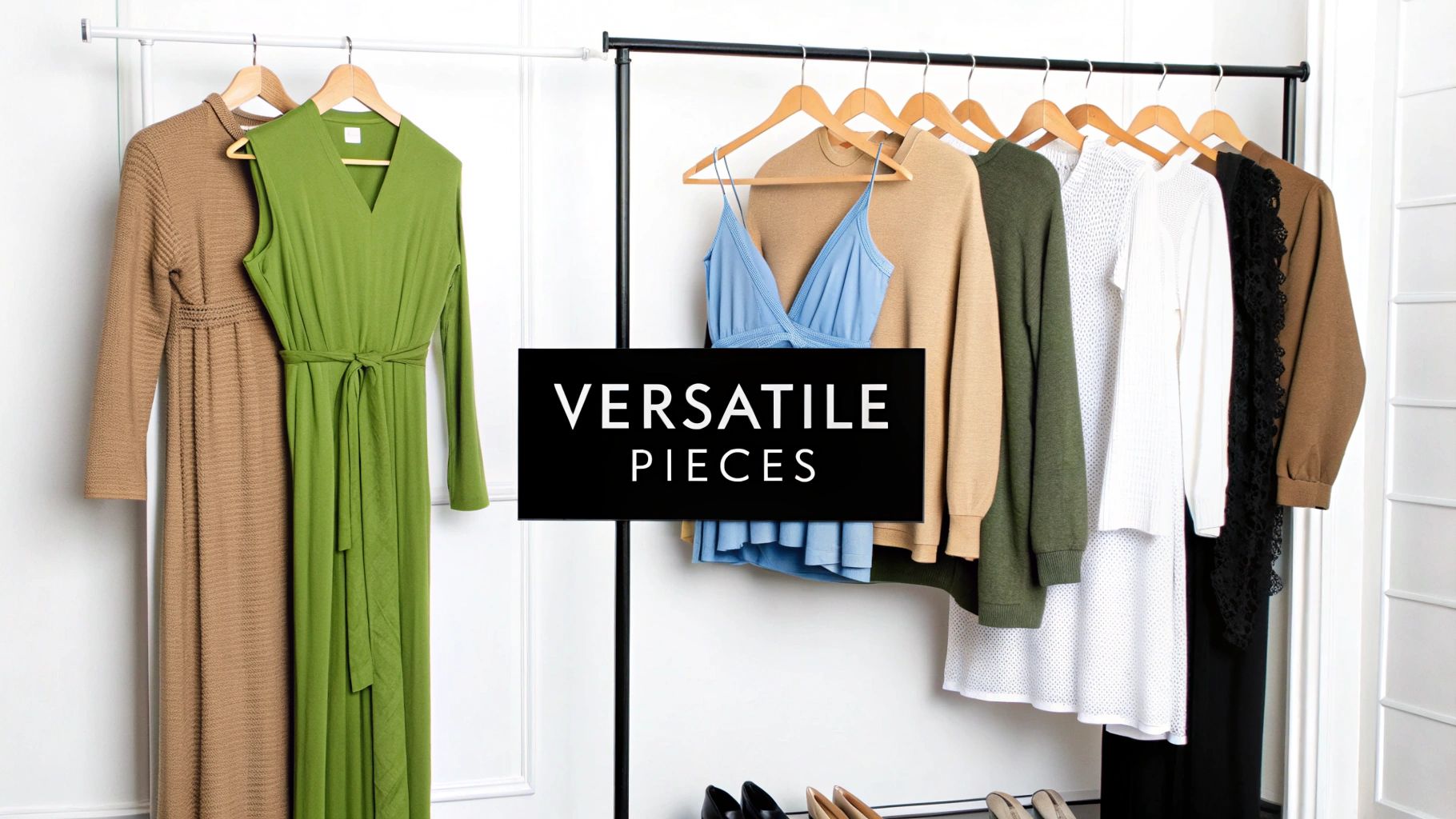
Here's a little secret from moms who've been there: the smartest way to shop for affordable maternity clothes online is to think beyond the nine months. The goal is to find pieces that won't get shoved into a box the second your baby arrives. A truly great maternity wardrobe is one that sticks around for the "fourth trimester" and beyond, saving you money and closet space.
This is all about finding clothes that can pull double-duty. Instead of just thinking about your bump, look for styles that will support you through every stage—from pregnancy to those early nursing days and whatever comes next. It’s a sustainable approach that makes your wardrobe work just as hard as you do.
Identifying Your Wardrobe Workhorses
Some pieces are absolute game-changers because they adapt to your body long after you've left the hospital. They become the bedrock of your postpartum wardrobe, giving you the comfort and practicality you desperately need.
As you browse online, keep an eye out for these must-have features:
- Easy Nursing Access: Look for tops and dresses with hidden zippers, simple button-fronts, or classic wrap styles. Trust me, you'll be grateful for them during late-night feedings.
- Forgiving Waistbands: Maxi skirts, leggings, and joggers with soft, stretchy waistbands are your best friends. They'll fit comfortably over a bump and won't irritate a C-section incision later.
- Flowy Silhouettes: A-line tops and empire-waist dresses are lifesavers. They give you plenty of room to grow during pregnancy and drape beautifully postpartum, so you feel put-together without anything clinging.
Building a long-lasting wardrobe isn't about buying more; it's about buying smarter. Every versatile piece you choose is one less thing you'll need to buy later, which stretches your budget and simplifies your life as a new mom.
Styling for the Fourth Trimester and Beyond
The real magic happens when you start mixing your maternity finds with your favorite pre-pregnancy clothes. This simple trick opens up a world of new outfit combinations without forcing you to buy a whole new wardrobe. It's the best way to get more mileage out of every single thing you own.
Think about it: that basic maternity tank top can be styled in so many ways. Throw it on with your go-to open-front cardigan for a cozy, layered look. Or, toss a blazer over it when you need to feel a little more polished for a meeting.
A great wrap dress is another style chameleon. A perfect example is a simple solid-color V-neck maternity dress designed for both pregnancy and nursing. You can dress it up with heels for a special occasion or pair it with sneakers and a denim jacket for a casual weekend vibe.
This mix-and-match strategy ensures your closet is both functional and stylish. You get to hold onto your personal style while meeting the practical demands of motherhood, proving that smart, affordable choices can also be incredibly chic.
Common Questions About Buying Maternity Clothes
Stepping into the world of maternity wear for the first time can feel a little disorienting. Suddenly, you're faced with a whole new vocabulary of belly panels, nursing access, and sizing charts that don't make any sense. Let's clear up some of the most common questions we hear from expecting moms.
When Is the Best Time to Start Buying Maternity Clothes?
Honestly, there’s no magic number on the calendar. While most women start to feel their regular clothes getting uncomfortably tight around 12-16 weeks, the real answer is simply: when you need them.
If you’re relying on the old hair-tie-on-the-button trick to get through the day or you just feel squeezed, it’s probably time. Don't feel like you have to wait for a big, obvious bump. Grabbing a couple of key comfort pieces early on—think great leggings or a supportive belly band—can be a game-changer. It’s so much better to shop thoughtfully when you’re comfortable, not in a last-minute panic.
What Are the Absolute Must-Have Maternity Items?
You don't need a whole new wardrobe! The secret is to think like you're building a small, versatile capsule wardrobe. A few high-quality, comfortable basics will carry you through your entire pregnancy and give you dozens of outfit combinations without breaking the bank.
For most moms-to-be, the real workhorses are:
- Great Bottoms: At least one pair of fantastic maternity leggings and a pair of jeans with a soft, over-the-belly panel. These will be your best friends.
- Versatile Tops: A few long, stretchy tops in neutral colors are perfect for layering under cardigans or jackets you already own.
- Supportive Bras: Your chest will change a lot. Invest in at least two comfortable and supportive nursing bras that can grow with you.
- A Go-To Dress: Find one simple, comfy dress that you can dress up for your baby shower or down for a trip to the grocery store.
Focusing on pieces made from soft, breathable, and baby-safe fabrics like organic cotton is a smart move. It's all about keeping you comfortable and giving you peace of mind about preventing rashes or allergies.
How Can I Be Sure Online Clothes Are Safe for My Baby's Skin?
This is a huge concern for so many moms, and for good reason. The best way to protect your sensitive skin—and your baby’s—from rashes and allergies is to be a mindful shopper.
Always look for natural, hypoallergenic fabrics like organic cotton, bamboo, and Tencel. They're much gentler on the skin and far less likely to cause irritation or an allergic reaction.
When you’re looking for affordable maternity clothes online, keep an eye out for an OEKO-TEX Standard 100 certification. It’s a bit of a mouthful, but it’s a global standard that means the fabric has been tested and is free from a list of over 100 harmful chemicals. It's a quick way to spot a quality, safety-conscious brand that prioritizes preventing skin issues.
As a general rule, it's always a good idea to wash new clothes in a gentle, baby-safe detergent before you wear them. This removes any potential residues from manufacturing and is especially important for anything that will have direct contact with your newborn, like nursing tops or swaddles.
Can I Just Wear Regular Clothes in a Bigger Size?
While it sounds like a clever hack, just sizing up in regular clothes usually doesn't work out so well. Non-maternity clothes just aren't cut to accommodate a growing belly. You often end up with a top that’s tight across the bump but baggy and shapeless everywhere else. It's not a great look, and it's definitely not comfortable.
A much better strategy is to mix and match. Pair your existing oversized sweaters, open-front cardigans, and stretchy non-maternity dresses with a few core maternity essentials. For example, throwing a flowy cardigan you already love over a simple maternity tank and a great pair of maternity leggings creates a comfortable, stylish, and perfectly fitting outfit. This approach helps you get the most out of your entire wardrobe, not just the new stuff.
At GuGuTon, we believe in providing families with essentials that are safe, comfortable, and practical. From baby-safe fabrics to postpartum-friendly designs, our curated collections are here to support you through every stage of your journey. Explore our full range of maternity and baby essentials.